“What happened to the rest of the August story?” you ask. Hey, it’s only December, don’t rush me. Meanwhile, September October and November saw us sticking closer to home and taking day trips around the region. It turns out Valencia has a very nice regional rail system and some pretty cool locations not too far away. The trains are clean and good enough if spartan for the local routes. None have been especially full and everyone’s masked up so we feel pretty comfortable.
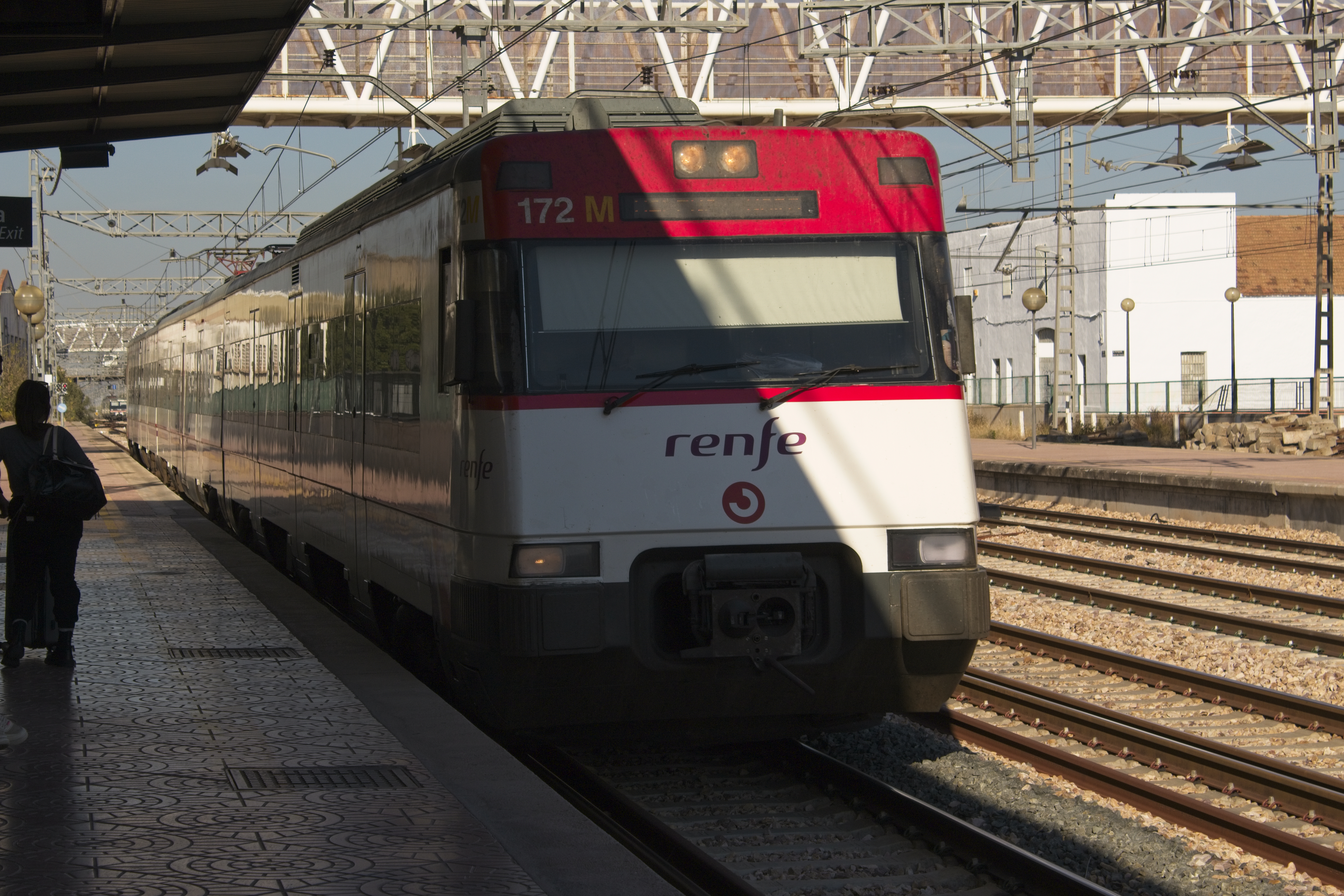
Our trusty steed
Xàtiva
Our first trip was to Xàtiva (SHA tee ba), about an hour south of Valencia. With its famous hilltop castle that dates back to Roman times, it’s also the birthplace of two Popes and the site of some royal brutality thanks to King James V. The town was also once a center of paper manufacture, imported by the Moors. The Castle occupies a strategically important hill that overlooks the Roman Via Augusta that ran from France down the Mediterranean coast to what is now Cadiz.
We picked the one rainy day in October to take this trip. We were lucky that the rain held off until the very end of our trip so while we don’t have the usual bluebird skies and Mediterranean light, we were able to enjoy the whole trip.
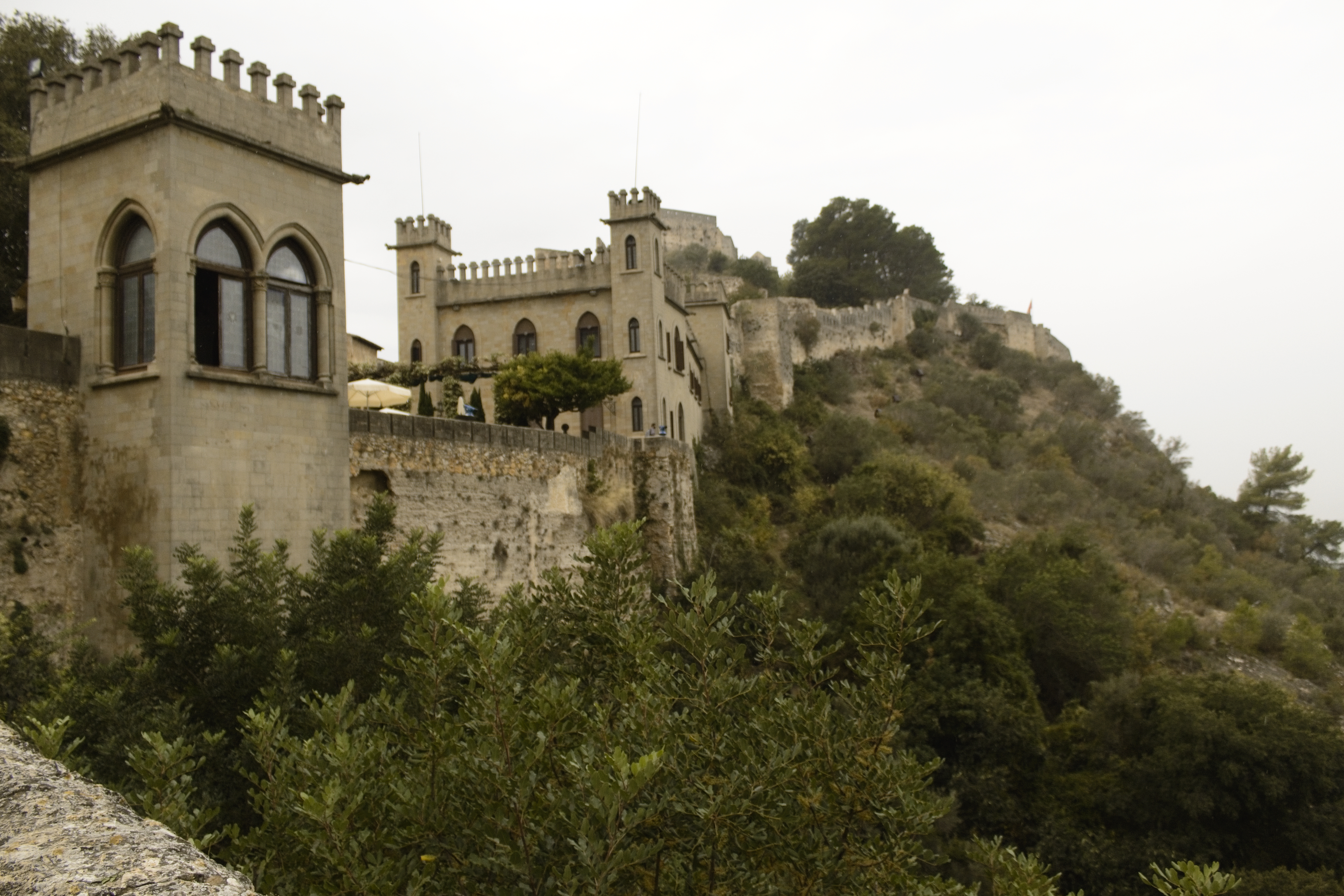
The view from the entrance.
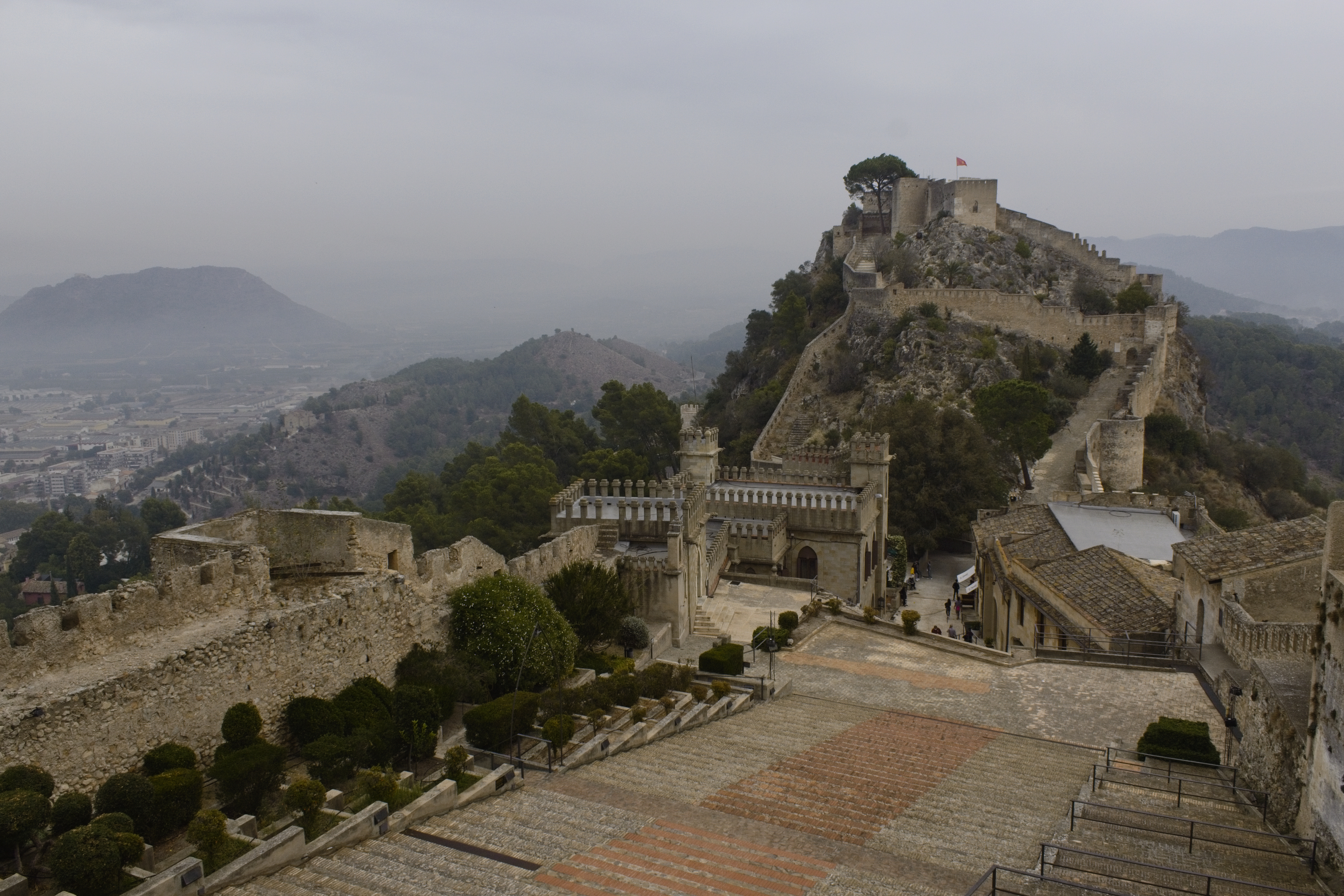
Looking south toward one of the two prominences on which the castle grounds are built. Love the crenelations. The valley was full of smoke from farmers burning…something. Many burn piles in the valley to the right.
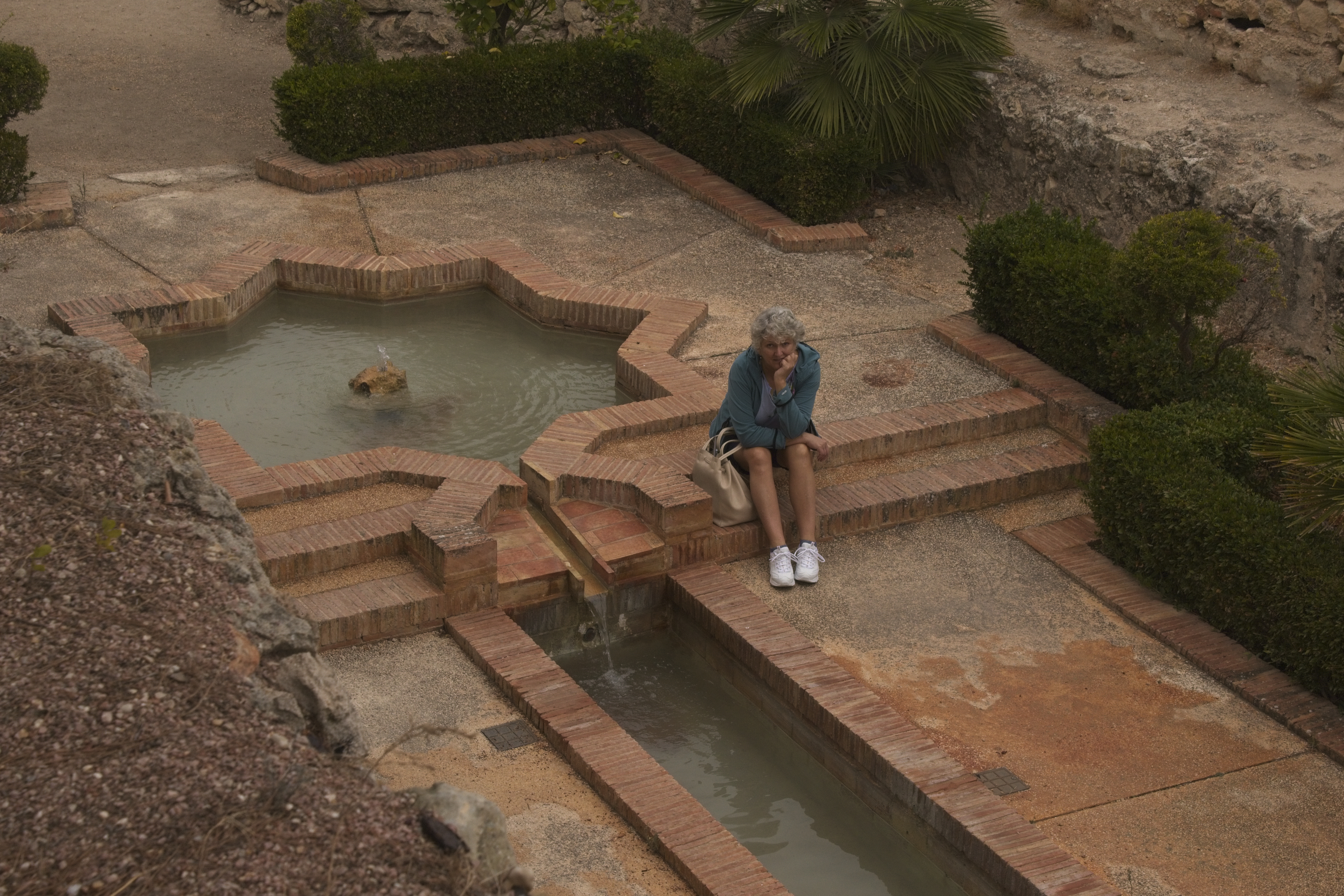
The Princess contemplates life at the fountain
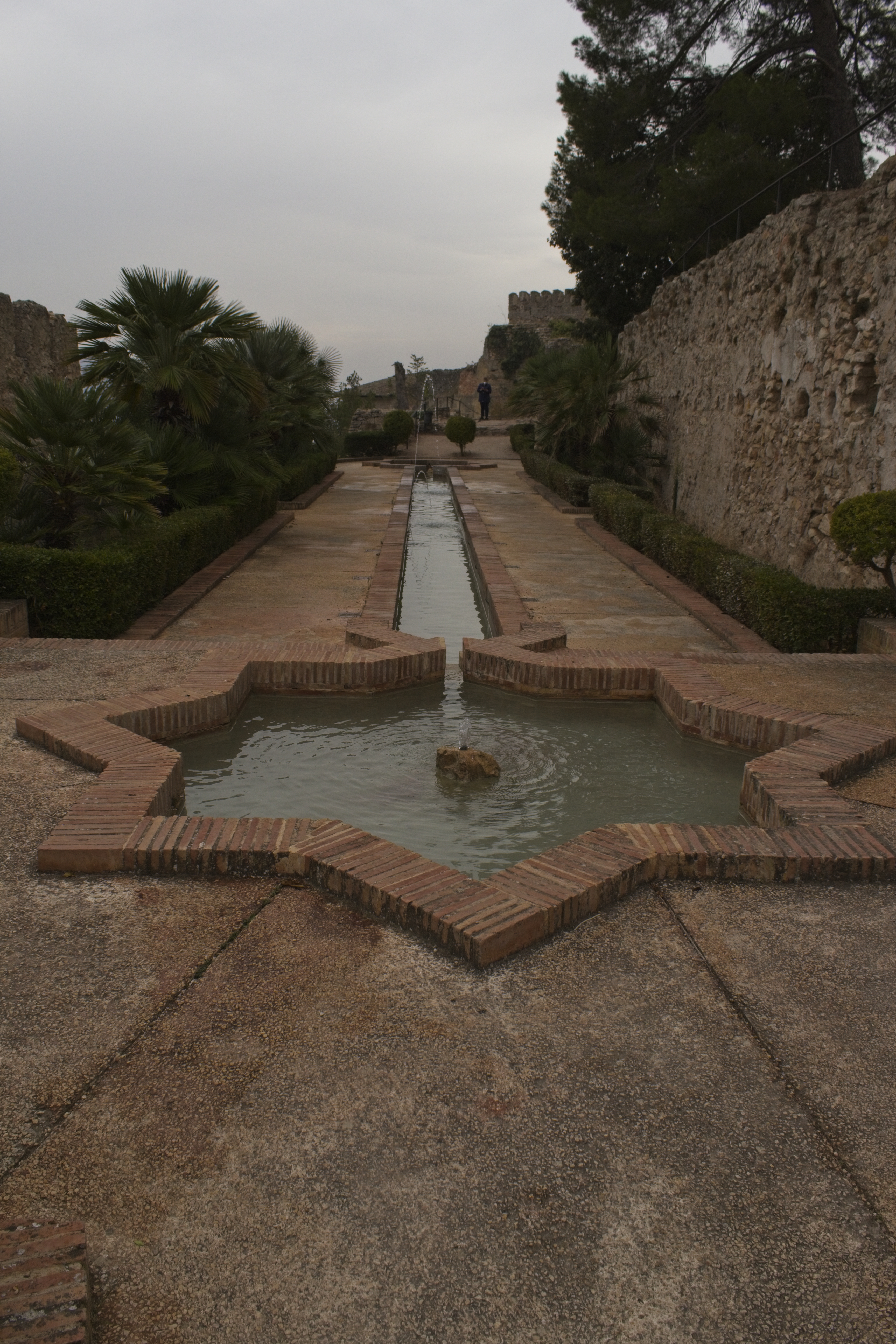
I absolutely love Moorish water features, which I assume this is. The square-in-square pattern is very common in Valencian art and architecture.
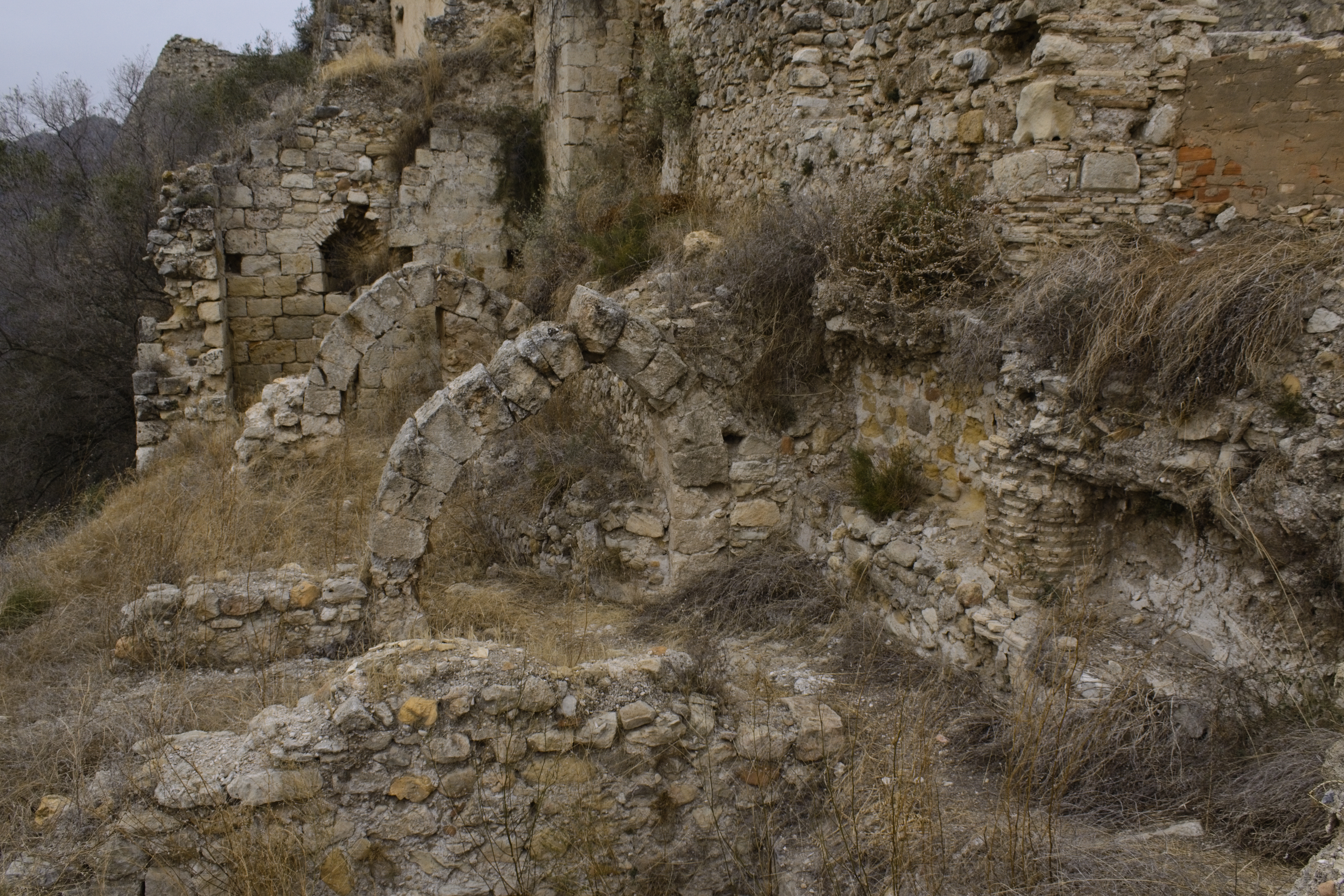
The remains of…something, don’t remember what now. Fascinating that all that really remains is the arches.
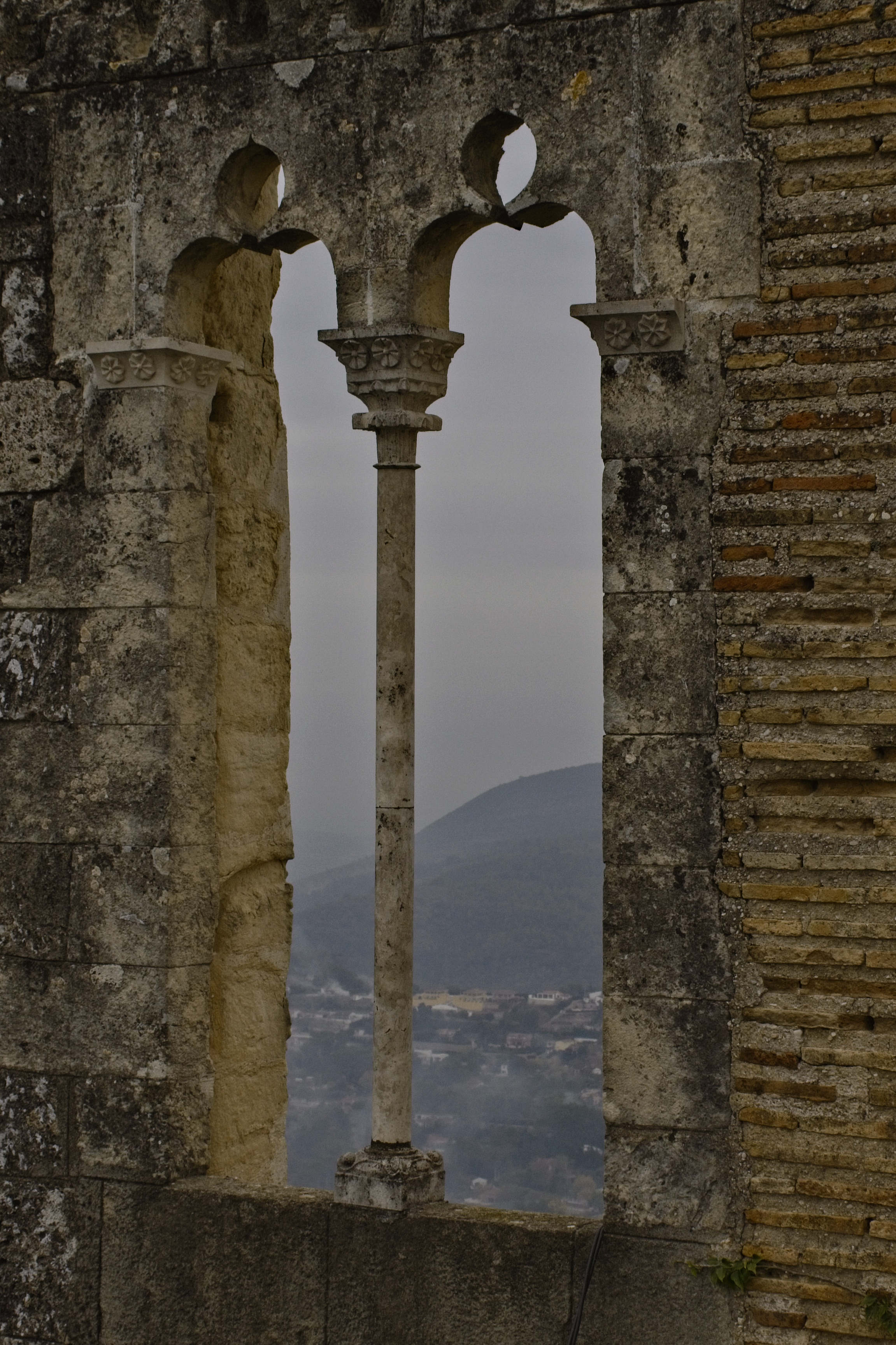
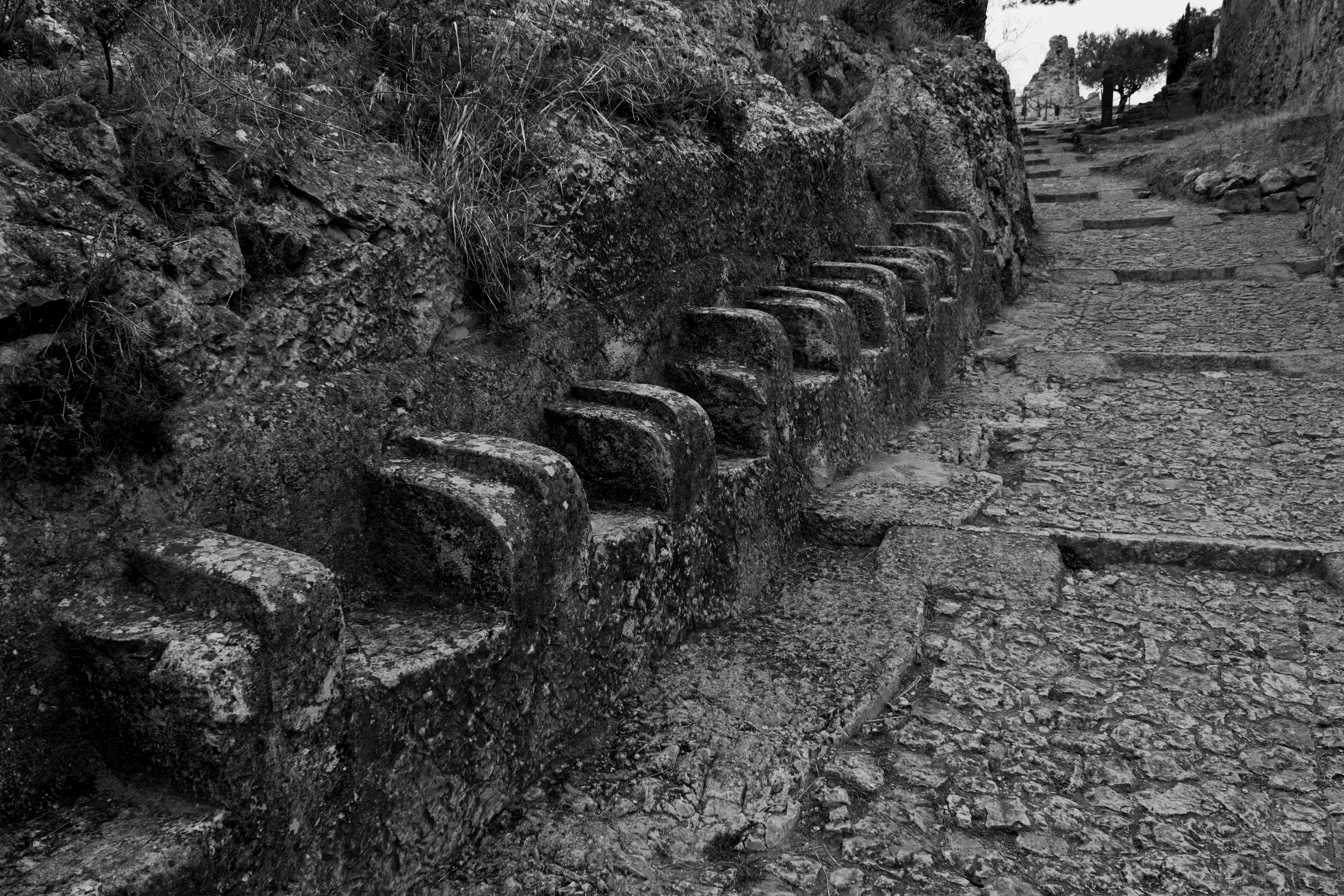
These seats, carved into the live rock, provided a nice view over the valley.
Sagunt
Our next trip was to the castle at Sagunto, about an hour north of Valencia. We were lucky with the weather, choosing one of the last sunny, over-70° days of the fall. The castle’s history goes back over two thousand years and covers Iberian, Roman, Moorish and Spanish history. Hannibal sacked the site in the second century BC and kicked off the Second Punic War. The Romans then took over shortly after, the Moors came along in the 9th Century, El Cid occupied the place in the 11th C, Christians by the 13th C. Of course, they then fought among themselves for hundreds of years, with the last major battle over the site taking place during the Napoleonic Peninsular War. There’s a lot of history there, is what I’m saying.
By the 14th Century, there was quite a substantial Jewish population in Sagunt, who built their cemetery into the rock under the walls of the castle. These were of course later raided and sacked because greed. The tombs were used by the population of Sagunt during the Spanish Civil War (1936-39) as air raid shelters, as Valencia was one of the last hold-outs against Franco’s Fascists (excuse me, “Catholic Nationalists”) and was heavily bombed by elements from the NAZI German air forces seconded to the rebels.
At any rate, it’s a big site, covering 800 meters on its long axis. We spent the day wandering about and enjoying a picnic lunch on the walls. ‘Twas a lovely day.
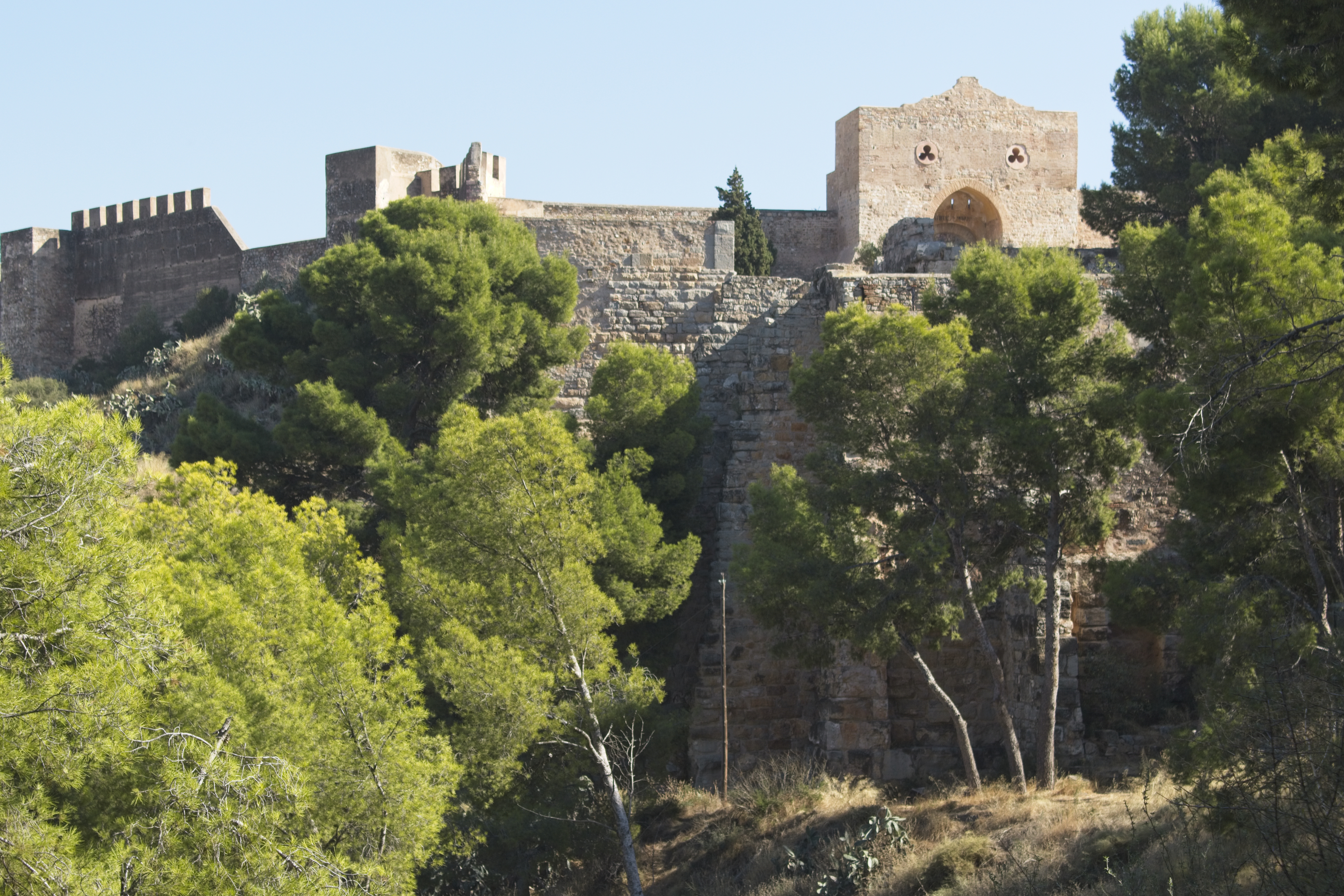
The view of the castle from the entrance
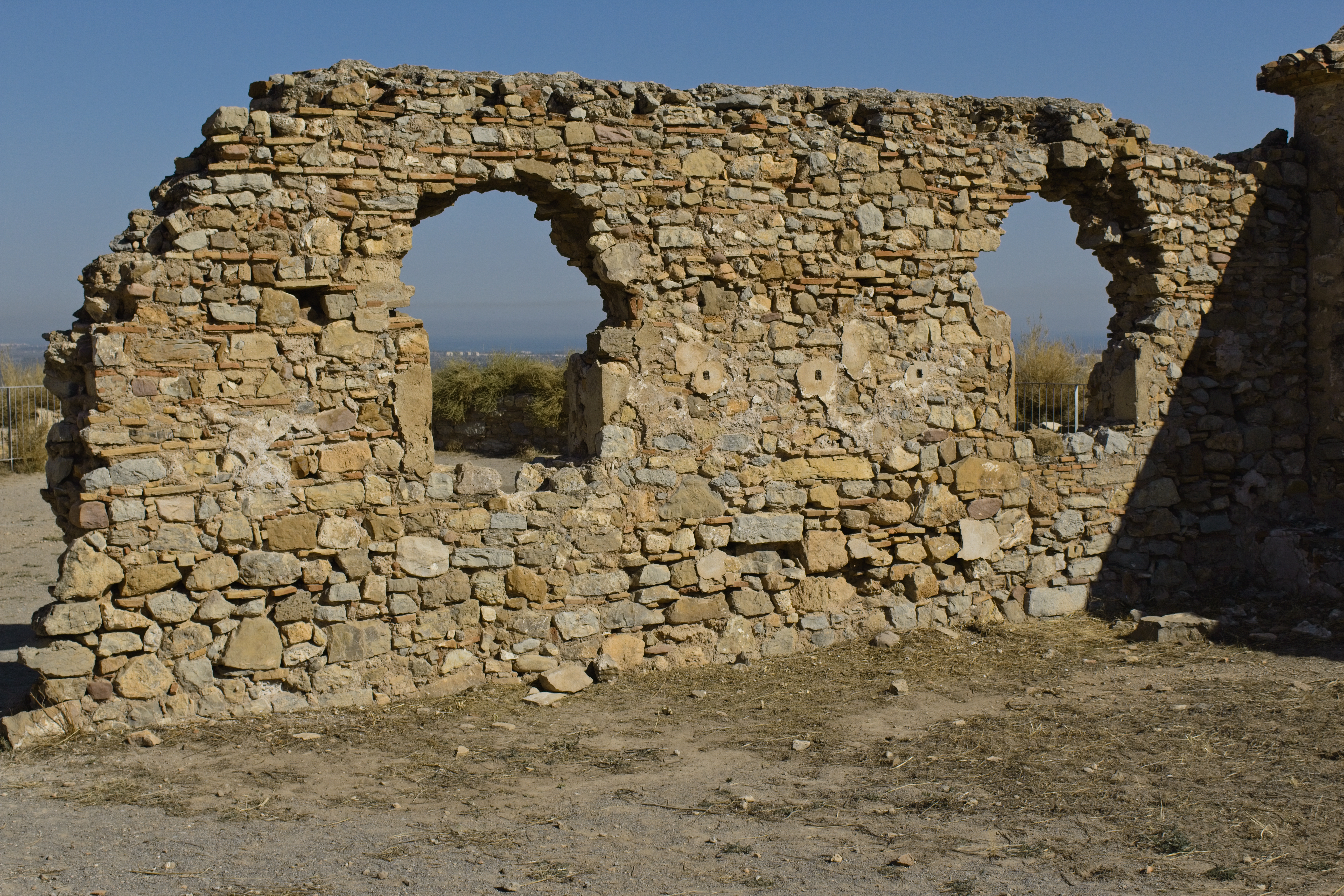
Walls. And former windows.
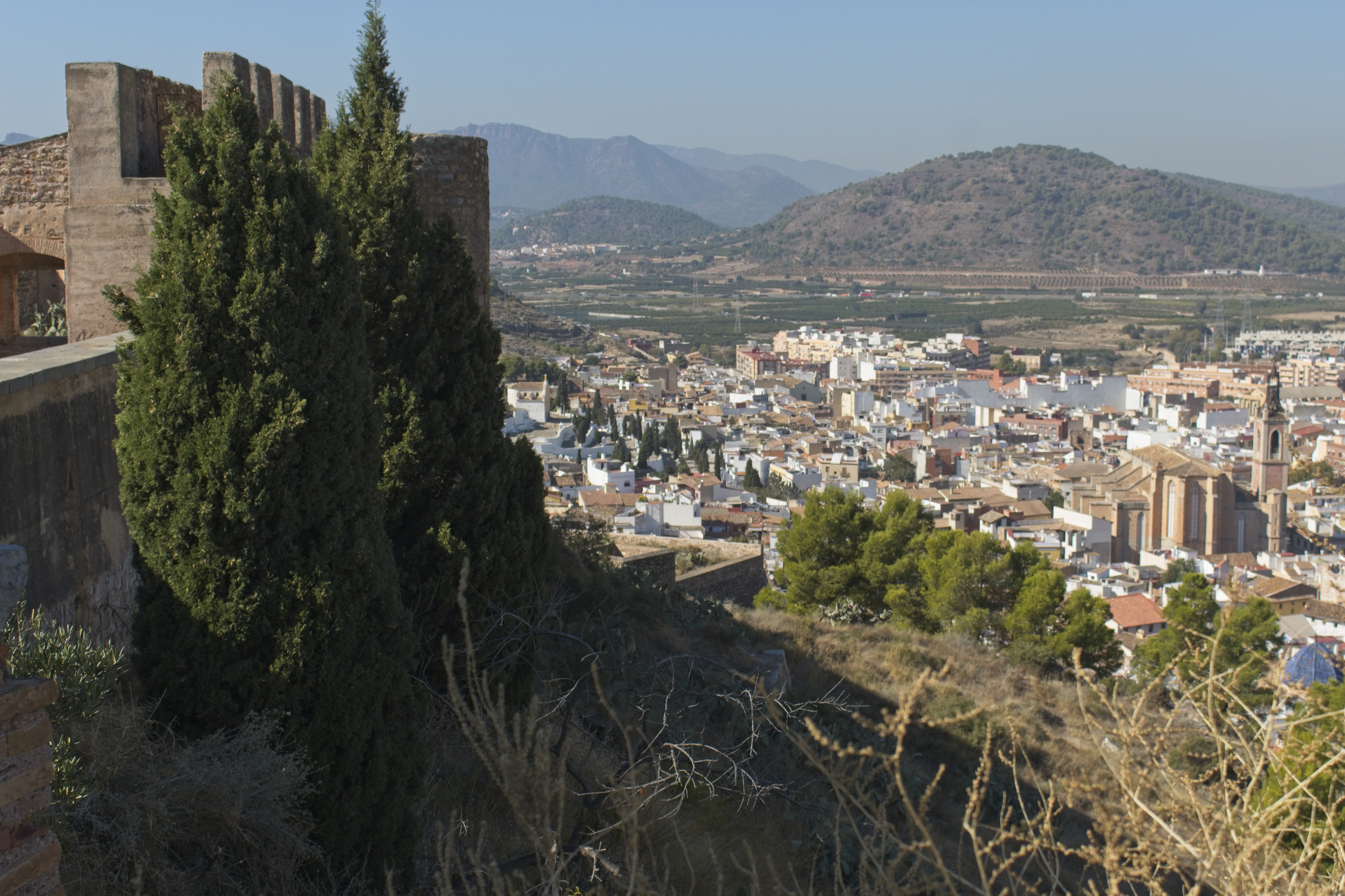
Overlooking the valley
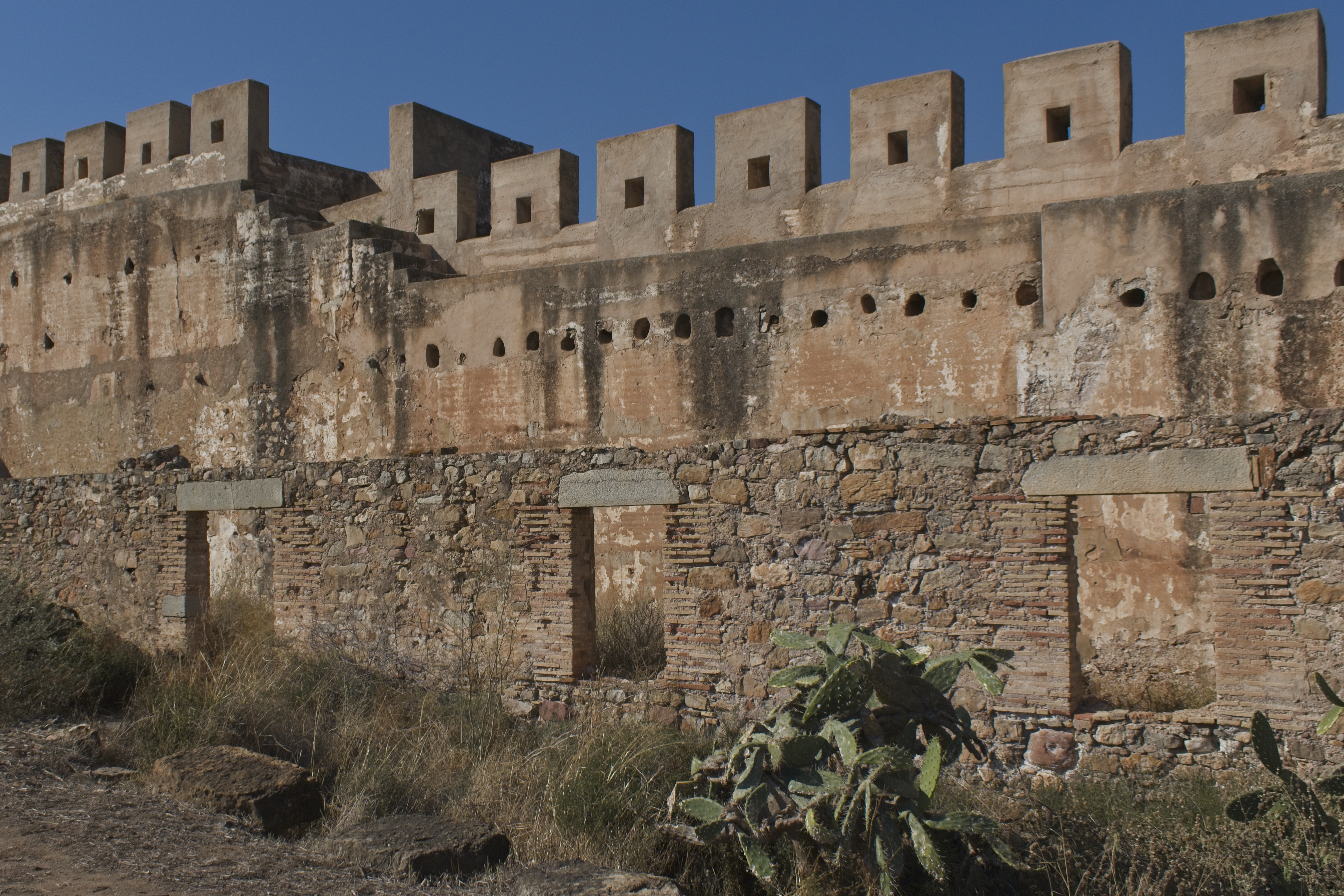
The remains of a building that was probably 50 meters long. You can see where the rafters ran from the exterior wall to the near wall. This was one of several such buildings and would have held a lot of…whatever they put there.
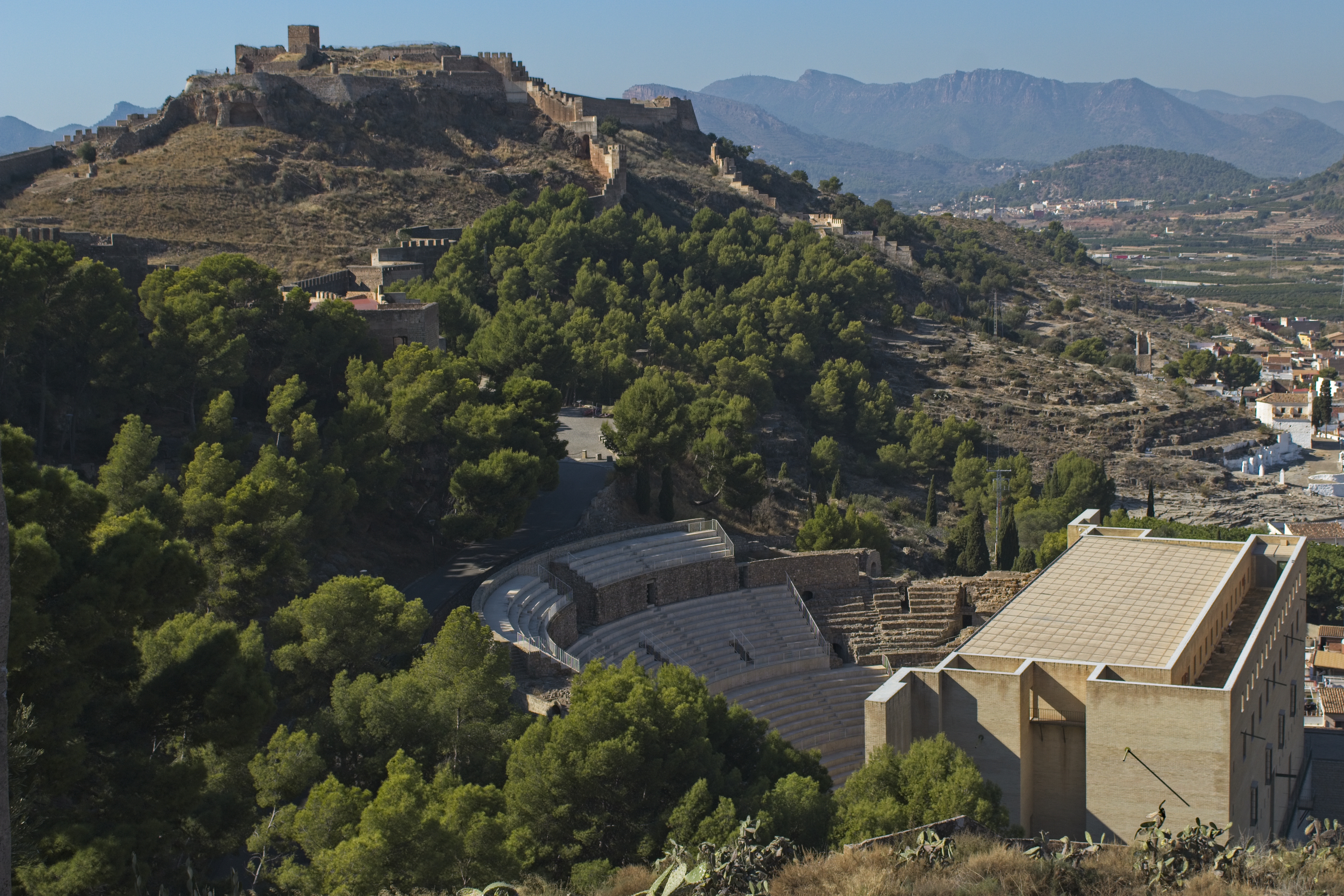
Looking across to the eastern part of the castle. In the foreground is a Roman theater, refurbished and still in use.
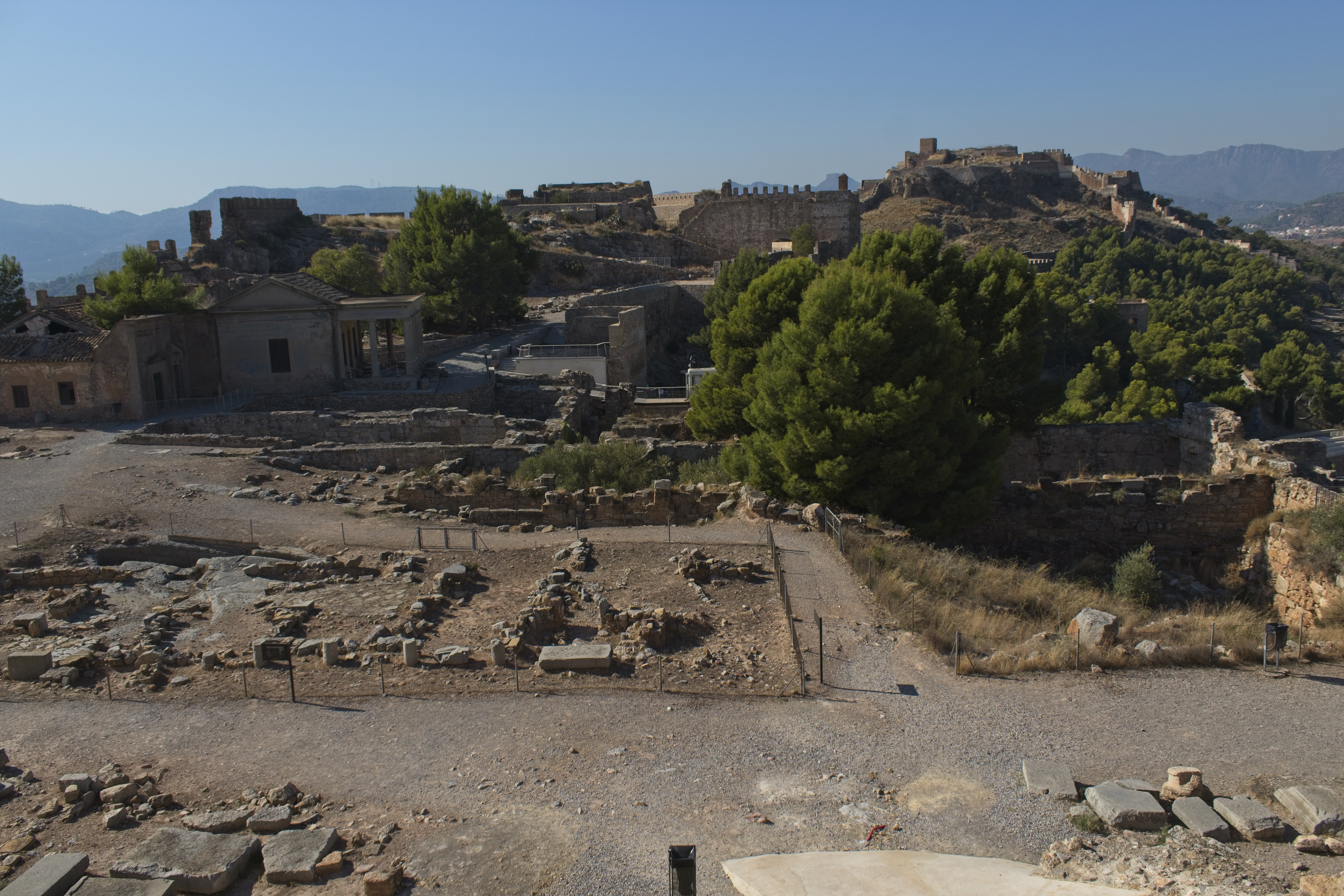
Ruins of the Roman site in the foreground. This is in the central part of the site.
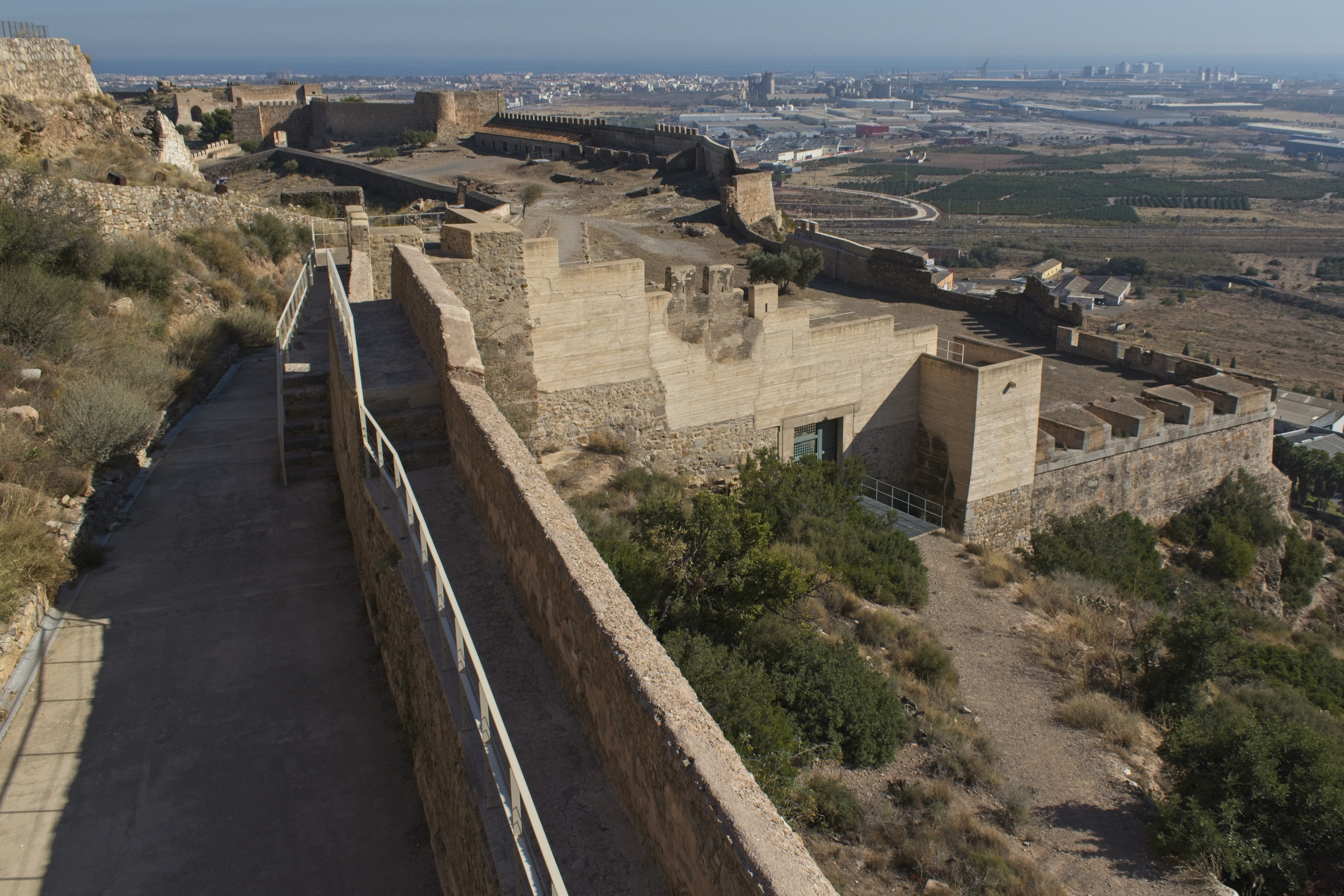
More walls and plazas. The place was huge.
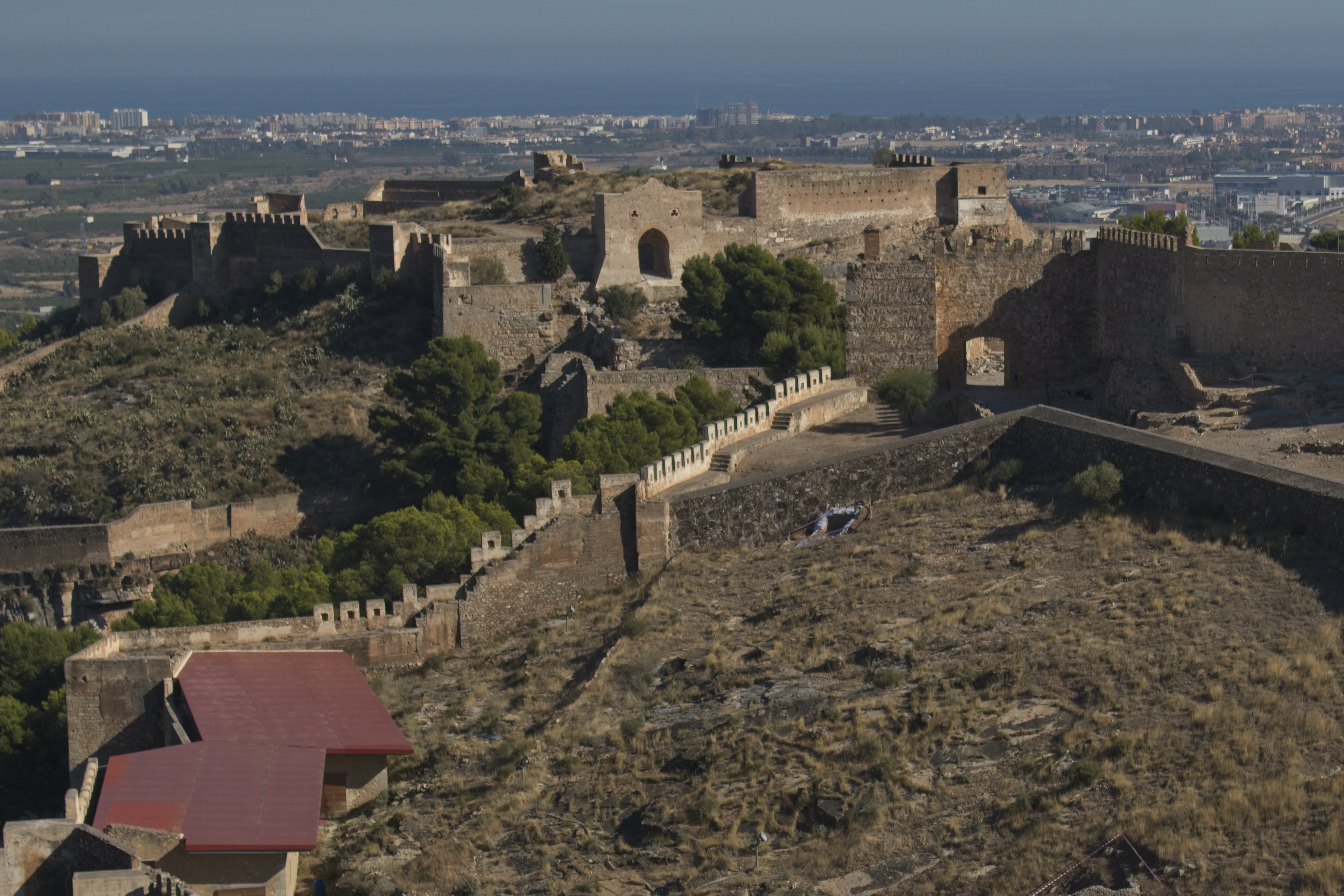
Looking back toward the sea from the east. The Roman theater is in the tree-filled ravine center left.
Peñíscola
Our most recent trip went a bit further afield, to Peñíscola, a couple hours north of Valencia by train, roughly halfway to Barcelona. The town dates back to the Iberians and was held at various times by Phonecians, Greeks, Carthaginians, Moors, Spanish and now mostly Brit vacationers. It’s a huge beach town, with tens of condos built along the shoreline for holiday makers. In this November of the Plague, it was a ghost town, inhabited primarily by the locals.
The castle on the peninsula (which is the word the town’s name is derived from) was established by the Knights Templar in 1294. This was their last home before they were disbanded by Pope Clement at the behest of King Phillip IV who owed them a lot of money. This story smells a lot like the reign of our most recent Grifter-in-Chief. History may not repeat itself but it rhymes. In any case, they were kicked out of the castle in 1307, some other knights hung there for the rest of the 14th C, then Pope Benedict XIII (AKA Papa Luna) moved in to make the place the Vatican-in-Exile during the Western Schism in the Catholic church (the so-called Avignon papacy). It’s more complicated than that but anyhow Papa Luna lived at Peñíscola from 1417 until his death in 1423. Several films and TV shows including Game of Thrones have shot scenes at the castle.
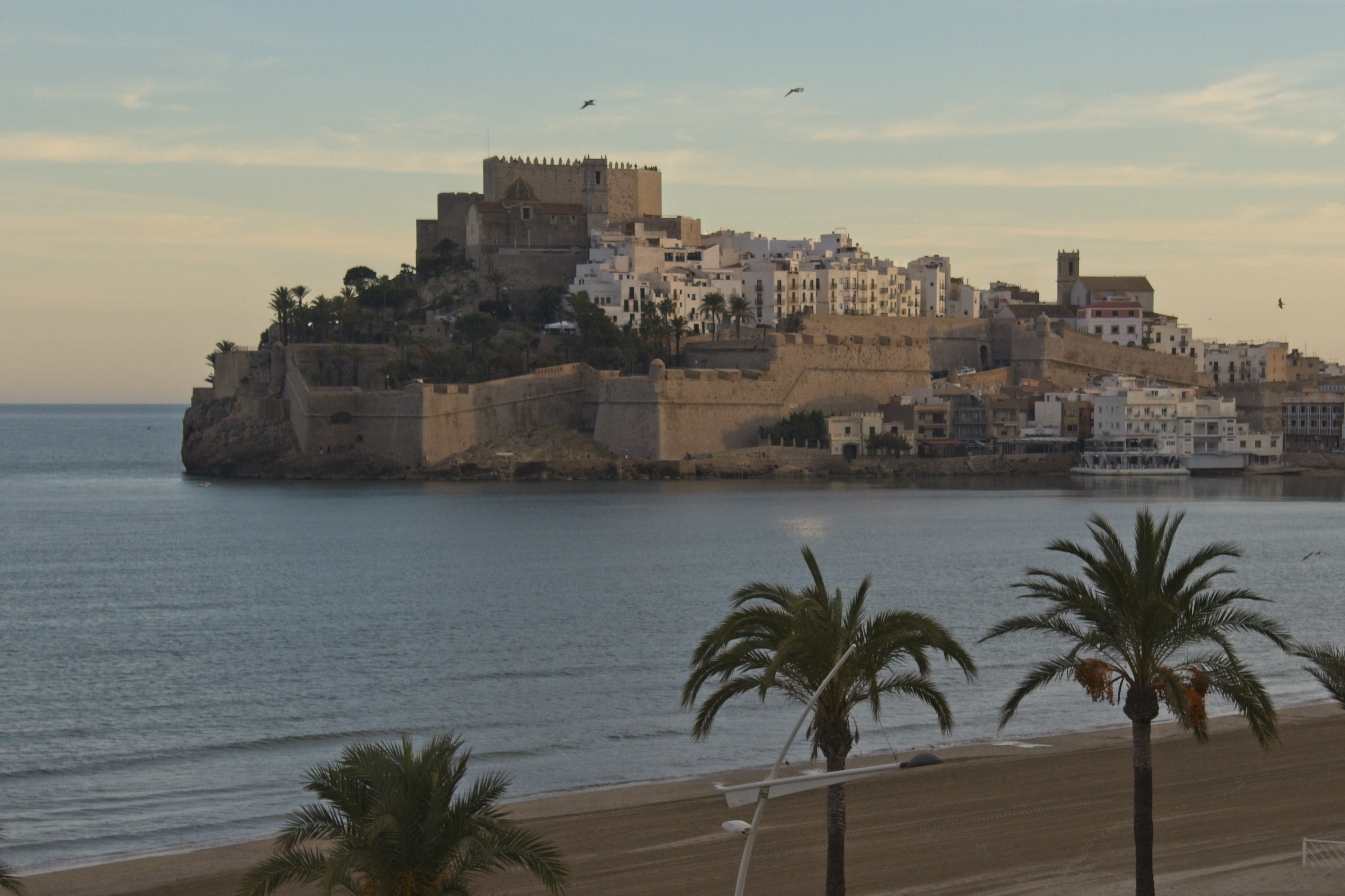
The view from the balcony of the AirBNB where we stayed. We weren’t the only people in the condo building but it was pretty empty. We did have a neighbor above us who apparently wore tap shoes around the house.

The castle and the old part of town at night

This place!
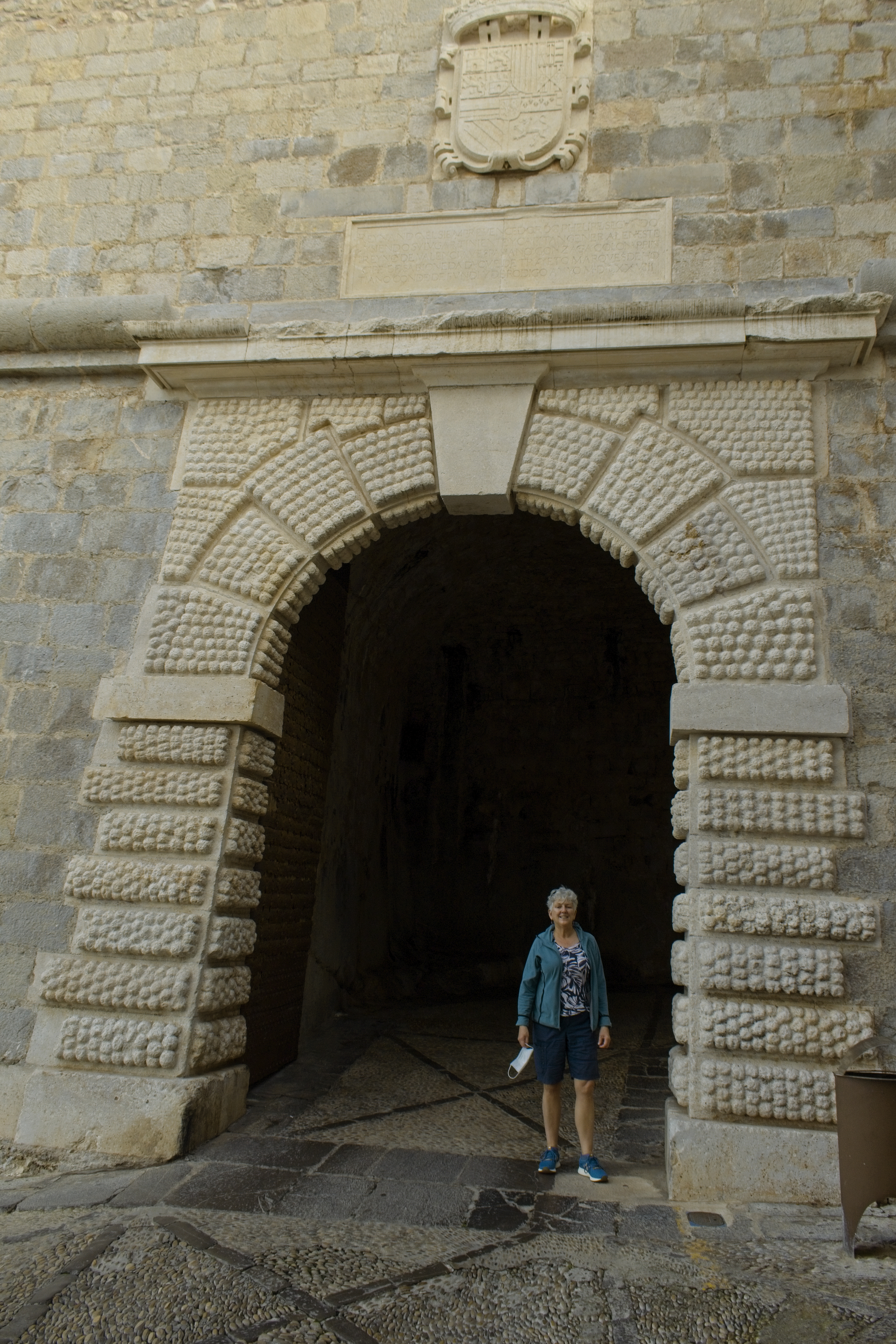
Castle entrance. Cindy included for size
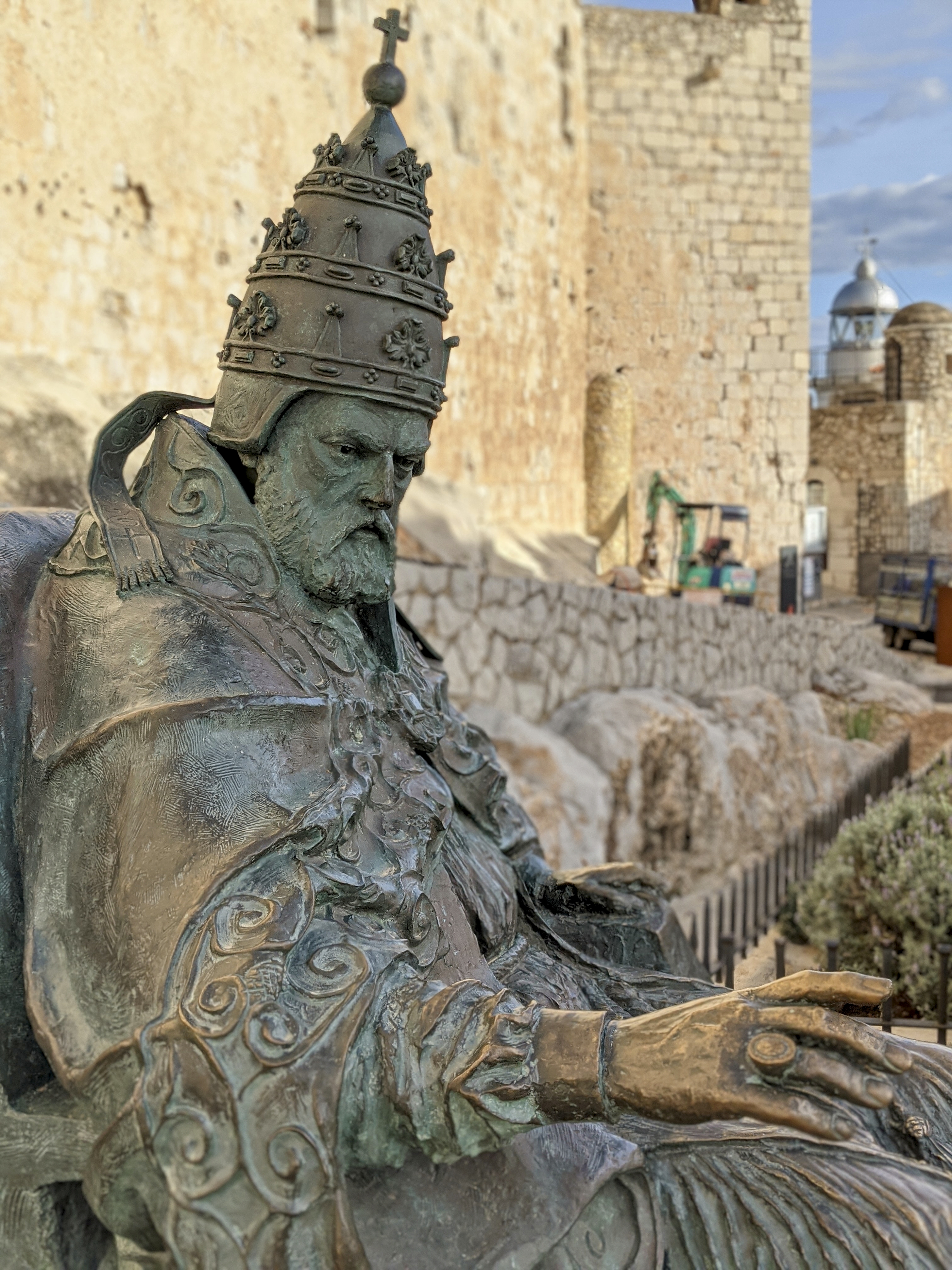
Papa Luna, watching over the town
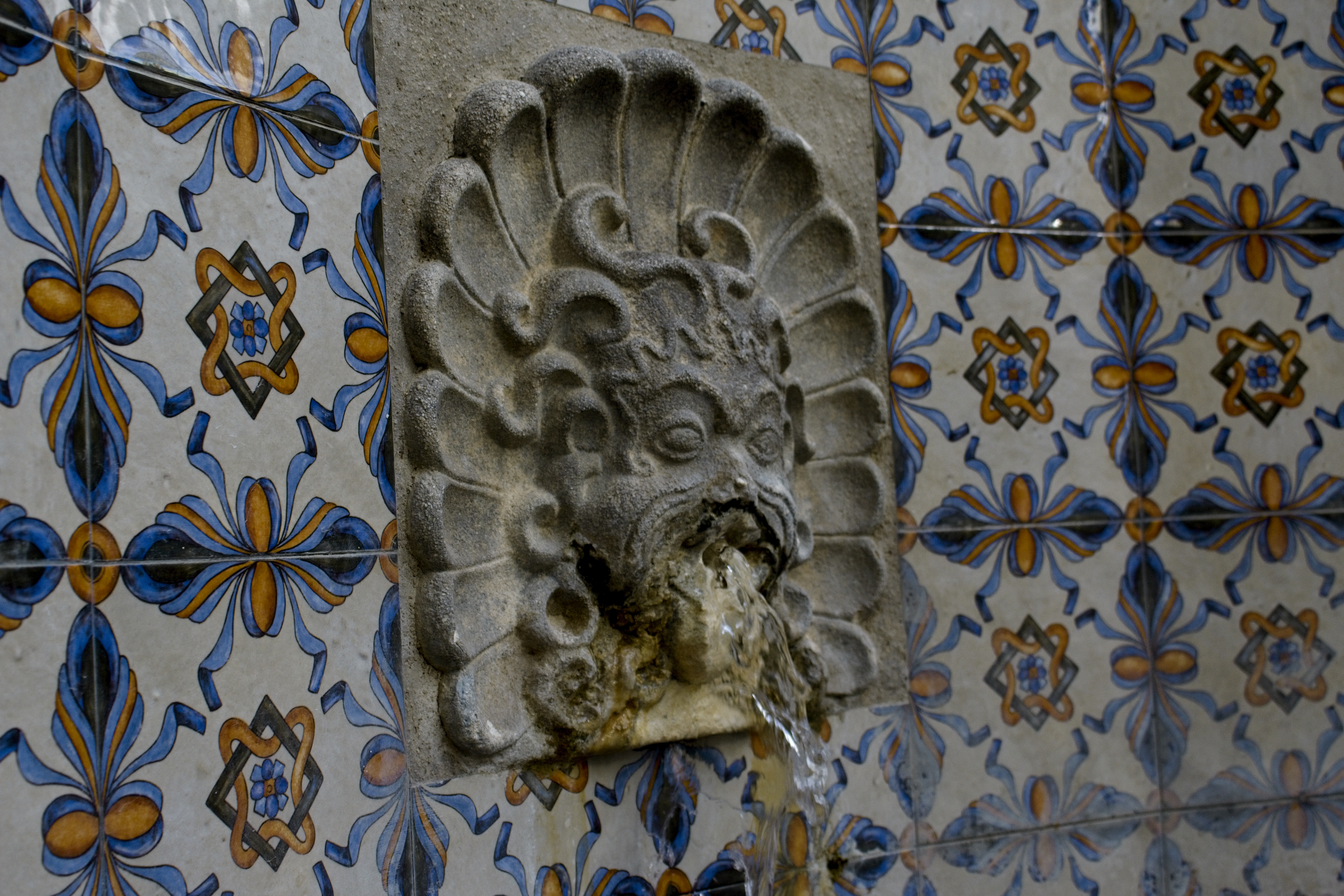
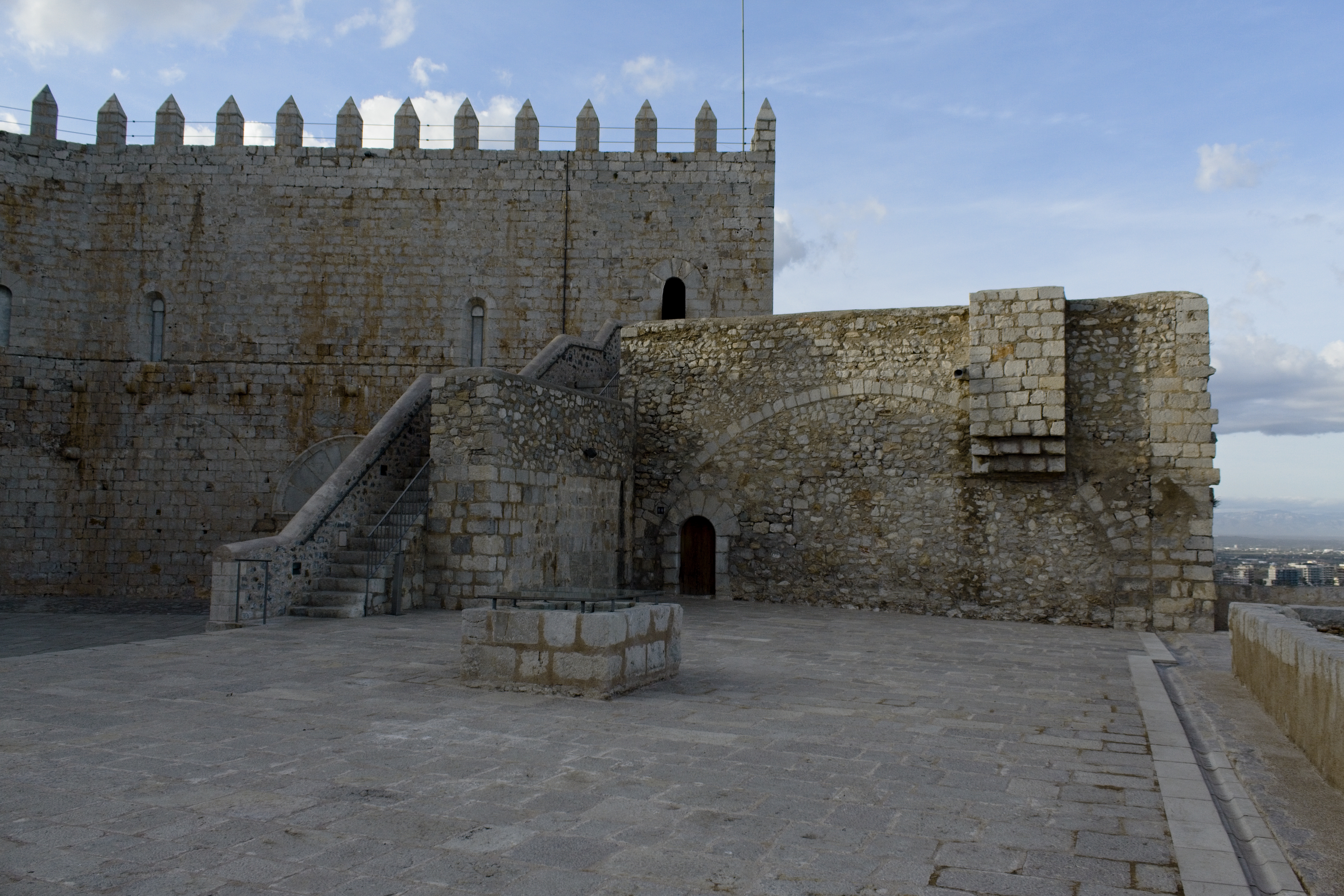
The place is pretty well preserved and has some pretty cool displays in the rooms.
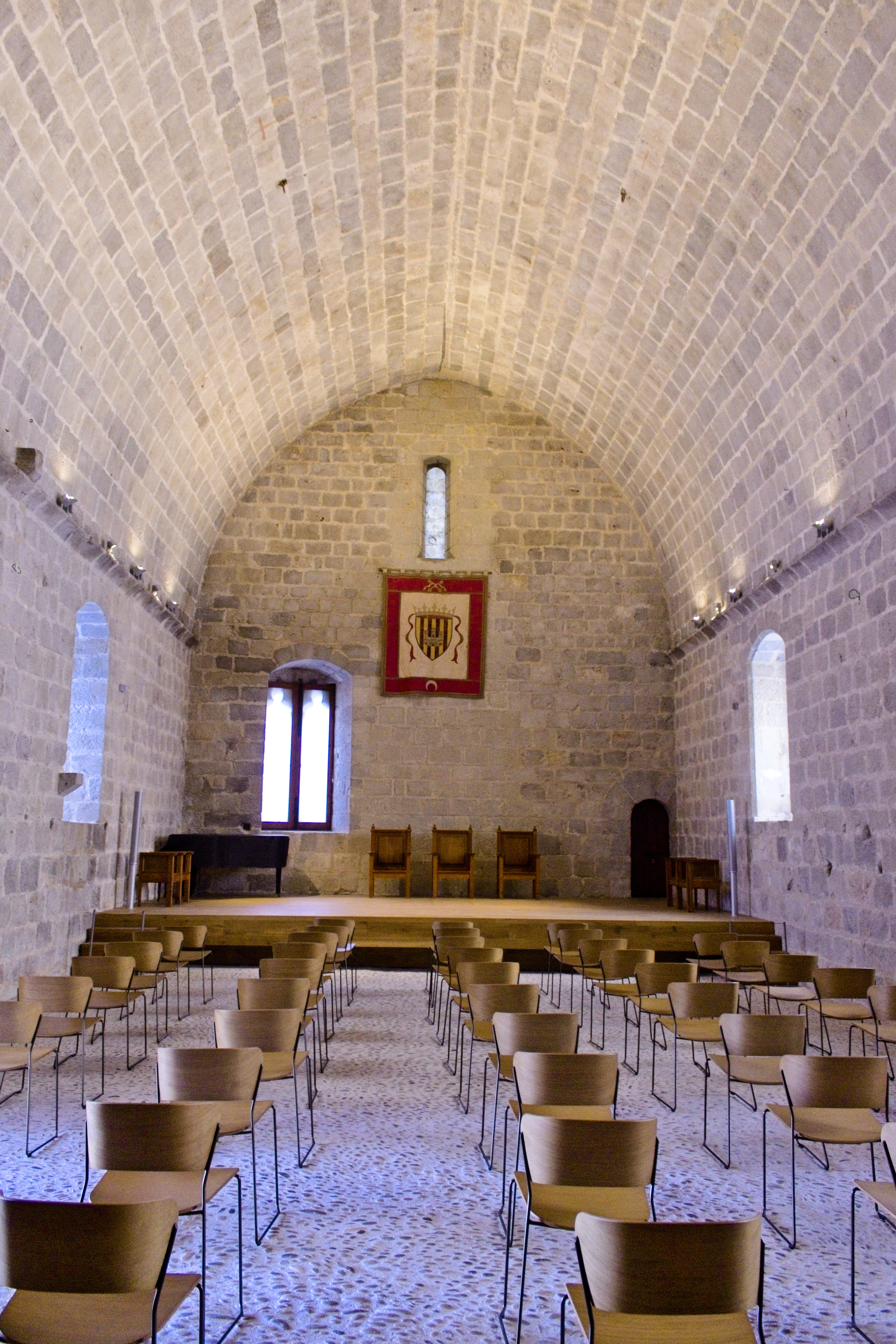
Chapel, including 10-meter barrel vault ceiling.

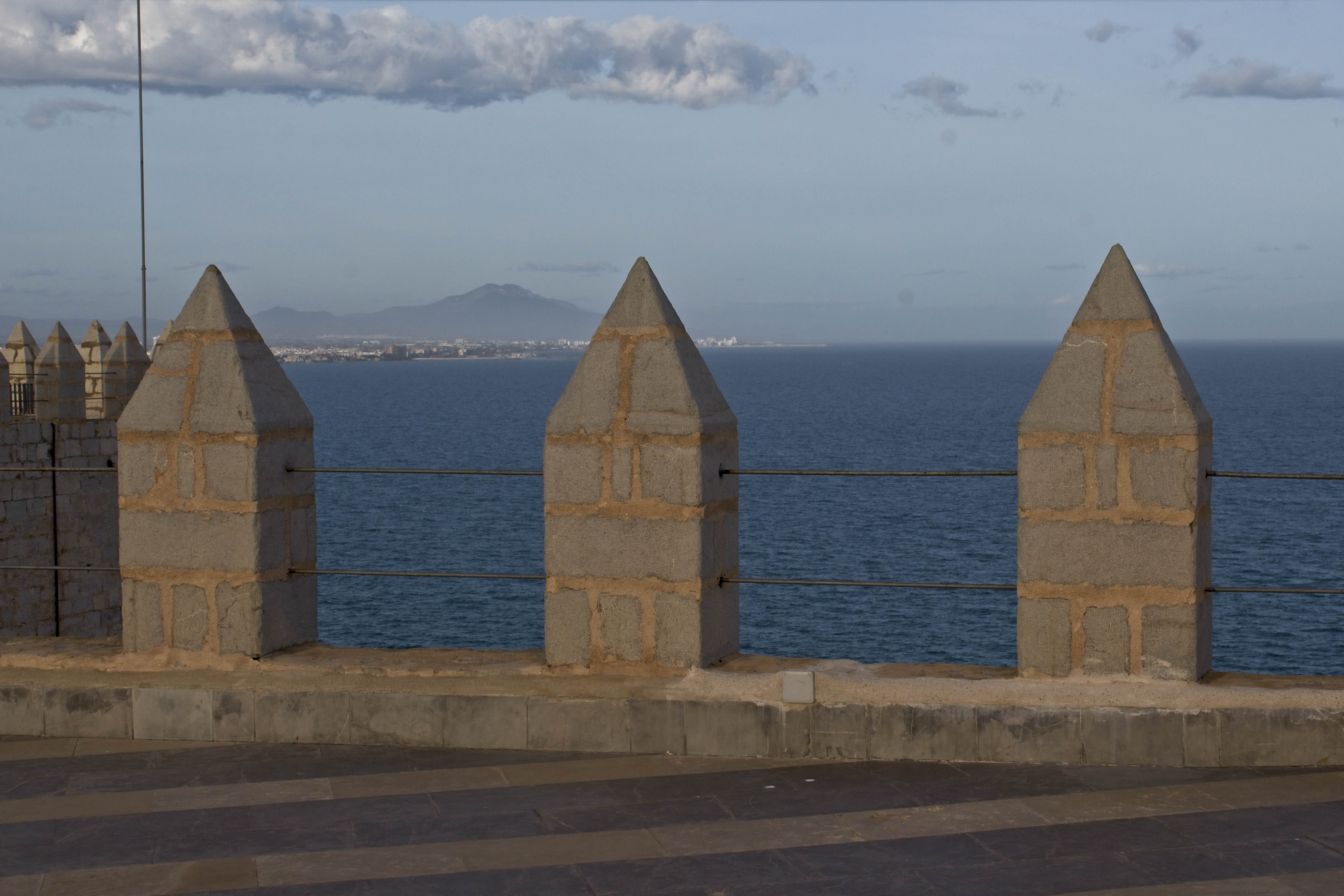
Looking north
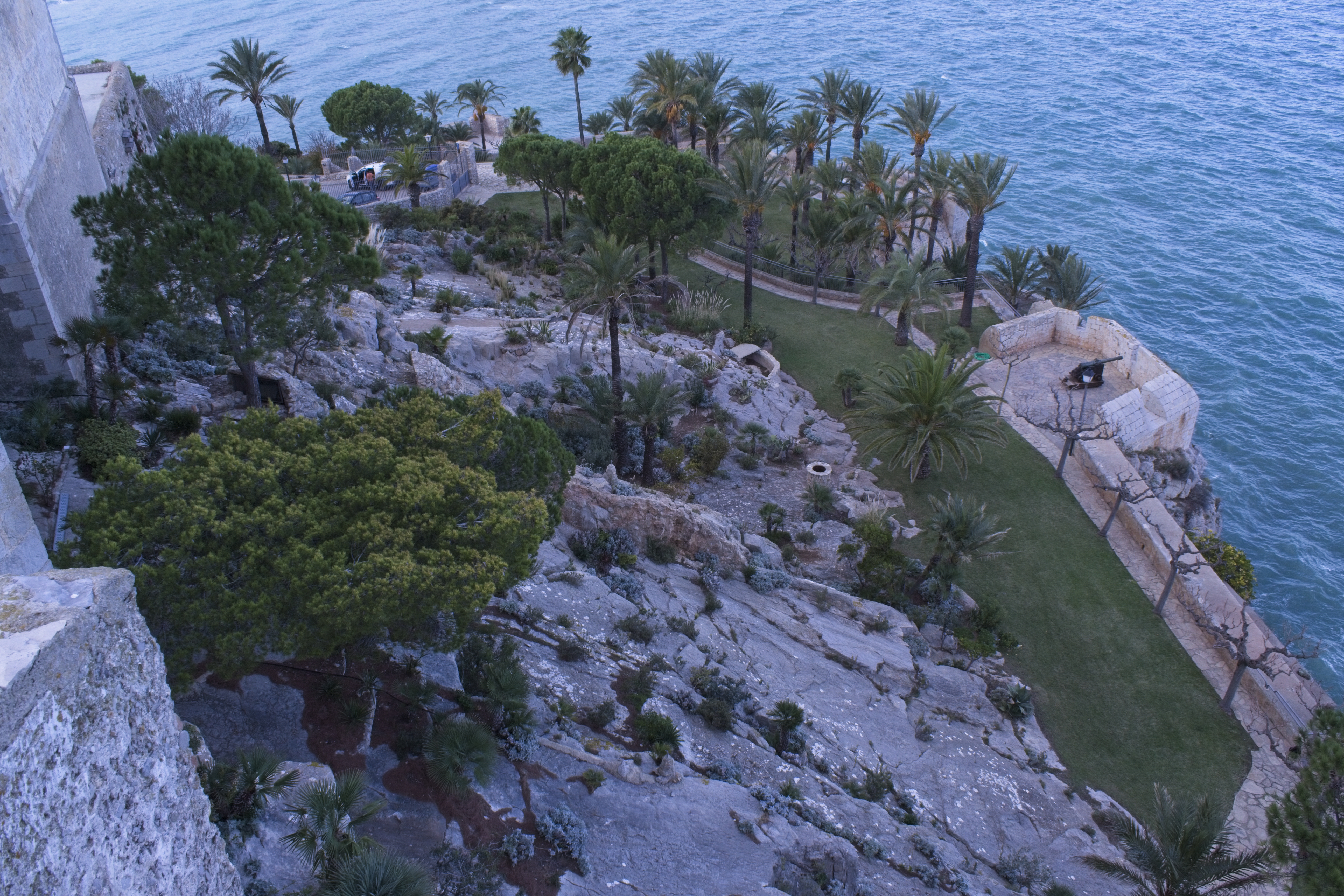
Artillery and parade grounds
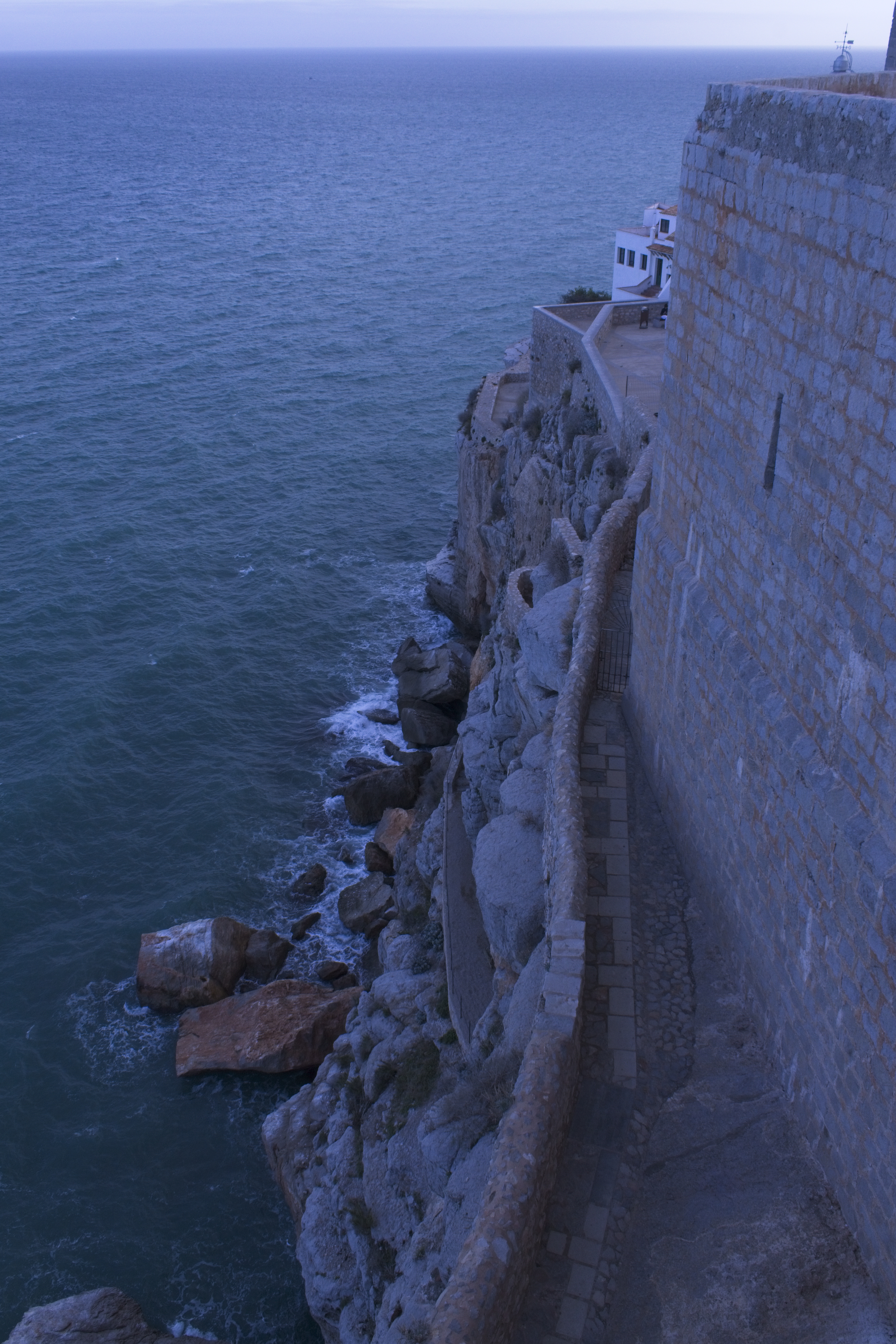
The seaward side of the castle is sheer to the water
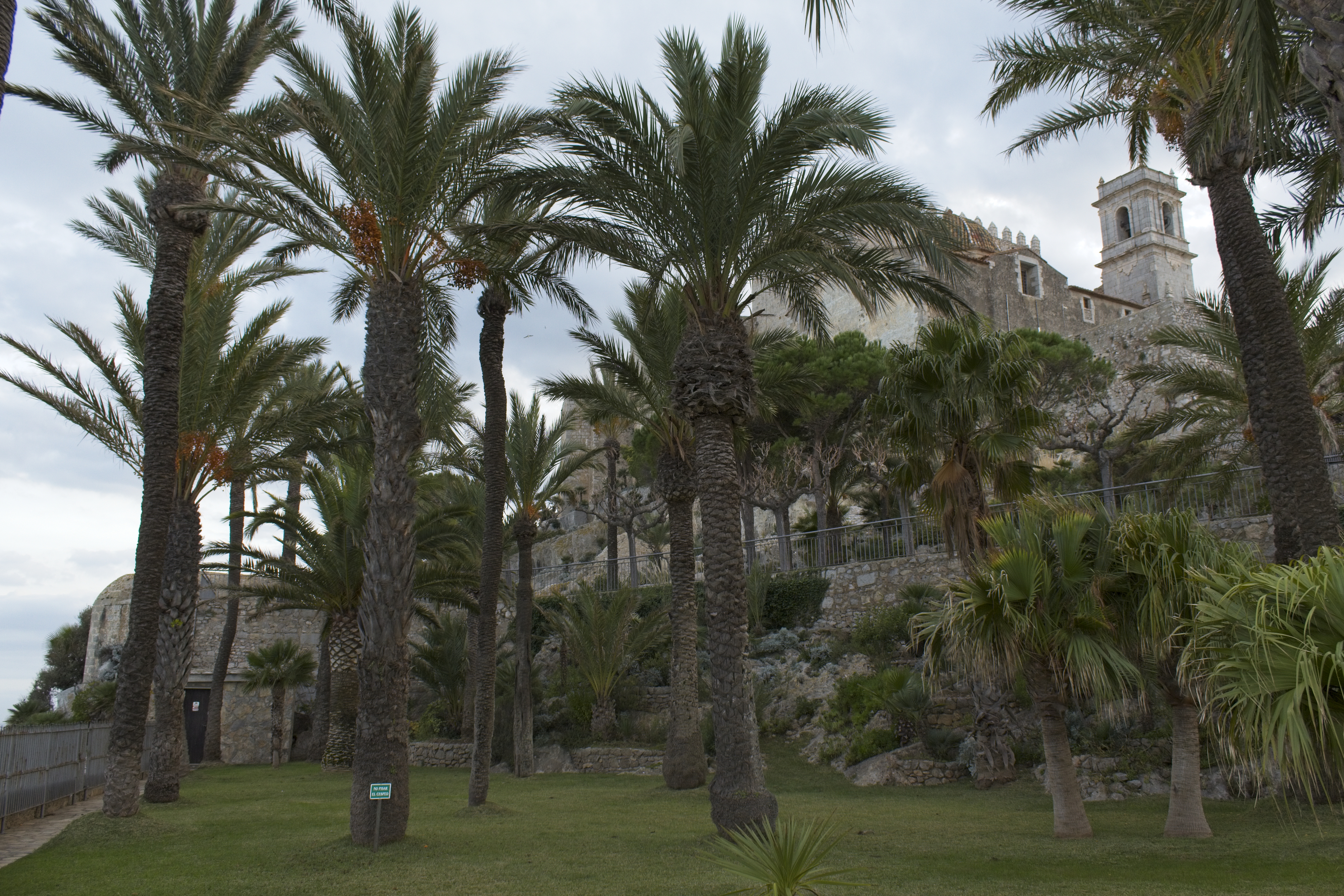
Looking up at the castle from the artillery grounds
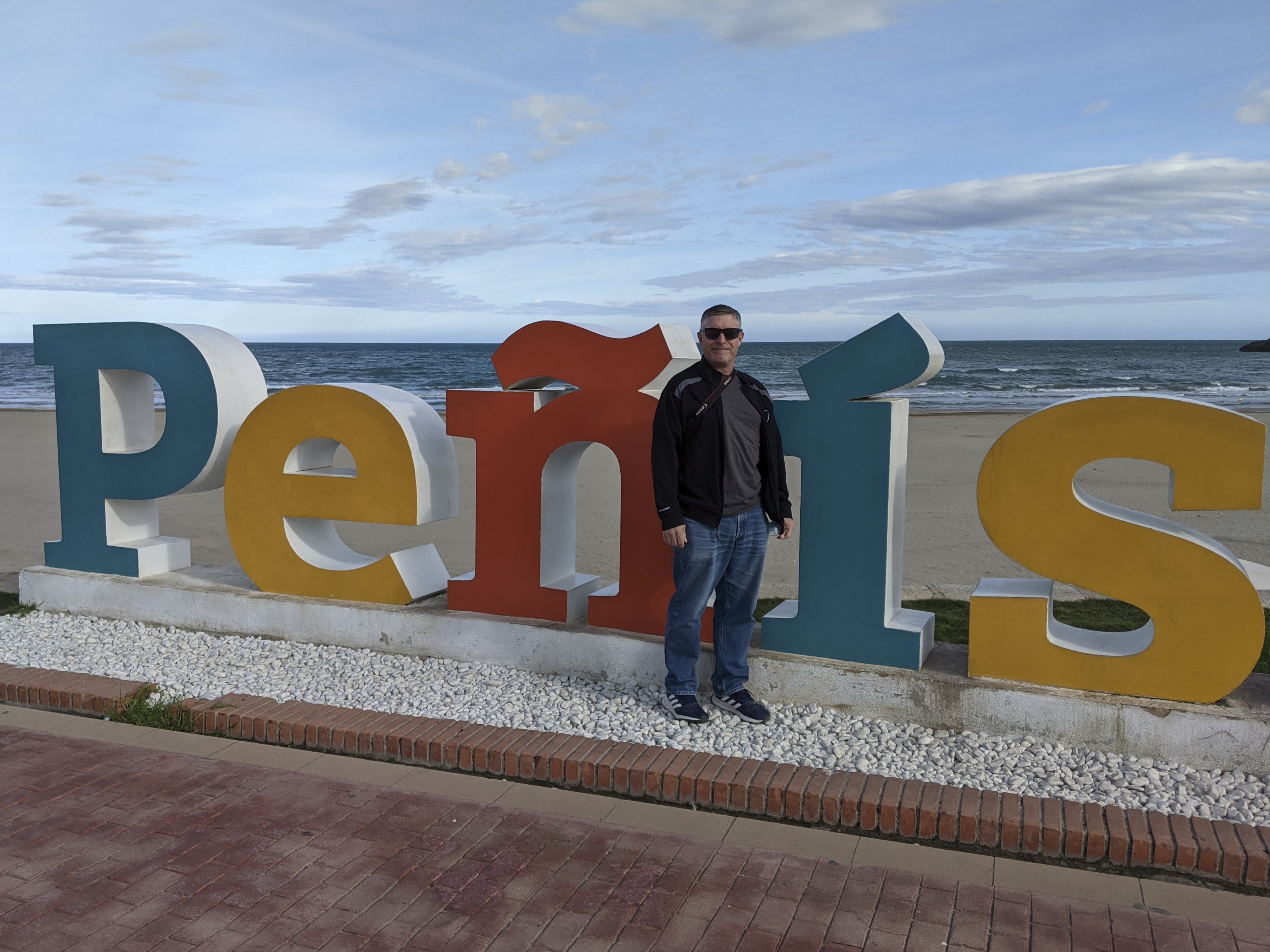
Obligatory. Hopefully not editorial content.
The following day we did an 11 kilometer day hike in Serra d’Irta Natural Park just south of Peñíscola. The park is very close to town but we had to rent a car to get to the trailhead. Turns out the road through the park is mostly gravel, so that was fun. Hilly and with mostly scrub trees, the park is a lot like “forests” near Los Angeles or in the high places in Arizona. That said, it was really great to get outside and smell the pines and see green.
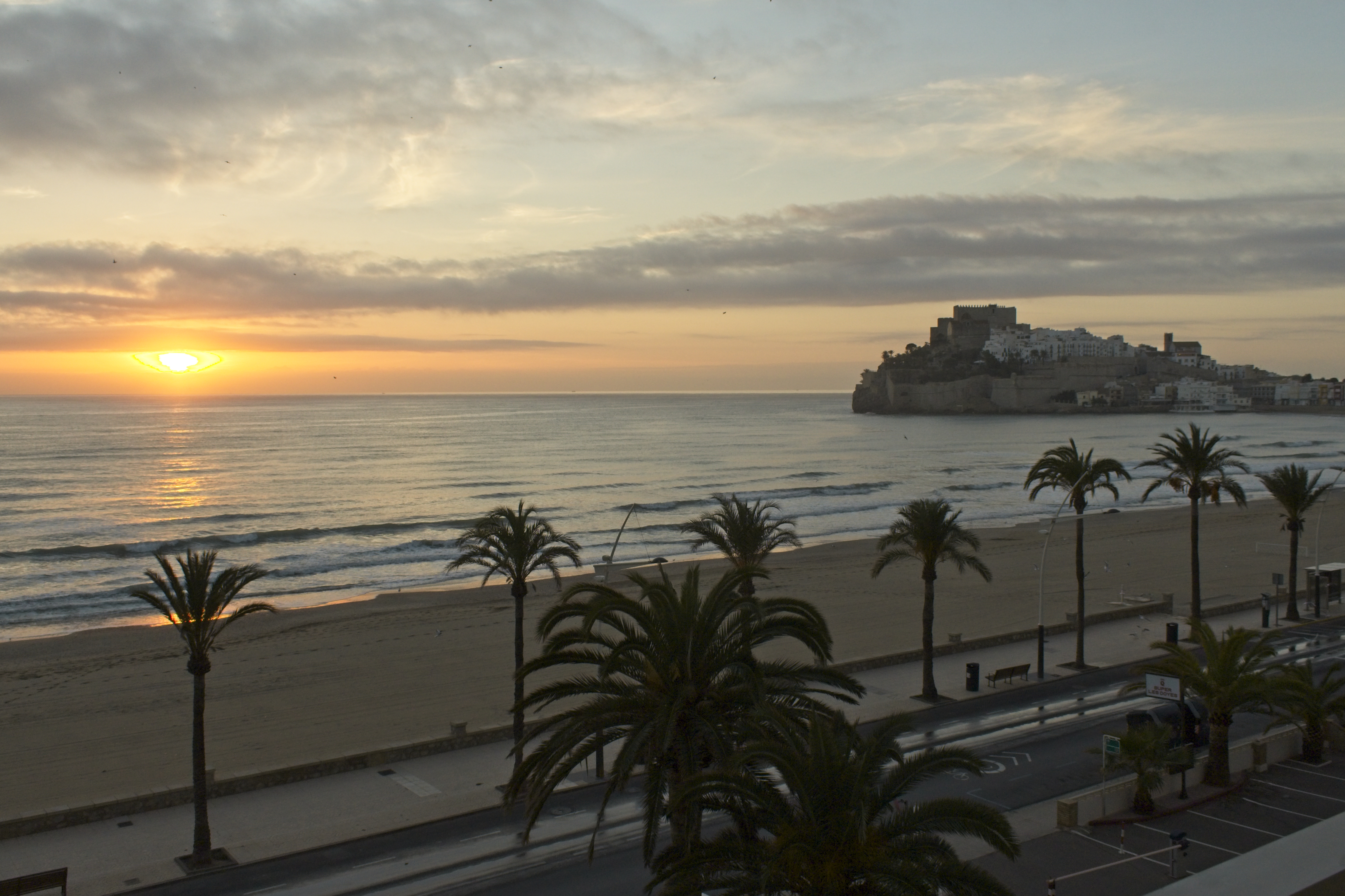
Morning view of the castle
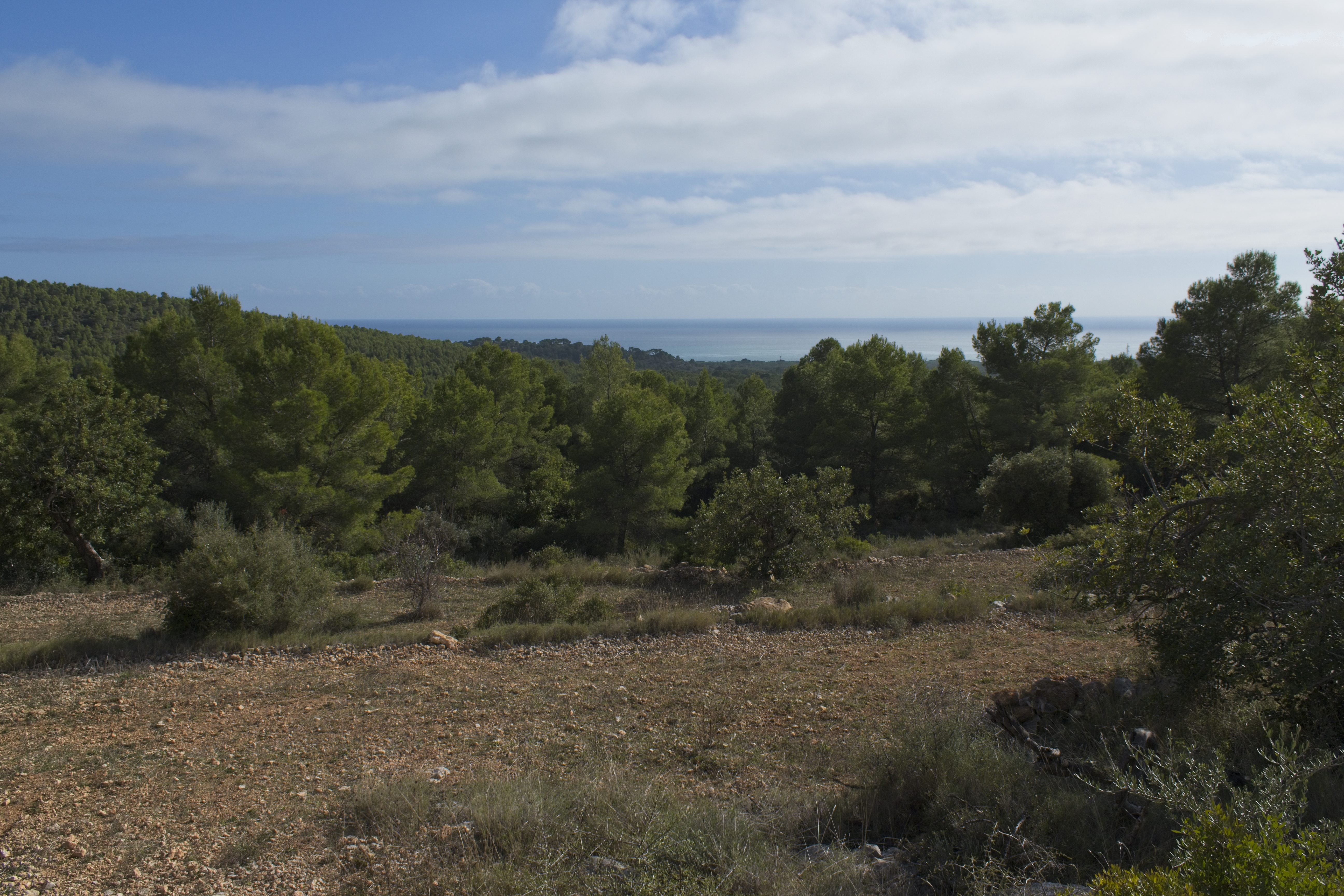
We started way down there by the water. This was the first time we popped out above the trees. I was standing on an old terraced farm plot. Maybe olives?
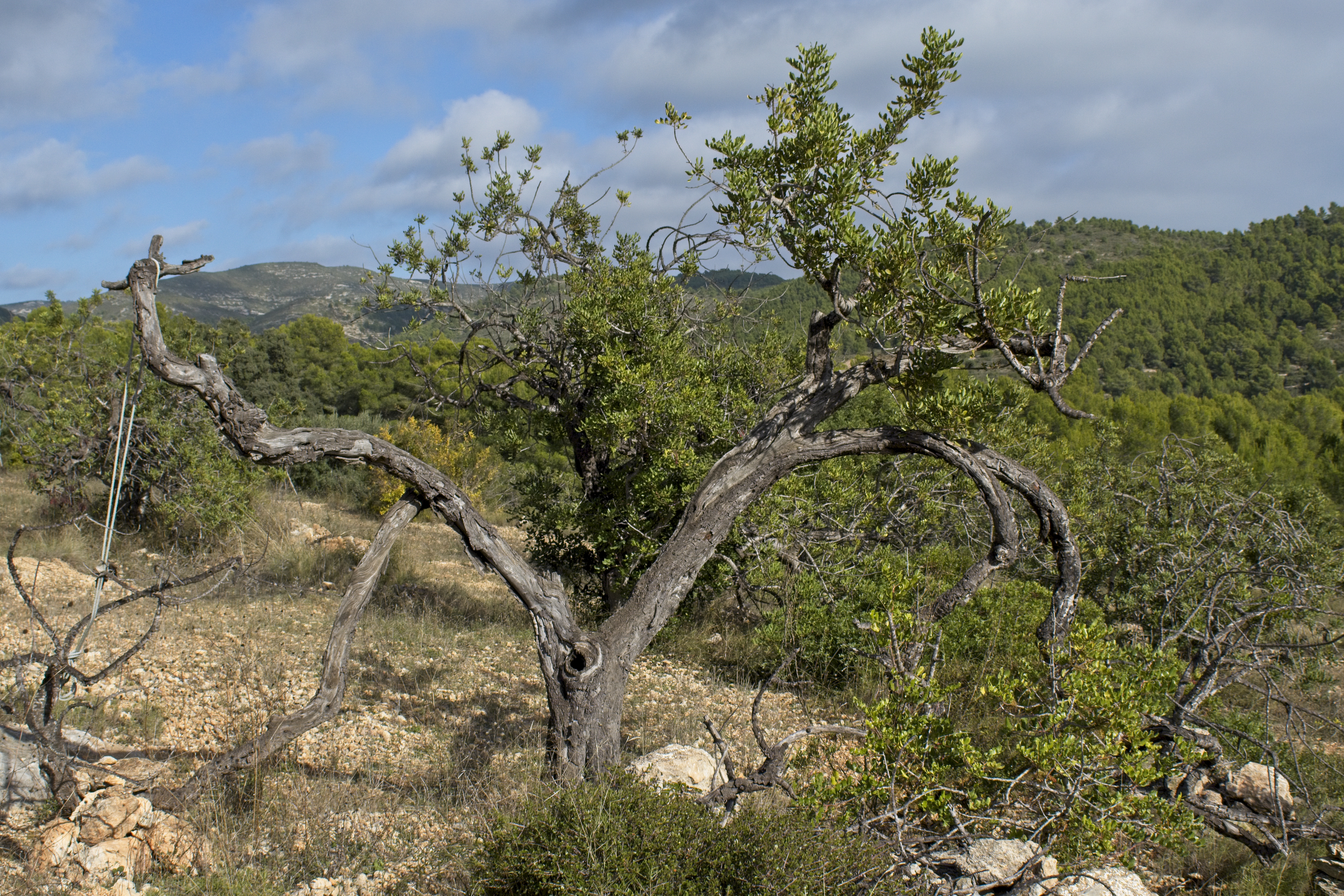
A very old olive tree
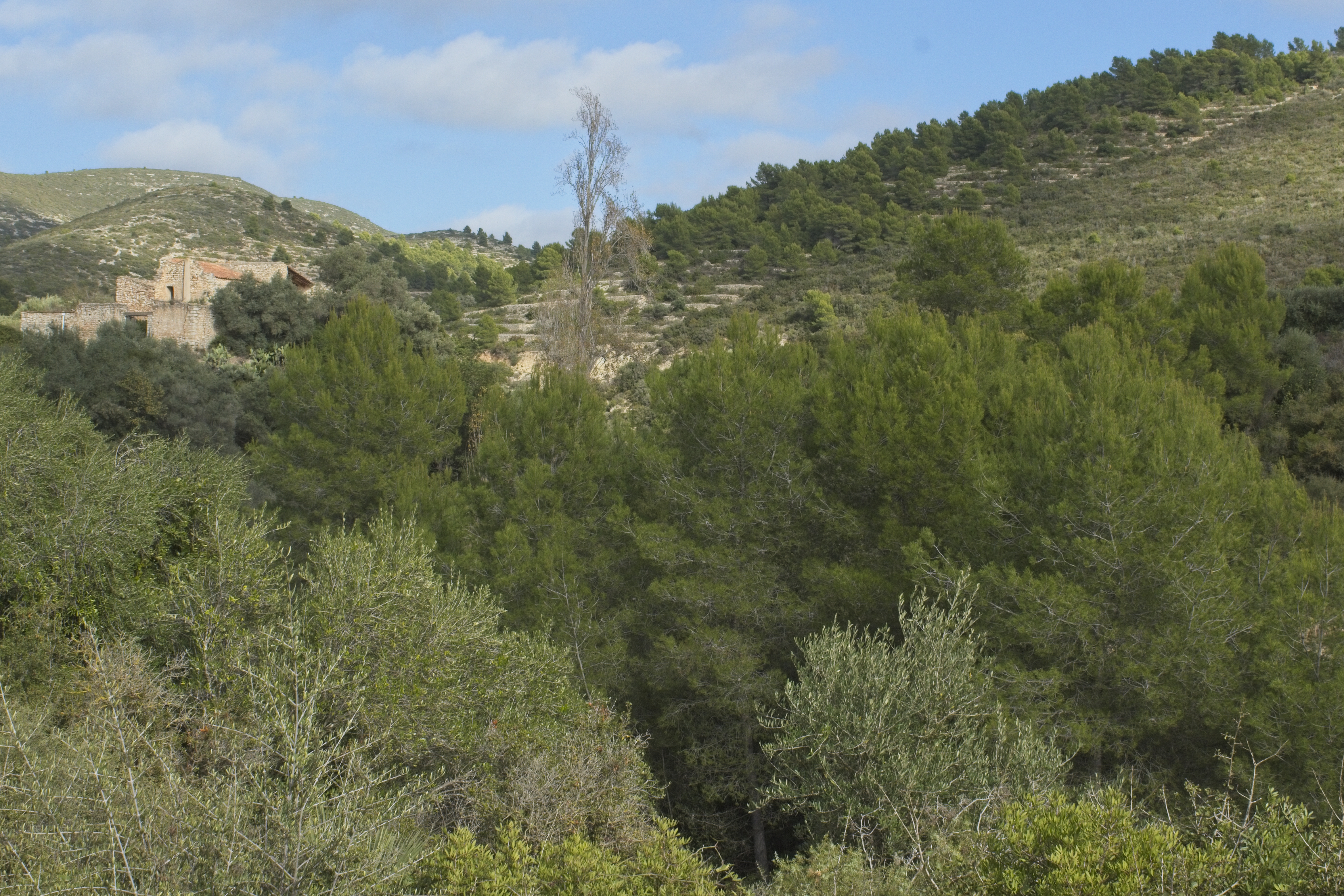
The building on the left is an old vineyard. Terracing up the hill to the right was where I figure the grape vines were. I wish I could have captured it better, it was really remarkable.
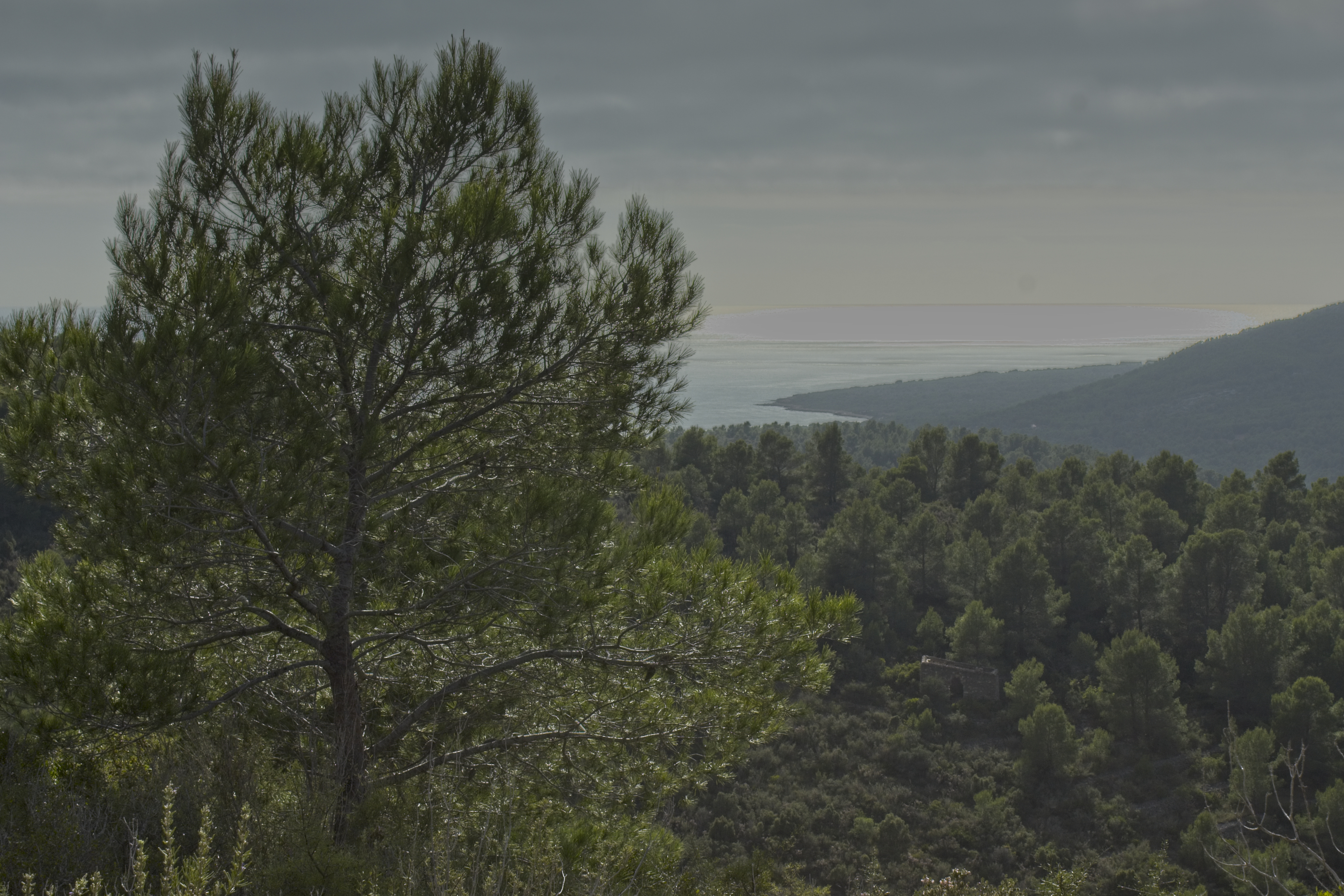
From the high point where we had lunch, looking SE at the coast
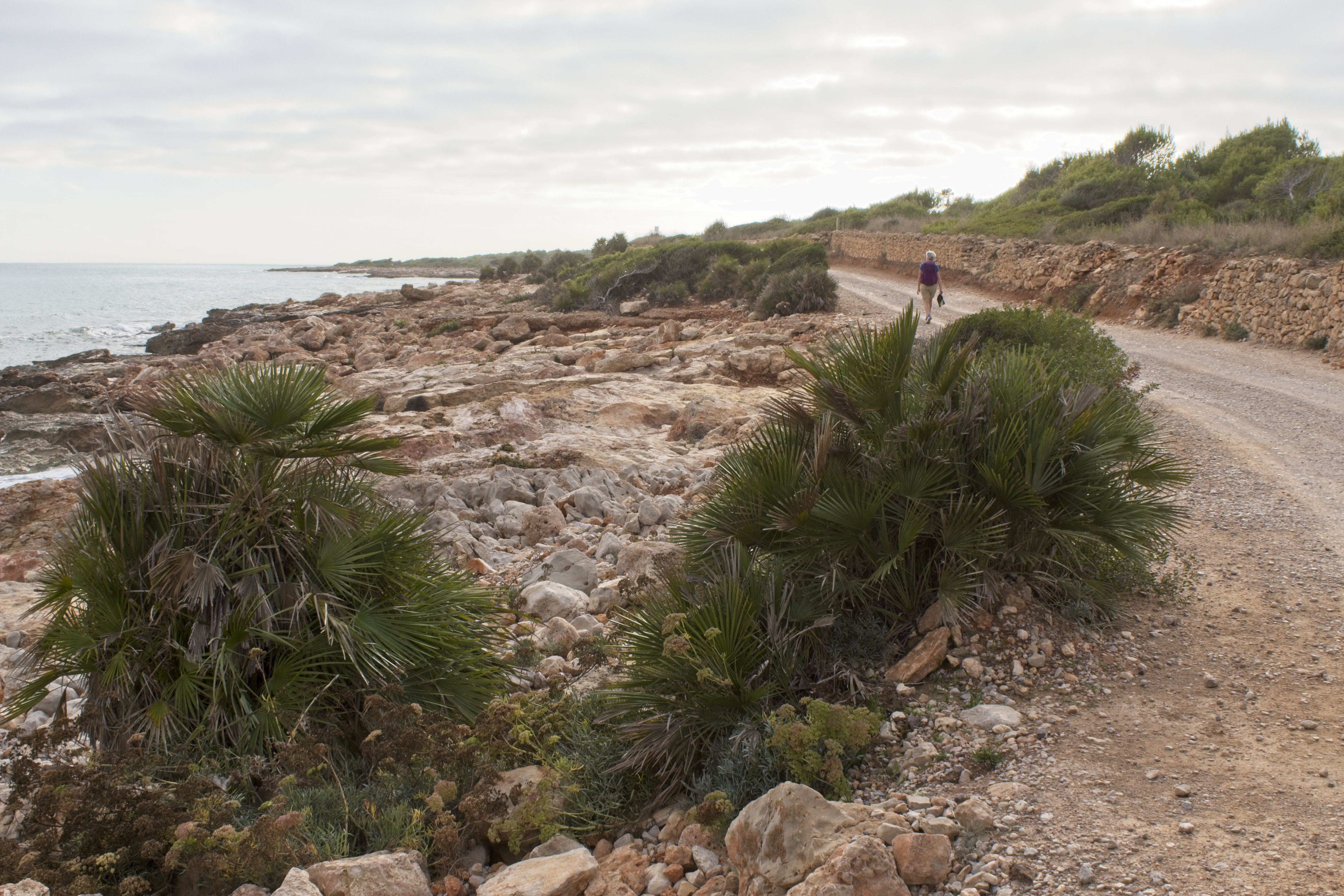
Back at sea level, we had a kilometer walk back to where we parked.
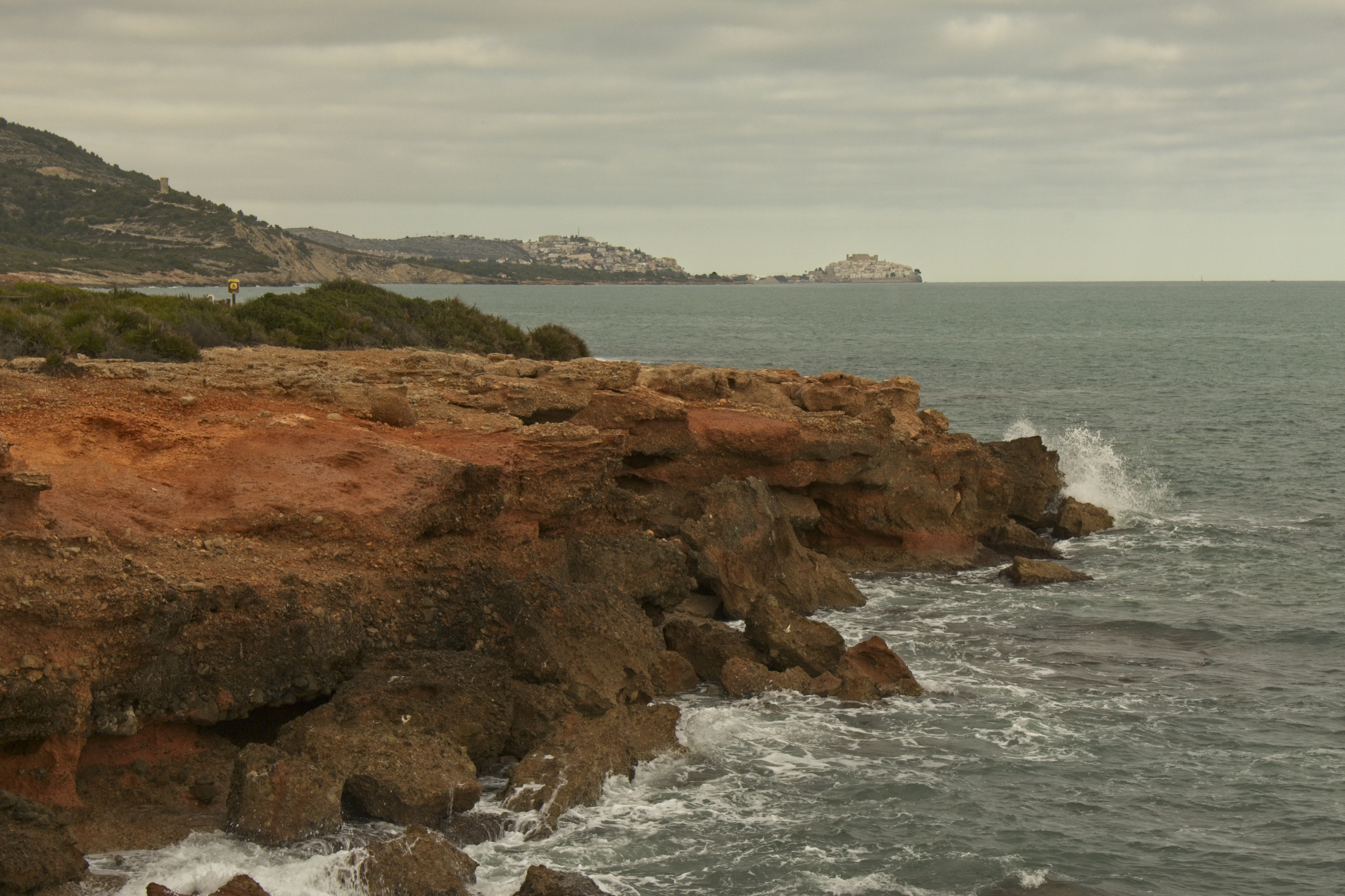
Looking back north toward Peñíscola. We were surprised at how close it is, it felt a lot more remote. We didn’t see another hiker on our whole walk. We did see workers doing maintenance on the roads and there were some bicyclists on the road (one of which passed us on a downhill section on the drive to the trailhead) but mostly we had the place to ourselves.
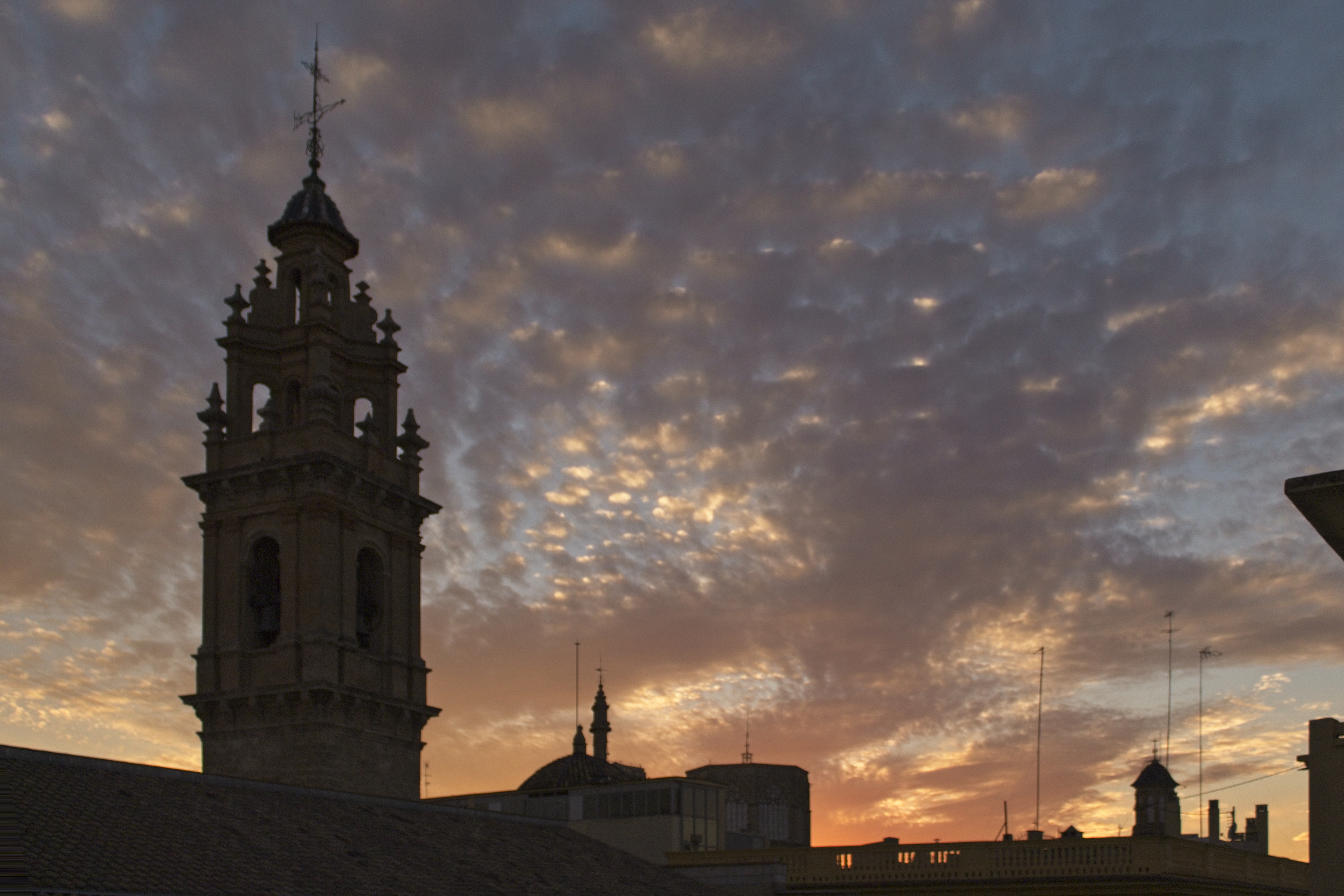
Bonus content: sunset from our window back in Valencia.
 Home | Travelblog
Leave a comment