Cracks are starting to appear in the icy hold of Covid that has held us trapped for so long. After receiving our first A-Z shot at the beginning of May, we are feeling more free to get out a little bit and explore again. This has included the wine region between Valencia and Madrid centered on Utiel and Requena, Castellón de la Plana and finally, Barcelona.
We drove to Utiel with our friends Richard and Phyllis and enjoyed a day eating, drinking wine and taking a tour of the underground wine storage system built throughout the town.
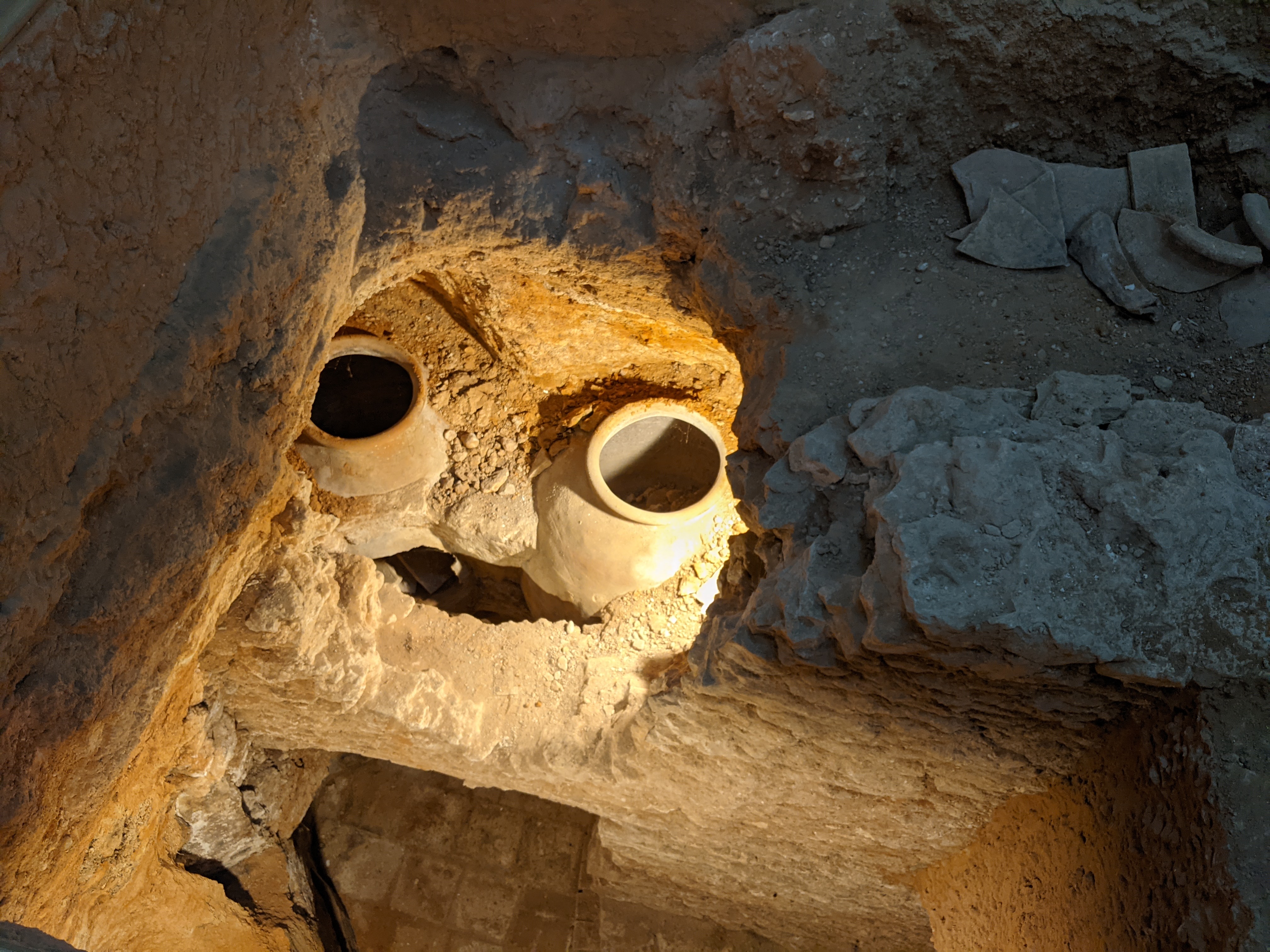
The whole town was involved in making wine and they stored it in these giant clay jars that they built into the foundations of their houses
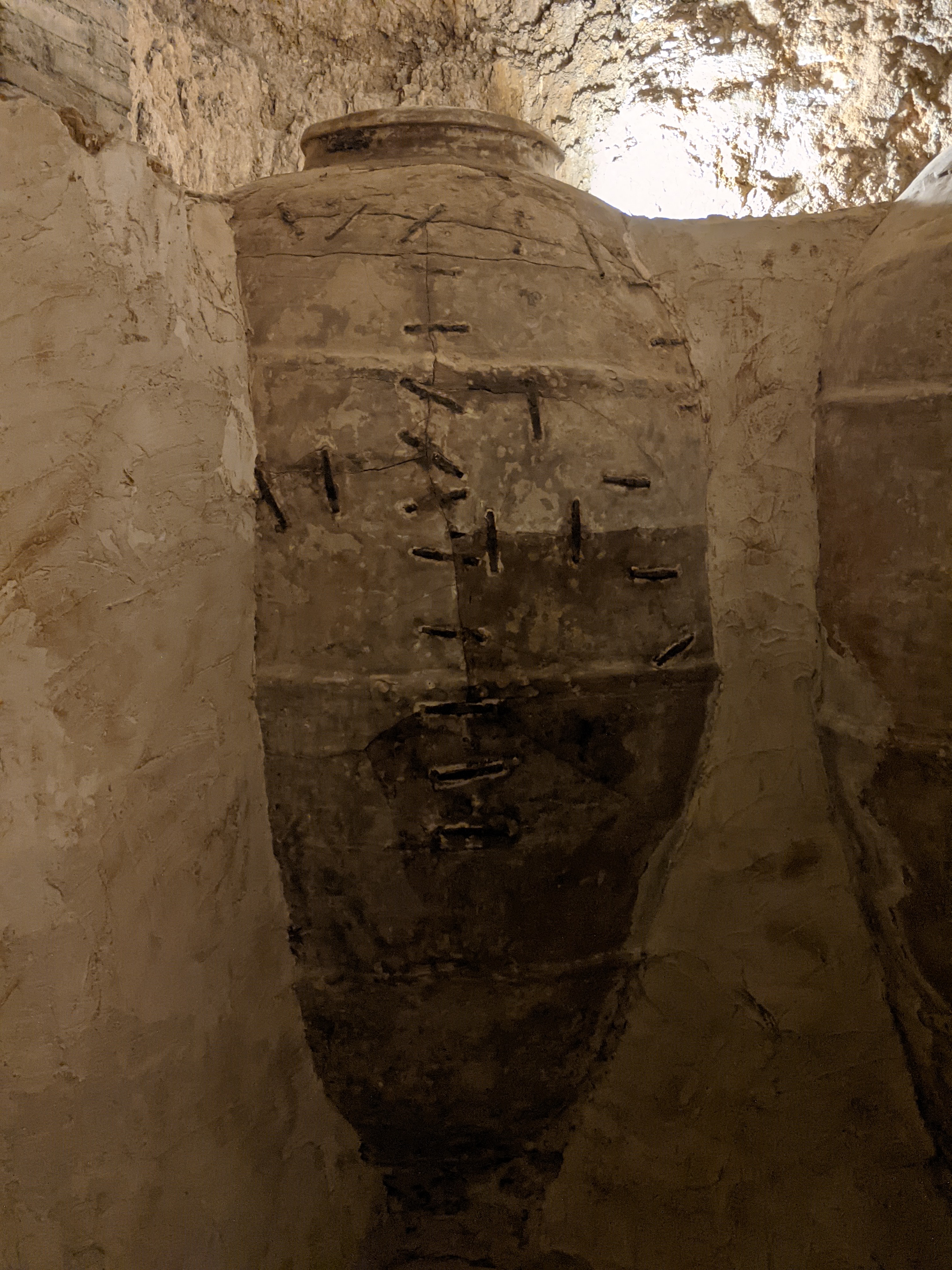
When jars broke, they weren’t removed, they were repaired. With staples and glue, by children who could fit into the jars.
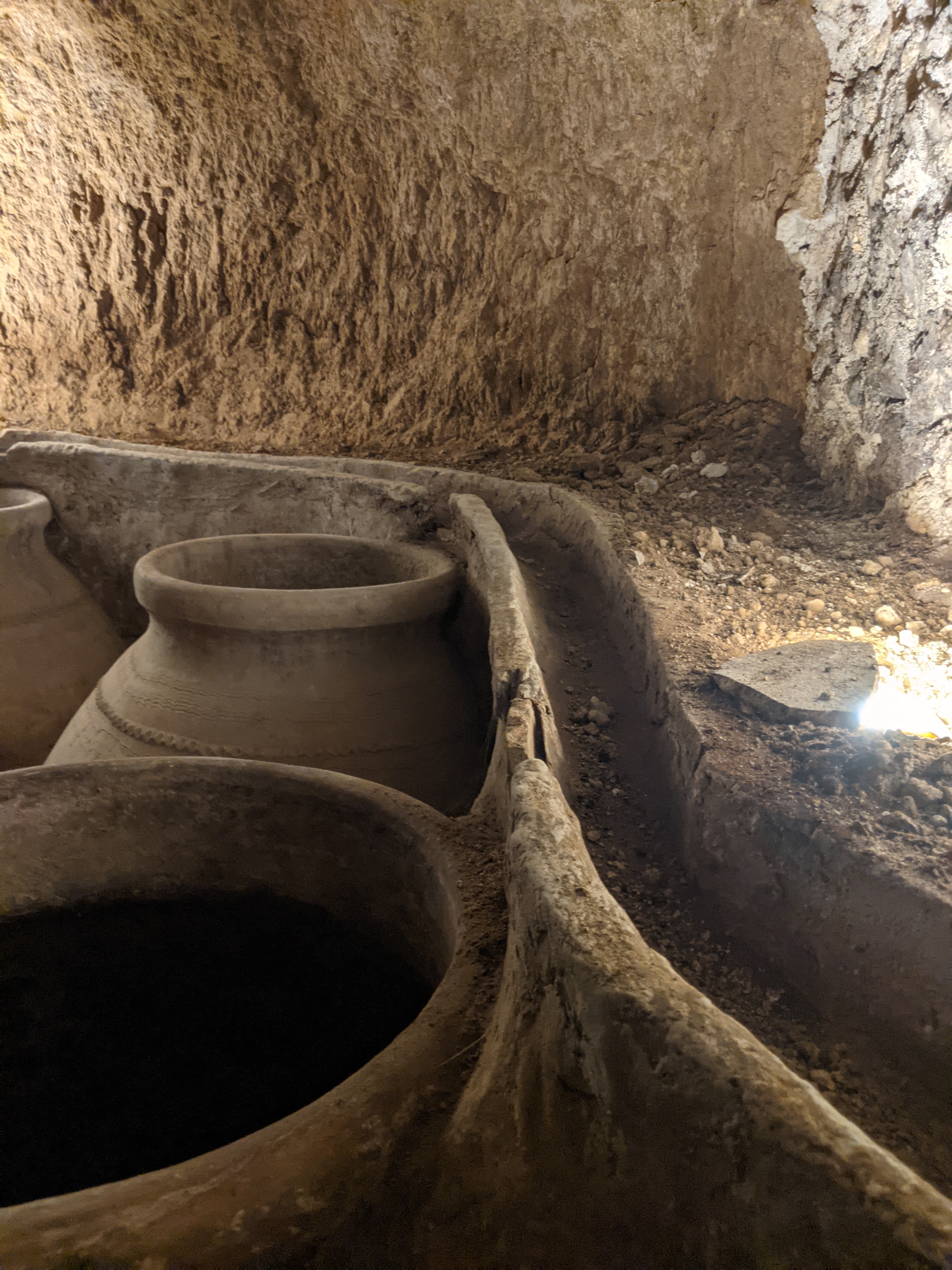
Wine was channeled into and out of the pots via these gutters that ran above the tops and along the floors.
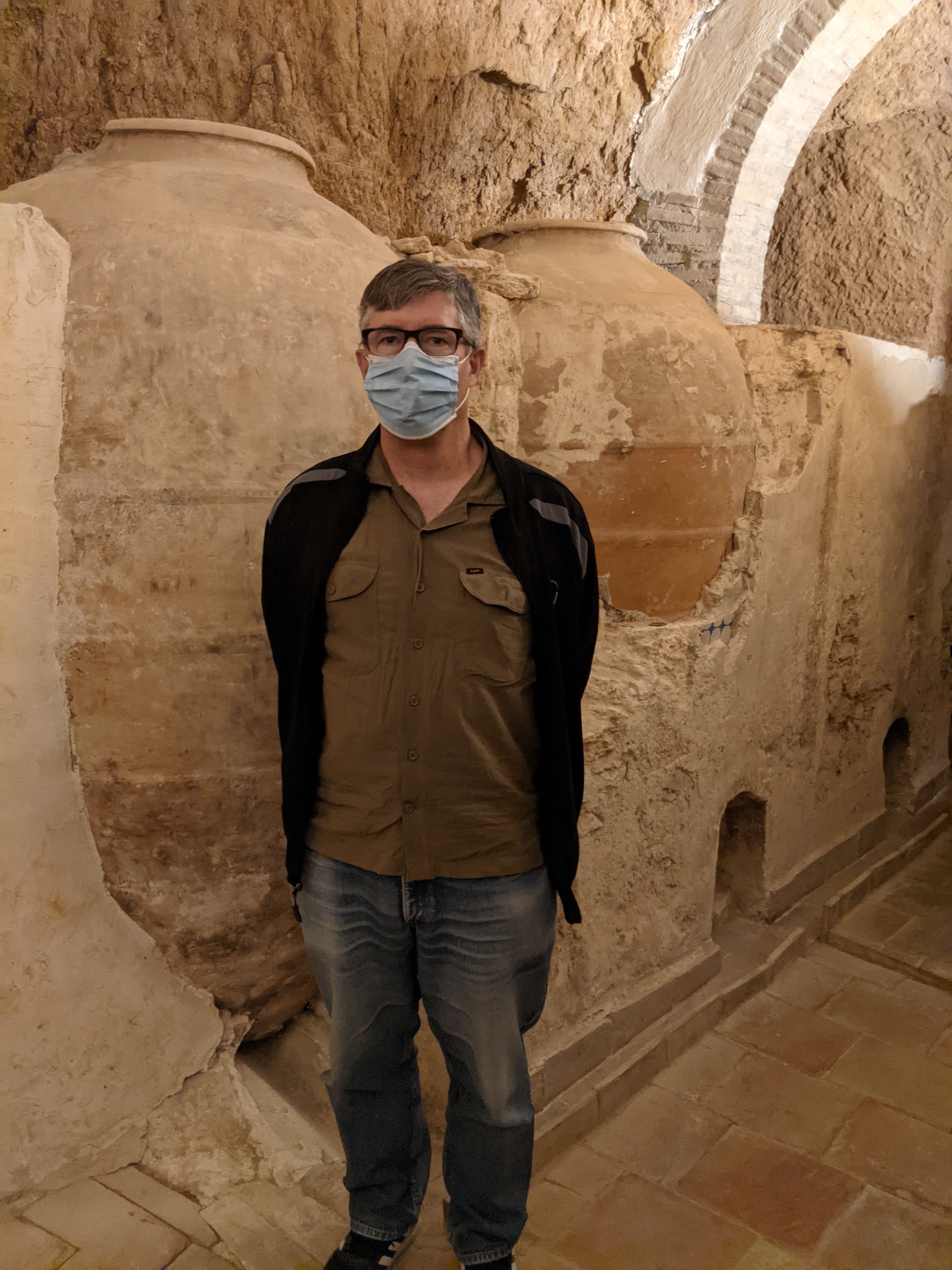
Human for scale
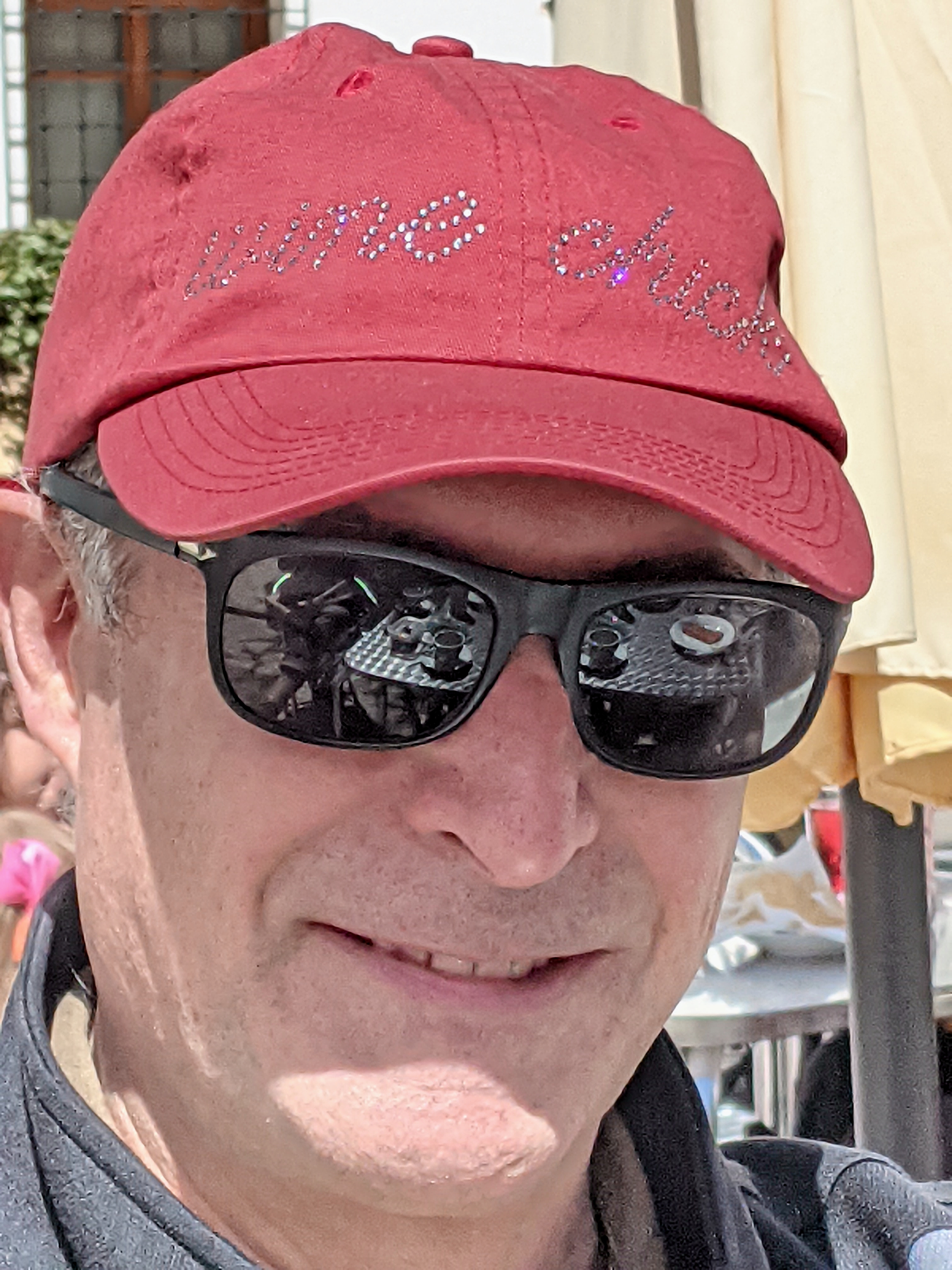
So somebody didn’t remember a hat and had to borrow.
Castellón de la Plana
We caught the train north to Castellón for a quick day trip, to get a break from the construction going on outside our place. They are literally tearing apart the entire street and plaza in front of us in a project that is scheduled to take the next 10 months. We’re hoping much of it will be quieter than it has been so far.
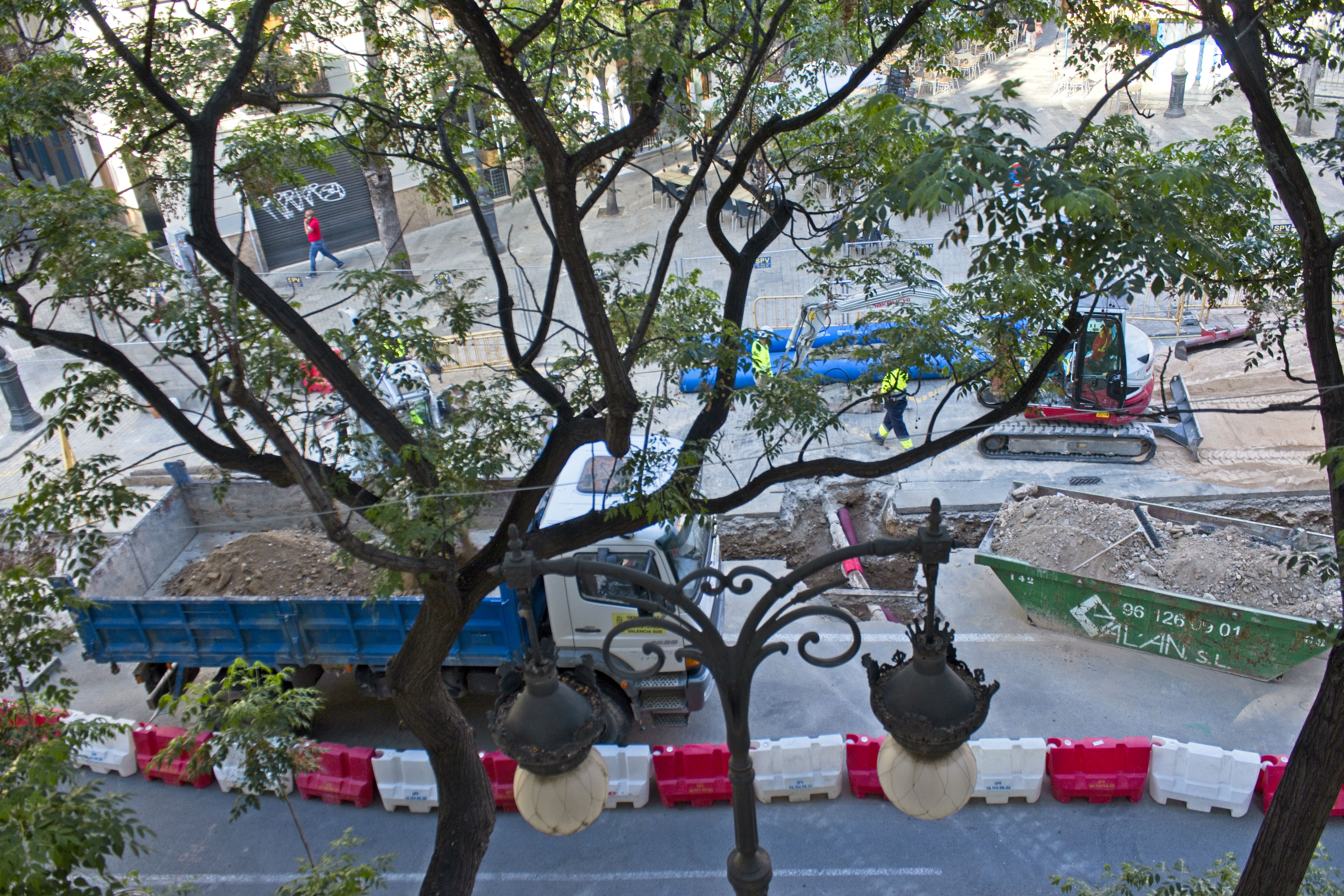
This is what’s been going on at our place.
Sadly, no other pictures because somehow I turned off the auto-focus on my camera and they all came out blurry. Castellón is a nice town up the coast and we had a pleasant day wandering the streets and enjoying the park. We also visited the belles artes museum where they have on display ceramics from prehistory up to the nineteenth century, along with paintings and a photo exhibit of Spanish housing developments that were abandoned mid-construction after the crash of 2008.
Barcelona
On our third try we finally made it to Barcelona. We had to scrub the two previously planned trips thanks to shutdowns driven by Covid but this time we finally made it. We definitely wanted to get up there before the crowds came back and are glad we did. Barcelona is a bigger (2x the size of Valencia) and busier town and it’s already starting to see tourists return but nothing like the crowds it saw in the past. We were able to do anything we wanted without fighting for tickets or battling the hordes. We feel very lucky.
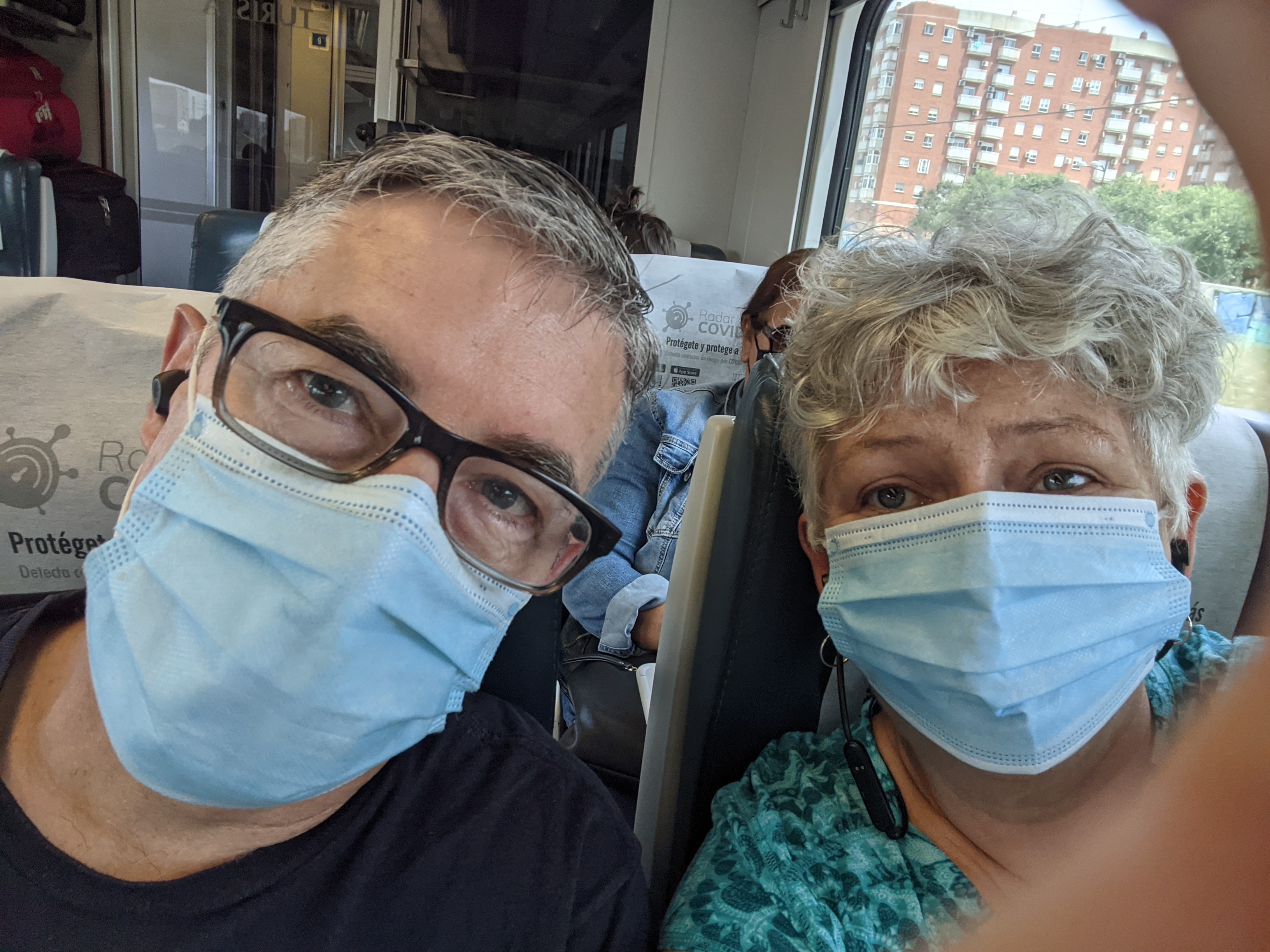
On the train
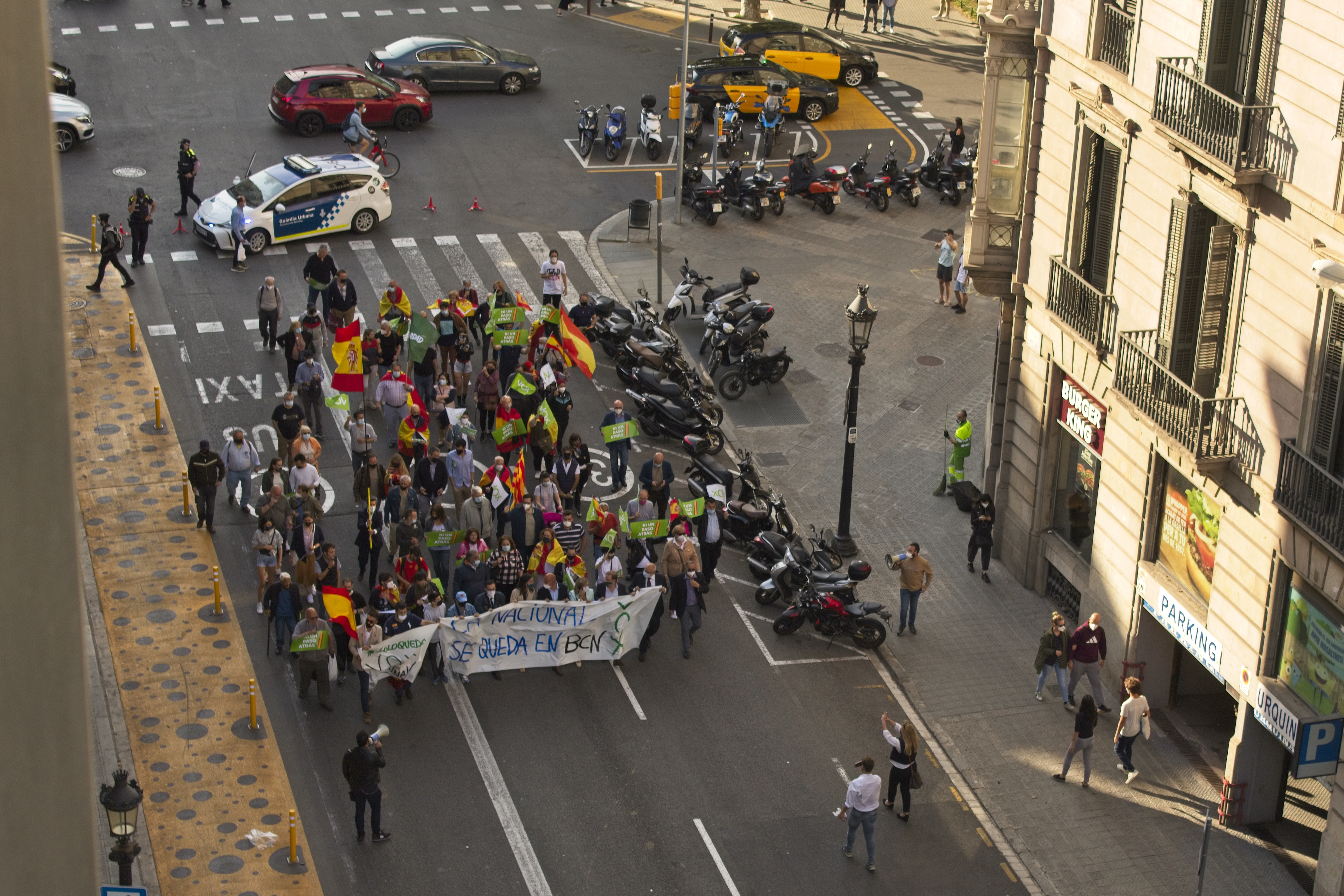
When we arrived at our hotel, we were greeted by this display. These are Vox party supporters, the far-right wing of politics in Spain. They have set themselves in opposition of the (left-wing) people who are trying to make Catalonia independent of Spain and thus are getting a bit of a foothold here but as you can see their numbers remain small in Barcelona, unlike in Madrid.
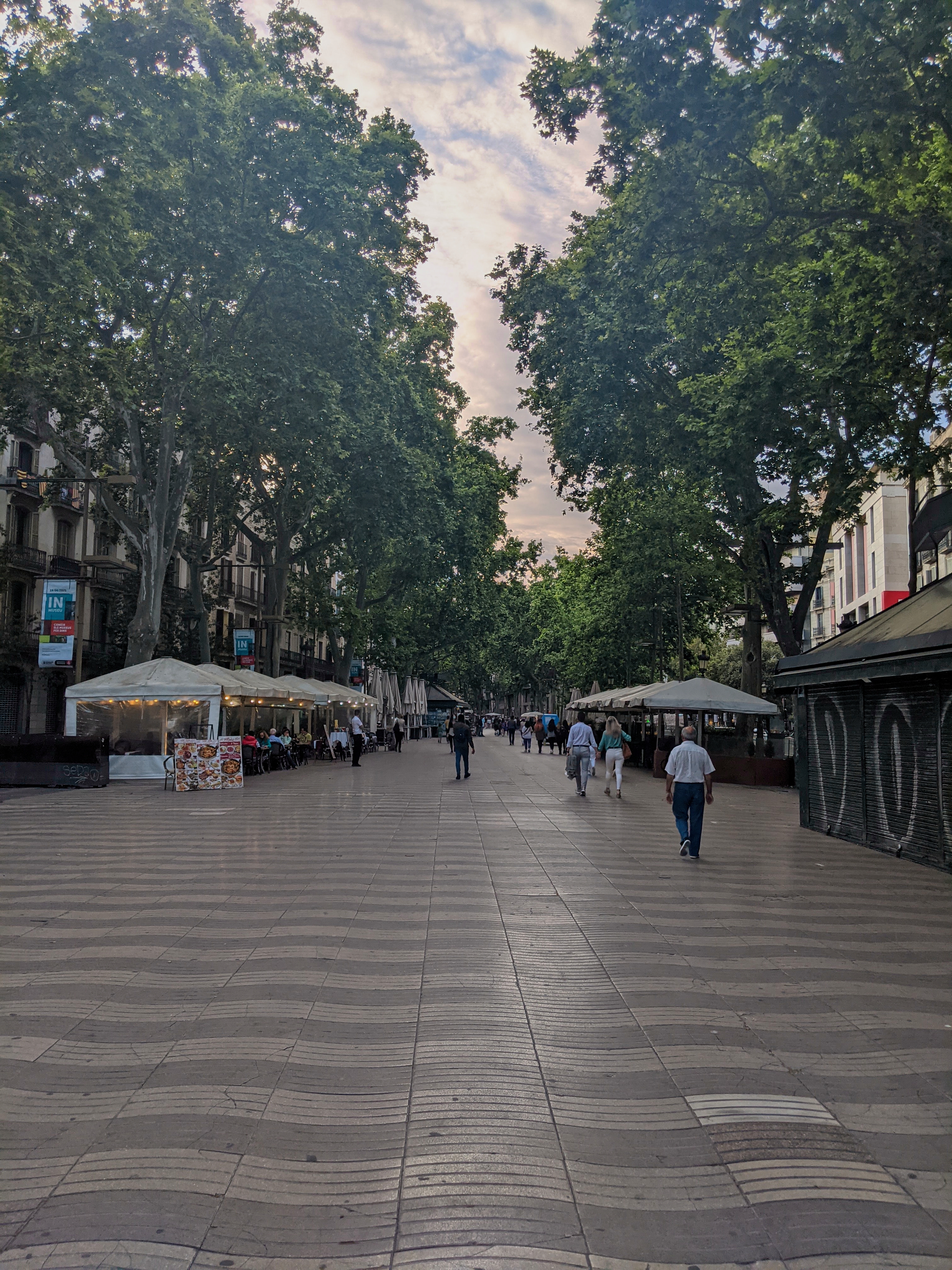
First thing we did was take a walk. This is the famous Rambla and you will never see it as empty as this again.
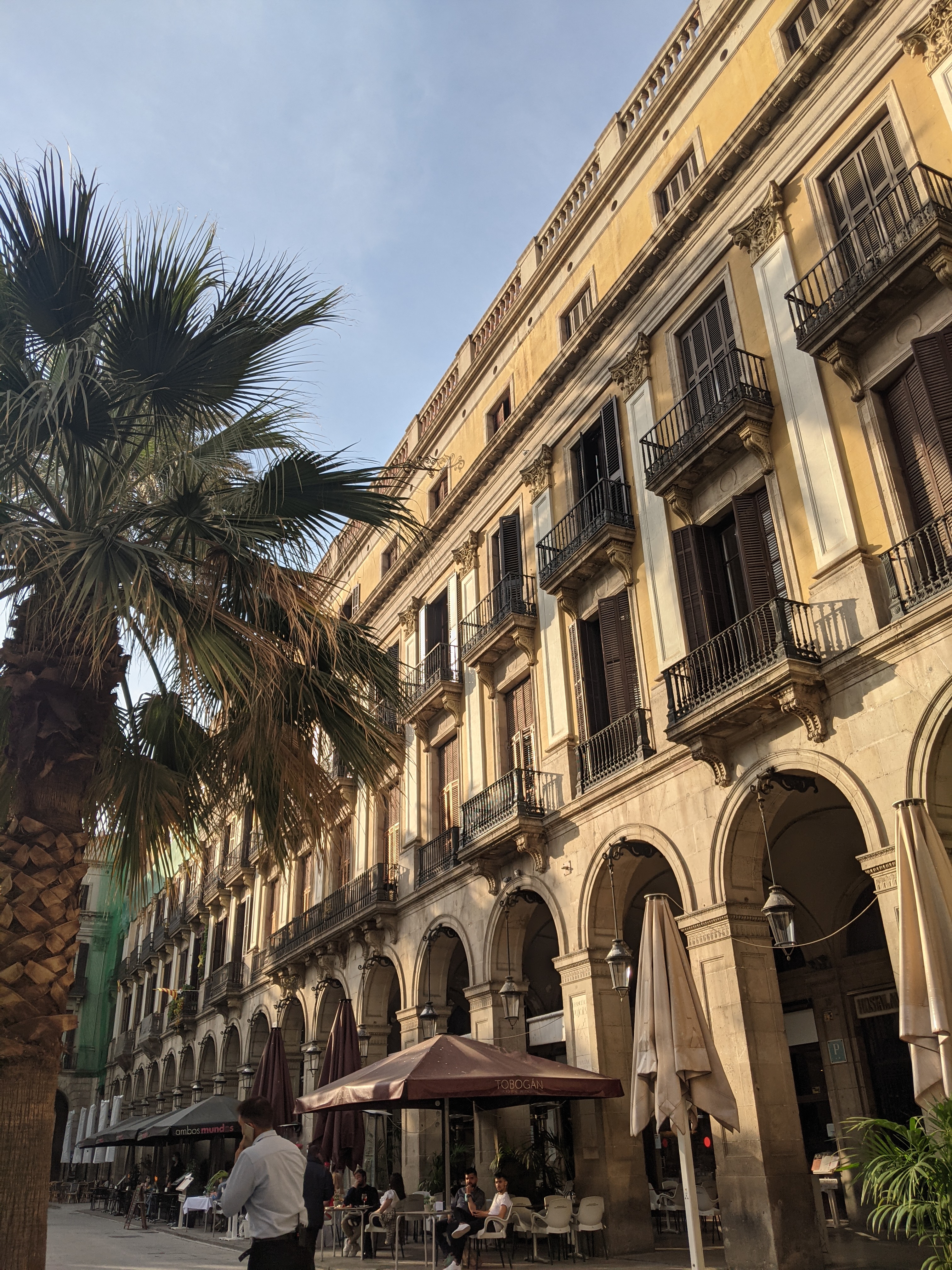
We stumbled across the Plaza Reial and decided that it was perfect for a little drink. We discovered later that it was built in the 19th C using Cuban sugar plantation money, which accounts for the Colonial style buildings and the Cuban palm trees.
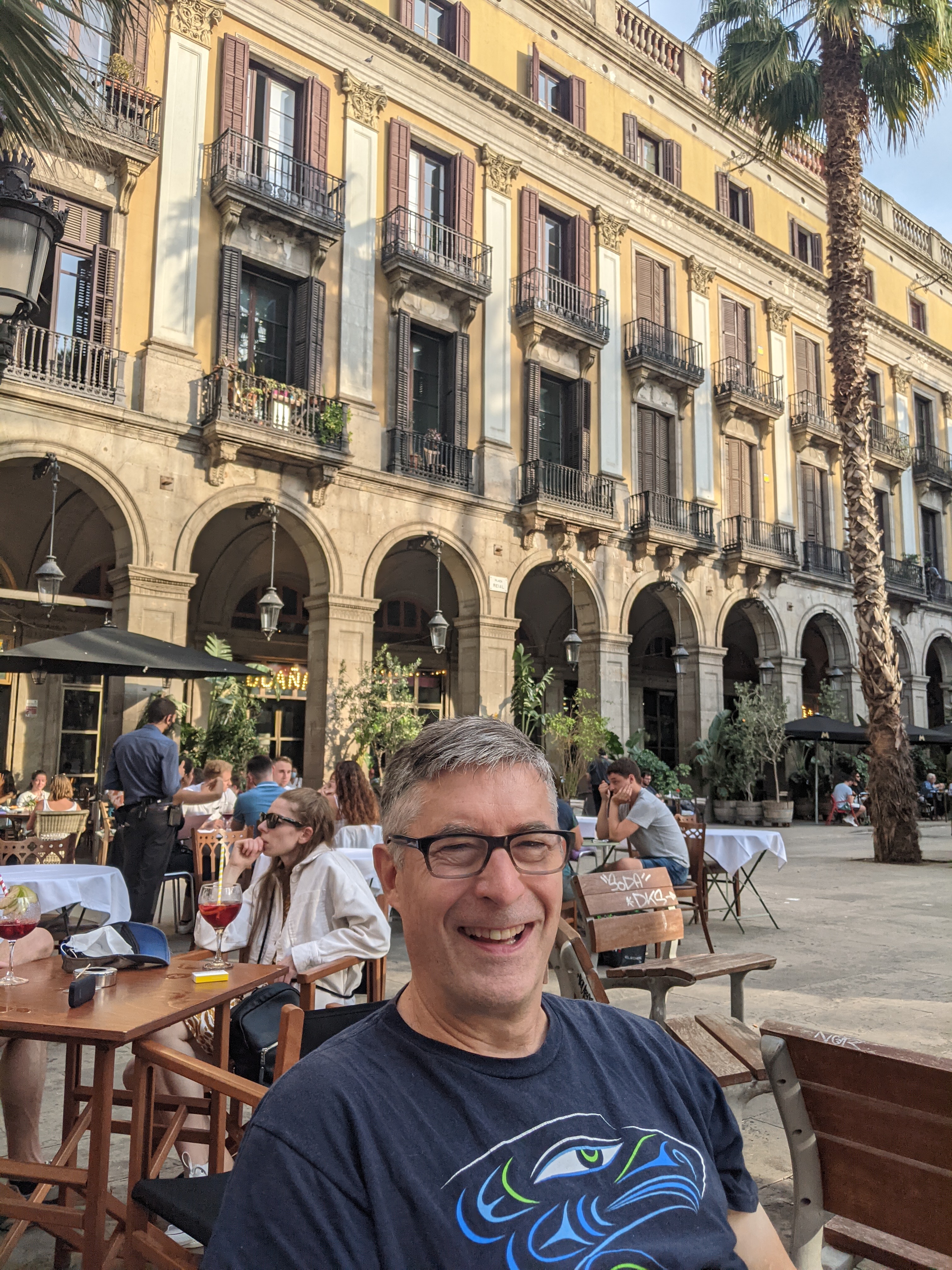
A little sun, a little space to take off the mask. It almost feels normal.
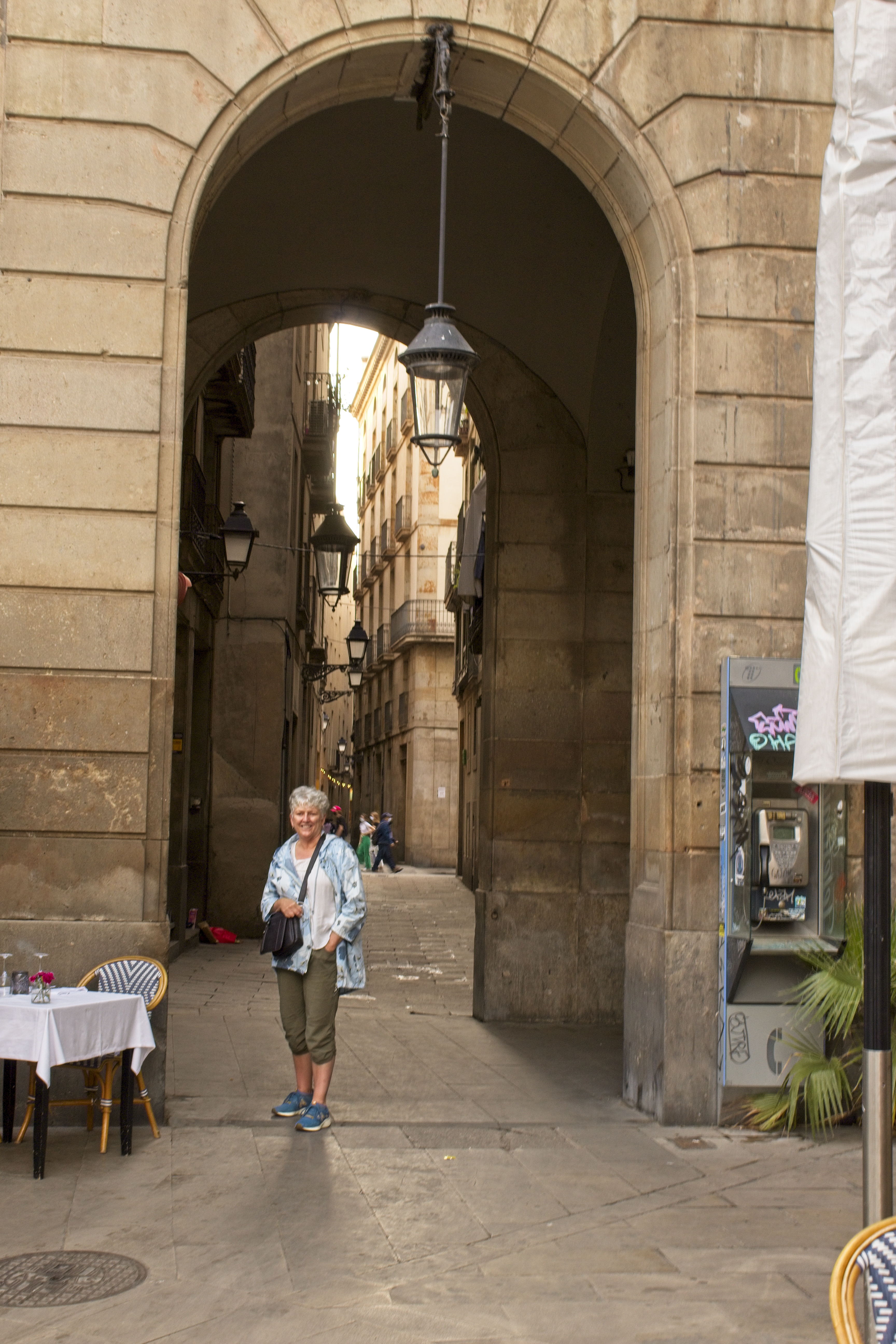
Drinking completed, a pause before plunging back into the mean streets of the Gothic Quarter (narrator: the streets were not mean)
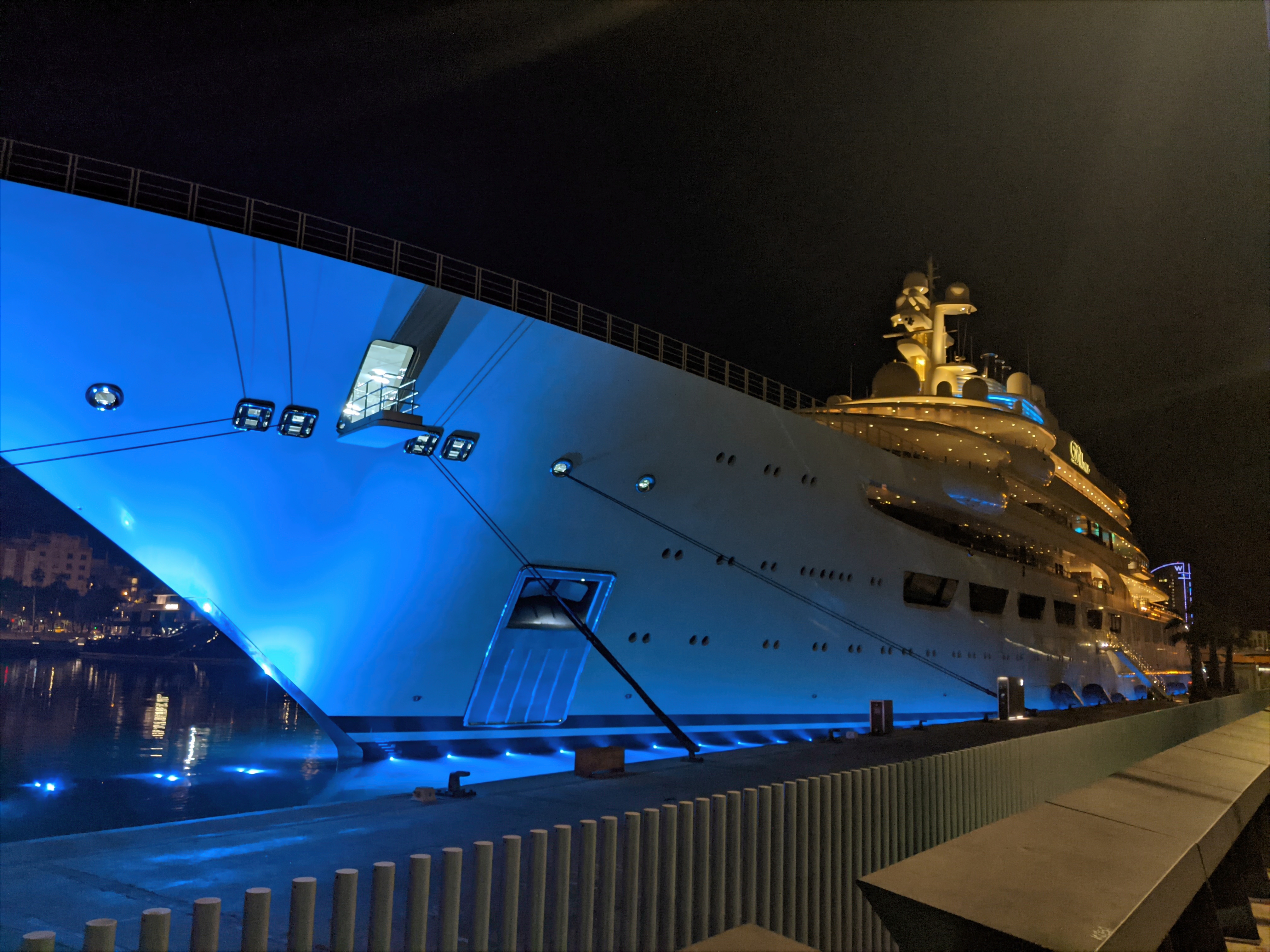
We wound up at the waterfront, where we eventually found this monster, one of the largest private yachts in the world, owned by a Russian Oligarch, the Dilbar. Gag.
Gaudí
Barcelona is all about the Gaudí or at least that’s the most prominent thing you will be exposed to on your first trip. Briefly, Gaudí was an architect in the late 19th and early 20th centuries who famously re-invented design and space in buildings. Some details I didn’t know: he not only designed buildings but often all of the fixtures and furniture that went into them. The money to fund him and his rivals came from Cuban sugar plantations, which were largely owned by Catalonian plantation owners, who brought the money back to Barcelona and built monuments to themselves like American robber-barons. Gaudí was a mathematical genius and used the catenary (the shape a chain makes when it hangs) as one of the main shapes that made up the arches holding up his constructions. Turns out they can be made light and are incredibly strong. You can discover more about Gaudí and his math here: https://mathstat.slu.edu/escher/index.php/The_Geometry_of_Antoni_Gaudi
Anyway, Gaudí’s ideas were unheard of, visually remarkable and incredibly innovative. His buildings in Barcelona draw people from around the world, including us. We did a walking tour with an architect to see some of his work, visited Parc Güell which he designed and of course visited La Sagrada Familia, the still-unfinished cathedral that he designed.
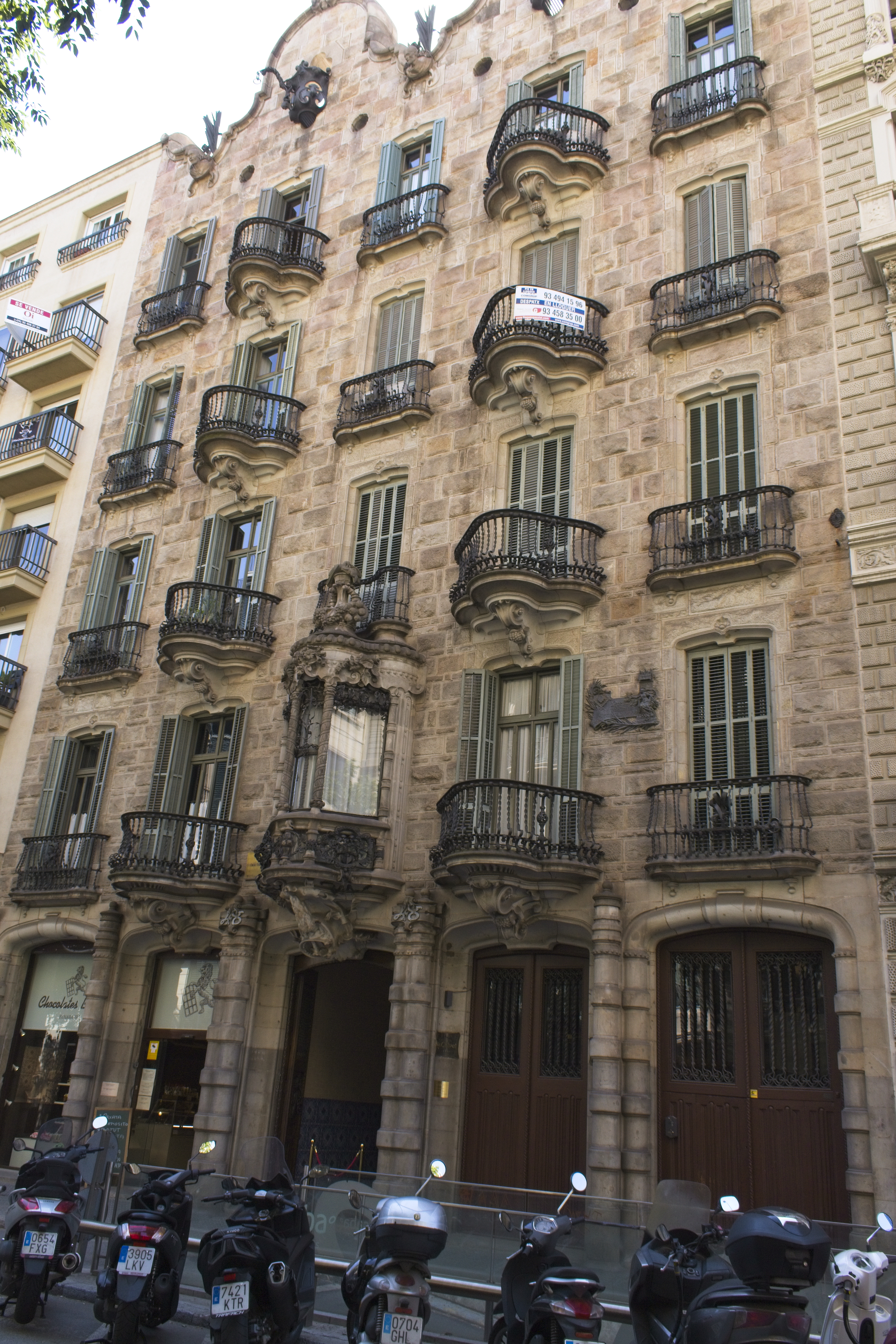
The first house Gaudí remodeled. He was constrained by regulations that forced him to keep the facade so all he could do was play with balconies, columns and decoration. The house itself was configured as a commercial business on the ground floor, storage in the basement and family quarters on the first floor. Floors above were rented out. His use of organic shapes for the balconies and the top of the building and his use of natural and human figures in the decorations hint at what was to come.
The second site we visited on our architectural tour was Barcelona’s “Street of Dreams” in 189x. Three rival architects renovated three buildings right next to each other, each trying to out-do the other, egged on by the buildings’ nouveau riche owners.
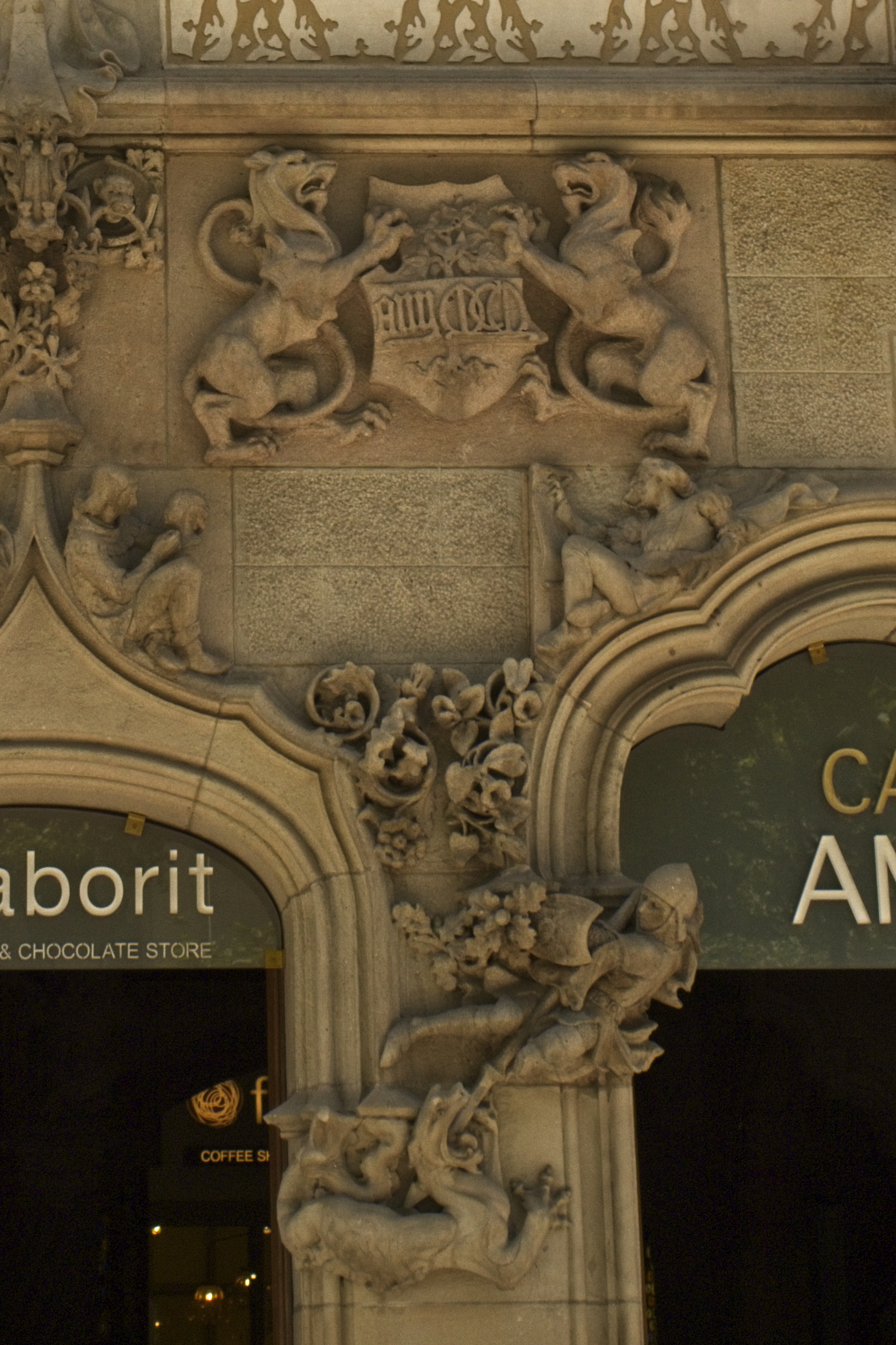
Detail over the doorway of one of the buildings, depicting St. George, who is patron saint of Catalonia. This building was designed by a Neo-classicist and reflects that sort of sensibility.
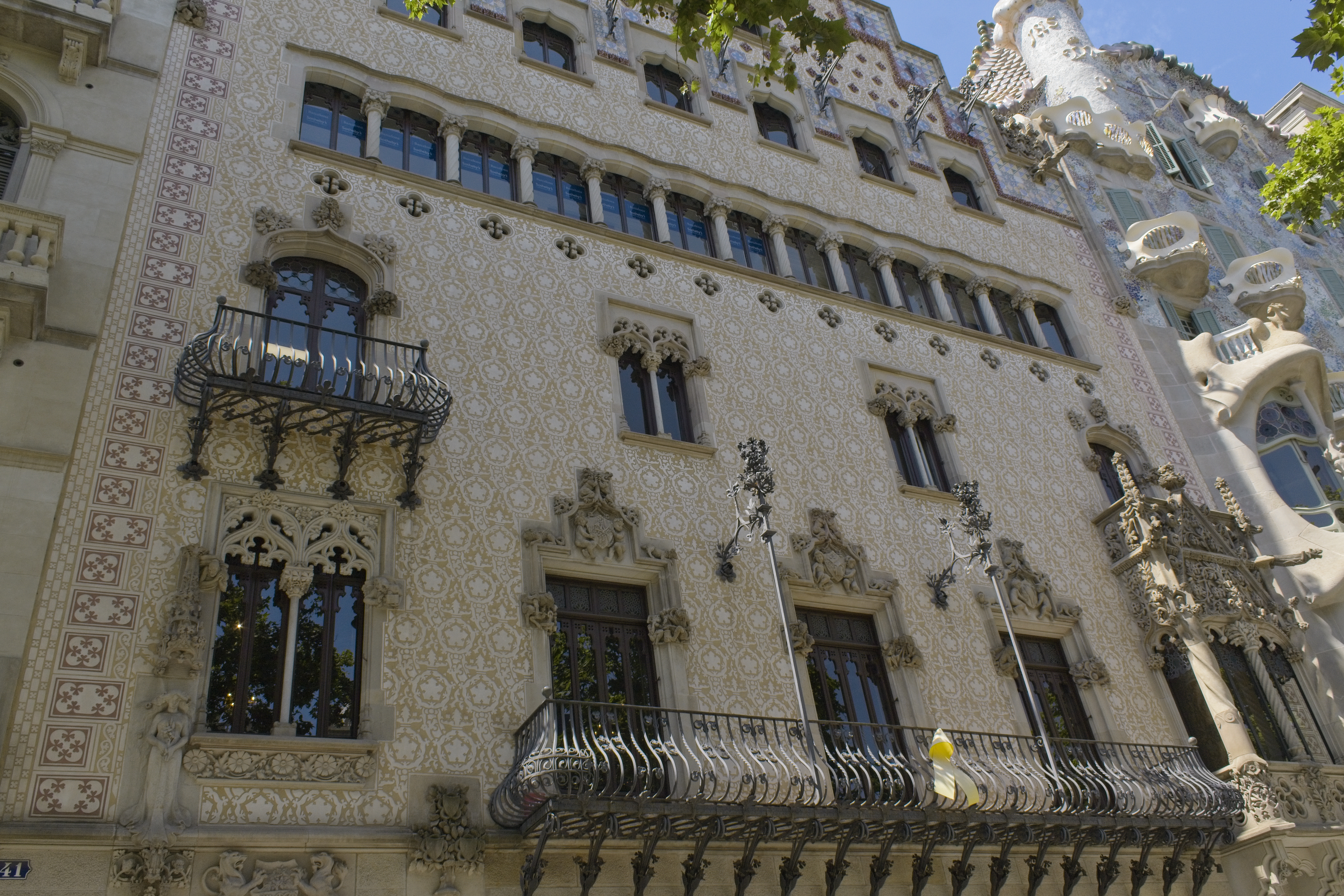
This was building number 2, showing more decoration, more “Modernisme” but still, you can see the Gaudí building next to it and how just completely different it was.
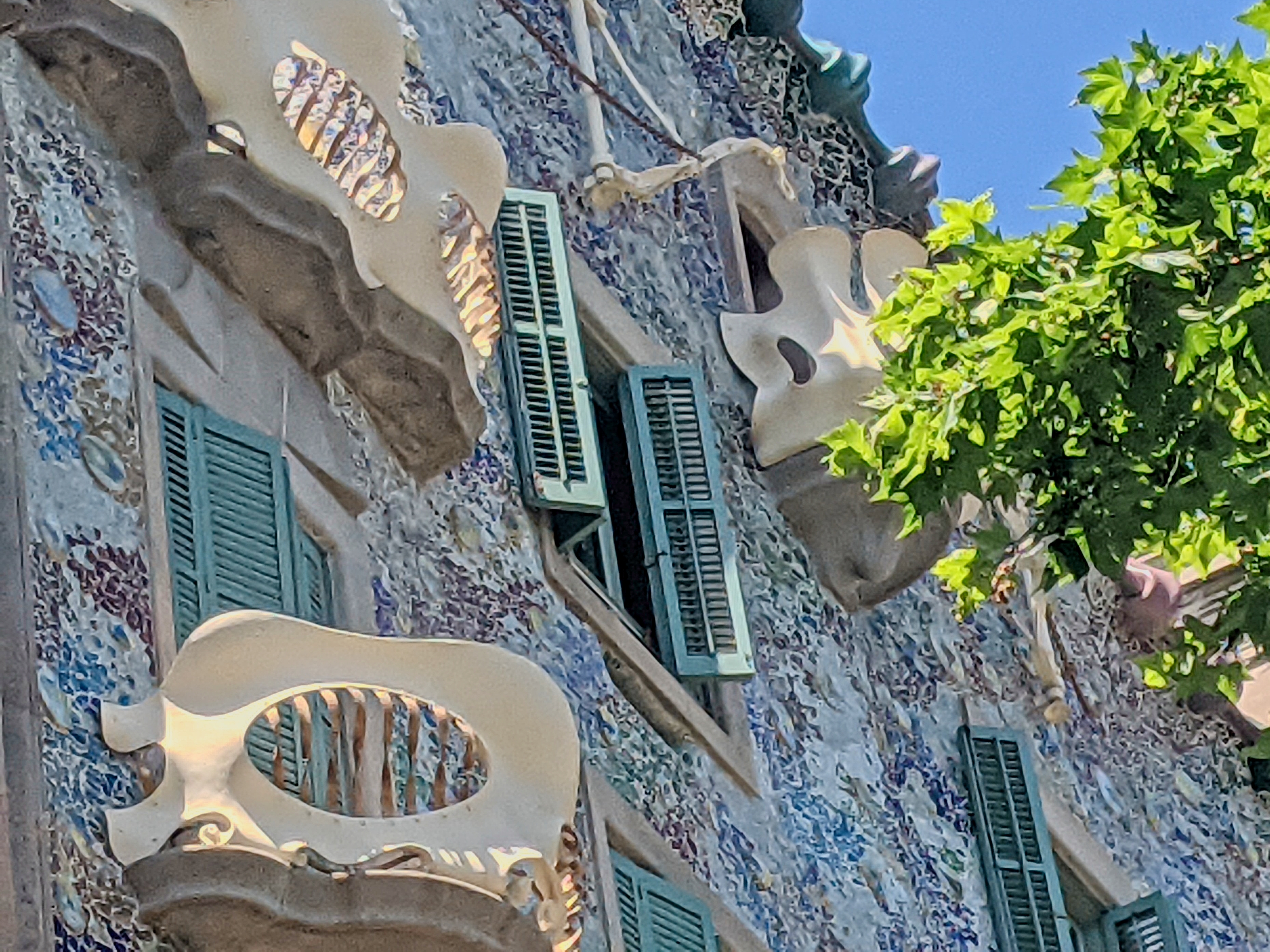
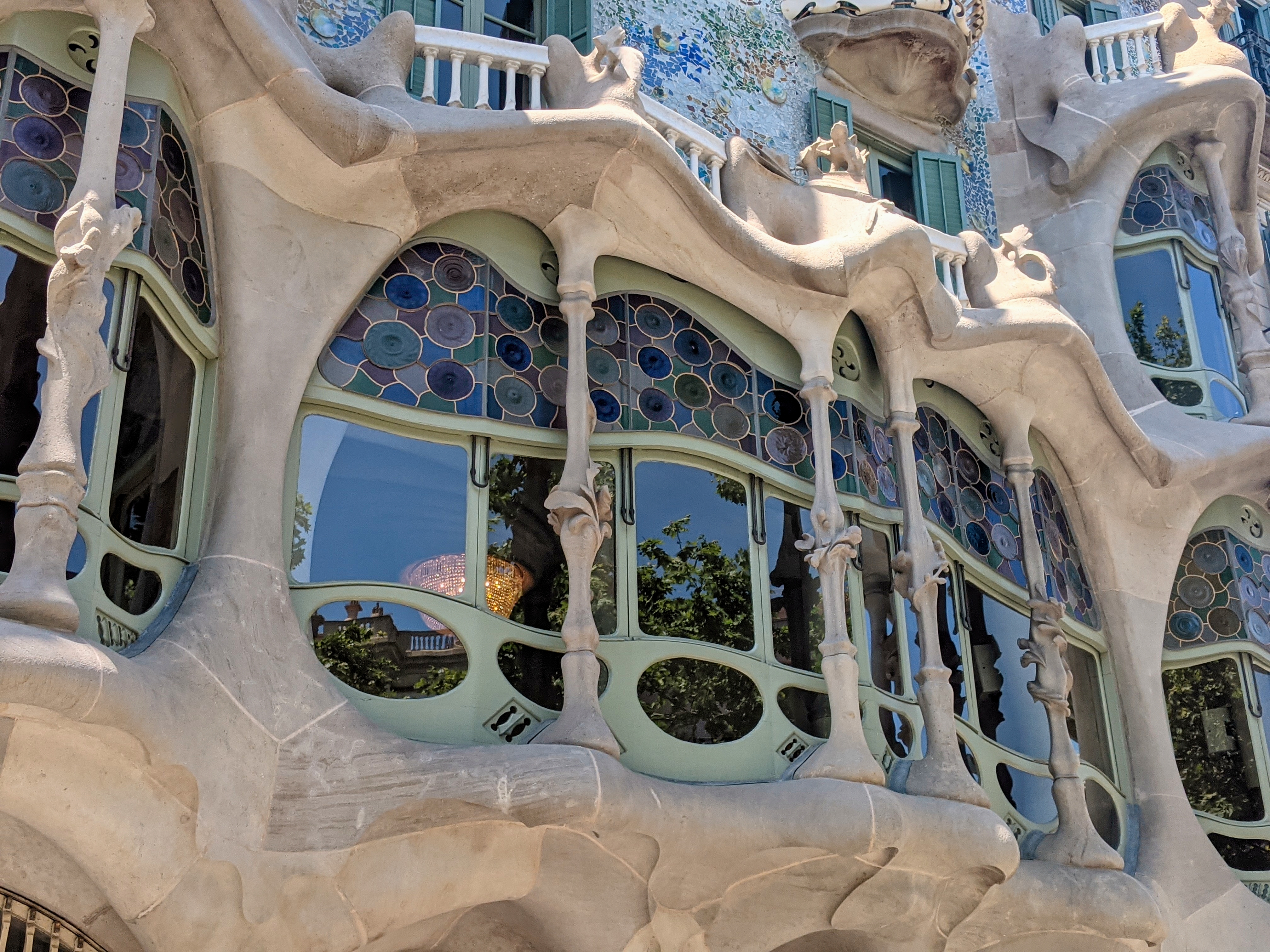
Gaudí’s work. You’ve seen a million pictures of this building but the details are amazing. Gaudí was only able to really completely re-do the first floor and ground floor, the rest had to keep the facade. As you can see, he did not let the opportunity go to waste.
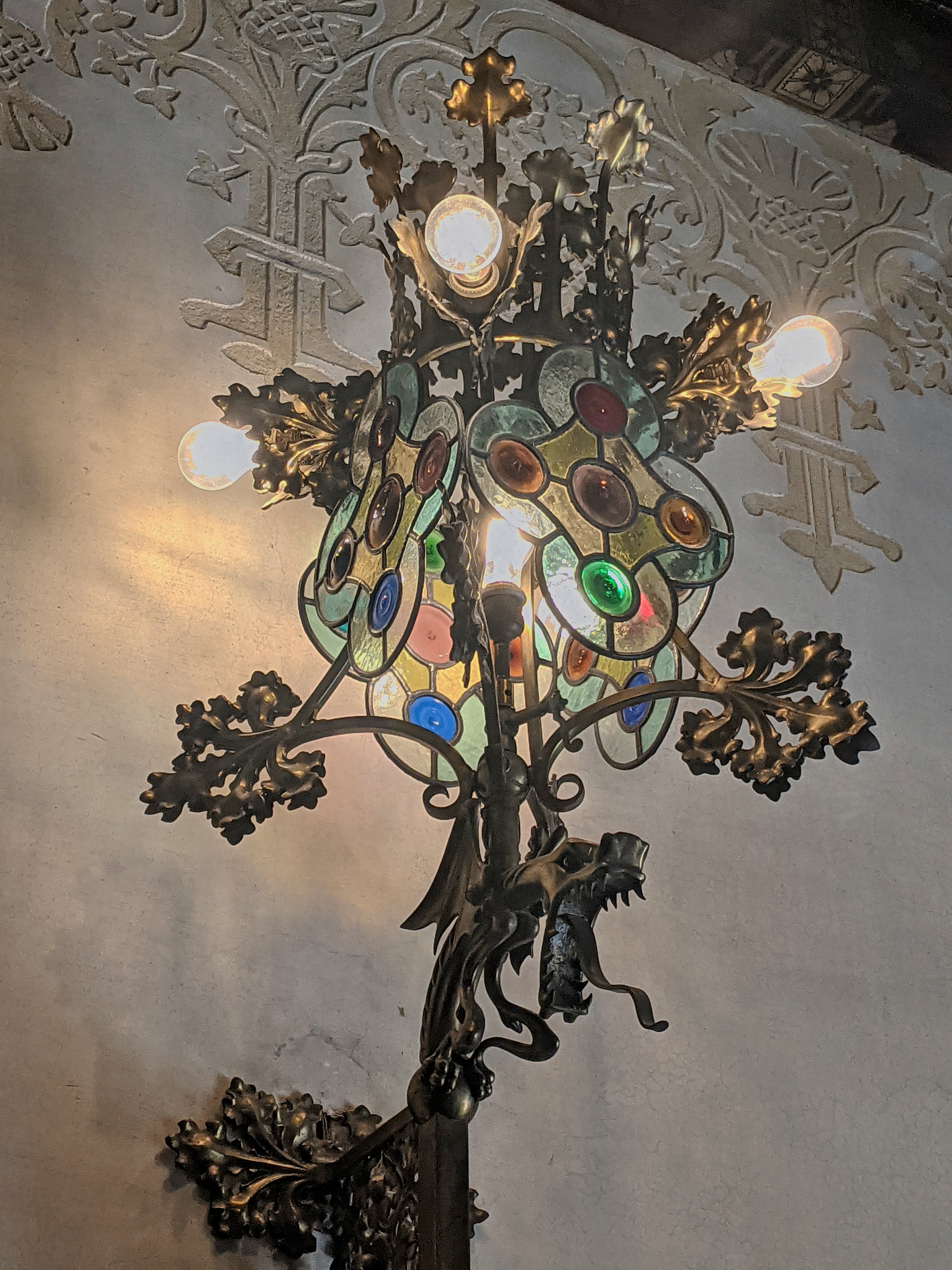
A lamp designed by Gaudí.
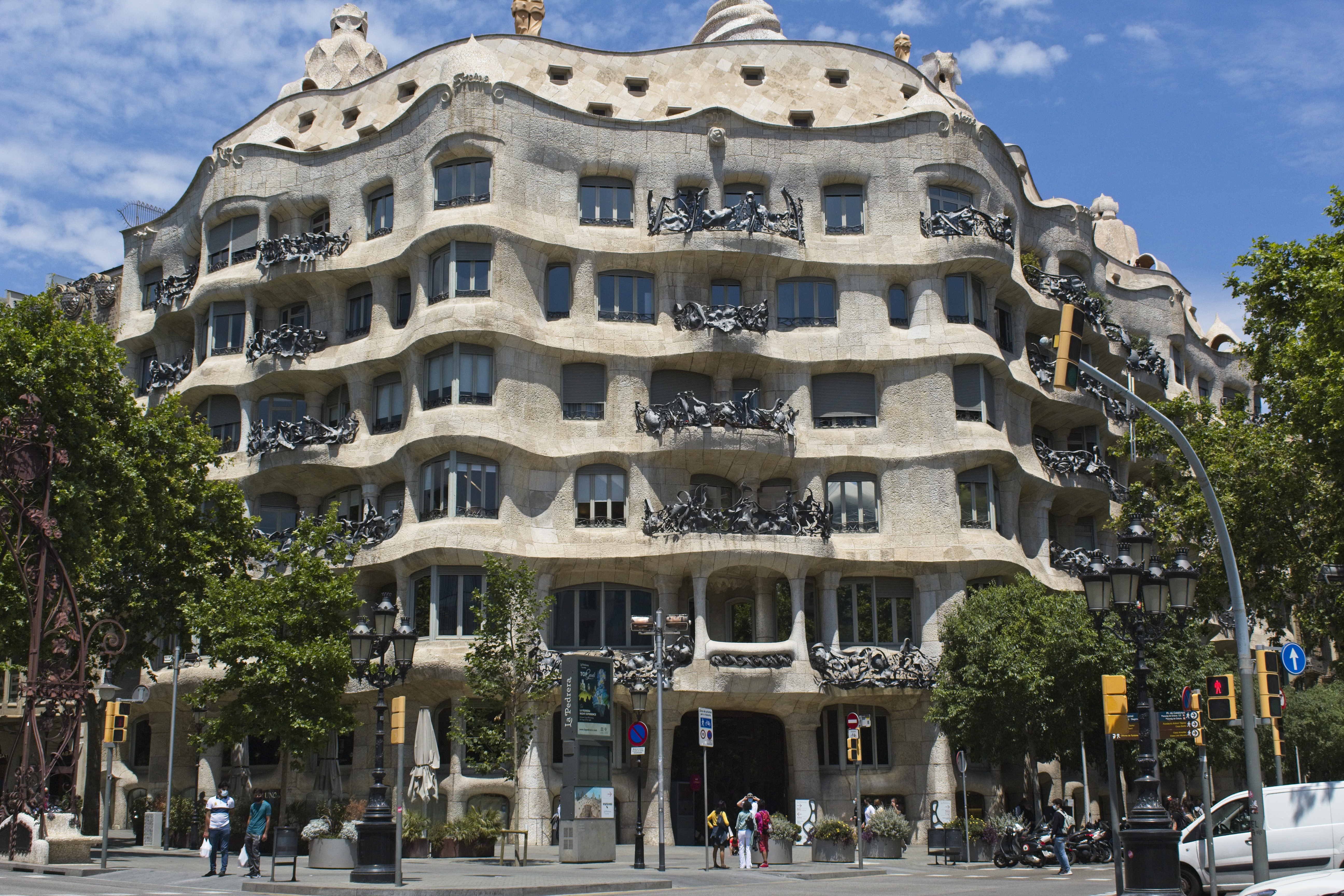
The third building we visited on our Gaudí tour. This one he got to do a complete tear-down and rebuild and he made heavy use of his catenary arches inside, and built the interior spaces with big light wells and sensible layouts so every room had lots of light and the houses made sense. Details on the balconies were amazing, made from wrought iron.
After a rest, we took a stroll through the Gothic quarter and wound up down at the waterfront again, this time in daylight.
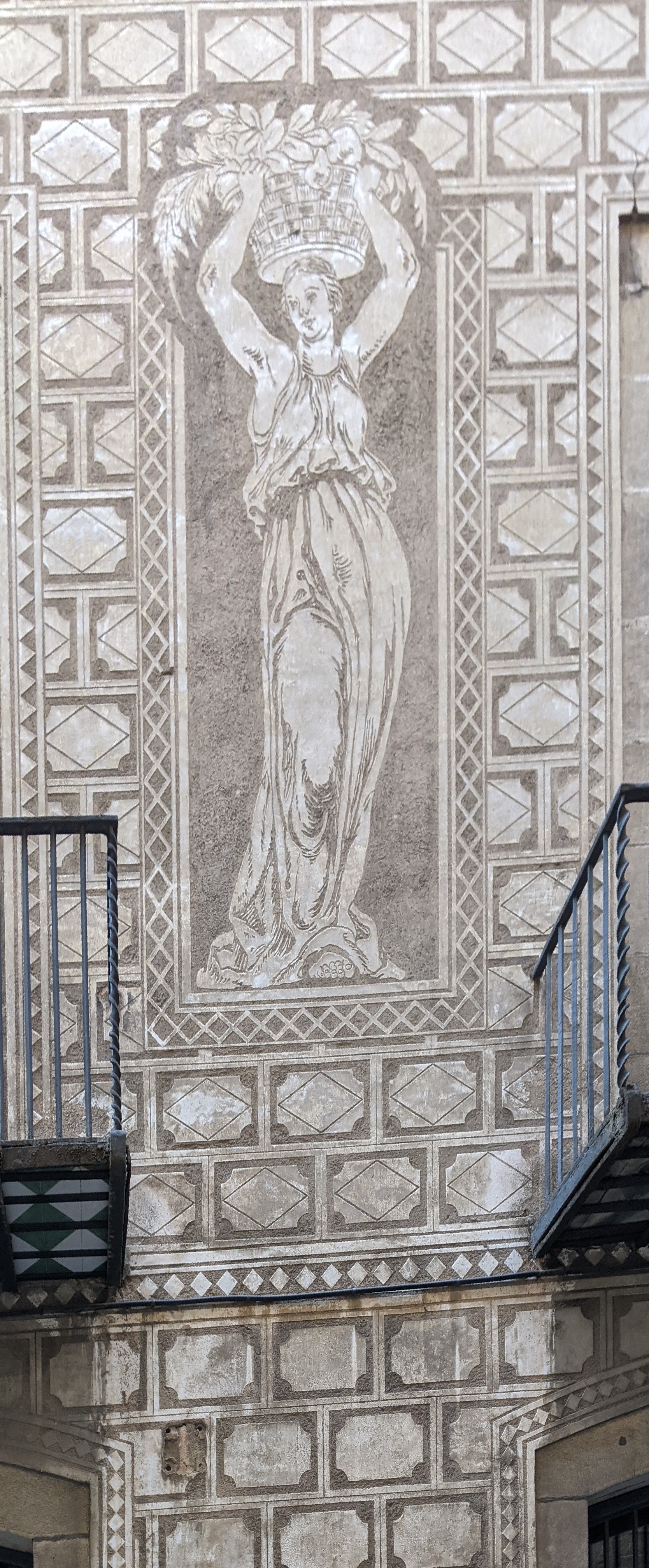
Random detail from a building (don’t remember where) with figures carved into the stucco. These were common around town.
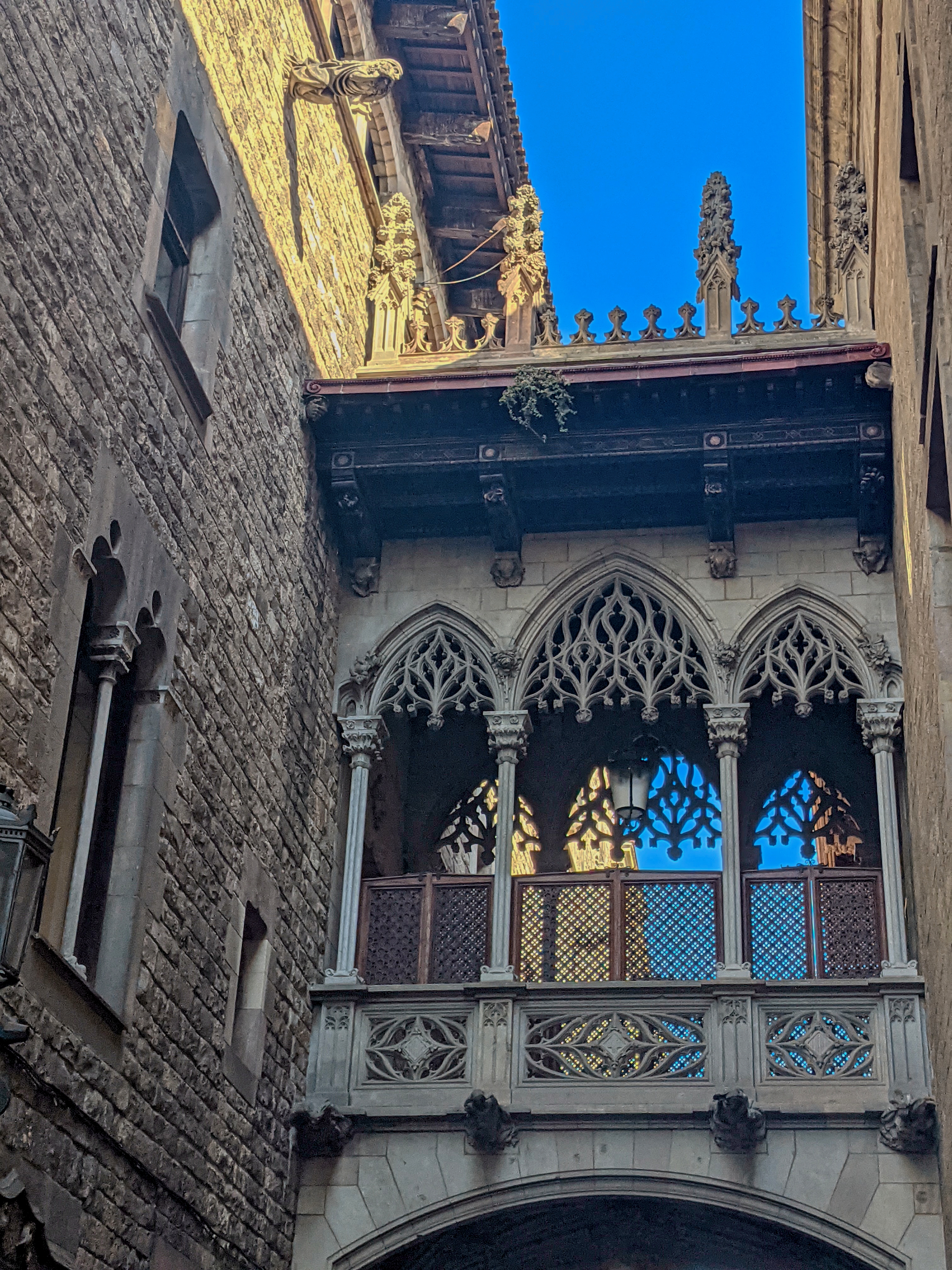
Arched passageway between buildings
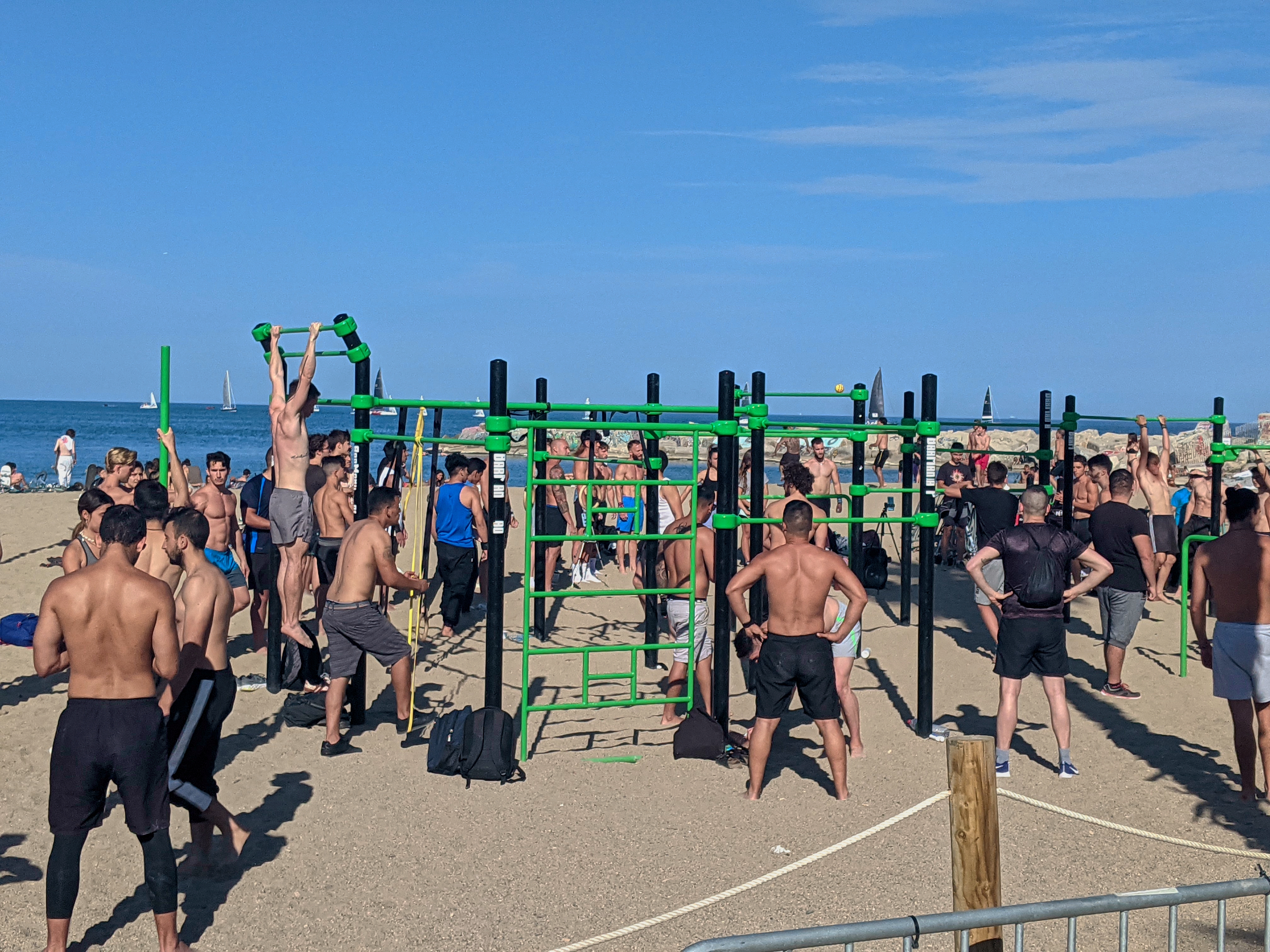
Muscle-heads showing their stuff
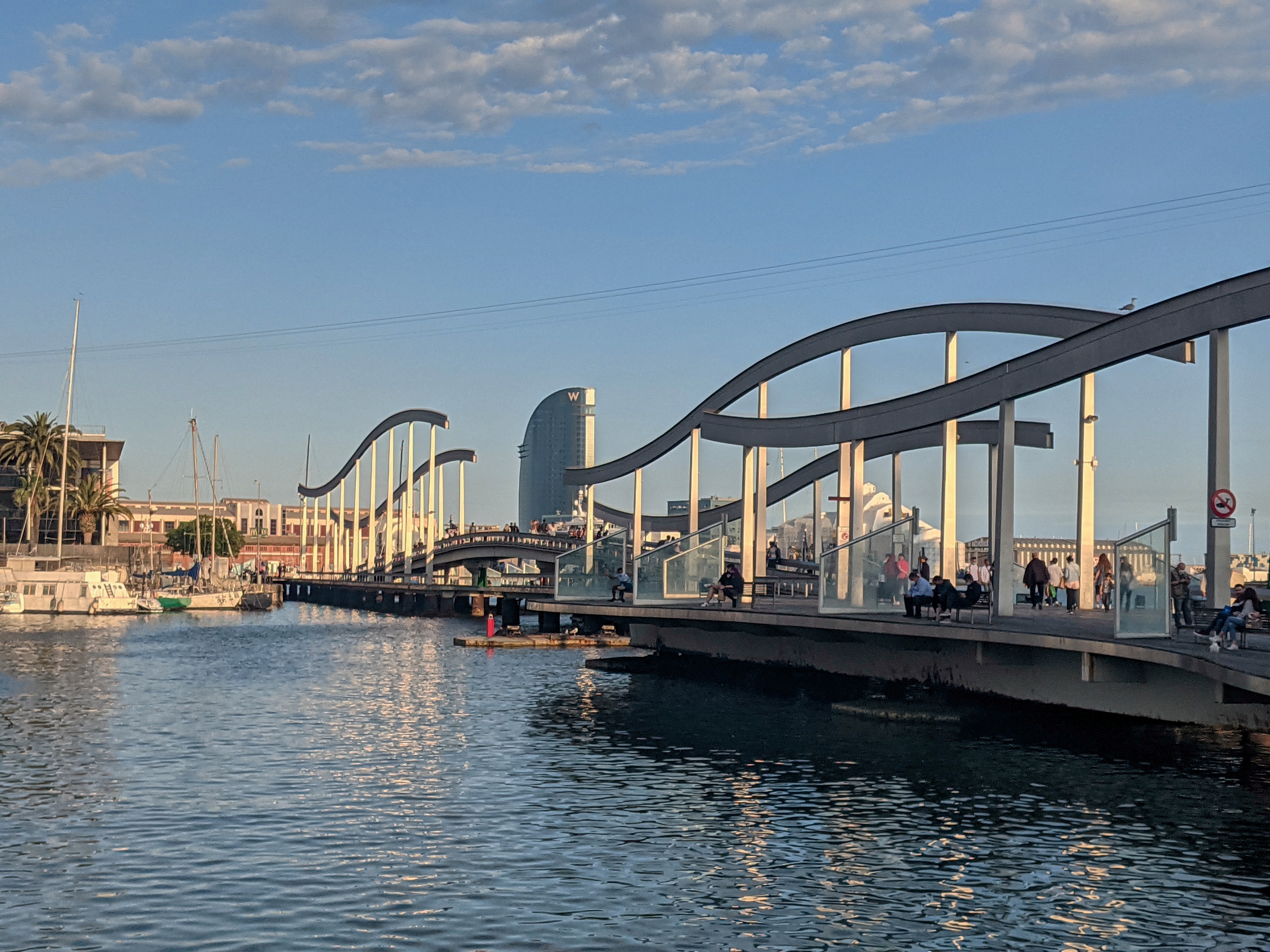
The walkway along the boat basin
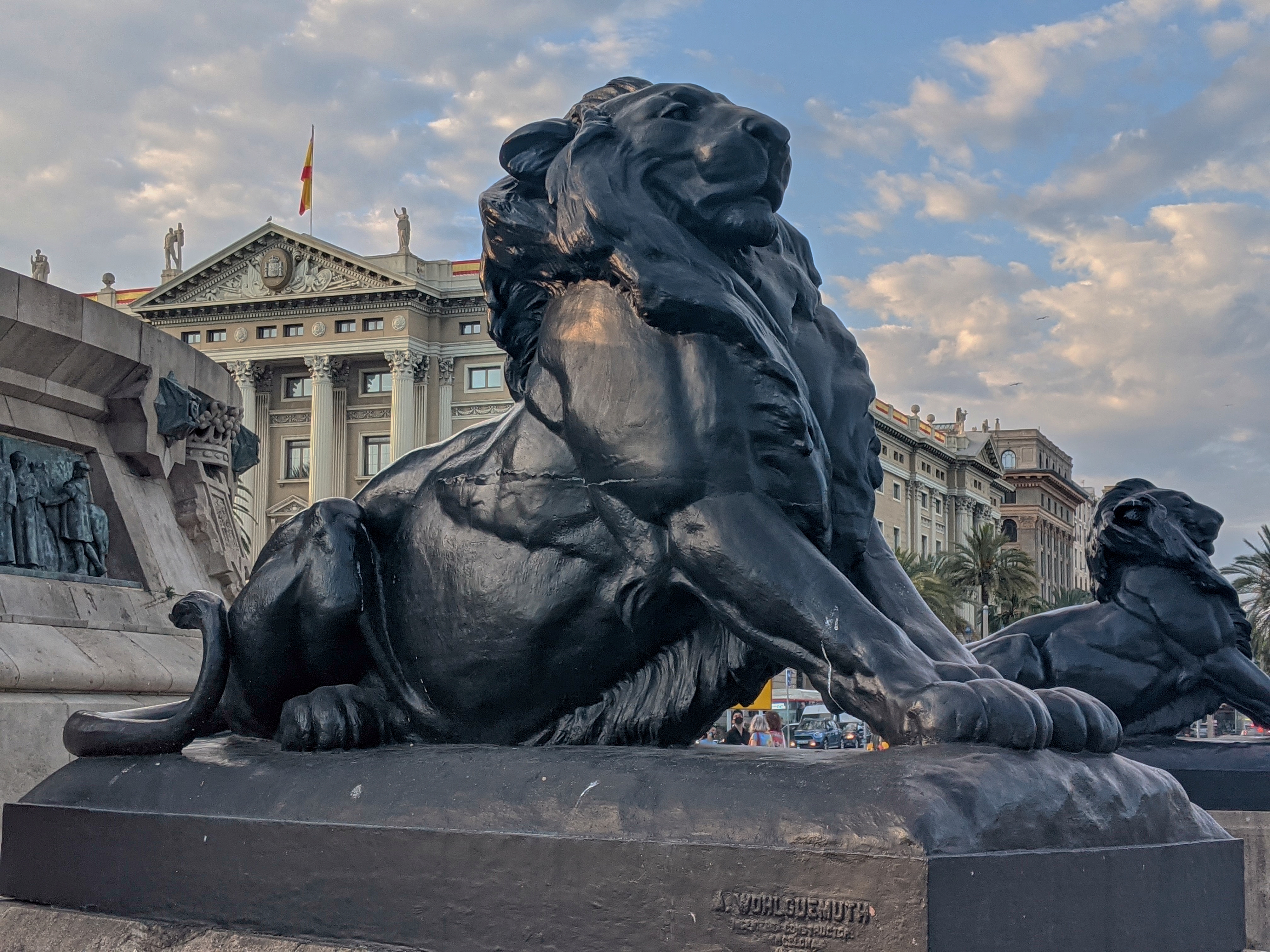
Big kitties at the foot of the Columbus monument
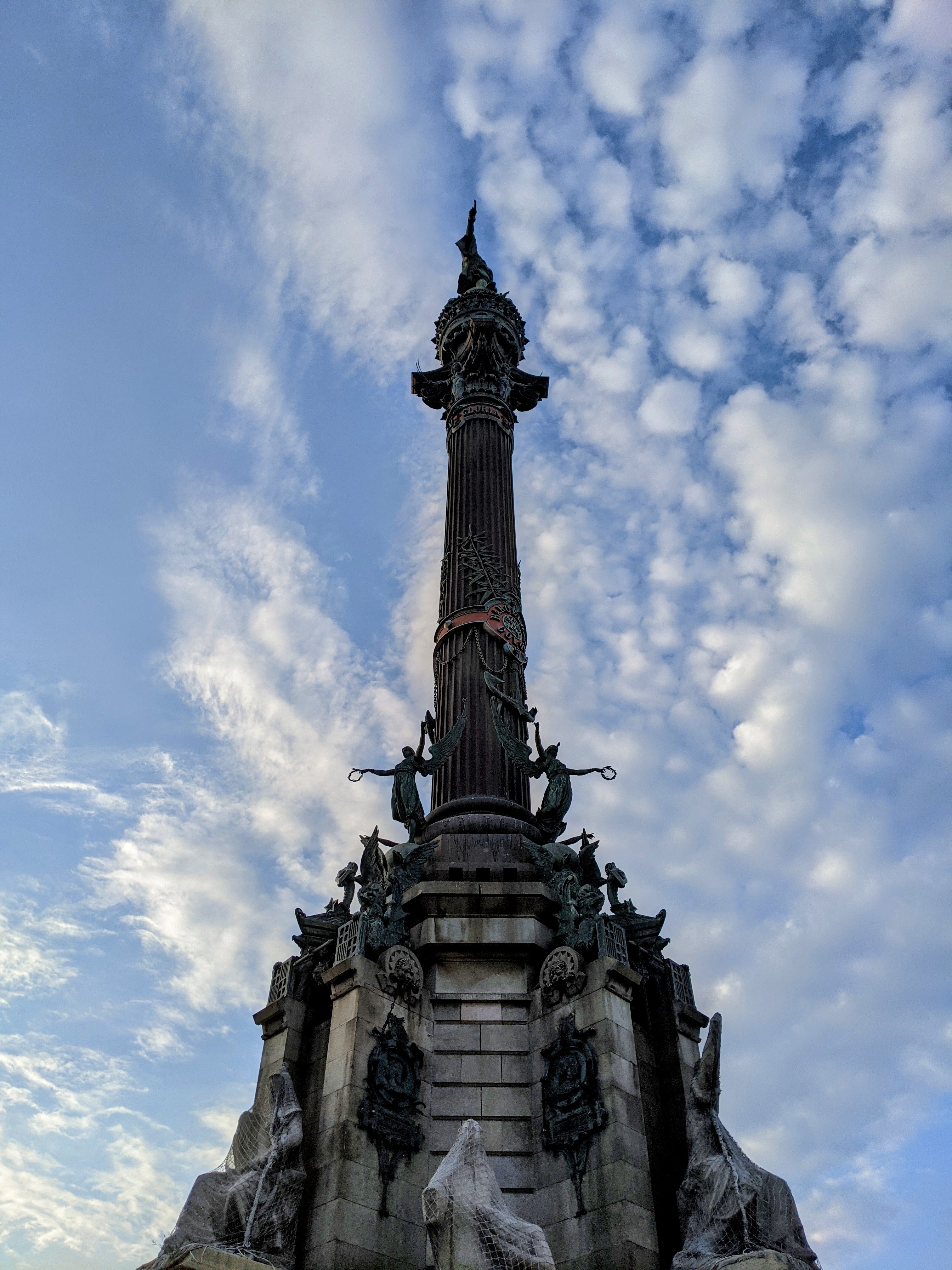
The man hisself, saying “the sea is thataway!”
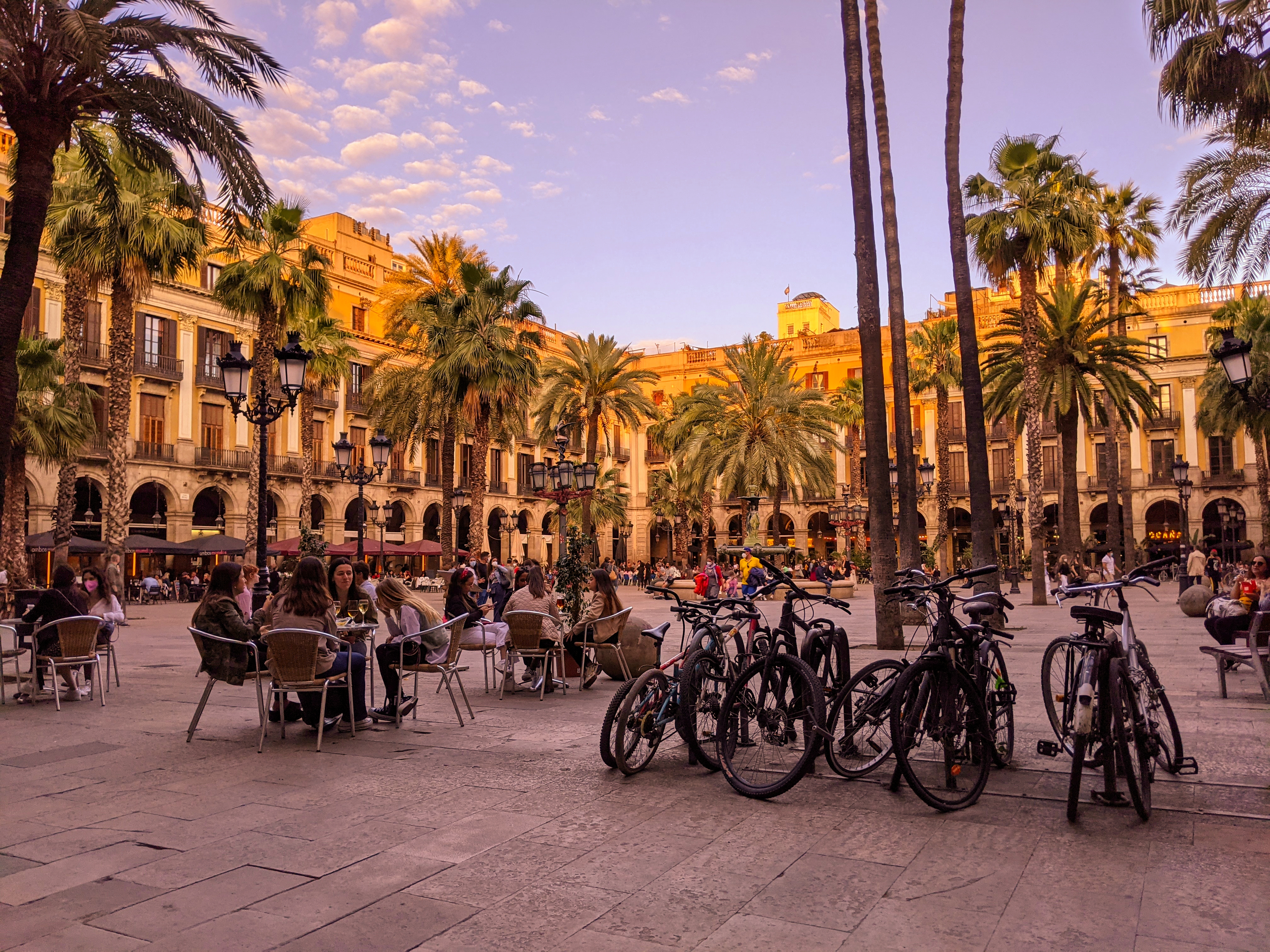
We returned to Plaza Rieal for happy hour, then found a little place that had gluten free tapas for dinner.
The following day we took a walking tour of the Gothic quarter, essentially the medieval part of the town, with a lovely Irish guide. We had a look at some old churches, the Jewish quarter and we got a nice sociological and political overview of old Barcelona.
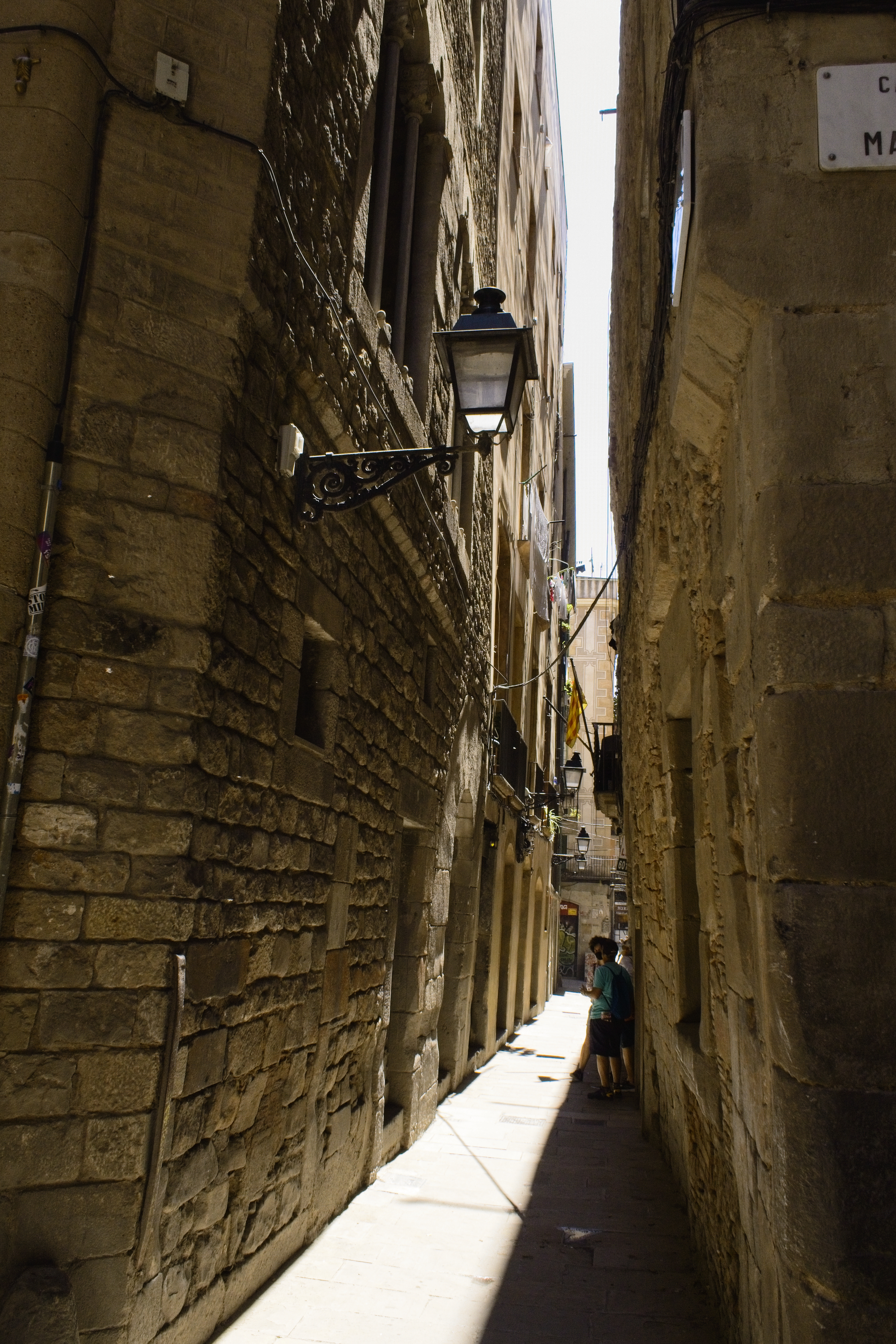
The Jewish quarter dates back to the time of the Romans and was a walled enclave within the walled city. Streets were no wider than needed to pass a cart.
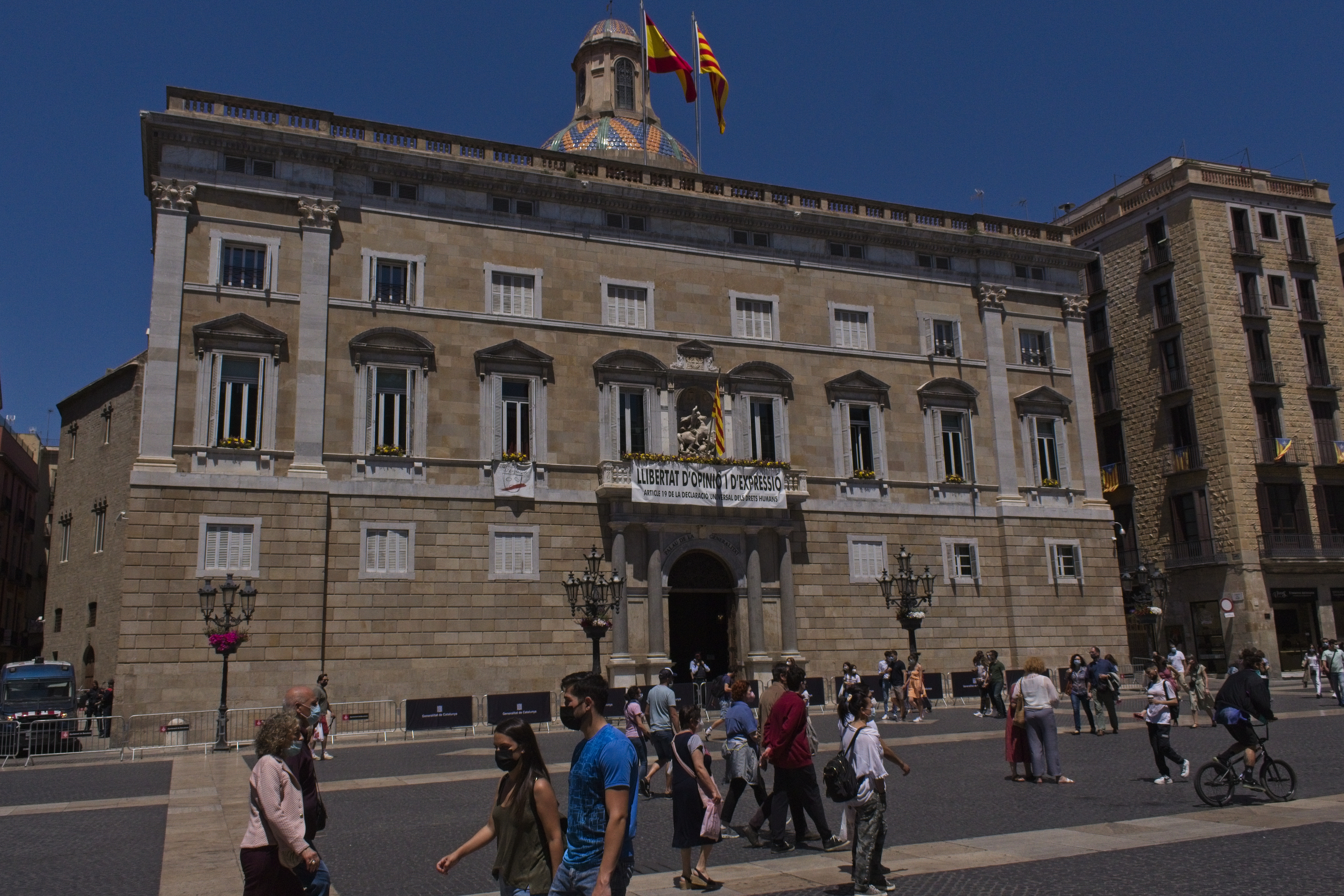
The seat of both the Catalan government and the city were in the main square in the hart of the old city. Lovely square, much history has been made here and nobody is shy about their political views.
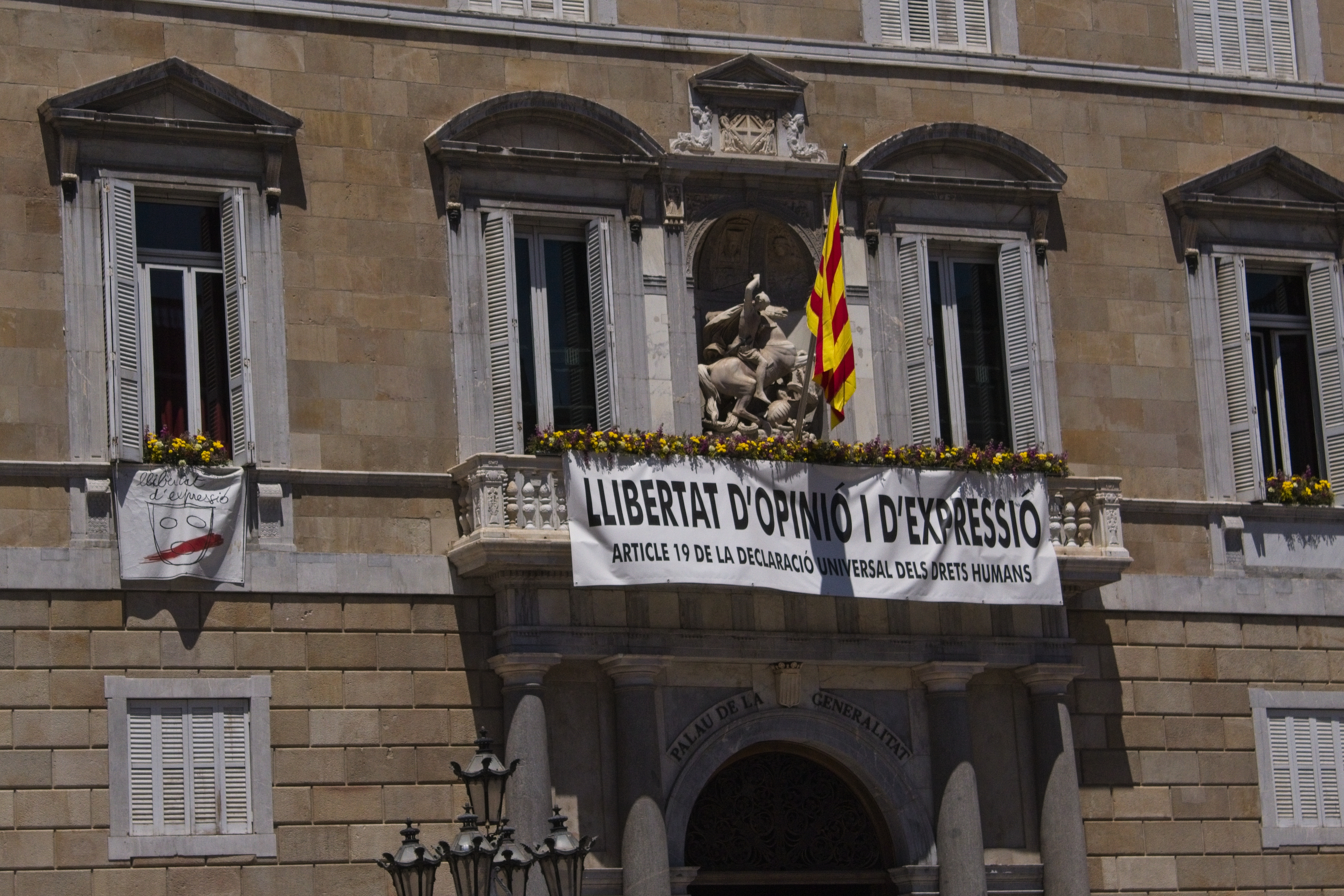
This is the Catalan government house and they were flying protest banners regarding freedom of speech, for the sake of the leaders of the referendum on independence in 2017, who have since been put in jail.
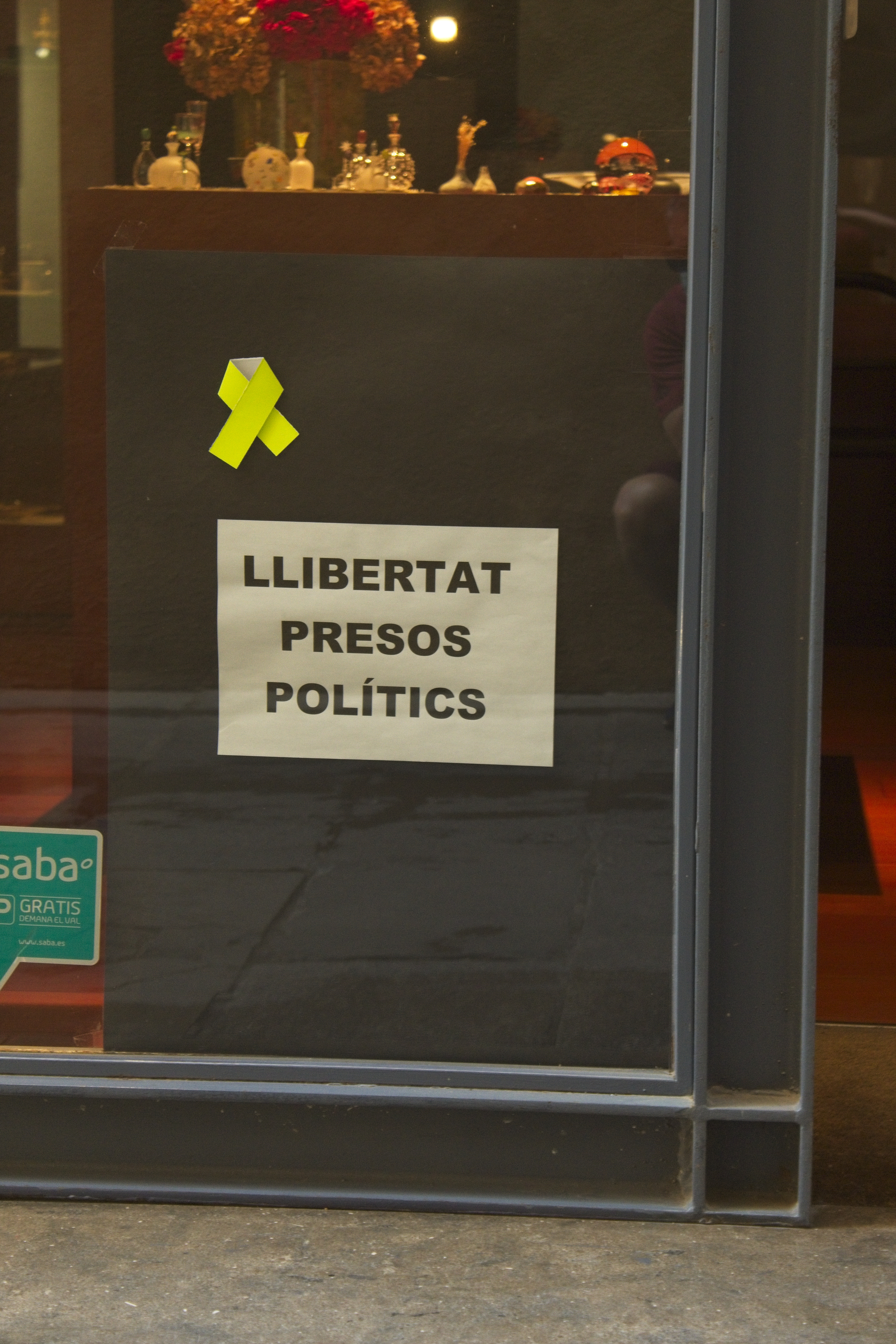
This says “Free the political prisoners” and the yellow ribbon was widely visible
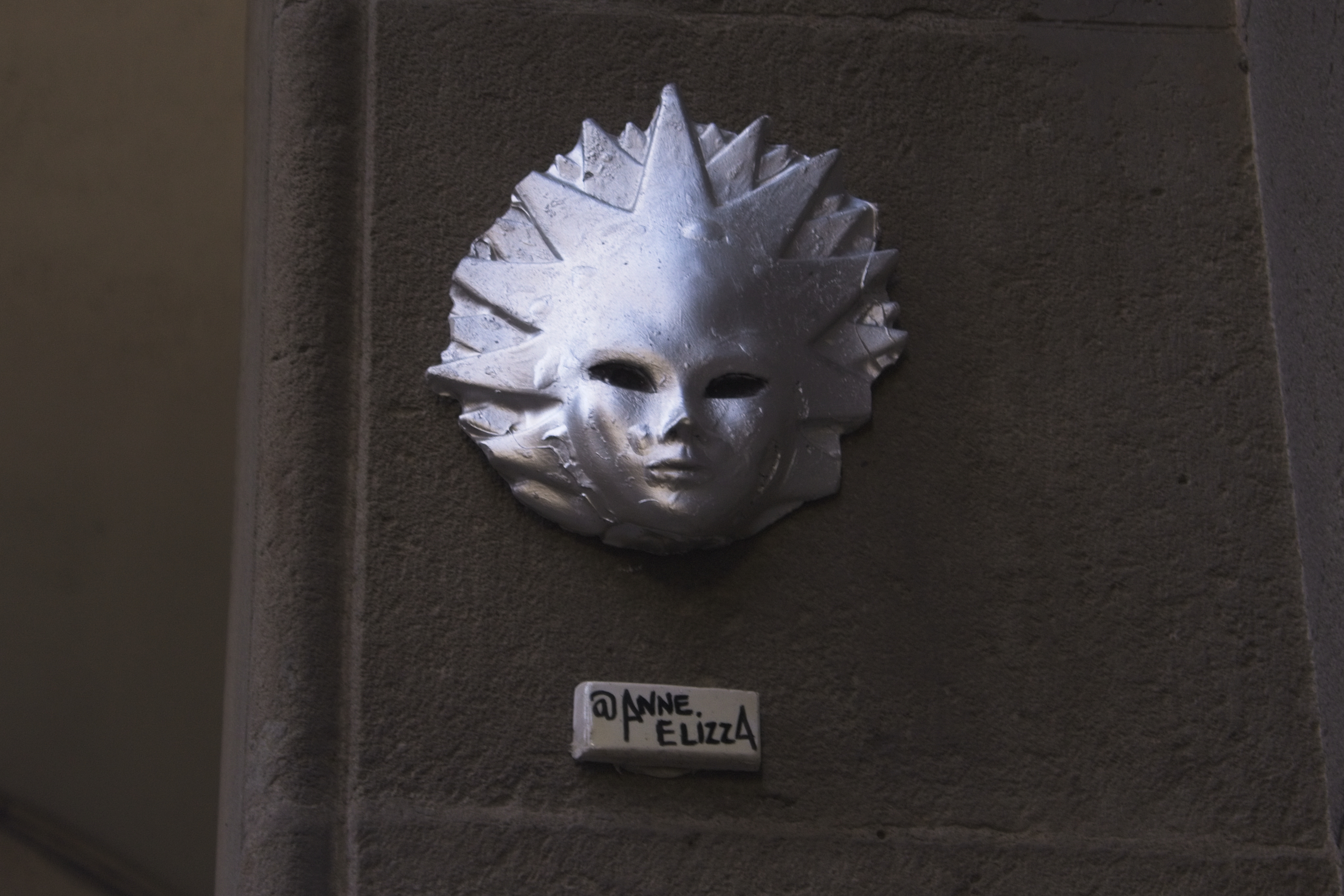
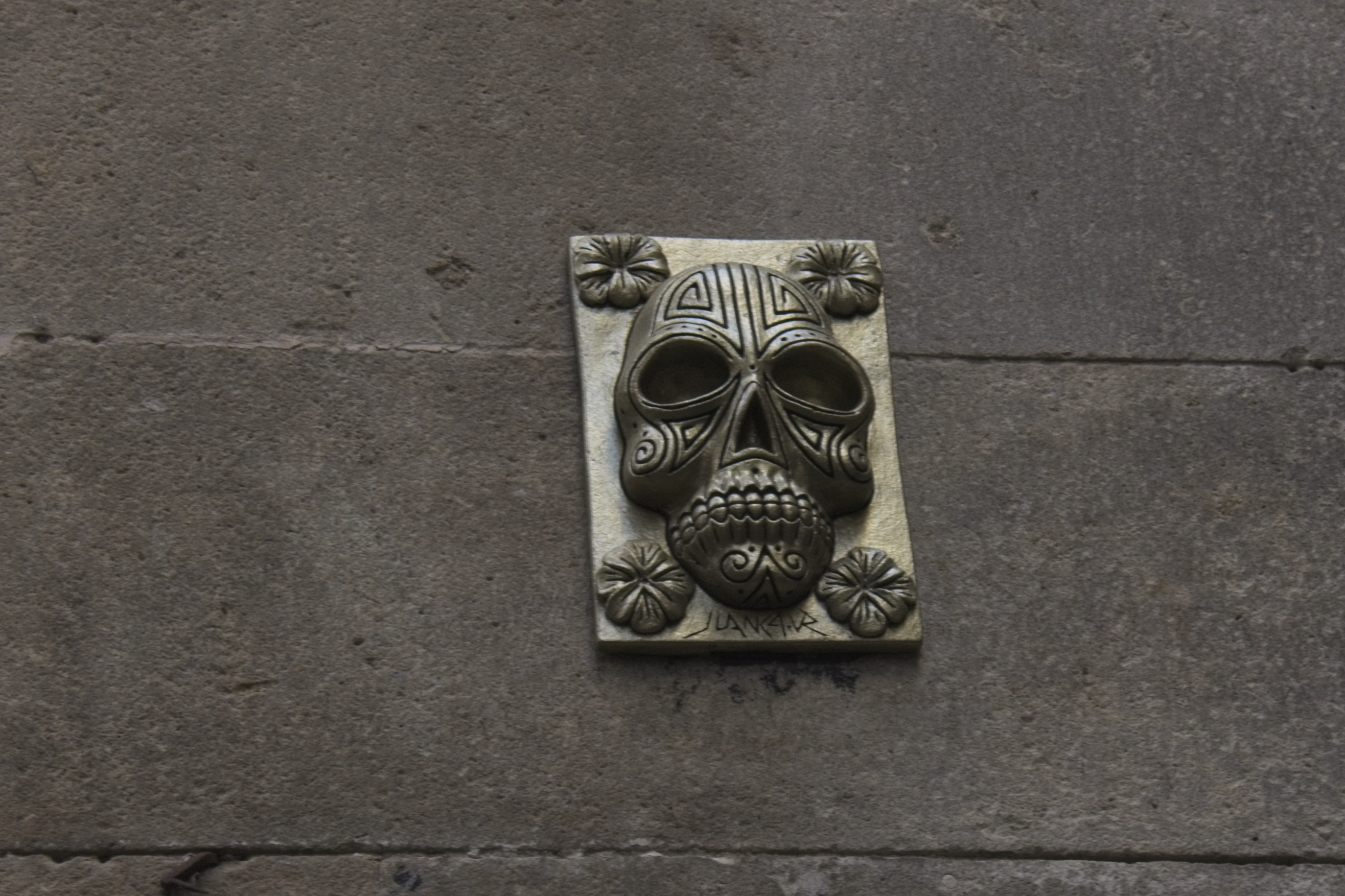
Not political, just cool art hanging on either side of an arch
Parc Güell
In the afternoon we made a visit to Parc Güell, which Gaudí created and designed for his main sponsor and local entrepreneur Eusebi Güell. He designed Güell’s house on the property as well as the park itself. It is a marvel of Modernisme, also one of the most photographed parts of Barcelona. It was a lovely place, close in to the center of the city in the area where expansion took place in the 1800s when Madrid finally allowed Barcelona to expand its footprint (the Eixample) and reflects both the sensibilities of the time and Gaudí’s unique vision.
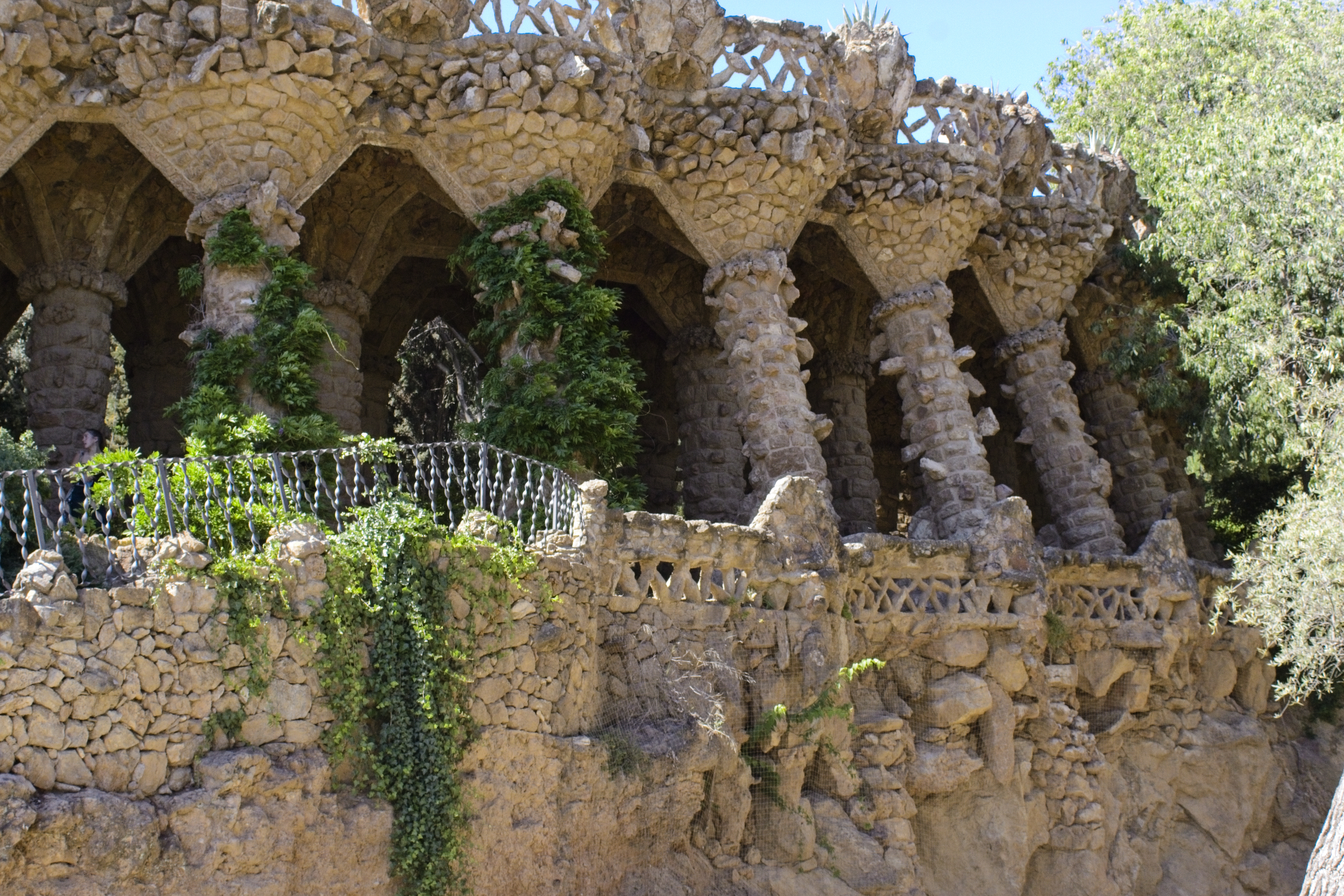
As you enter the park you climb a series of viaducts to get tot the top of the hill where the park is situated. Each viaduct is unique and reflect’s Gaudí’s love of organic shapes and catenary arches.
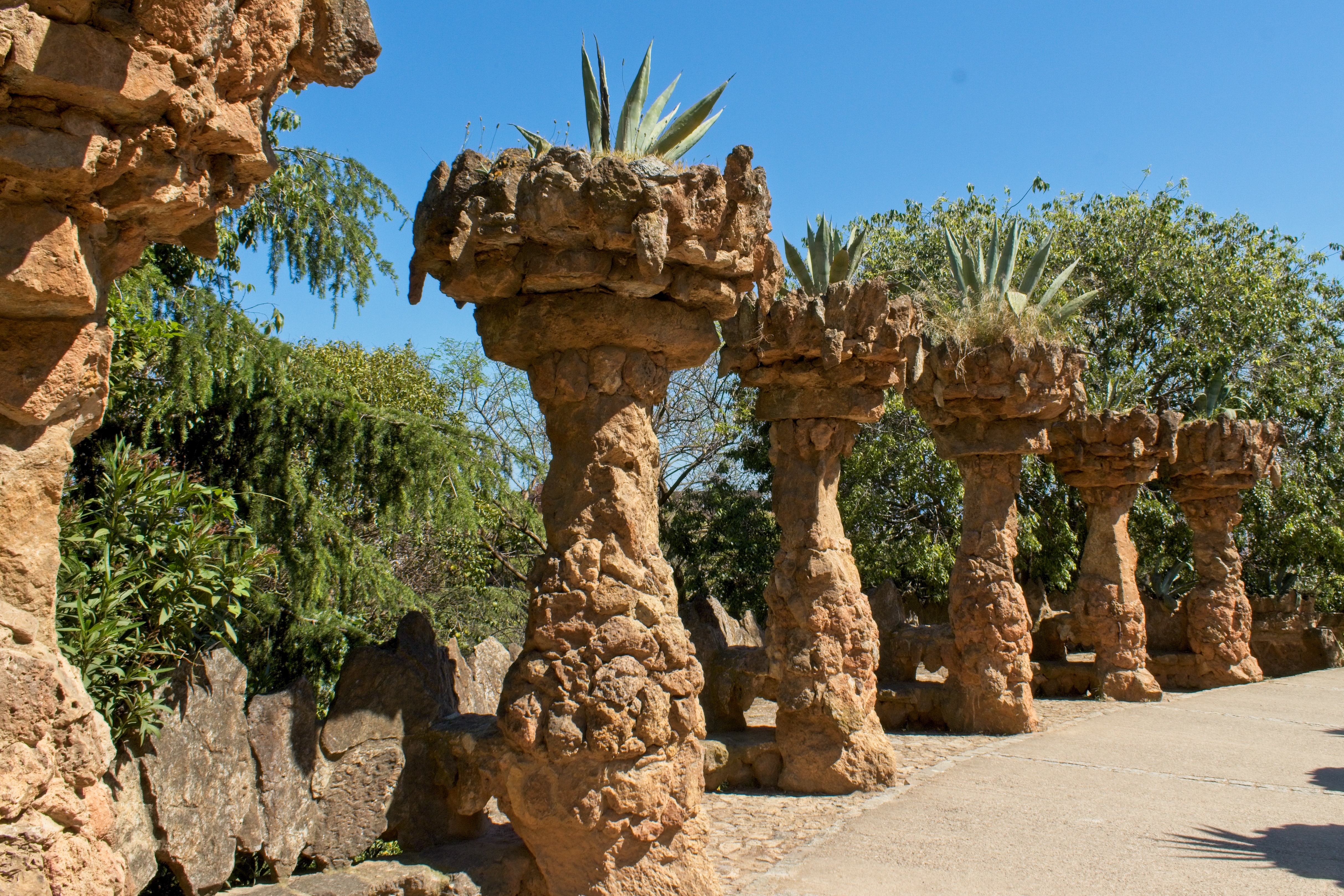
Planters, with agave plants in the top. These were all of 3 meters tall.
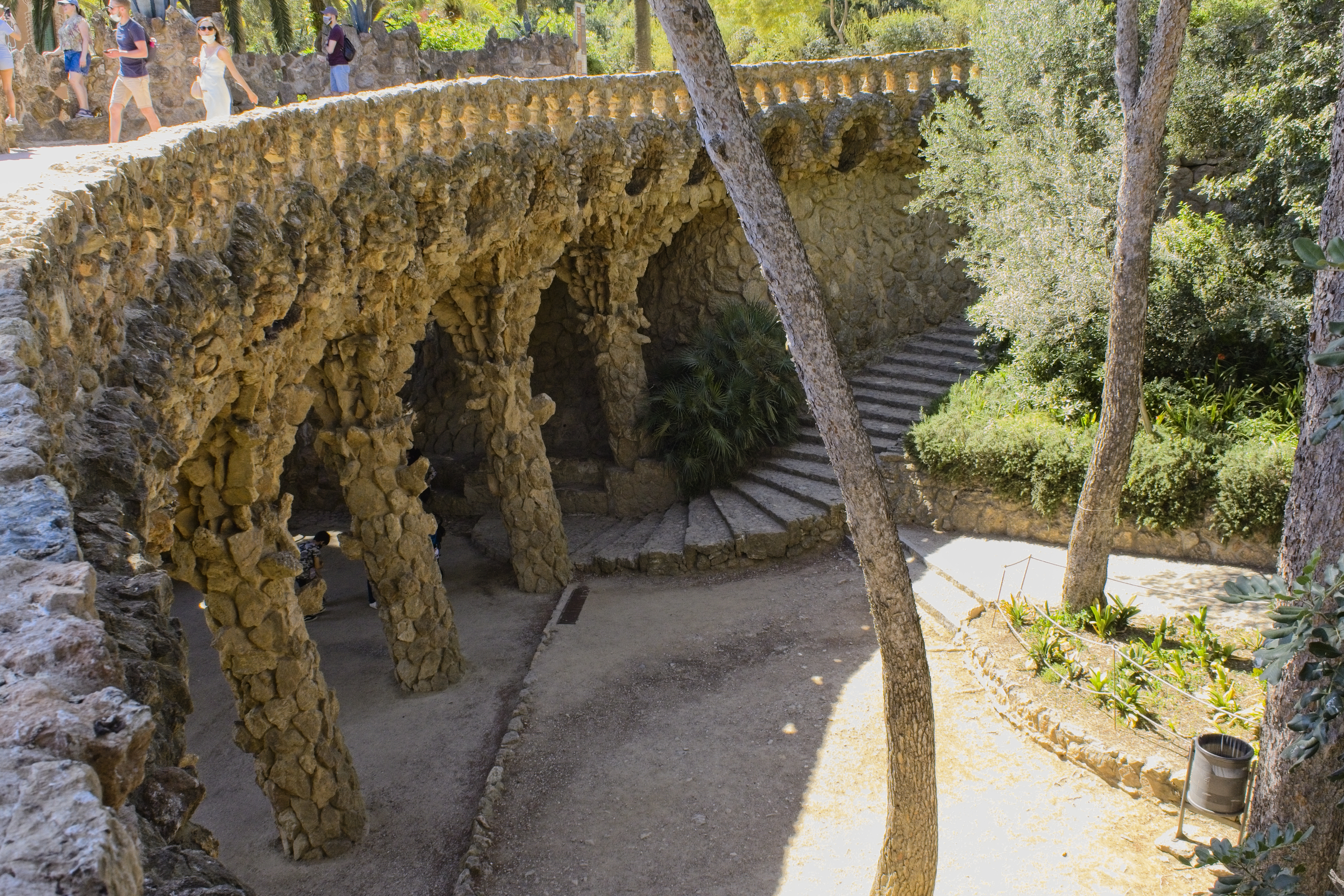
Another viaduct, from the roadway
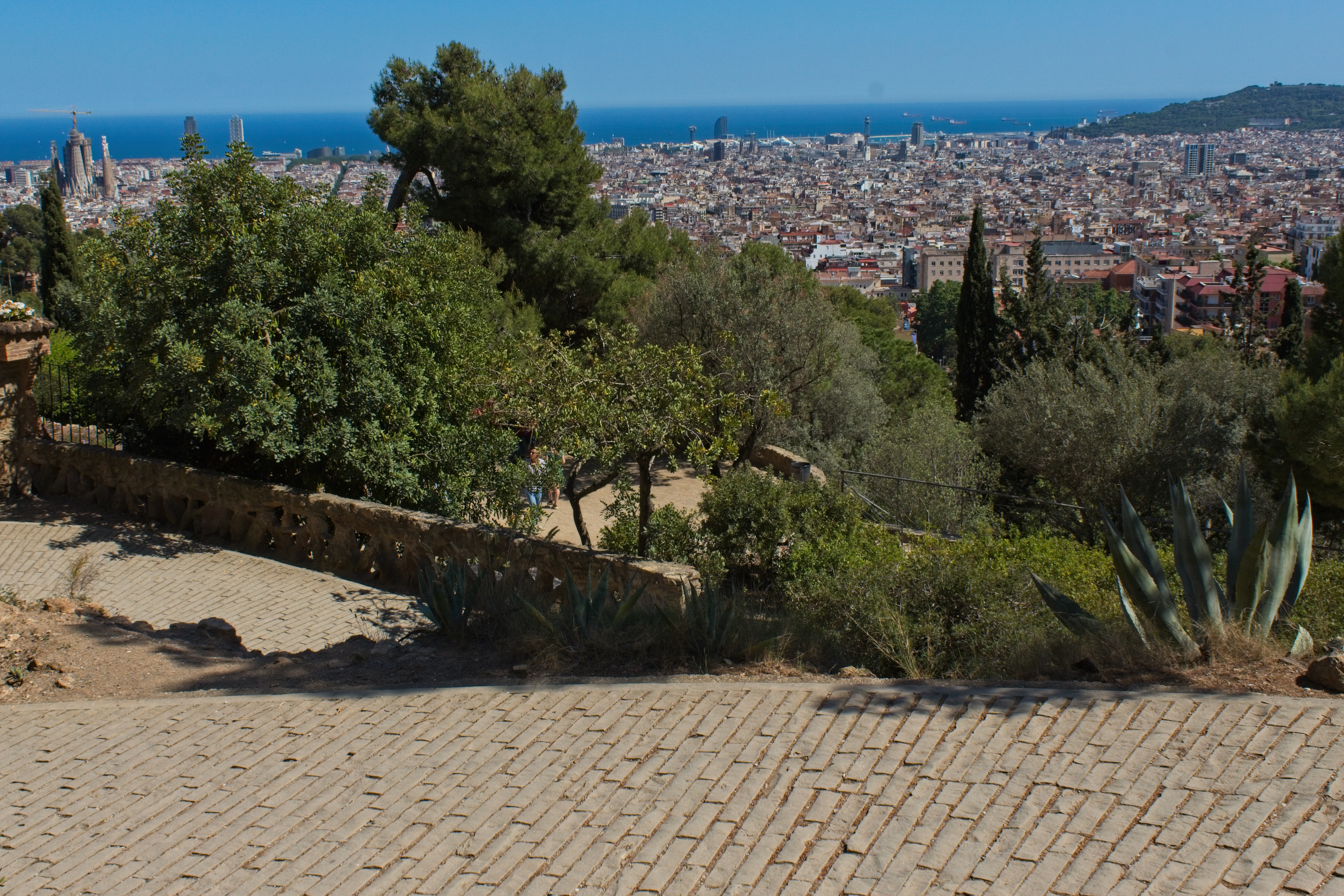
The view from the highest point on the hill overlooking Barcelona and the Med. On the left you can see la Familia Sagrada dominating its neighborhood.
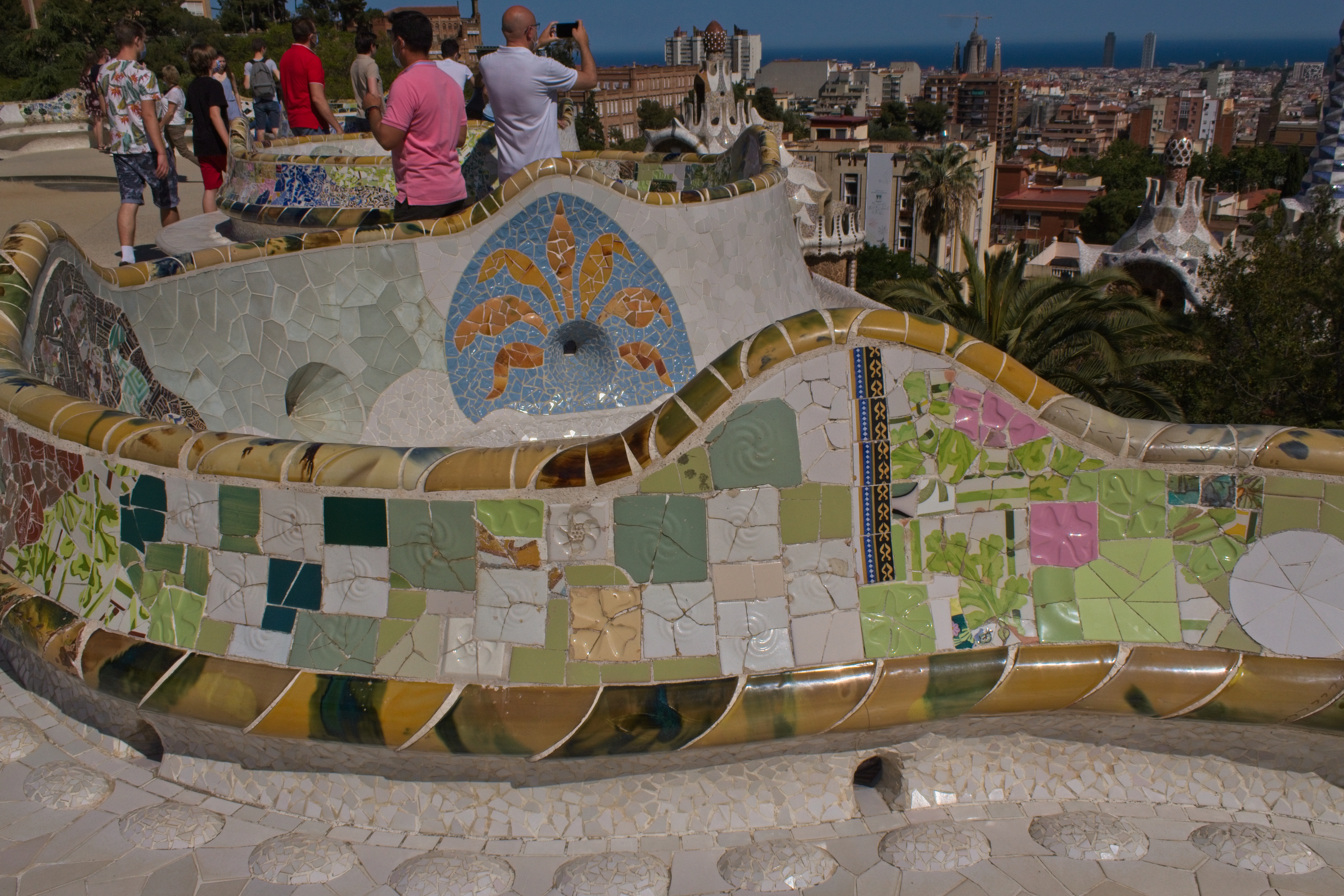
The “Serpentine Bench.” It was built in this shape on purpose to give groups privacy in crowds; the bumps in the foreground are on the bench seat to keep people’s behinds out of the gutters. The broken tilework is a Gaudí signature; it allowed him to decorate his sinuous shapes with tiles and the effect is remarkable.
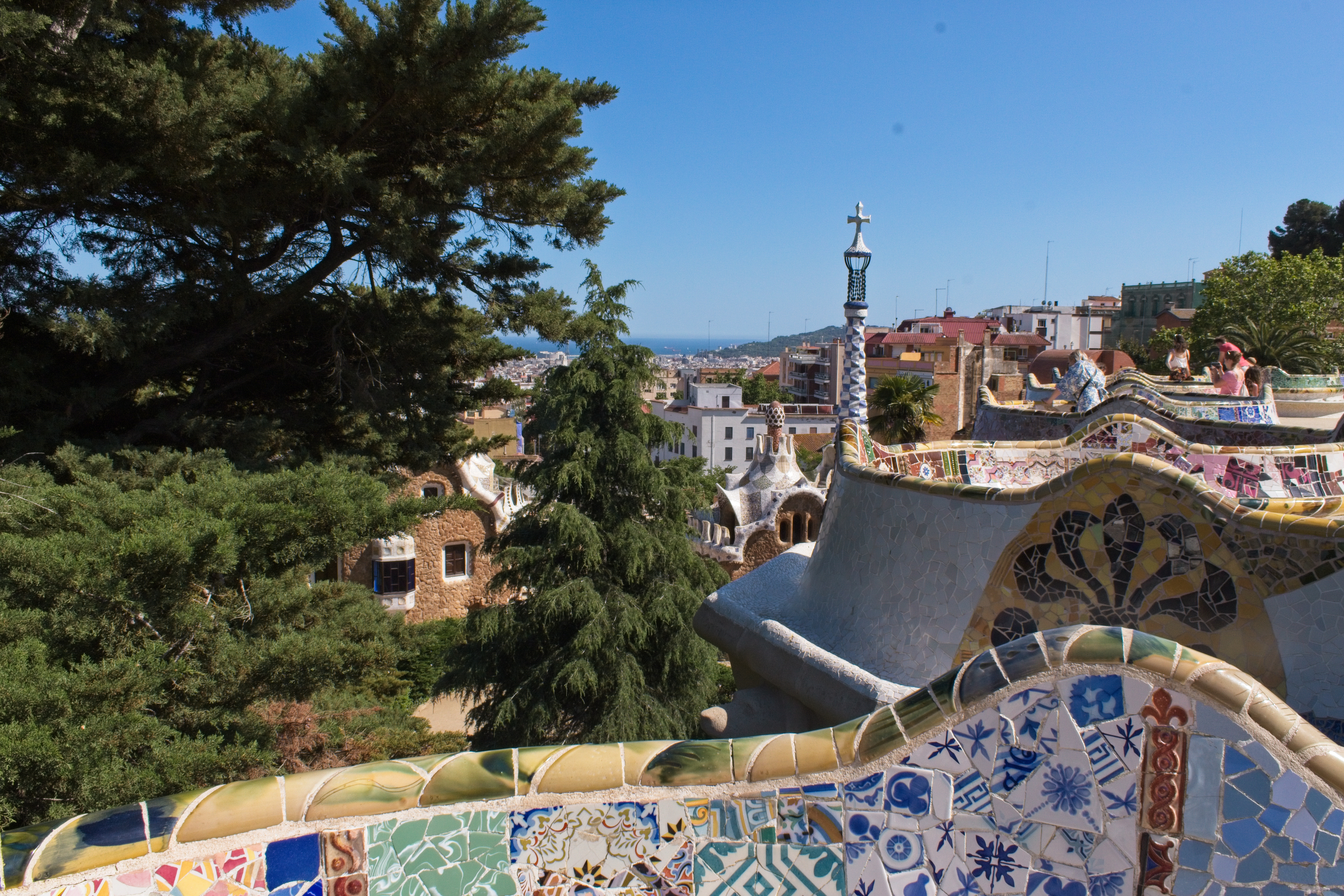
There was tile work on both the insides and outsides of the benches.
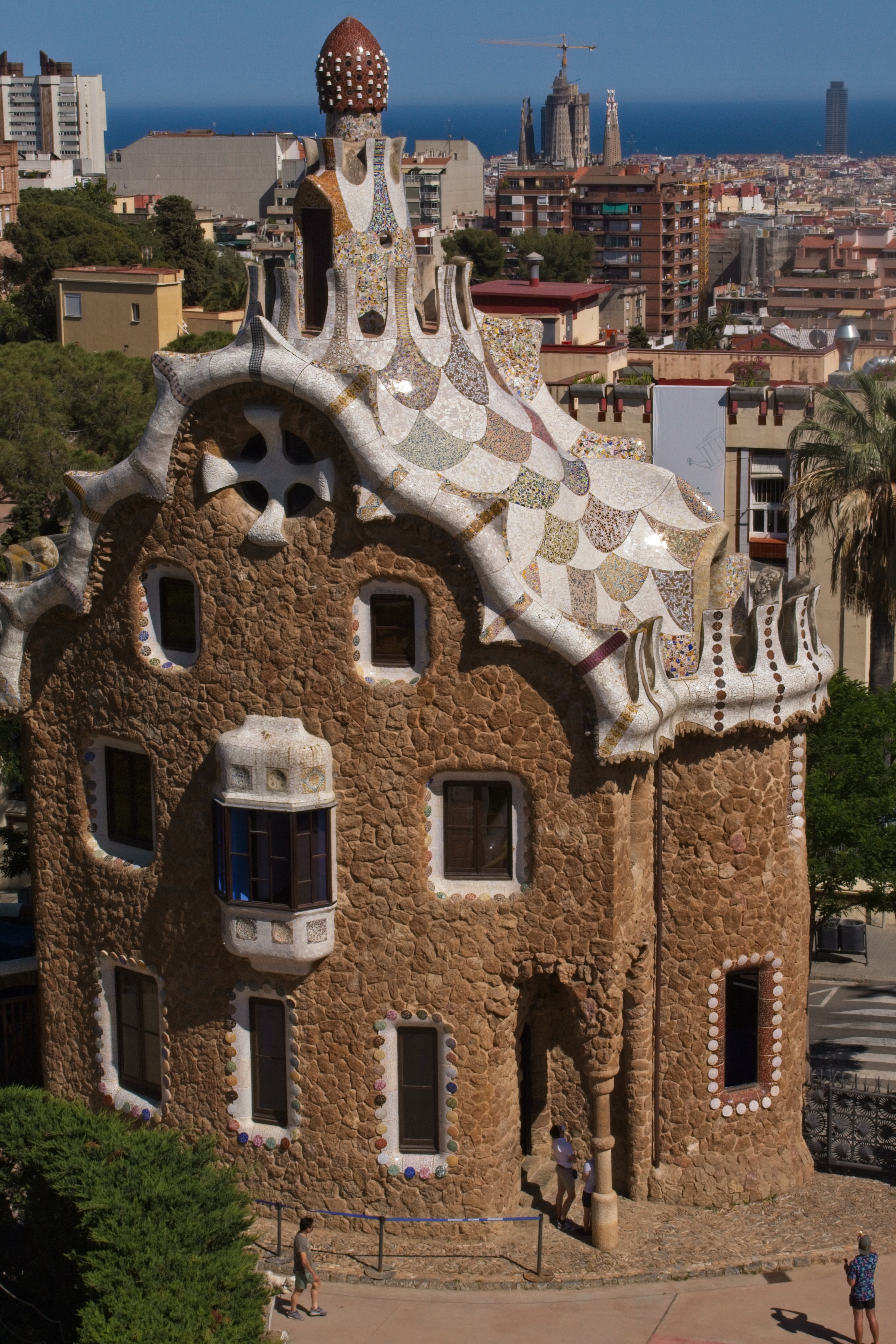
More tile mosaic, this time on the roof of the Porter’s Lodge by the main entrance.
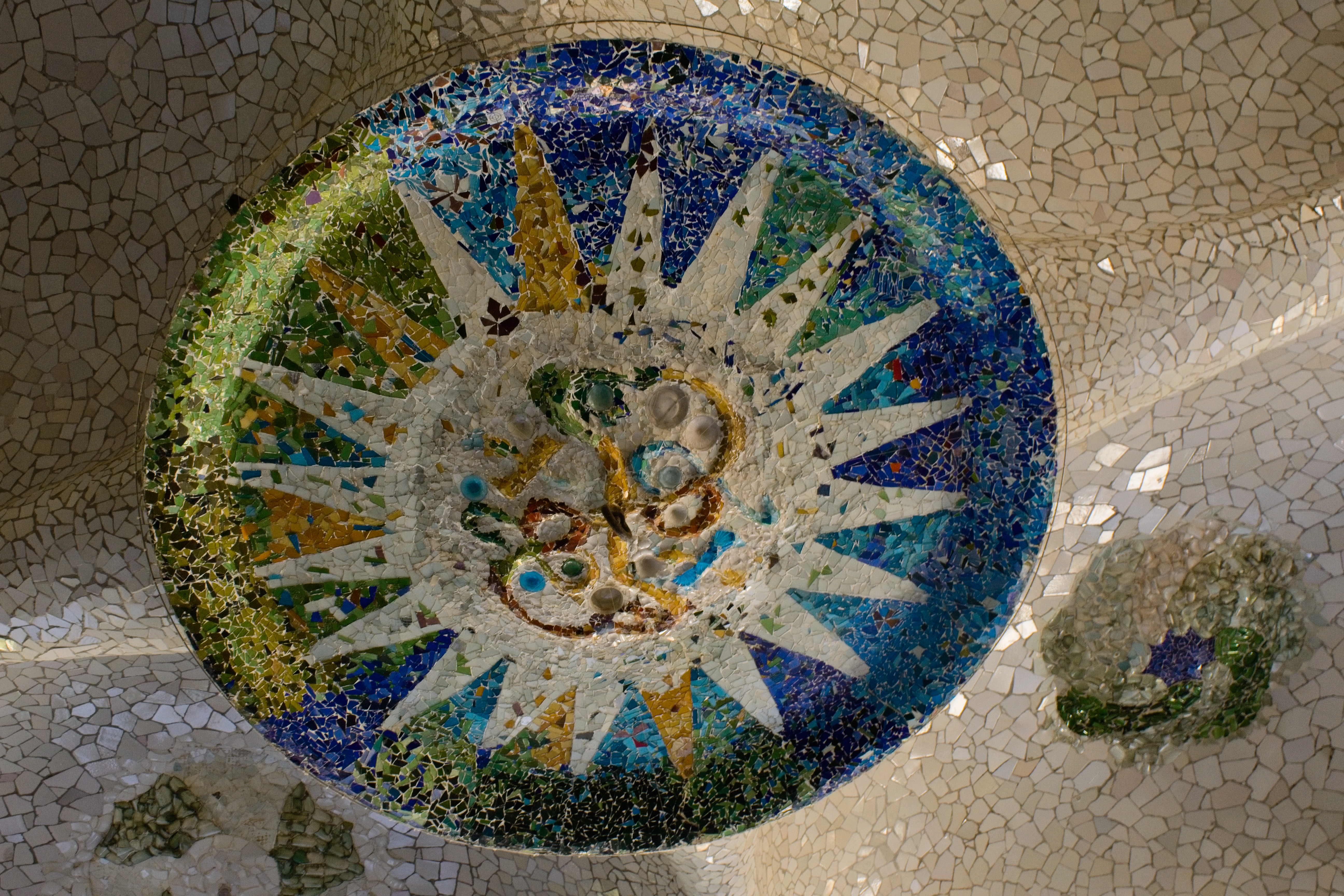
Underneath the terrace with the serpentine benches is the “hypostyle” room, covered in more tile mosaic and decorations at the tops of the arches.
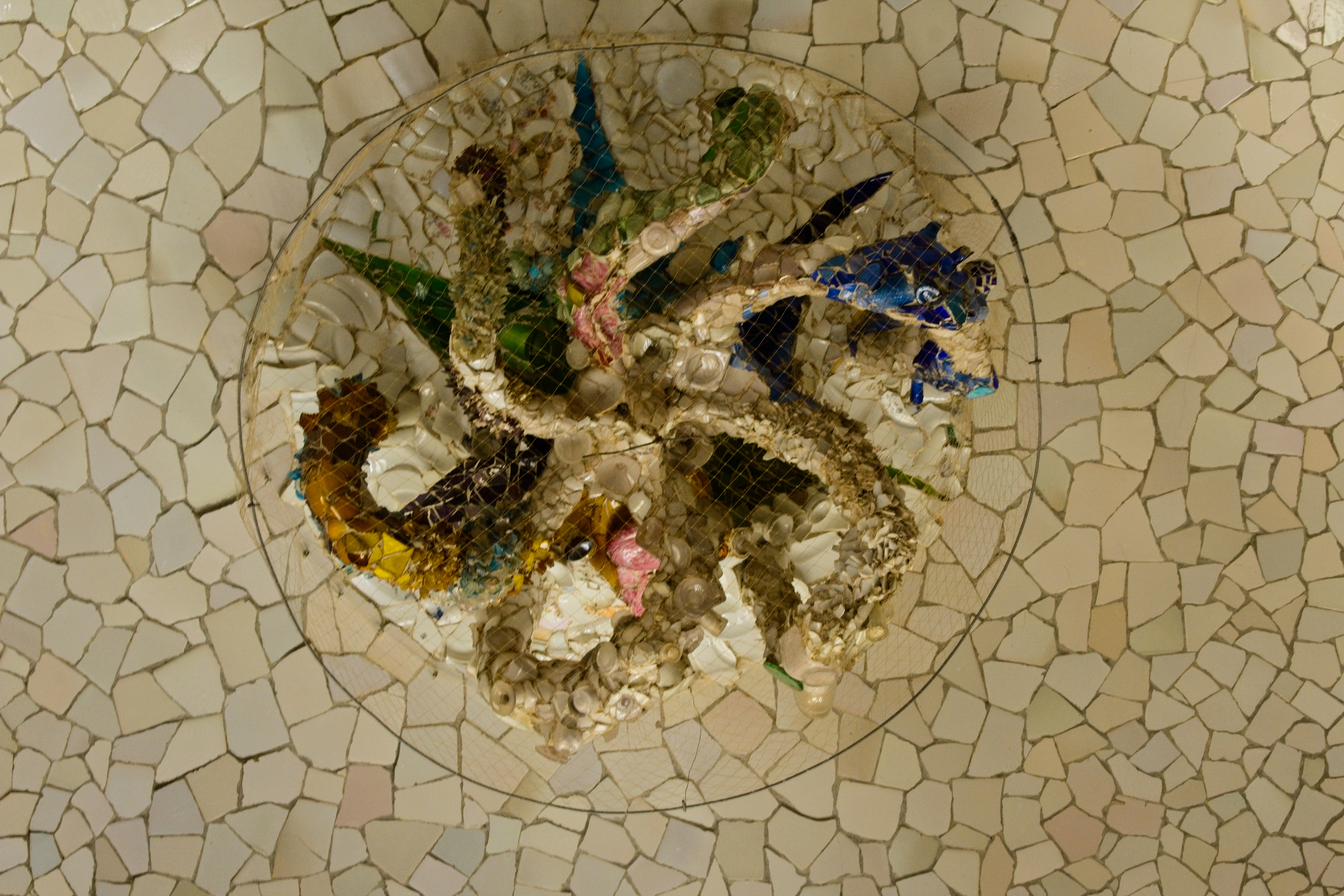
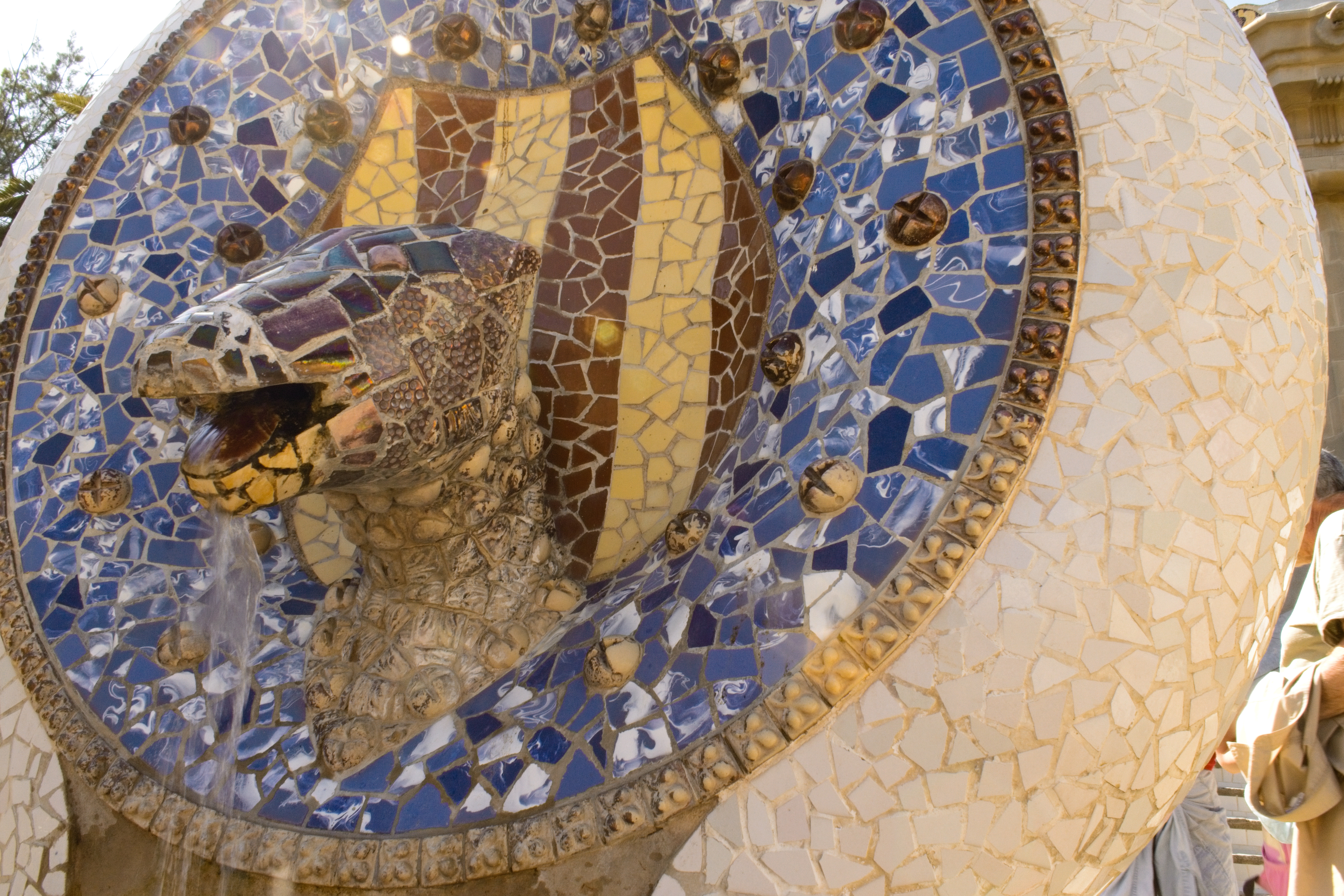
The emblem of Barcelona, in tile
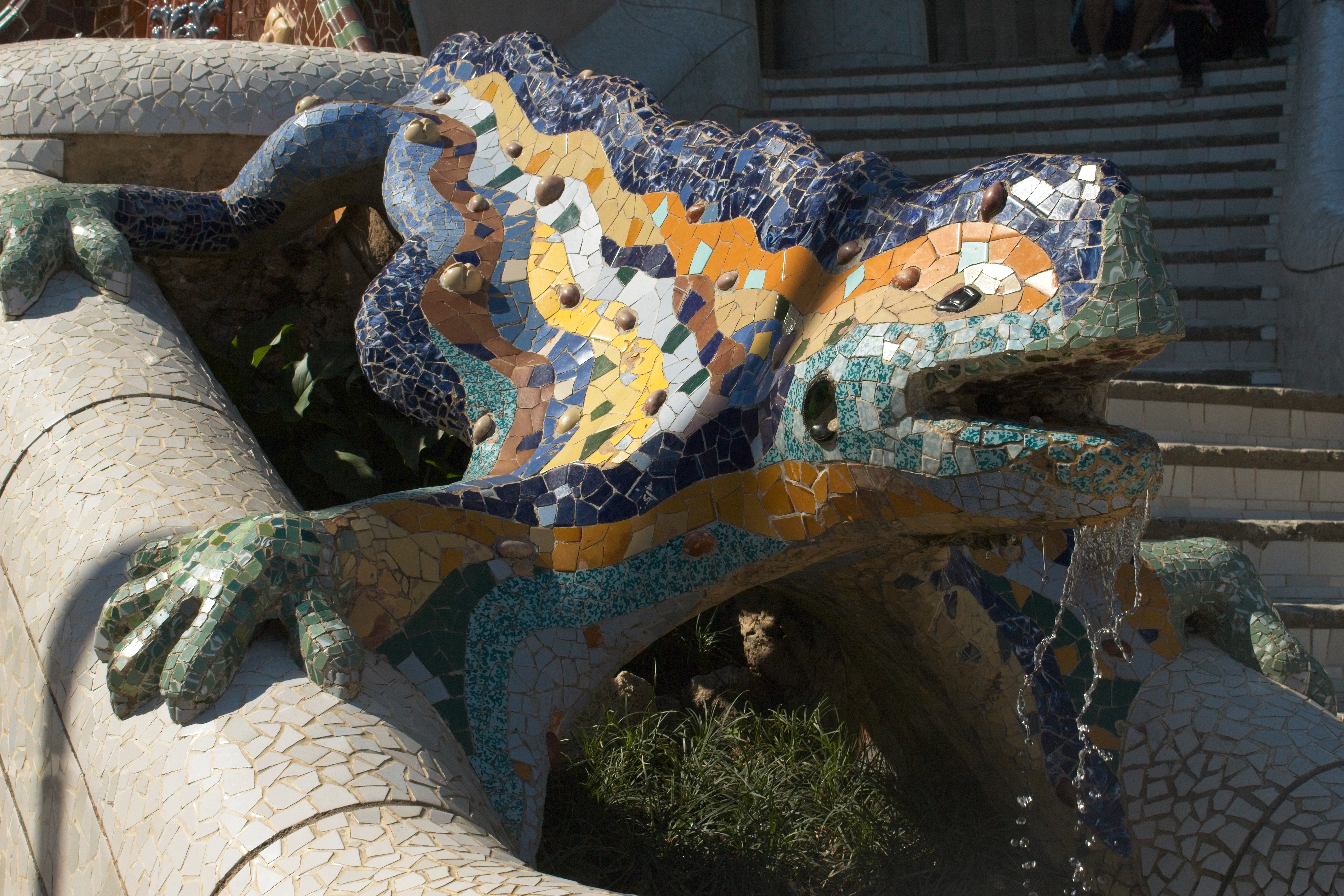
Mosaic gecko
After our trip to the park, we returned to the hotel for a rooftop drink and then caught a trio of Flemenco players paying tribute to Paco de Lucia, a towering figure in Flamenco guitar and the jazz scene of the ’70s – ’90s. It was a lovely evening.
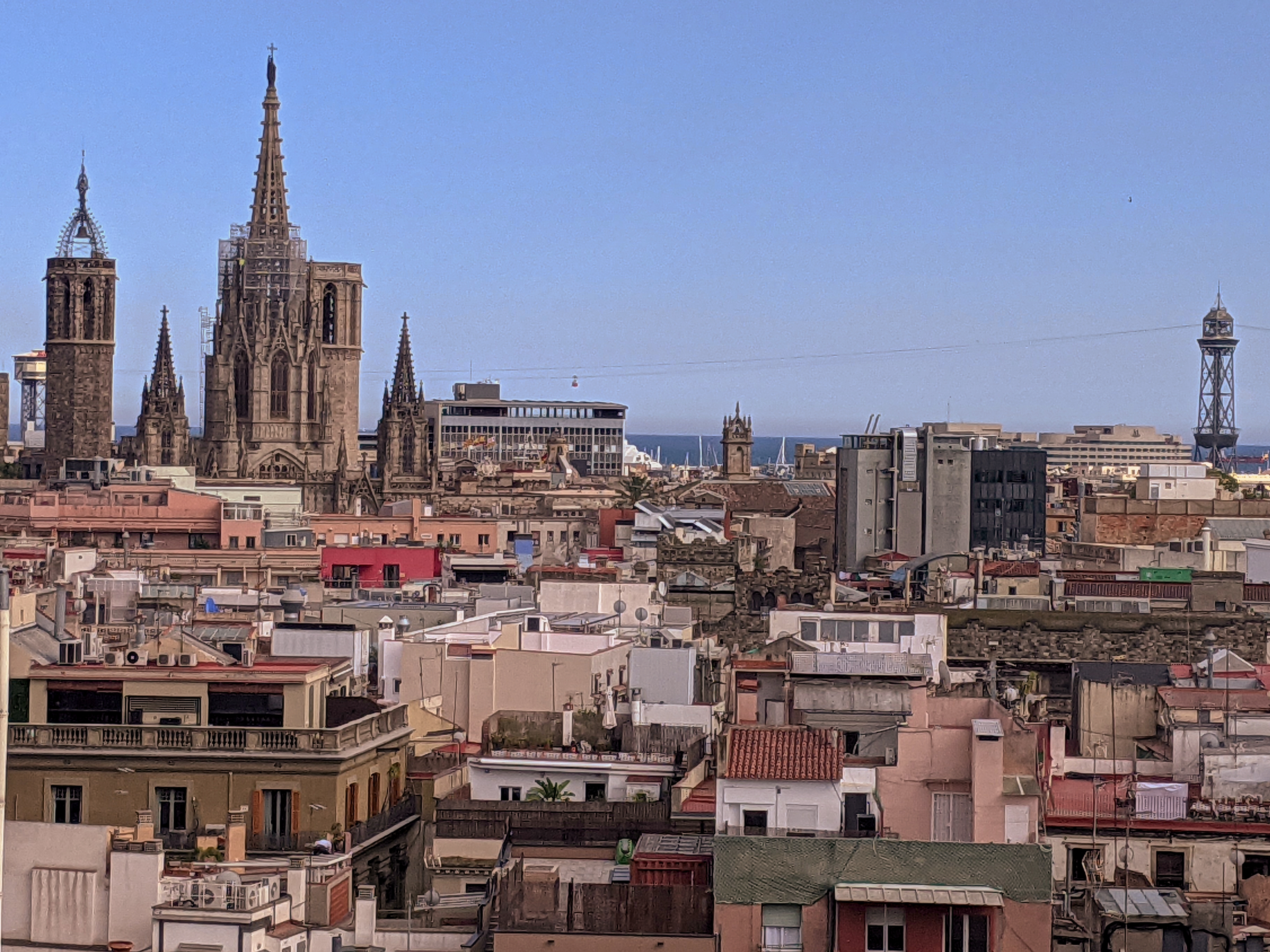
View from the rooftop
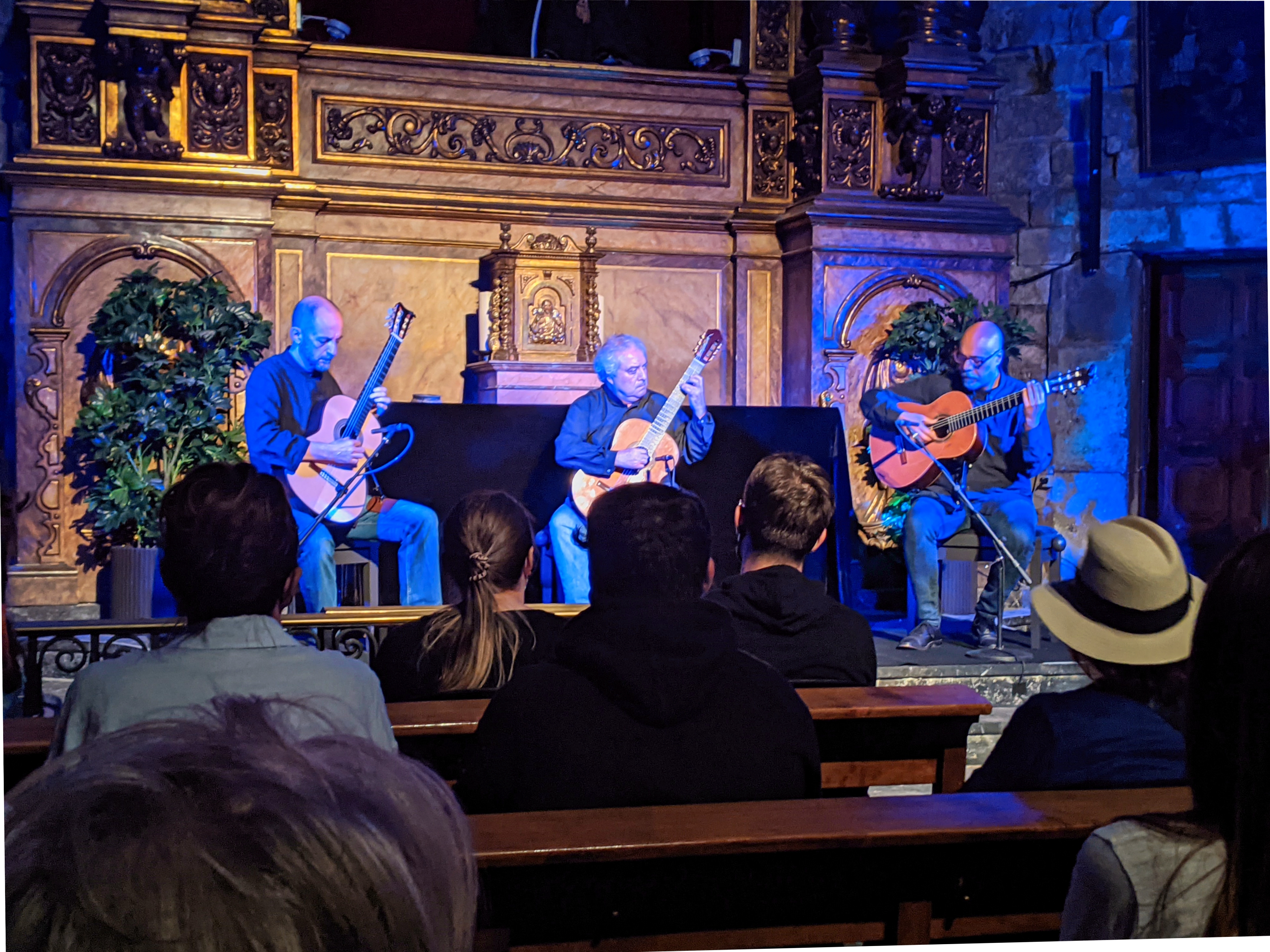
Our musical hosts for the evening.
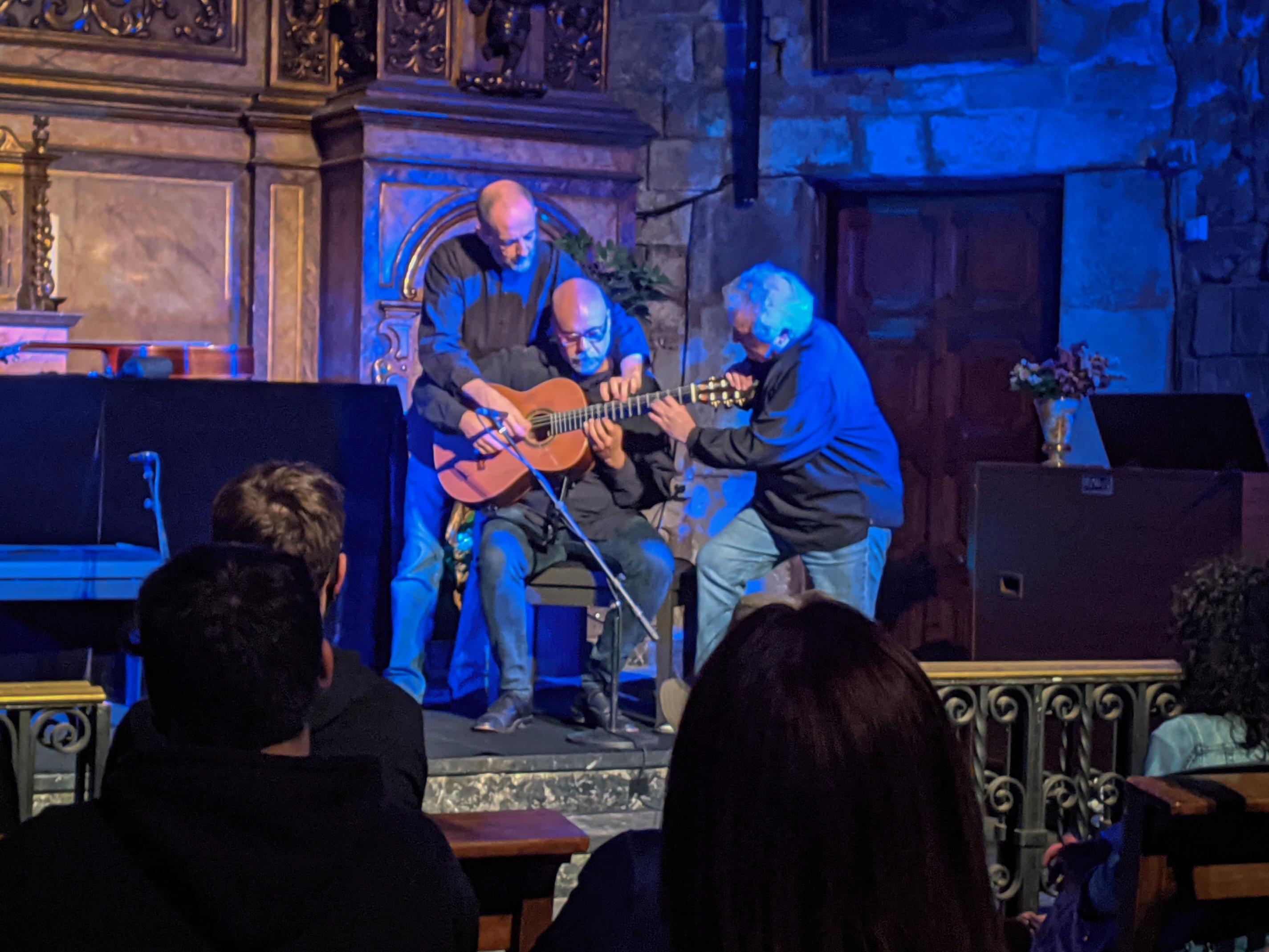
As part of their encore, they played a 3-on-1 version of Michael Jackson’s Billie Jean that brought down the house.
La Sagrada Familia
You knew it was coming. Everybody has to go see La Sagrada Familia, Gaudí’s ultimate work and contribution to Barcelona. We’re no different and now you get to see our version of the pictures everybody takes of this remarkable building. My (Steve) takeaways: from a distance it’s an eyesore, all out of proportion to the neighborhood and just dominant on the skyline. Close in, the textures and designs on the exterior are much more interesting and pleasing. Inside is just jaw dropping. I’m glad we went to see it.
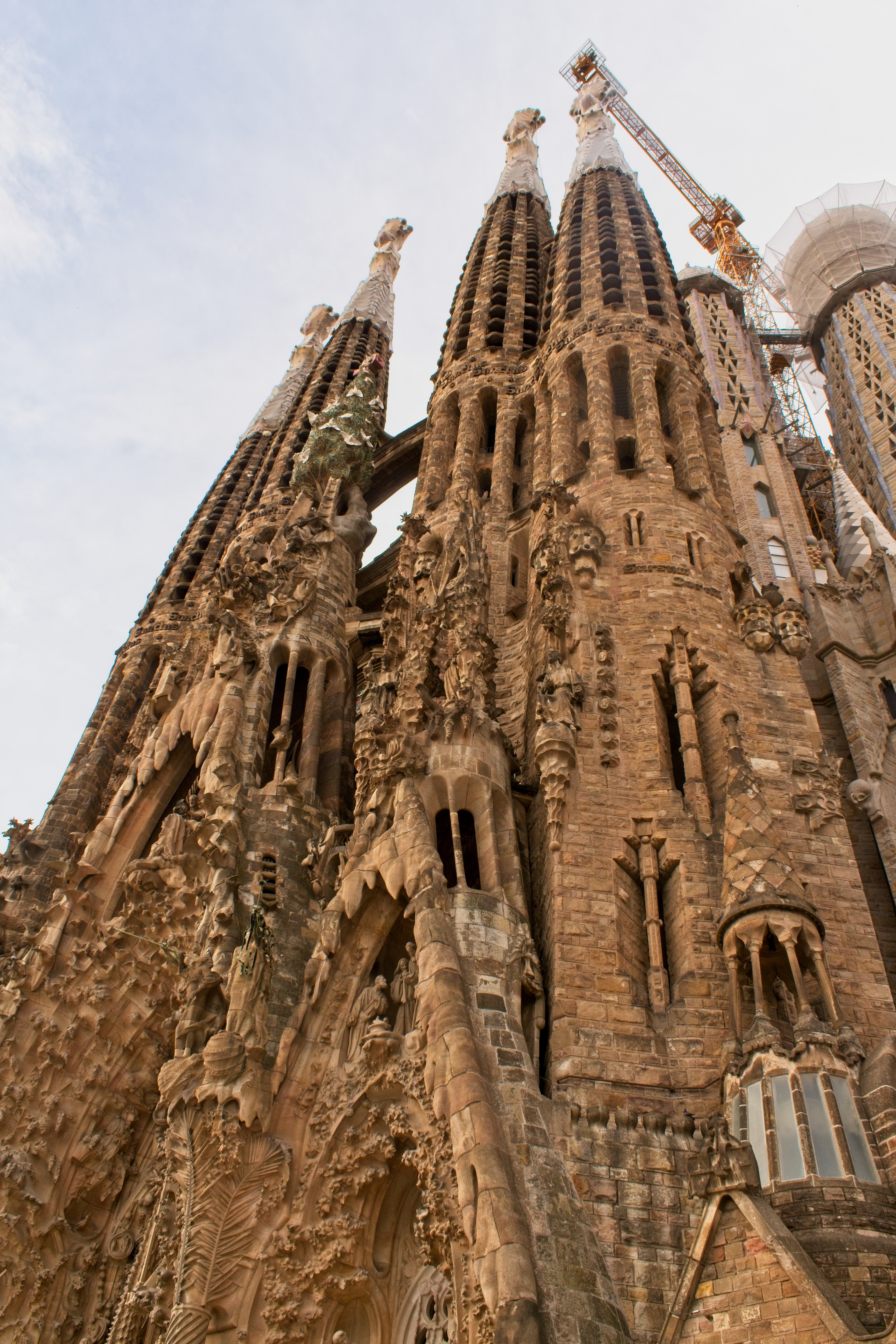
The Nativity Facade, the oldest part of the building and fussiest, most Neo-Gothic part.
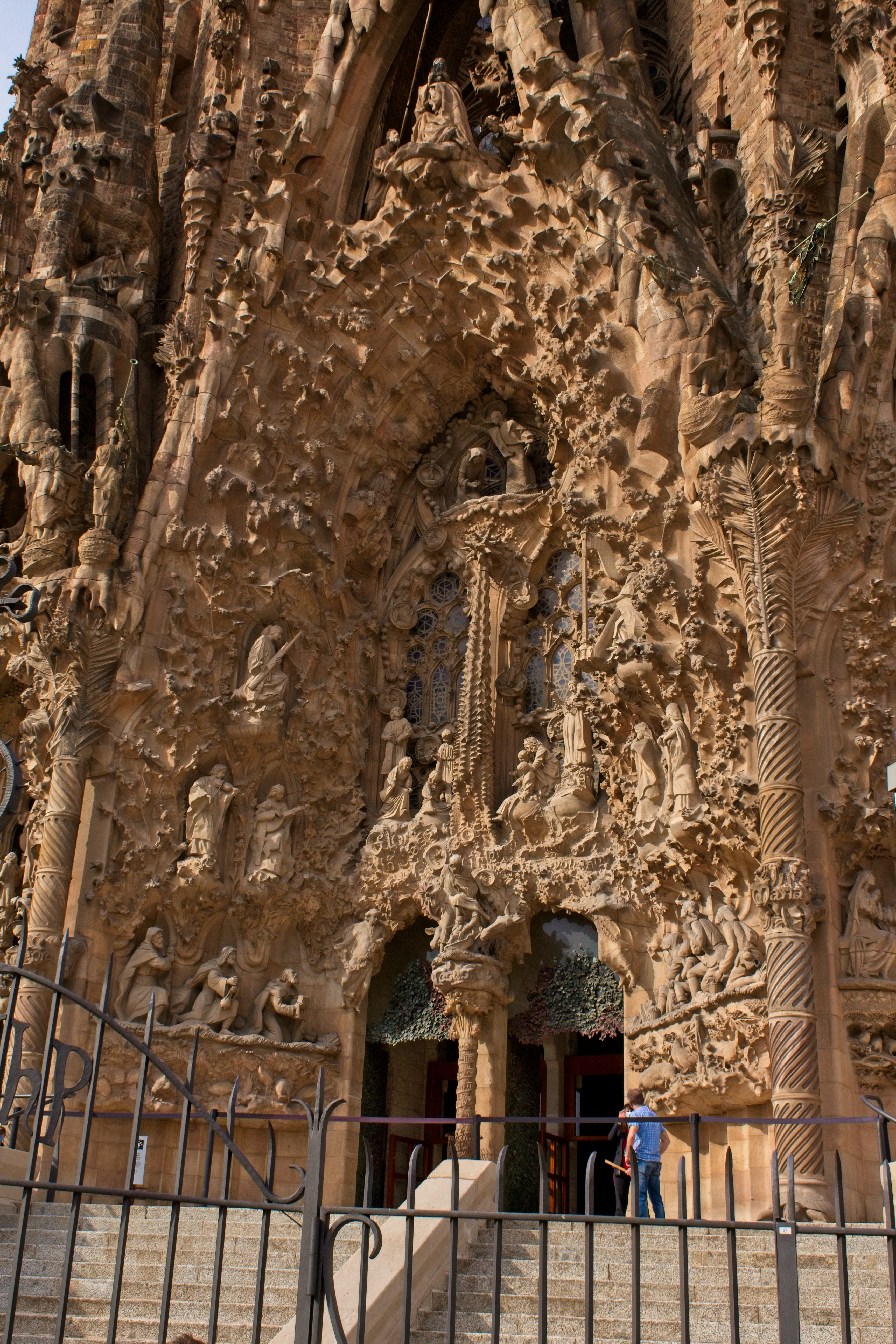
The main entrance, with the Nativity recreated in statues around the door
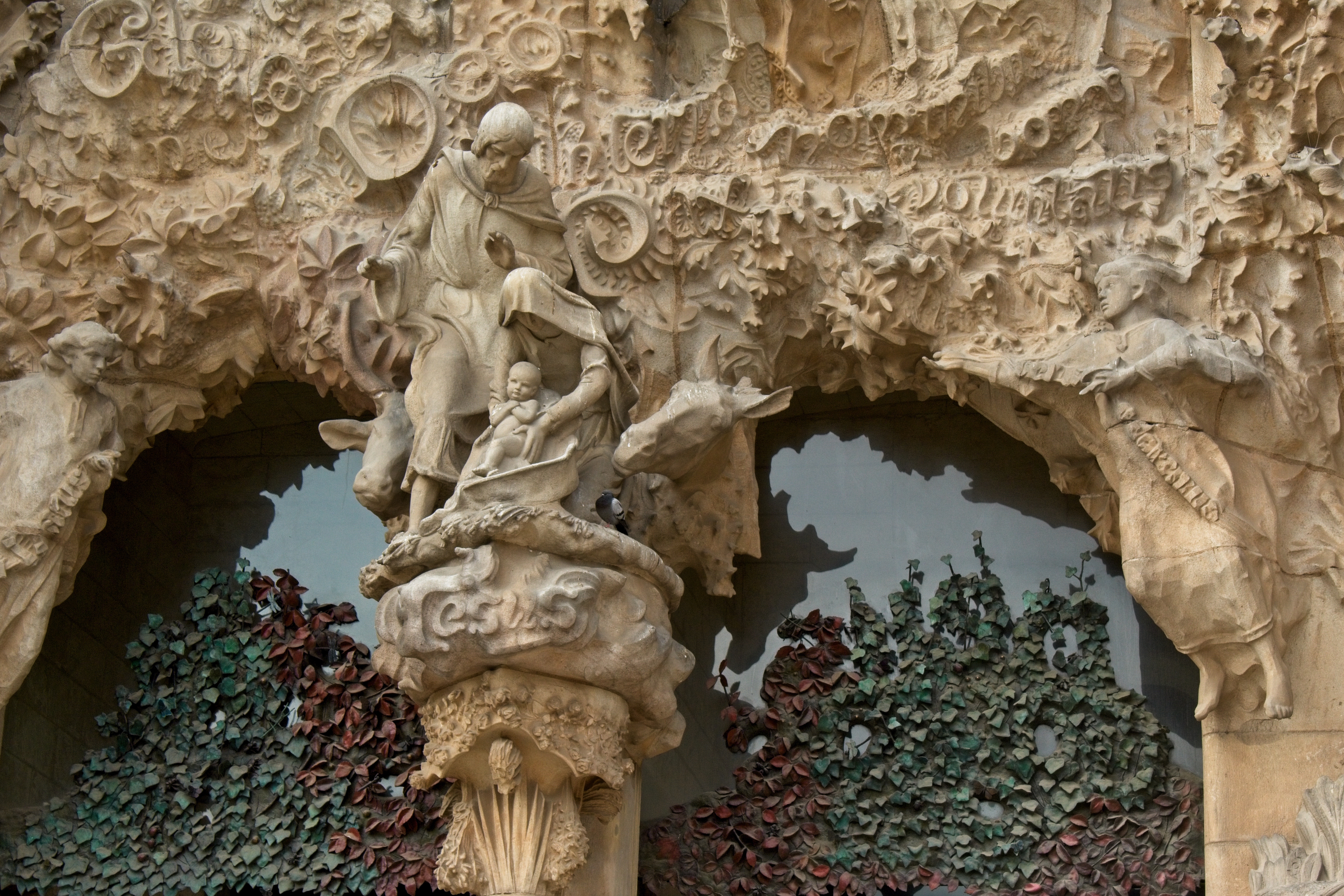
The stars of the show, plus ass and cow
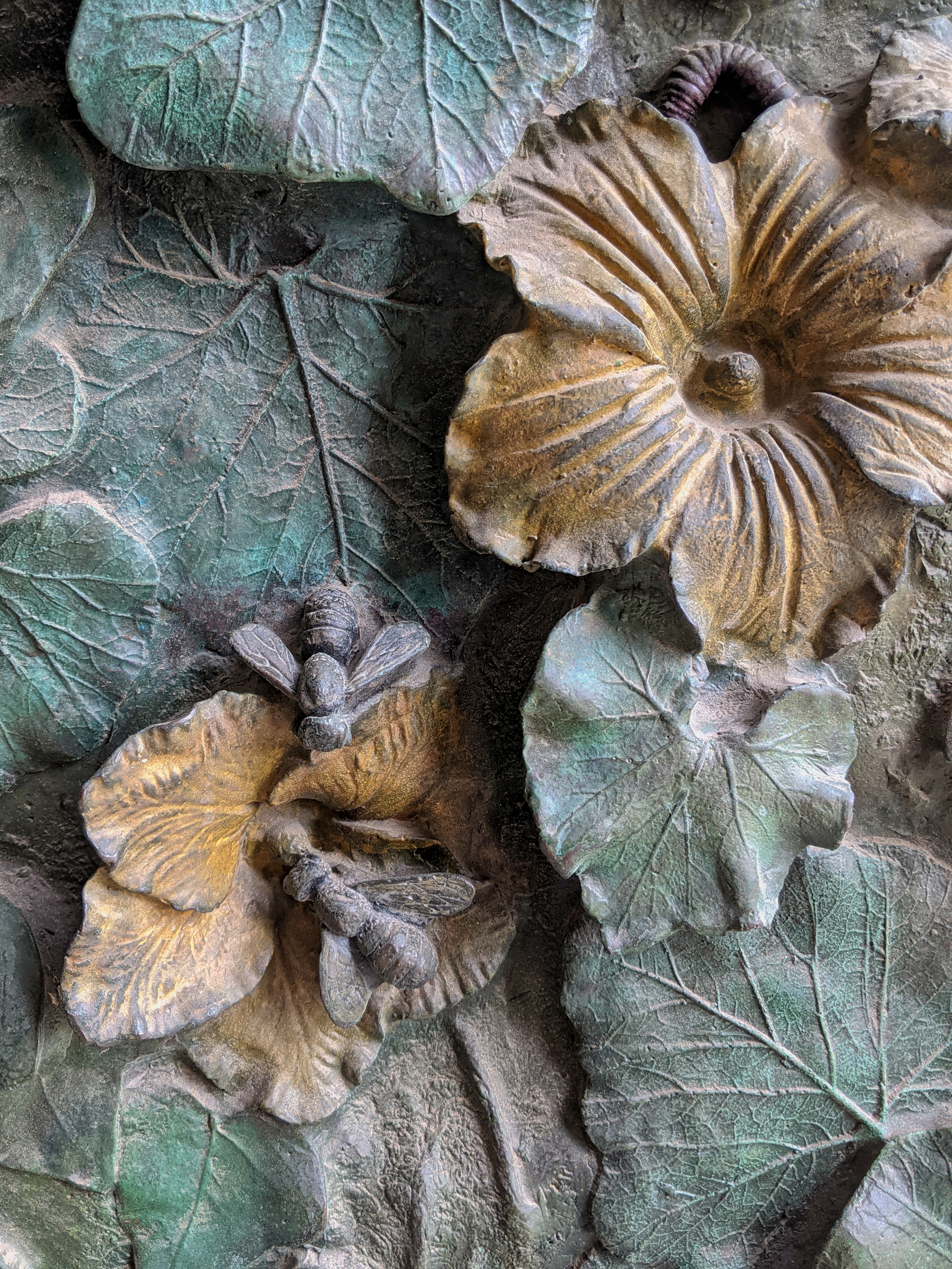
Detail from the entry doors, which were covered in many varieties of flowers and leaves and had some critters too.
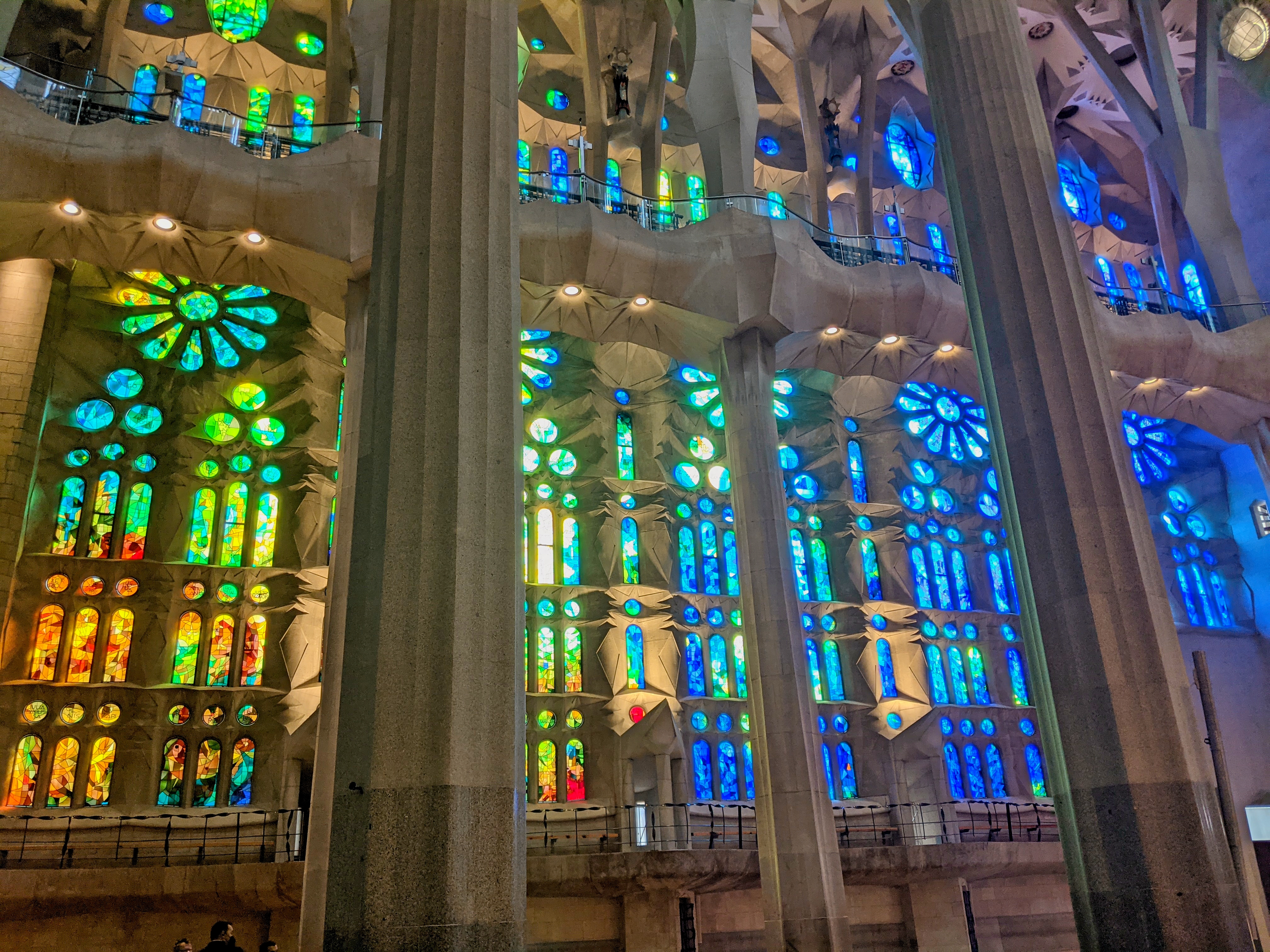
The eastern side of the building, with stained glass in morning colors
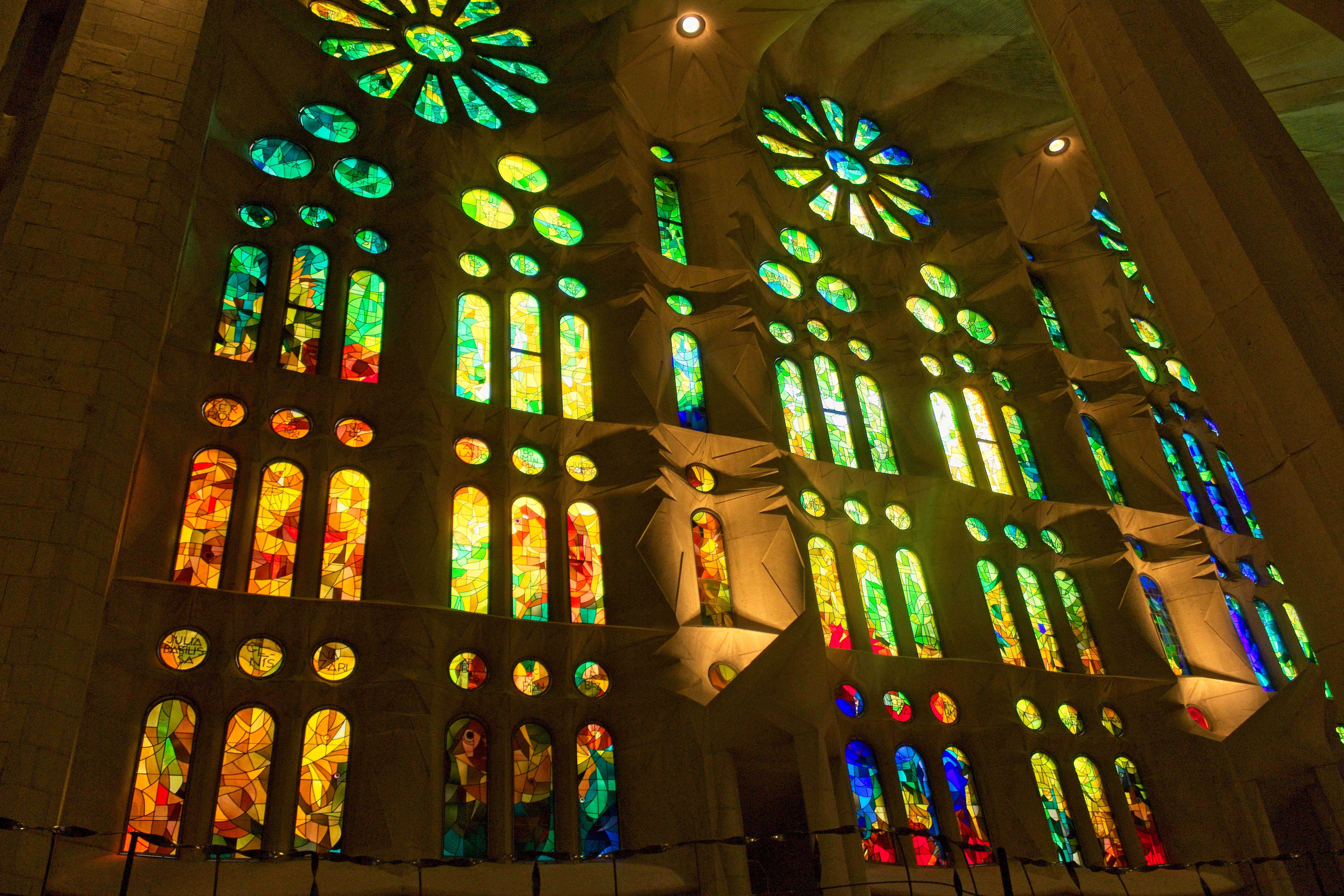
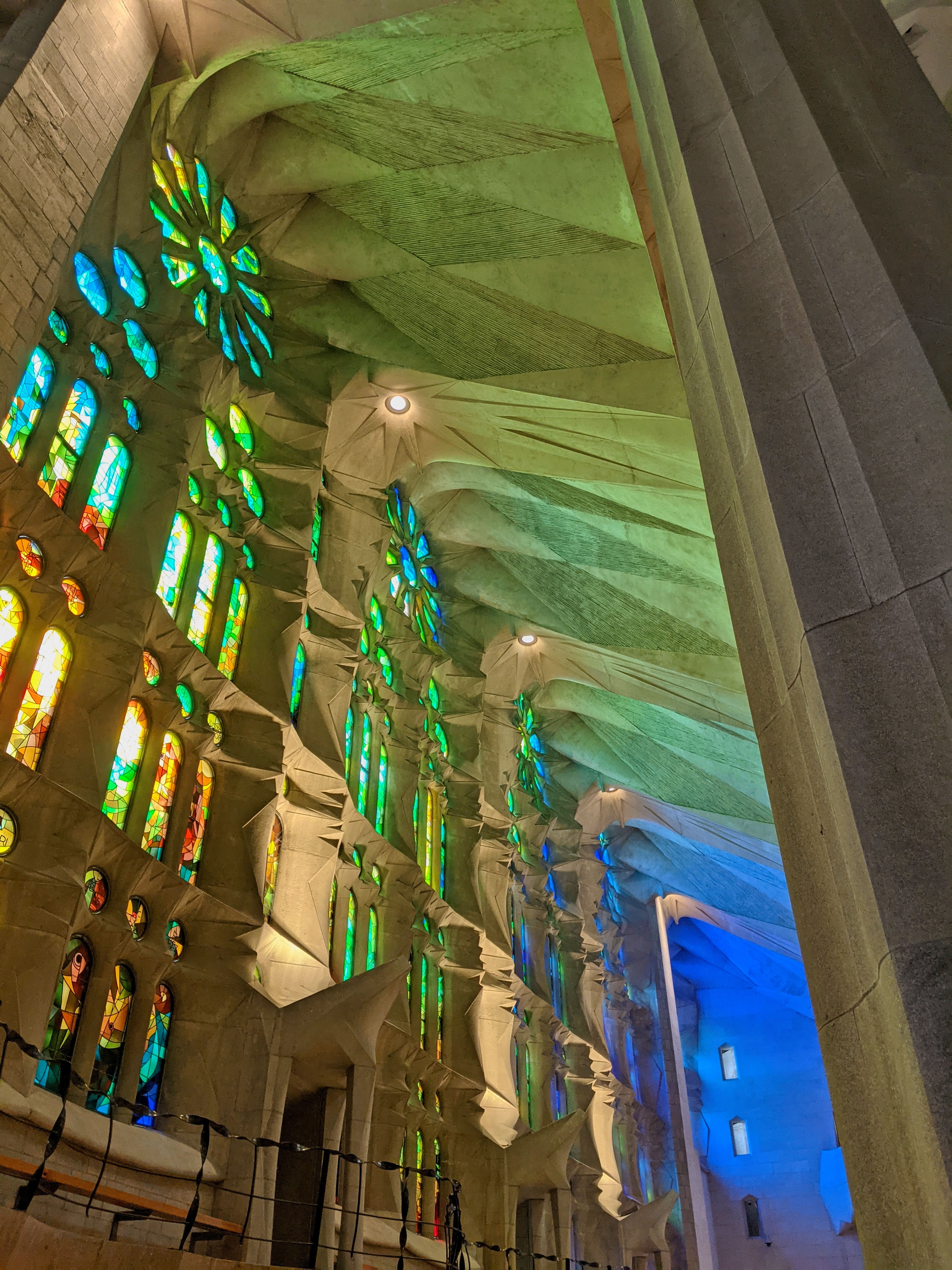
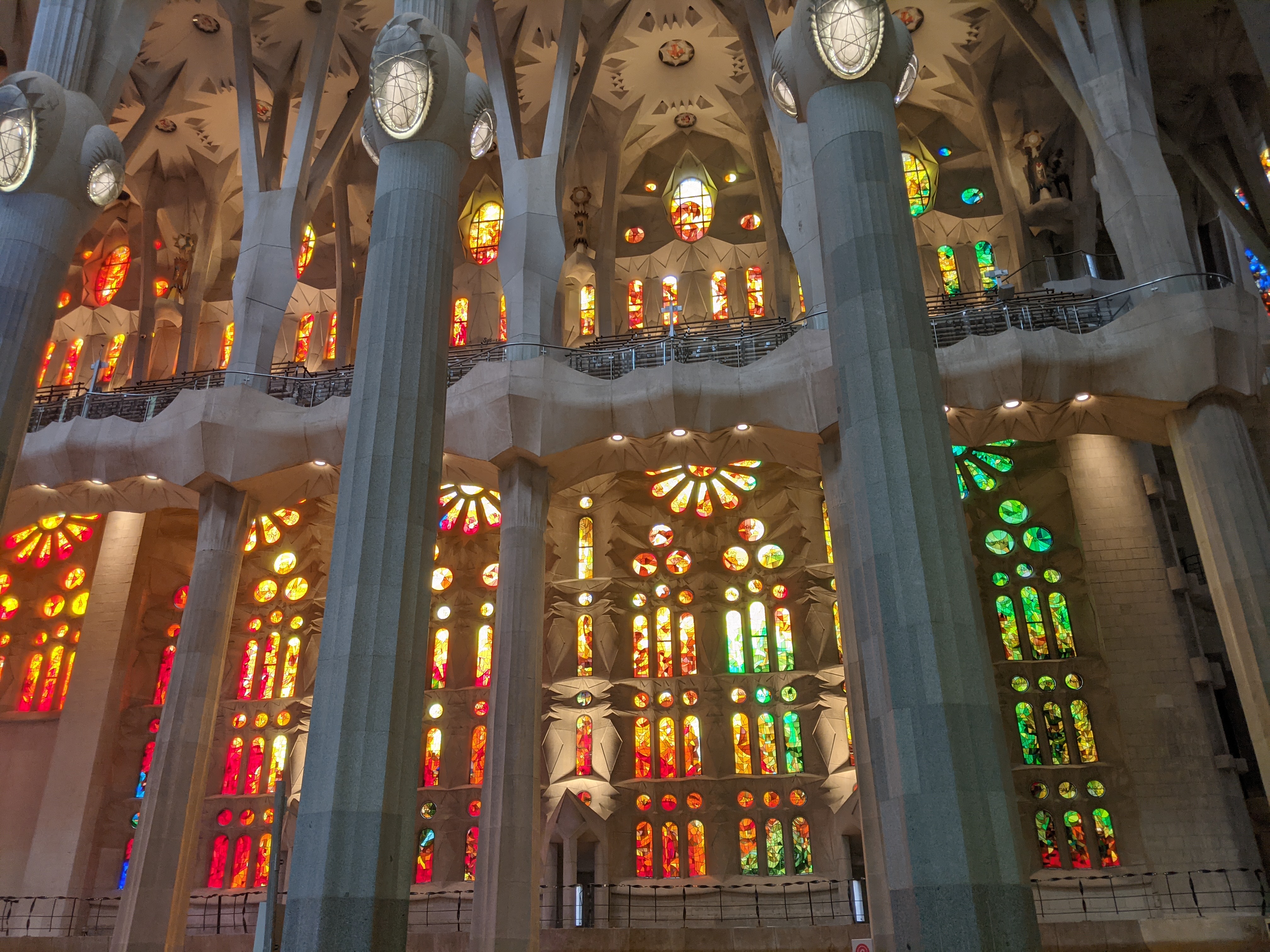
Across the way the west side, with glass in the colors of the sunset
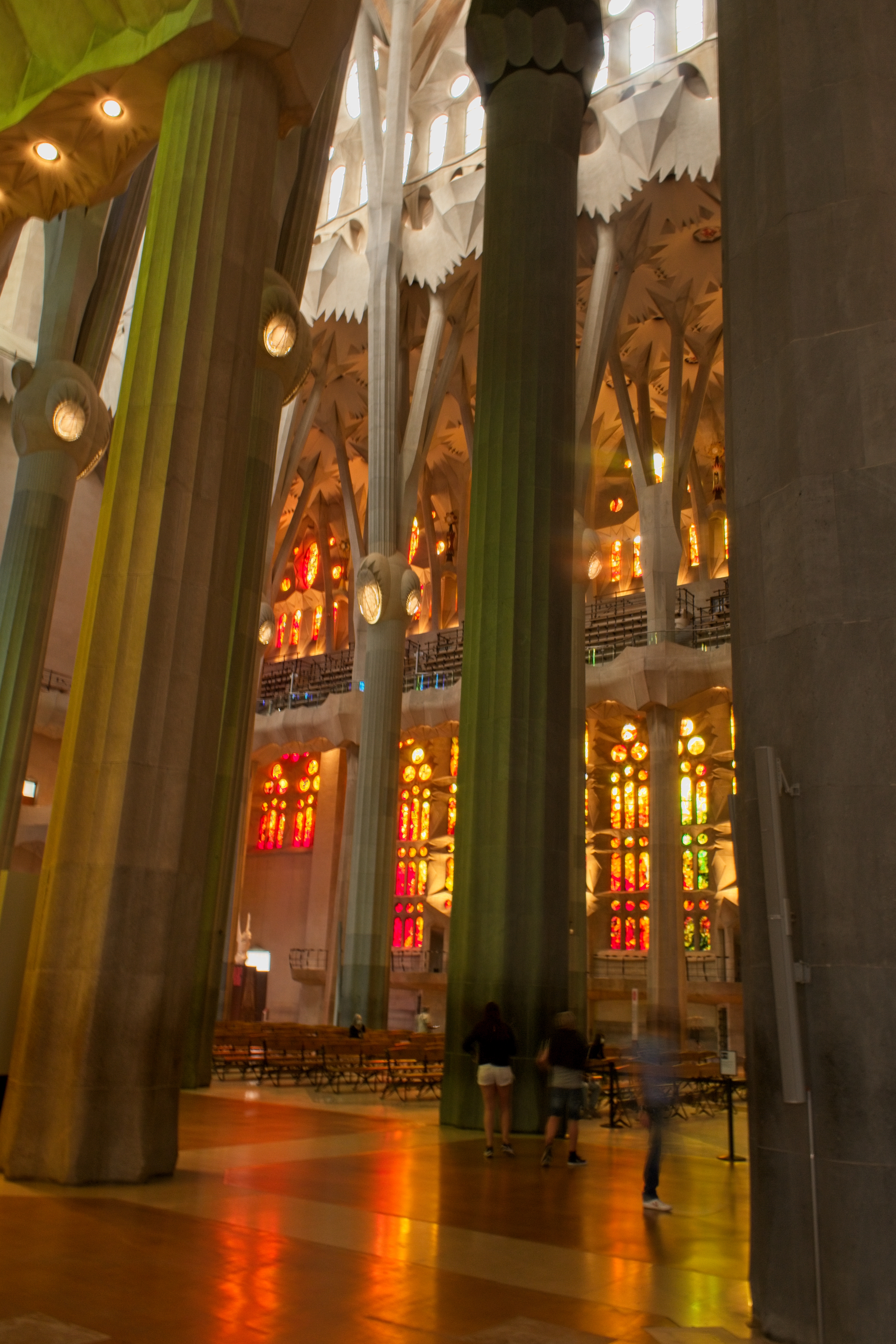
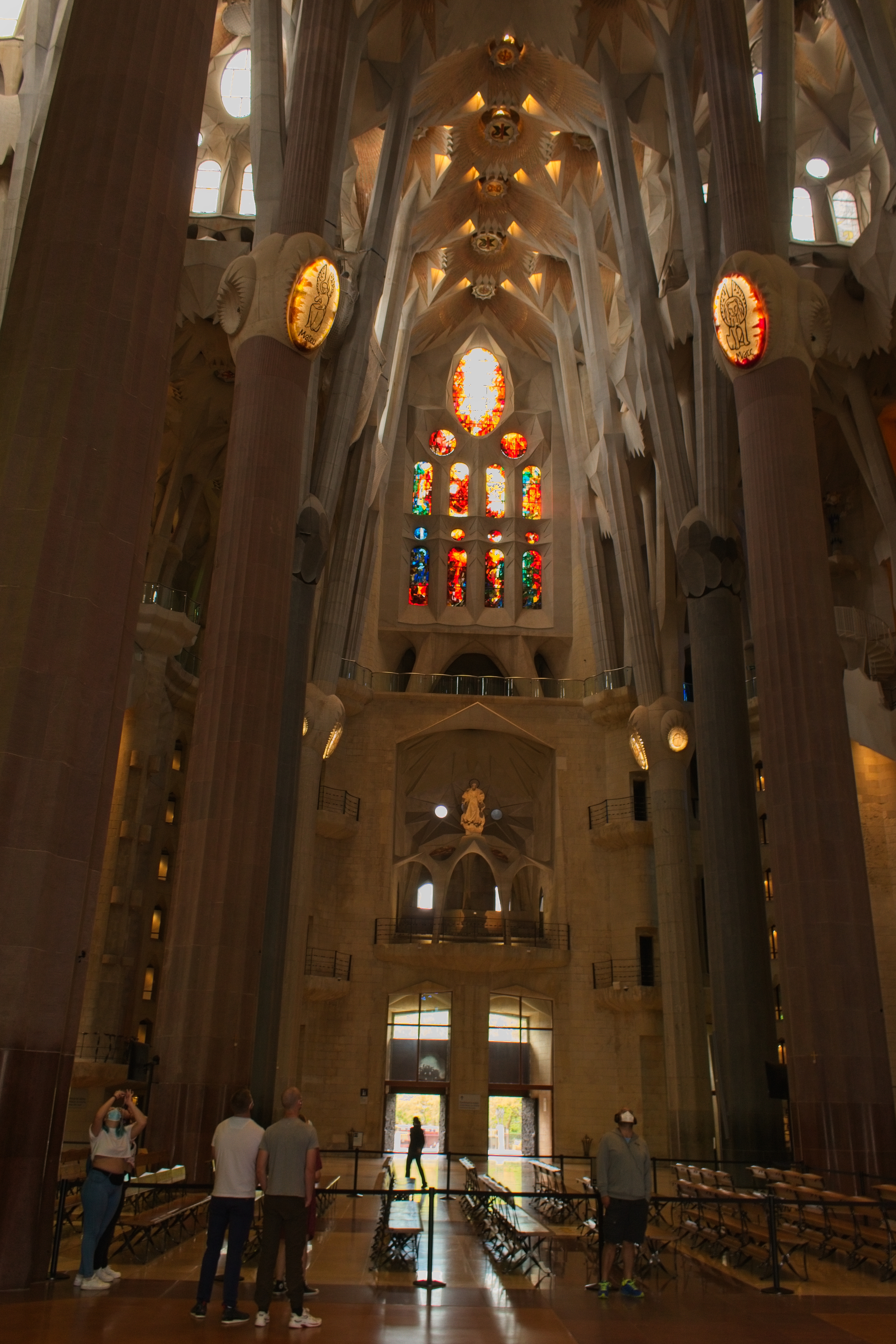
West transept. Note the rose color of the central pillars; that’s porphyry, a particularly strong stone which will hold up the tallest spire at 170+ meters.
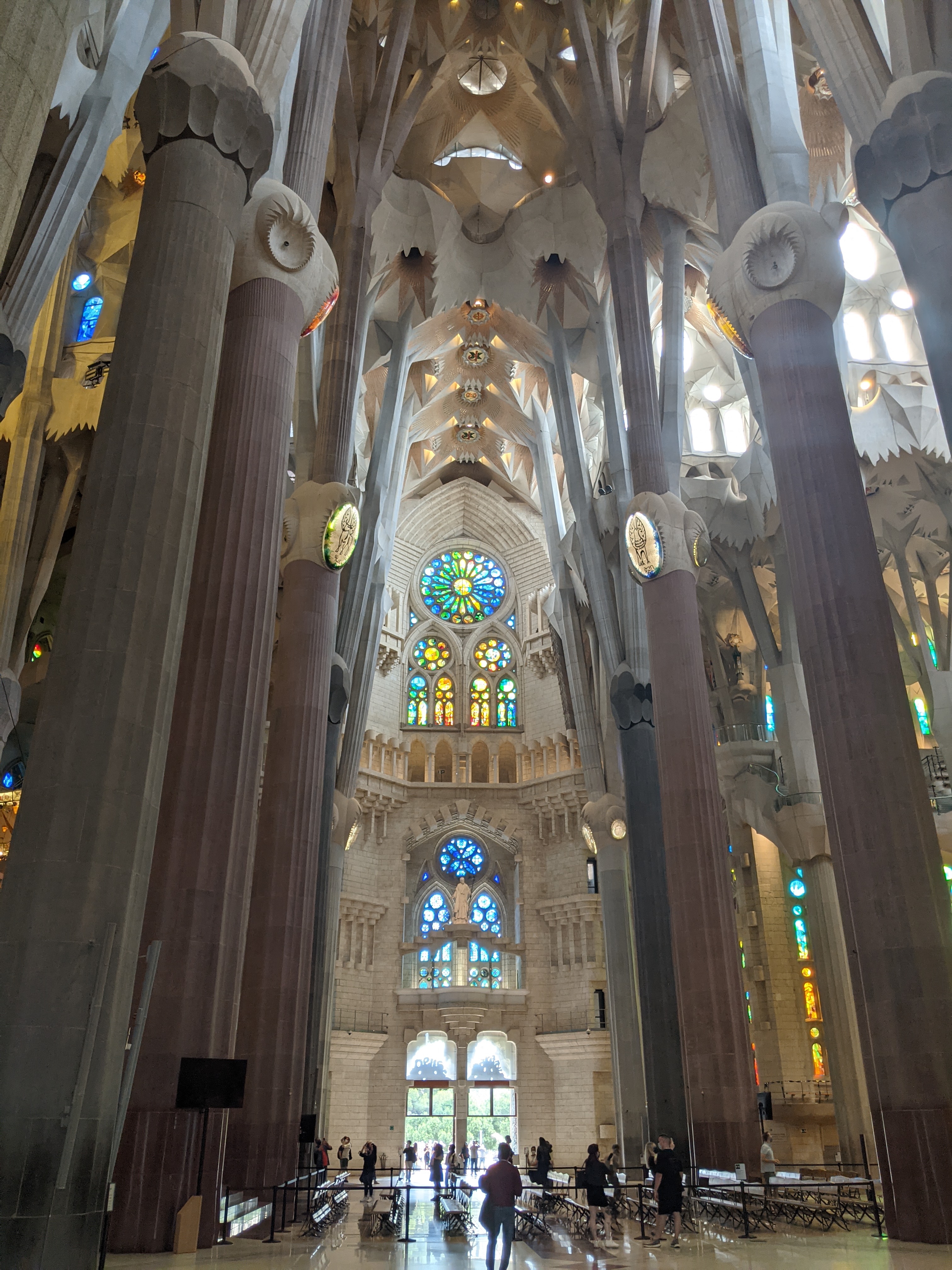
East transept
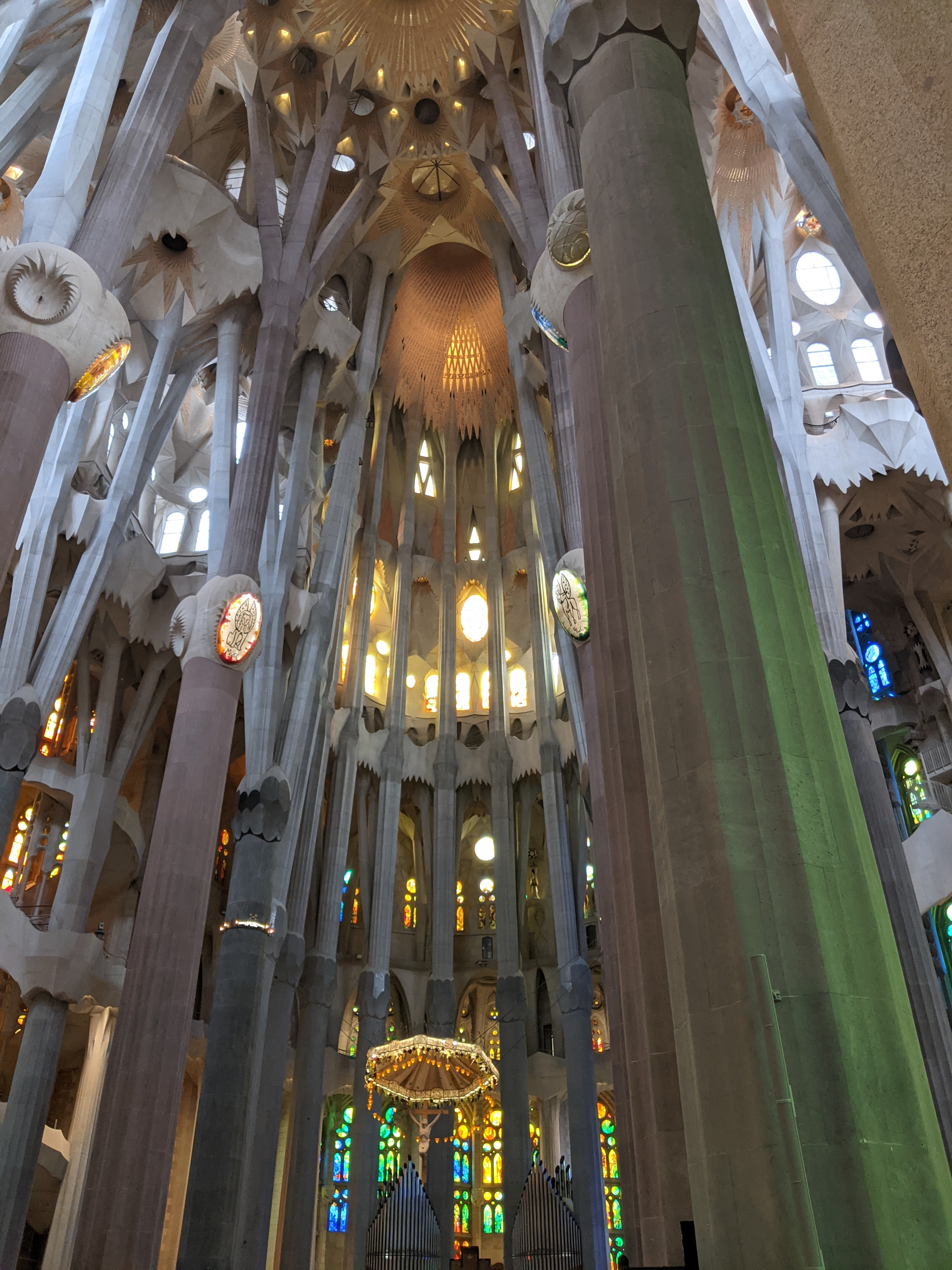
Looking toward the Apse or top of the cross shape of the cathedral. Ceilings are as tall as 45 meters.
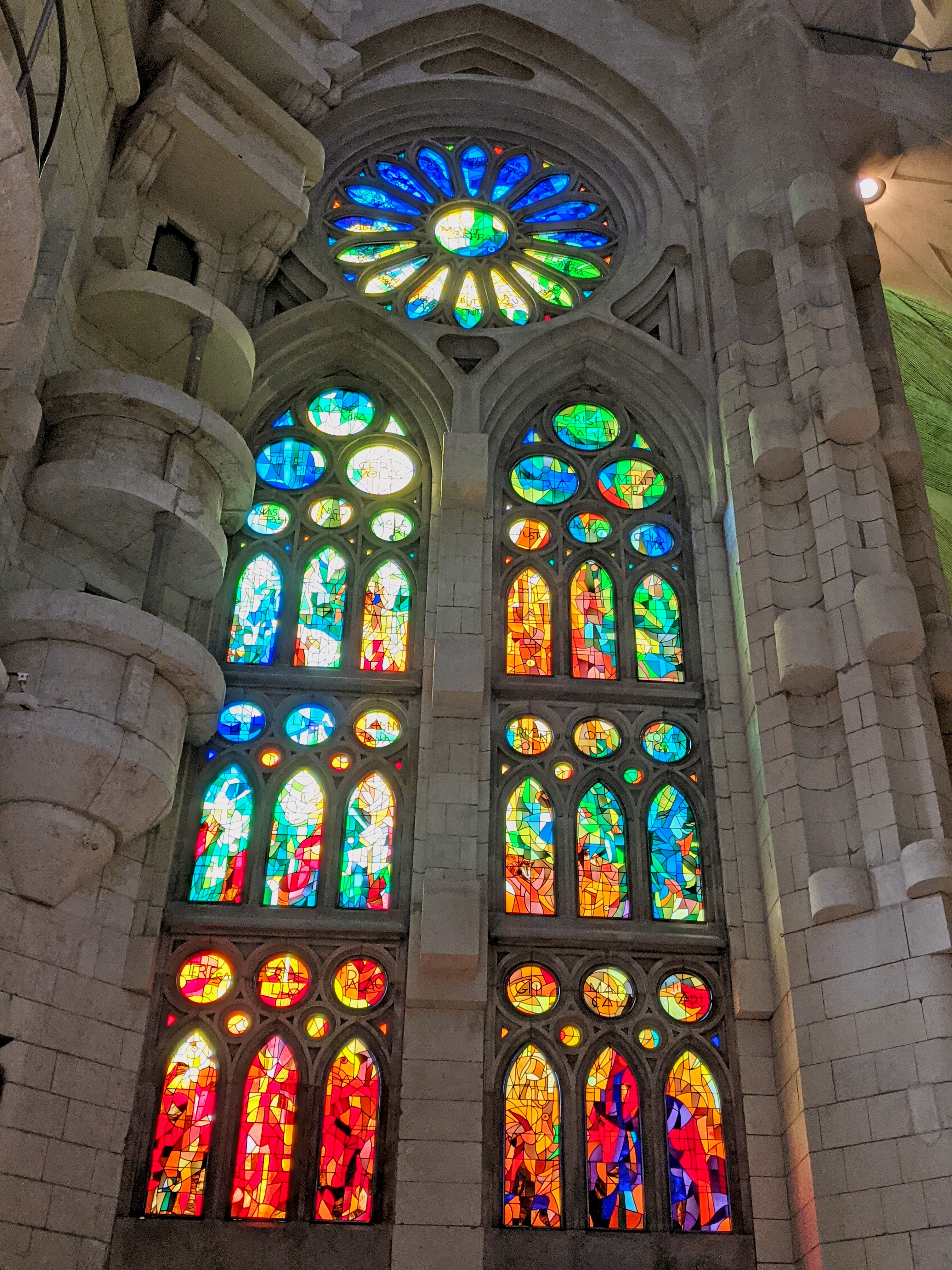
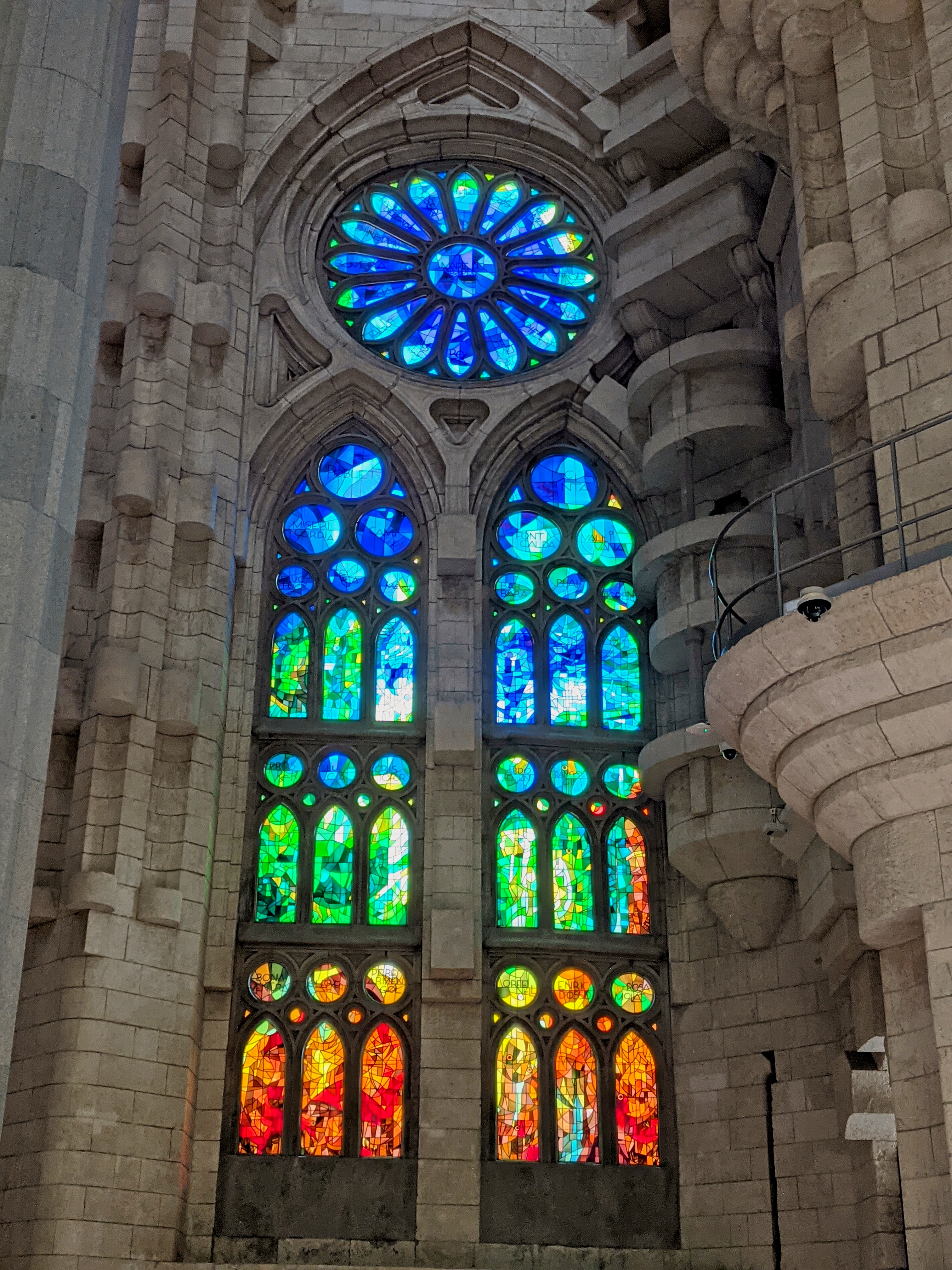
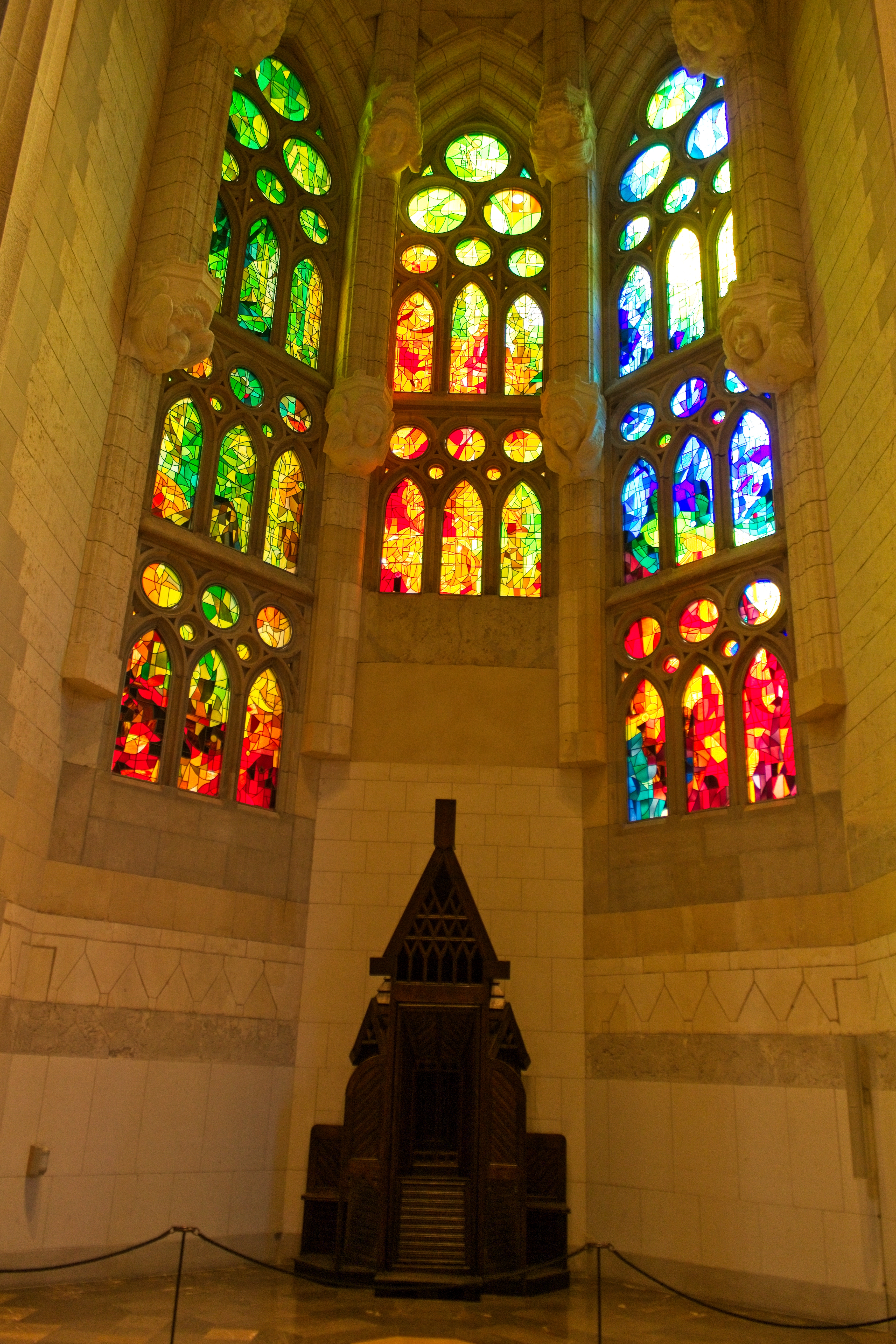
Amazing stained glass works
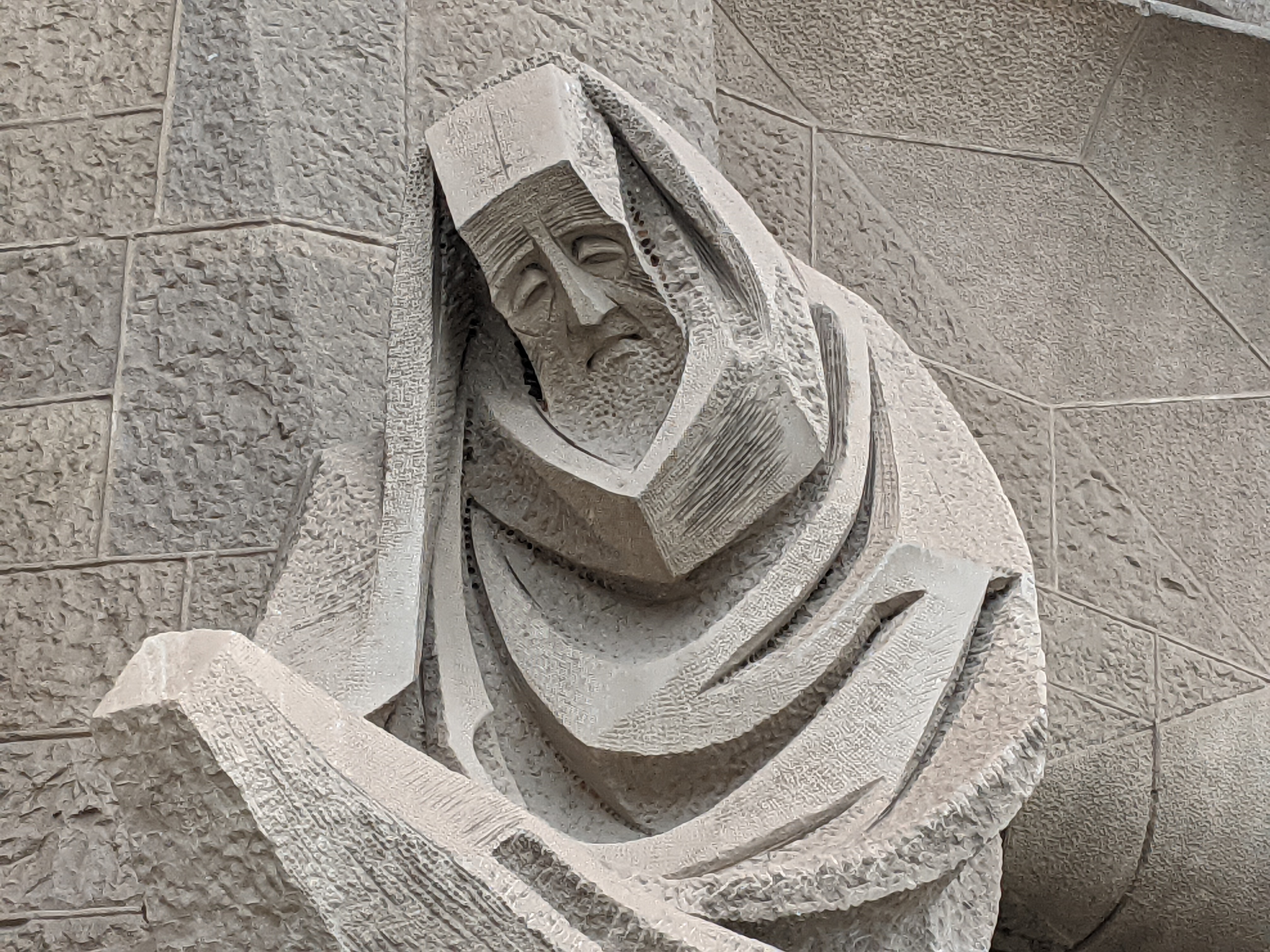
One exits at the Passion facade (which will ultimately be the main entrance to the church), which depicts the crucifixion. Here’s St. Peter being sad. The figures were all carved in this style which is meant to strike fear into the viewer.
So anyway, that’s what we’ve gotten up to. We are incredibly glad to be able to begin exploring again. Can’t wait to get the second shot and get out and about some more.
 Home | Travelblog
Leave a comment