About a year ago, our British hiking buddies Colin and Jane asked us if we were interested in doing the Annapurna Base Camp trek in Nepal. We thought that was a swell idea and agreed that a Spring 2024 date was achievable. What followed was a year of preparation, panic, exercise, doubt, confidence and ultimately a trip to Nepal.
The Annapurna Base Camp (or ABC) trek is notoriously hilly, involving nine days of hiking averaging 12-14 kilometers per day, or about 7 hours hiking per day. There’s hardly a level spot on the whole hike, you’re either going up or down. Almost all of the trek is above 2000 meters elevation, two days are above 3000 meters and ABC itself is 4310. What I’m saying is it’s a strenuous hike, especially for people in their mid-sixties.
Since about November, we’d been hiking nearly every weekend near Valencia, in the hopes of getting into shape for the trek. Cindy had been hitting the gym, working the treadmill and leg strengthening. I was walking about an hour and a half every day, taking every opportunity to put some elevation down in flat Valencia. We both walked the stairs to our 17th floor apartment at least once a day, by the end I was taking the stairs twice. We thought we were ready.
Cindy started making travel arrangements which proved troublesome. Turkish Airlines, who we were told are a wonderful airline, screwed up the booking and it took literally months and a physical trip to the airport for her to get it straightened out. Air travel turned out to be one of the recurring difficulties during the trip.
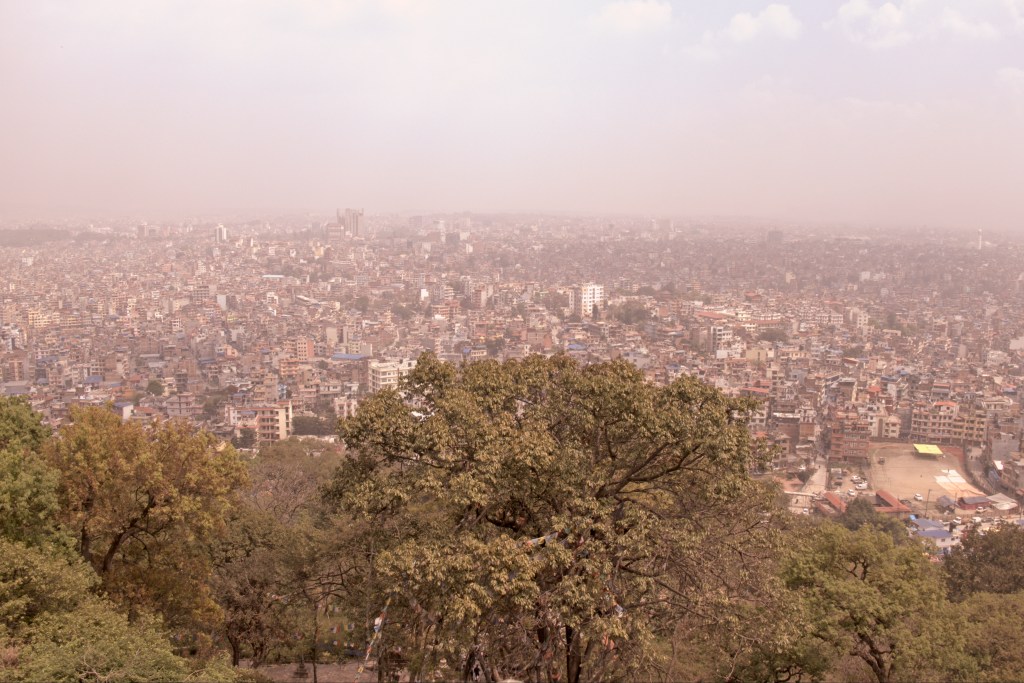
Still, we felt ready at the end of March so off we went to our first stop in Kathmandu, the capital of Nepal and by far the largest city. We didn’t know when we arrived that the city had nearly tripled in size just since 2000, to 1.6 million. It quickly became apparent that the population has overwhelmed the infrastructure. Nepal suffered a 20-year civil war (mid-’90s to mid 2010s) before establishing a republic and their economy, while it is growing, is heavily dependent on tourism and remittances from expats in India, the Middle East and East Asia. The country also depends heavily on foreign aid to bring most of its citizens out of the deepest poverty (Wikipedia).
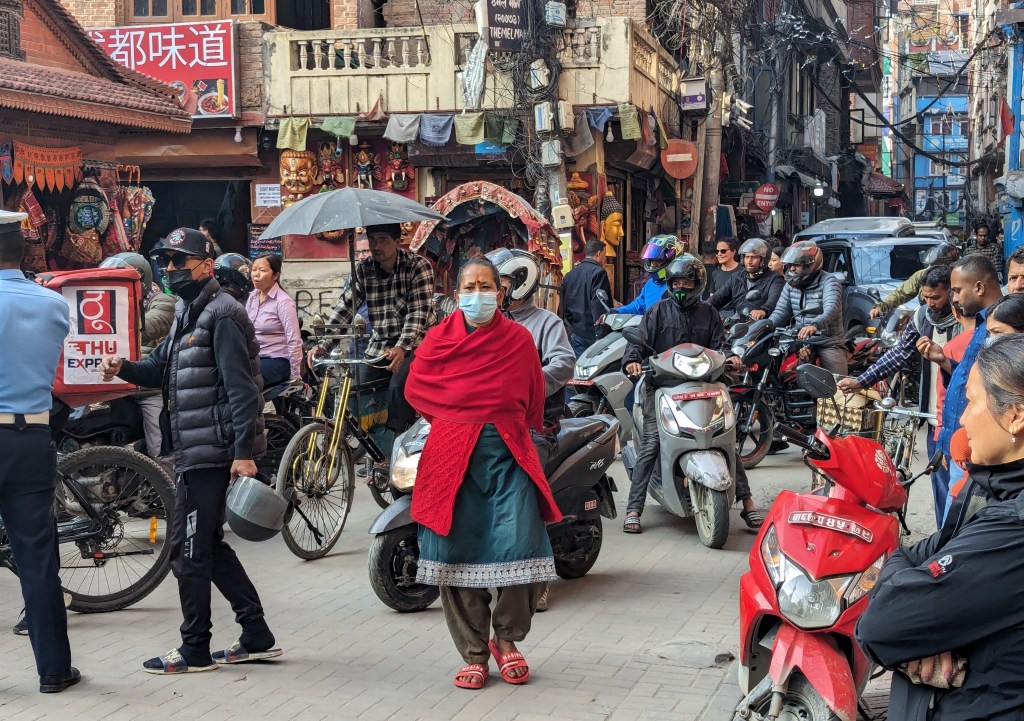
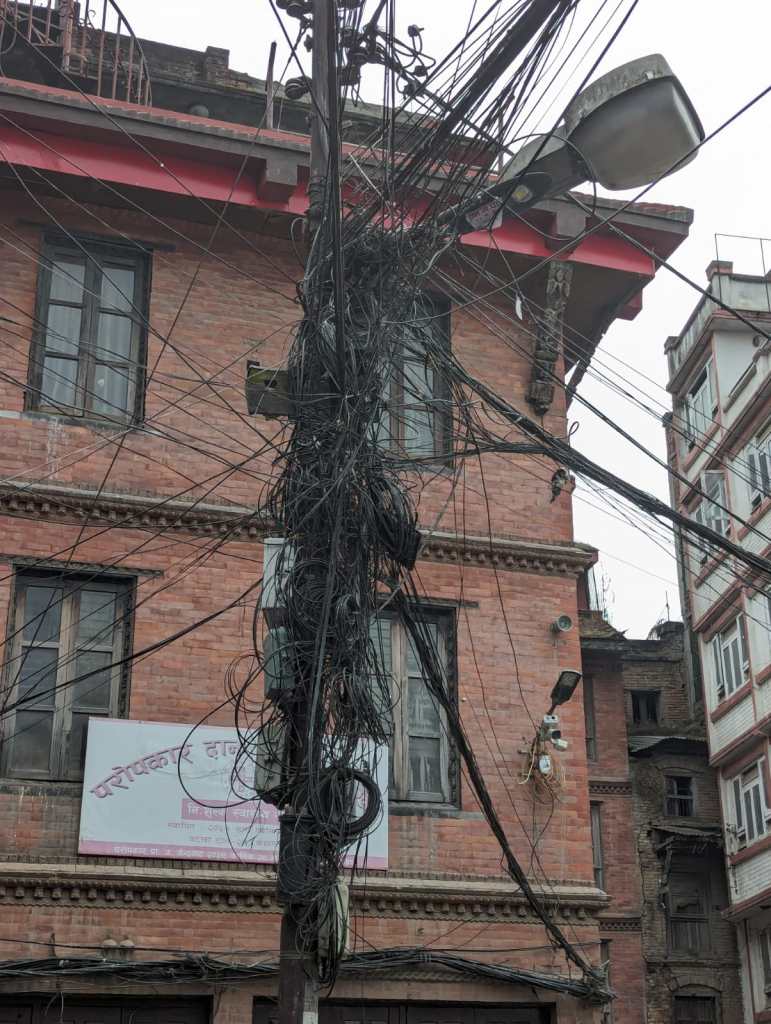
What that means in practical terms is that there are very few public services like transit, road infrastructure, water treatment, police etc. So you can’t count on the water (ask me how I know), the streets have no sidewalks, so you’re walking in traffic whenever you walk in the city, almost nobody goes by bus or metro (ha!) so there are a million motorbikes and cars on the move. This of course fouls the air, raises a lot of dust and makes walking anywhere in Kathmandu a white-knuckle experience.
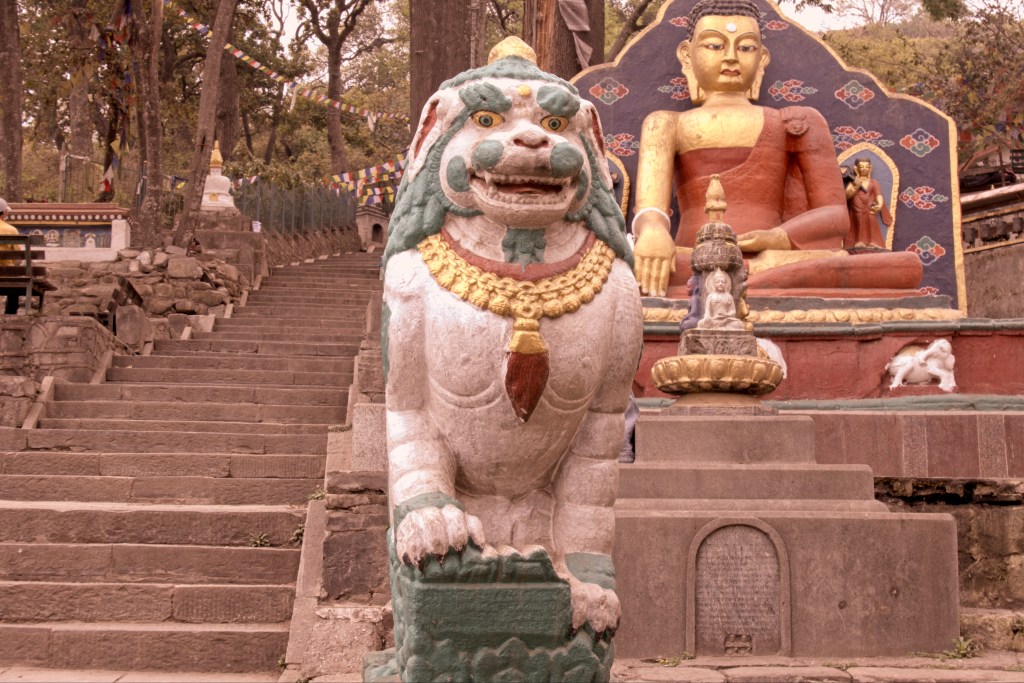
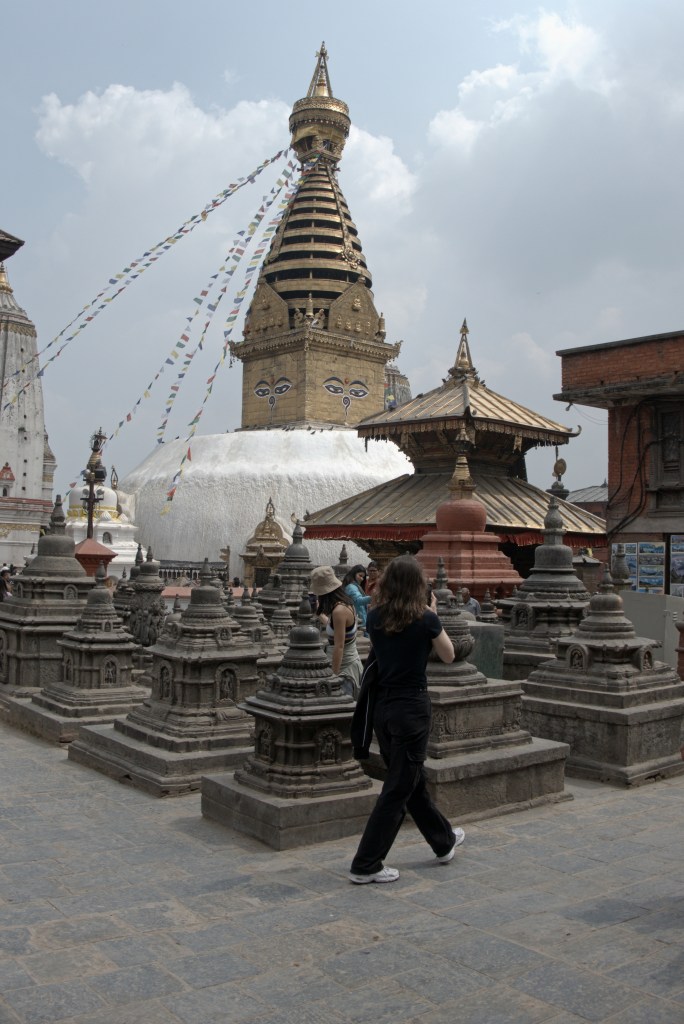
So, this is how we found ourselves in Kathmandu for a couple of days ahead of our trek. We walked around the center of the city, visited the Monkey Temple, shopped for a couple of last-minute items and mostly tried to take in the city without dying in the street. Thanks to a miscommunication between ourselves, we also made daily forays to the ATMs to collect enough cash to cover tips for our guide and porters. We met with Prakesh, owner of Prime Himalayas expeditions, who we hired to guide us on our trek. I can say that definitely Prime Himalayas is a quality outfitter and we’d recommend them to anyone.
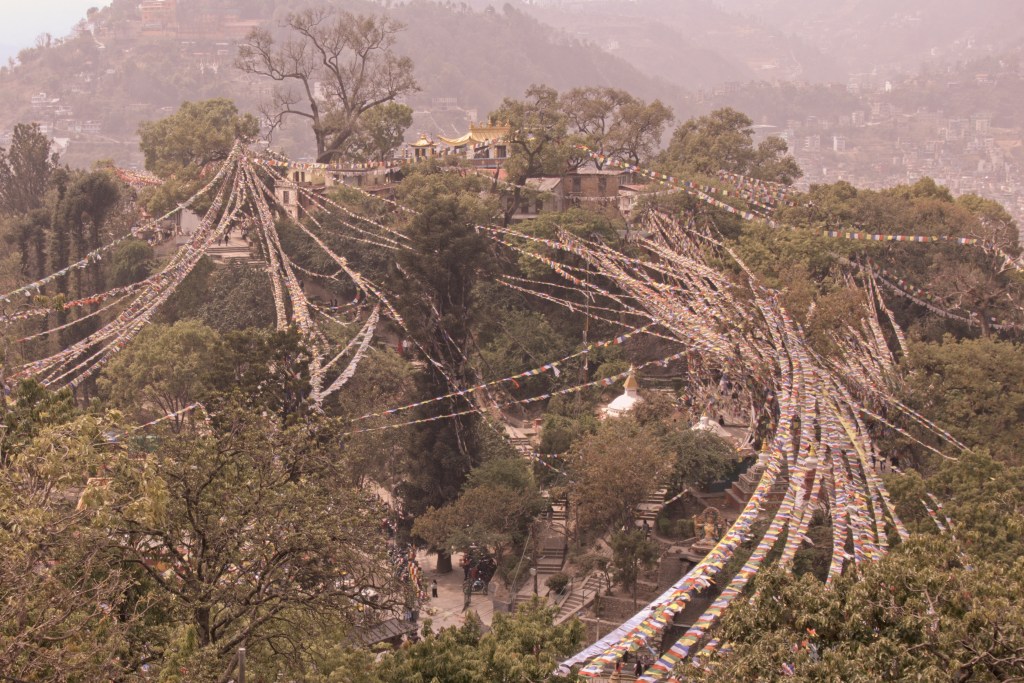
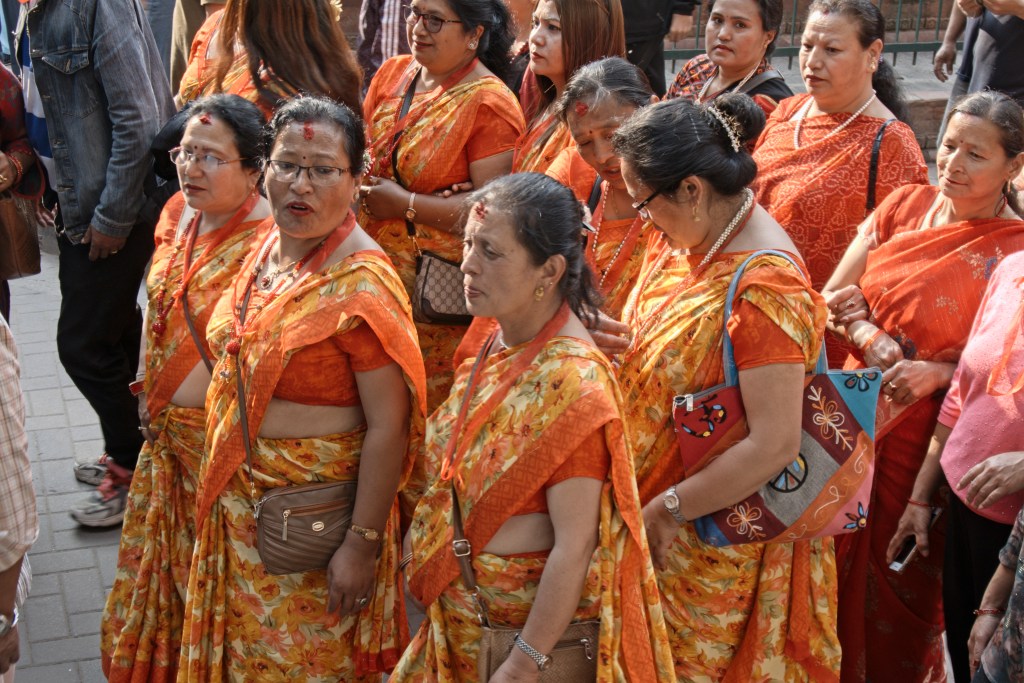
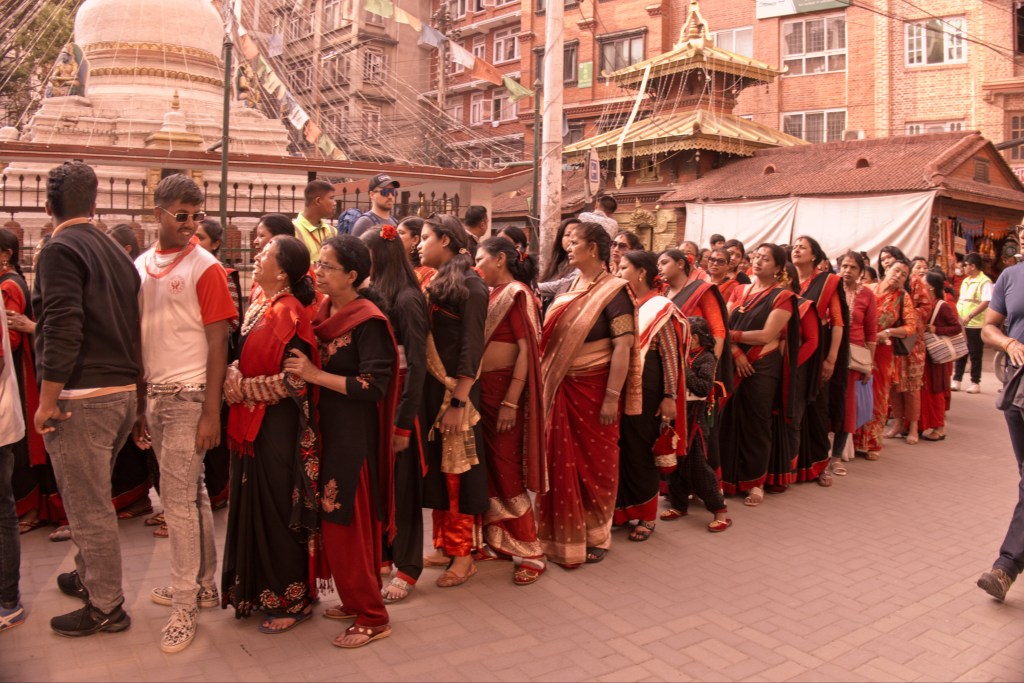
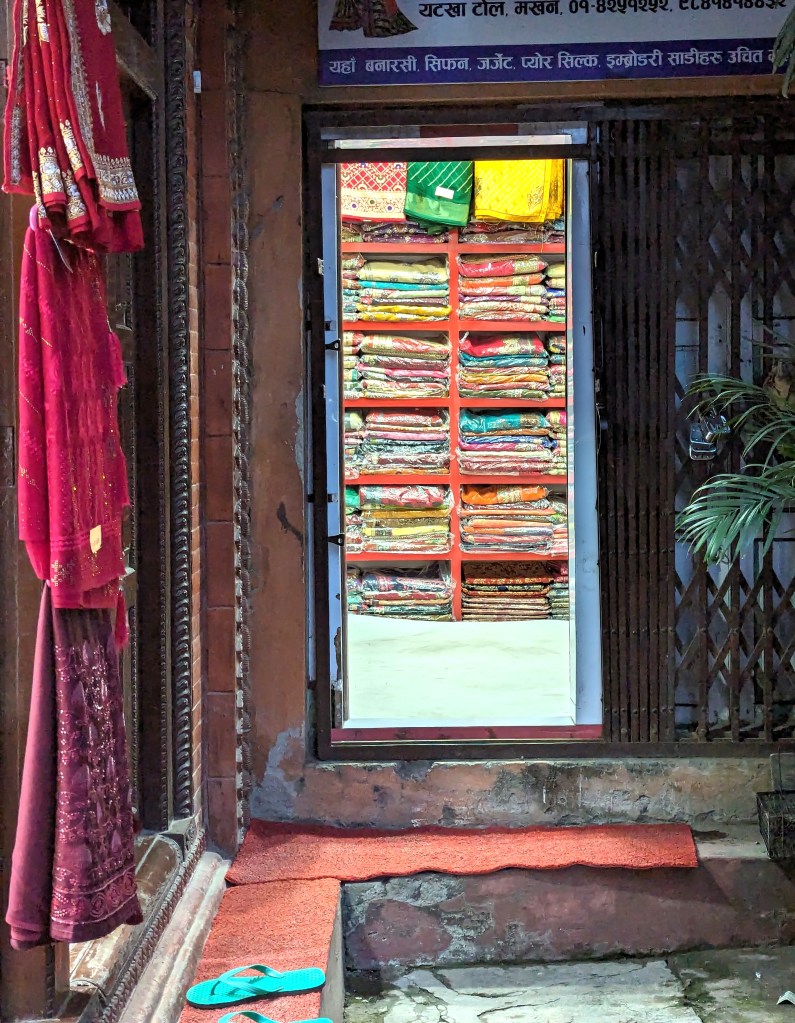

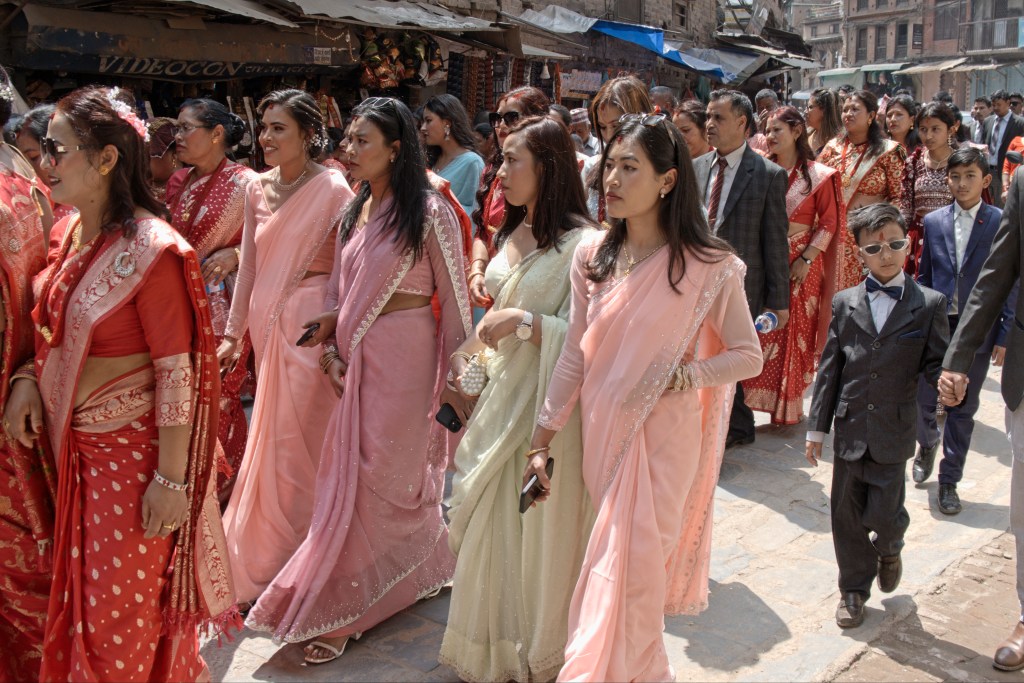
We took part of a day to visit the nearby town of Bhaktapur, known for its well preserved old town that dates from the Middle Ages and its many temples, both Hindu and Buddhist, located in the city’s four main squares. Bhaktapur is also known for its woodcarving and sculptures. Bhaktapur was heavily damaged by the earthquake that shook Nepal in 2015 and is still recovering.
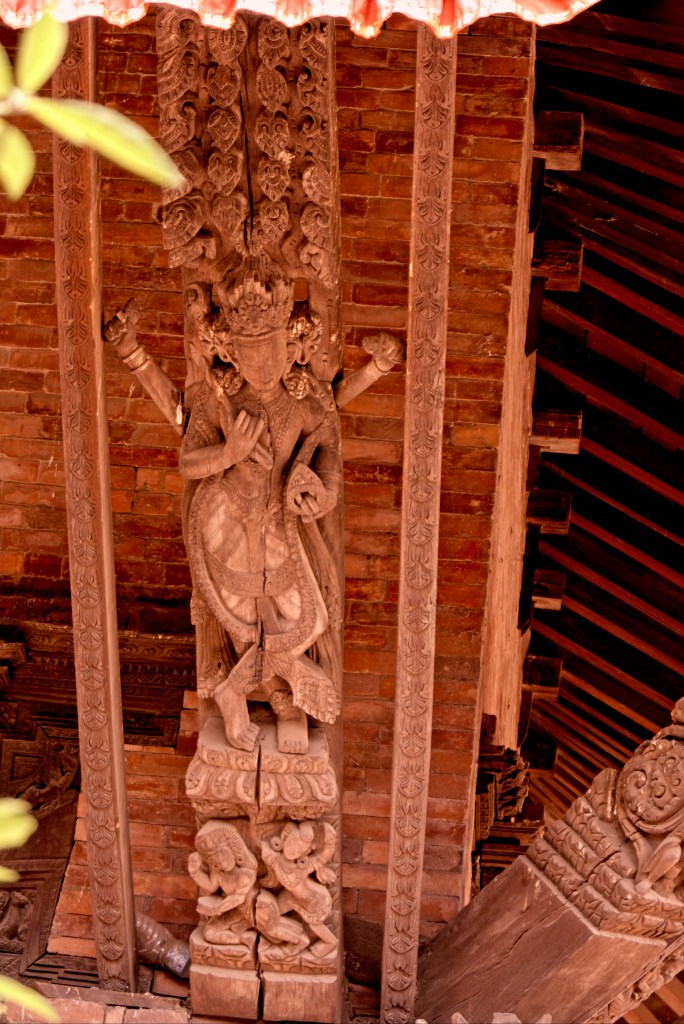
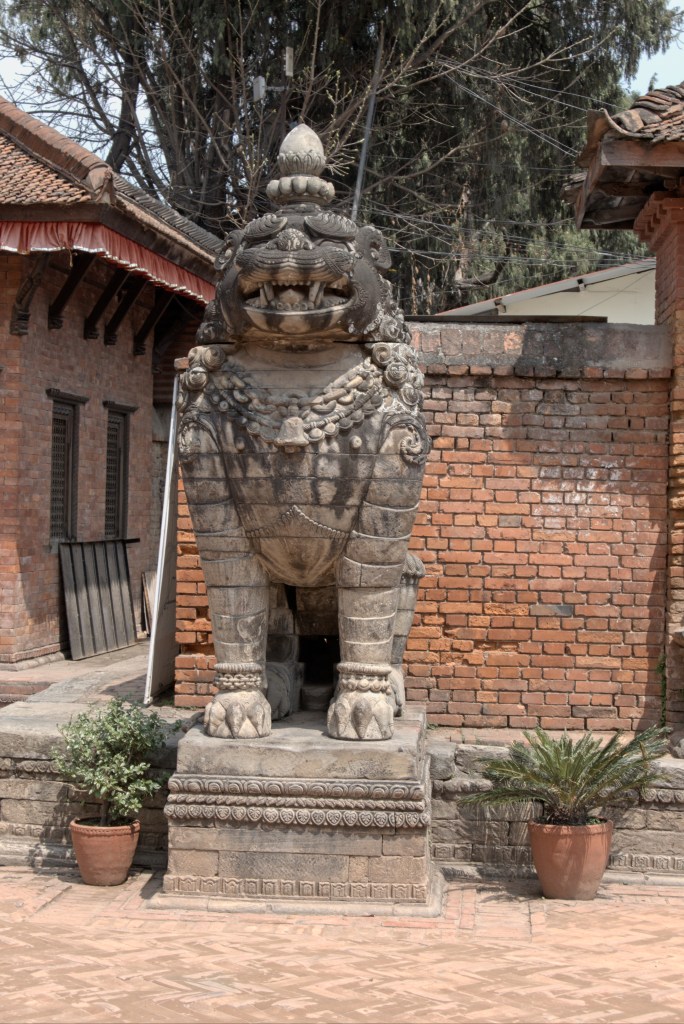
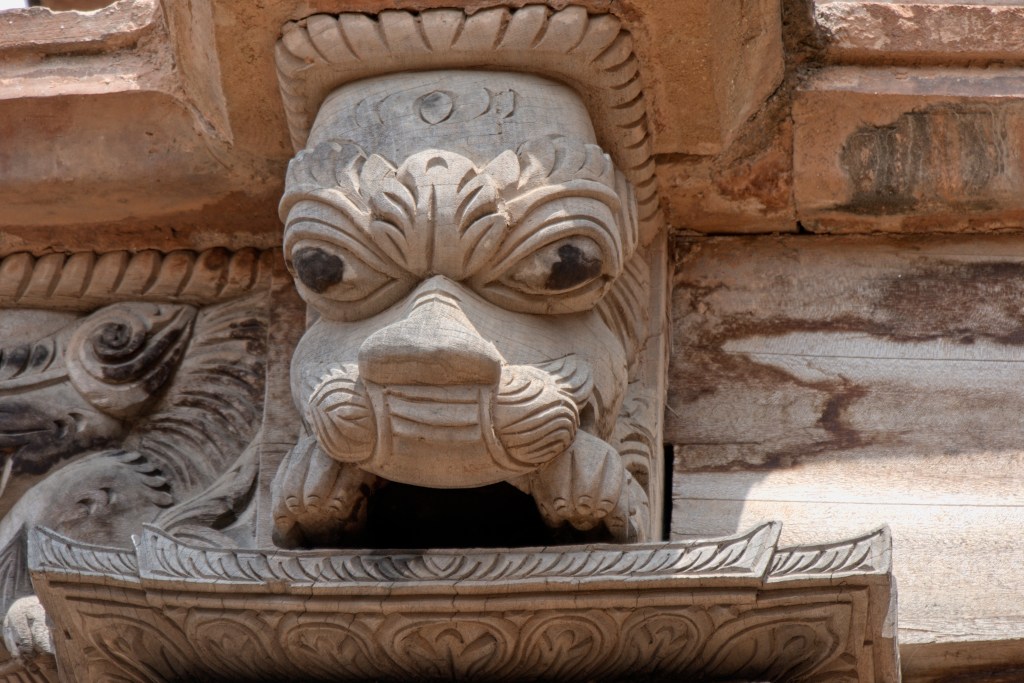
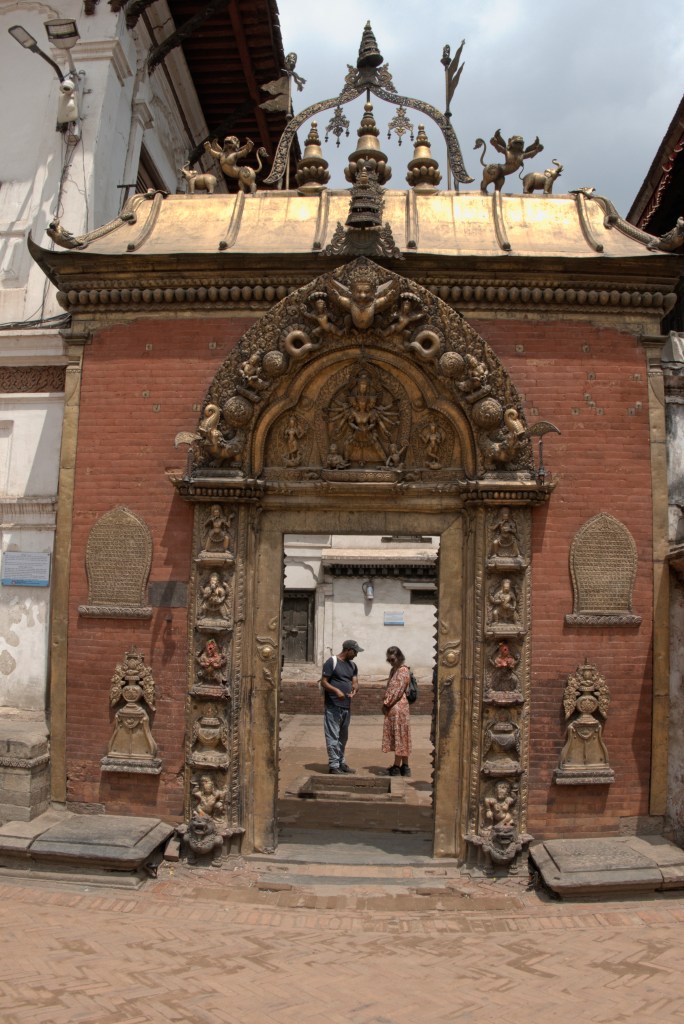
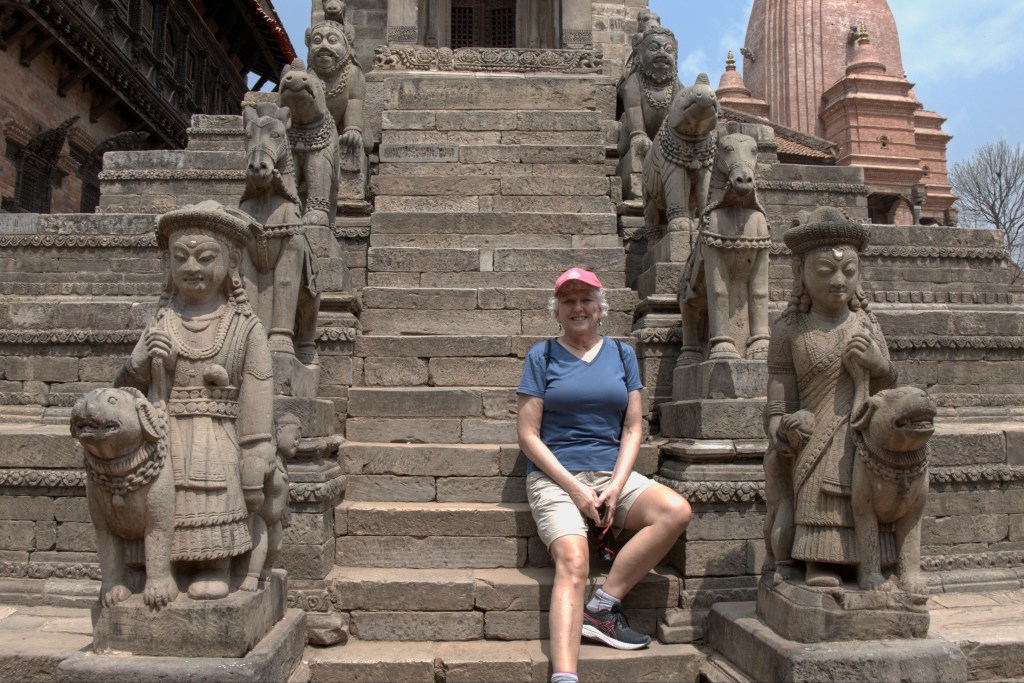
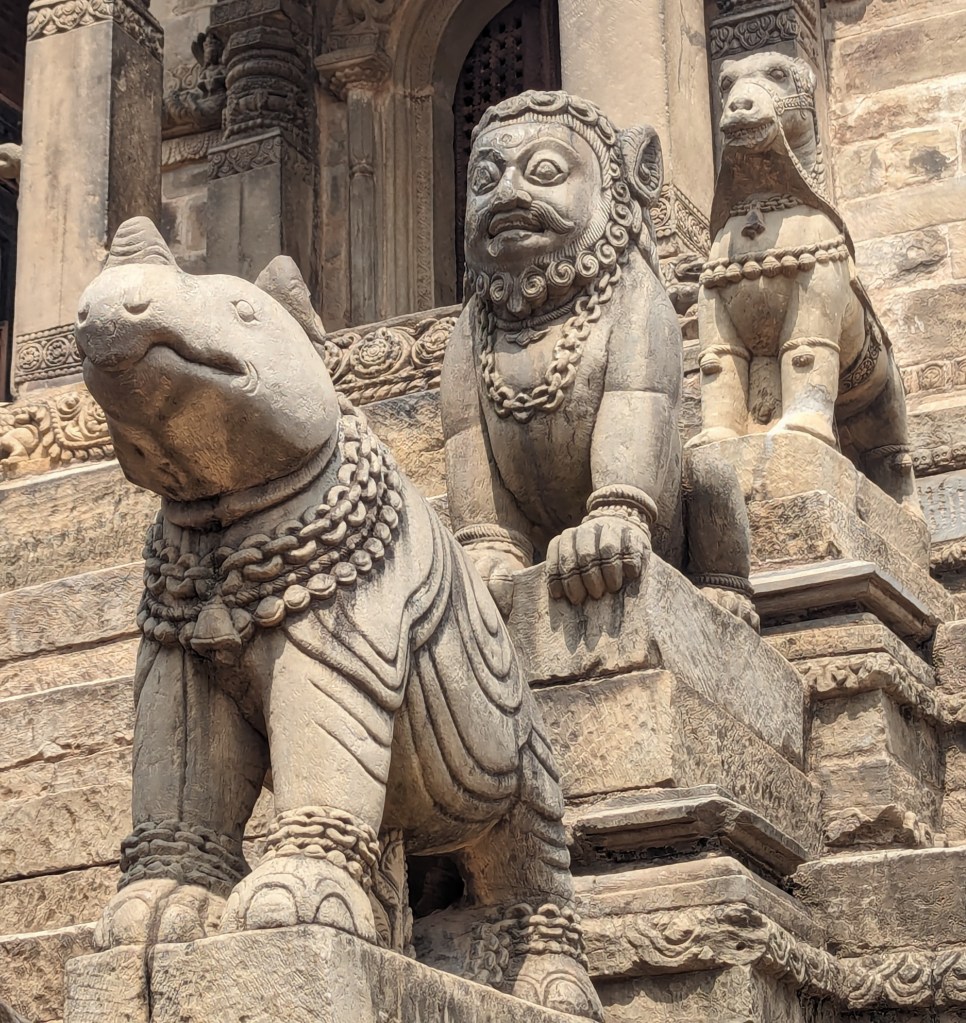
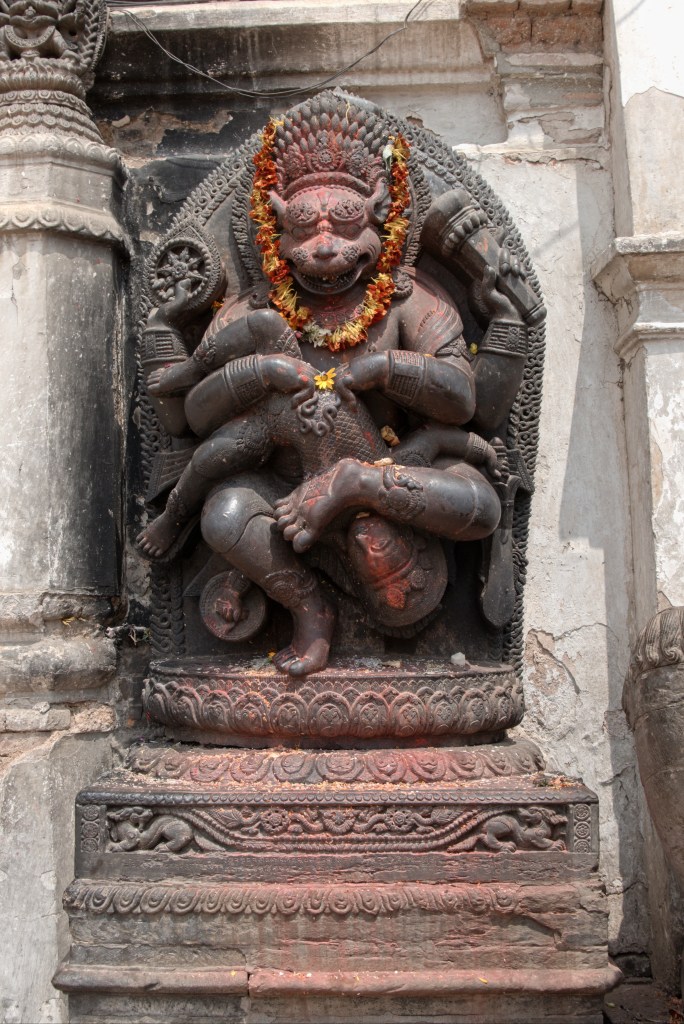
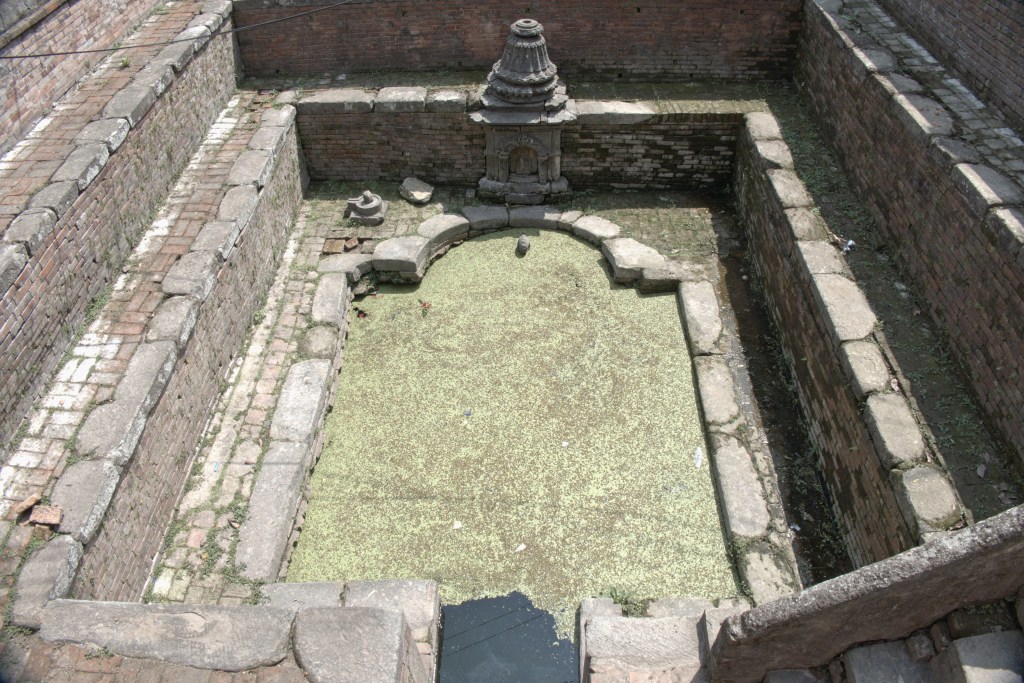
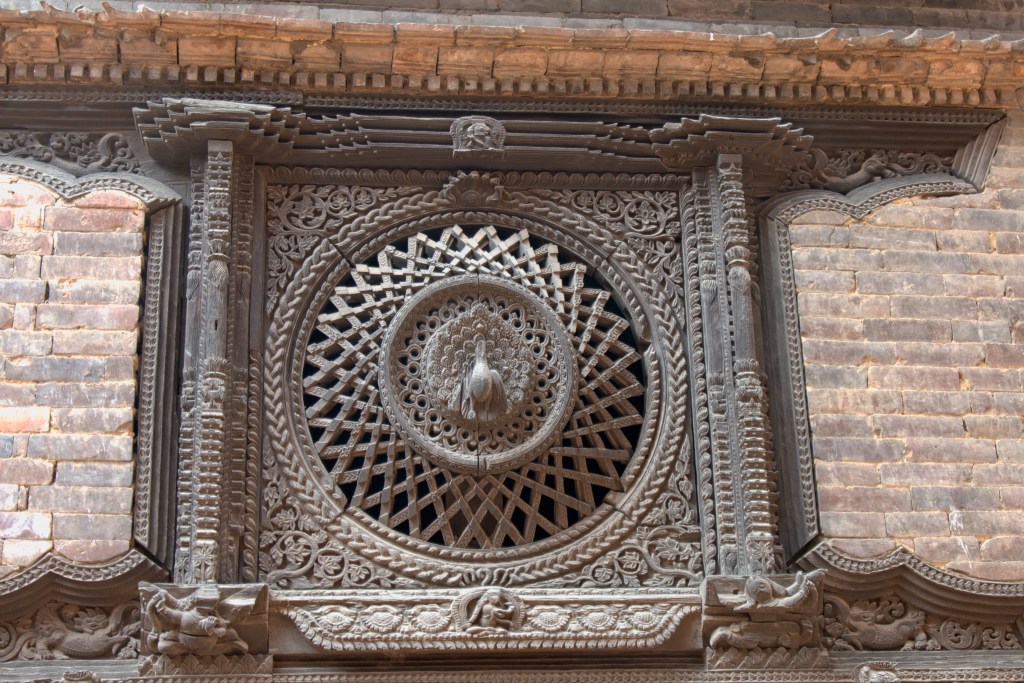
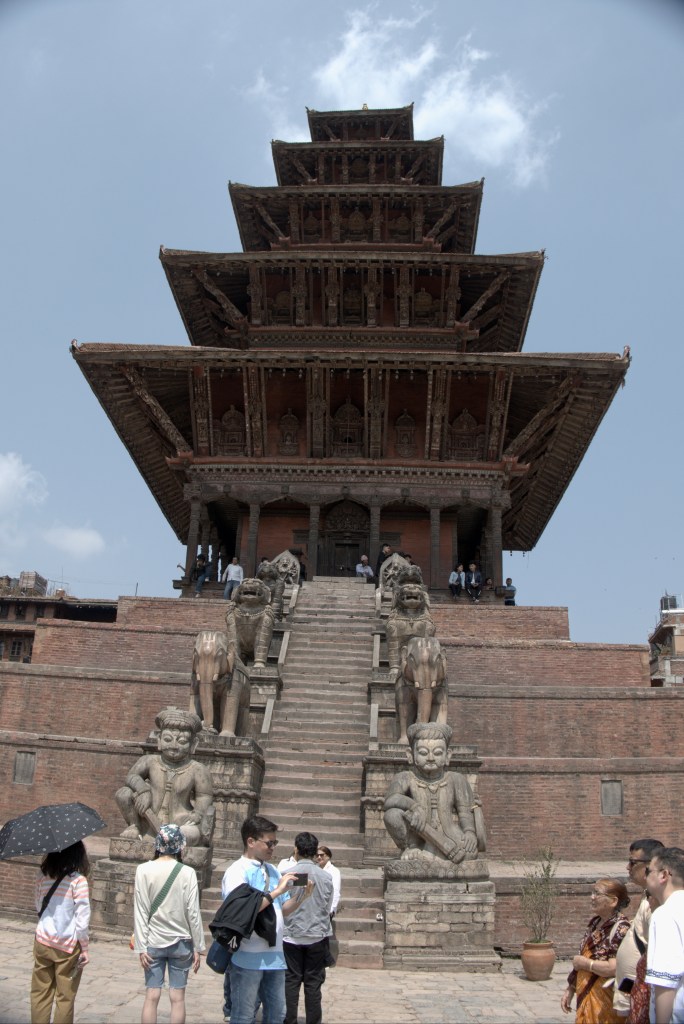
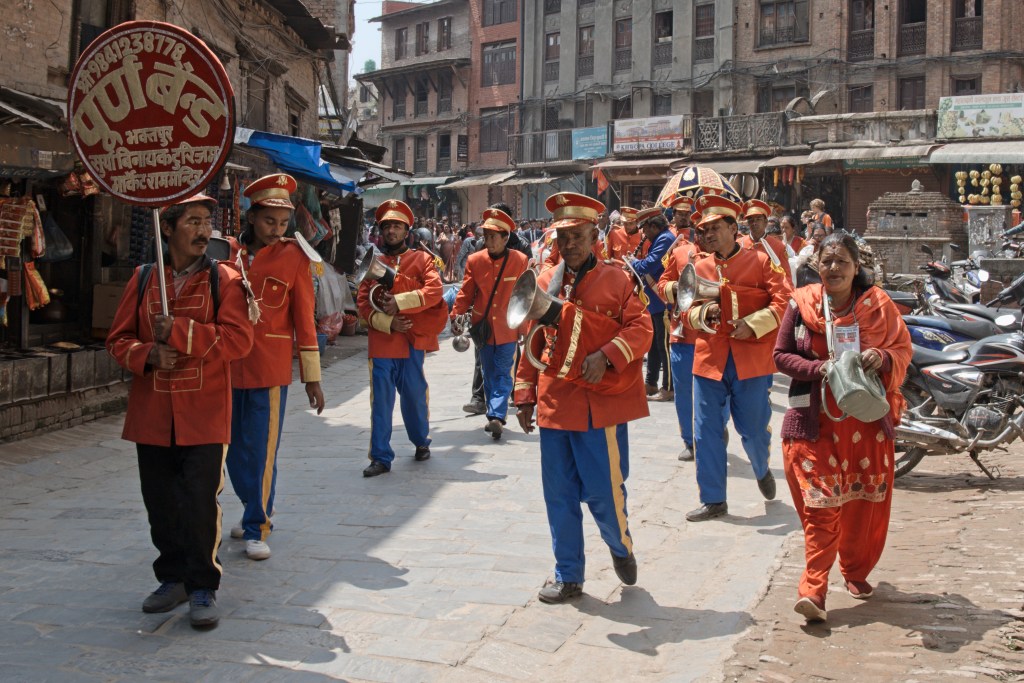
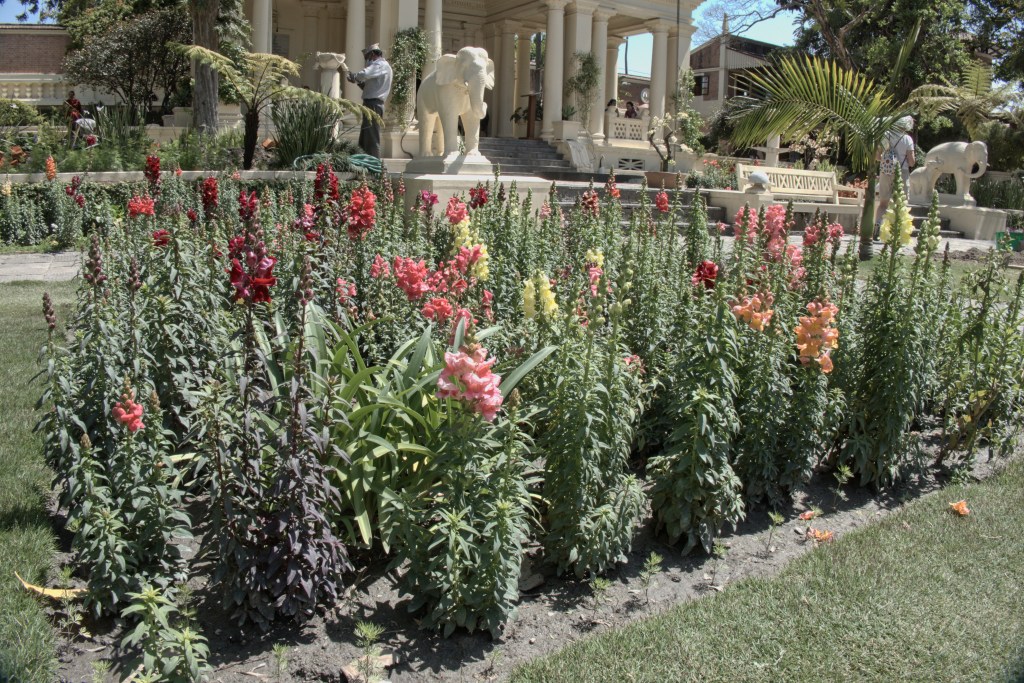
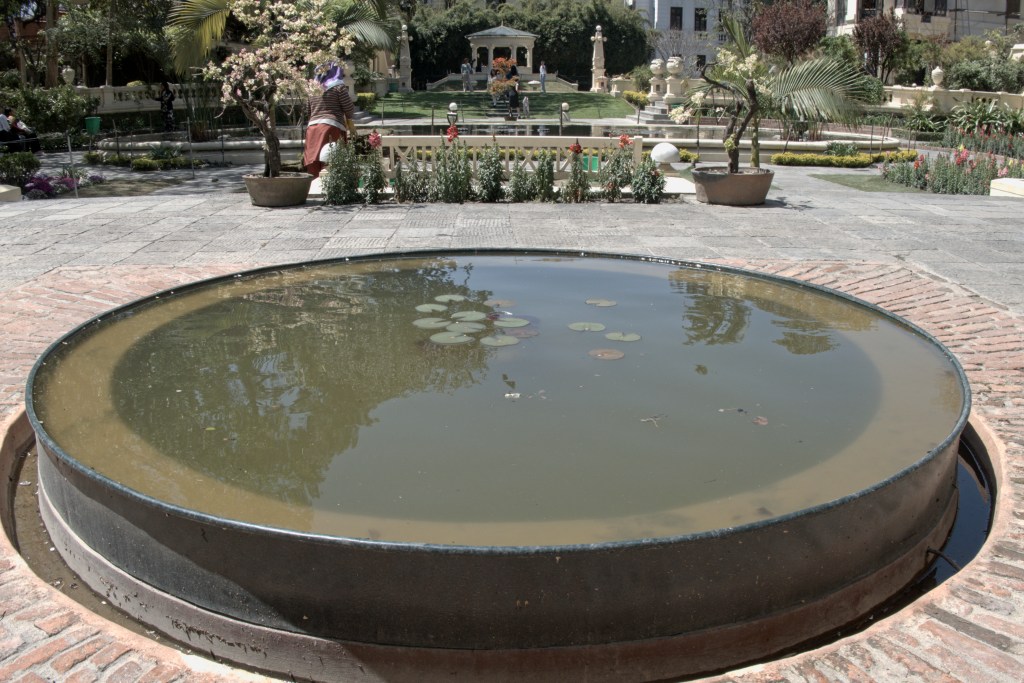
Back in Kathmandu, we visited the Garden of Dreams, a lovely little oasis in the midst of the madness of the city.

From Kathmandu we flew to Pokhara, where we’d meet our guide and porters for the trek. Our flight out of Kathmandu was delayed by several hours (a theme we’d return to over our trip). By the time they loaded us onto the bus, our mid-afternoon flight was getting ready to take off in the usual evening thunderstorm, so after they took us out to the airplane they turned right around and took us back to the gate. This caused a near riot of the other passengers who we were told were accusing the airline of canceling flights until they got full airplanes. Police were called, everyone got it out of their system without anyone getting hurt and an hour or so later we made the half hour or so flight to Pokhara, where we met up with our friends Colin and Jane who had been in town a few days.
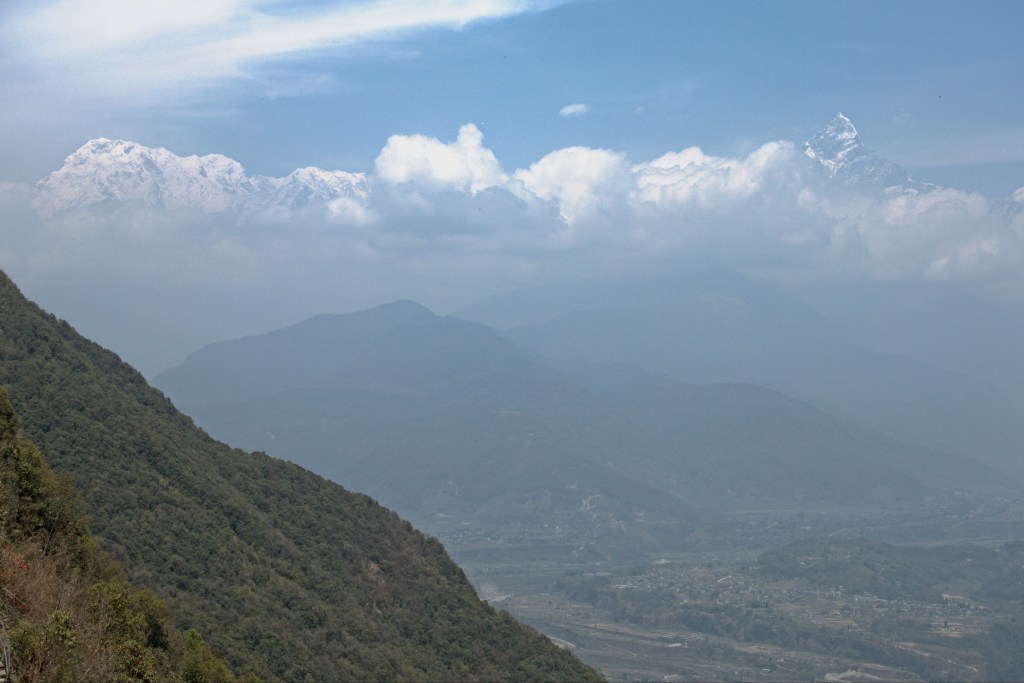

We spent a day or so exploring Pokhara, visiting with Jane and Colin and sorting our gear into piles to take or leave, and what of the things we were bringing we wanted to carry in our day packs vs. the duffels our porters were to carry.
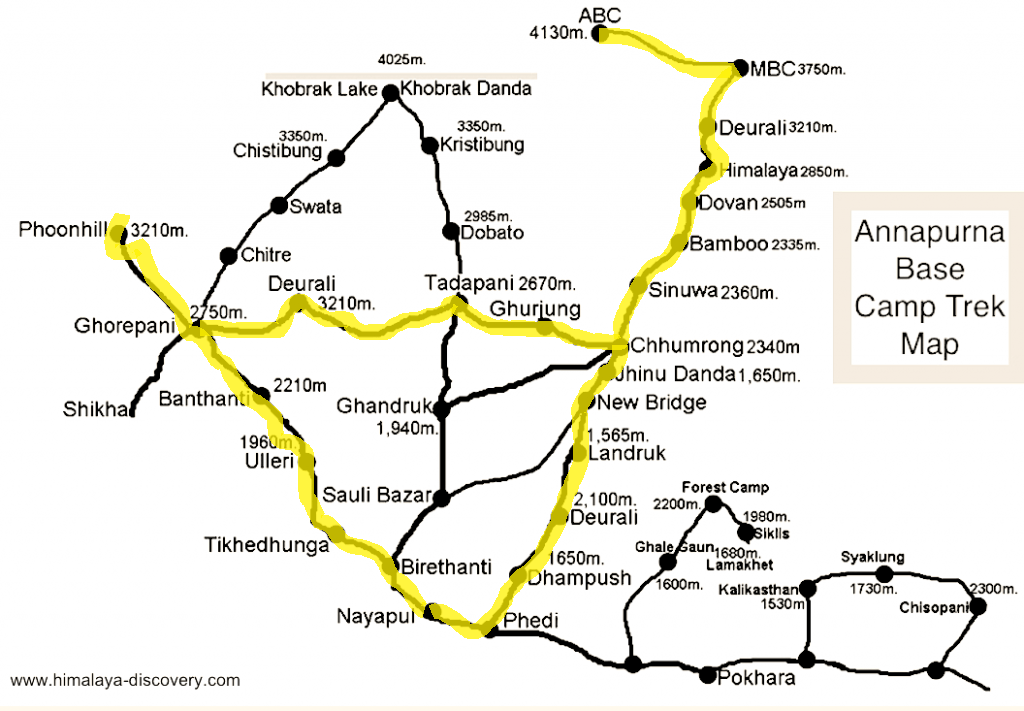
Day 1: Pokhara – Nayapul – Ulleri
The trek began with a van ride from Pokhara to the town of Nayapul right at the base of the foothills over roads that varied from pavement to very rough gravel. It was a couple of uncomfortable hours breathing the diesel exhaust of the trucks and buses and the unburnt gas from the two-stroke scooters. I wasn’t feeling great thanks to (what we later decided was) drinking bad water and Jane was still recovering from a digestive problem she’d gotten about a week before. We set of around noon for our destination for the day of Ulleri.
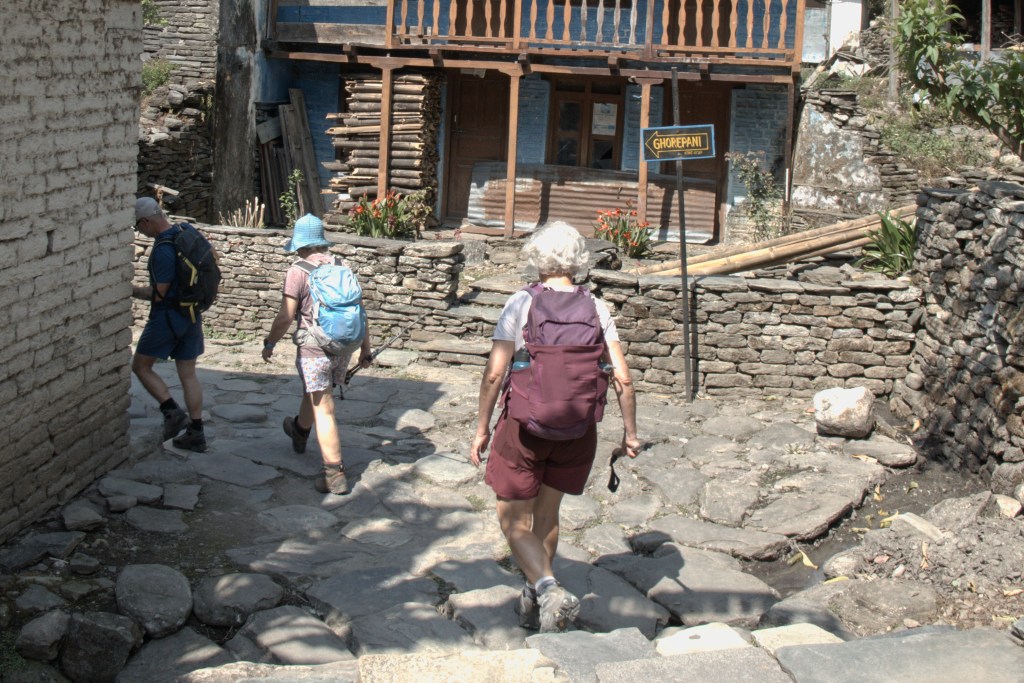
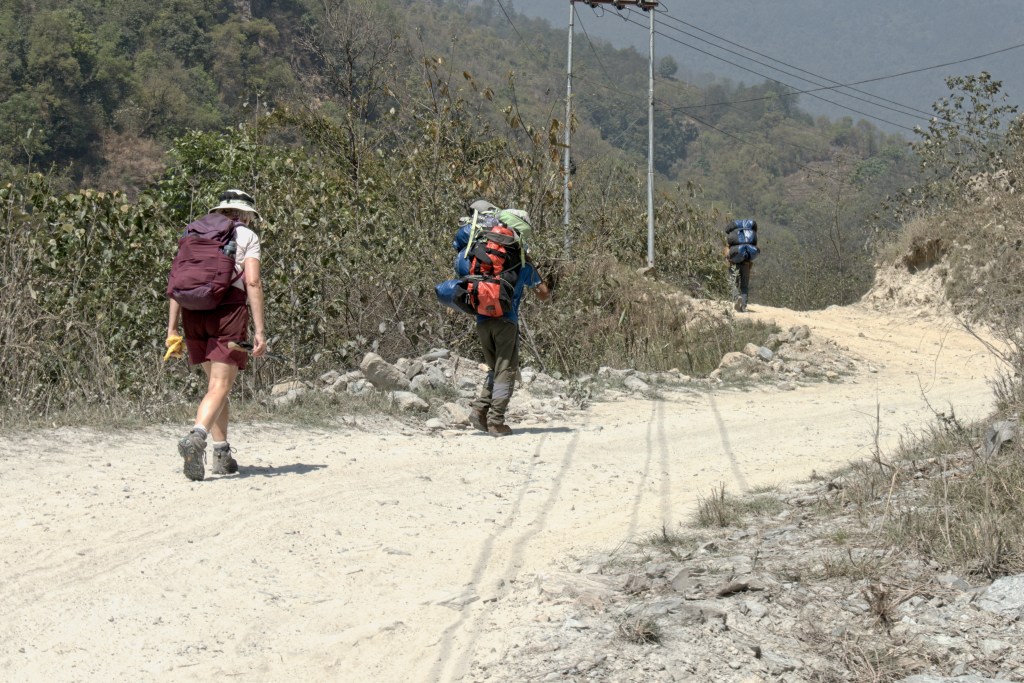
It quickly became evident that Jane wasn’t doing well. Her illness came roaring back with fever and gastrointestinal problems. We finally sent her back to Pokhara by jeep. She insisted that Colin continue; she returned to the hotel we had stayed at and spent 5 days recovering and consuming antibiotics. She would later join us on the last couple of days of the trek but she sadly missed the base camp itself.
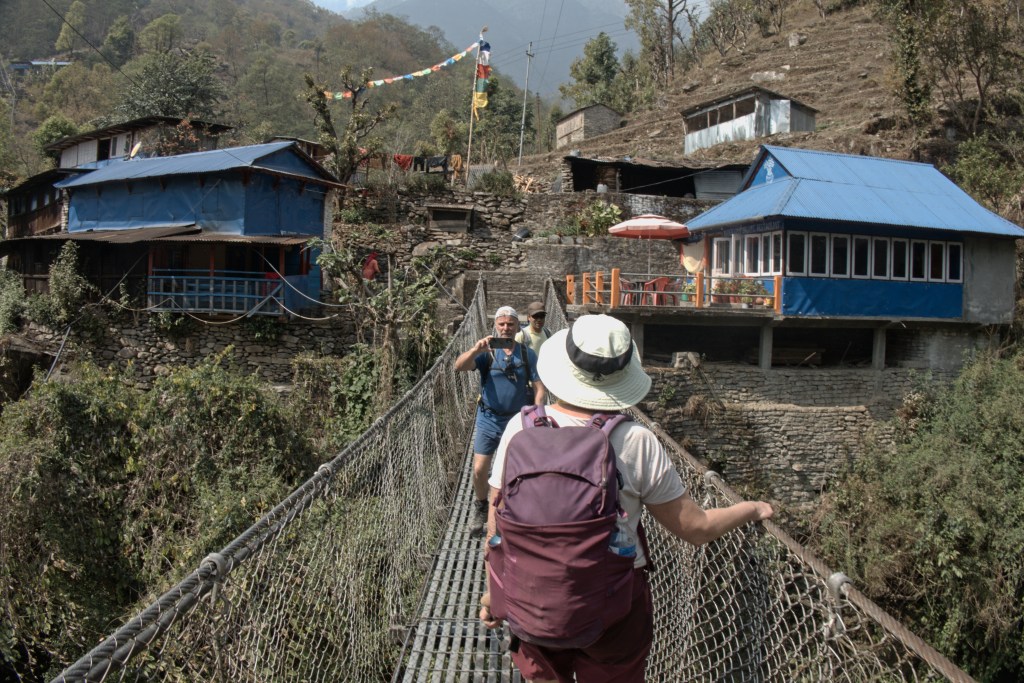
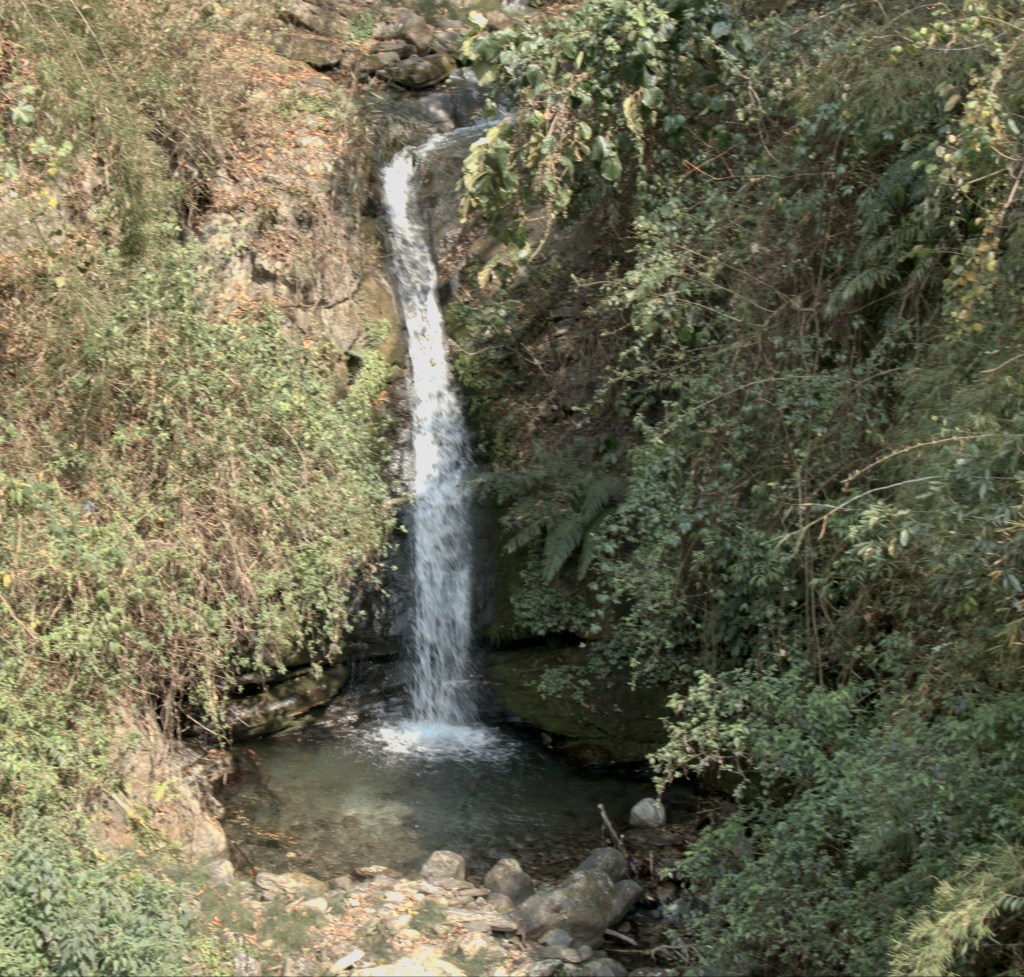
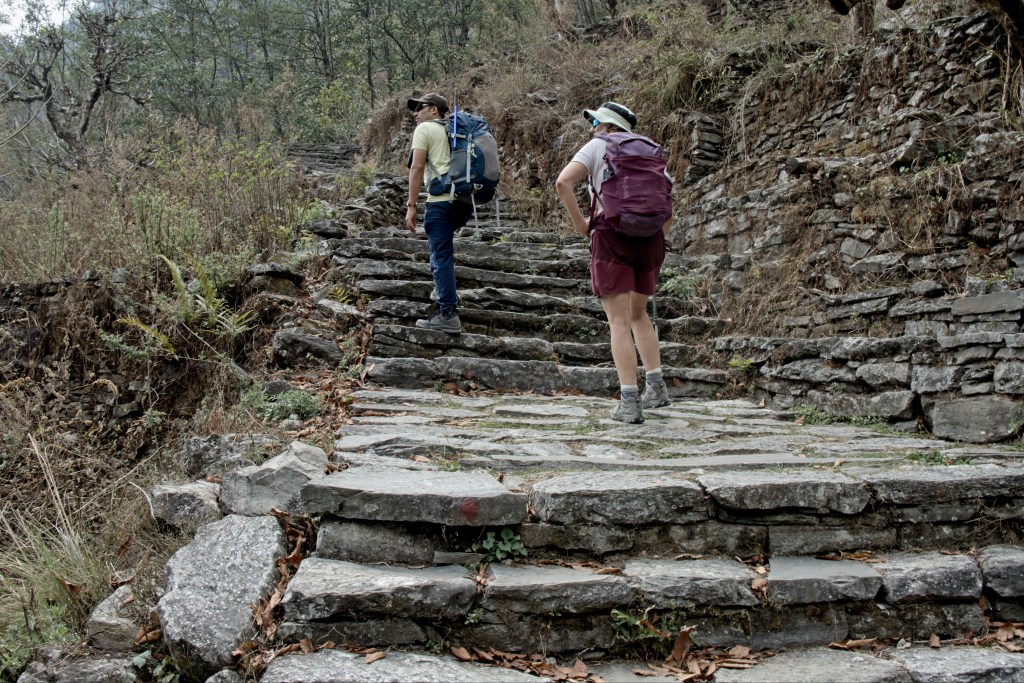
We arrived around 3:30 PM at Ulleri for an initial climb of 900 meters or so.
Day 2: Ulleri – Ghorepani
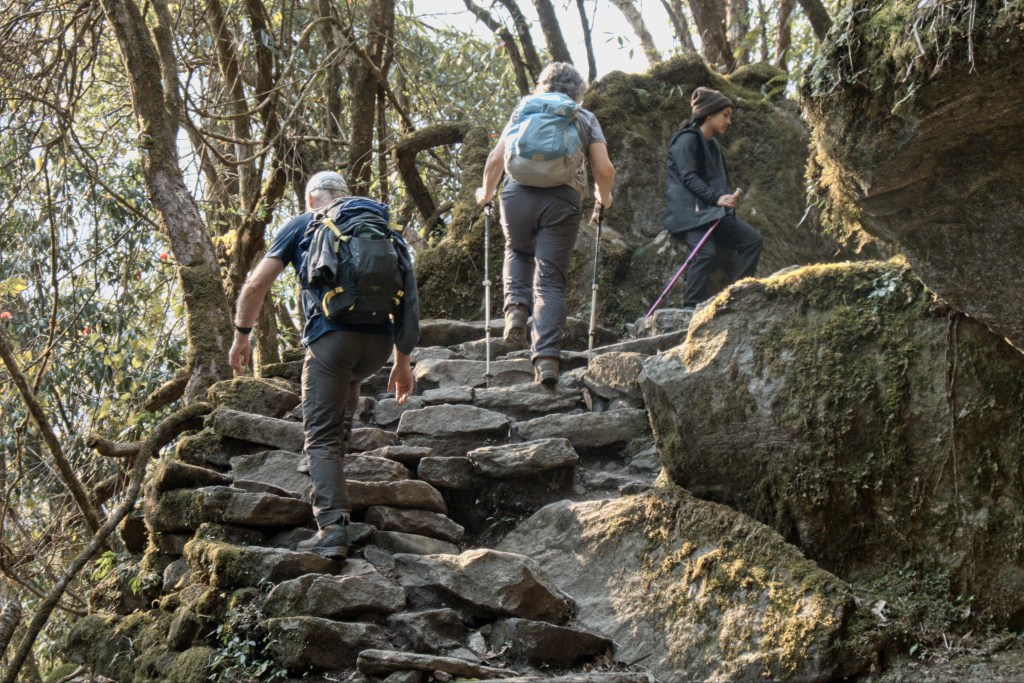
This day we got into the rhododendron forests for the first time. We also climbed one stretch of 2600 steps according to Arjun who counted them back when he was a porter. There was a lot of up and down through the foothills this day.
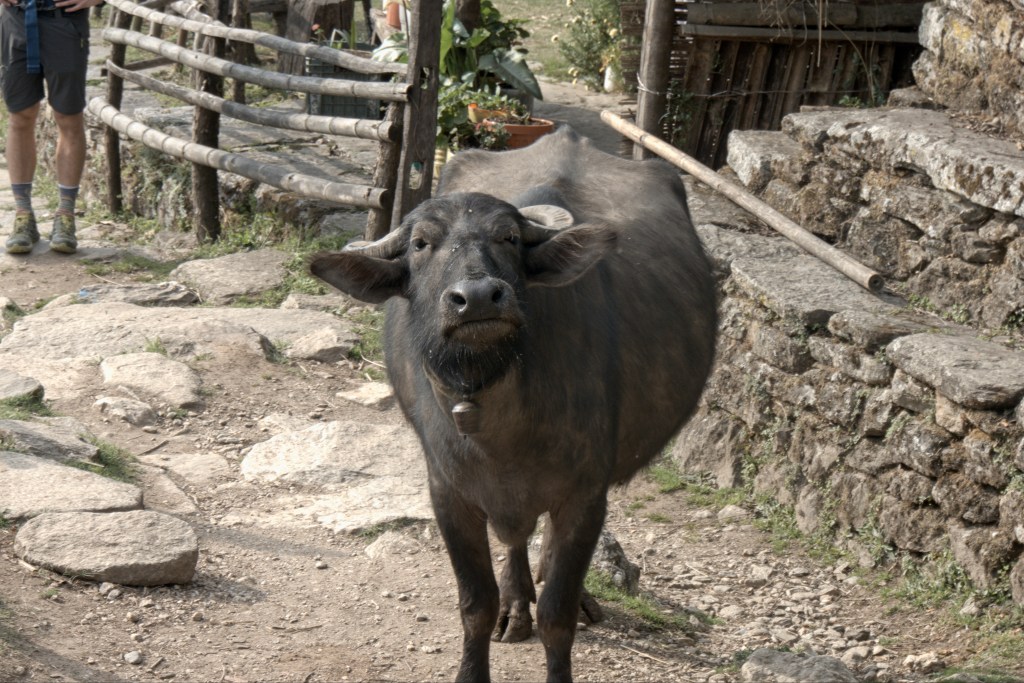
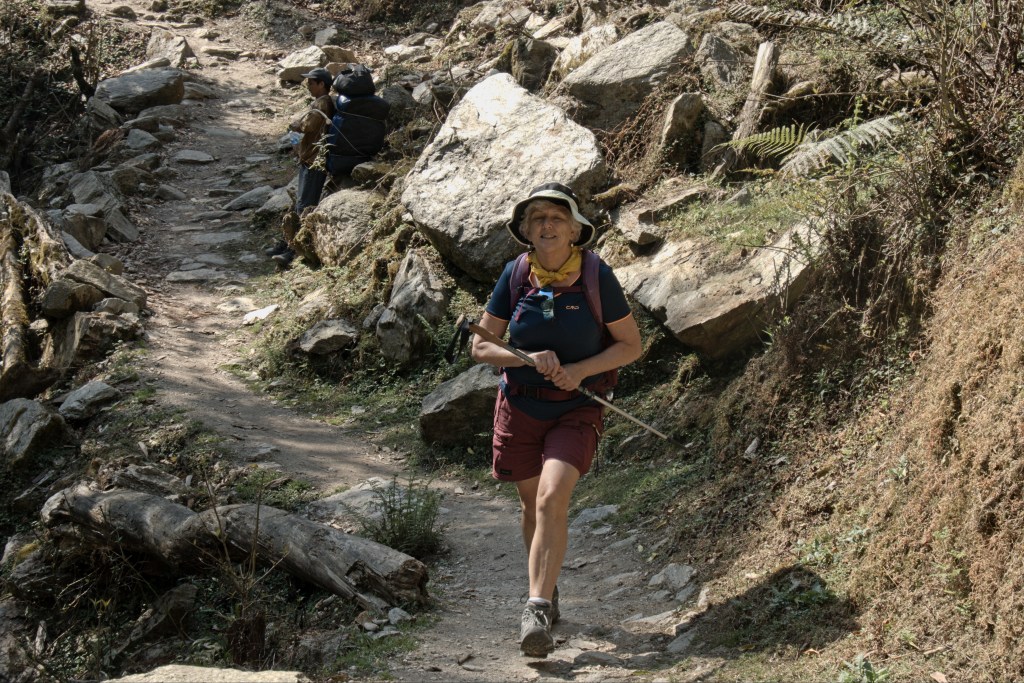
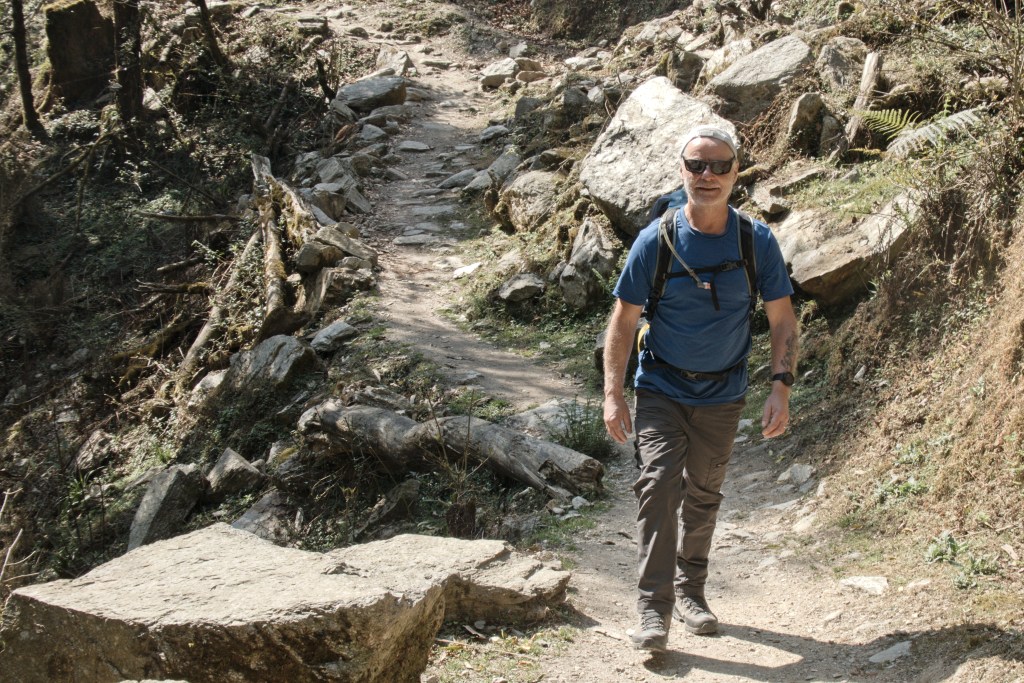
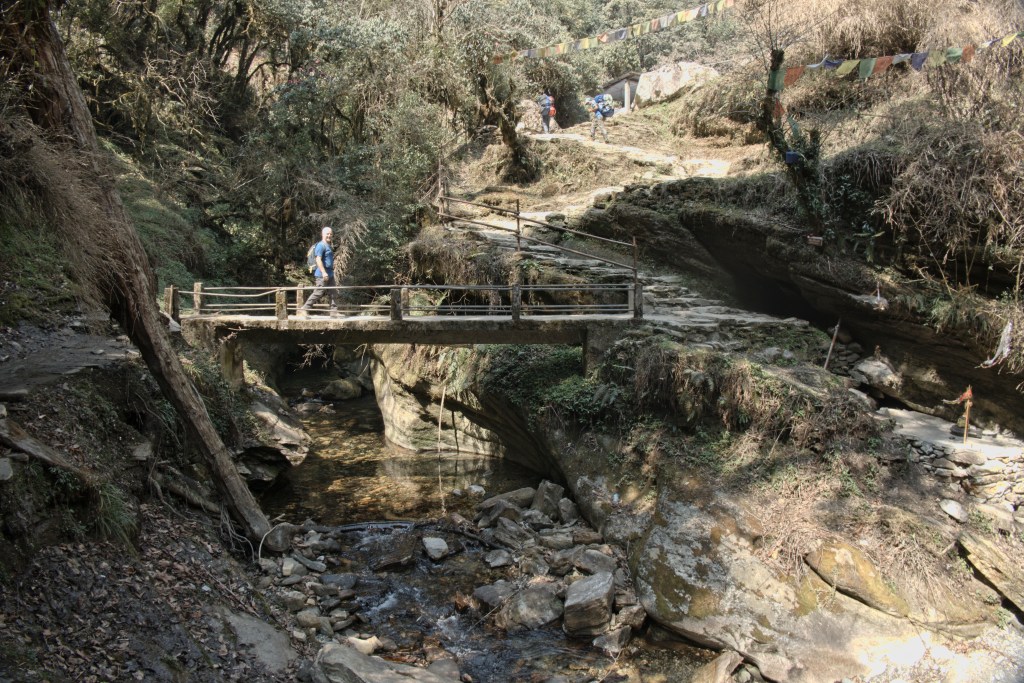
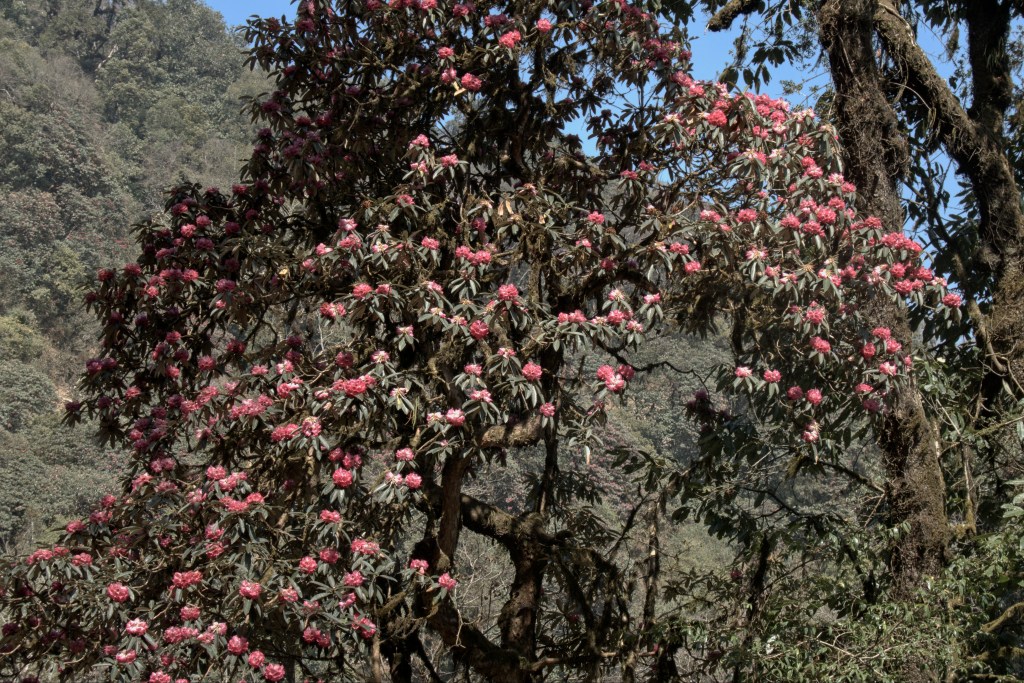
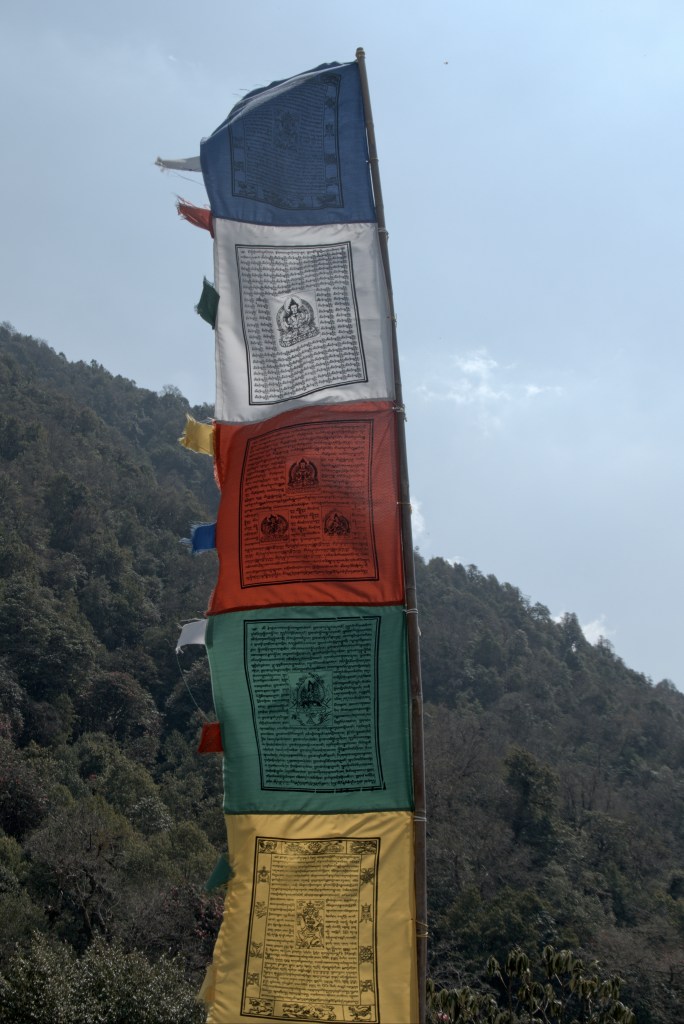
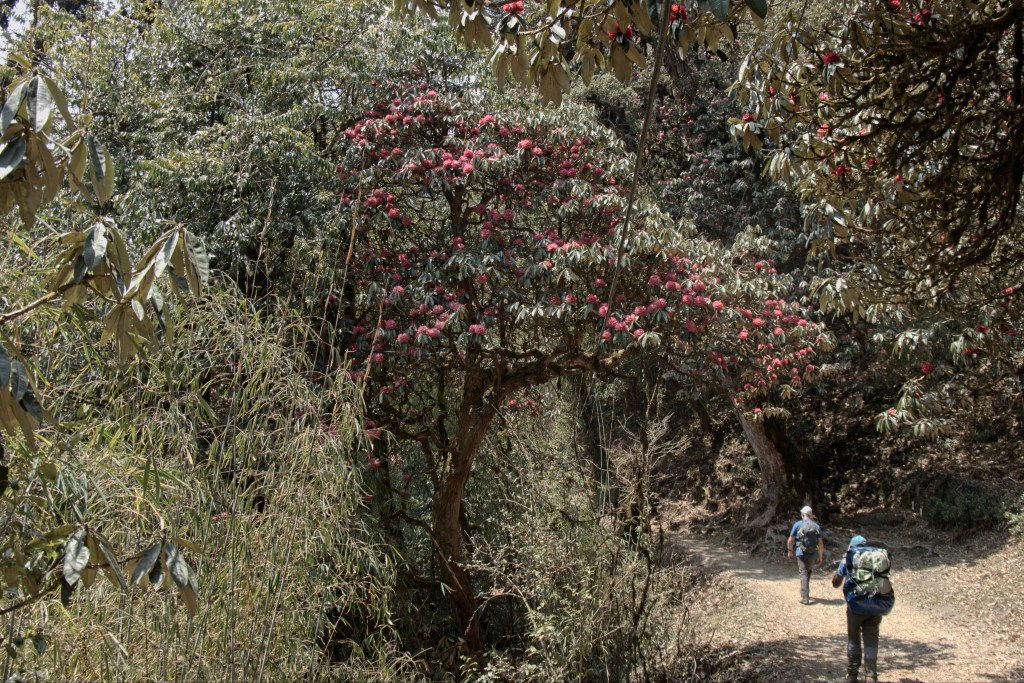
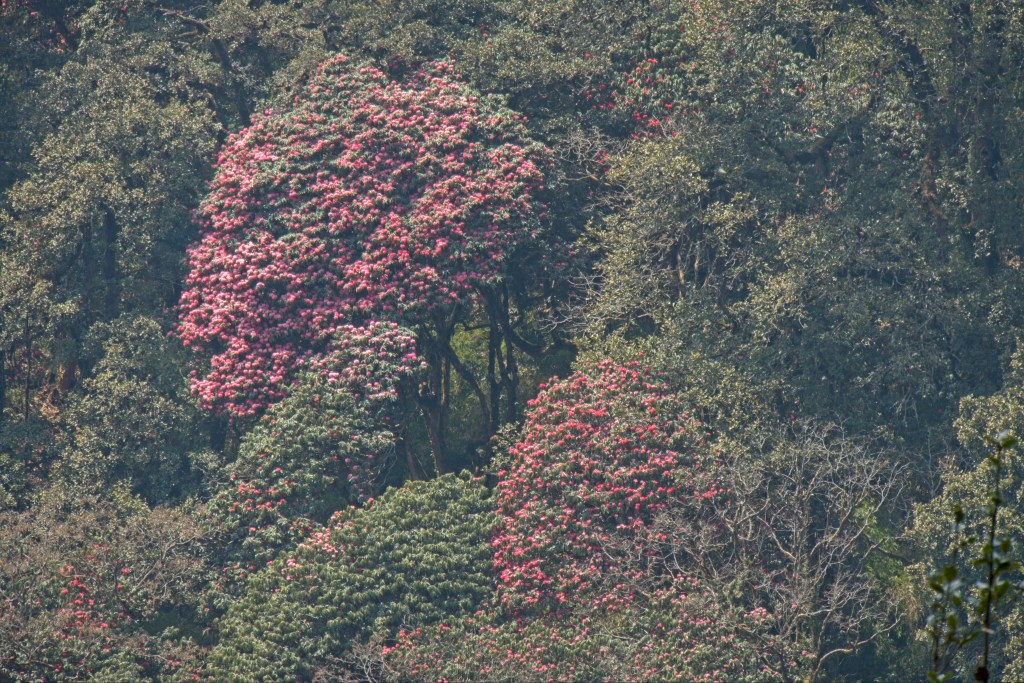
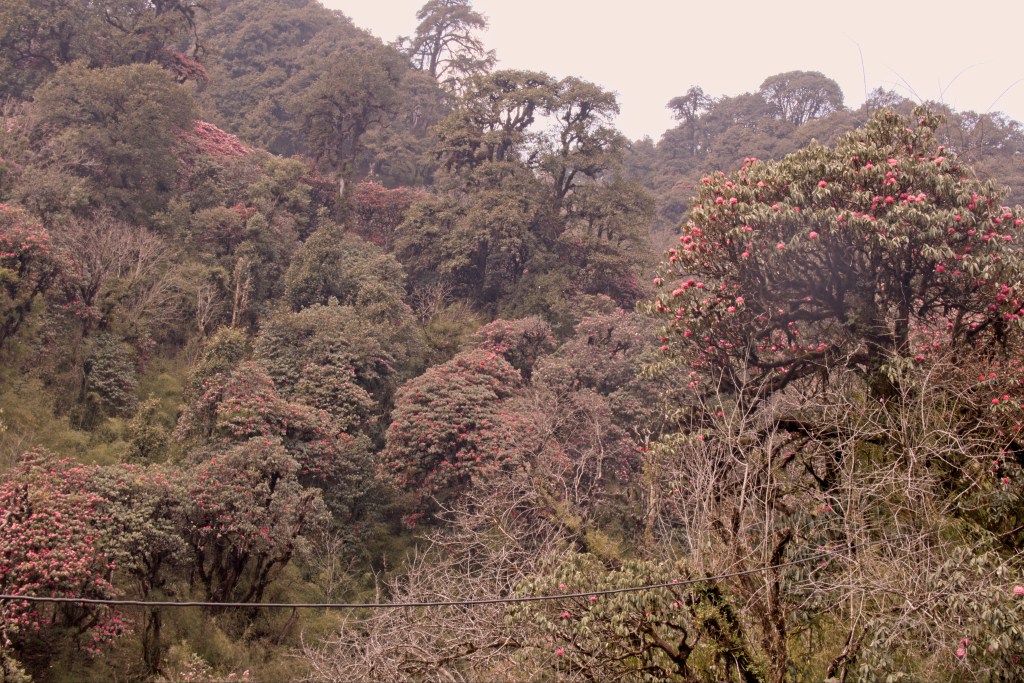

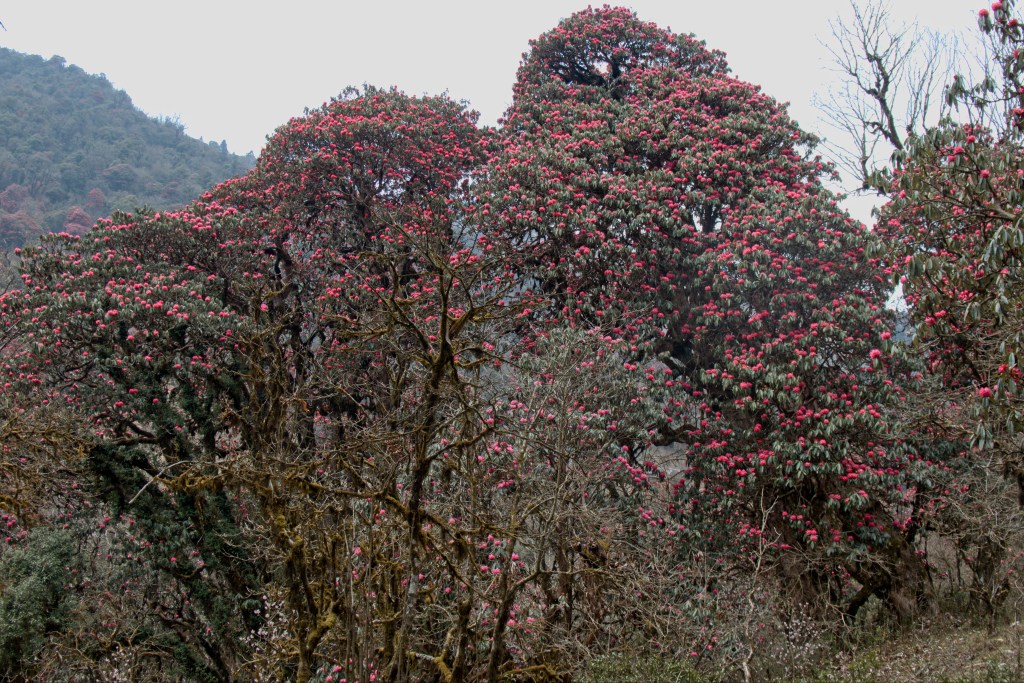
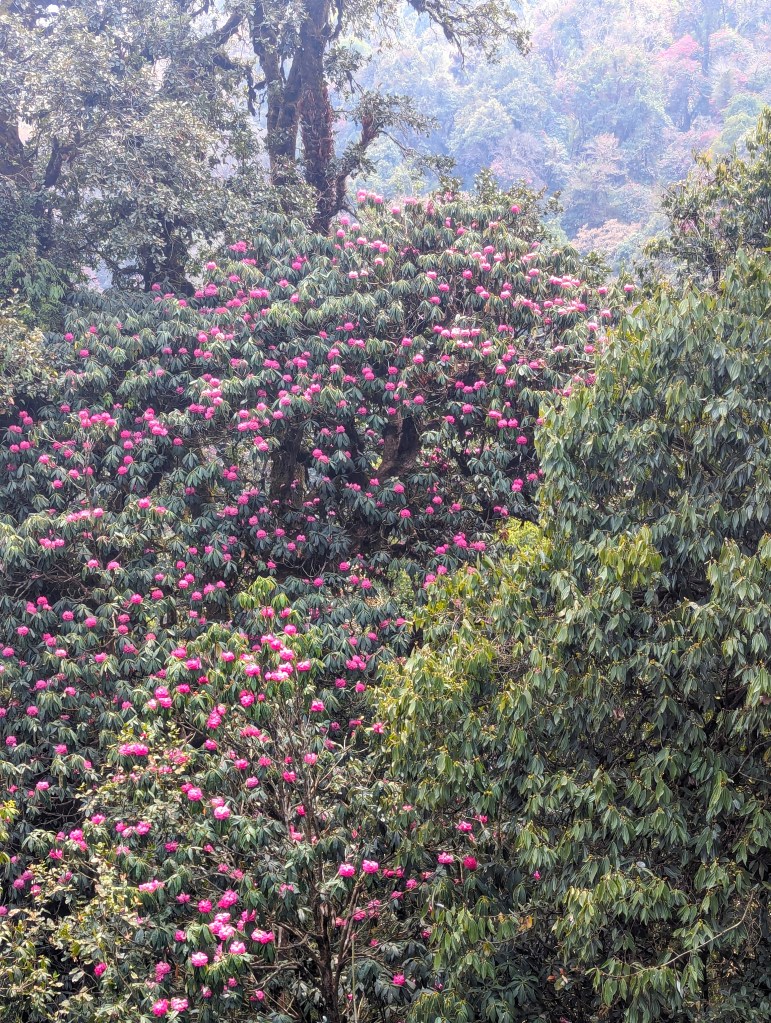
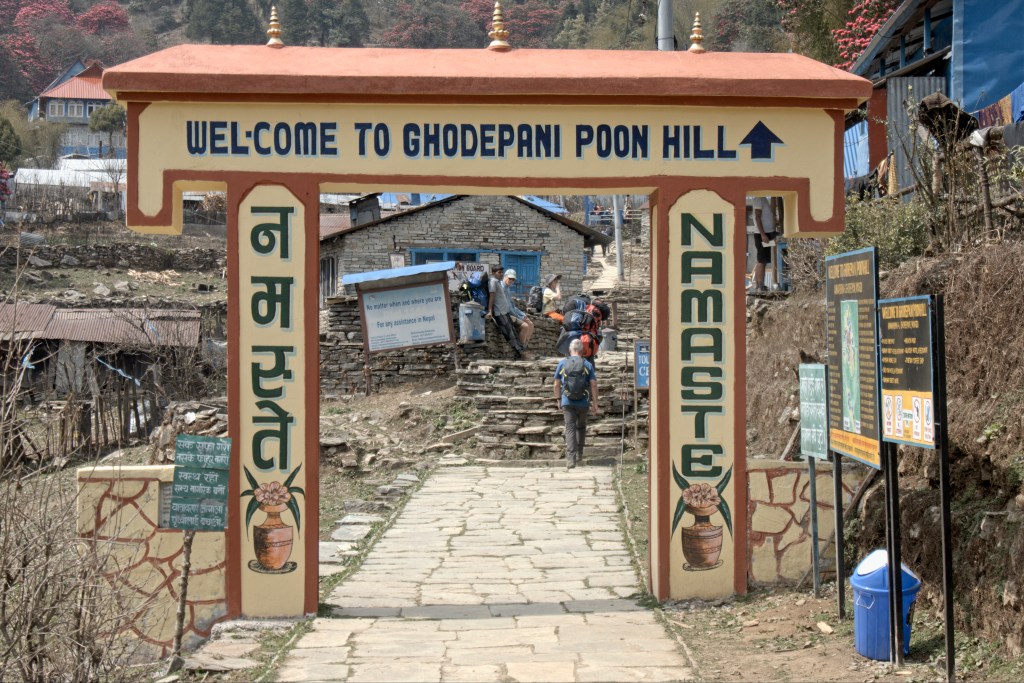
We stayed overnight in Ghorepani, another 900 meters net elevation gain. We made an early night of it, as we had to get up well before dawn to get to Poon Hill for sunrise.
Day 3: Ghorepani – Poon Hill – Tadapani
4:30 AM came all too soon and we grabbed our day packs and headlamps to climb the 300 meters to Poon Hill before the sun rose. Poon Hill is up hundreds of stairs from Ghorepani. It’s a viewpoint where you can watch the sun rise and light up the Annapurna range. From there you can see Annapurna I, II, III and South (all individual peaks), plus Machapuchare (“Fish Tail”) and a handful of other peaks. It’s a beautiful spot.
This was the day the stomach bug I got in Pokhara really took hold. The climb was rough for me. On top of this, the headlamp I had used just a couple days before refused to work so I was depending on others to light my way up the steps. Fun!
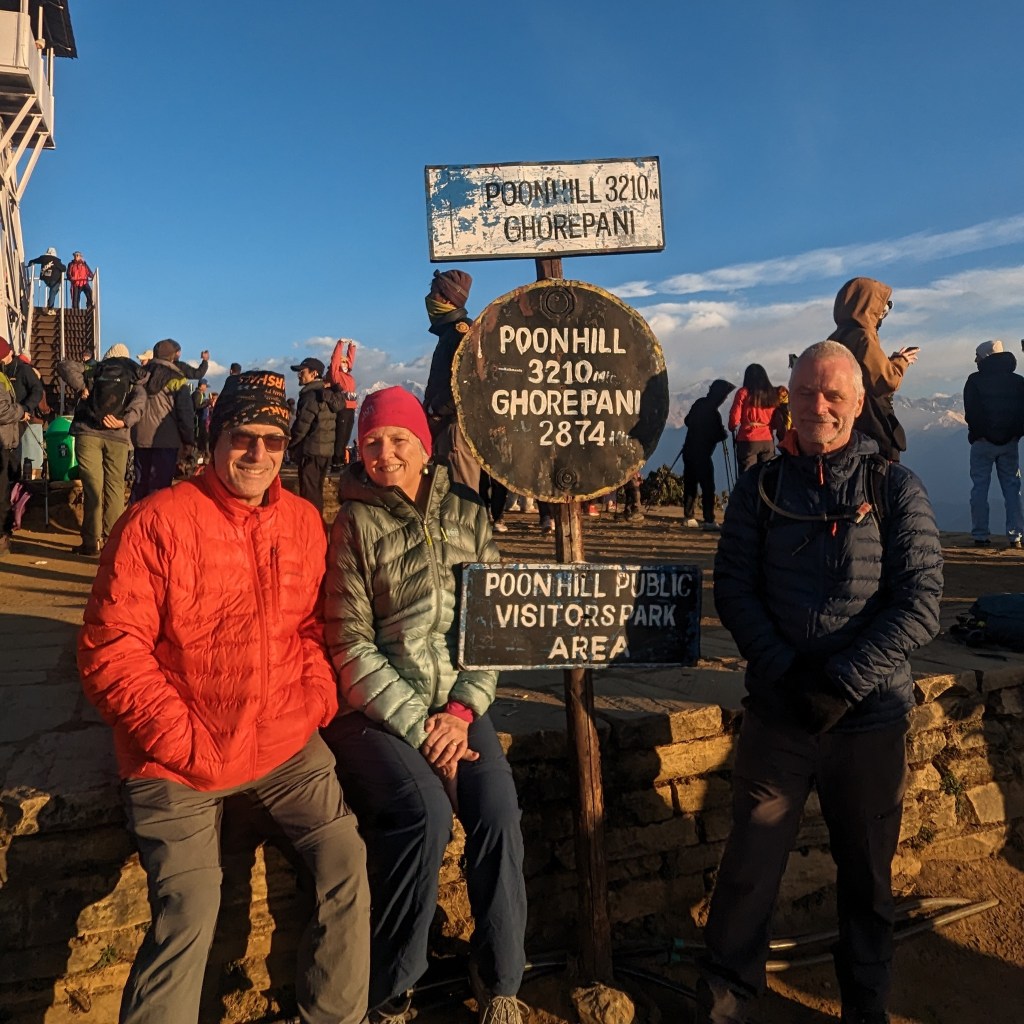
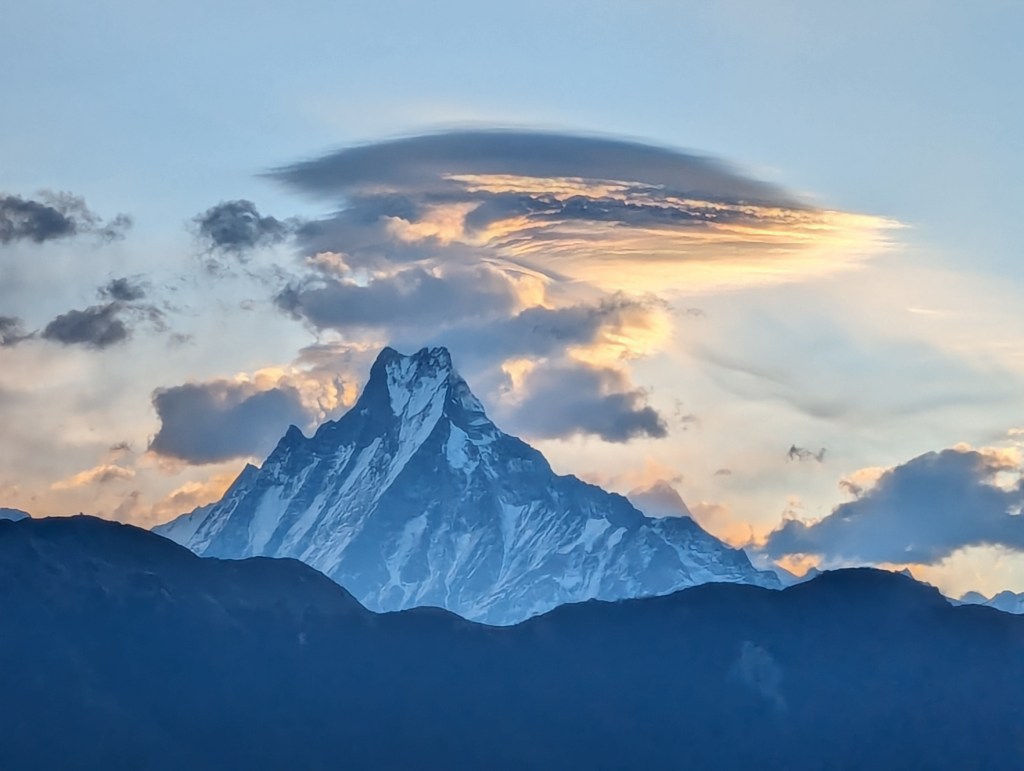
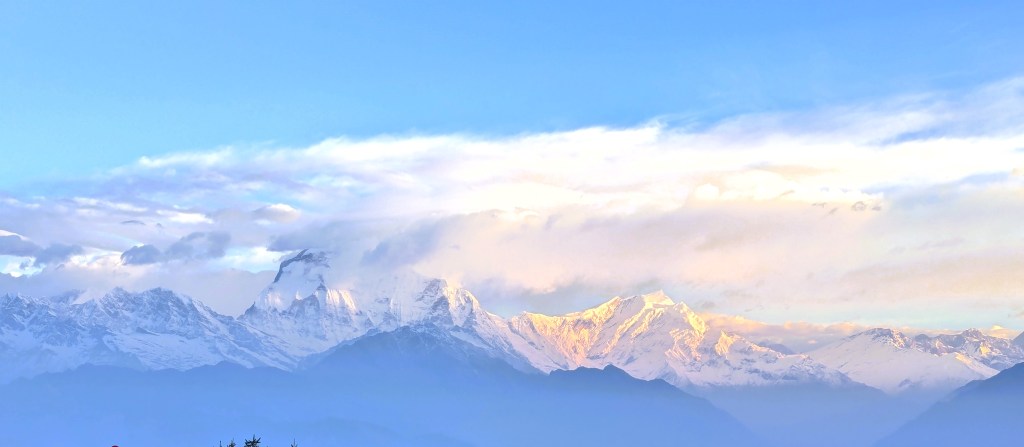
Panoramic view from Poon Hill
After Poon Hill, we returned to Ghorepani for breakfast and then struck out for our next stop, Tadapani.
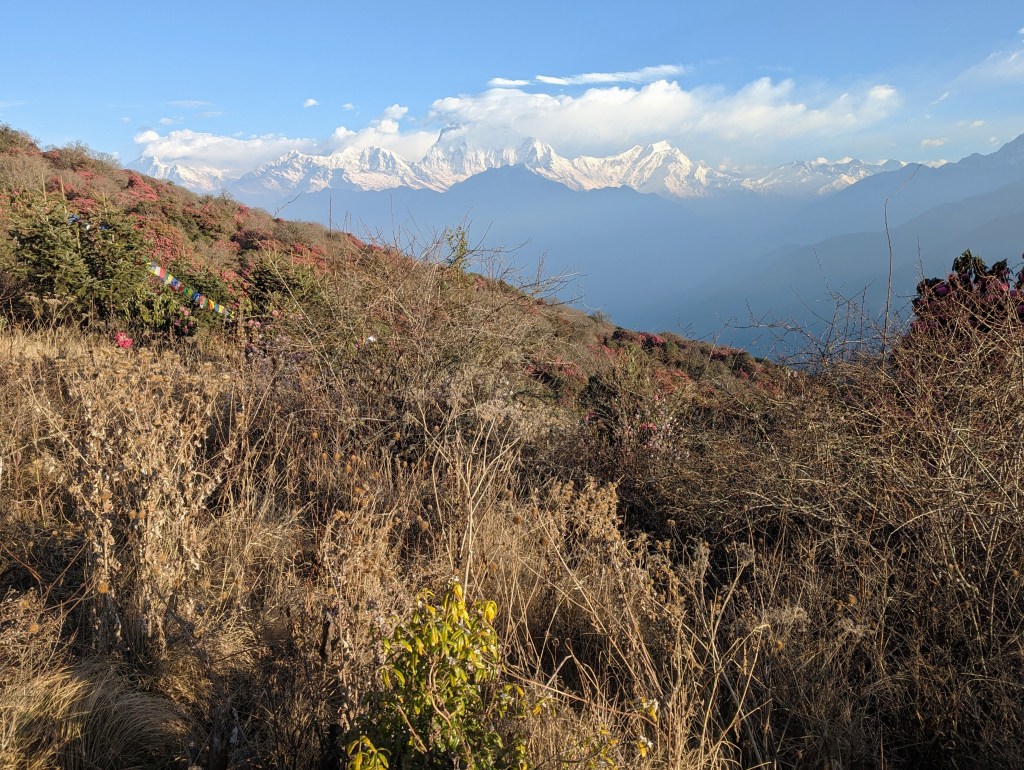
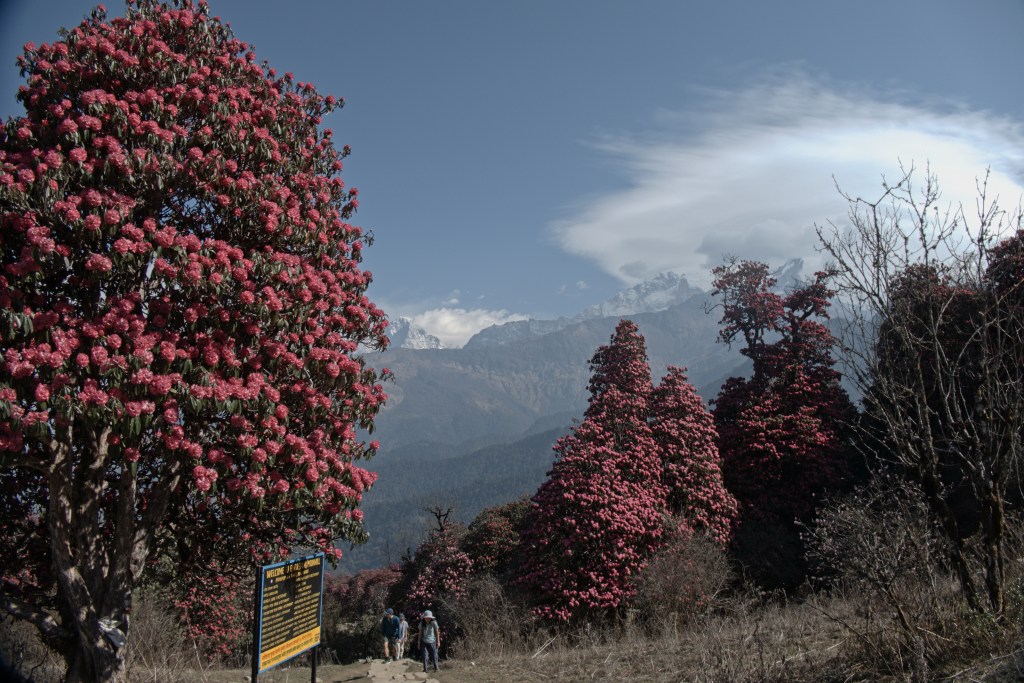
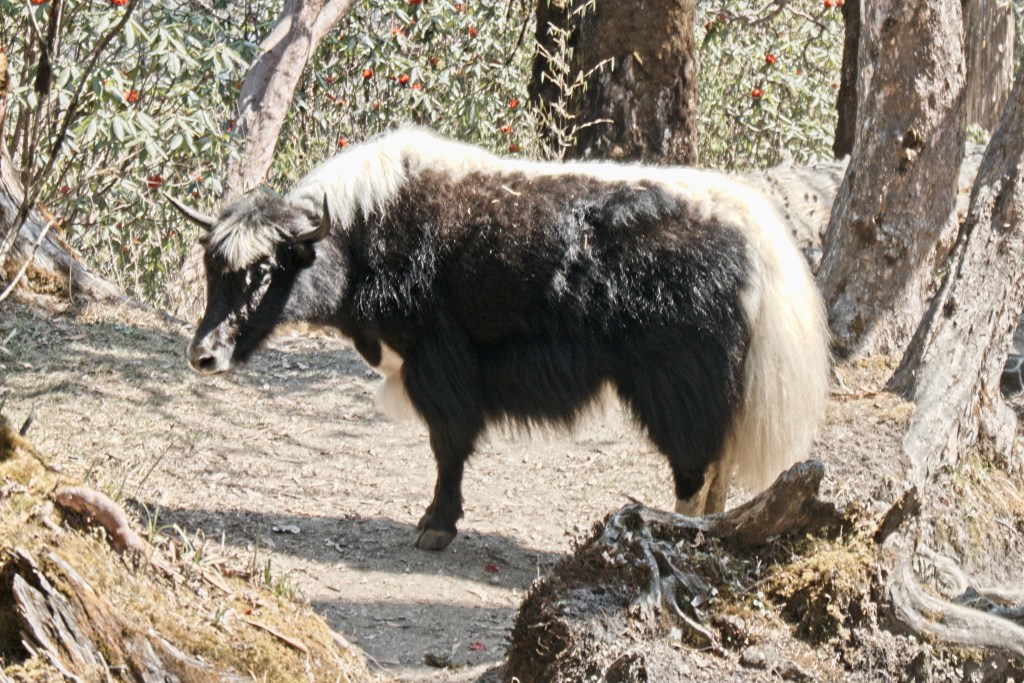

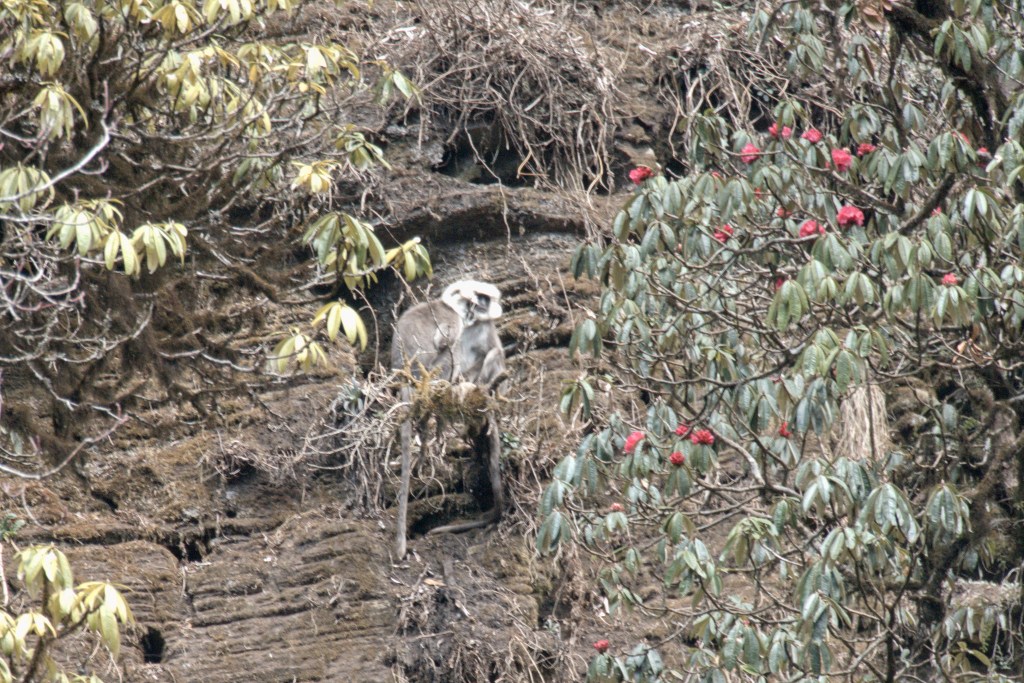
Ghorepani to Tadapani, a net loss of 200 meters, with a whole lot of elevation in between.
Day 4: Tadapani – Chhumrong
This day offered no particular goals or attractions, rather it was a grind-it-out day of ups and downs through the rhodie forests, past farms and streams to get to the valley up which we’d walk to get to ABC.
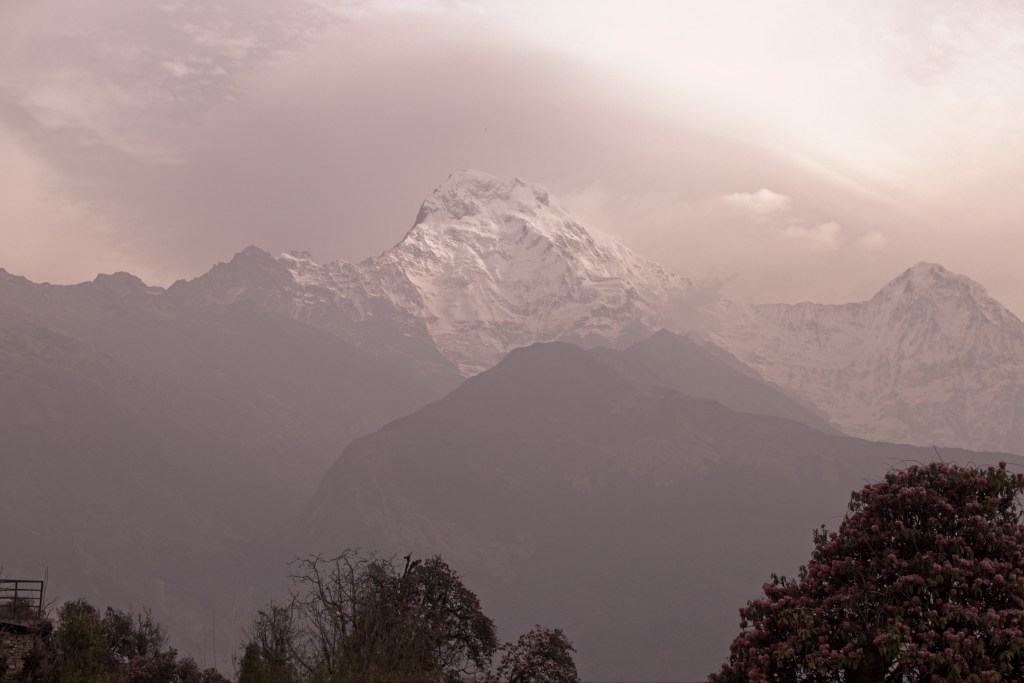

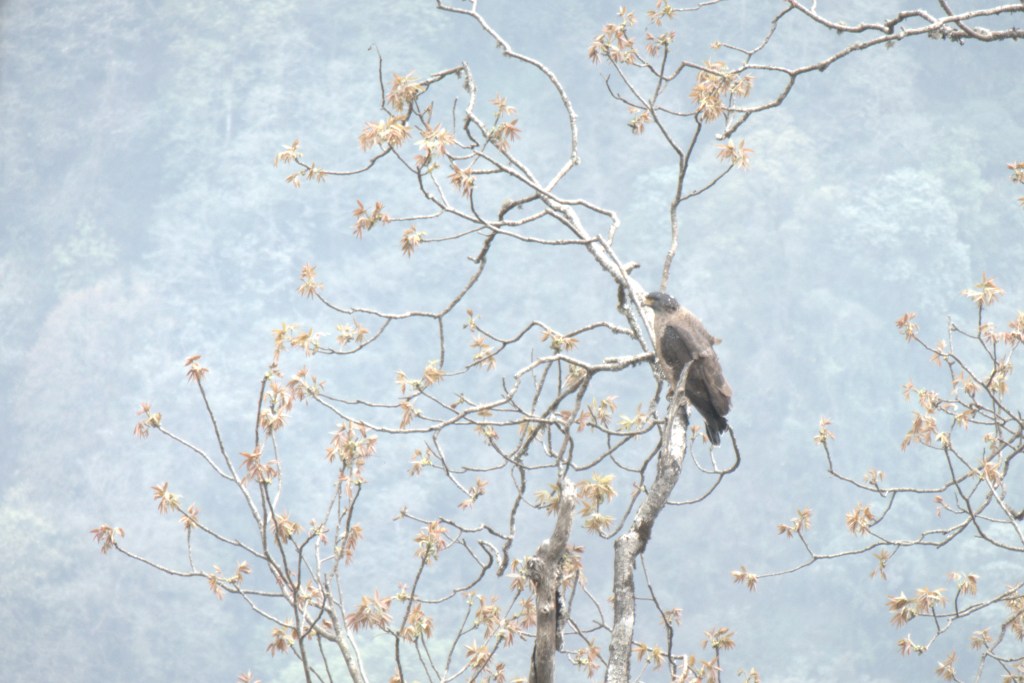
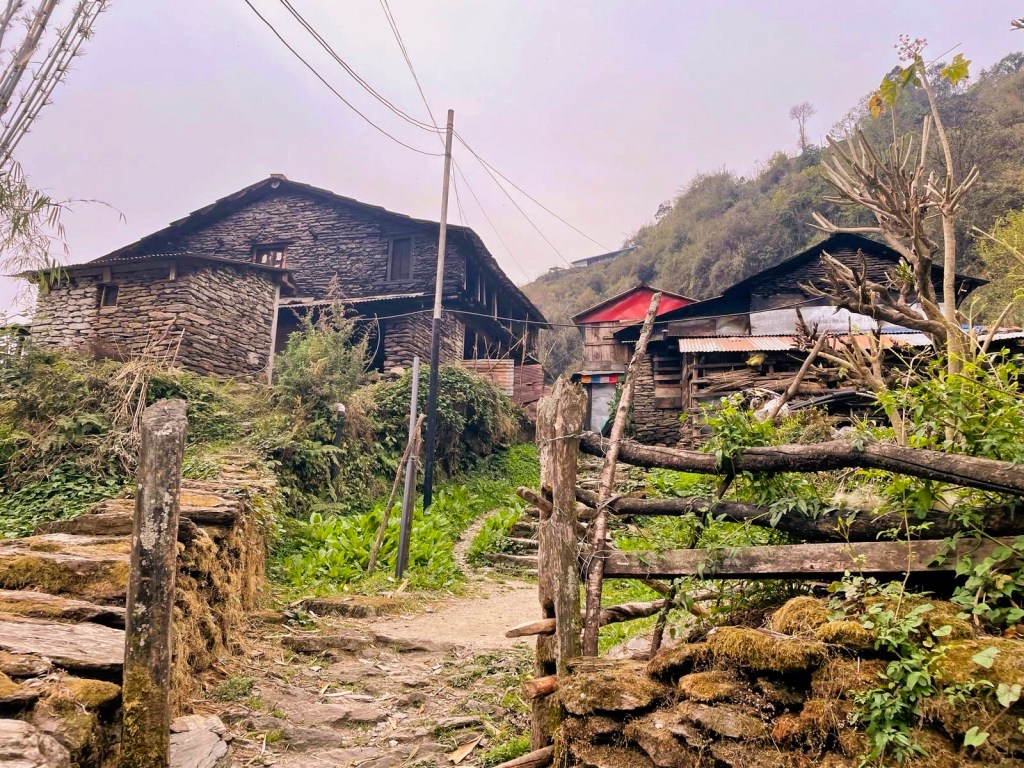
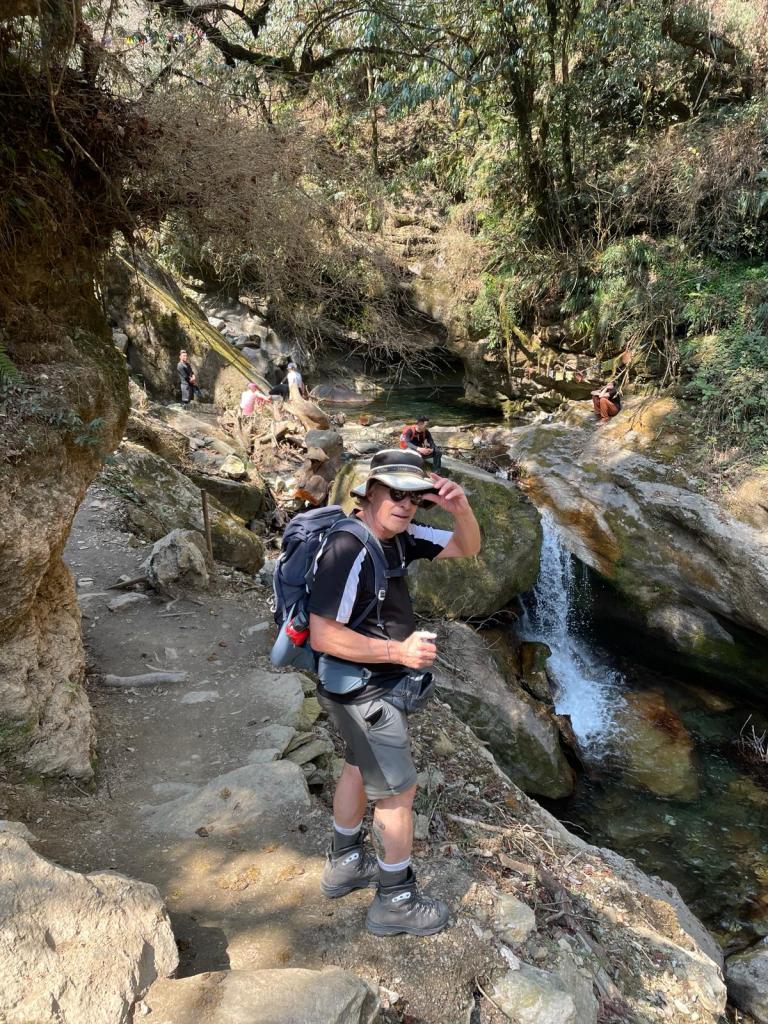
Chhumrong is net 300 meters lower than Tadapani. Again, there were plenty of ridges to climb and descend between start and finish.
Day 5: Chhumrong – Himalaya
Here we turned and started up the valley that leads to the base camp. The weather changed its pattern here too, clouding up and dumping rain (later, snow) in the afternoons when the warm moist air from the Kathmandu Valley rose up over the Himalayas and dumped its load.
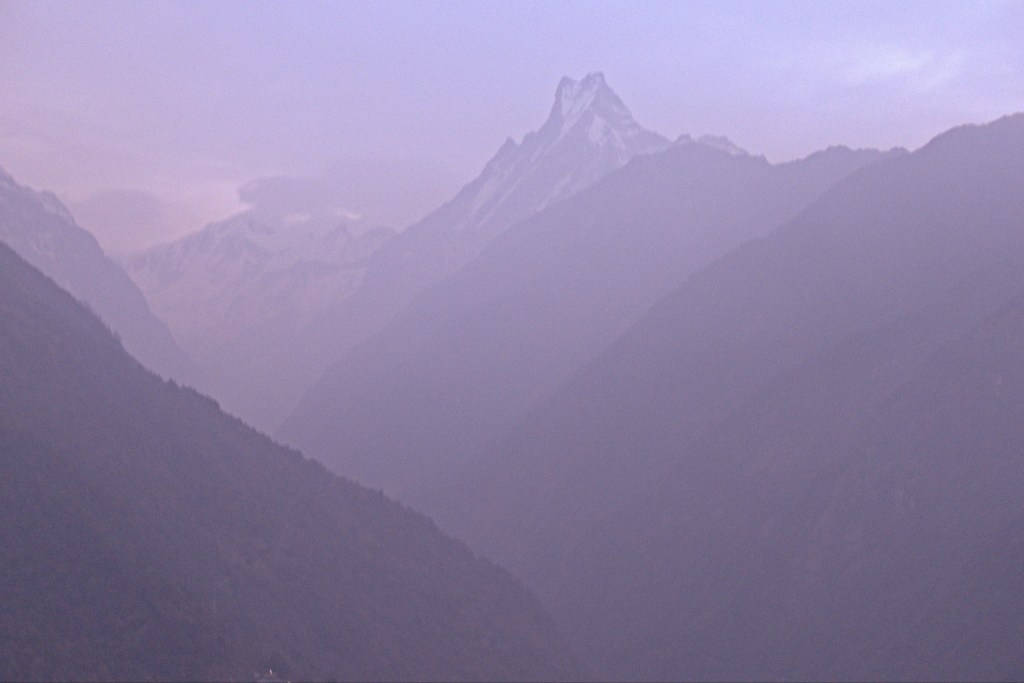
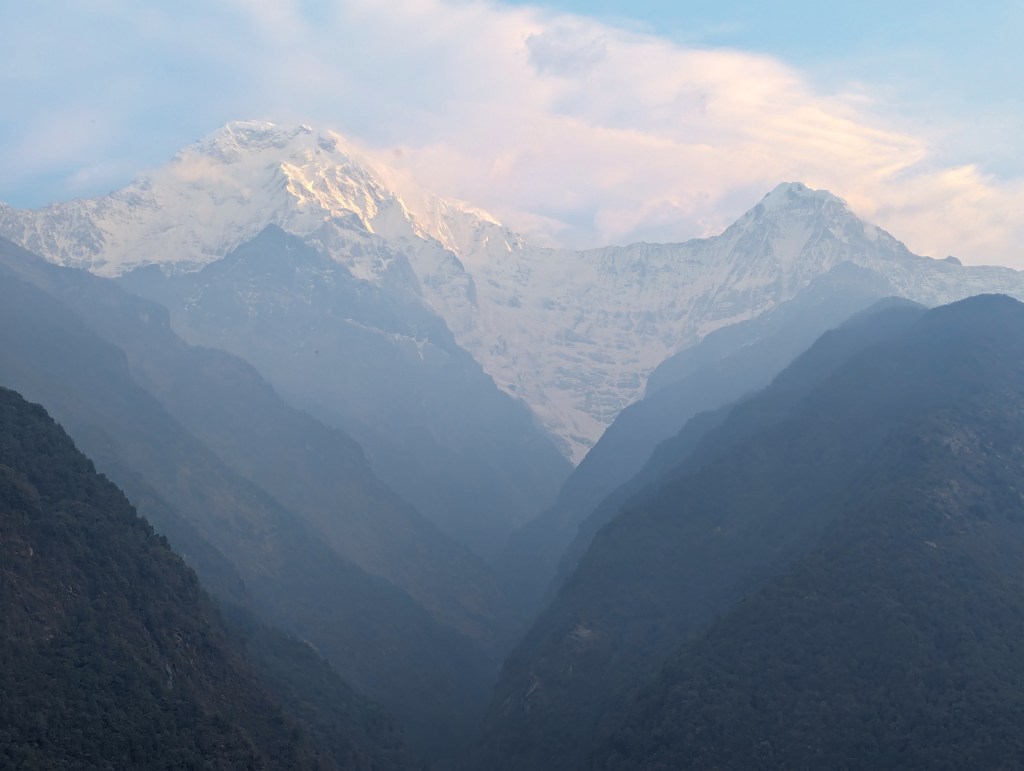
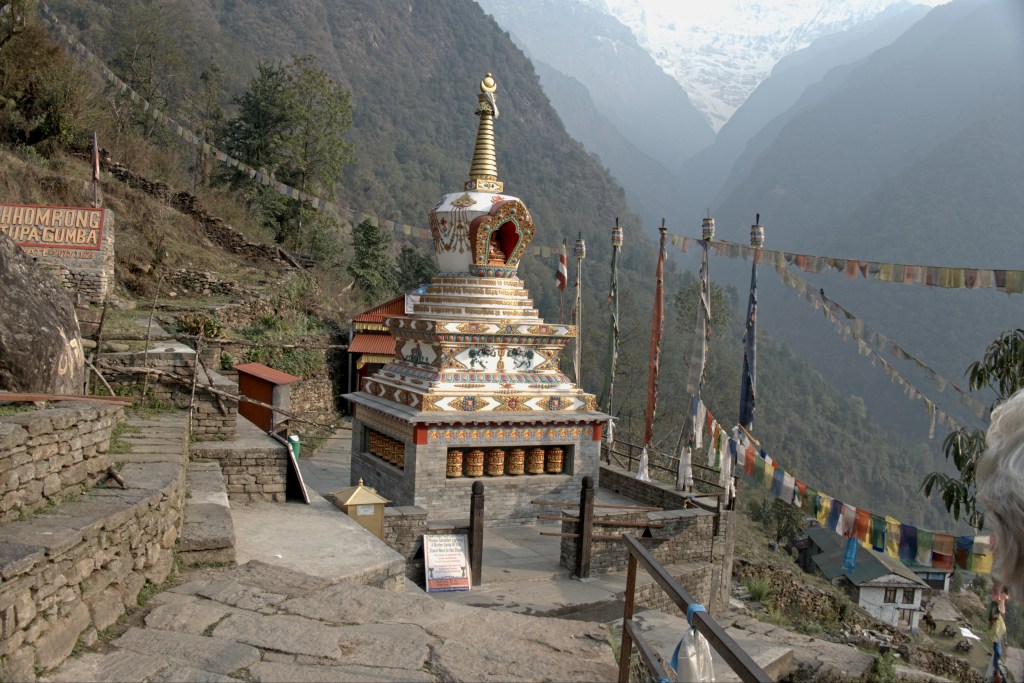
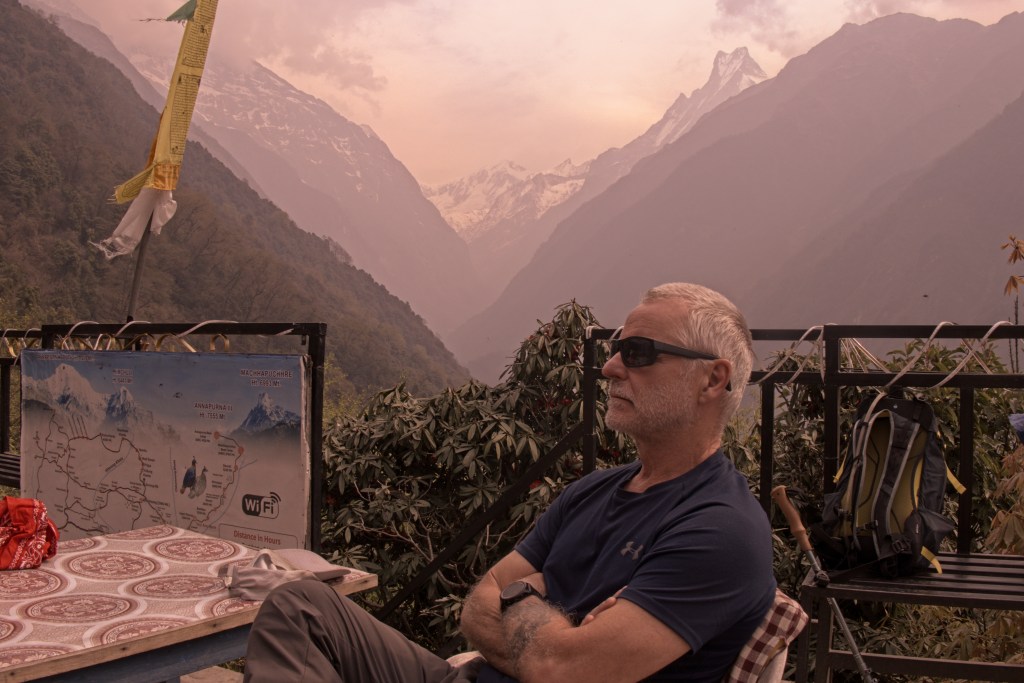
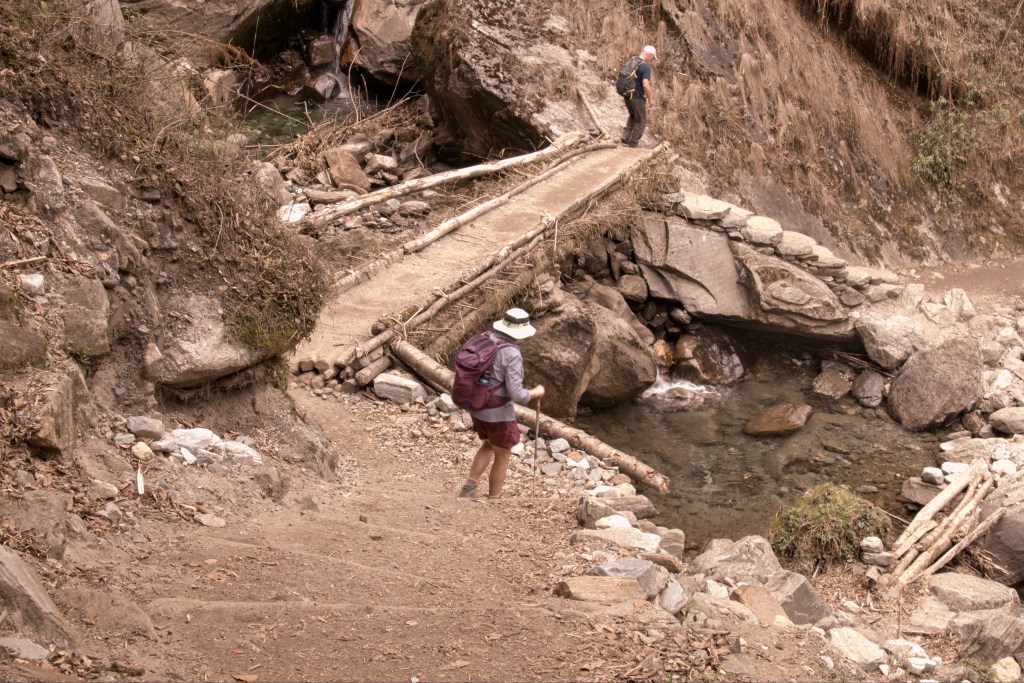
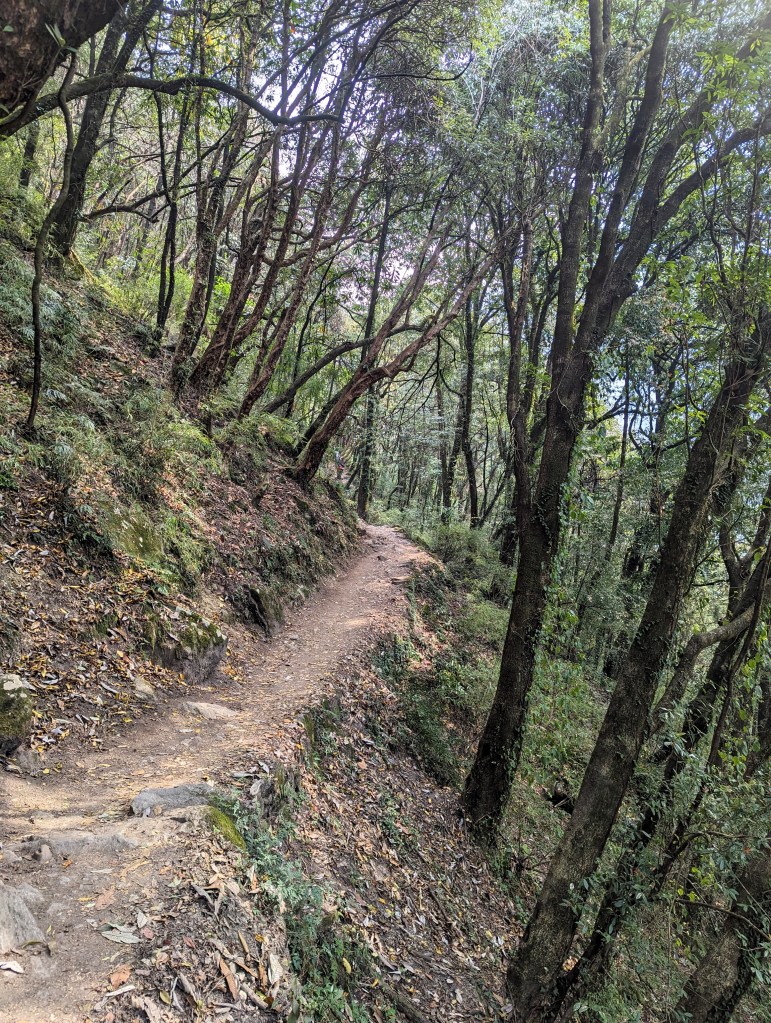
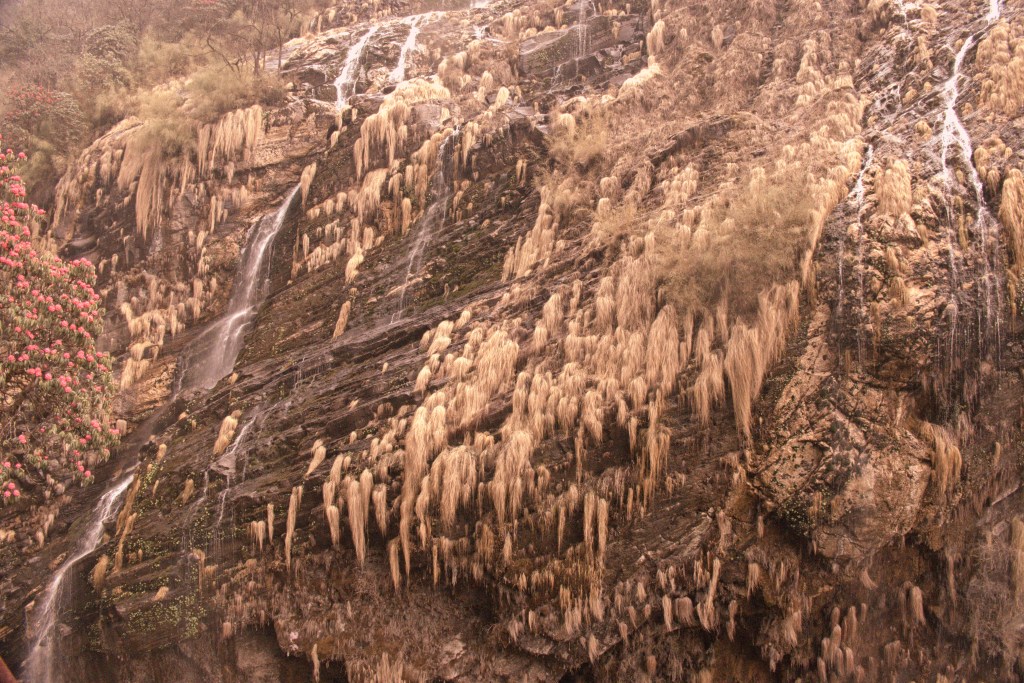
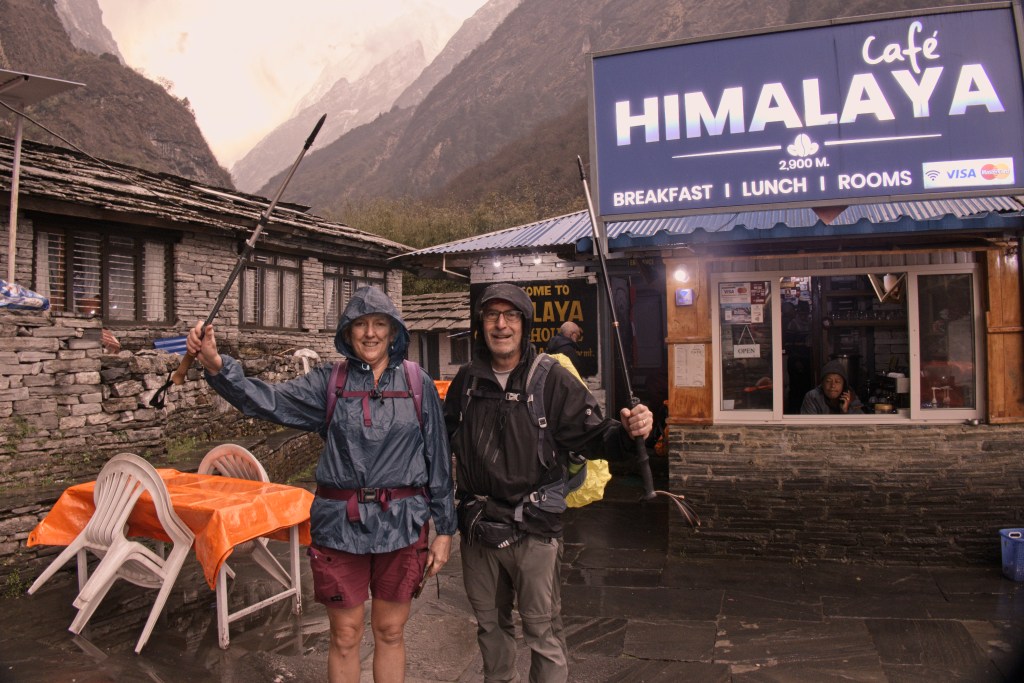
Himalaya is some 600 meters above Chhumrong. Fires aren’t allowed either here or at ABC so soggy things stay wet. It got chilly overnight too; we put on most of our layers here and kept them on through the night.
Day 6: Himalaya – ABC
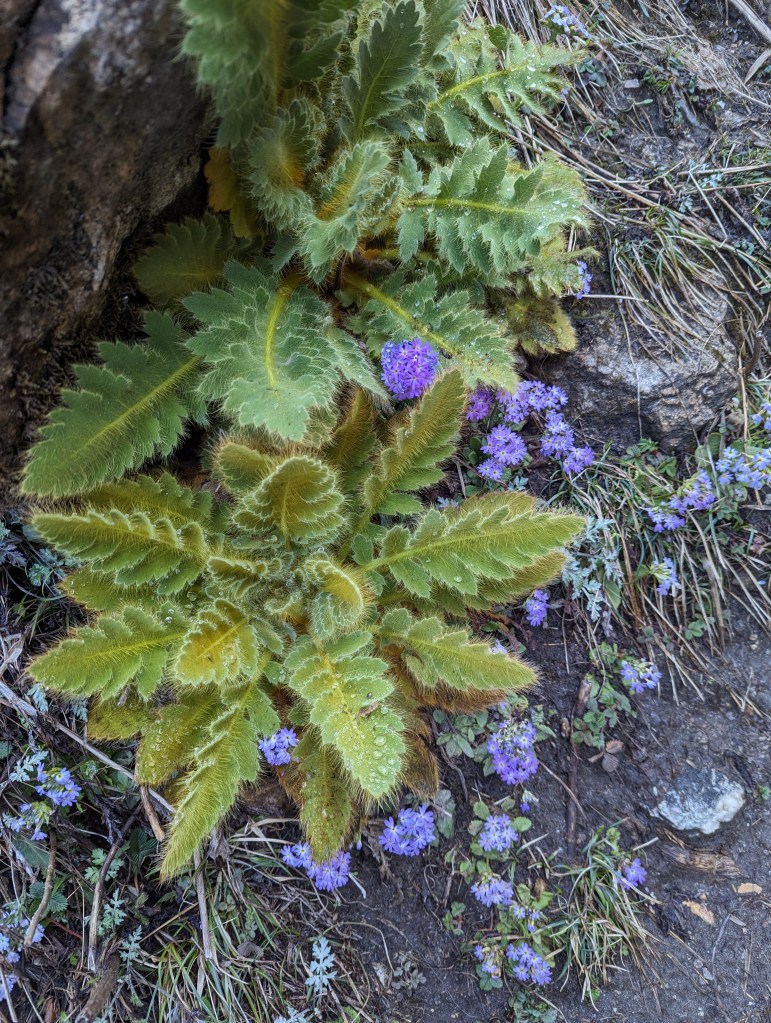
The day of the big push to the Base Camp dawned clear and cold. After the usual breakfast, maybe eggs and fries or granola with hot (powdered) milk or eggs with Gurung bread or one or two other options along with tea, we set off to ABC.
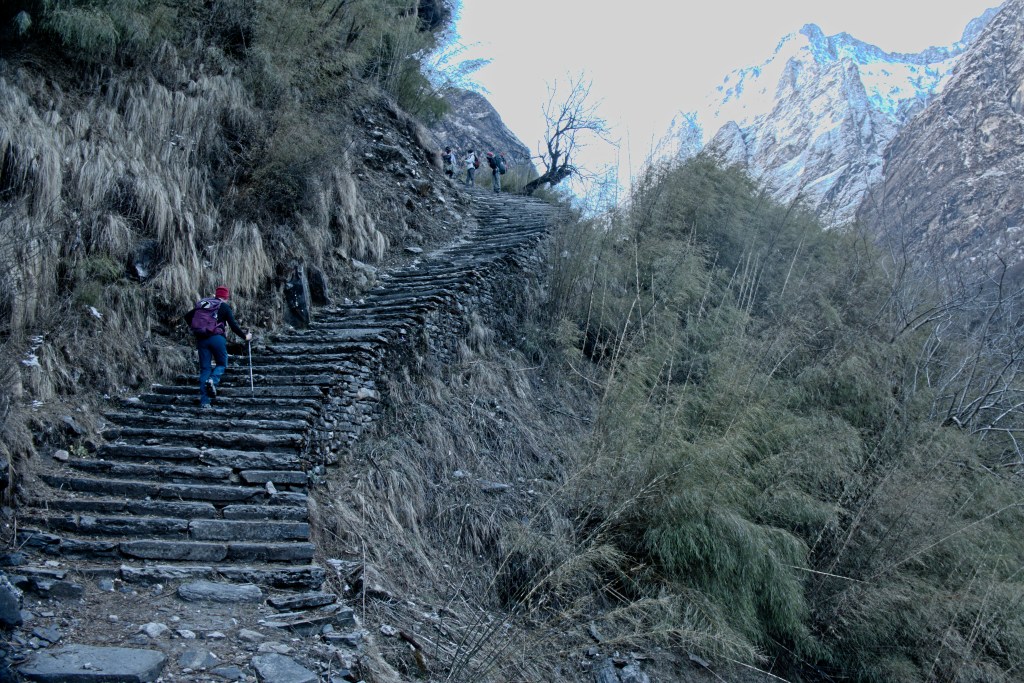
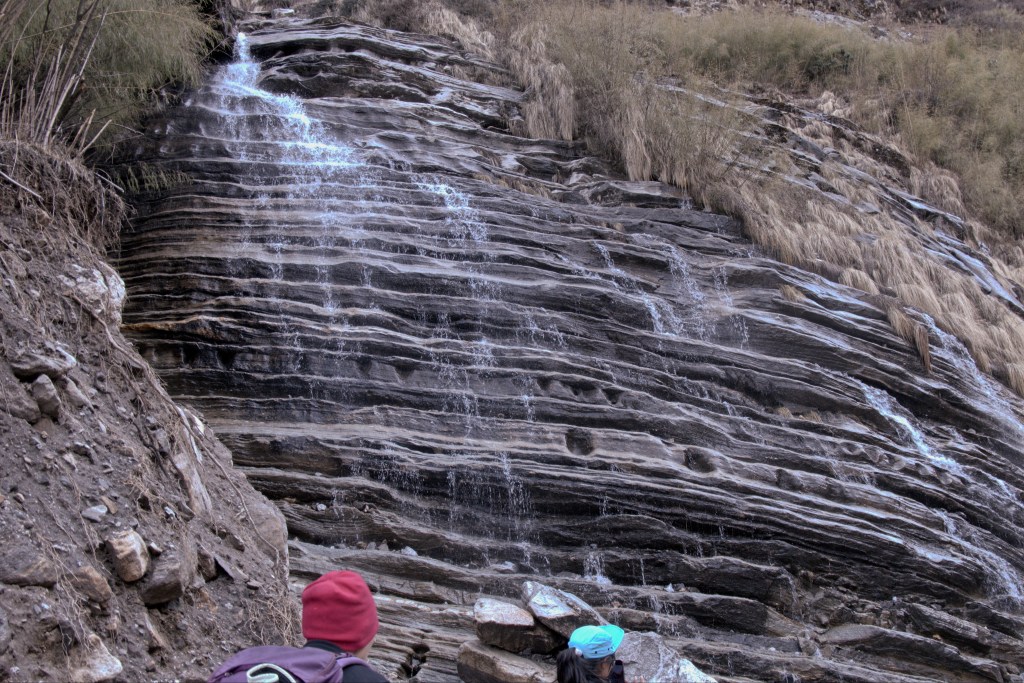

Avalanche on the trail
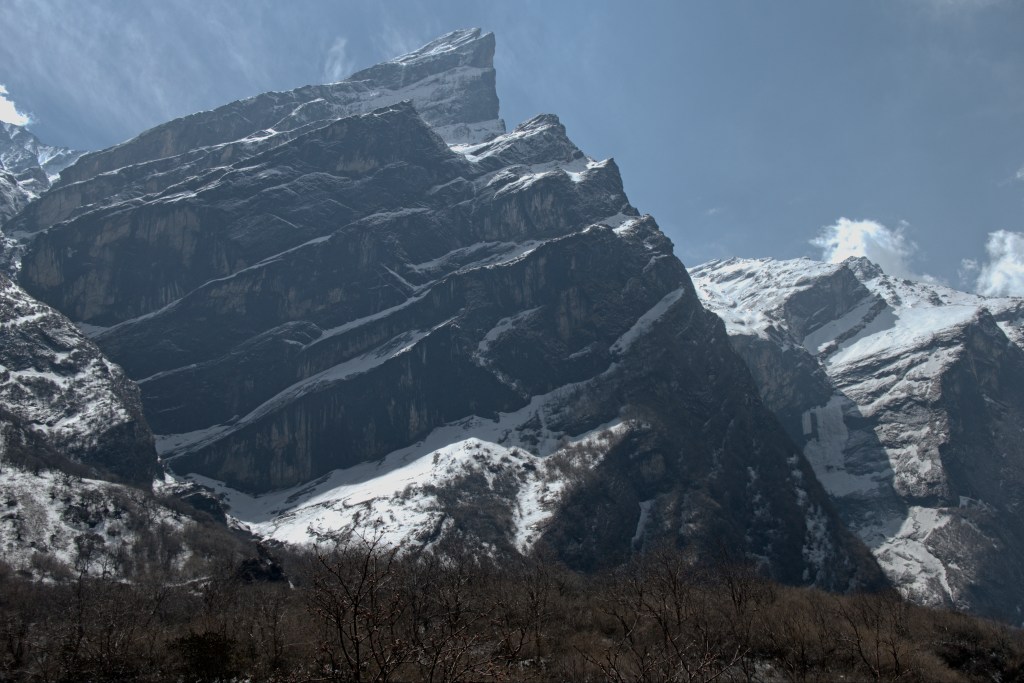

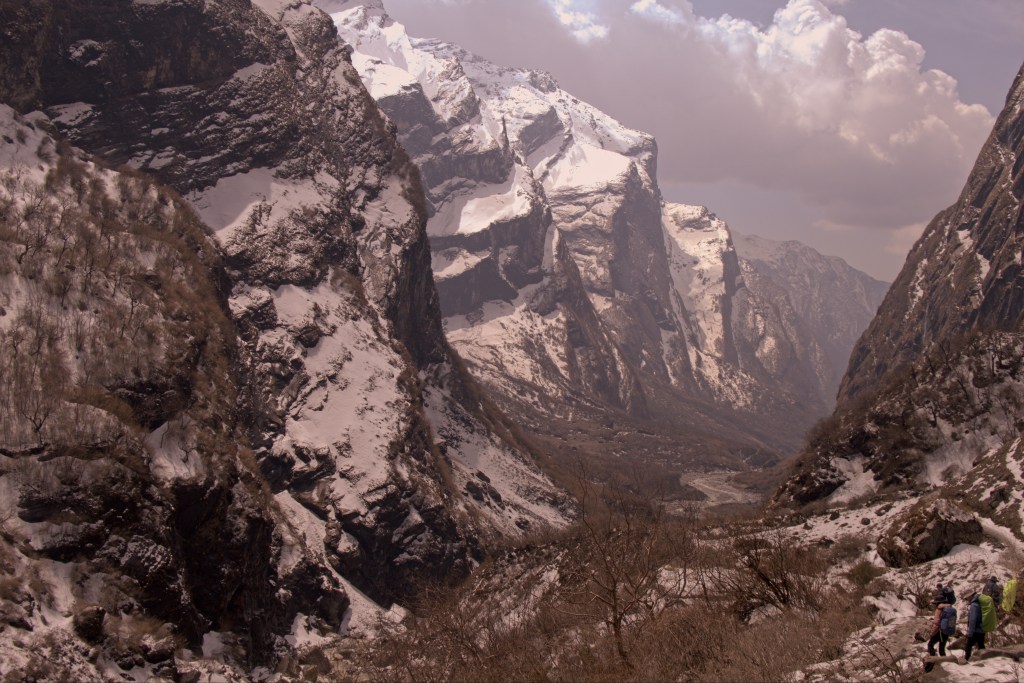
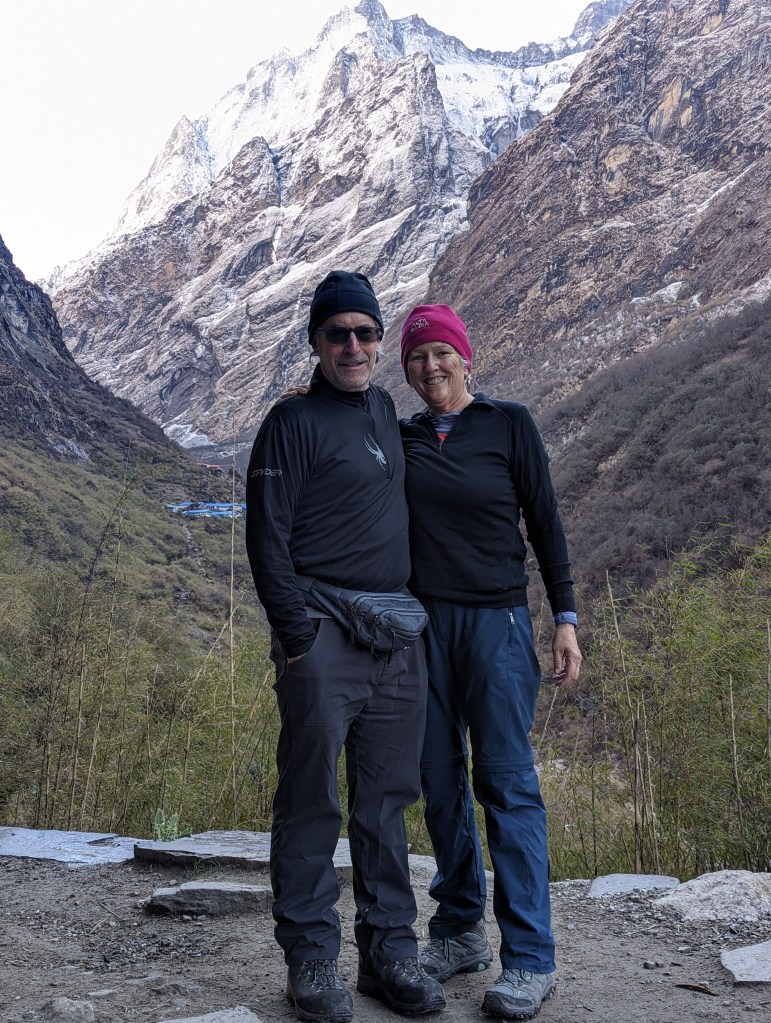
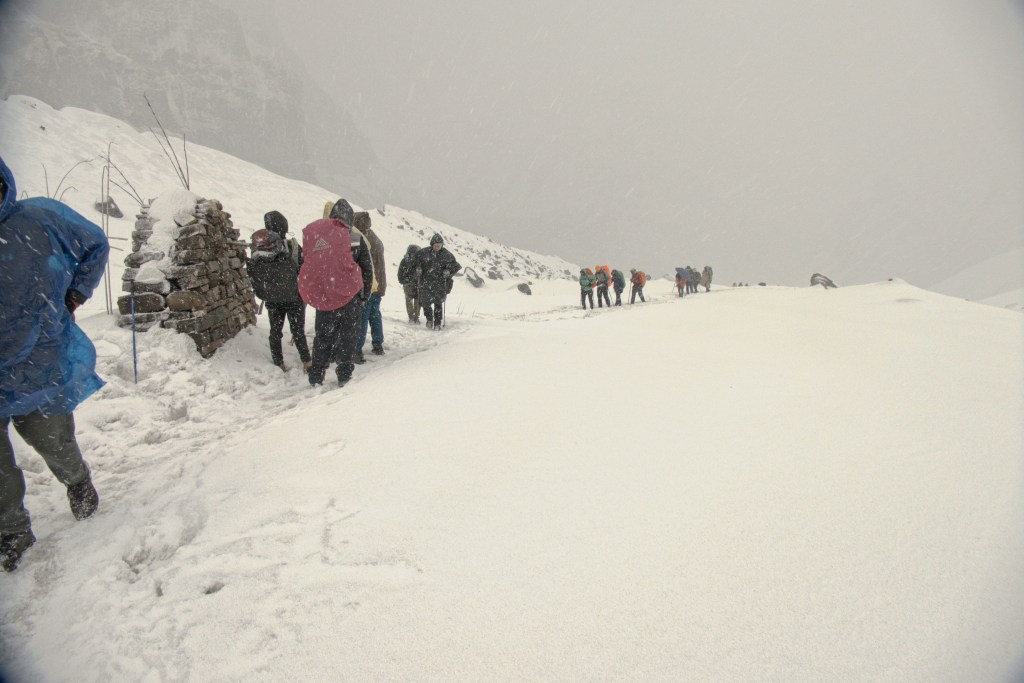
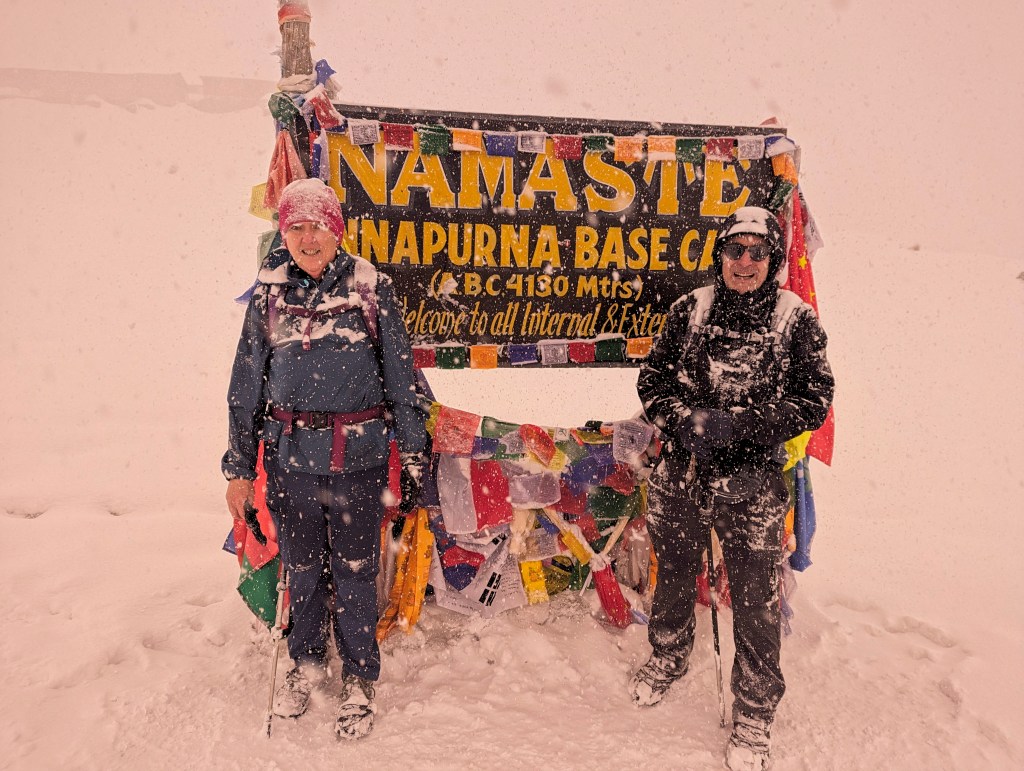
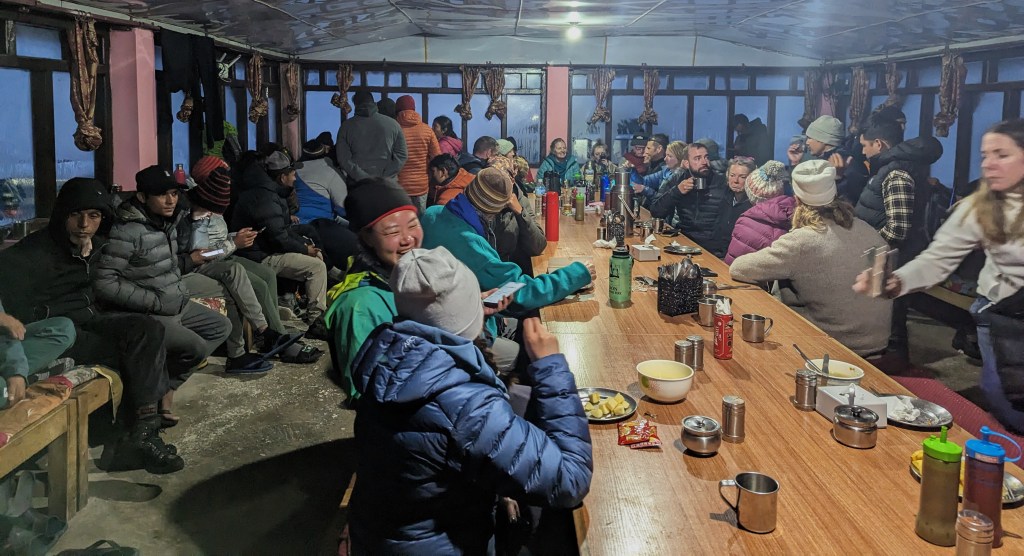
There was nothing to see through the snow when we arrived, other than more snow, so we ate and hung out a while in the dining room and then crawled into our sleeping bags. Tomorrow would be another early day and the big reveal. Net elevation gain was about 1300 meters. We were tired.
Day 6: ABC – Bamboo
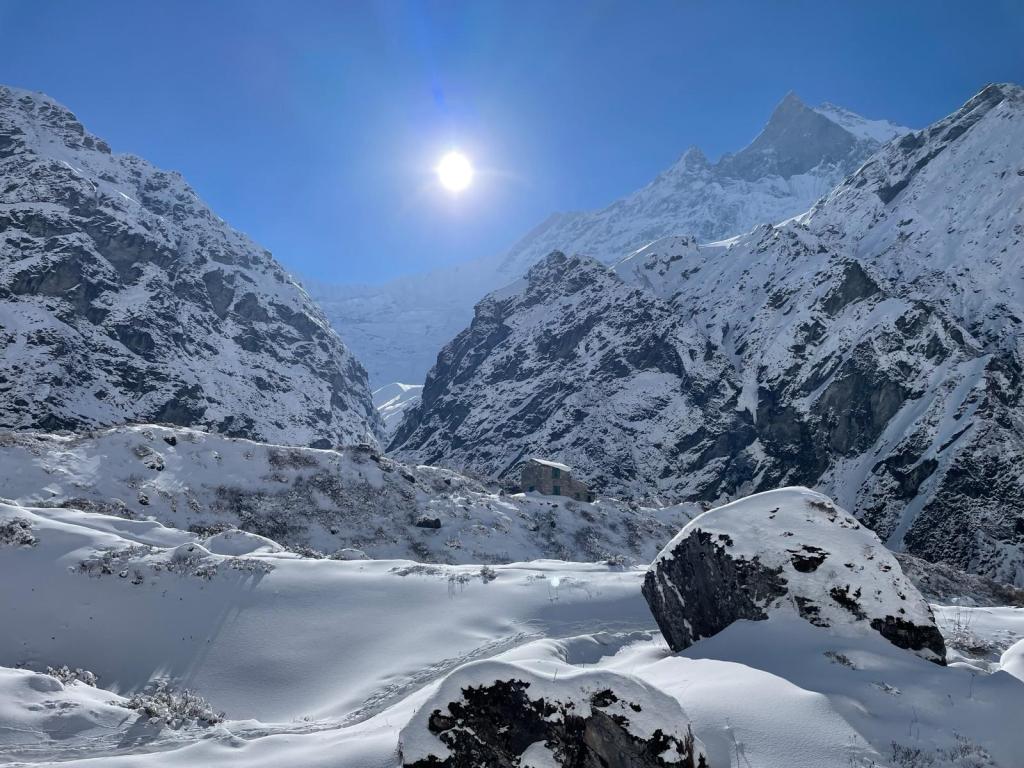
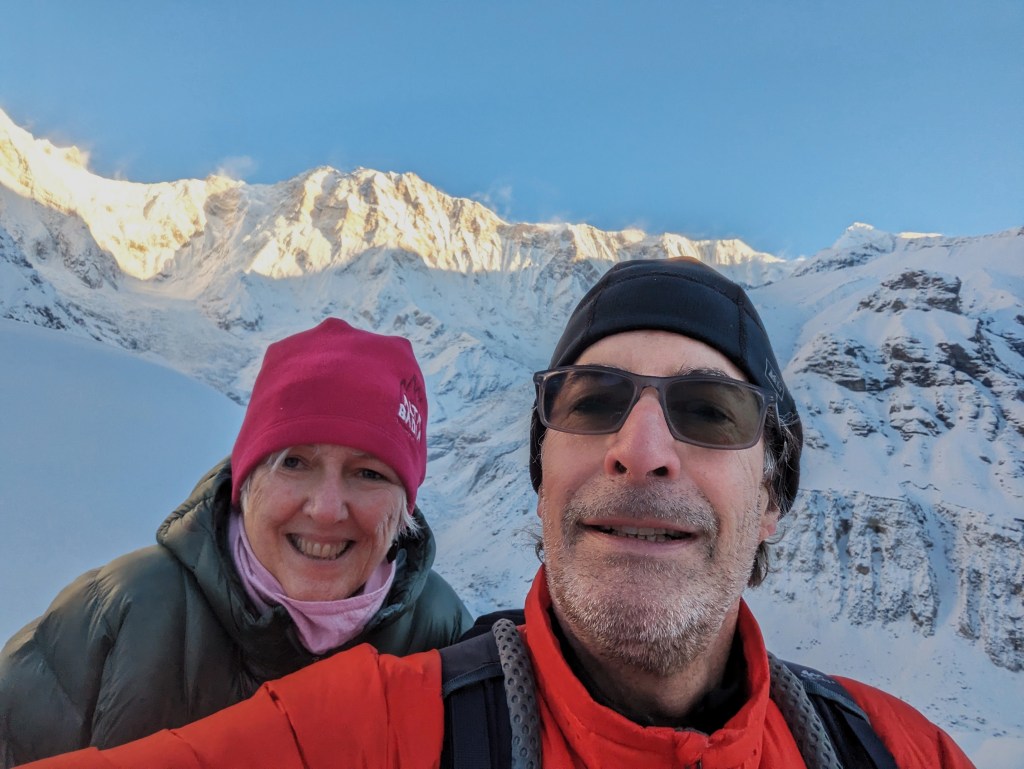
We got up just at sunrise to get out to the viewpoint by the base camp to get our payoff. We walked through a foot of new snow to the overlook over Annapurna glacier and the Annapurna range. It was a spectacular bluebird morning and the view was amazing.
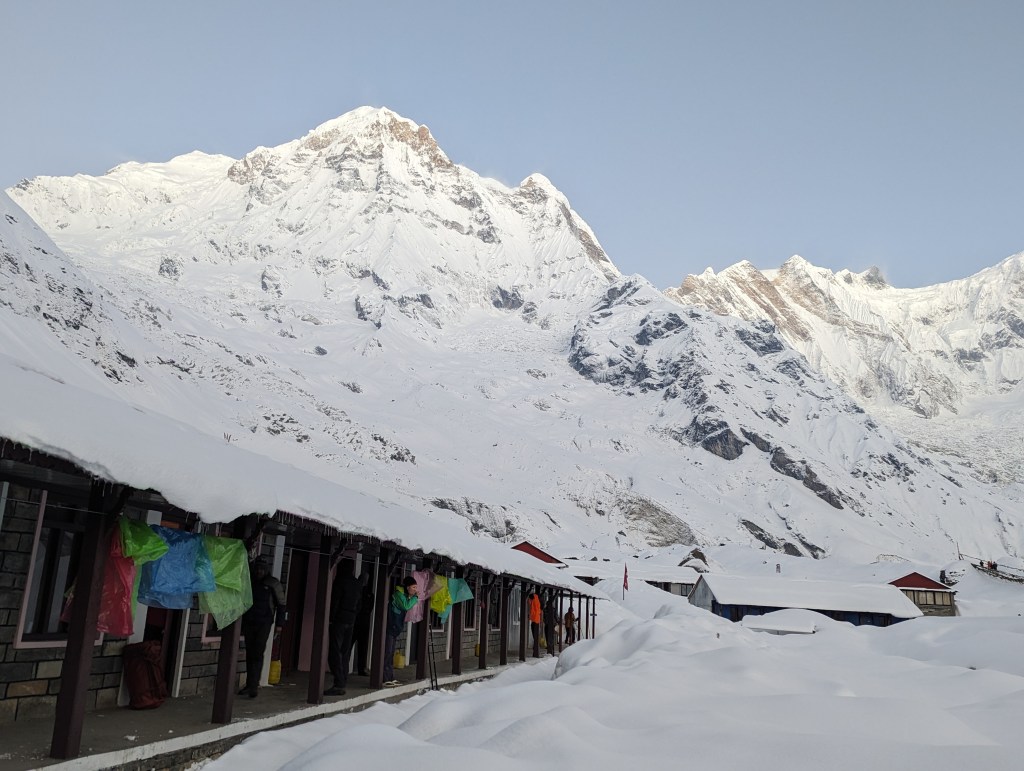
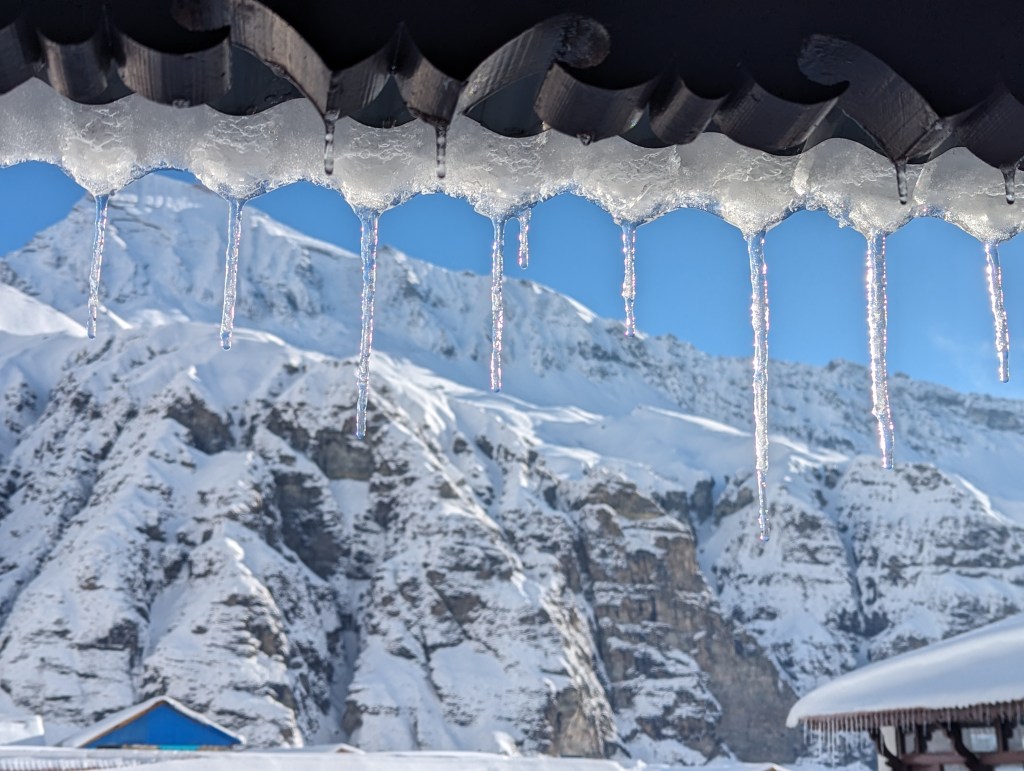
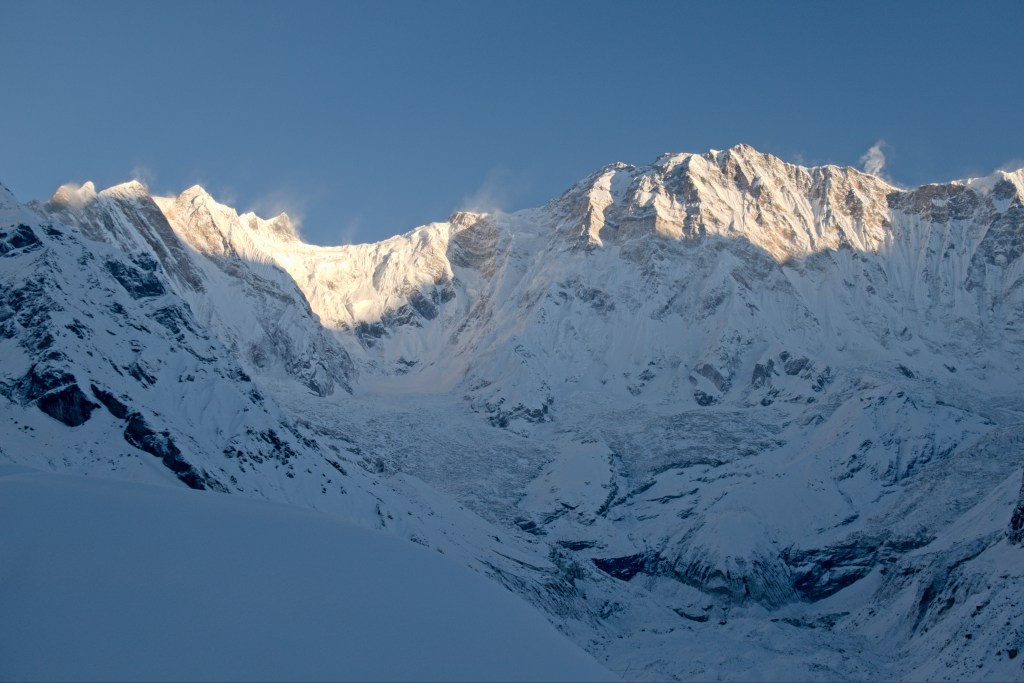
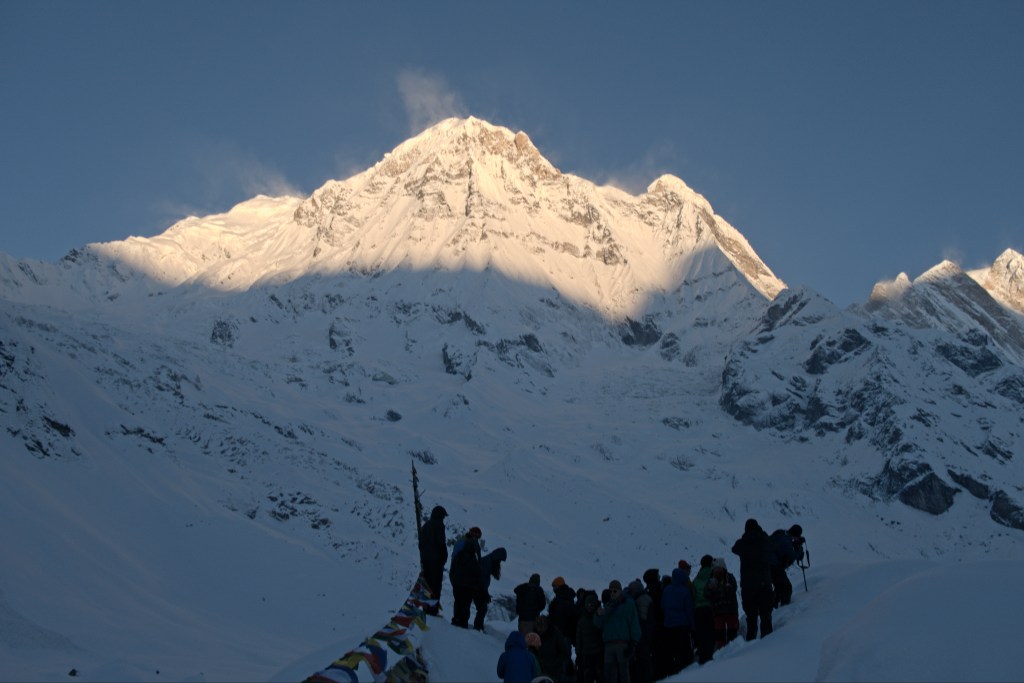

The panoramic view.
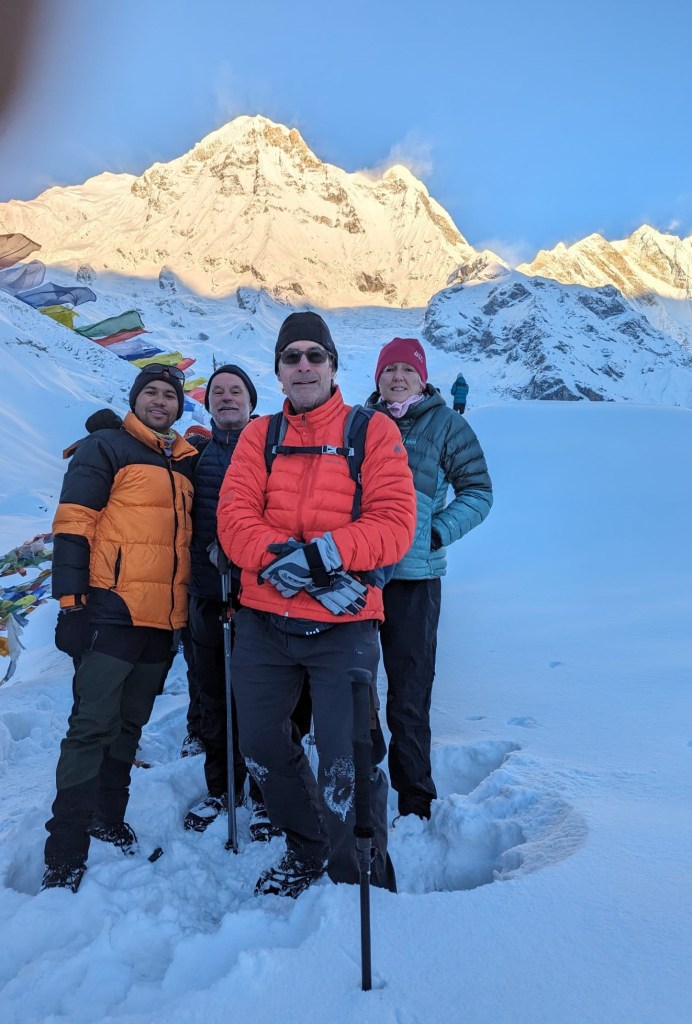
Then it was time for breakfast and the return trip to lower elevations.
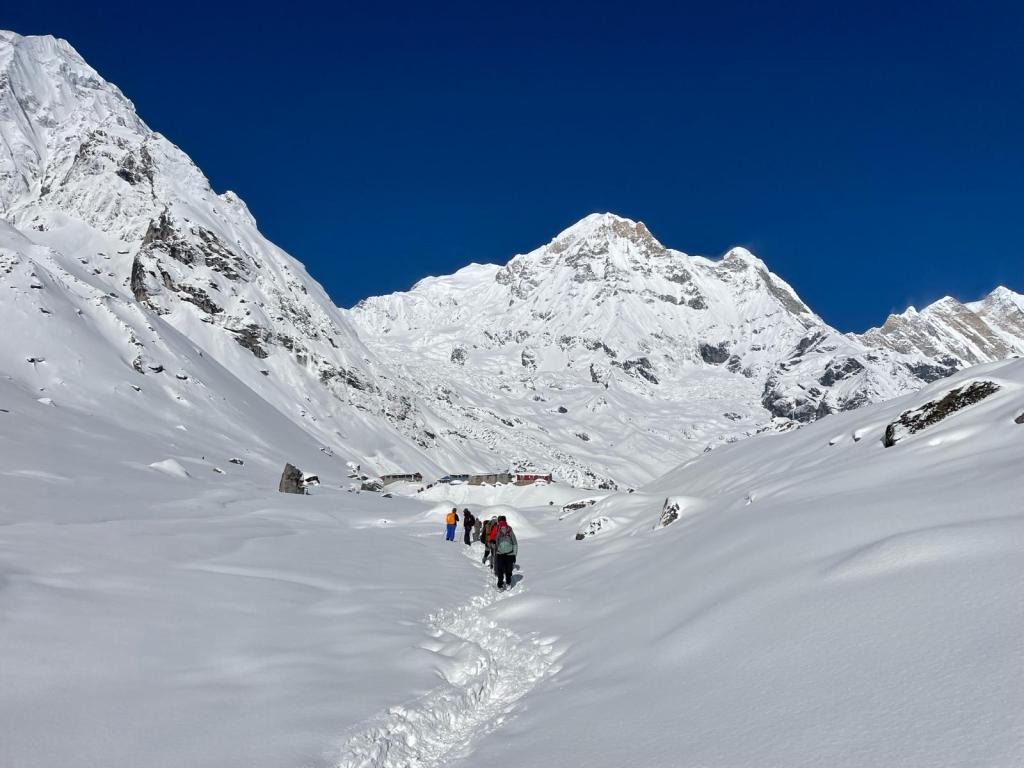
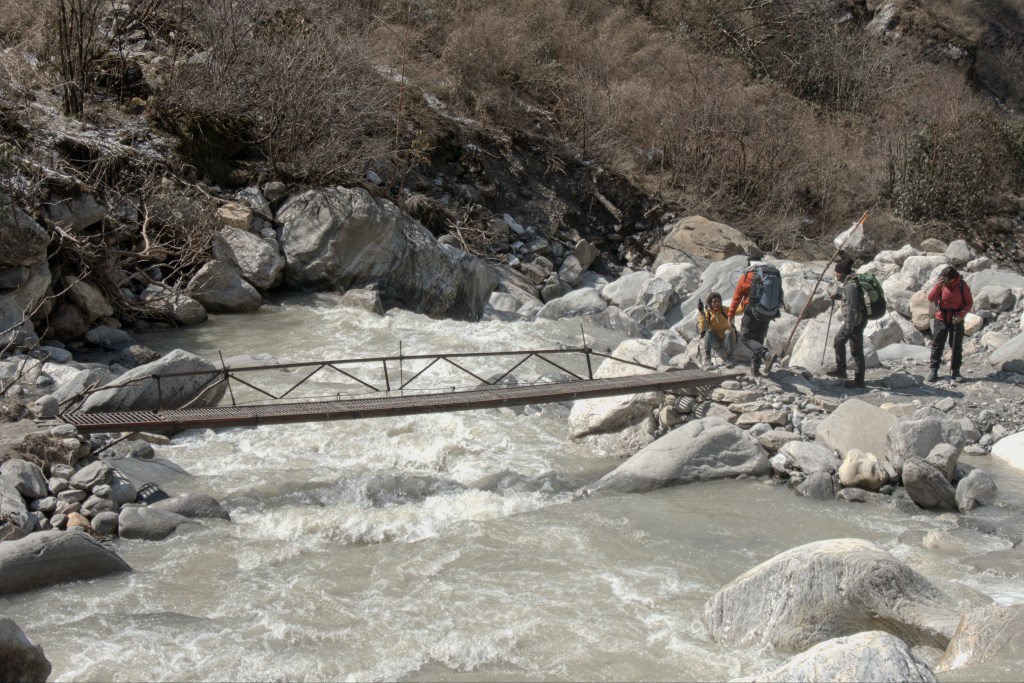
At the end of this leg, Cindy’s knee began to ache. Net elevation loss: 1800 meters.
Day 7: Bamboo – Jhinu Danda
This day we retraced our steps through Chhumrong and then branched off to the direct path back to Nayapul. It was a lot of up-and-down over the ridges which triggered something in Cindy’s knee. Getting up and down the stair steps was a slow and painful experience for her.
We did, however, get to meet back up with Jane. After recovering back in Pokhara and trying some test walks, she felt well enough to meet us at our lunch stop and walk with us on the rest of our return trip.
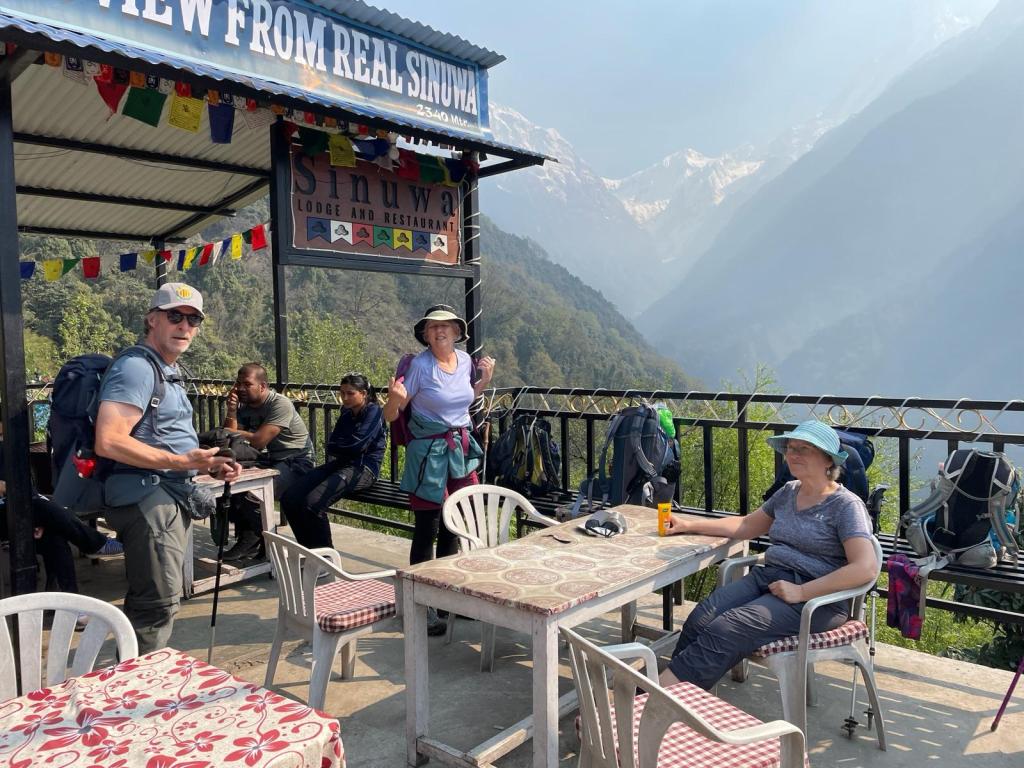
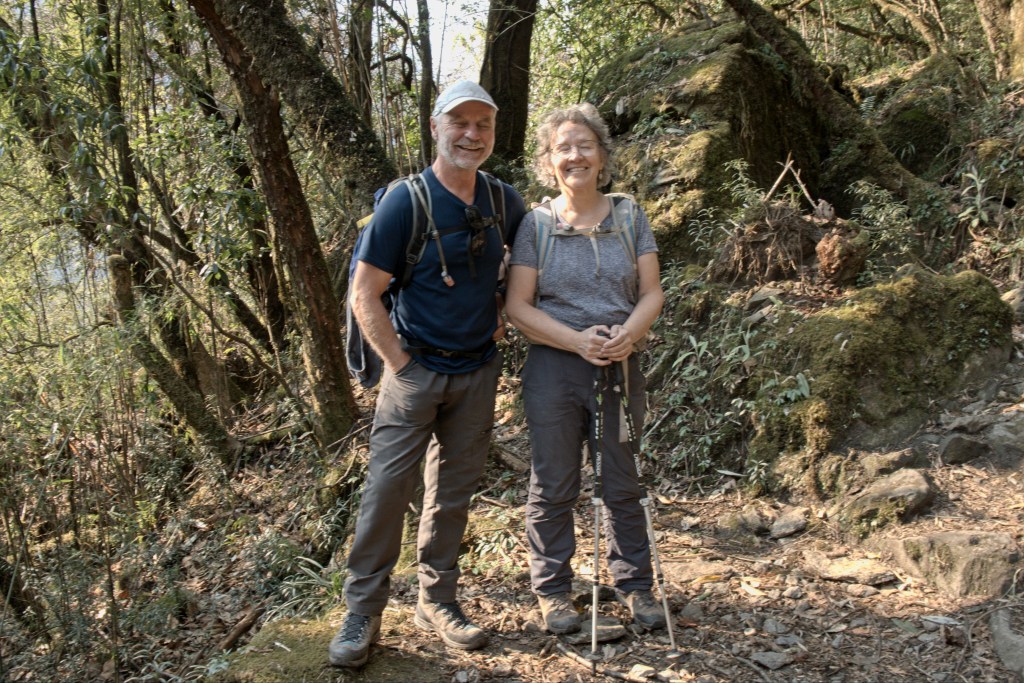
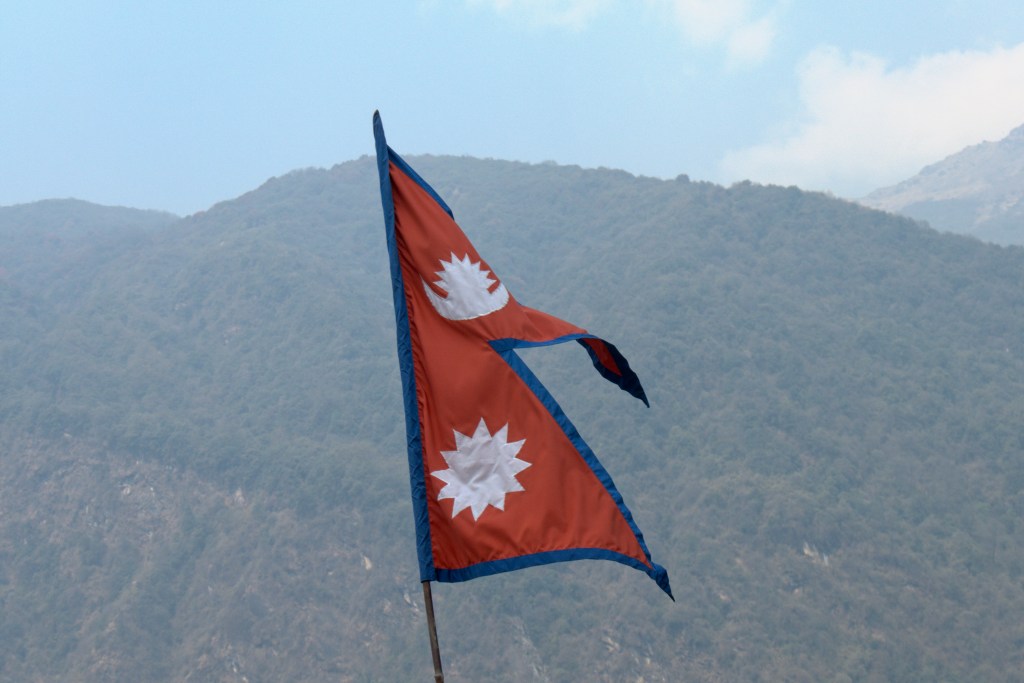
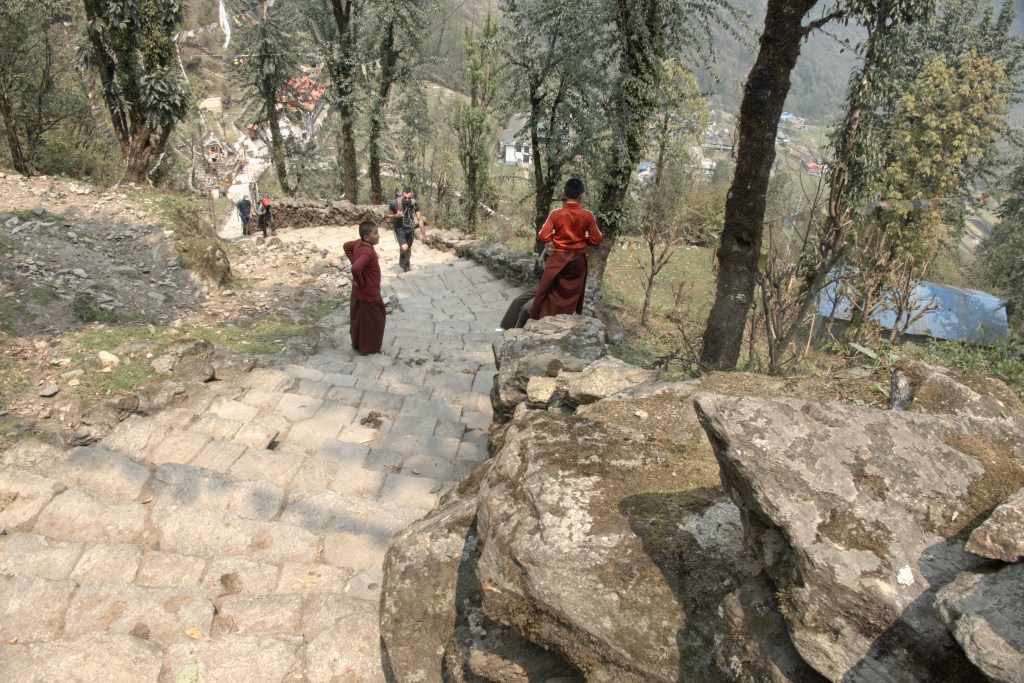
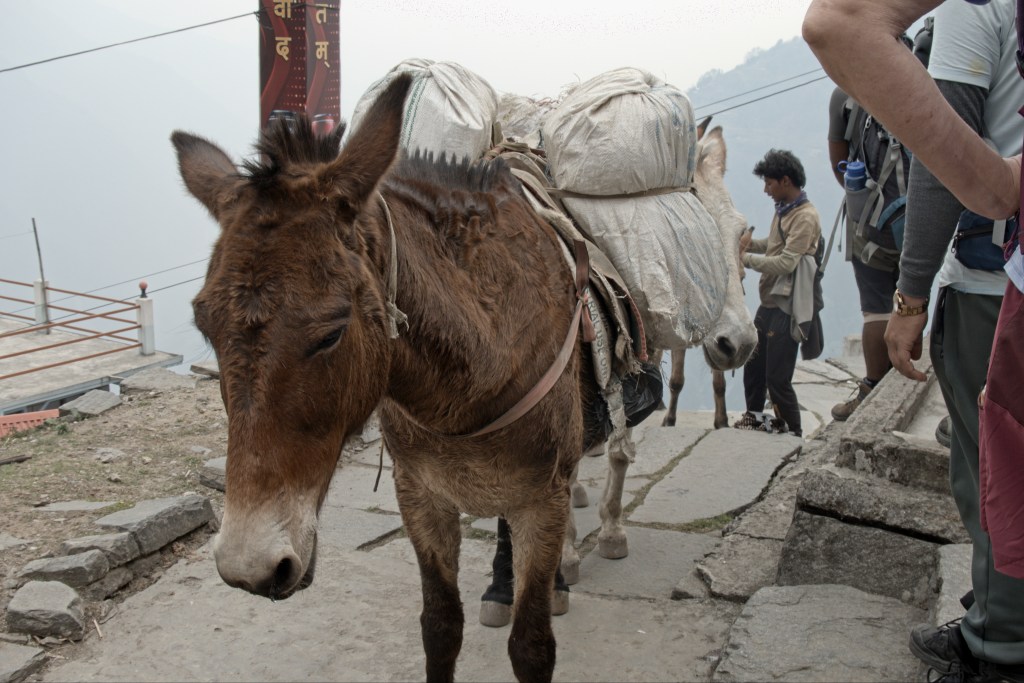
We stayed at an actual hotel that night although the power went out thanks to thunderstorms. Still, the local rum tasted awfully good in the dining hall. Net elevation loss: 800 meters.
Day 8: Jinhu Danda – Nayapul – Pokhara
Cindy’s knee was unusable after the previous day, it couldn’t hold her weight and was extremely painful. We took the sensible option of a short walk to the road where a jeep could pick us up and take us back to our starting point at Nayapul and from there back to Pokhara.
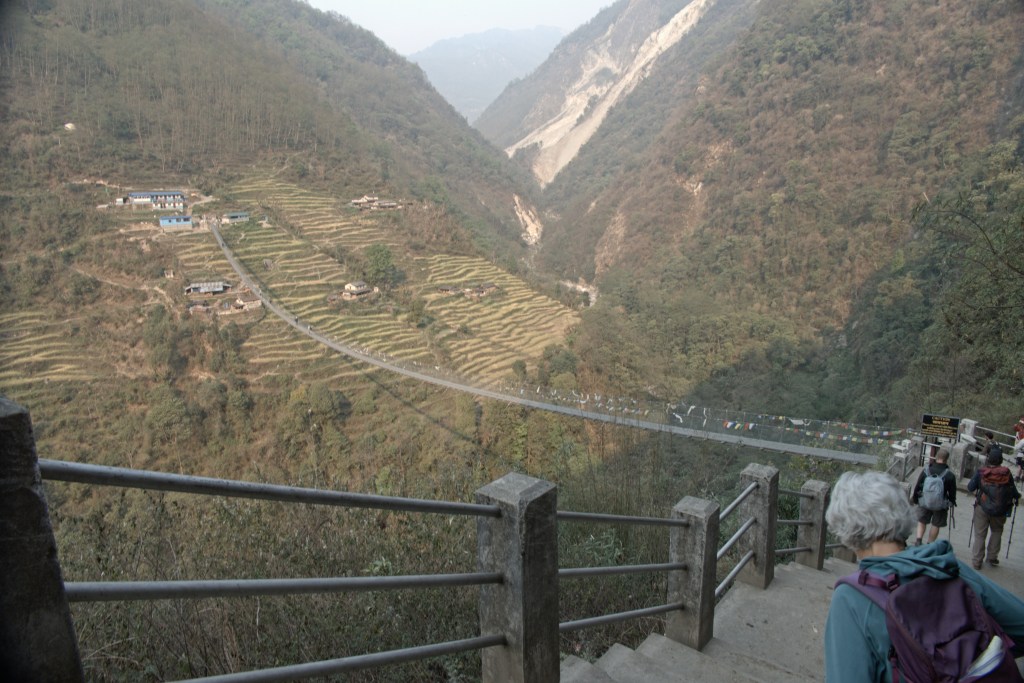
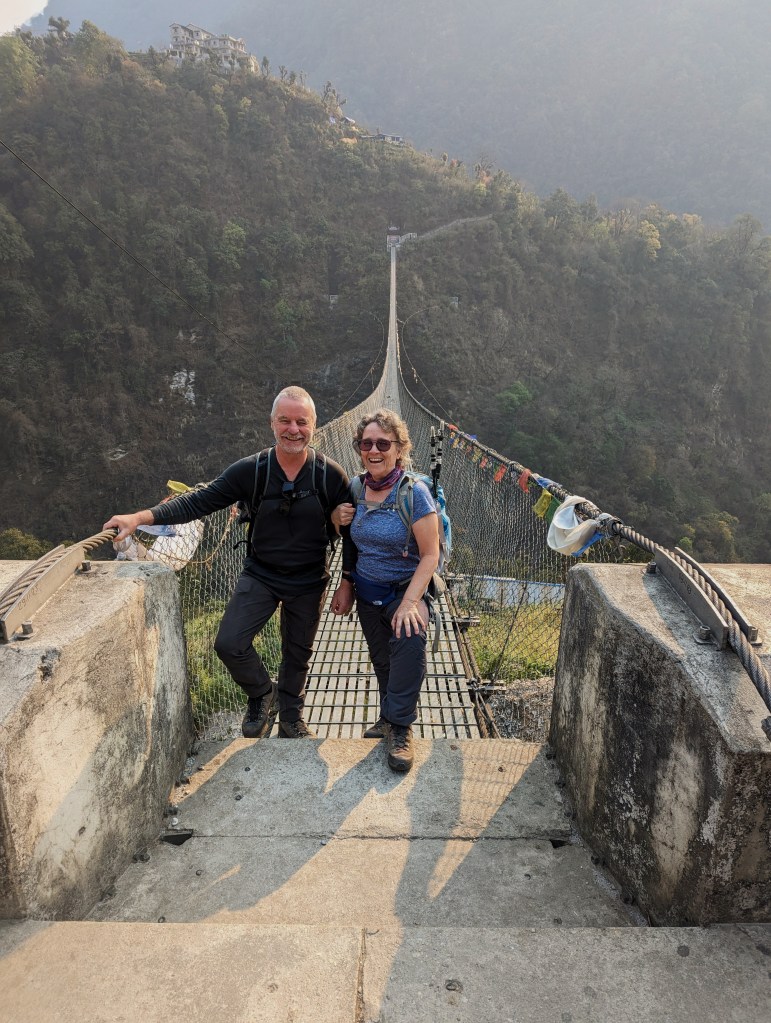
The ride down followed the road we would have walked and to be honest I didn’t mind missing the walk. It really wasn’t attractive and we would have been walking with the traffic passing on another hot, hot day. Just as well. Total elevation loss: who cares? we were riding.
Epilog
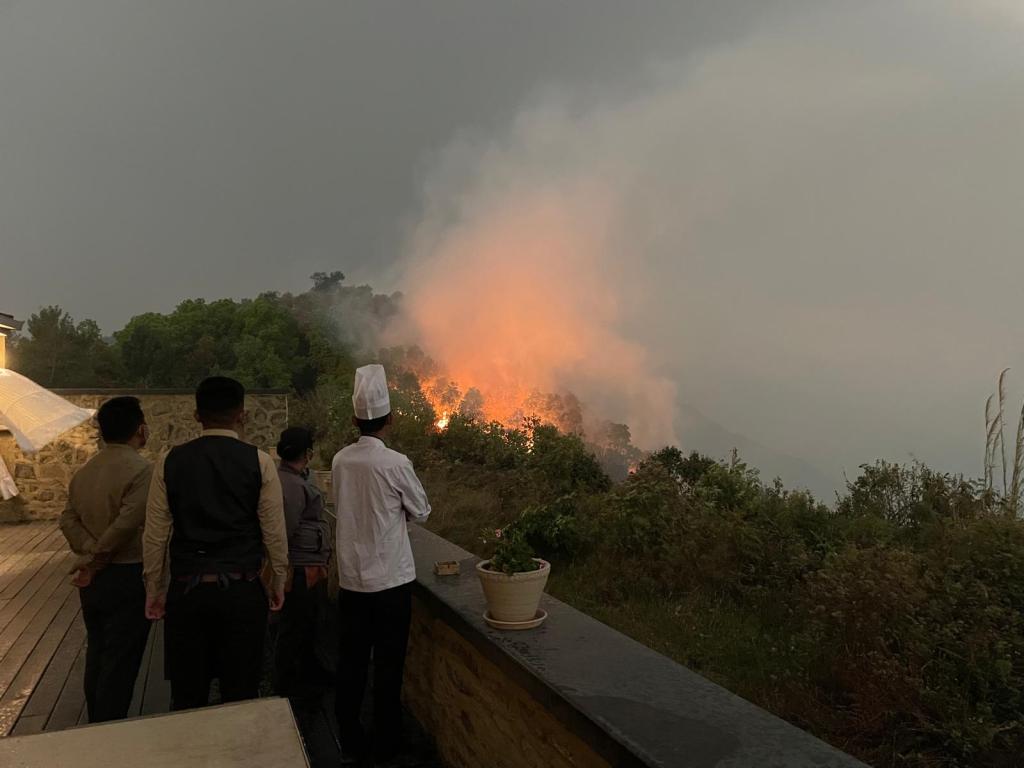
The following day we left Jane and Colin to catch our flight to India. They were going to stay on at a nice resort hotel in Pokhara for a few days. They had a little twist, though, when a lightning strike caused a bush fire that came within meters of their hotel before bucketfuls of rain put it out. They went on to spend a few days in Kathmandu and then returned to England.
Meanwhile, we landed in Kathmandu after a much delayed flight and when we checked in for our flight to Delhi we discovered to our horror that we needed visas for India which we hadn’t even considered ahead of time. After sitting on the concrete floor trying to figure out our options, tired and sick and embarrassed, we called it and booked flights back to Valencia through Qatar. The flight of course was delayed, enough so that we didn’t have time to use the fancy lounge we’d booked in Qatar before having to get onto the next flight to Madrid — which was also delayed. Upon arrival in Madrid we discovered that they had lost our luggage. Submitting the paperwork for that put us behind for getting to the train station to go to Valencia but fortunately (!) the train was delayed too. We straggled into our apartment mid-morning and pretty much collapsed. Cindy’s bag came a week later, mine a further week behind that.
So. Was it worth it? I’d say a qualified “yes”. Travel to a place like Nepal is never going to be easy and the trek itself was incredibly strenuous. I wish we’d done it twenty years ago. It was one of those trips where just about everything that could go wrong did and there was a fair amount of not-fun involved. Still, the countryside was beautiful, the people very kind and we accomplished a thing that not many people do. So yeah, worth it.


 Home | Travelblog
Leave a reply to havenholidaysnepal.com Cancel reply