-
Movement!
Cracks are starting to appear in the icy hold of Covid that has held us trapped for so long. After receiving our first A-Z shot at the beginning of May, we are feeling more free to get out a little bit and explore again. This has included the wine region between Valencia and Madrid centered on Utiel and Requena, Castellón de la Plana and finally, Barcelona.
We drove to Utiel with our friends Richard and Phyllis and enjoyed a day eating, drinking wine and taking a tour of the underground wine storage system built throughout the town.
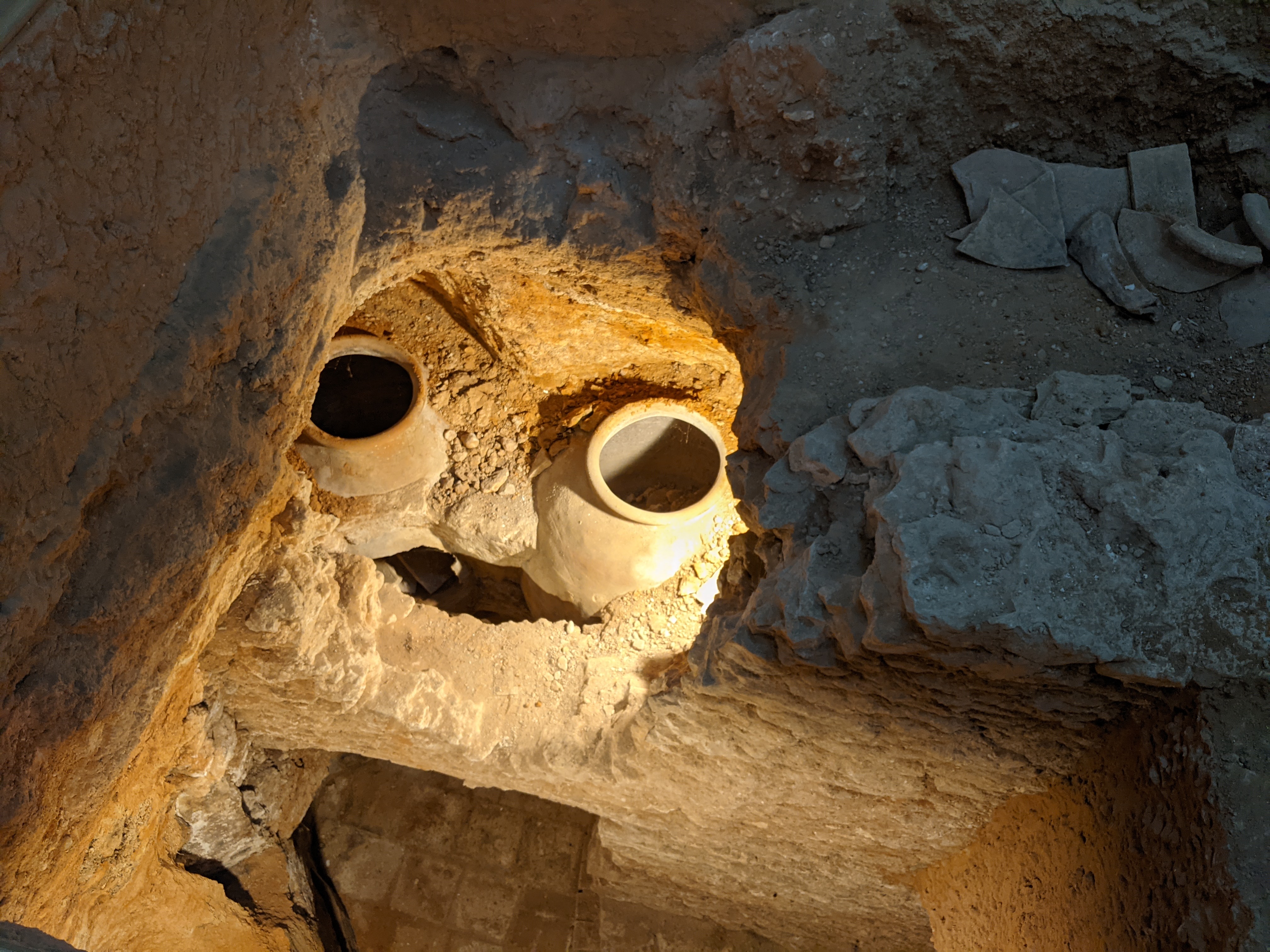
The whole town was involved in making wine and they stored it in these giant clay jars that they built into the foundations of their houses
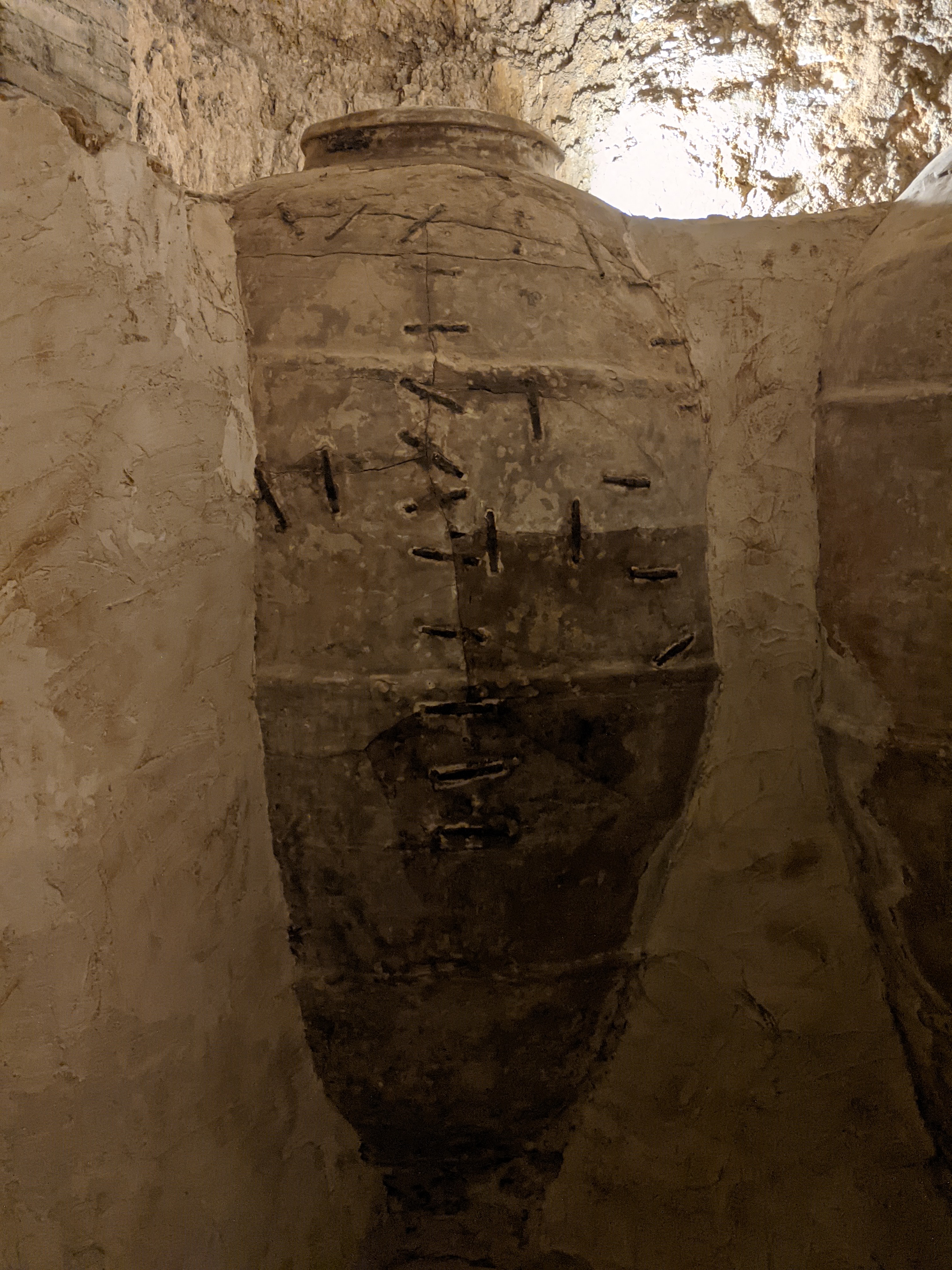
When jars broke, they weren’t removed, they were repaired. With staples and glue, by children who could fit into the jars.
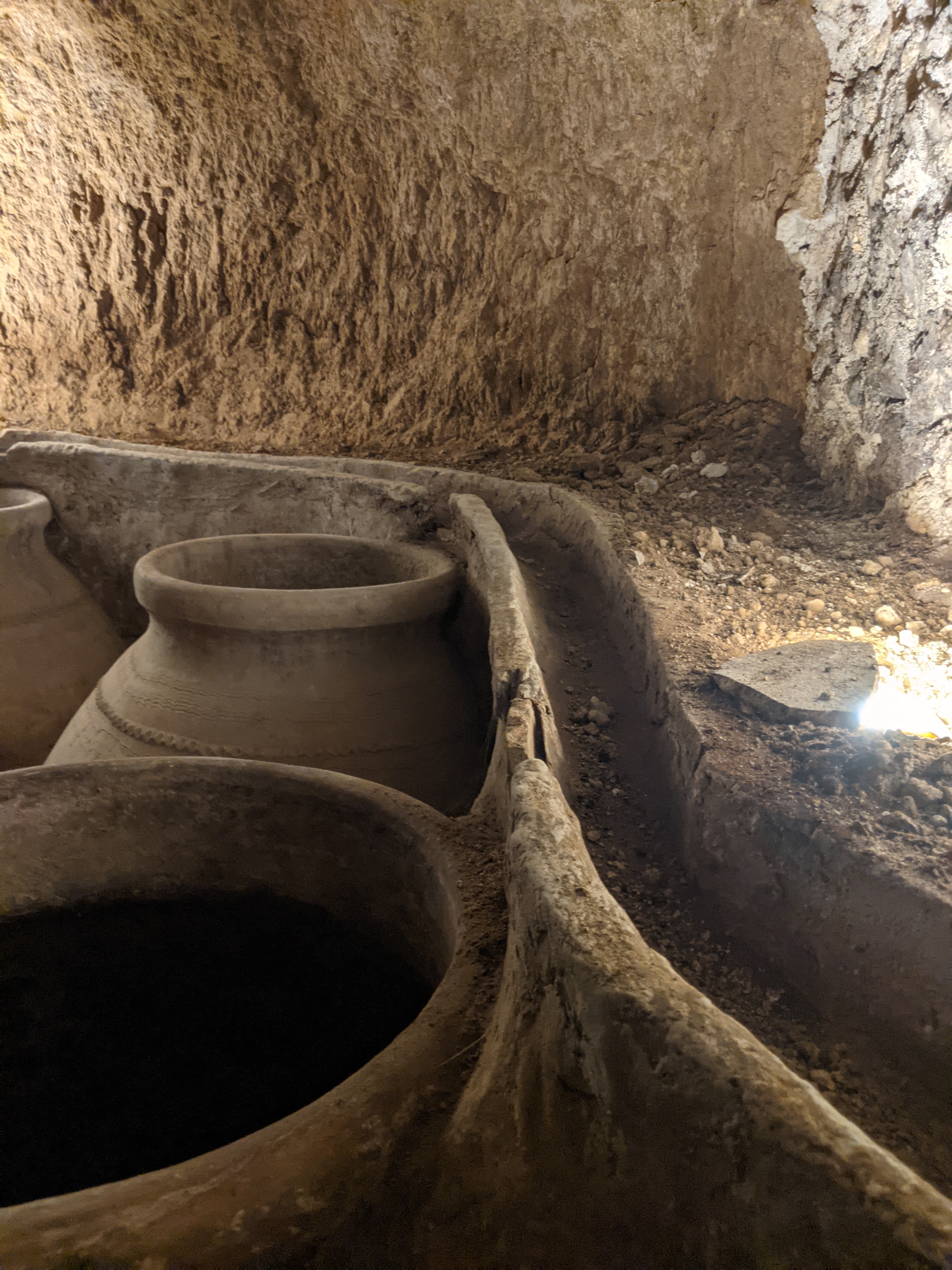
Wine was channeled into and out of the pots via these gutters that ran above the tops and along the floors.
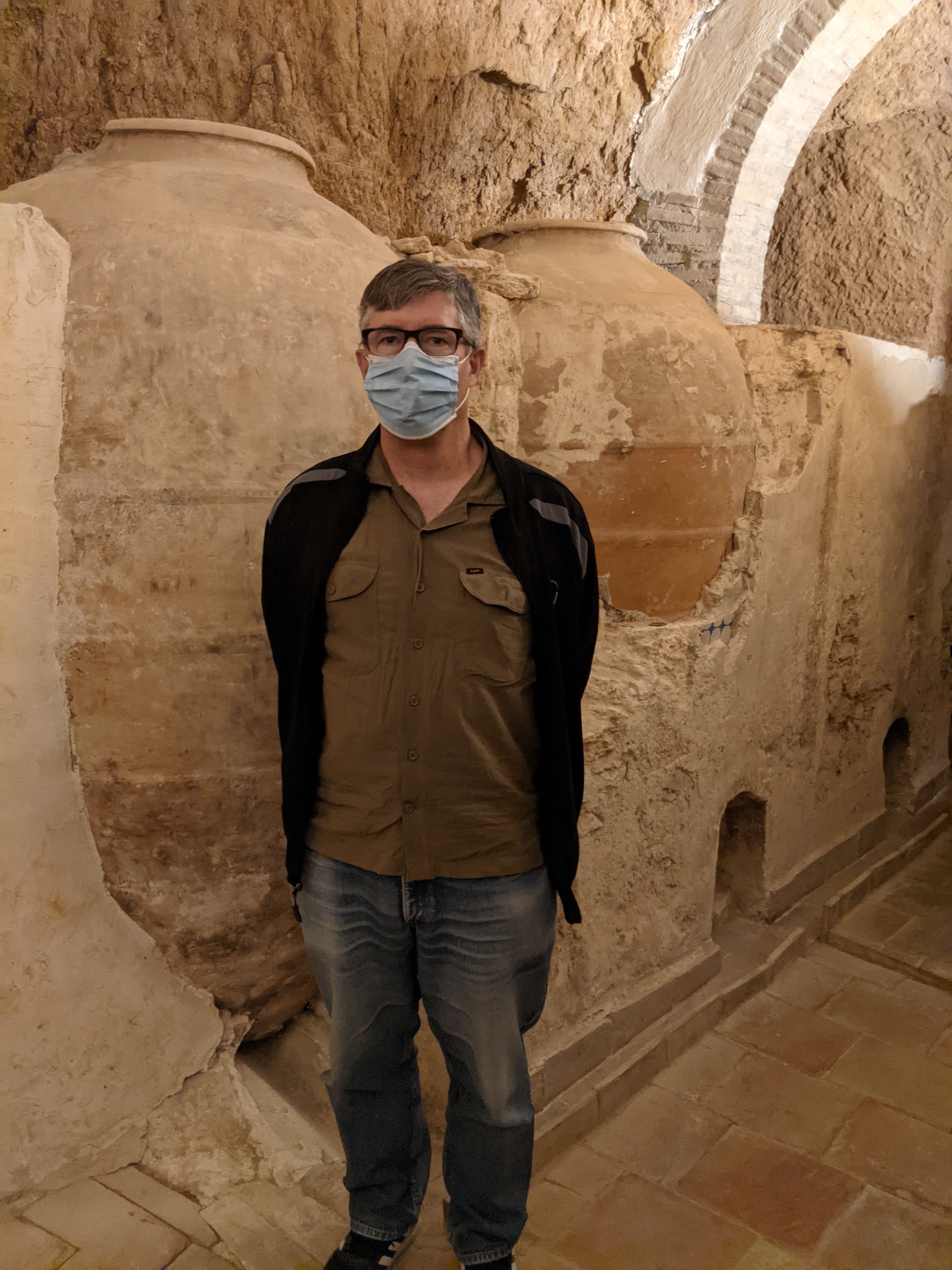
Human for scale
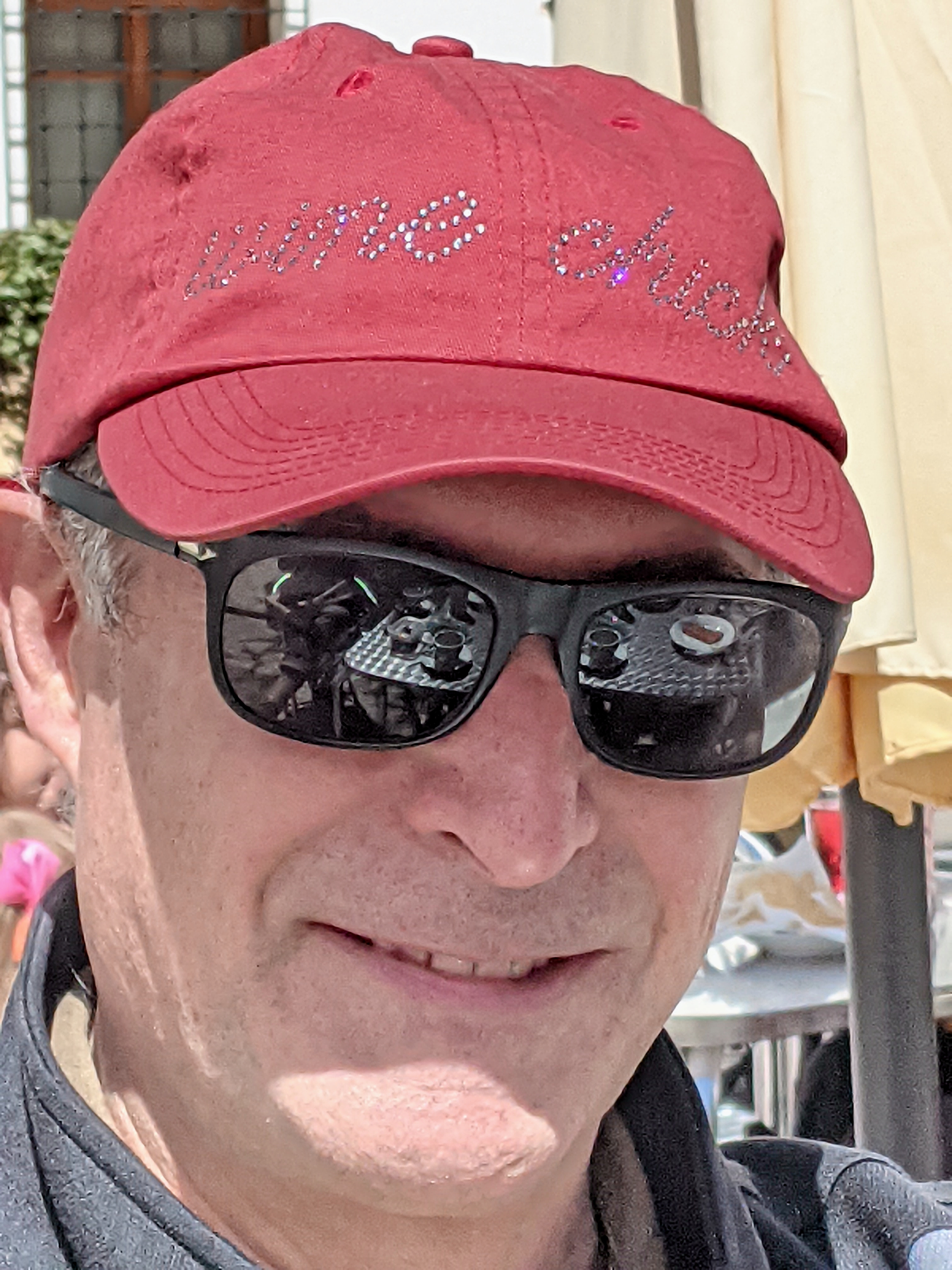
So somebody didn’t remember a hat and had to borrow.
Castellón de la Plana
We caught the train north to Castellón for a quick day trip, to get a break from the construction going on outside our place. They are literally tearing apart the entire street and plaza in front of us in a project that is scheduled to take the next 10 months. We’re hoping much of it will be quieter than it has been so far.
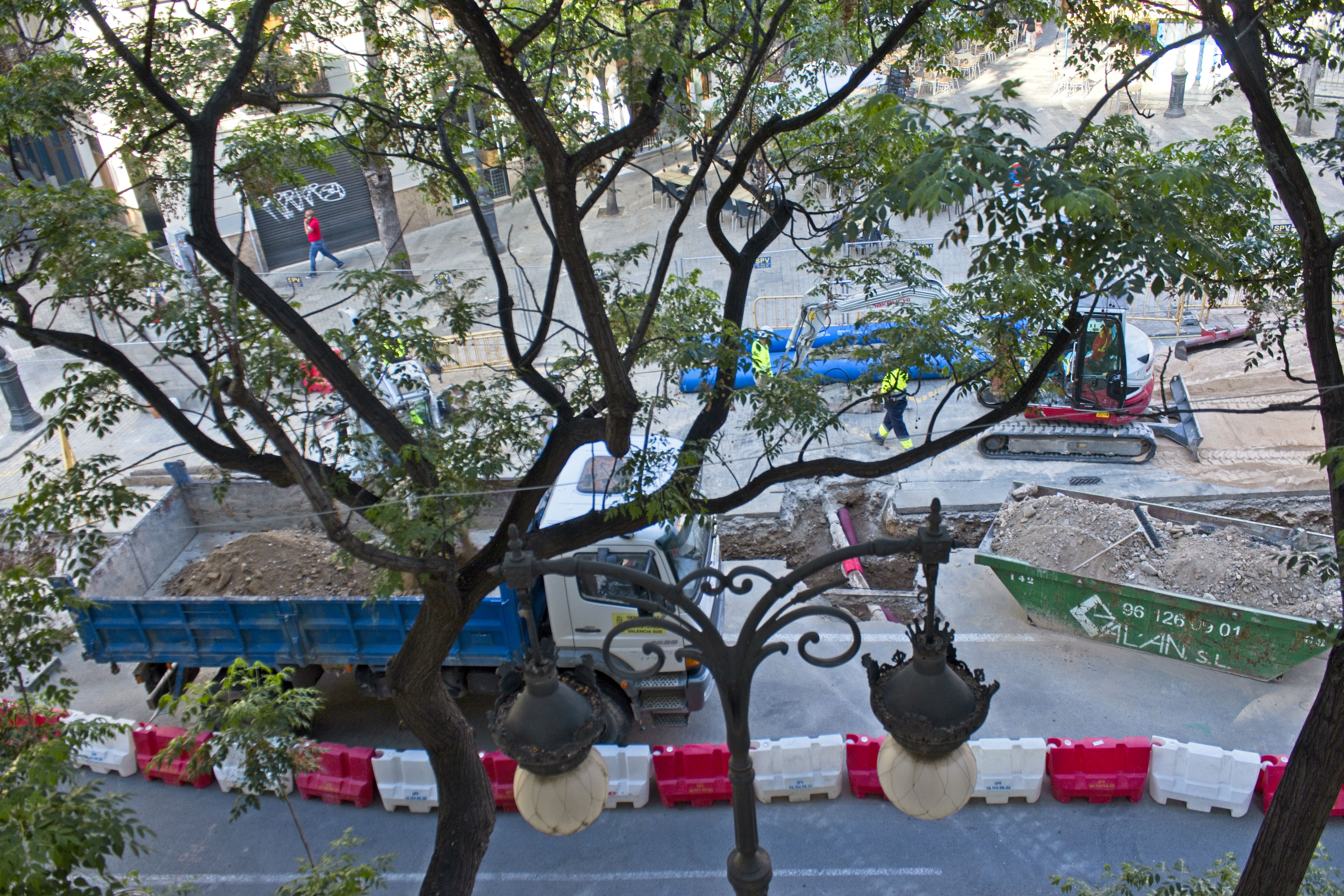
This is what’s been going on at our place.
Sadly, no other pictures because somehow I turned off the auto-focus on my camera and they all came out blurry. Castellón is a nice town up the coast and we had a pleasant day wandering the streets and enjoying the park. We also visited the belles artes museum where they have on display ceramics from prehistory up to the nineteenth century, along with paintings and a photo exhibit of Spanish housing developments that were abandoned mid-construction after the crash of 2008.
Barcelona
On our third try we finally made it to Barcelona. We had to scrub the two previously planned trips thanks to shutdowns driven by Covid but this time we finally made it. We definitely wanted to get up there before the crowds came back and are glad we did. Barcelona is a bigger (2x the size of Valencia) and busier town and it’s already starting to see tourists return but nothing like the crowds it saw in the past. We were able to do anything we wanted without fighting for tickets or battling the hordes. We feel very lucky.
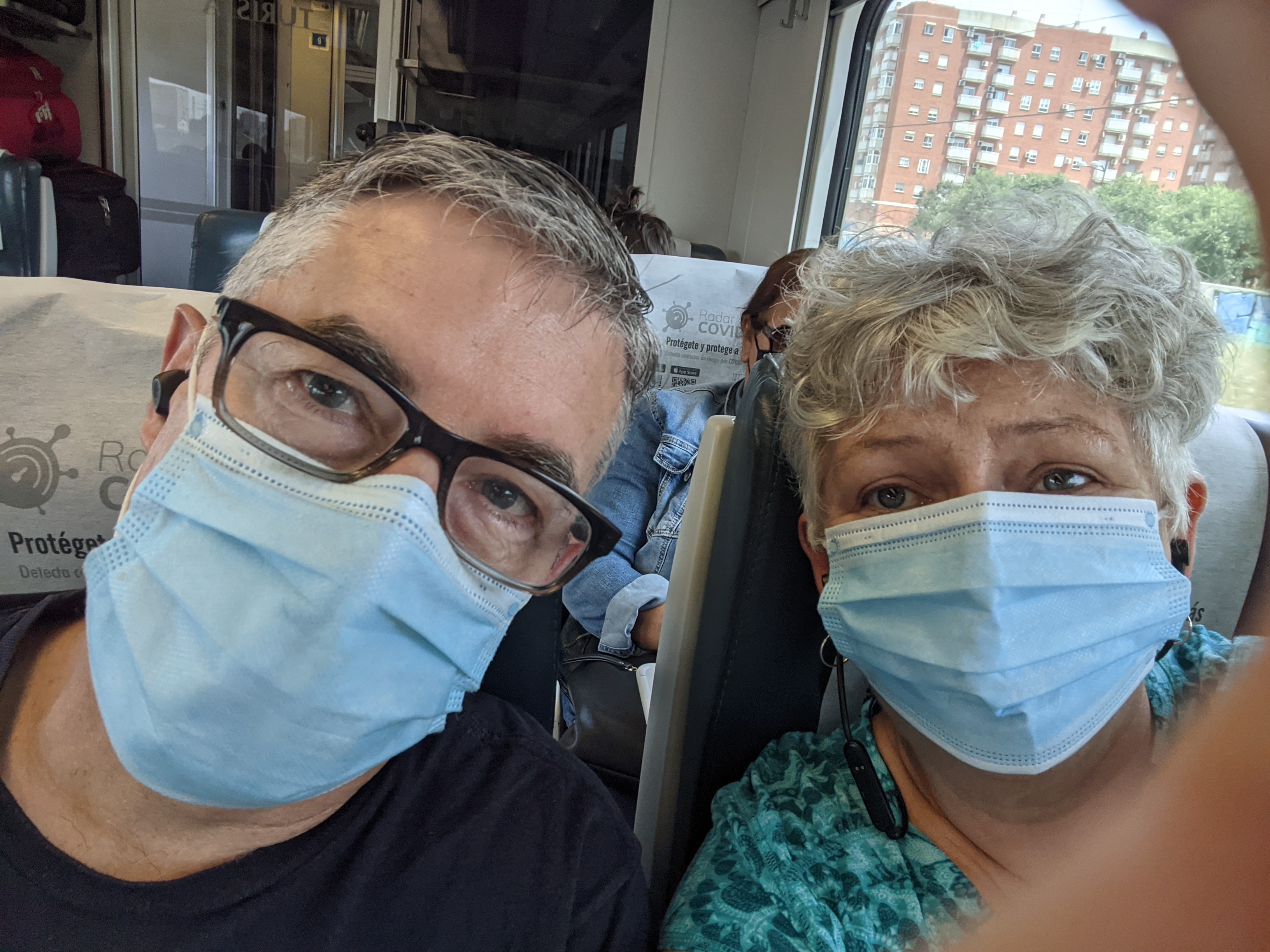
On the train
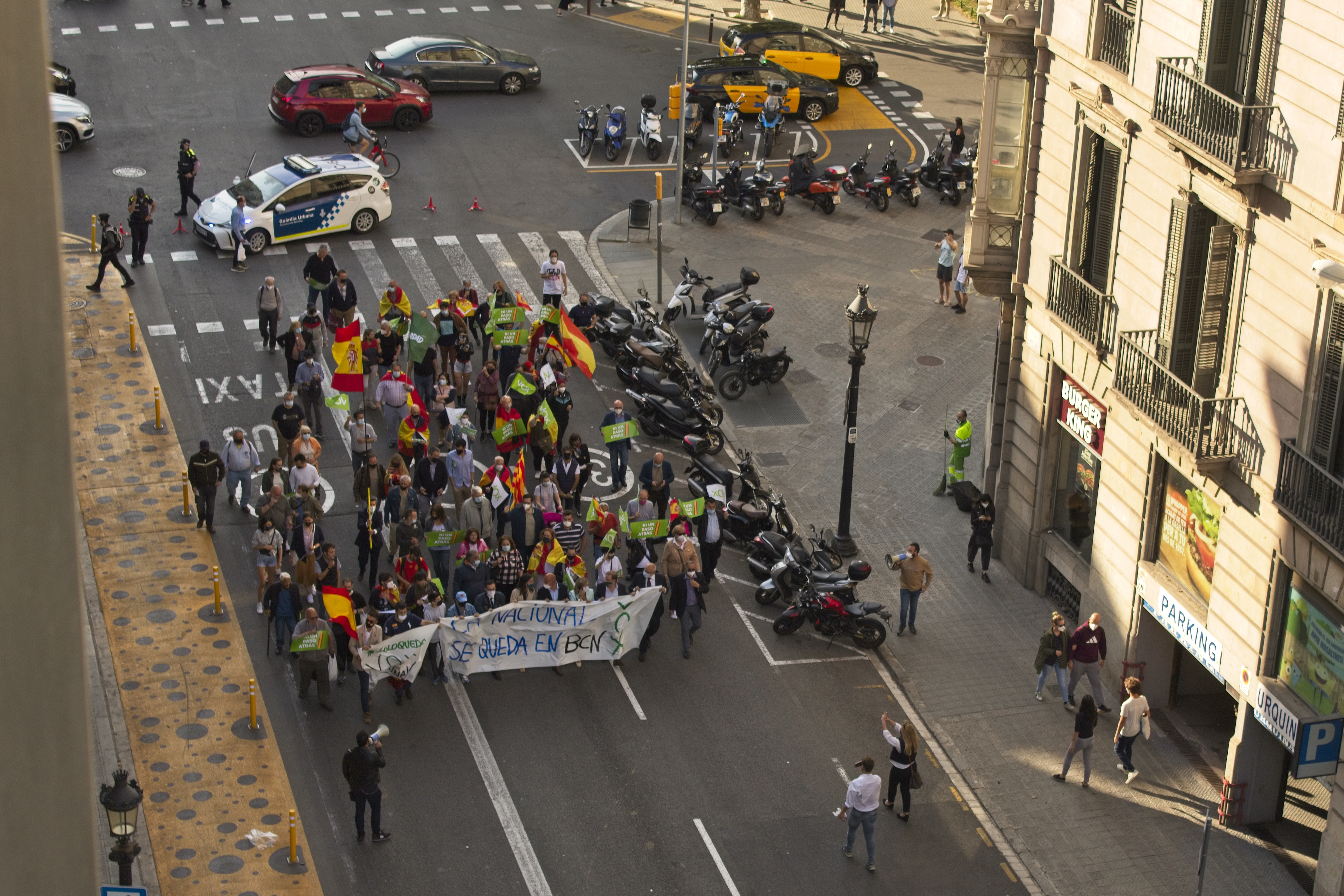
When we arrived at our hotel, we were greeted by this display. These are Vox party supporters, the far-right wing of politics in Spain. They have set themselves in opposition of the (left-wing) people who are trying to make Catalonia independent of Spain and thus are getting a bit of a foothold here but as you can see their numbers remain small in Barcelona, unlike in Madrid.
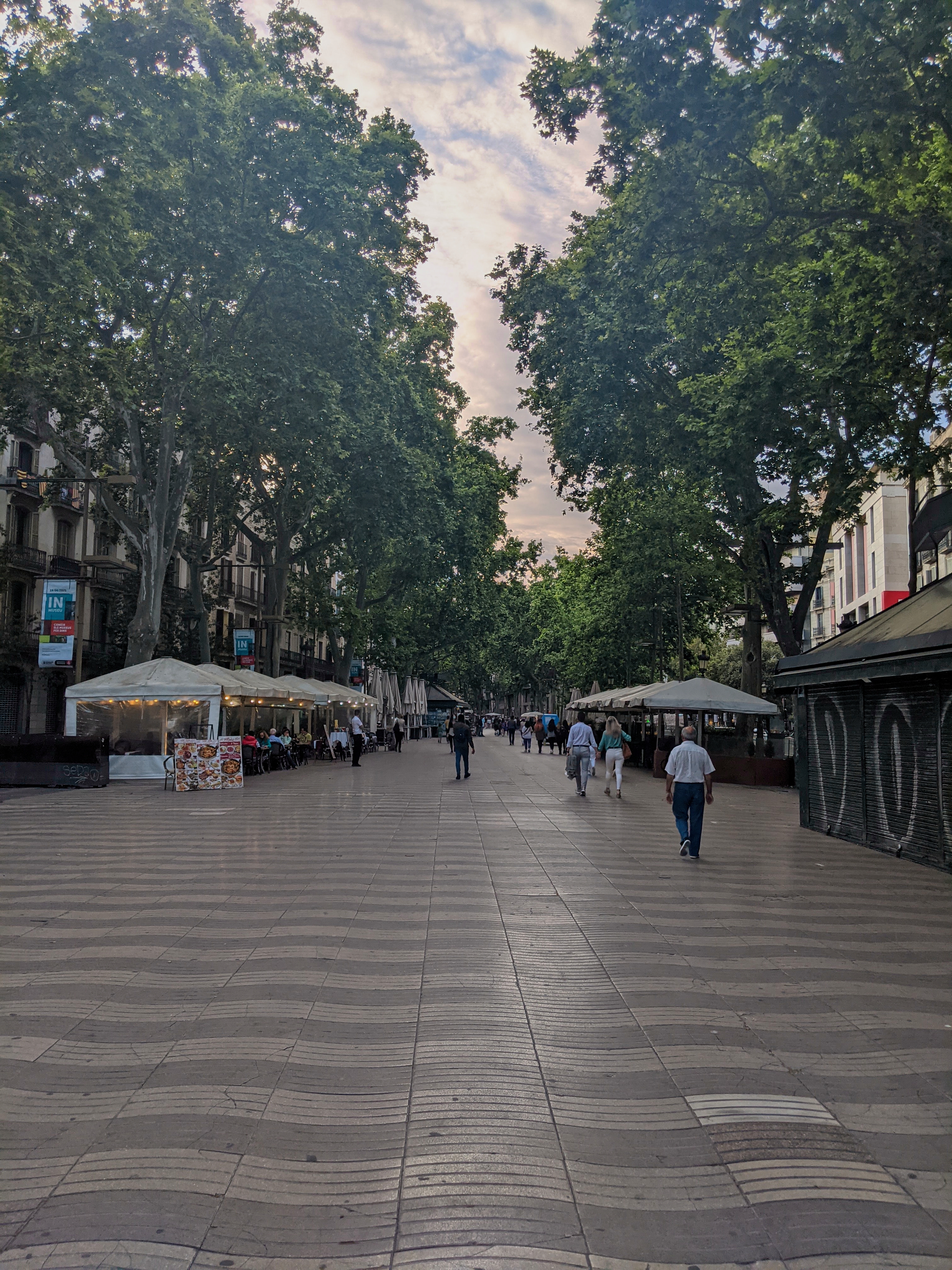
First thing we did was take a walk. This is the famous Rambla and you will never see it as empty as this again.
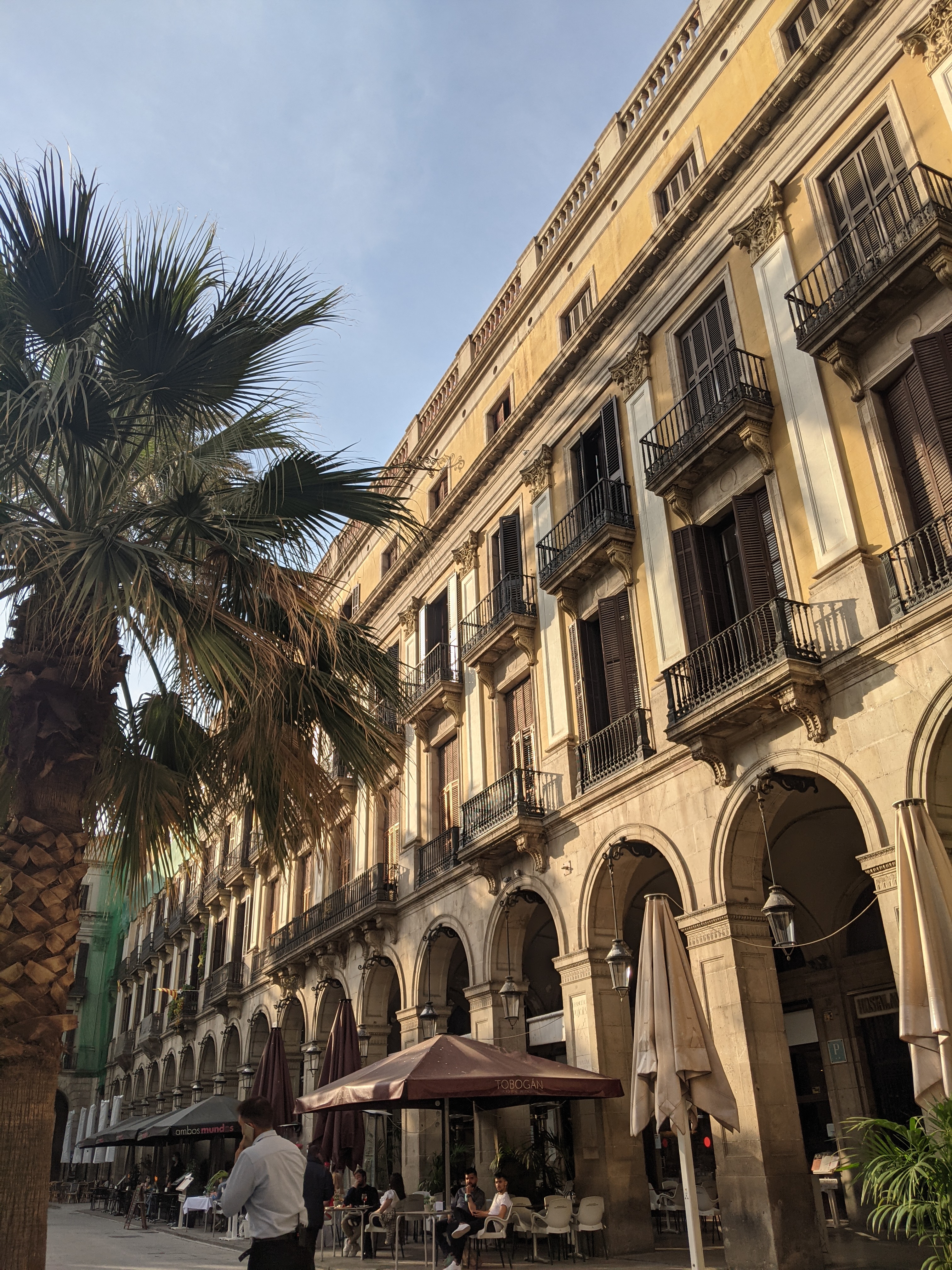
We stumbled across the Plaza Reial and decided that it was perfect for a little drink. We discovered later that it was built in the 19th C using Cuban sugar plantation money, which accounts for the Colonial style buildings and the Cuban palm trees.
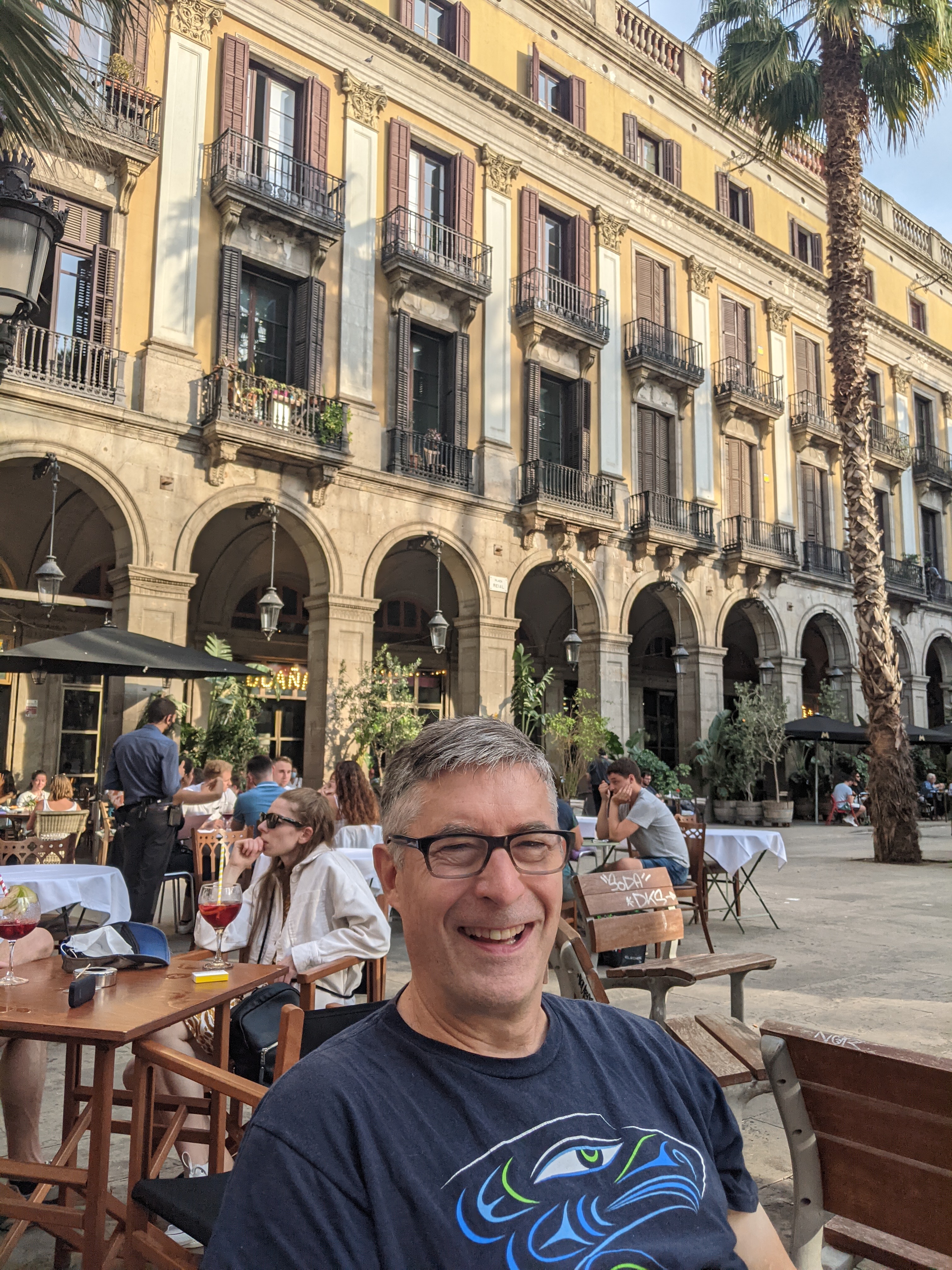
A little sun, a little space to take off the mask. It almost feels normal.
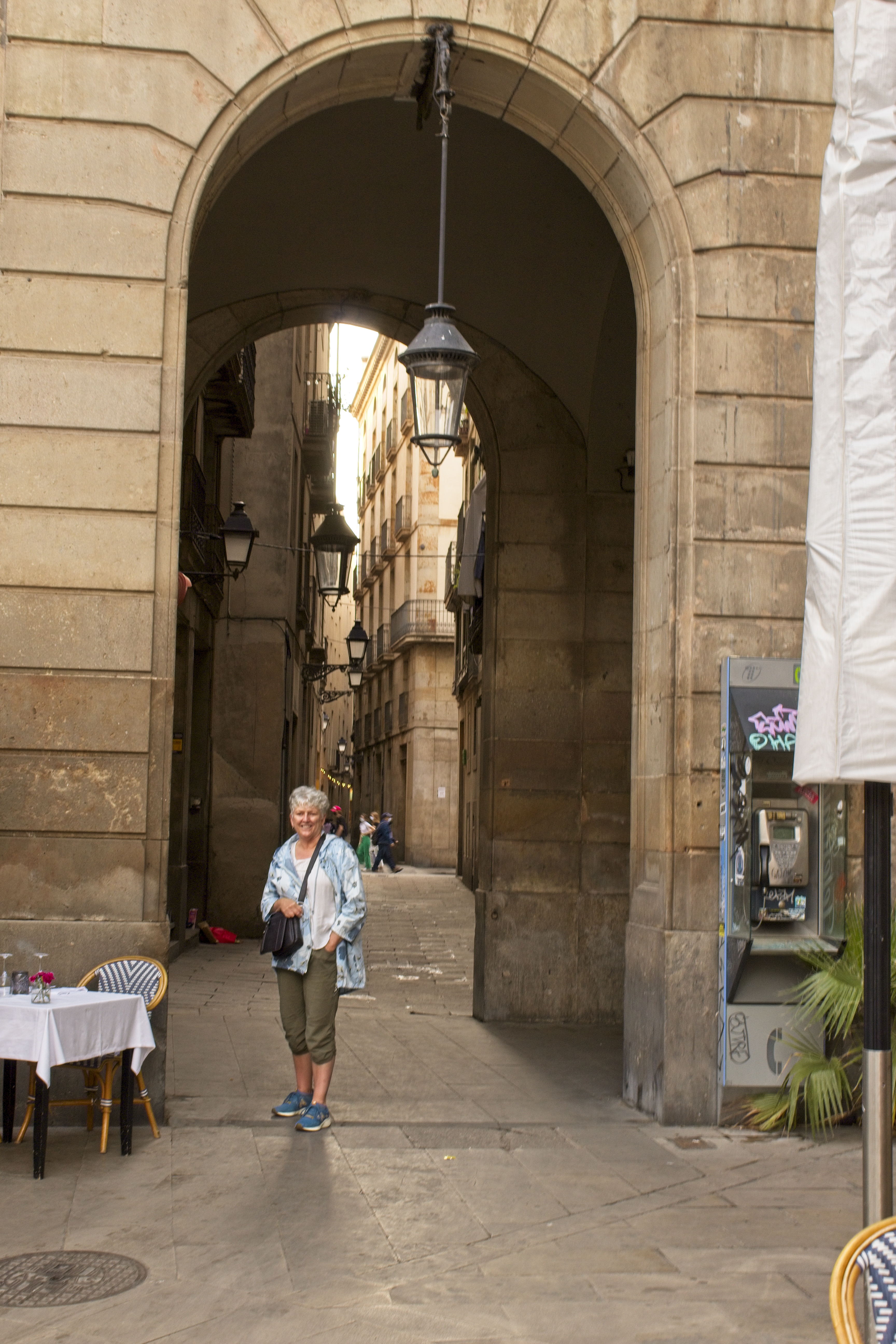
Drinking completed, a pause before plunging back into the mean streets of the Gothic Quarter (narrator: the streets were not mean)
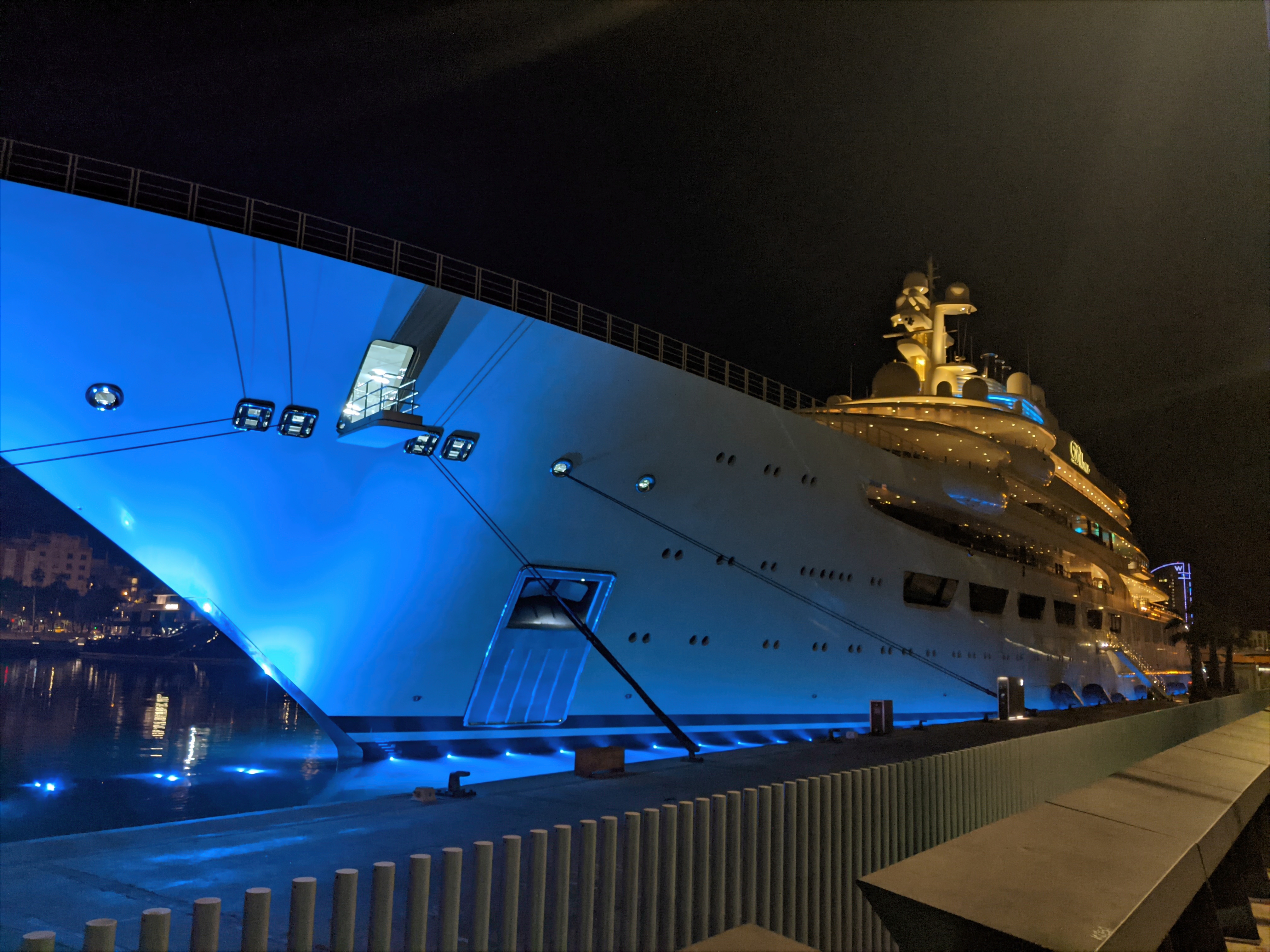
We wound up at the waterfront, where we eventually found this monster, one of the largest private yachts in the world, owned by a Russian Oligarch, the Dilbar. Gag.
Gaudí
Barcelona is all about the Gaudí or at least that’s the most prominent thing you will be exposed to on your first trip. Briefly, Gaudí was an architect in the late 19th and early 20th centuries who famously re-invented design and space in buildings. Some details I didn’t know: he not only designed buildings but often all of the fixtures and furniture that went into them. The money to fund him and his rivals came from Cuban sugar plantations, which were largely owned by Catalonian plantation owners, who brought the money back to Barcelona and built monuments to themselves like American robber-barons. Gaudí was a mathematical genius and used the catenary (the shape a chain makes when it hangs) as one of the main shapes that made up the arches holding up his constructions. Turns out they can be made light and are incredibly strong. You can discover more about Gaudí and his math here: https://mathstat.slu.edu/escher/index.php/The_Geometry_of_Antoni_Gaudi
Anyway, Gaudí’s ideas were unheard of, visually remarkable and incredibly innovative. His buildings in Barcelona draw people from around the world, including us. We did a walking tour with an architect to see some of his work, visited Parc Güell which he designed and of course visited La Sagrada Familia, the still-unfinished cathedral that he designed.
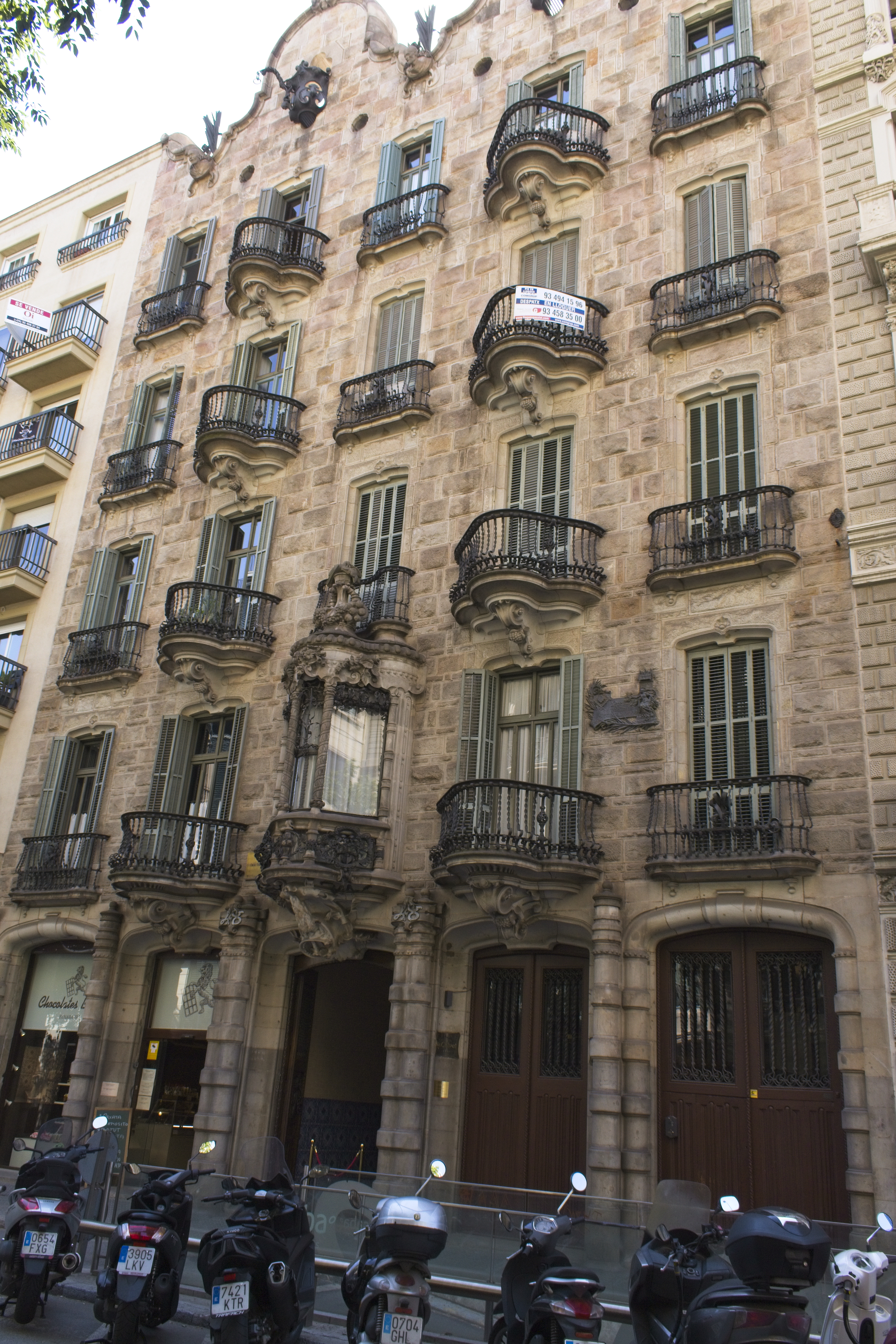
The first house Gaudí remodeled. He was constrained by regulations that forced him to keep the facade so all he could do was play with balconies, columns and decoration. The house itself was configured as a commercial business on the ground floor, storage in the basement and family quarters on the first floor. Floors above were rented out. His use of organic shapes for the balconies and the top of the building and his use of natural and human figures in the decorations hint at what was to come.
The second site we visited on our architectural tour was Barcelona’s “Street of Dreams” in 189x. Three rival architects renovated three buildings right next to each other, each trying to out-do the other, egged on by the buildings’ nouveau riche owners.
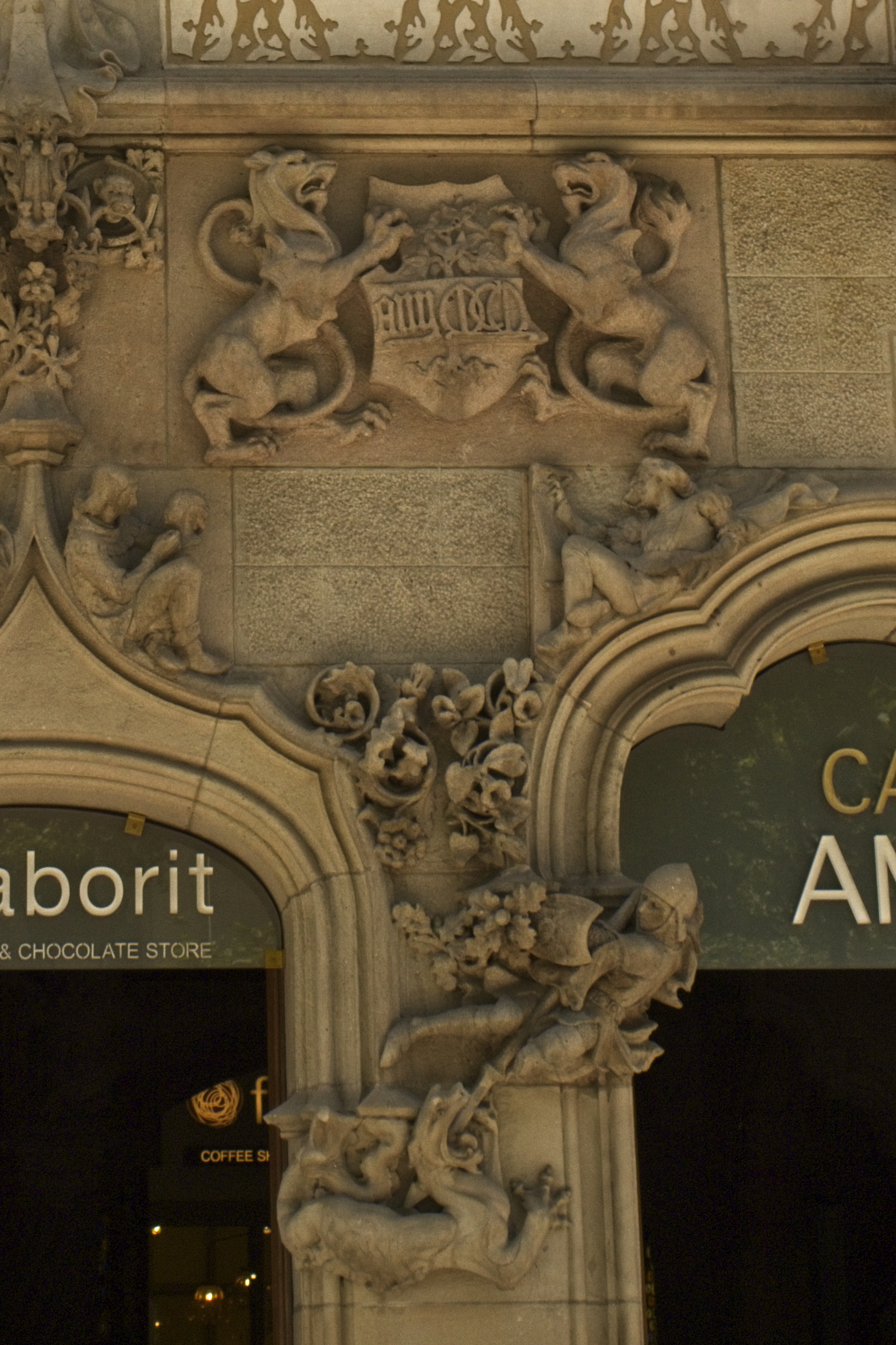
Detail over the doorway of one of the buildings, depicting St. George, who is patron saint of Catalonia. This building was designed by a Neo-classicist and reflects that sort of sensibility.
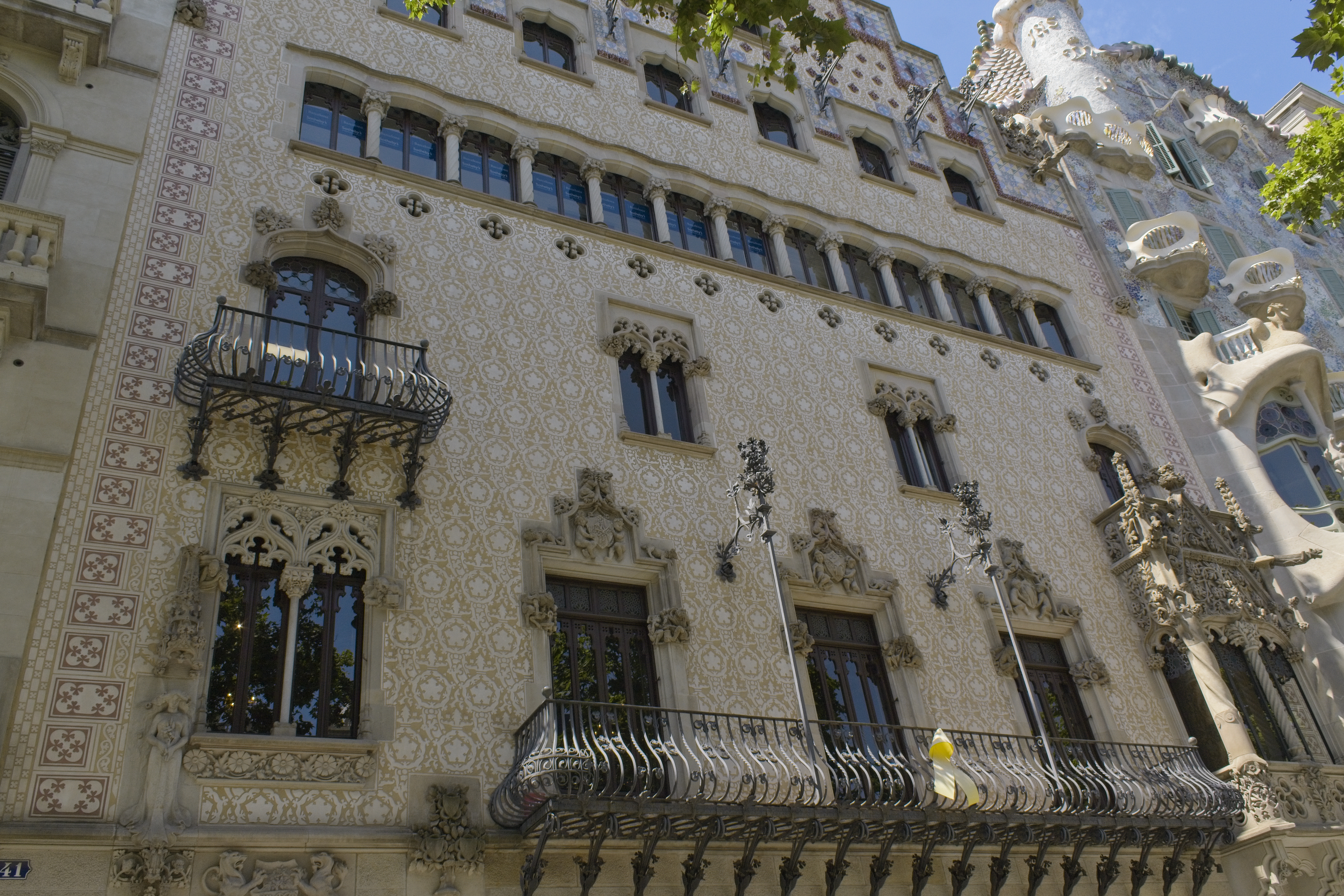
This was building number 2, showing more decoration, more “Modernisme” but still, you can see the Gaudí building next to it and how just completely different it was.
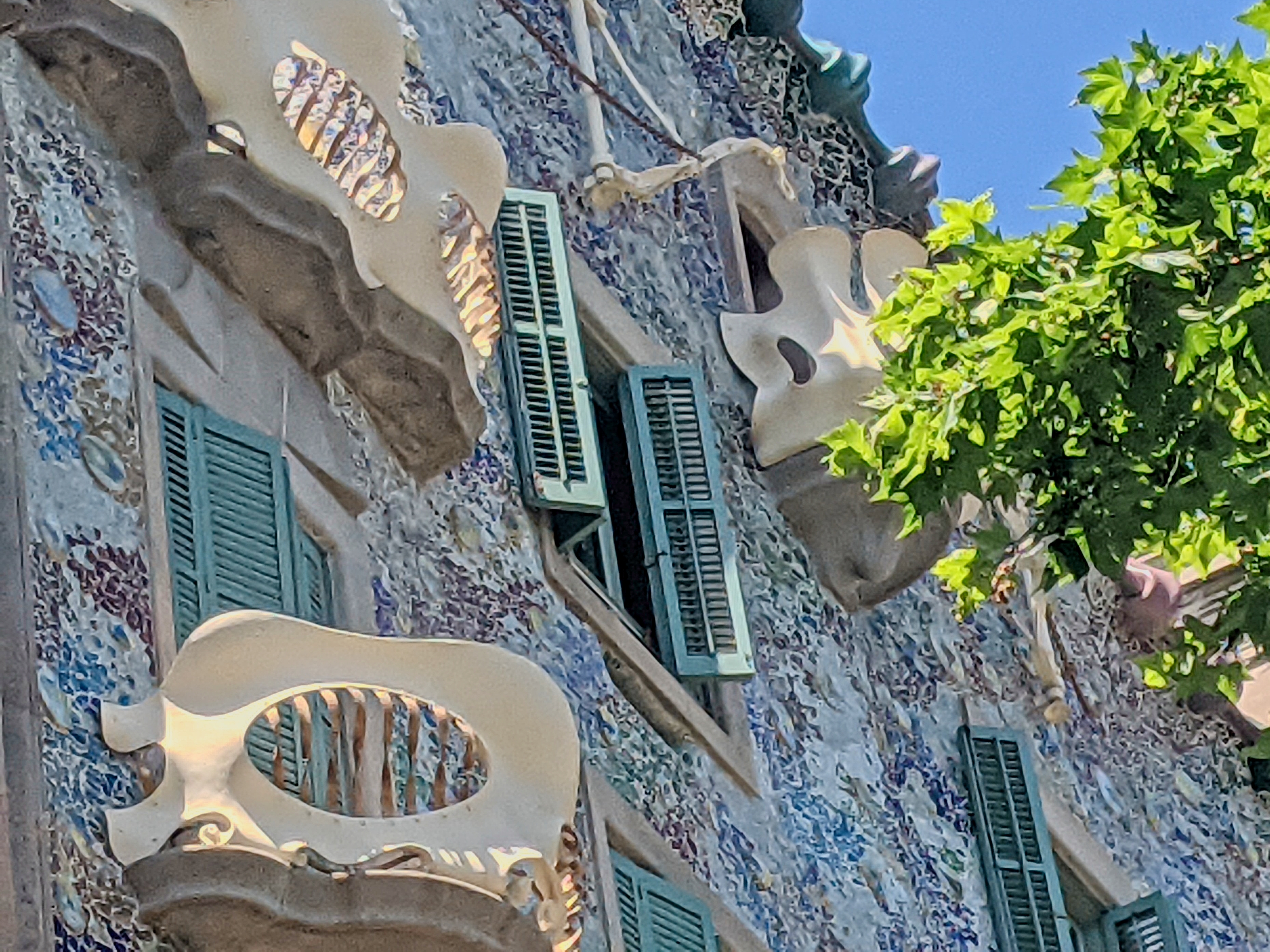
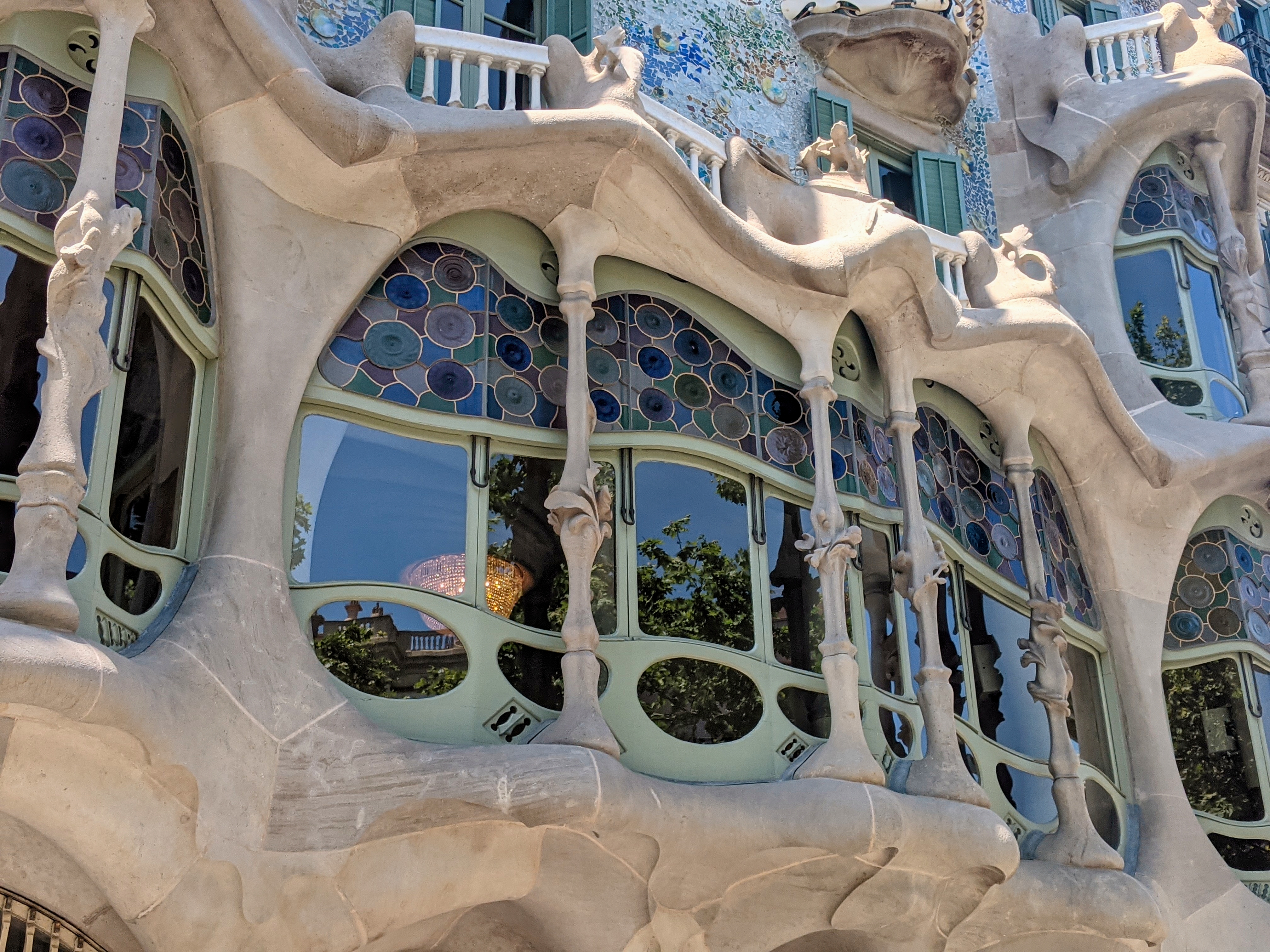
Gaudí’s work. You’ve seen a million pictures of this building but the details are amazing. Gaudí was only able to really completely re-do the first floor and ground floor, the rest had to keep the facade. As you can see, he did not let the opportunity go to waste.
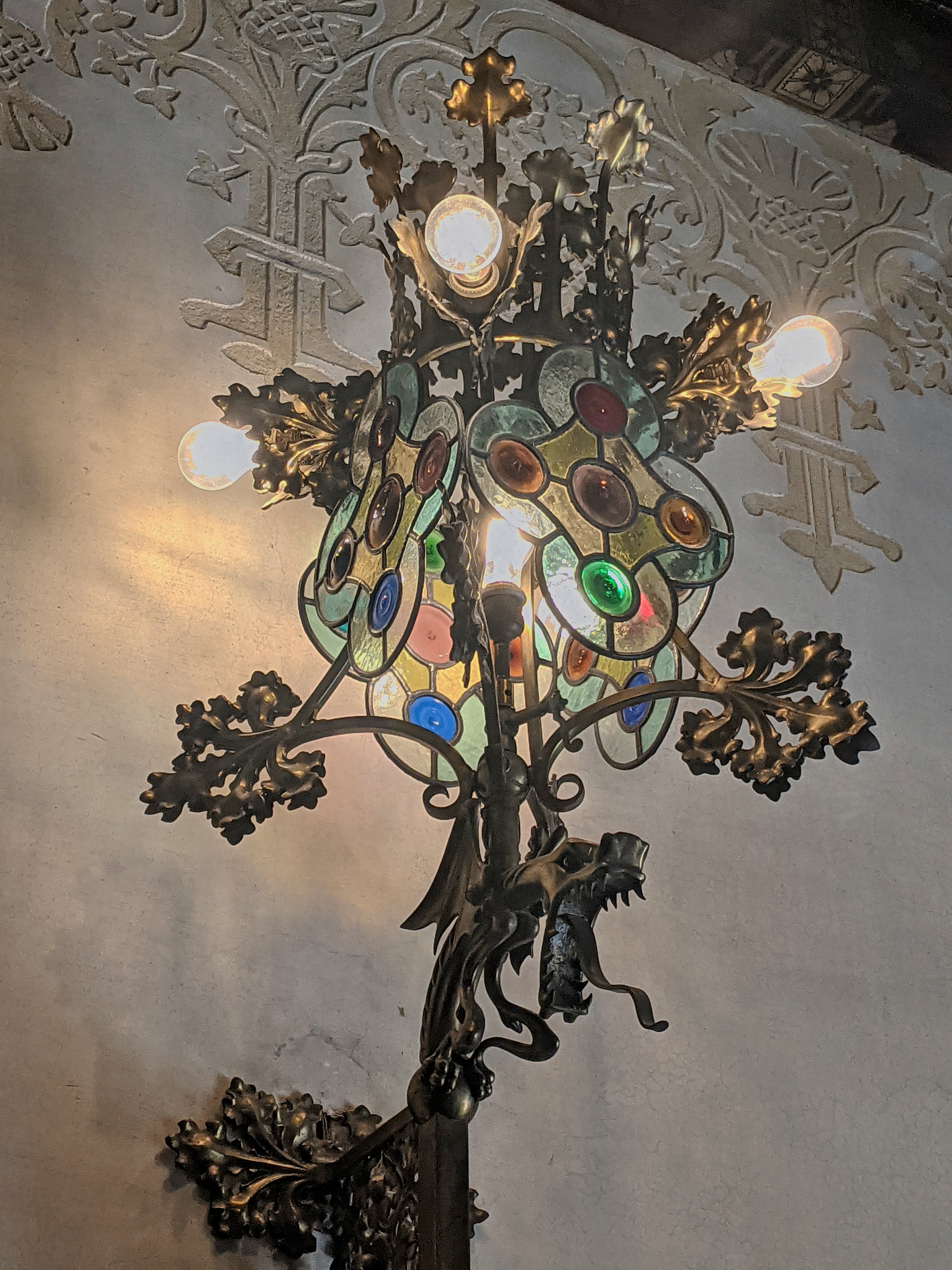
A lamp designed by Gaudí.
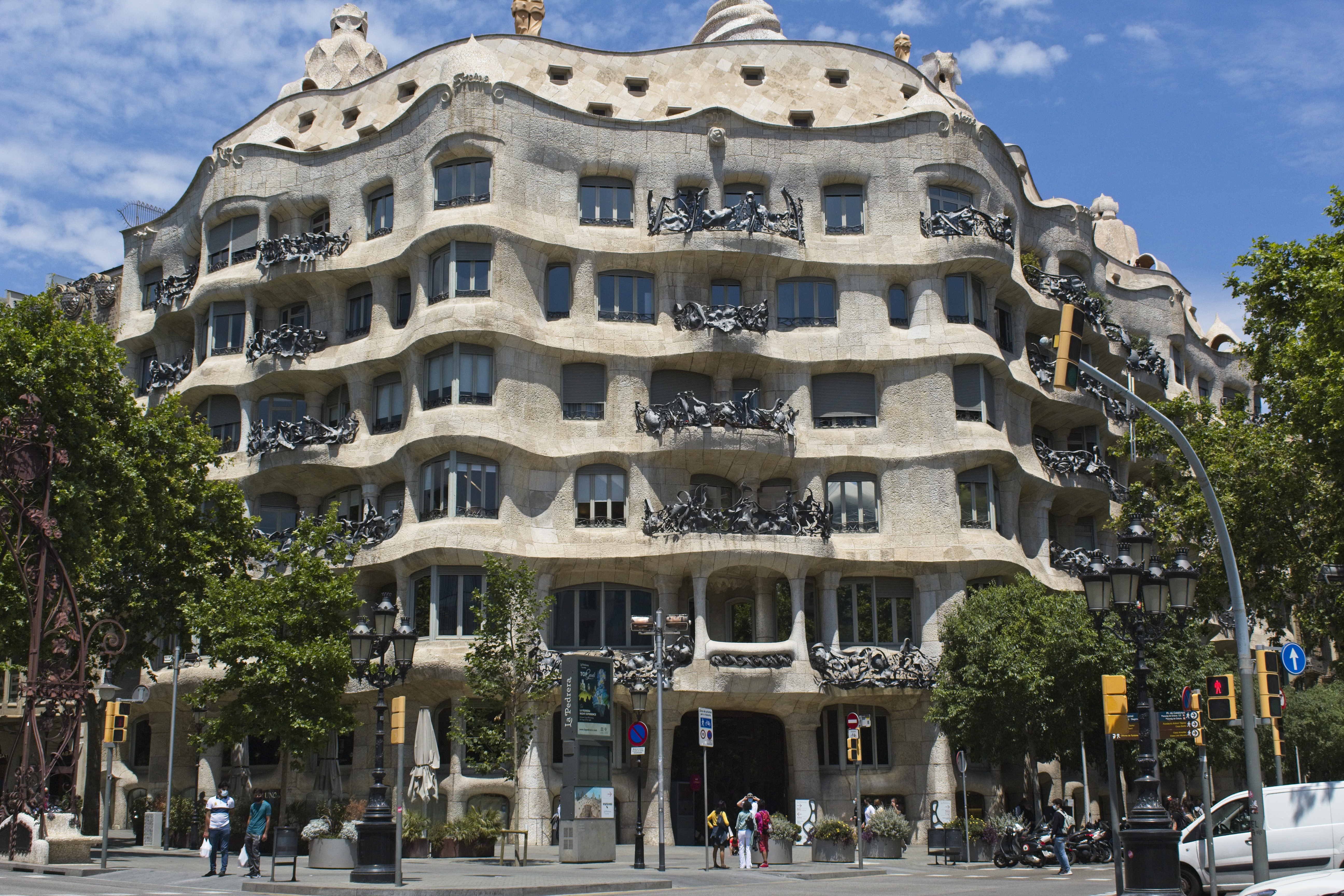
The third building we visited on our Gaudí tour. This one he got to do a complete tear-down and rebuild and he made heavy use of his catenary arches inside, and built the interior spaces with big light wells and sensible layouts so every room had lots of light and the houses made sense. Details on the balconies were amazing, made from wrought iron.
After a rest, we took a stroll through the Gothic quarter and wound up down at the waterfront again, this time in daylight.
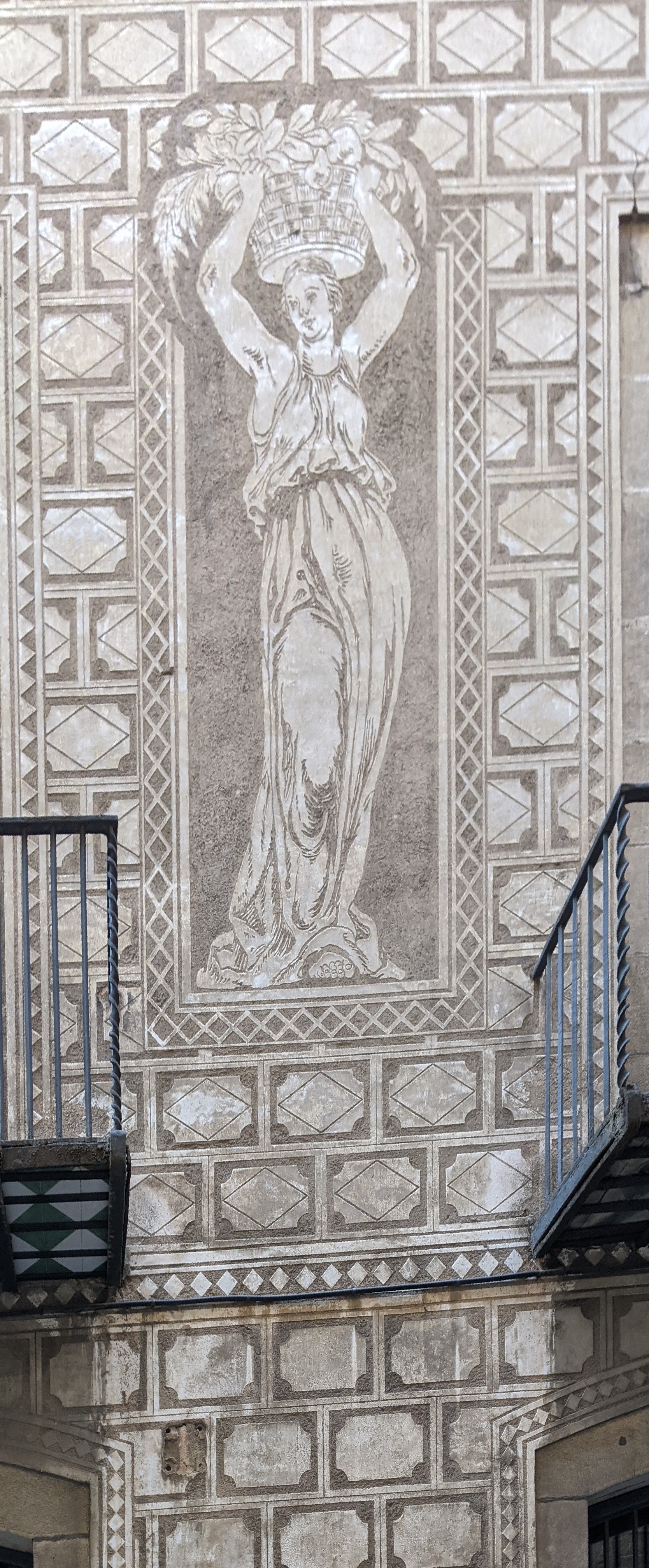
Random detail from a building (don’t remember where) with figures carved into the stucco. These were common around town.
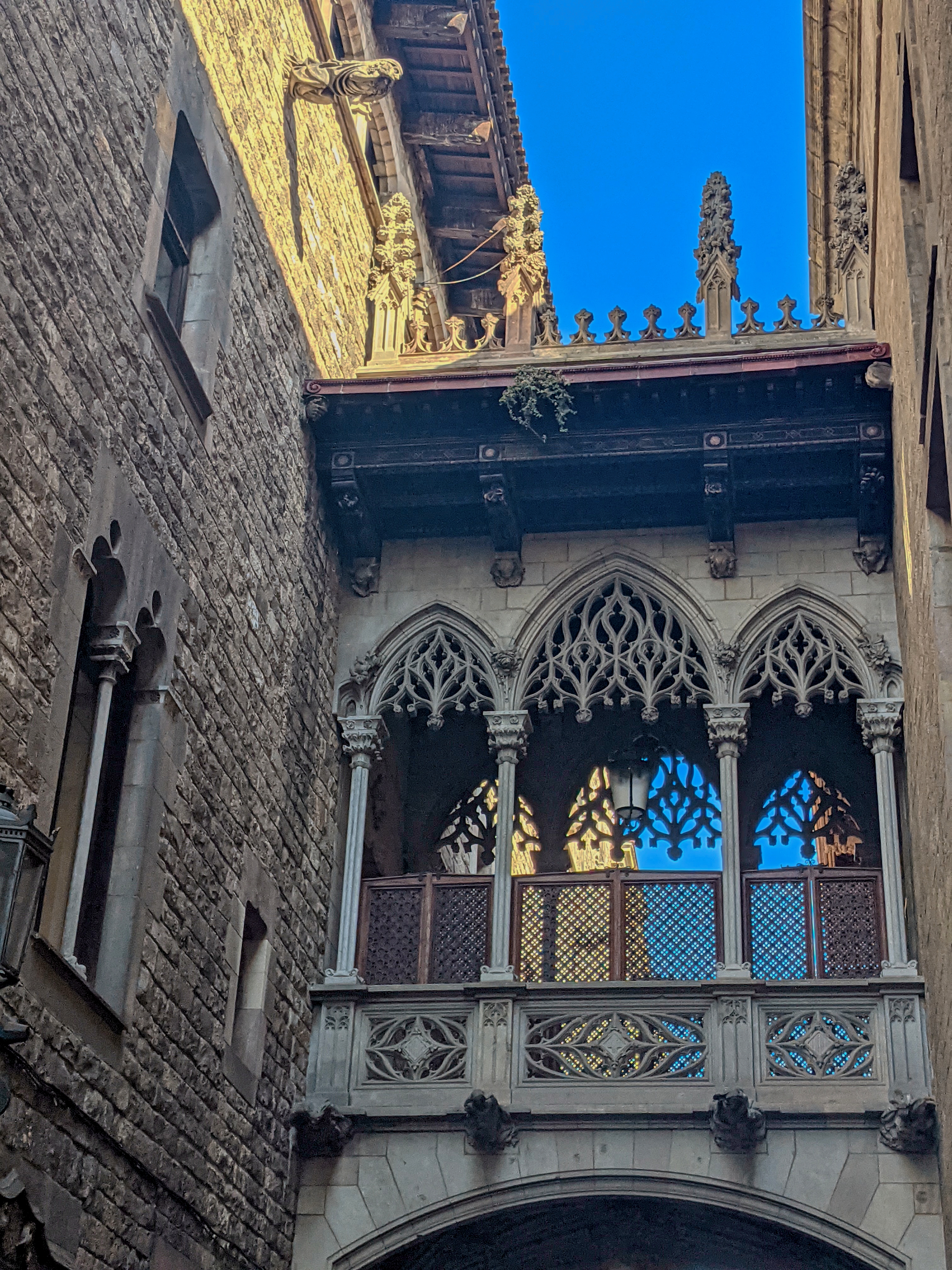
Arched passageway between buildings
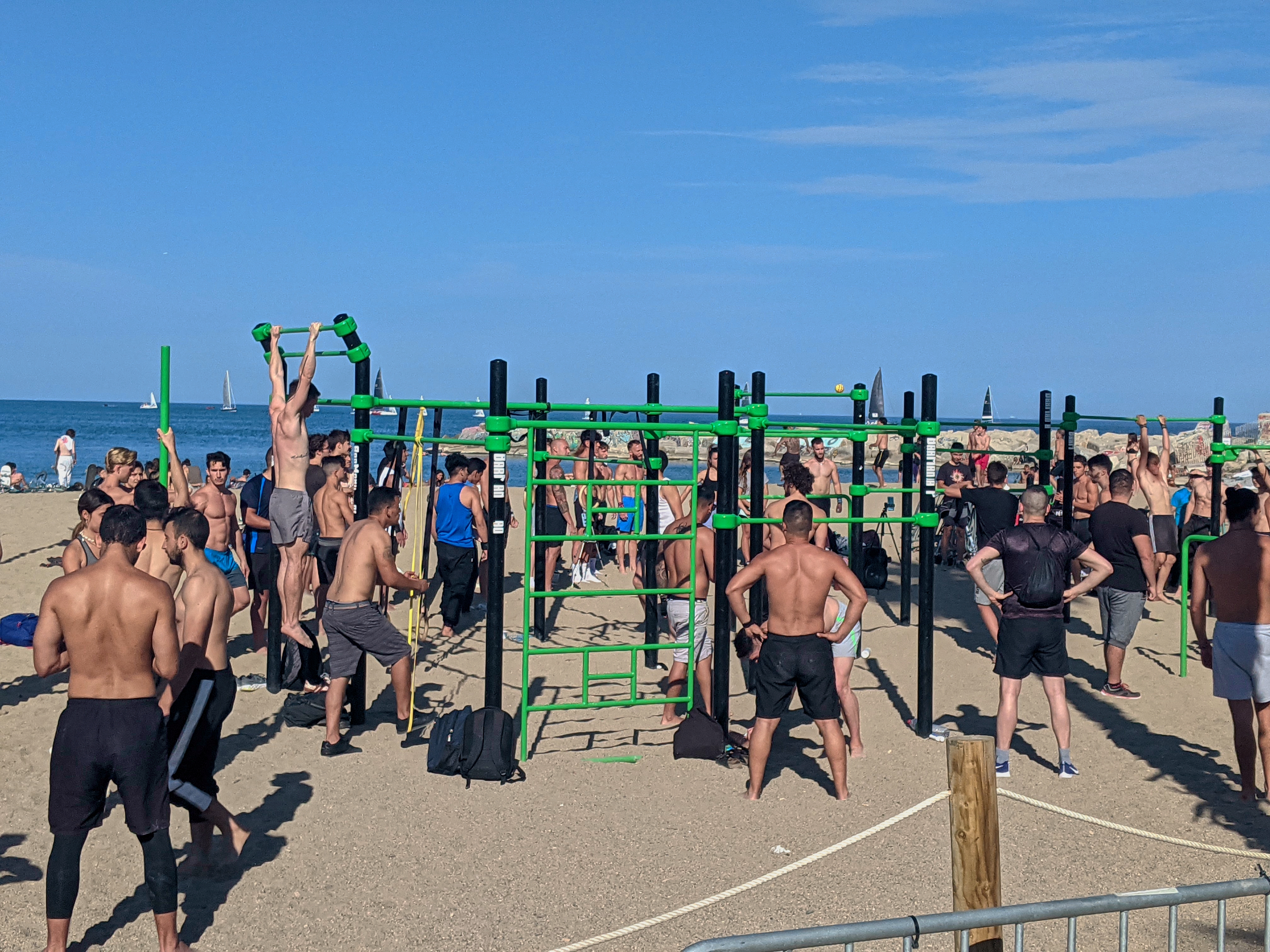
Muscle-heads showing their stuff
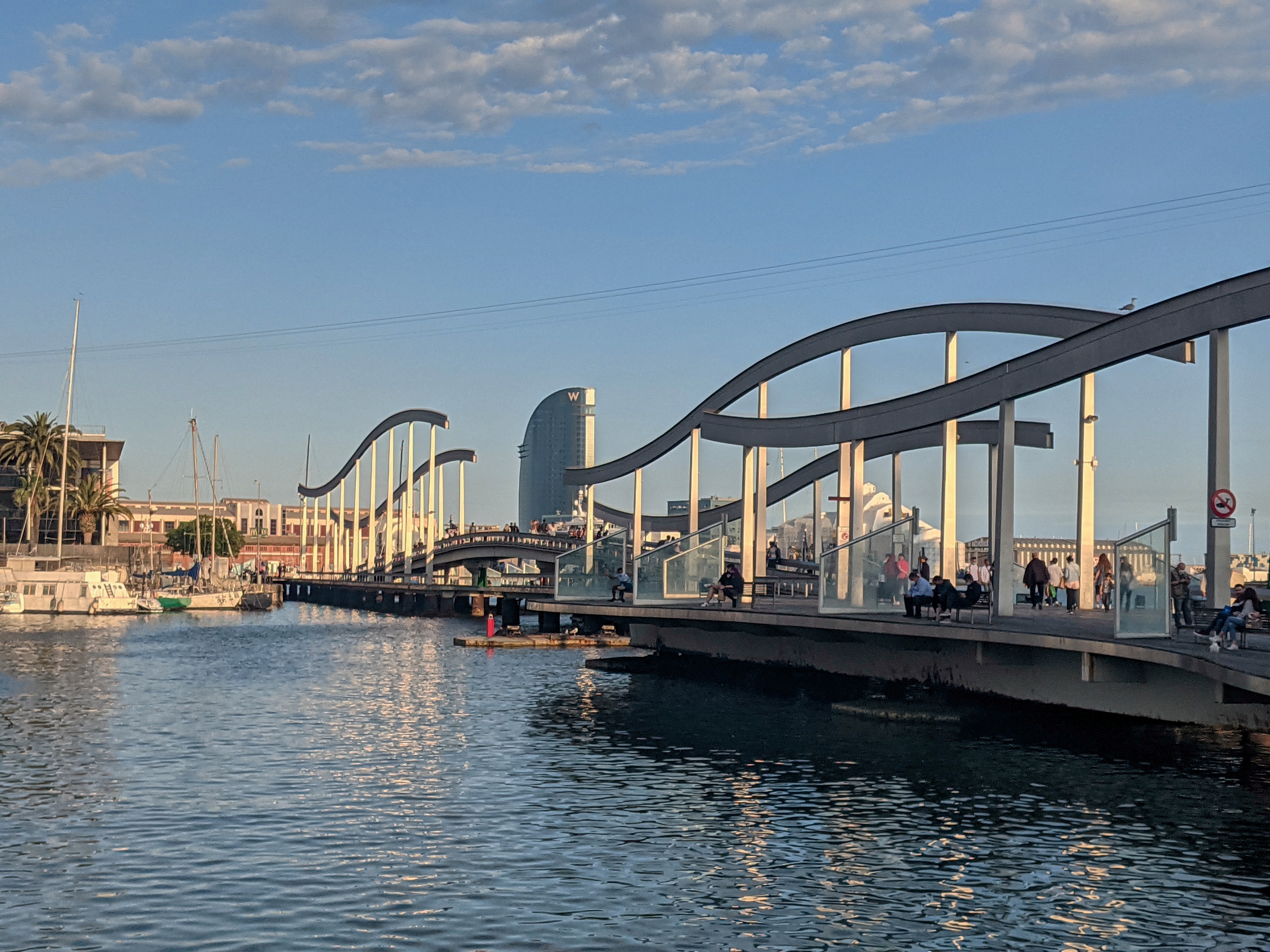
The walkway along the boat basin
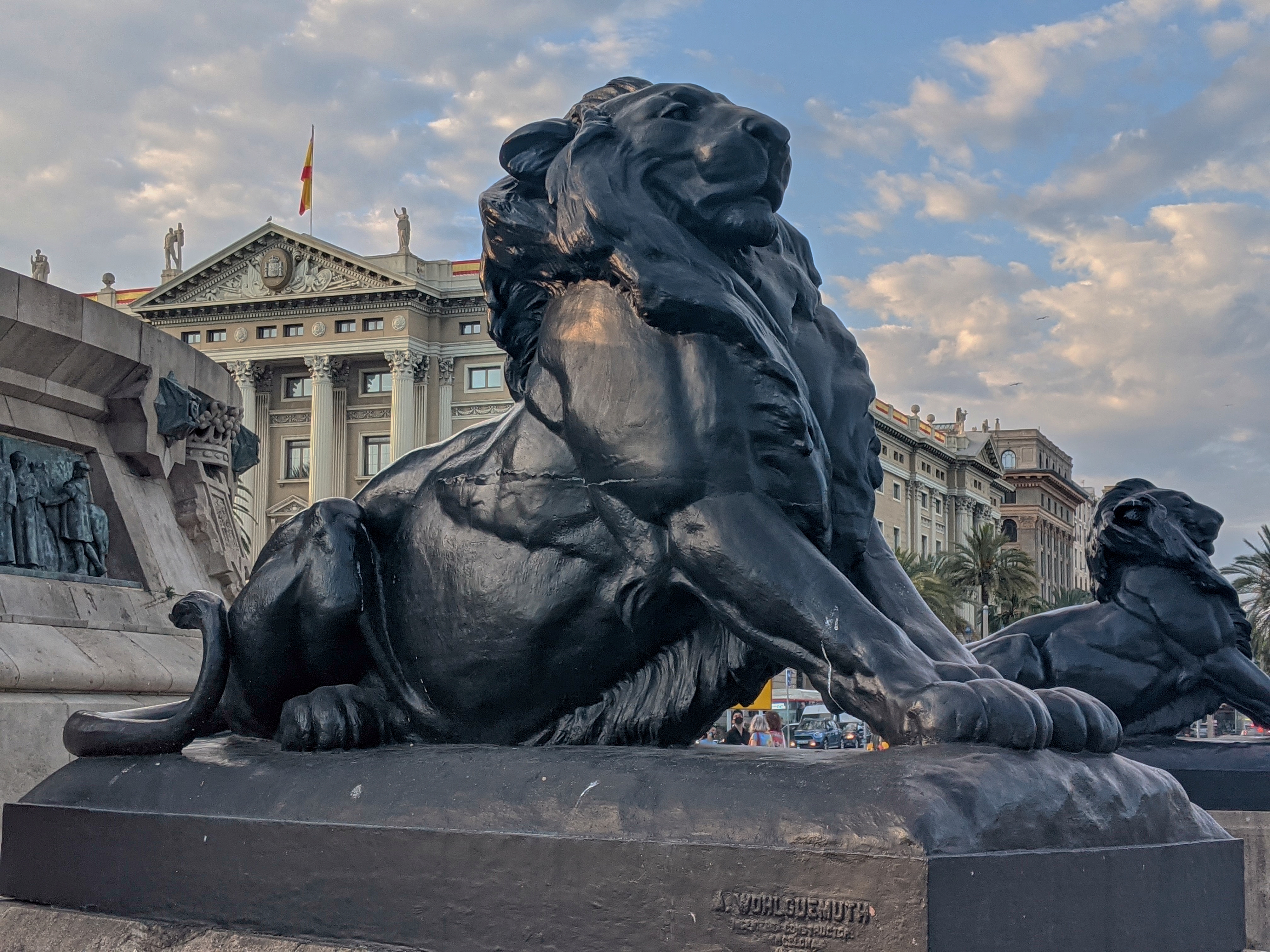
Big kitties at the foot of the Columbus monument
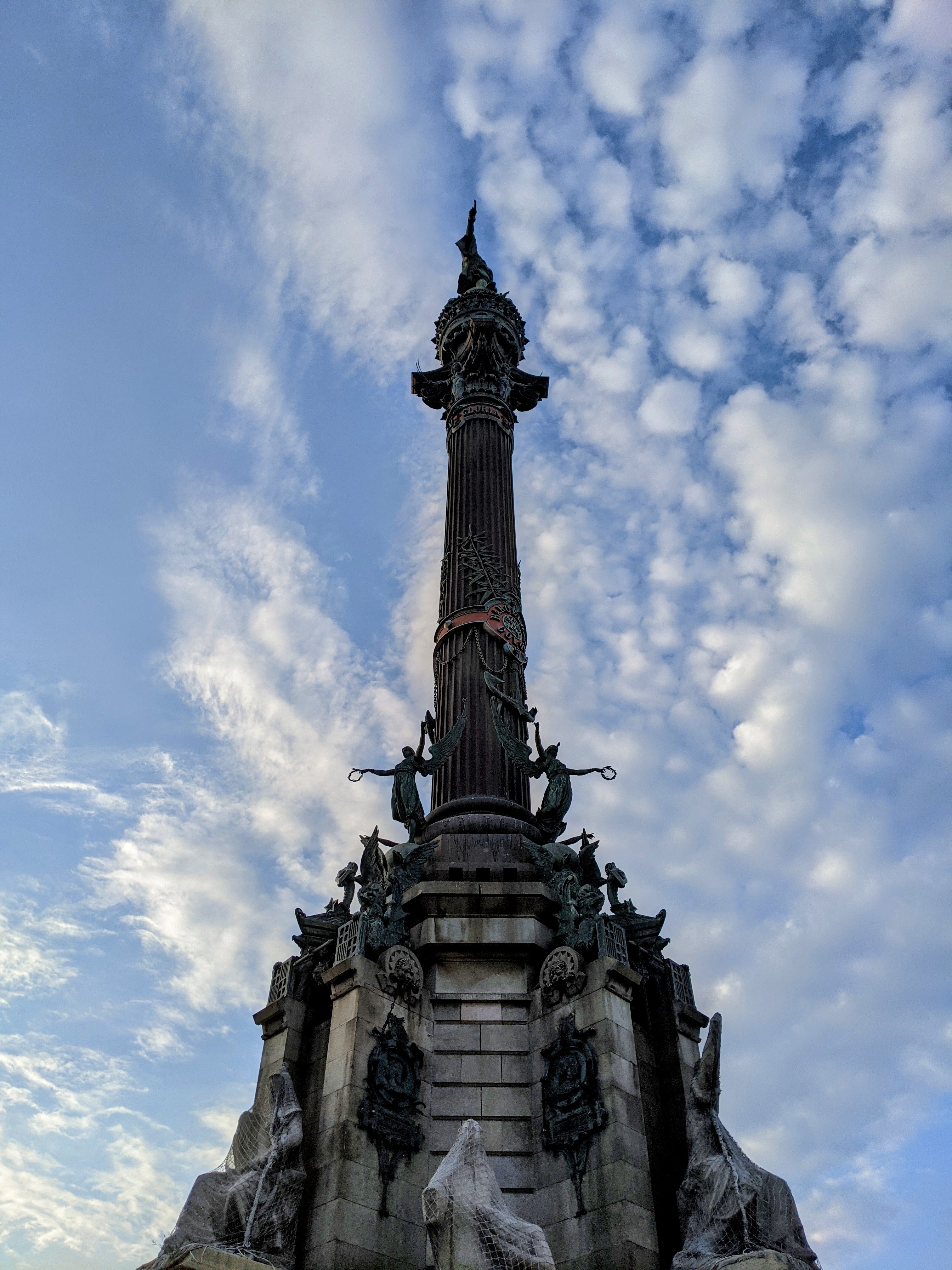
The man hisself, saying “the sea is thataway!”
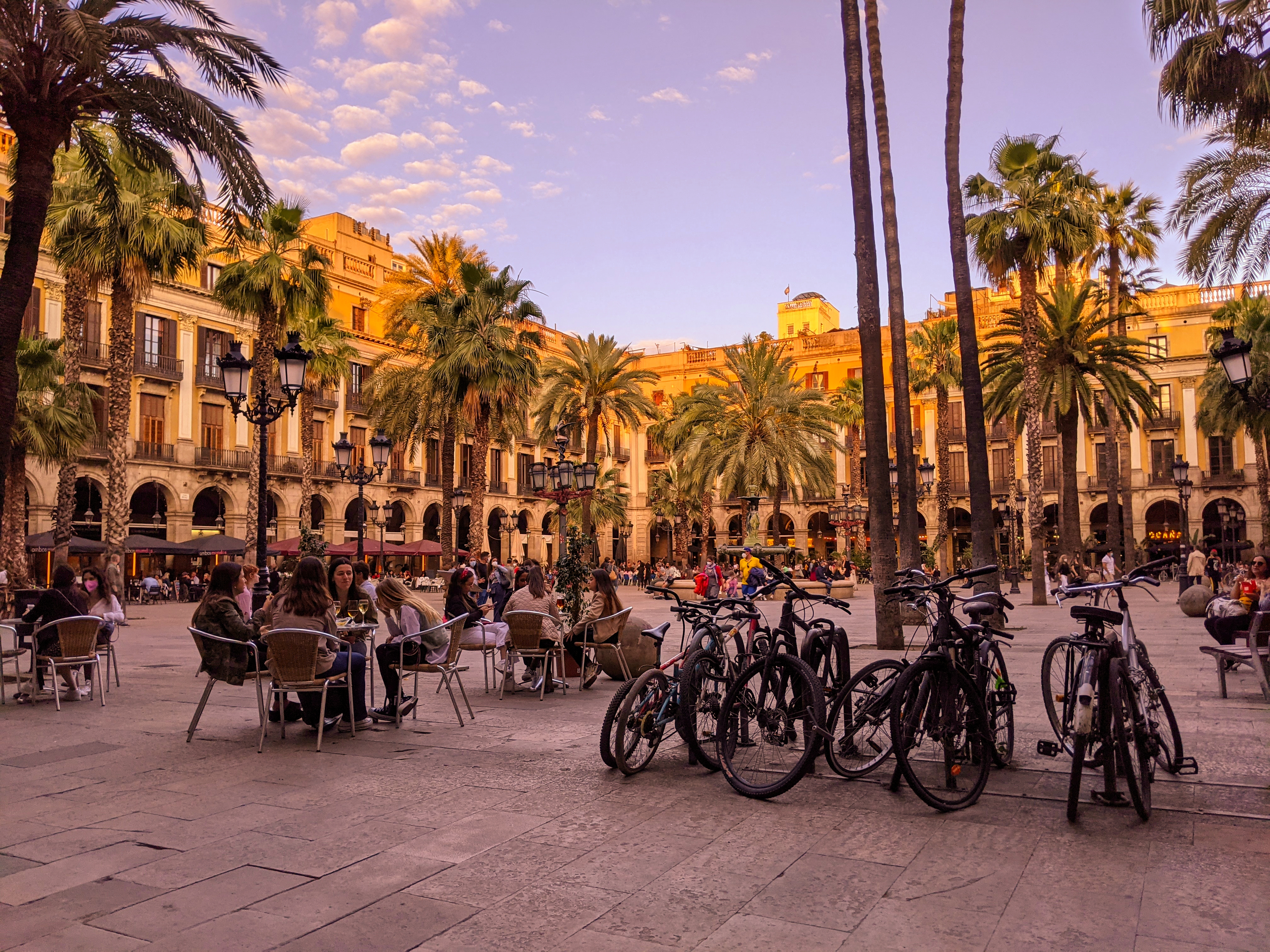
We returned to Plaza Rieal for happy hour, then found a little place that had gluten free tapas for dinner.
The following day we took a walking tour of the Gothic quarter, essentially the medieval part of the town, with a lovely Irish guide. We had a look at some old churches, the Jewish quarter and we got a nice sociological and political overview of old Barcelona.
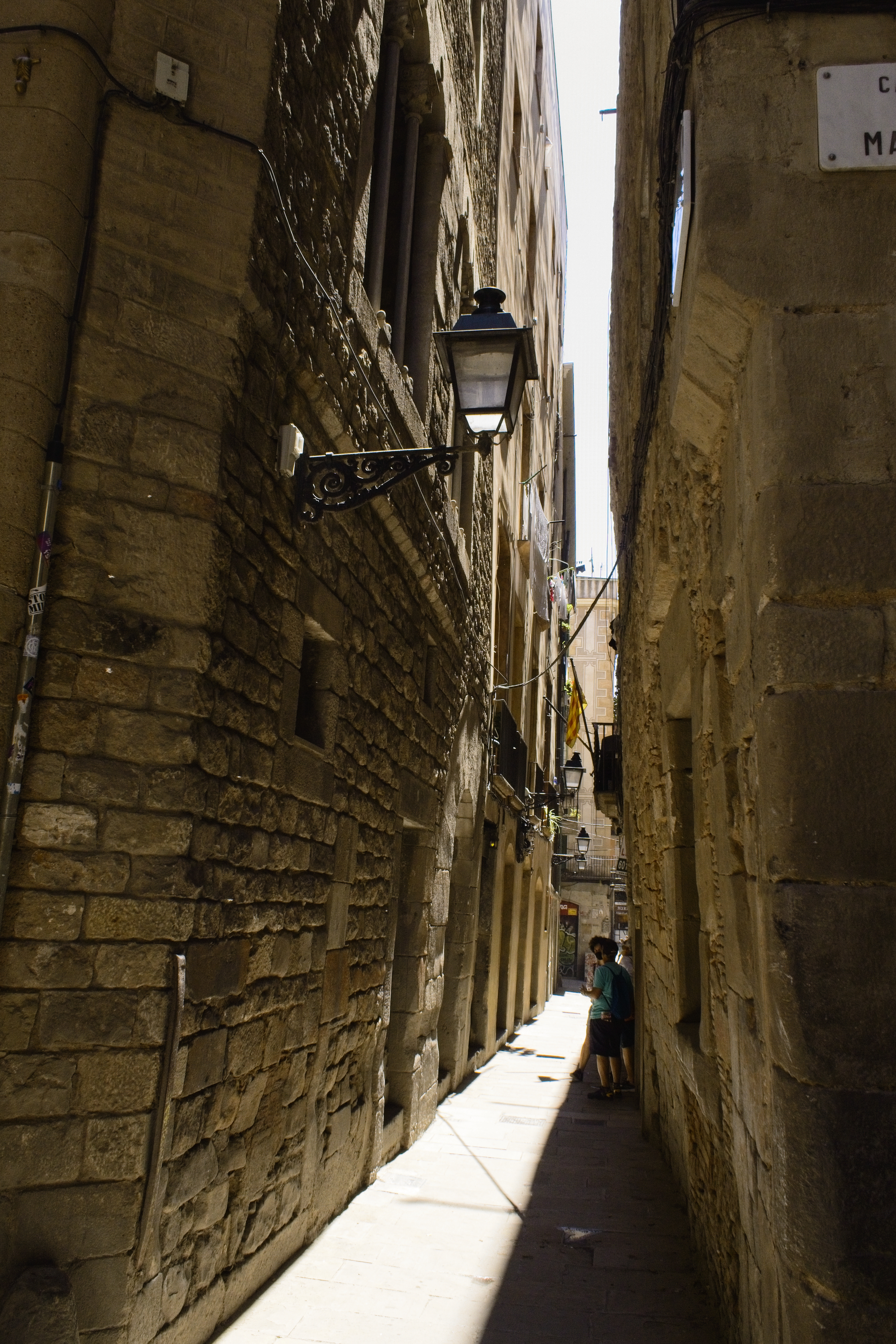
The Jewish quarter dates back to the time of the Romans and was a walled enclave within the walled city. Streets were no wider than needed to pass a cart.
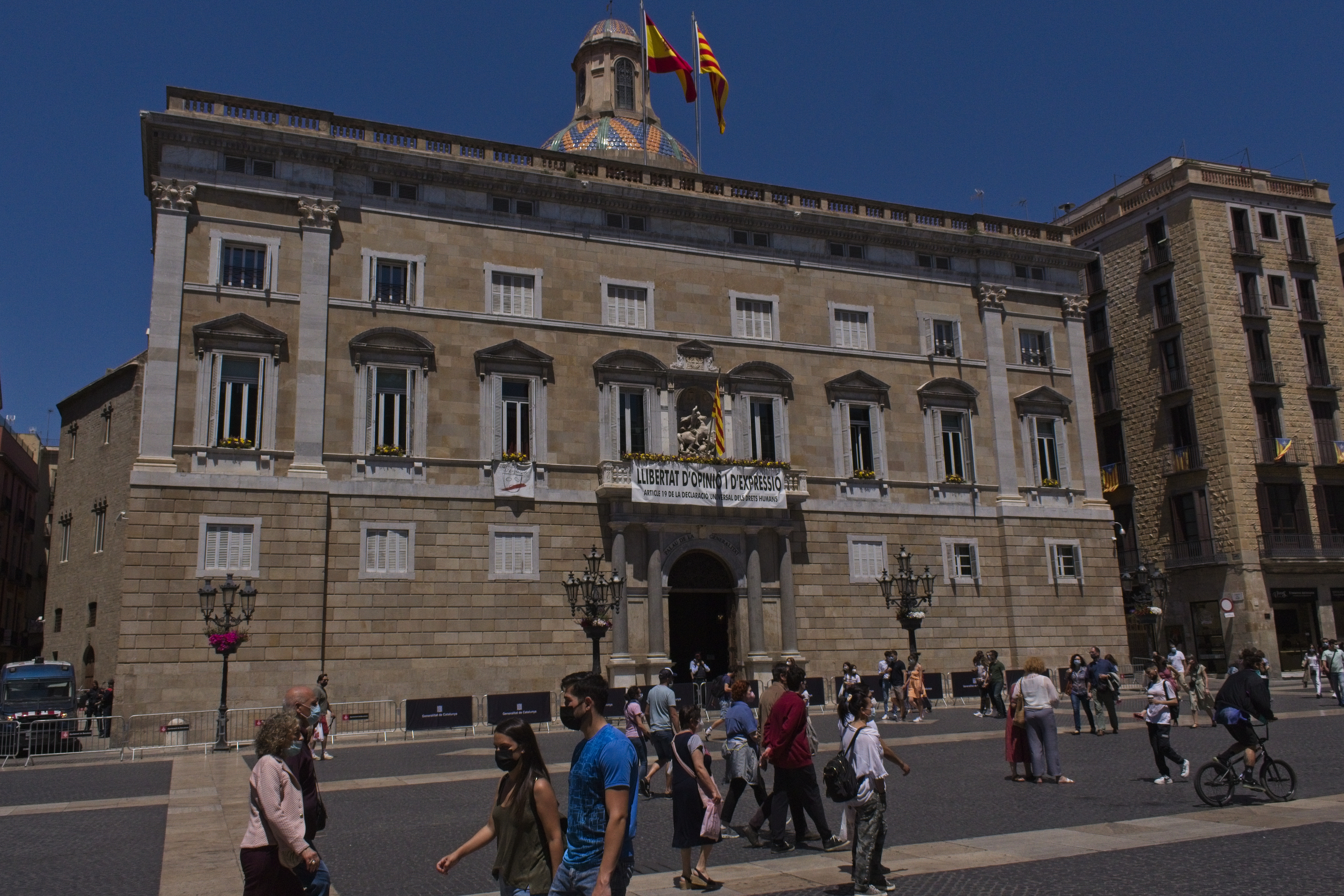
The seat of both the Catalan government and the city were in the main square in the hart of the old city. Lovely square, much history has been made here and nobody is shy about their political views.
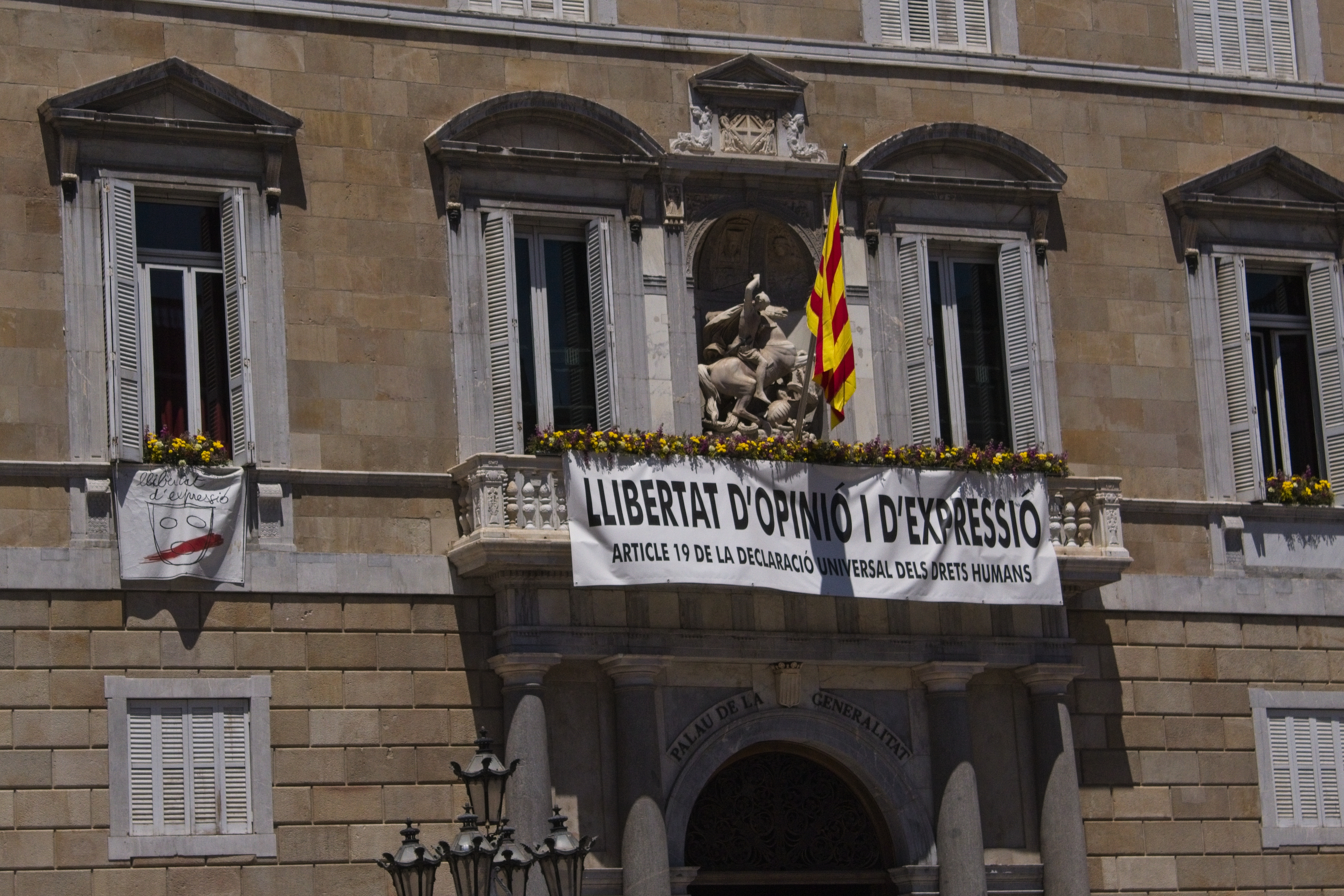
This is the Catalan government house and they were flying protest banners regarding freedom of speech, for the sake of the leaders of the referendum on independence in 2017, who have since been put in jail.
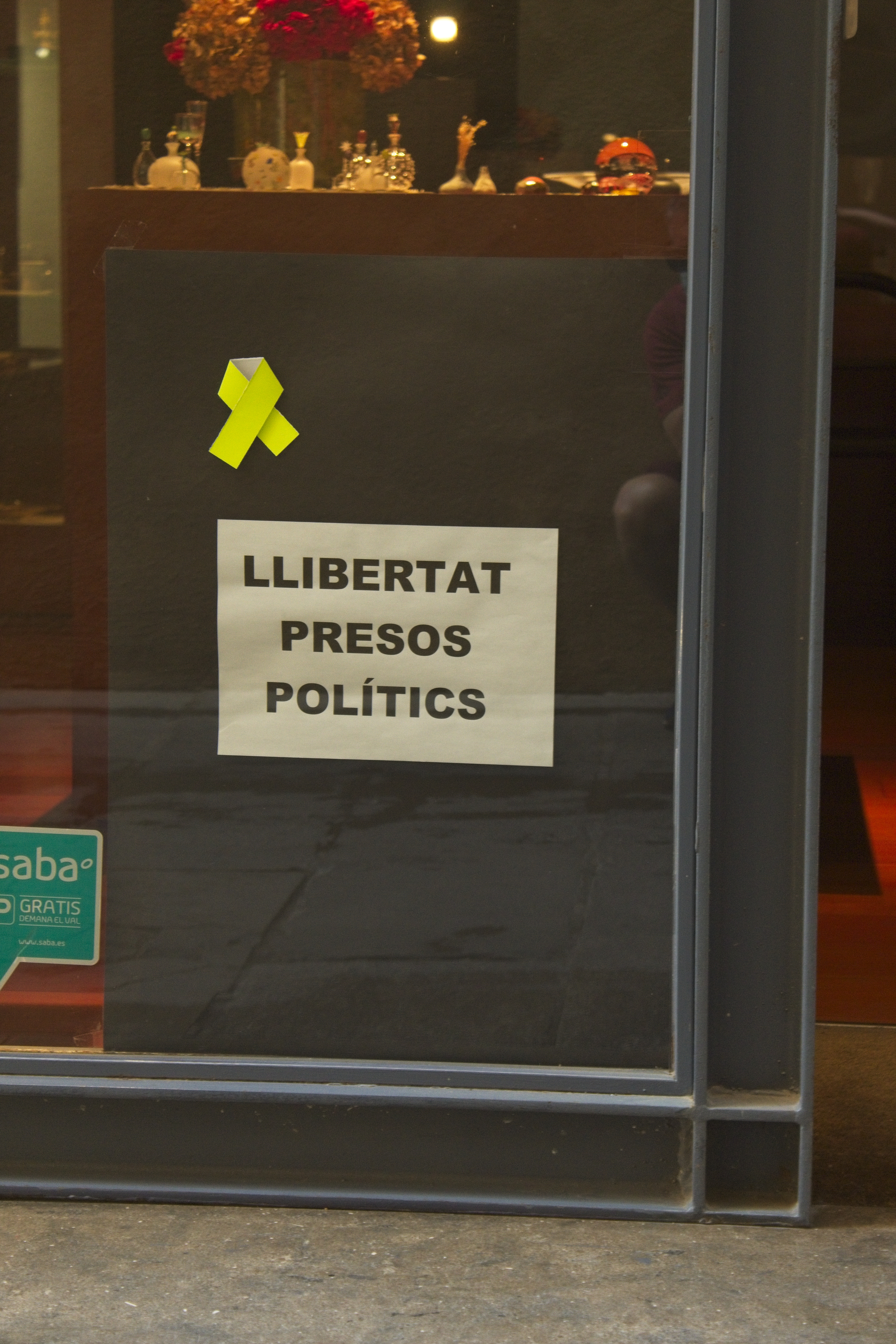
This says “Free the political prisoners” and the yellow ribbon was widely visible
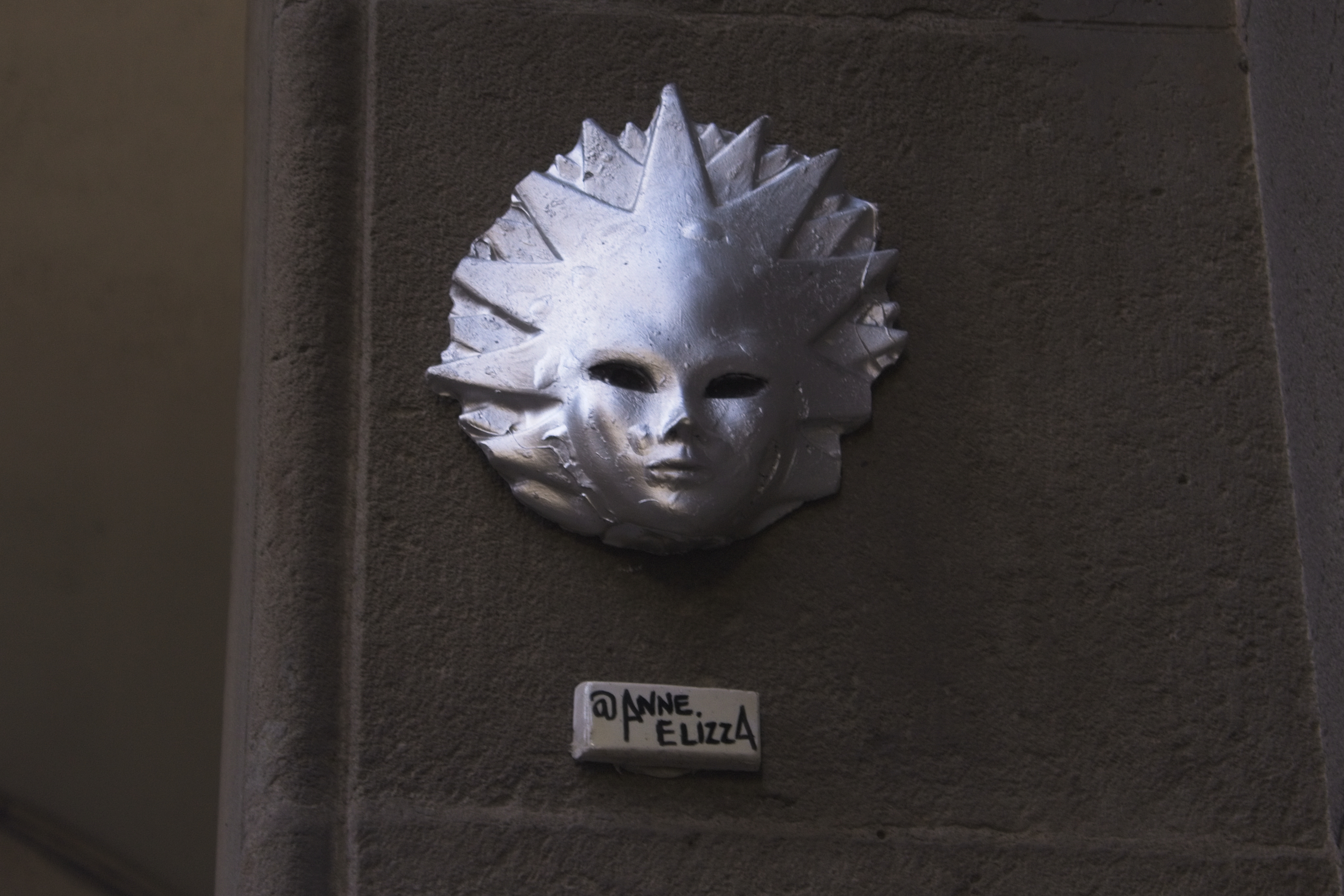
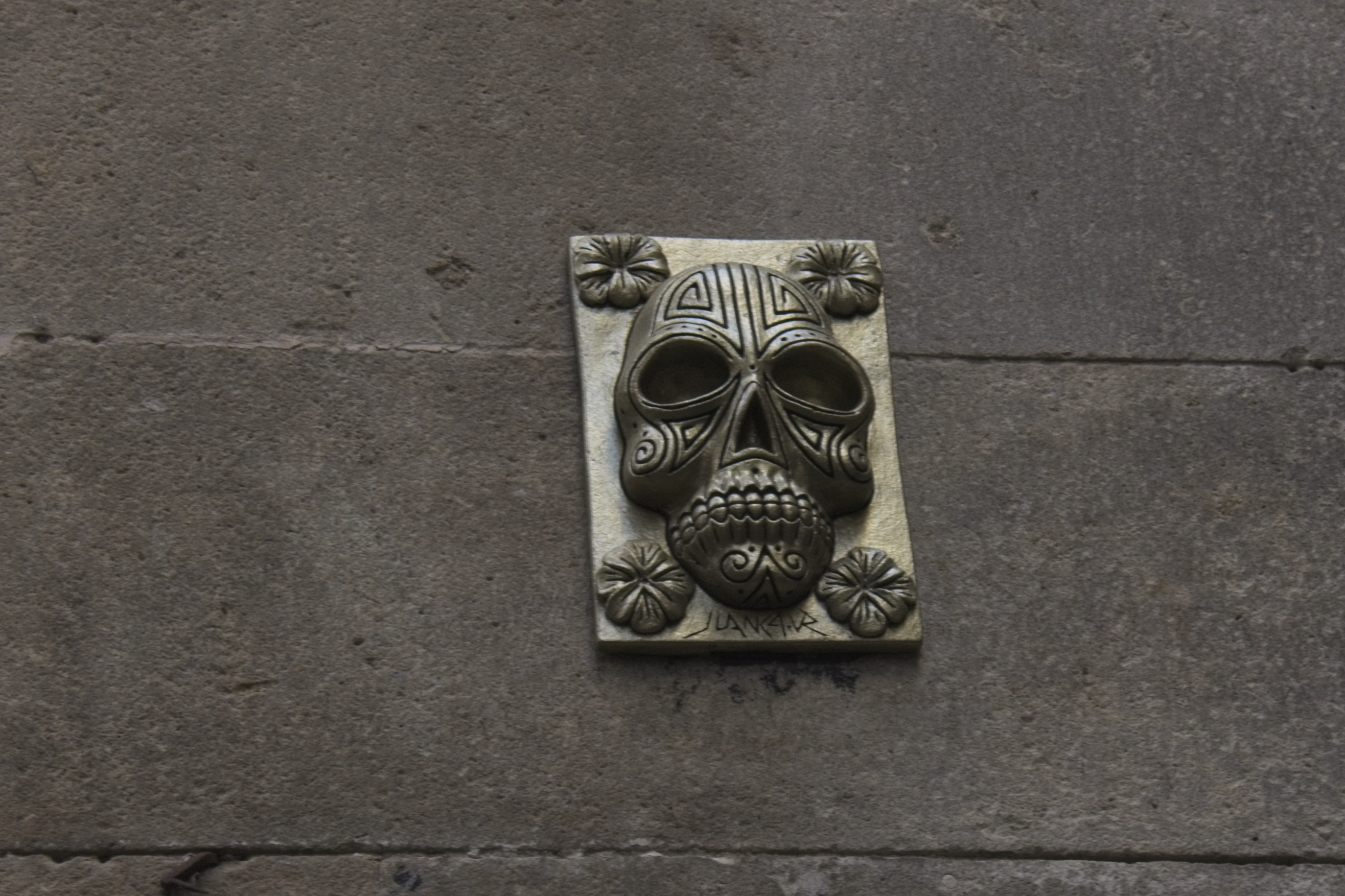
Not political, just cool art hanging on either side of an arch
Parc Güell
In the afternoon we made a visit to Parc Güell, which Gaudí created and designed for his main sponsor and local entrepreneur Eusebi Güell. He designed Güell’s house on the property as well as the park itself. It is a marvel of Modernisme, also one of the most photographed parts of Barcelona. It was a lovely place, close in to the center of the city in the area where expansion took place in the 1800s when Madrid finally allowed Barcelona to expand its footprint (the Eixample) and reflects both the sensibilities of the time and Gaudí’s unique vision.
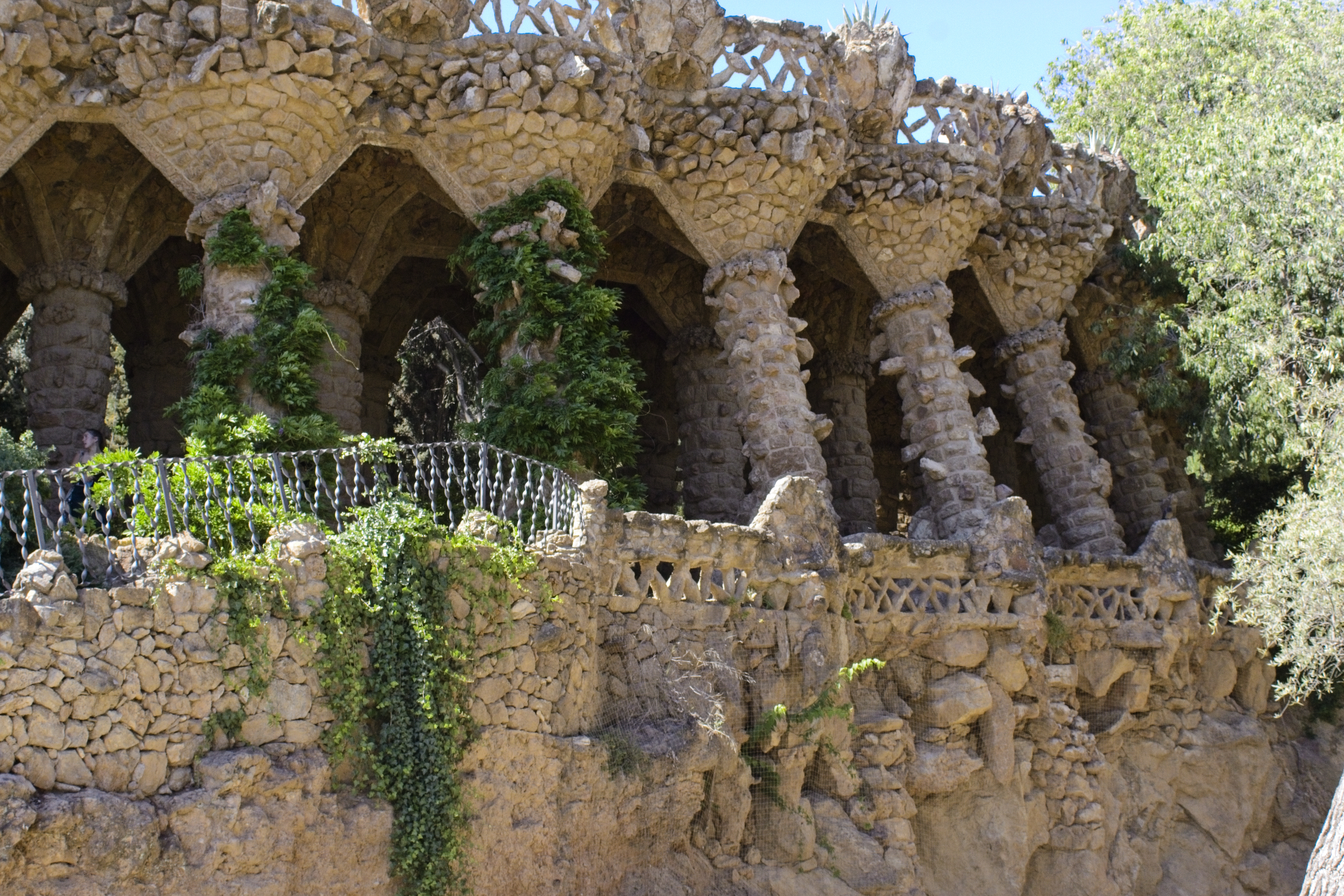
As you enter the park you climb a series of viaducts to get tot the top of the hill where the park is situated. Each viaduct is unique and reflect’s Gaudí’s love of organic shapes and catenary arches.
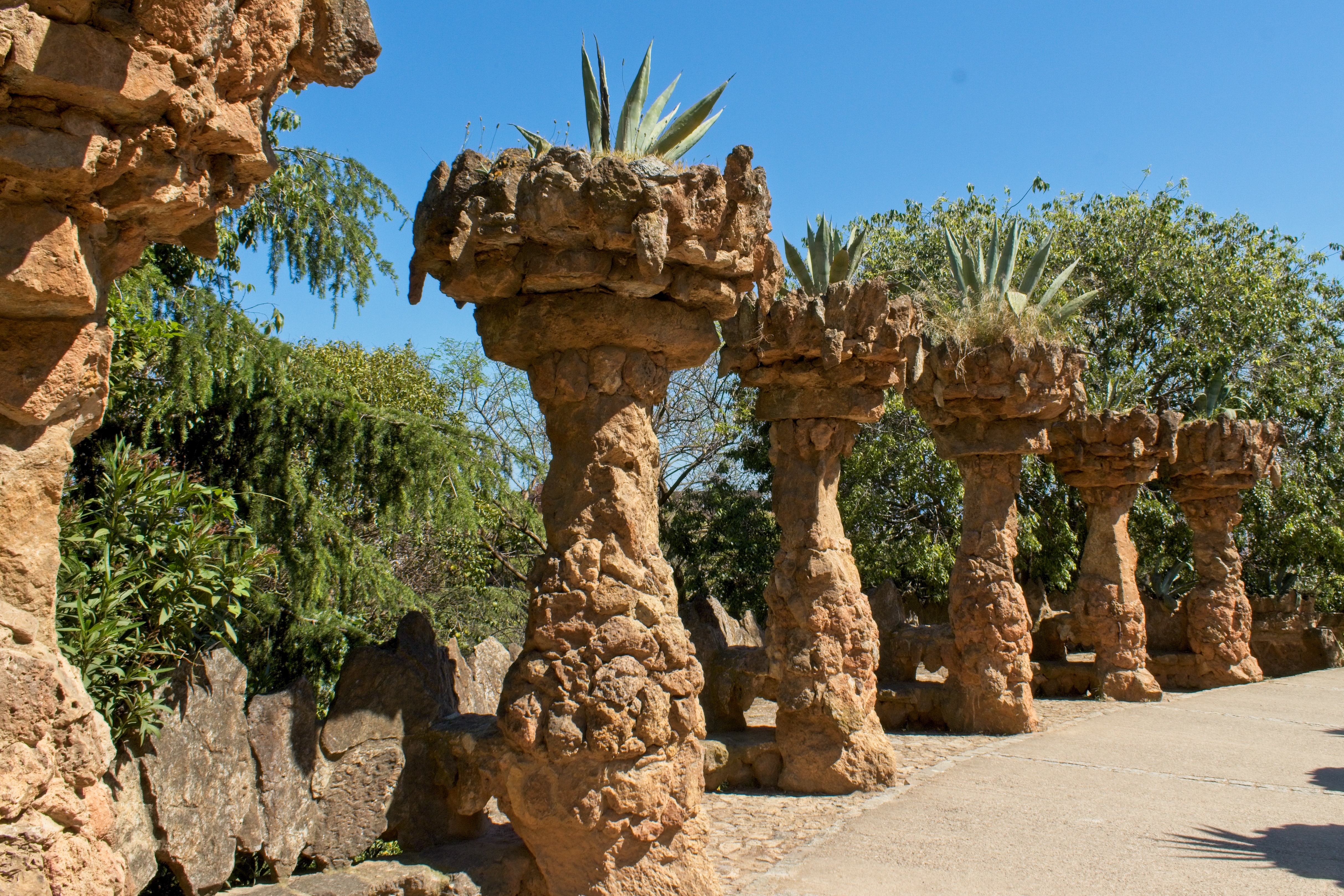
Planters, with agave plants in the top. These were all of 3 meters tall.
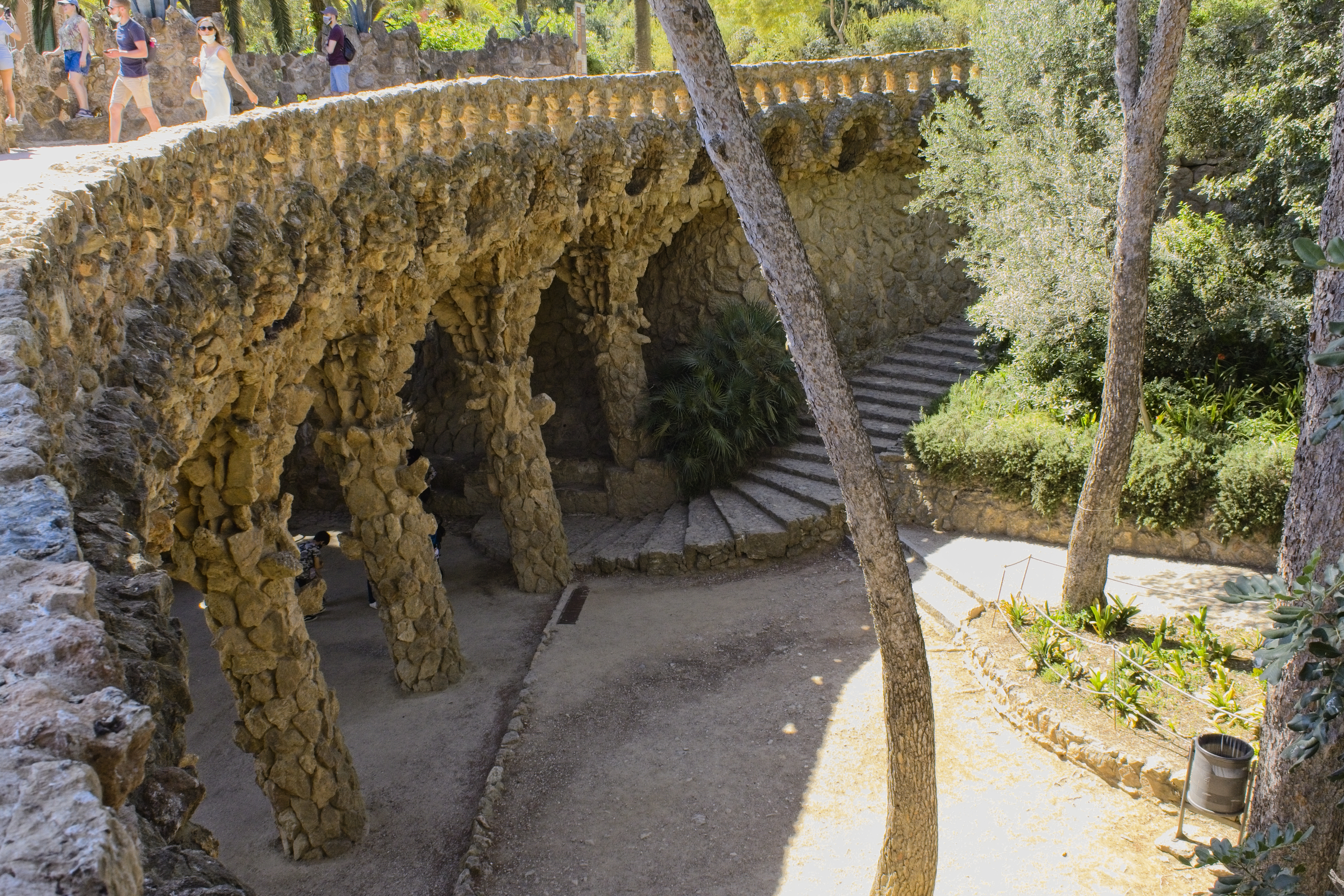
Another viaduct, from the roadway
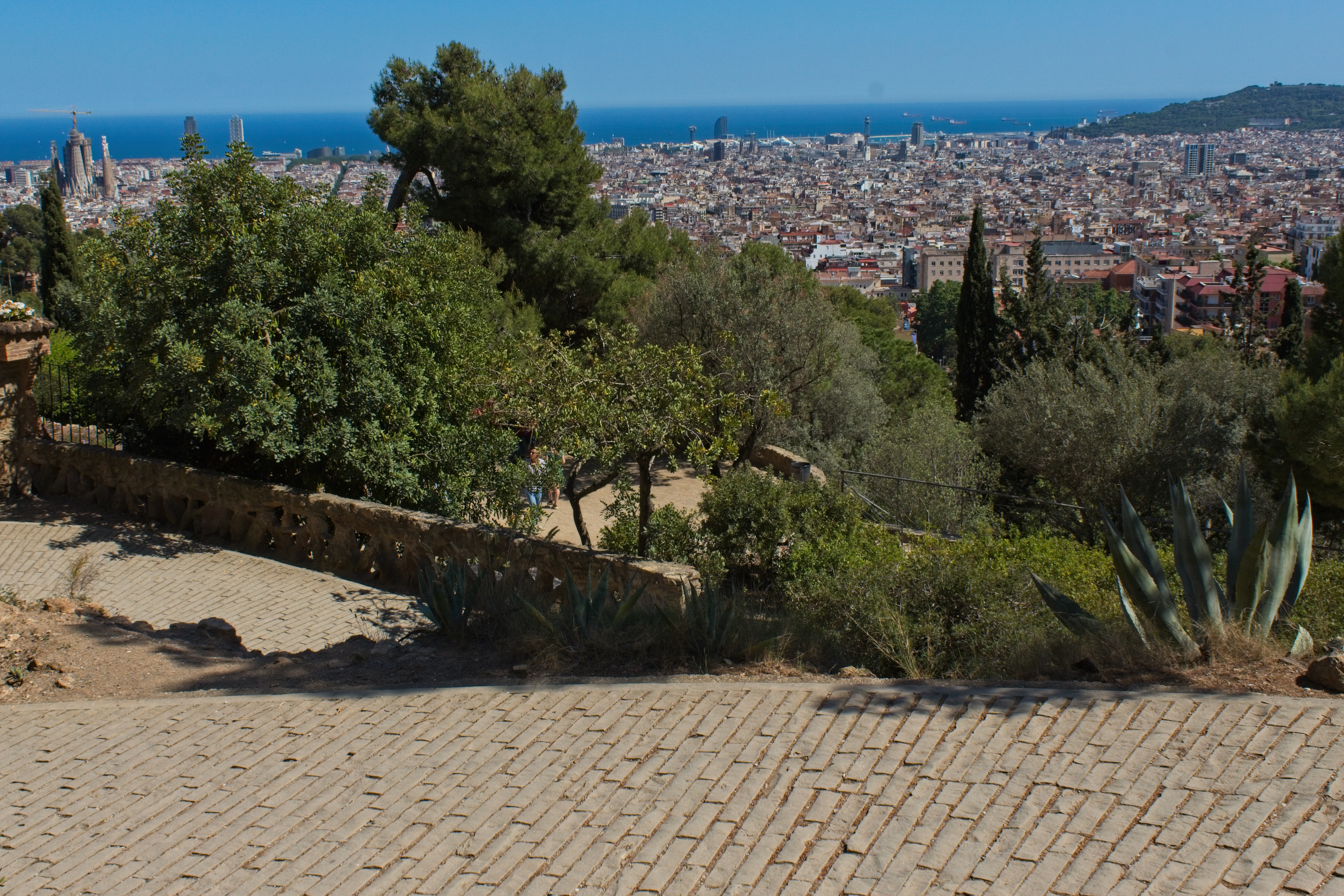
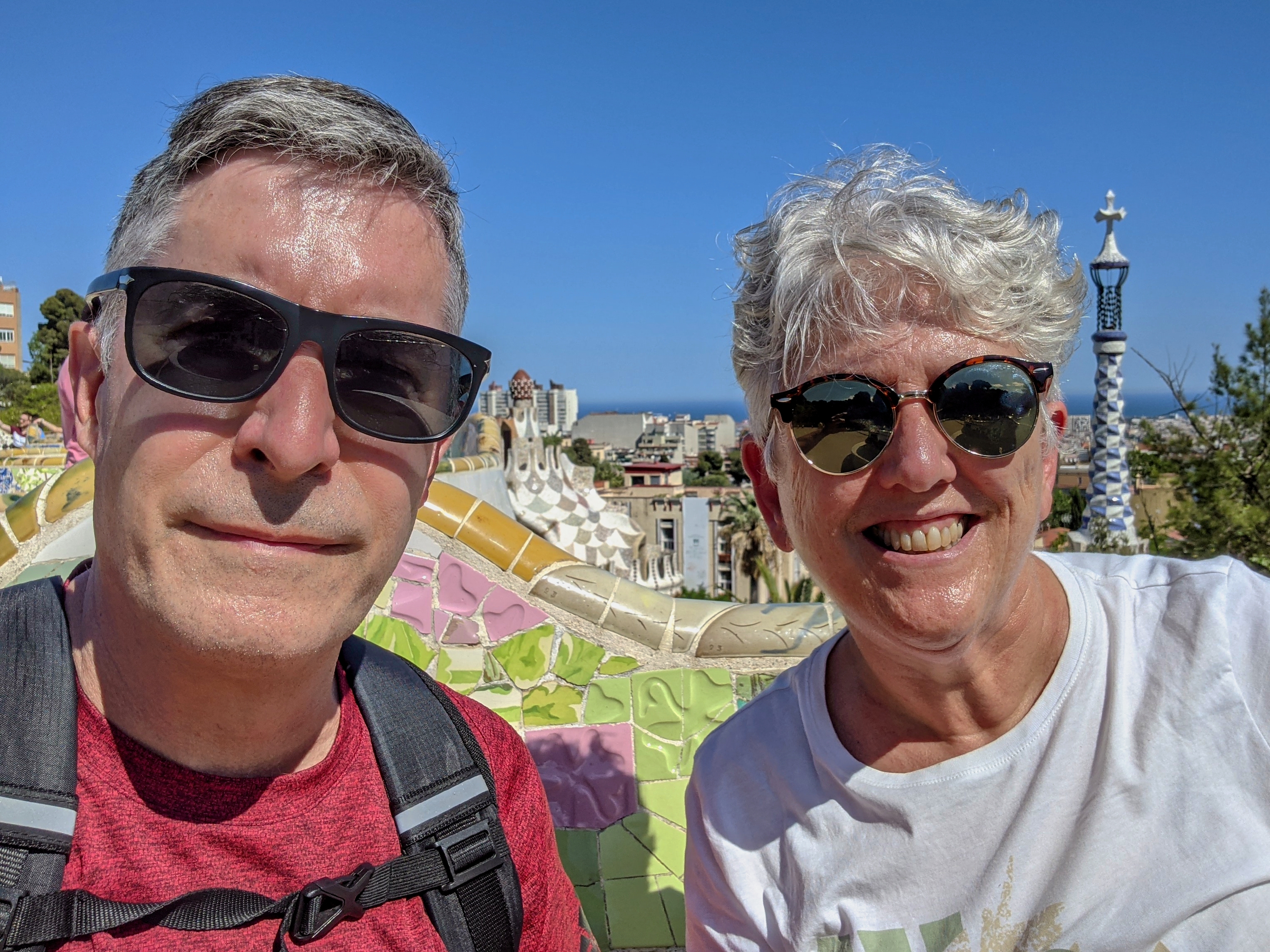
The view from the highest point on the hill overlooking Barcelona and the Med. On the left you can see la Familia Sagrada dominating its neighborhood.
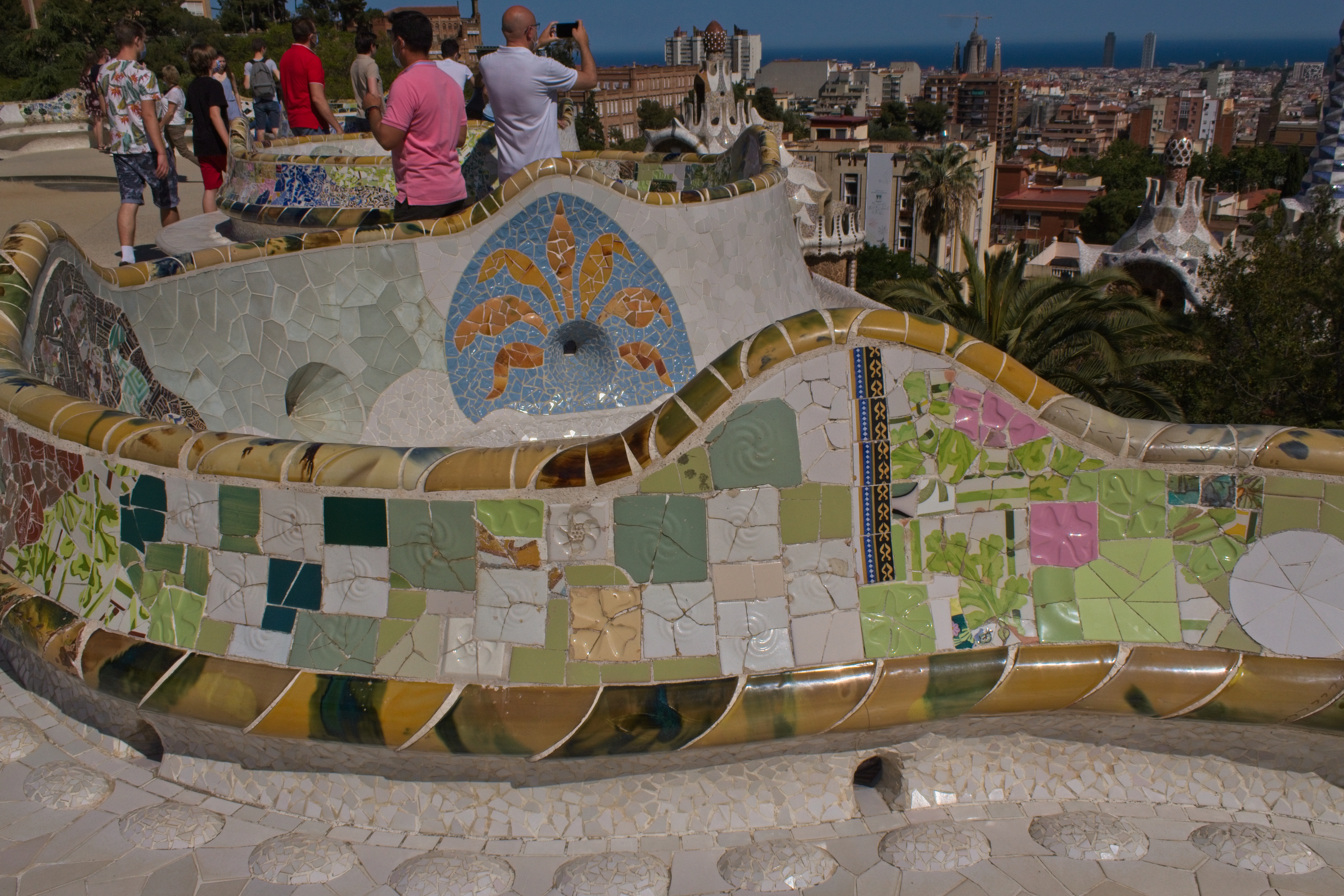
The “Serpentine Bench.” It was built in this shape on purpose to give groups privacy in crowds; the bumps in the foreground are on the bench seat to keep people’s behinds out of the gutters. The broken tilework is a Gaudí signature; it allowed him to decorate his sinuous shapes with tiles and the effect is remarkable.
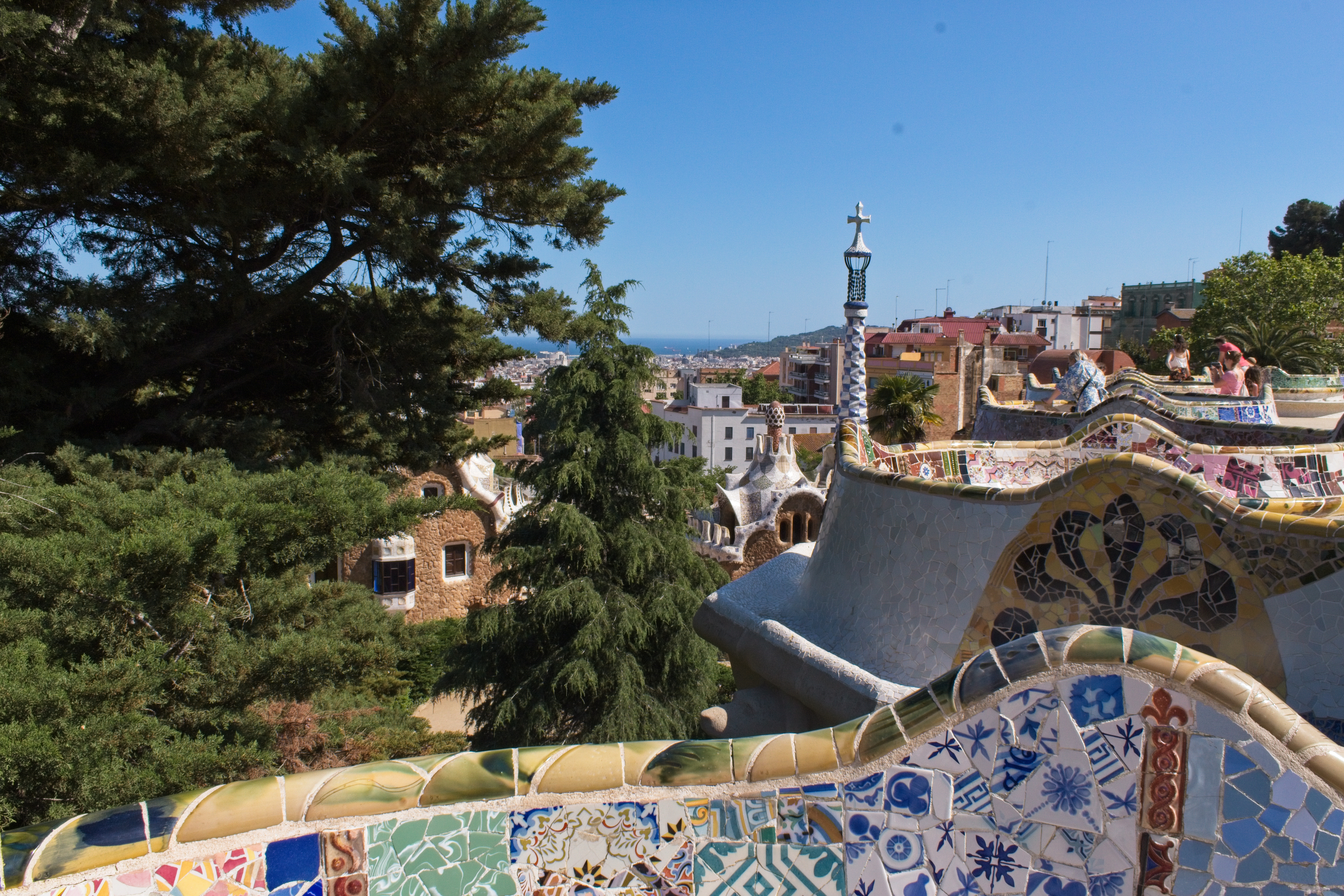
There was tile work on both the insides and outsides of the benches.
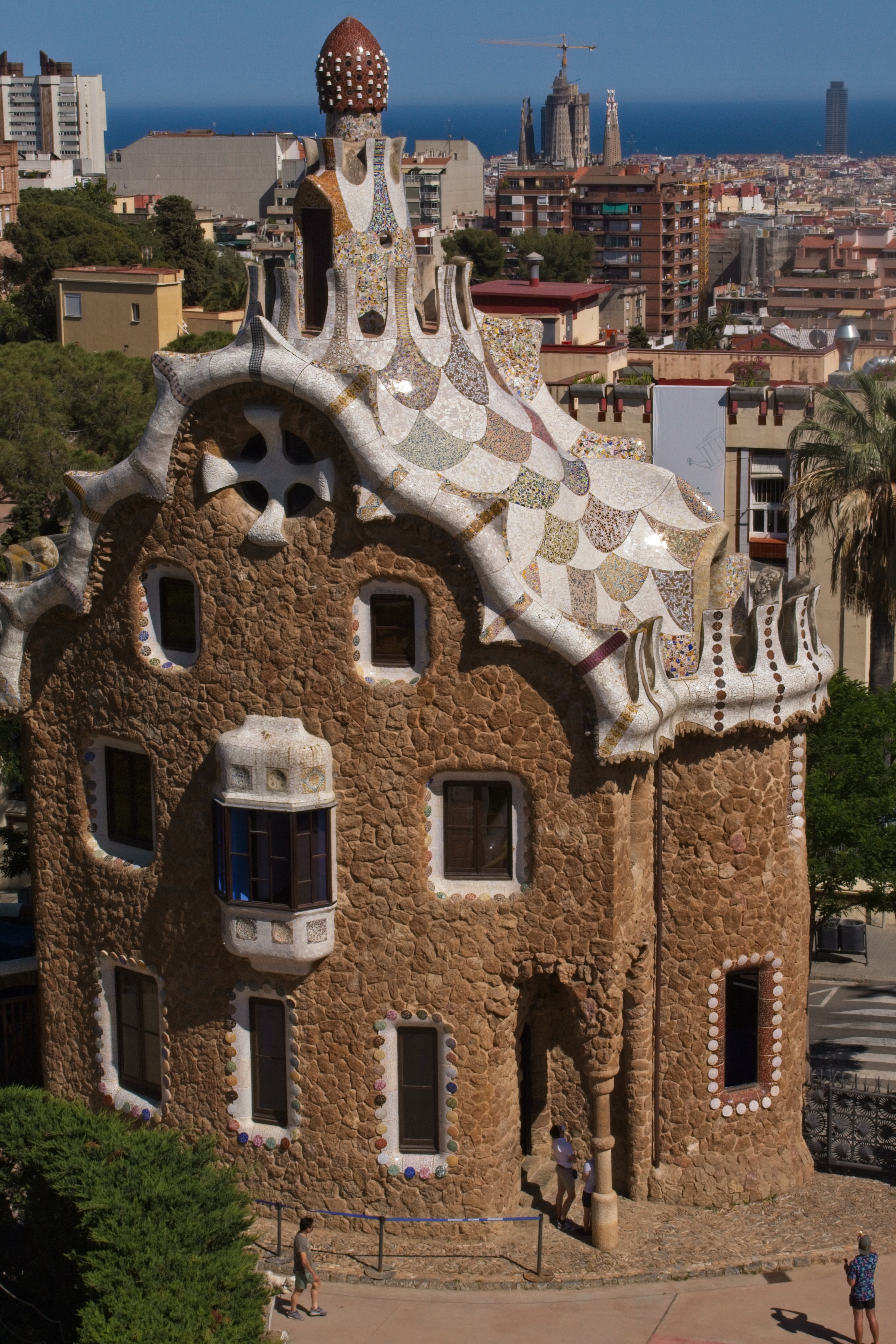
More tile mosaic, this time on the roof of the Porter’s Lodge by the main entrance.
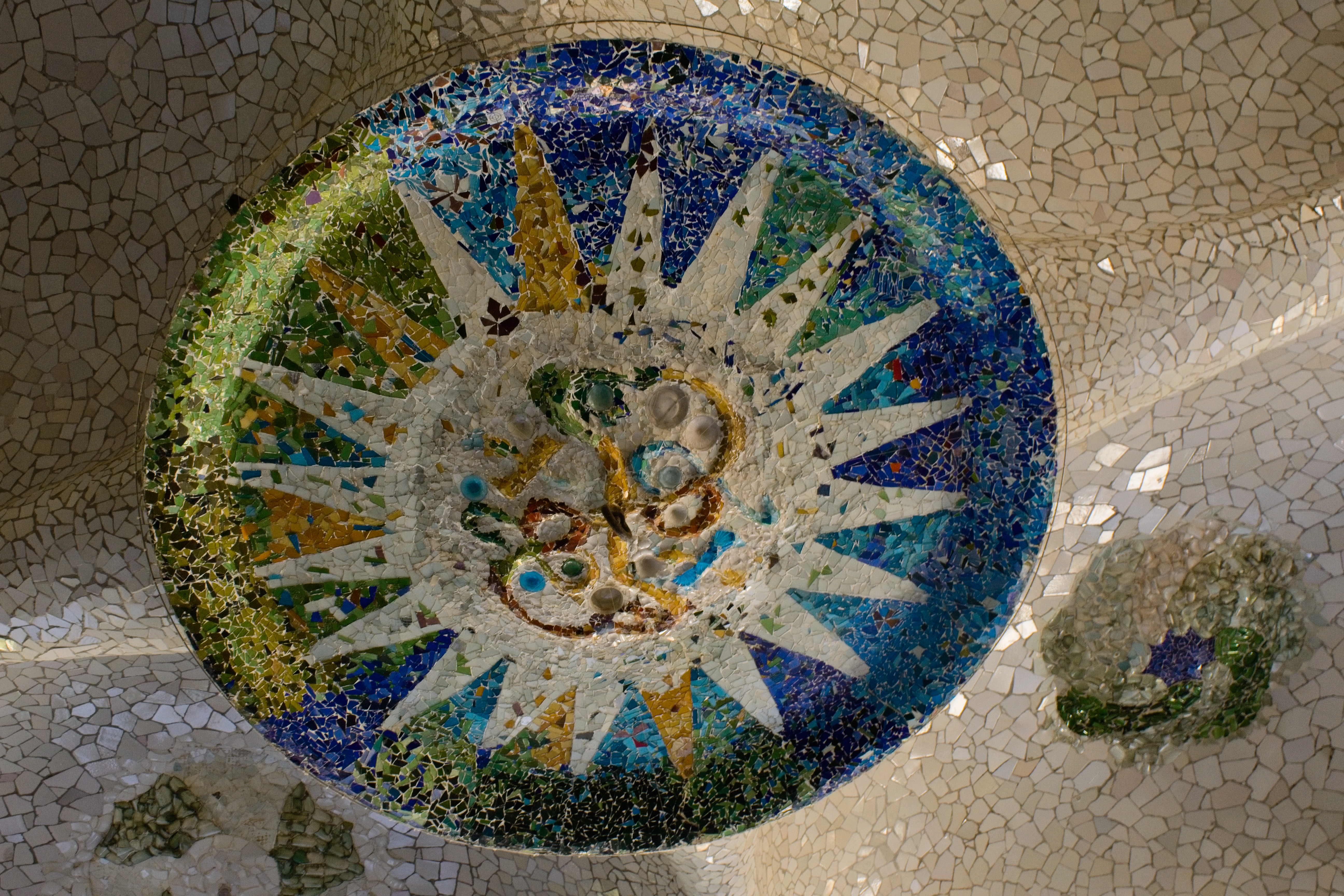
Underneath the terrace with the serpentine benches is the “hypostyle” room, covered in more tile mosaic and decorations at the tops of the arches.
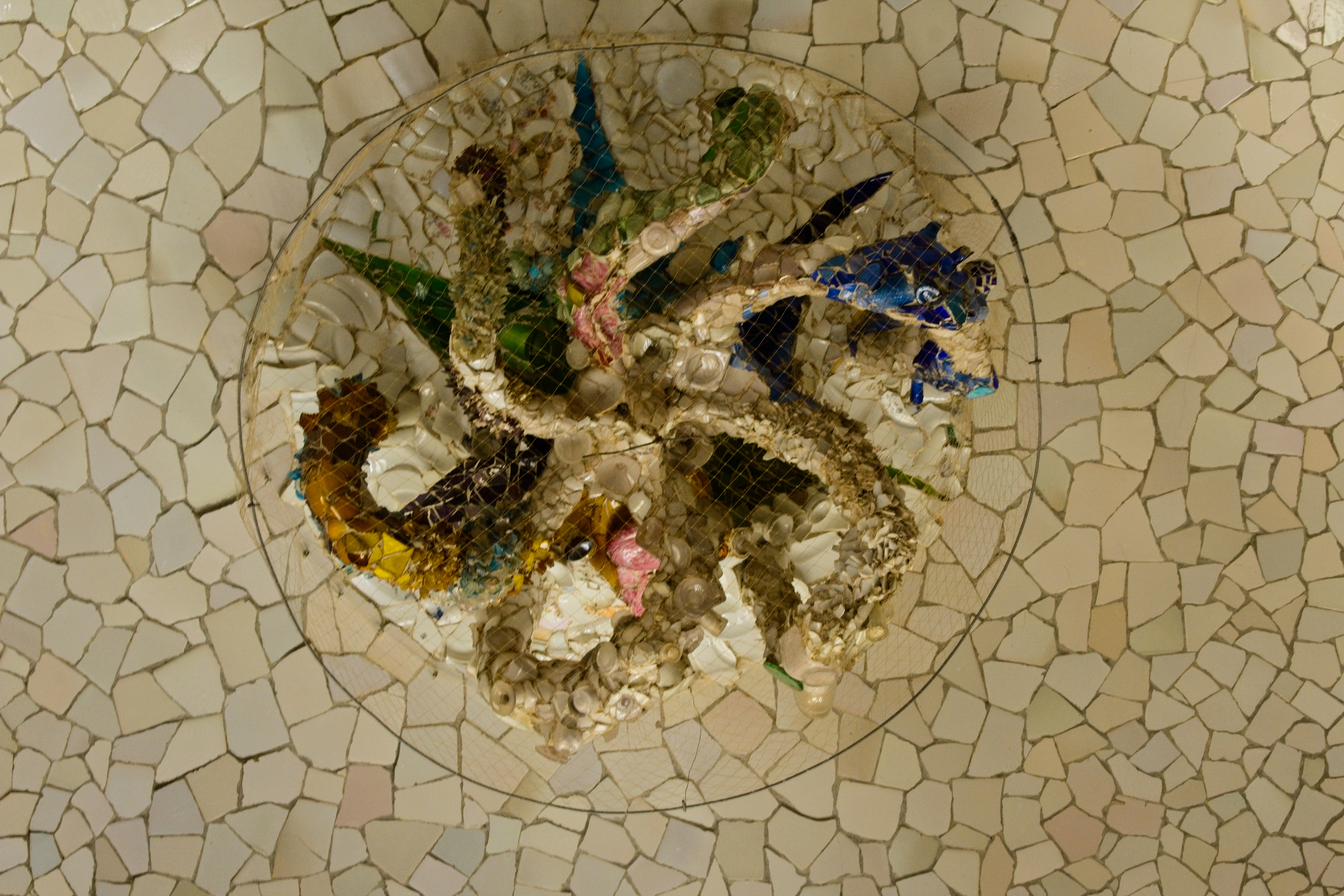
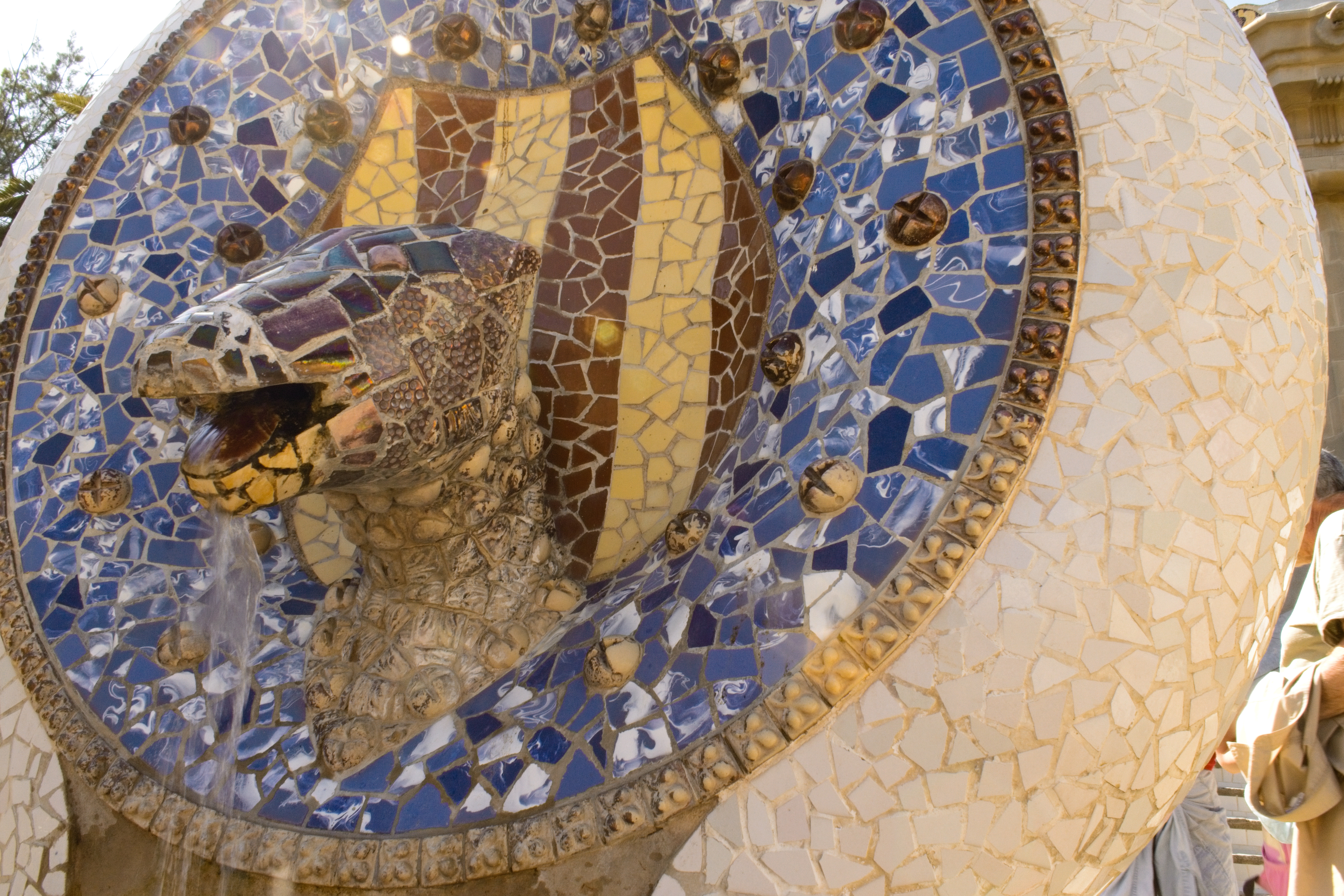
The emblem of Barcelona, in tile
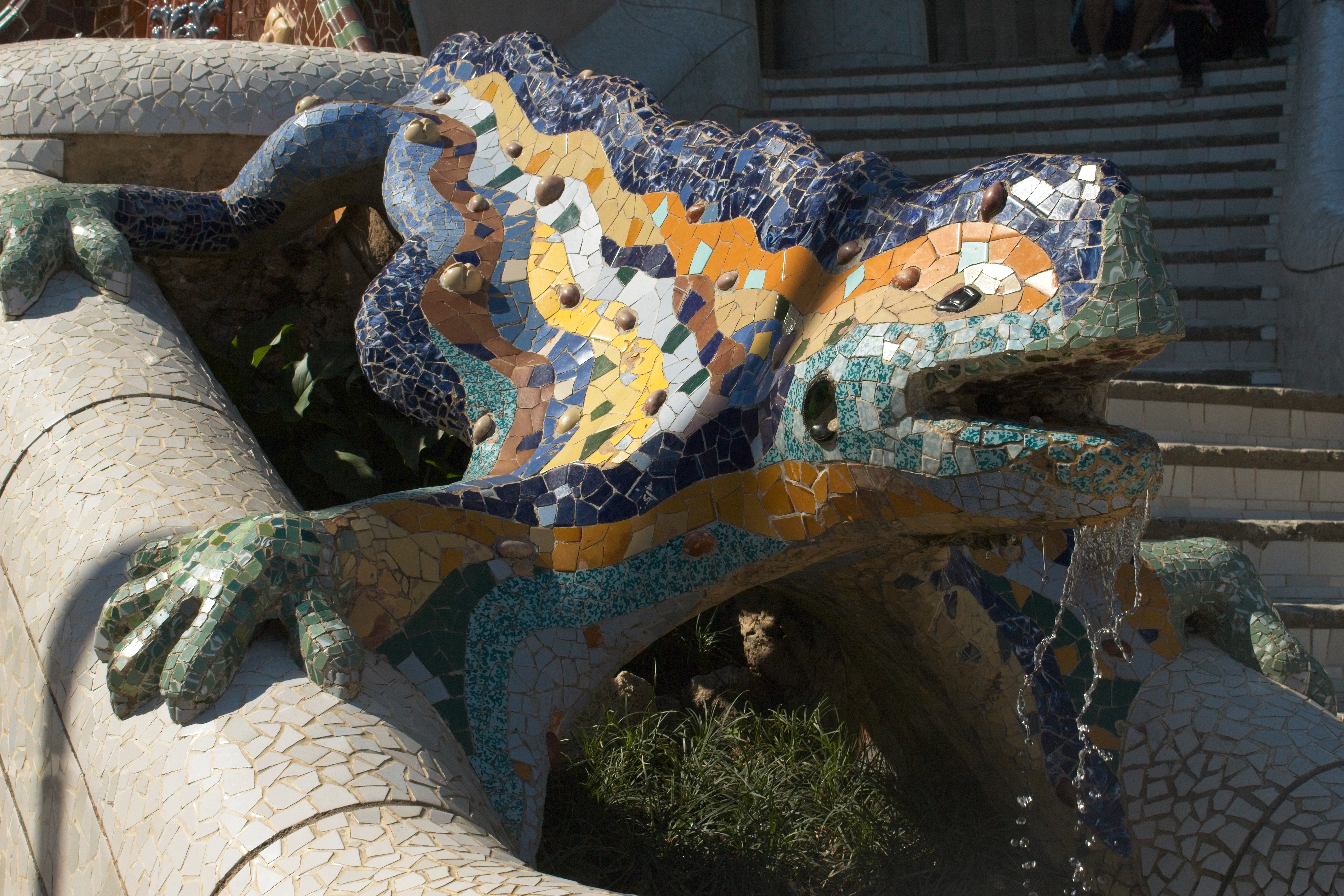
Mosaic gecko
After our trip to the park, we returned to the hotel for a rooftop drink and then caught a trio of Flemenco players paying tribute to Paco de Lucia, a towering figure in Flamenco guitar and the jazz scene of the ’70s – ’90s. It was a lovely evening.
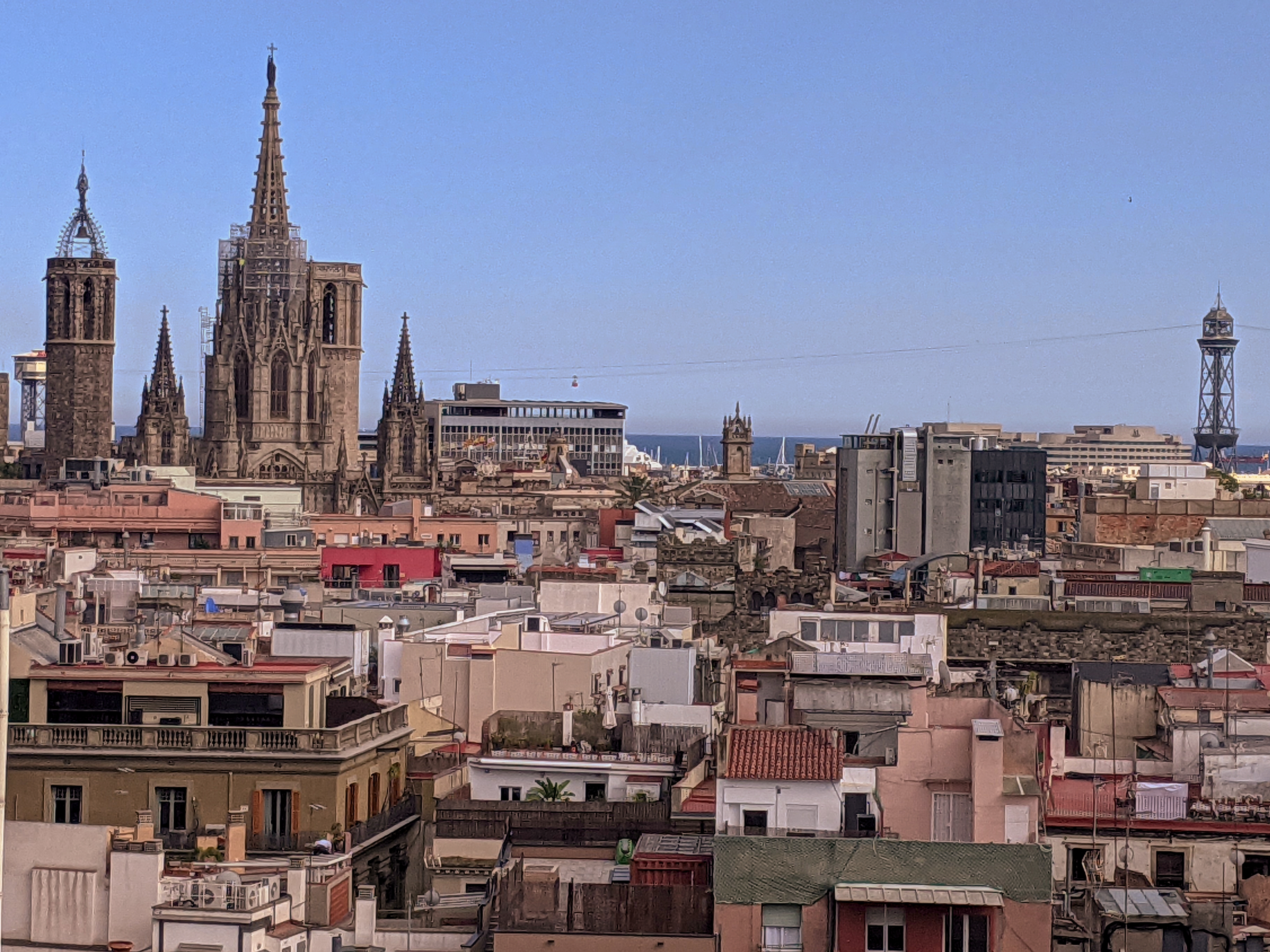
View from the rooftop
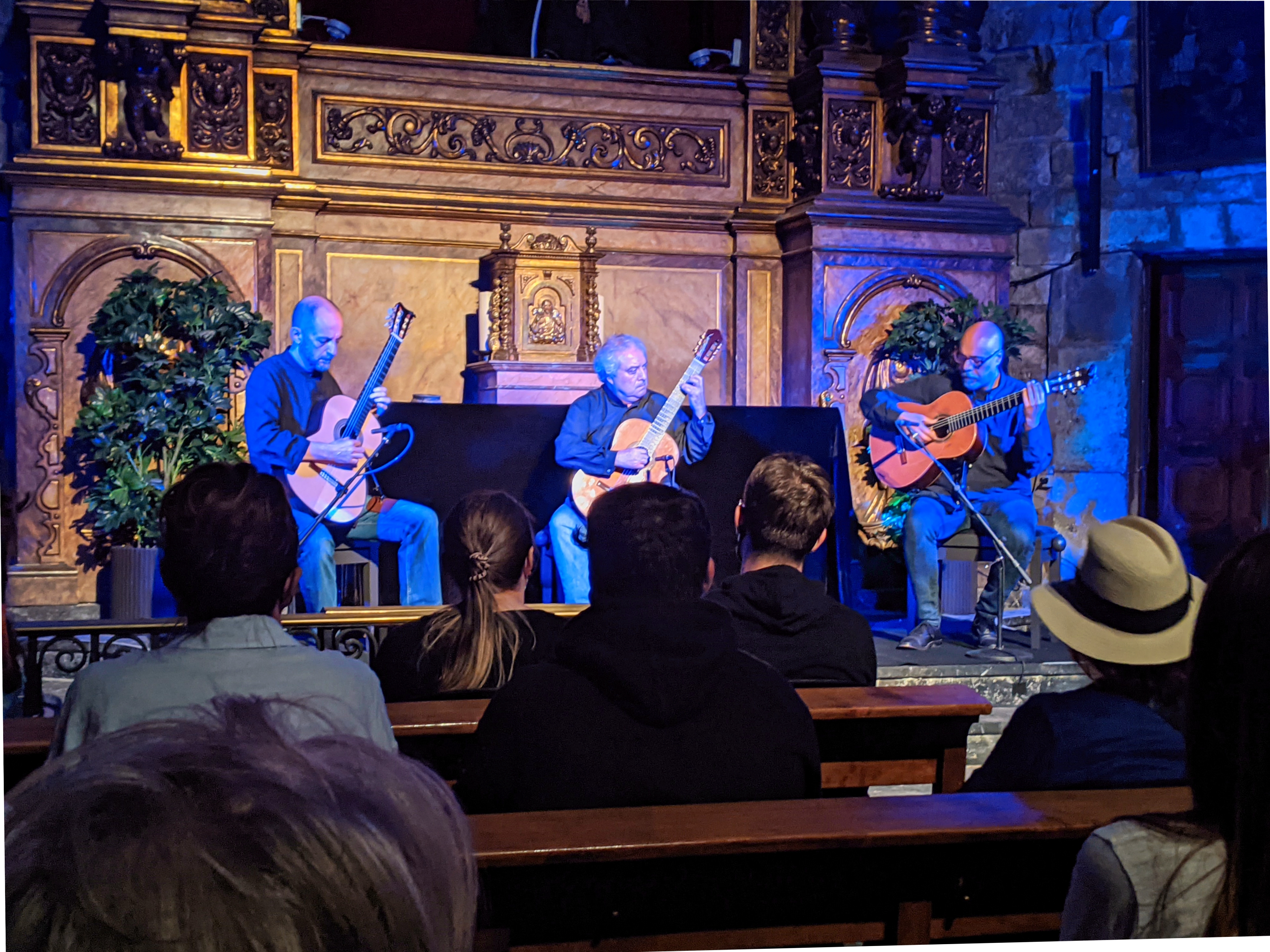
Our musical hosts for the evening.
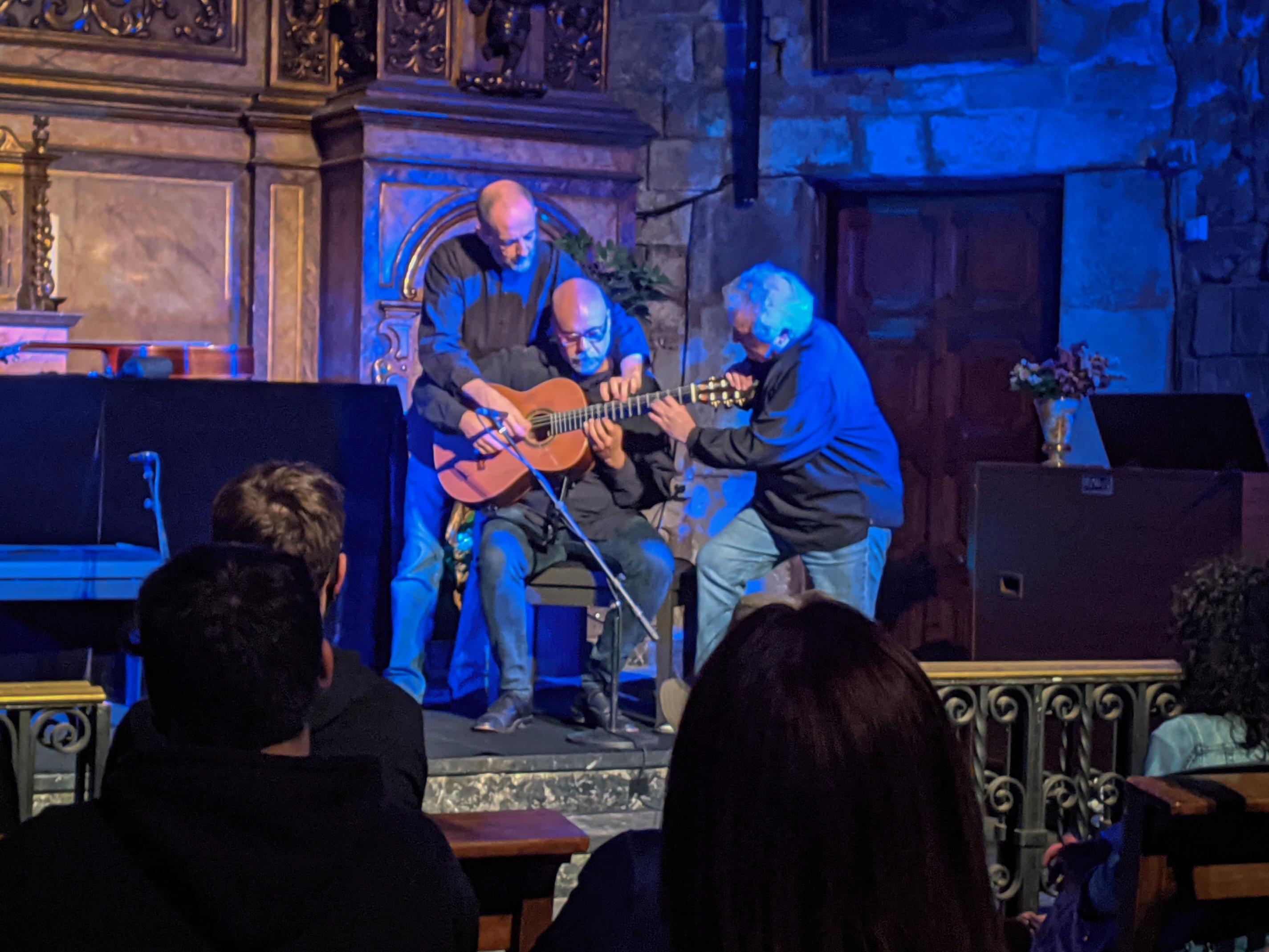
As part of their encore, they played a 3-on-1 version of Michael Jackson’s Billie Jean that brought down the house.
La Sagrada Familia
You knew it was coming. Everybody has to go see La Sagrada Familia, Gaudí’s ultimate work and contribution to Barcelona. We’re no different and now you get to see our version of the pictures everybody takes of this remarkable building. My (Steve) takeaways: from a distance it’s an eyesore, all out of proportion to the neighborhood and just dominant on the skyline. Close in, the textures and designs on the exterior are much more interesting and pleasing. Inside is just jaw dropping. I’m glad we went to see it.
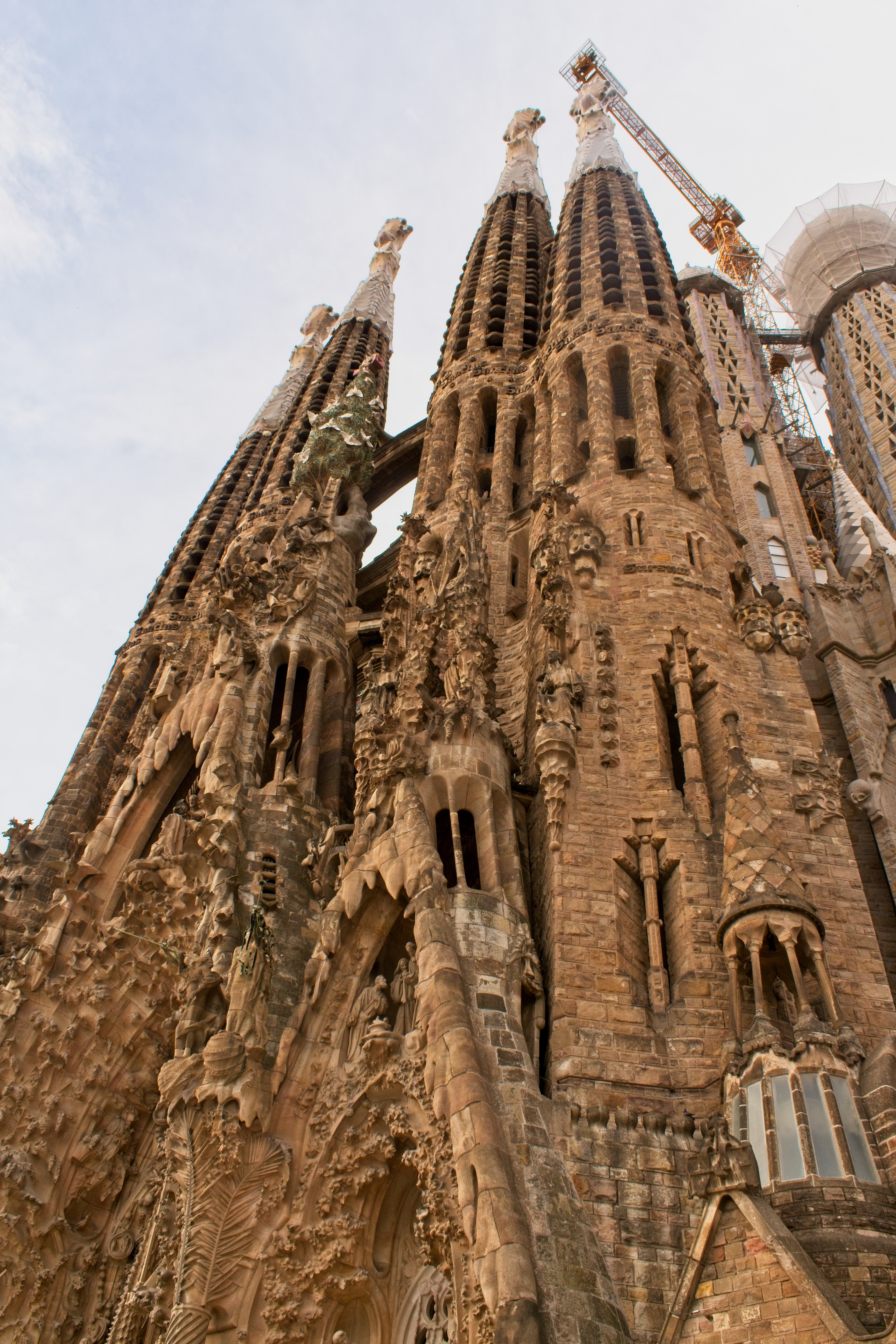
The Nativity Facade, the oldest part of the building and fussiest, most Neo-Gothic part.
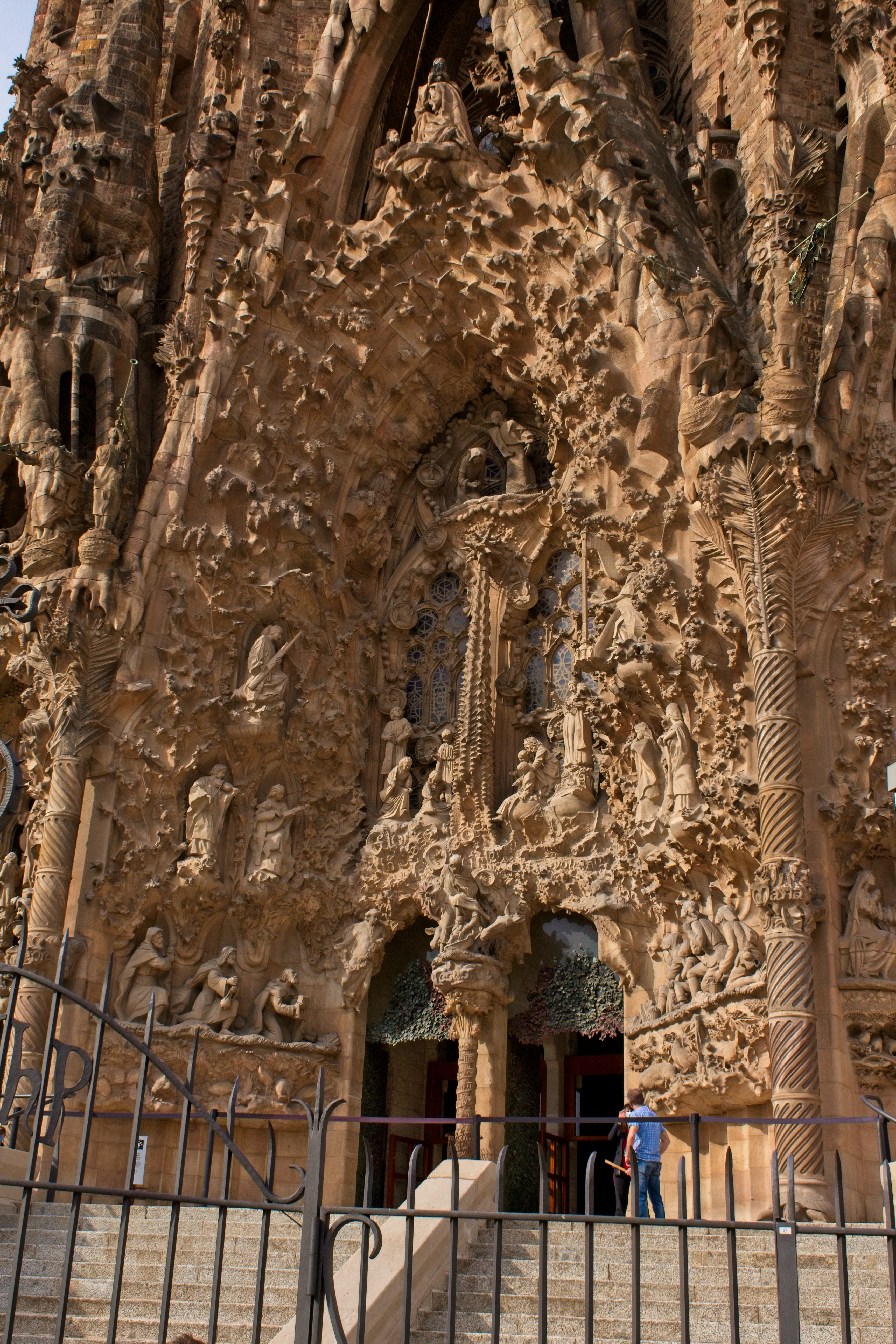
The main entrance, with the Nativity recreated in statues around the door
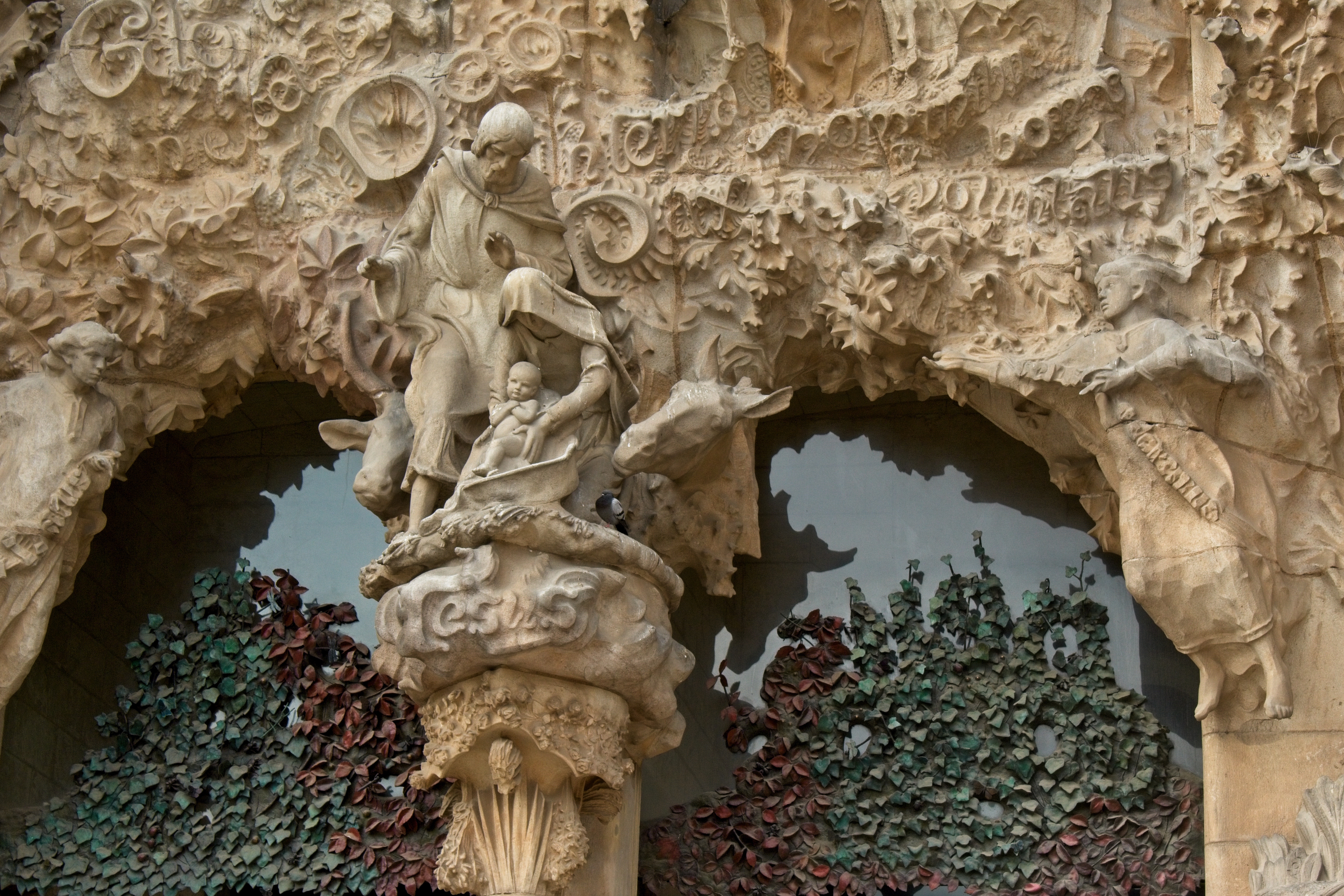
The stars of the show, plus ass and cow
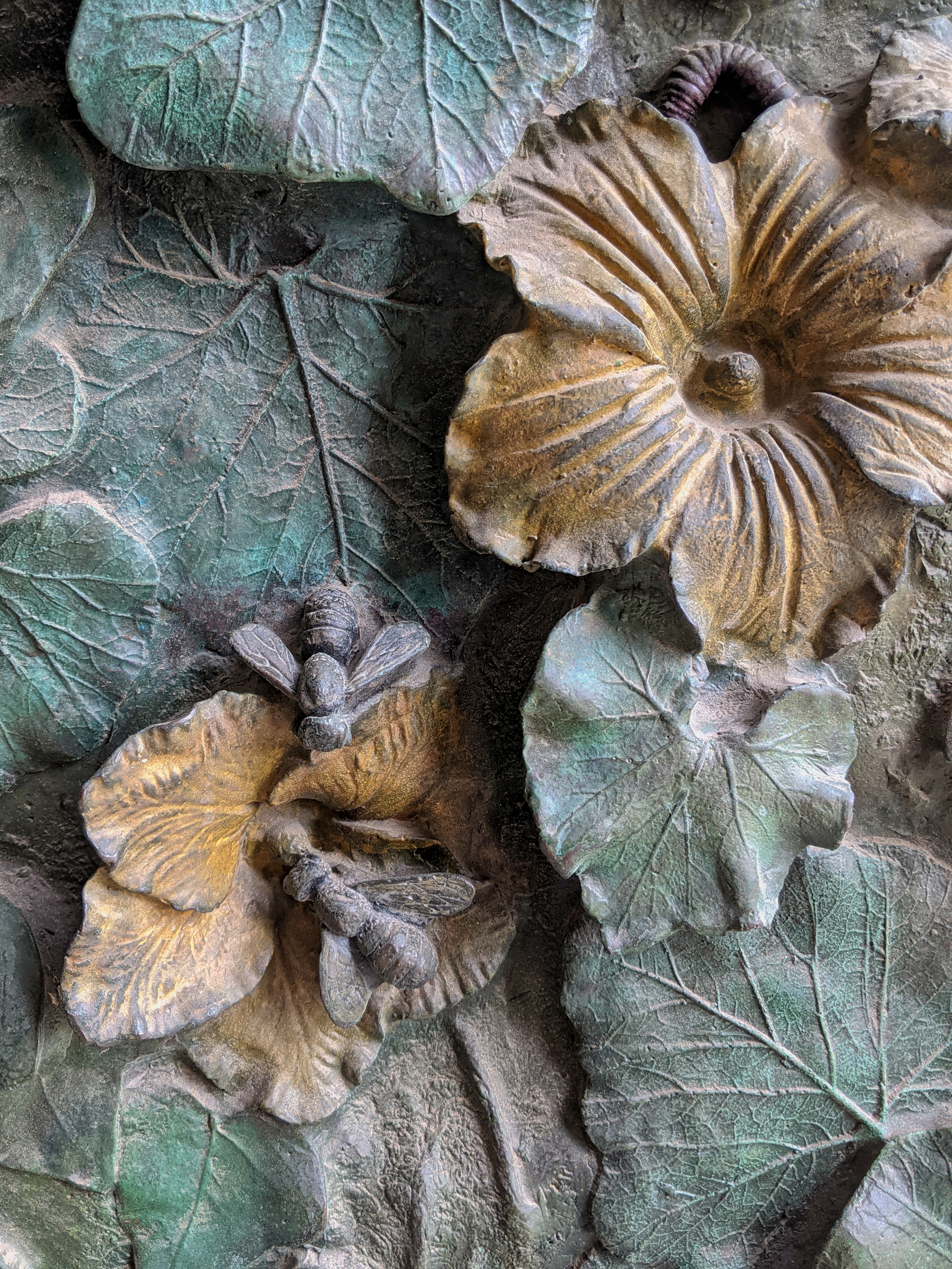
Detail from the entry doors, which were covered in many varieties of flowers and leaves and had some critters too.
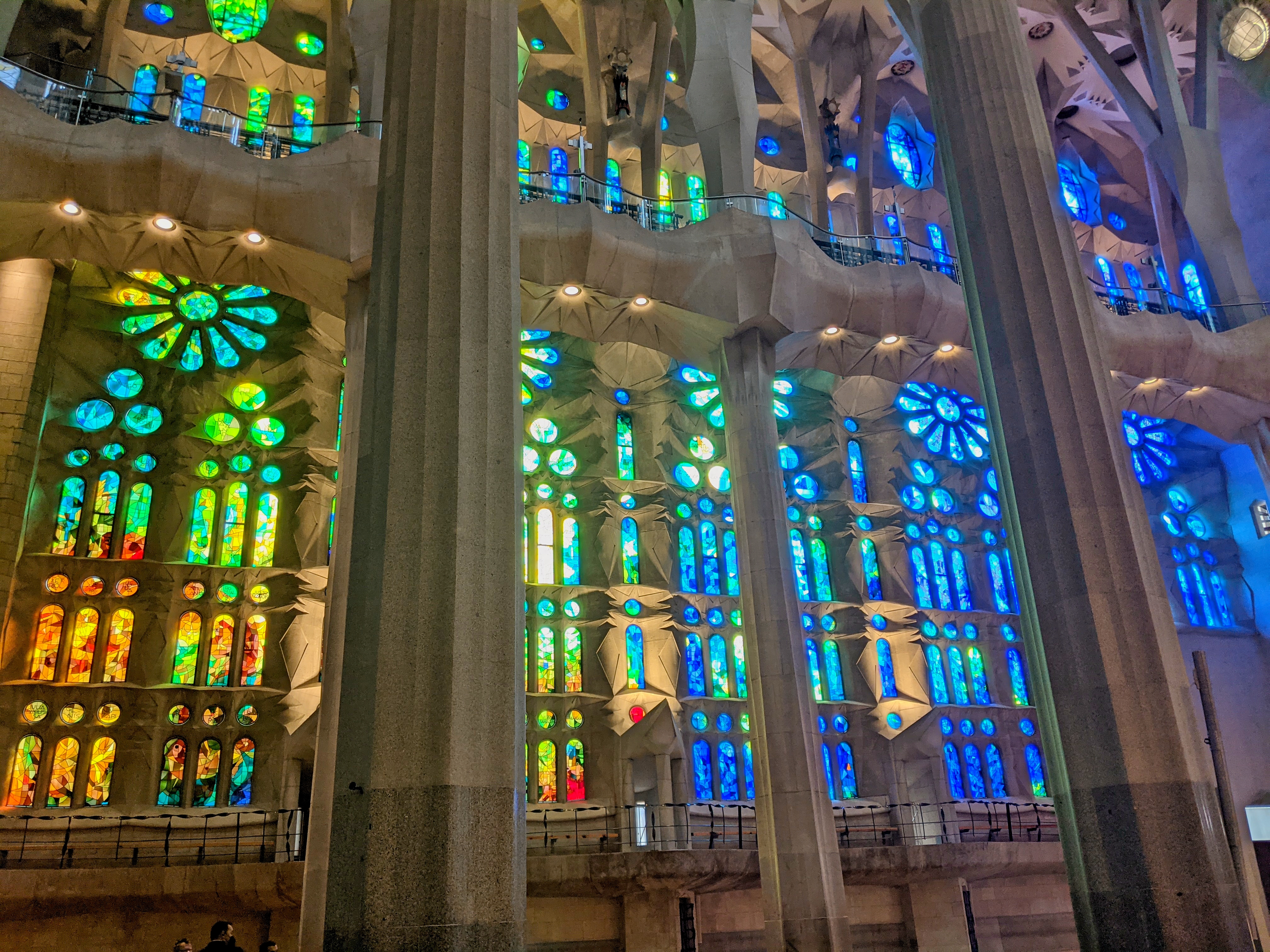
The eastern side of the building, with stained glass in morning colors
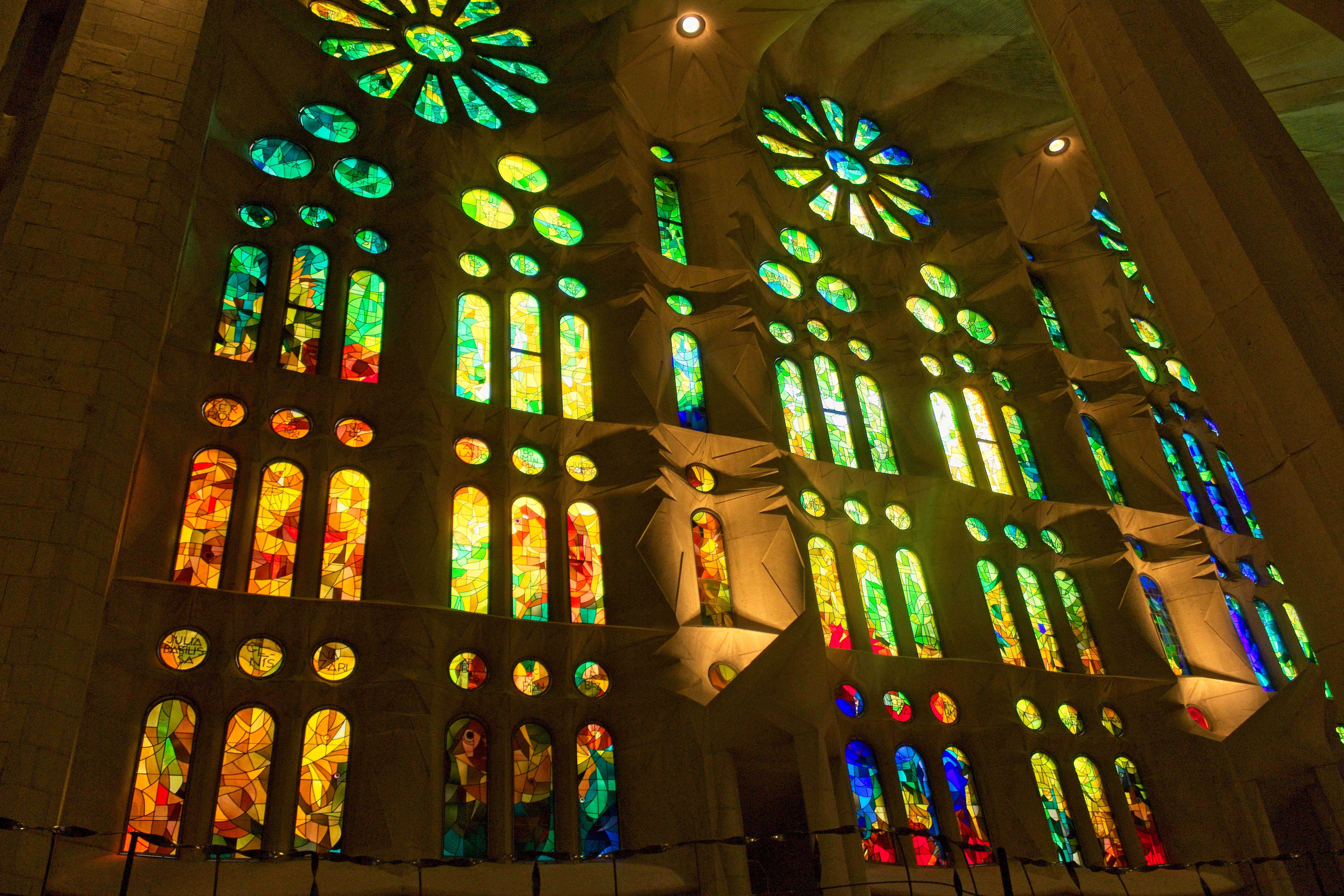
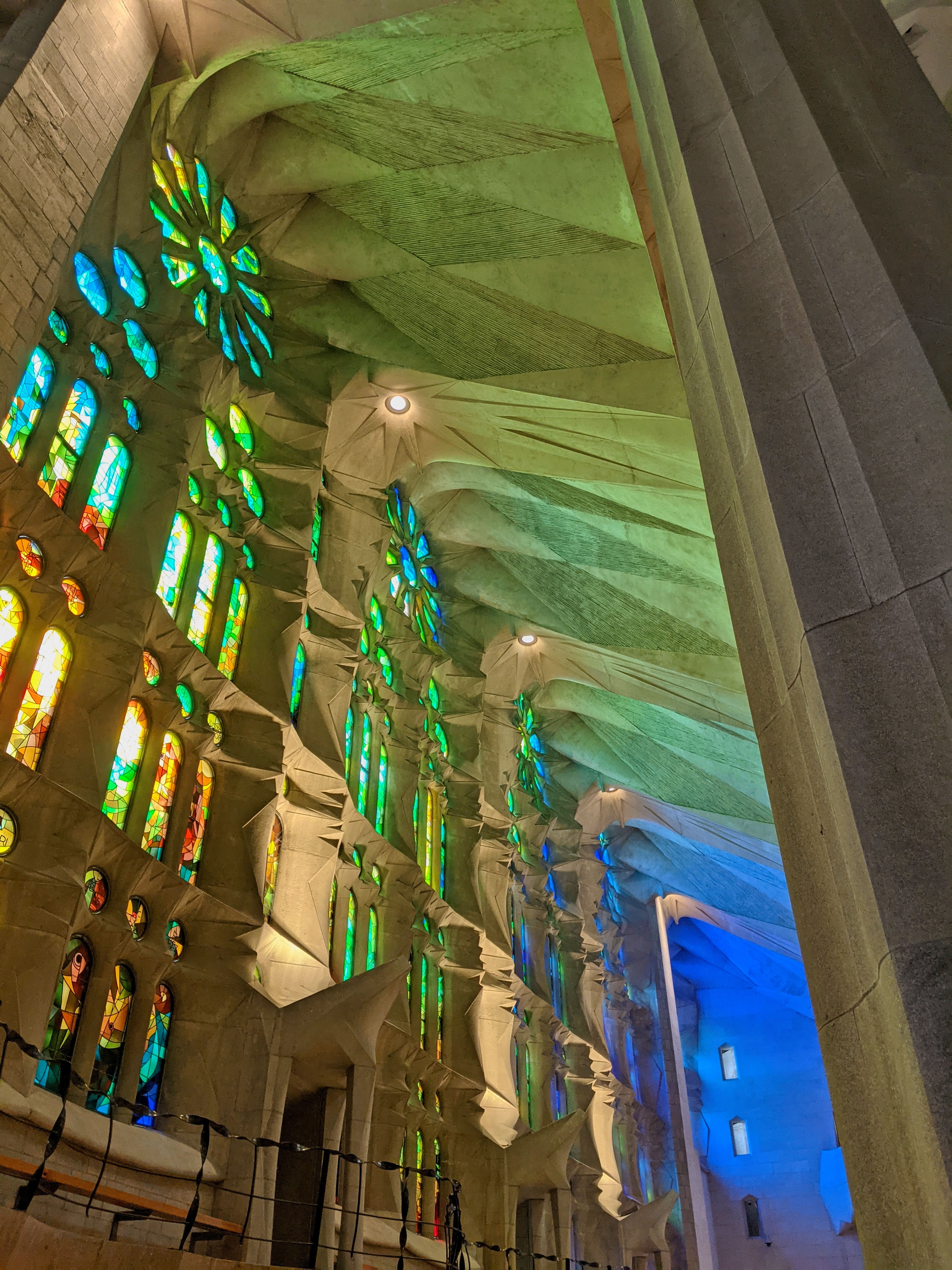
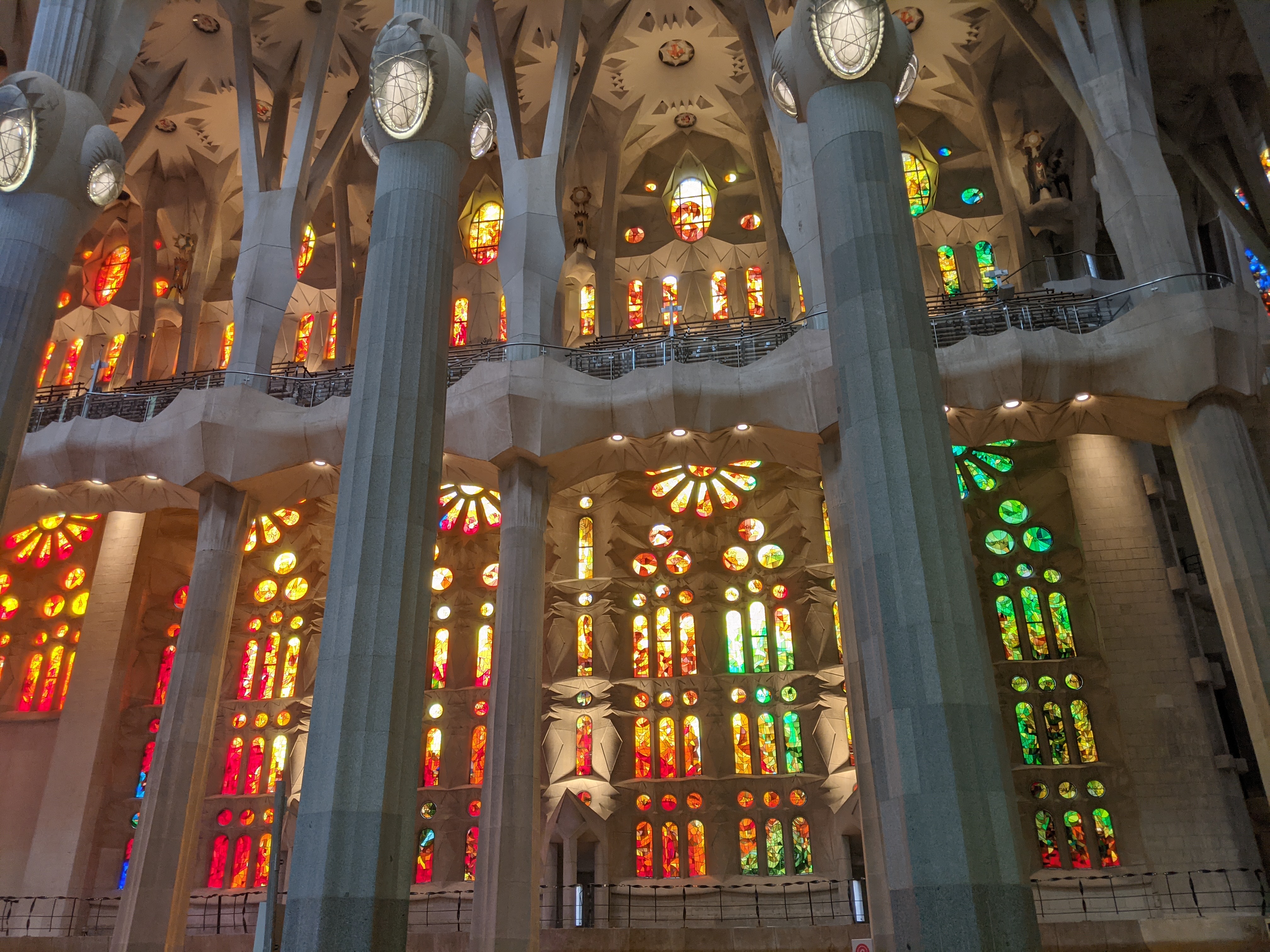
Across the way the west side, with glass in the colors of the sunset
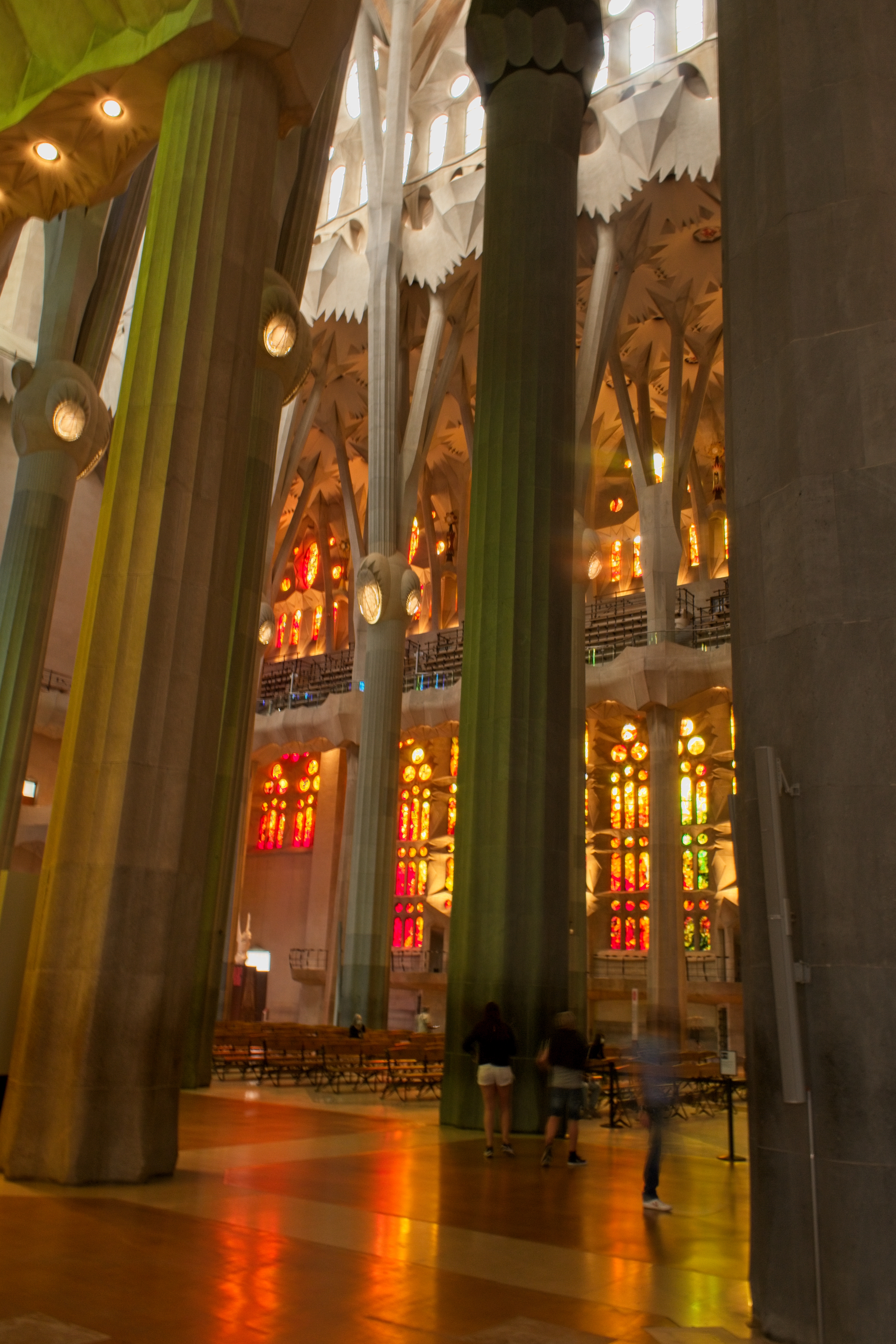
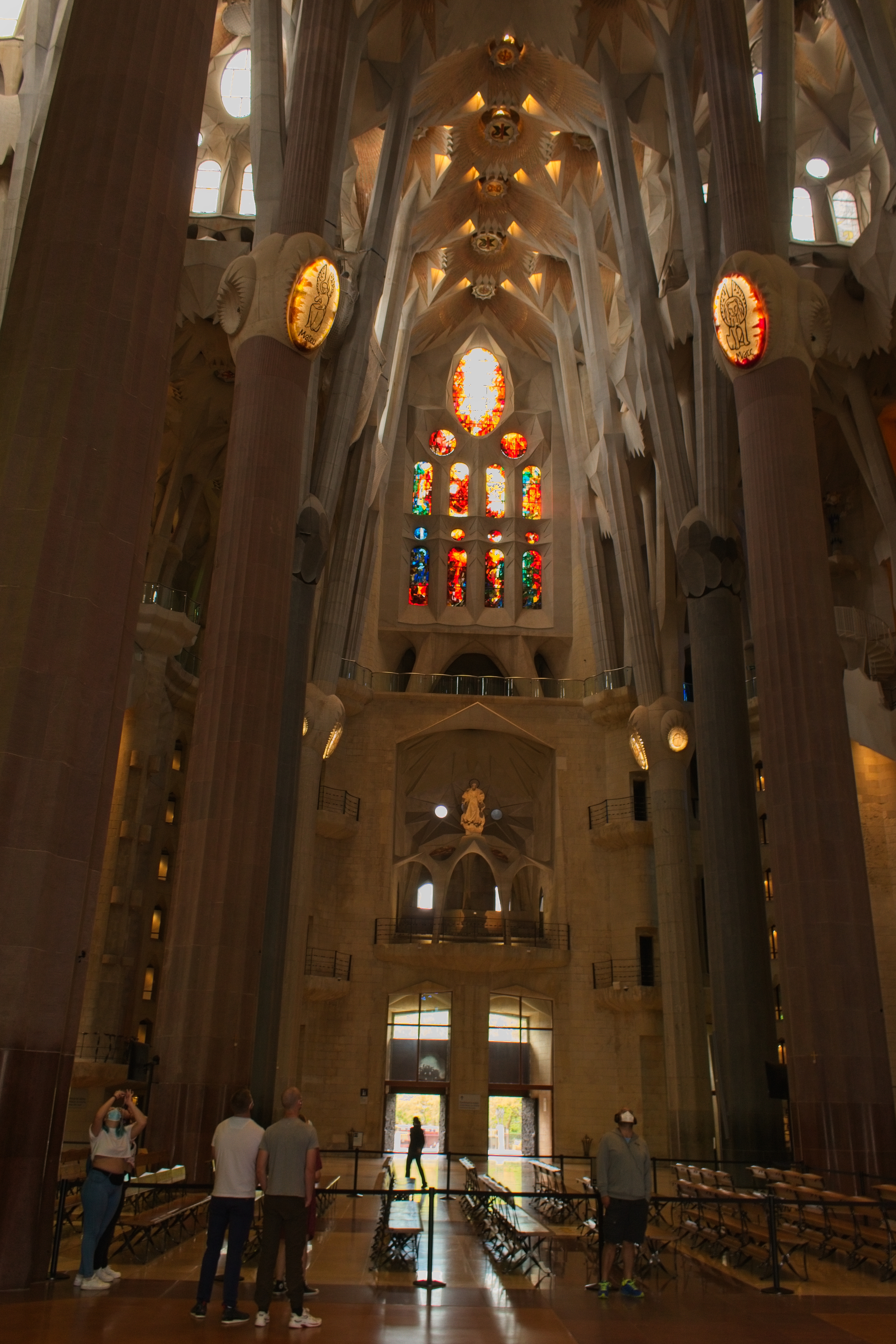
West transept. Note the rose color of the central pillars; that’s porphyry, a particularly strong stone which will hold up the tallest spire at 170+ meters.
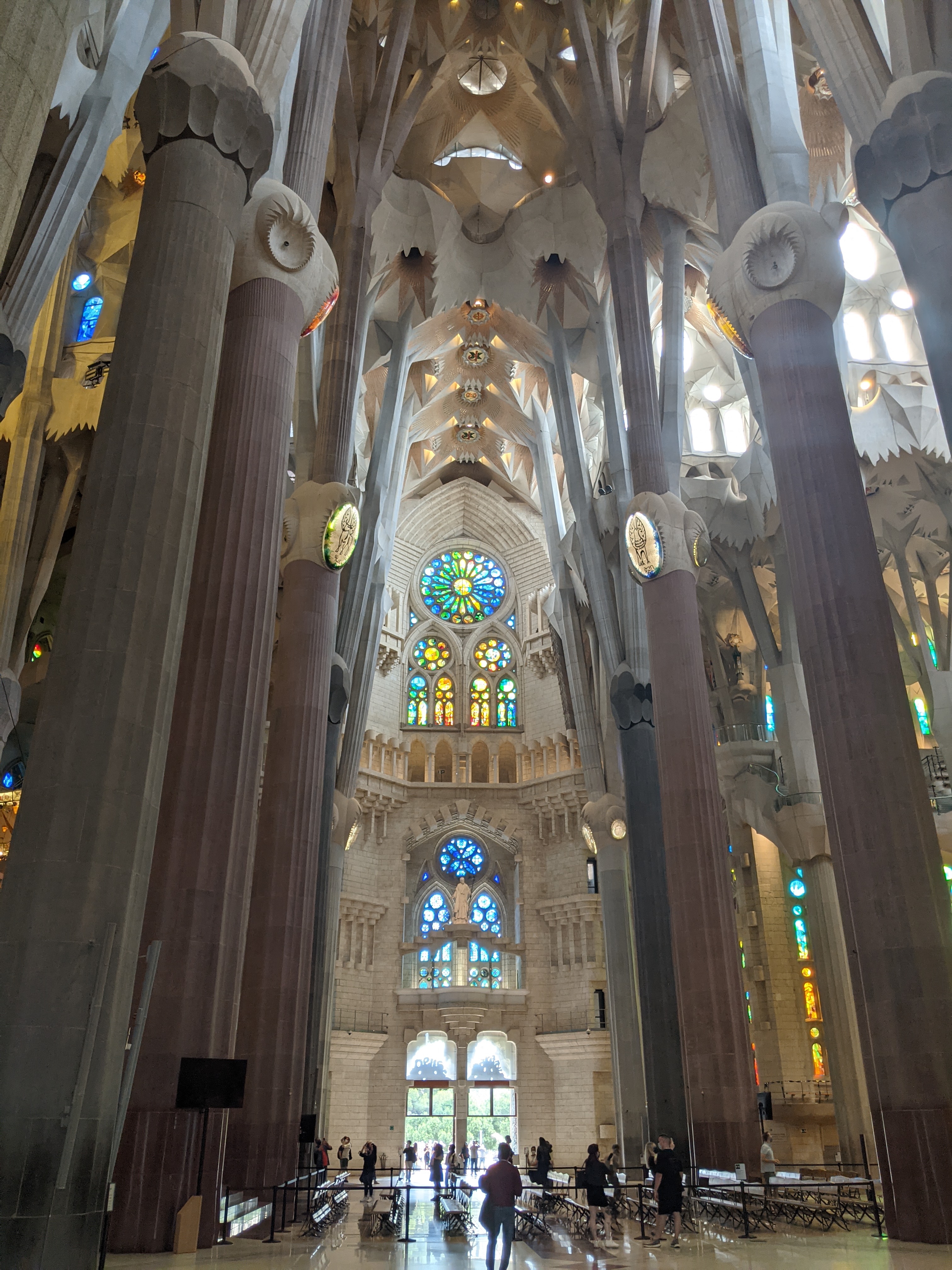
East transept
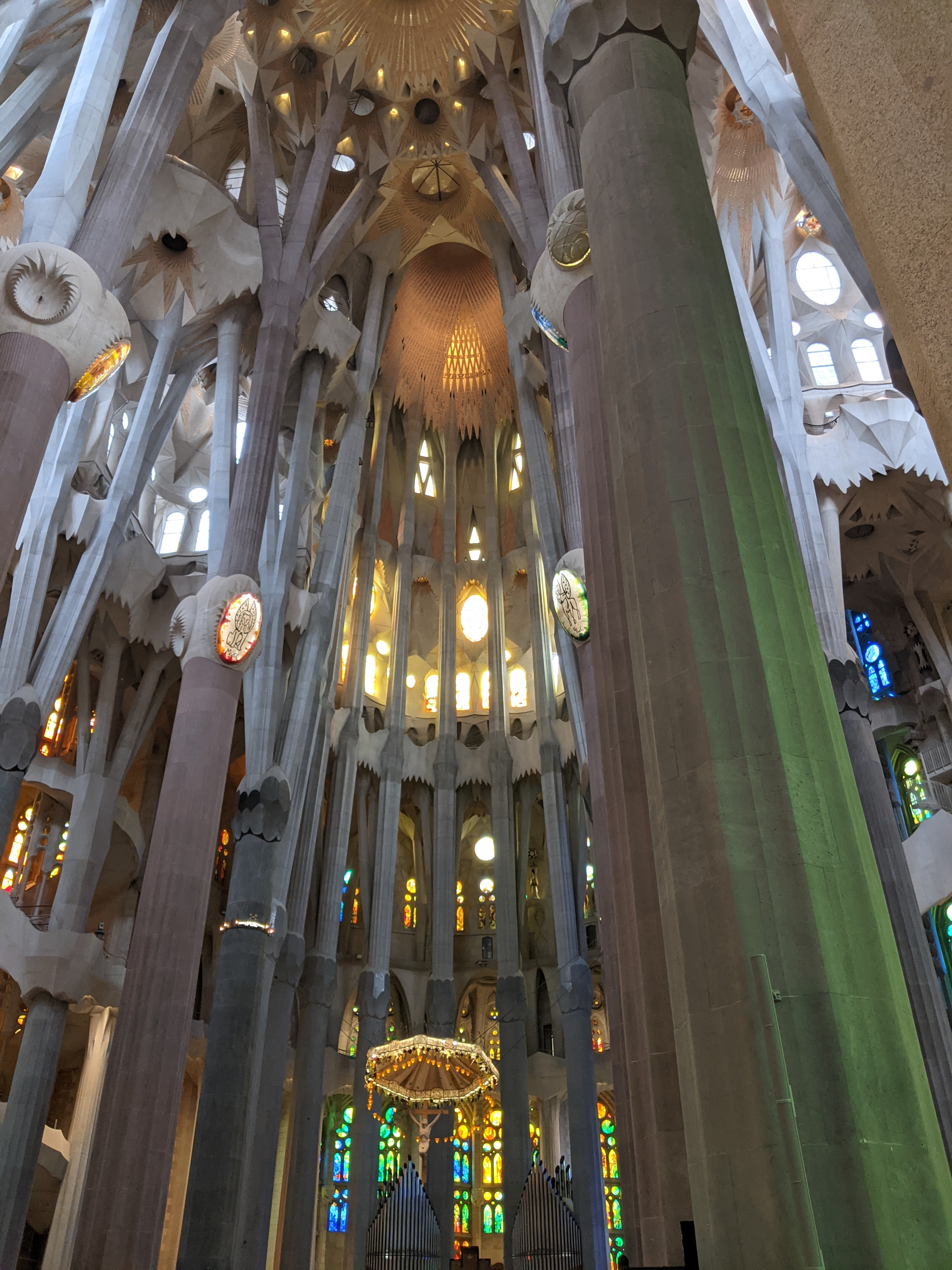
Looking toward the Apse or top of the cross shape of the cathedral. Ceilings are as tall as 45 meters.
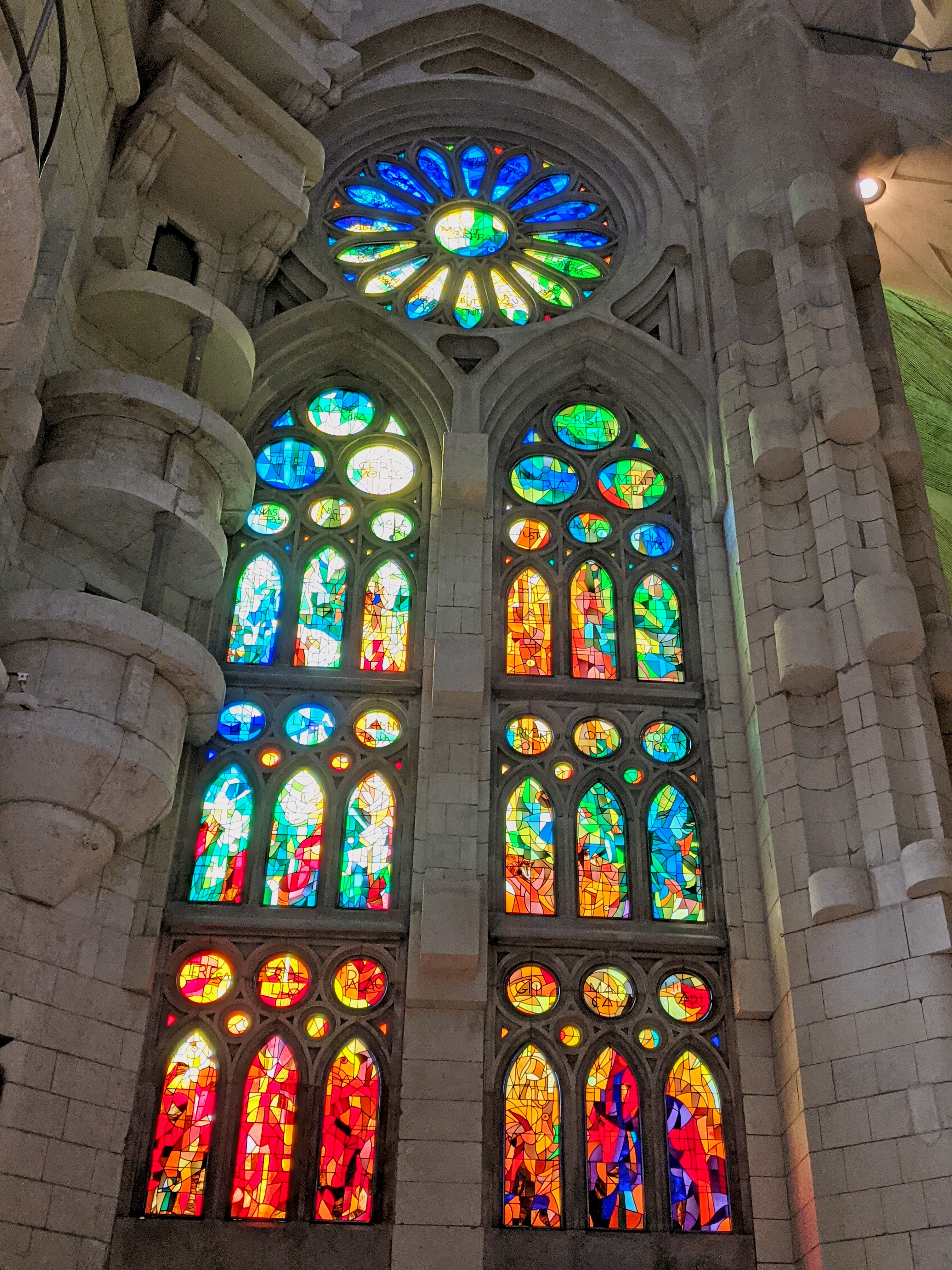
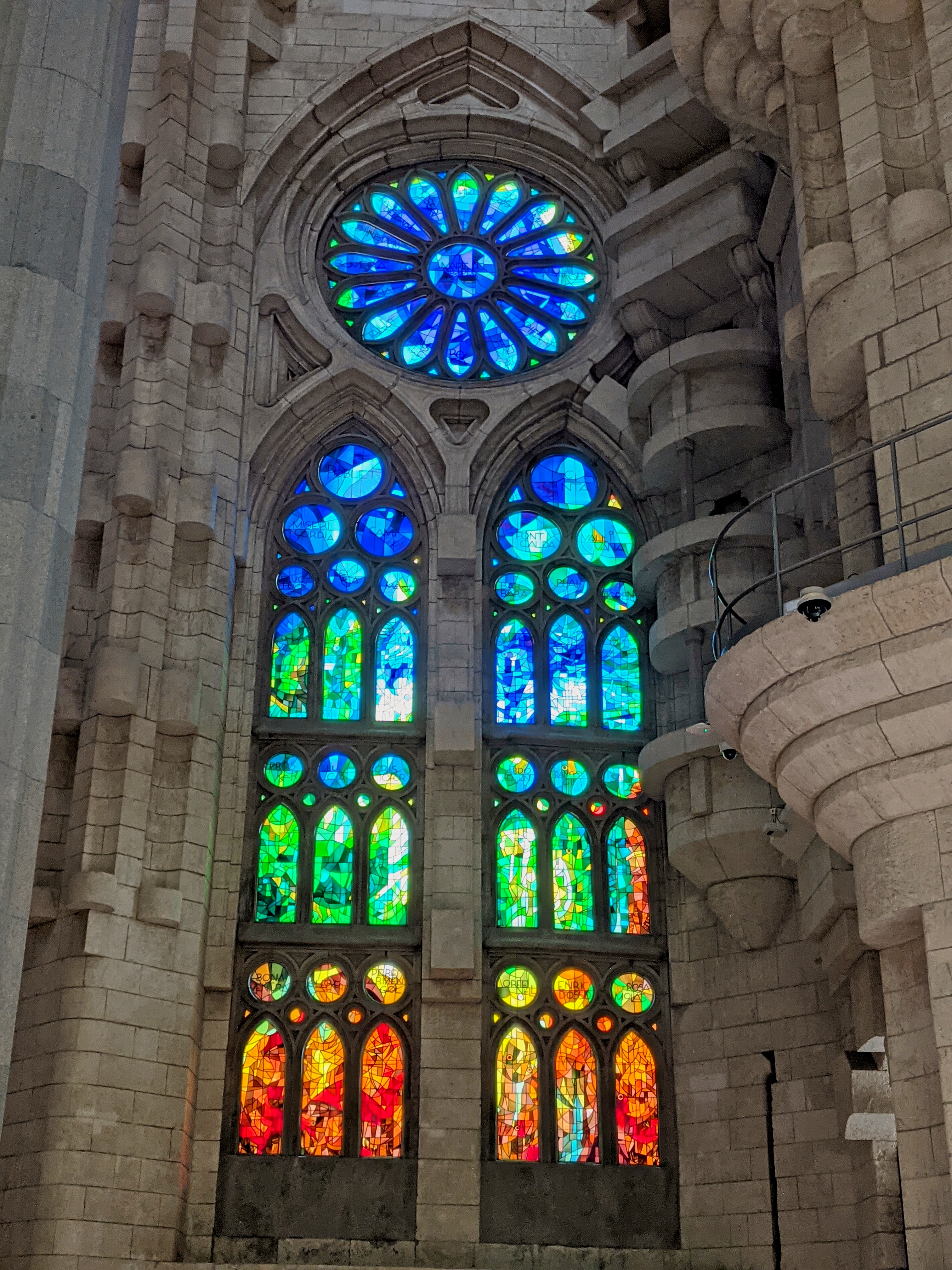
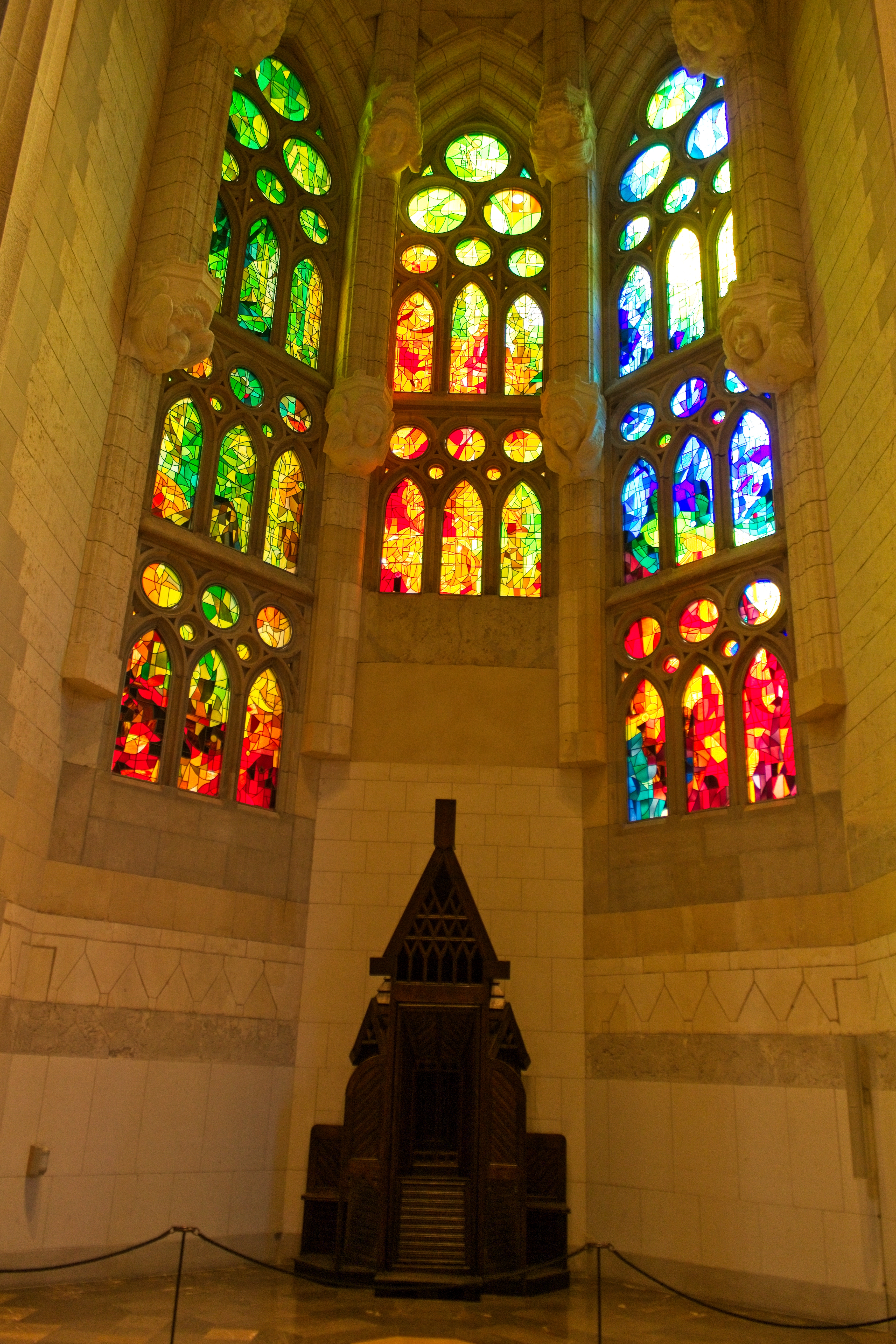
Amazing stained glass works
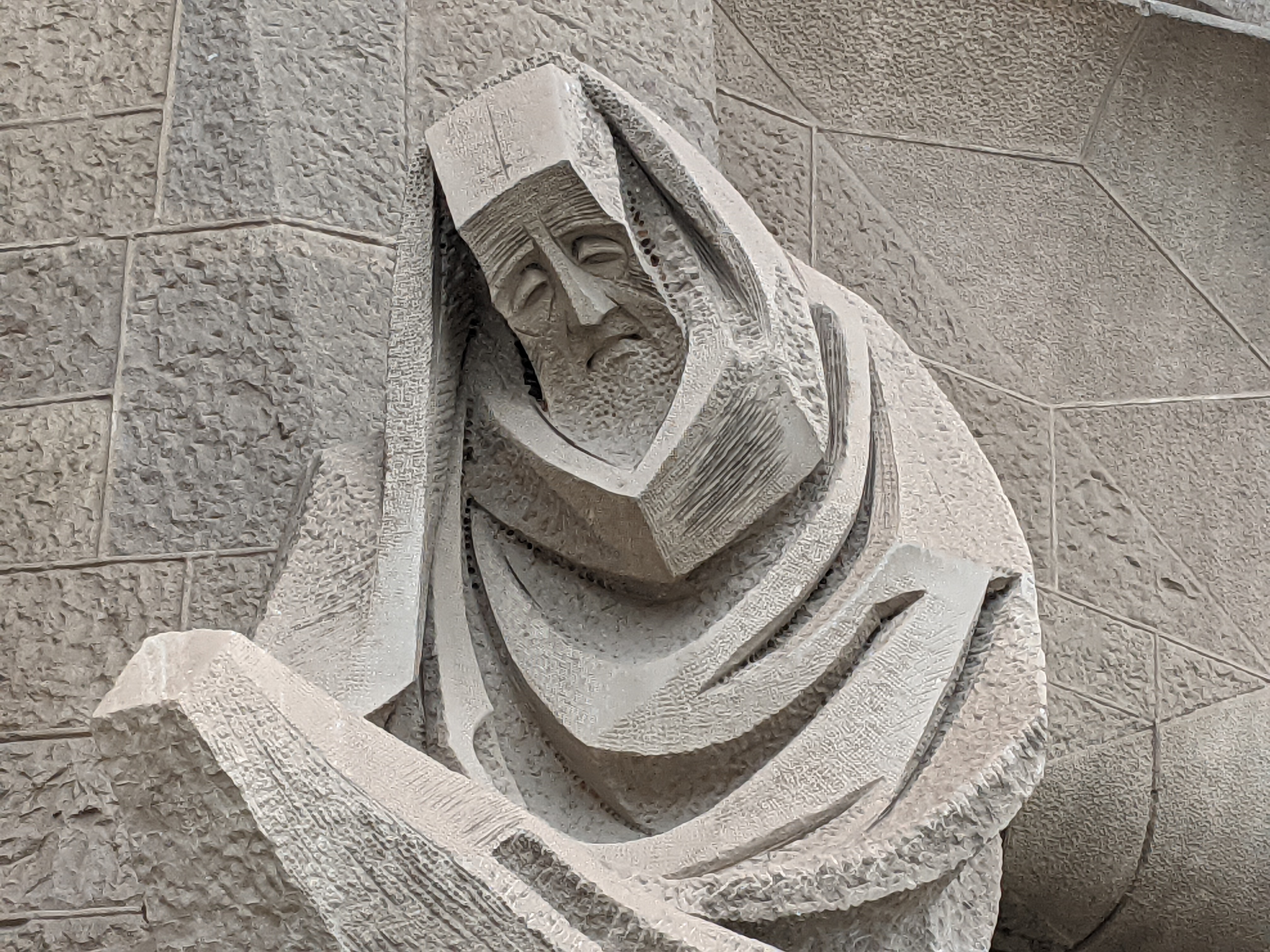
One exits at the Passion facade (which will ultimately be the main entrance to the church), which depicts the crucifixion. Here’s St. Peter being sad. The figures were all carved in this style which is meant to strike fear into the viewer.
So anyway, that’s what we’ve gotten up to. We are incredibly glad to be able to begin exploring again. Can’t wait to get the second shot and get out and about some more.
-
Not Quite Stasis
It has been a while since our last update. There’s a reason for that; very little has been happening. We’re still here, still haven’t gotten the plague knocks forehead, still in Valencia.
Since Christmas things got very bad in Spain and the whole country has been all but locked down, including “perimetral lockdowns,” meaning the provinces’ borders are closed. What this means is we haven’t been doing much exploring. Valencia has done particularly well but now the UK variant is becoming dominant and the case numbers are starting to rise again. They’re trying to keep everything buttoned down beyond Easter (another big family event here) so we continue with a 6 PM curfew for bars & restaurants and 10 PM curfew for everything else.
Interestingly, the Spanish government has begun allowing German and UK tourists into the country even though the lockdowns are still in force, to the chagrin of the provincial governments. This is because the provinces are in control of their own Covid protocols but EU tourism is managed by the central government and dictated by agreements in place with the EU itself. See? Screwed up government isn’t unique to the States. The French are required to provide proof of a negative PCR test before they can drive across the frontier too.
On top of that, we’ve been having fun navigating the bureaucracy to get and renew our residency cards, which fun has been compounded by Covid and Brexit. Covid means the necessary government bureaus aren’t at full strength and Brexit means there’s a bunch of British expats who suddenly have needed to get their papers sorted at the same time as us. It’s an ongoing slog of fighting to get appointments and visiting government buildings all over the city. In one case we paid a bunch of cash to a lawyer who then found a way (*ahem*) to get us a critically needed appointment.
On top of THAT, I’ve been working on acquiring a Spanish driver’s license. This is not a straight one-for-one exchange for your US license, oh no. I had to take the written test (twice) and have had handful of lessons to work toward my actual driving test, which is scheduled for early April, next week as I write this. This process has been slowed by our difficulties getting our residency cards, because I couldn’t schedule myself to take the written test without card in hand.
On top of THOSE, we just moved to a new apartment. We took the keys at the beginning of March and moved our stuff a duffel bag load at a time from the old flat which is a ten minute walk away. While the new flat is furnished, I spent several days on hands and knees putting together IKEA furniture for dressers, desks etc. That’ll make ya feel old, let me tell you. We have three bedrooms, one of which I’ve turned into an office / practice room, one of which has a double bed waiting for guests to arrive.
The new place is next to the Central Market, containing over 8000 sq. m of fresh and prepared food, wine, crafts and goodies. It’s an amazing place that will take us a long time to fully explore. It’s like Pike Place Market’s wildest dreams.
Behold the photos:
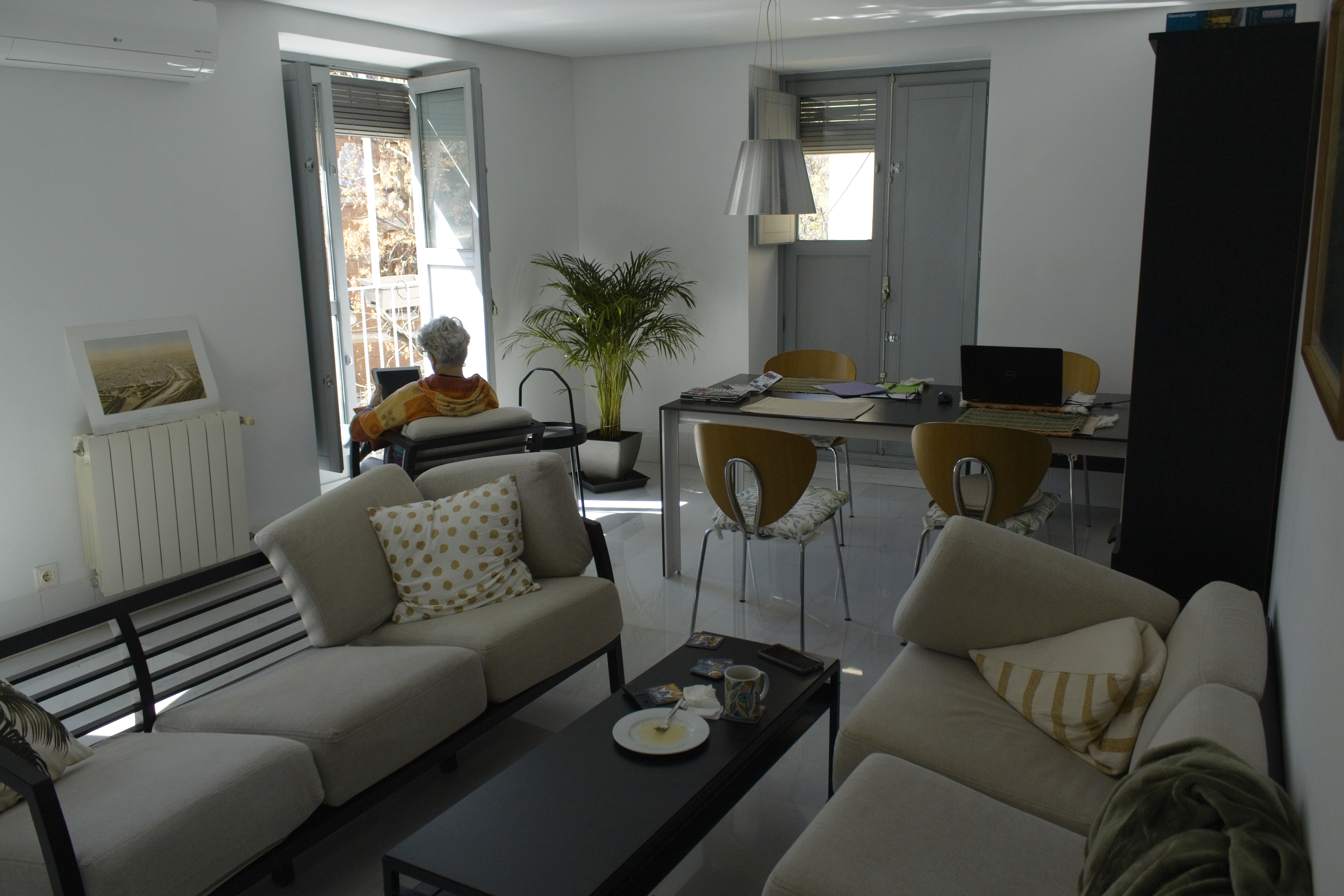
The living/dining room, and a hint of the french doors opening onto the plaza
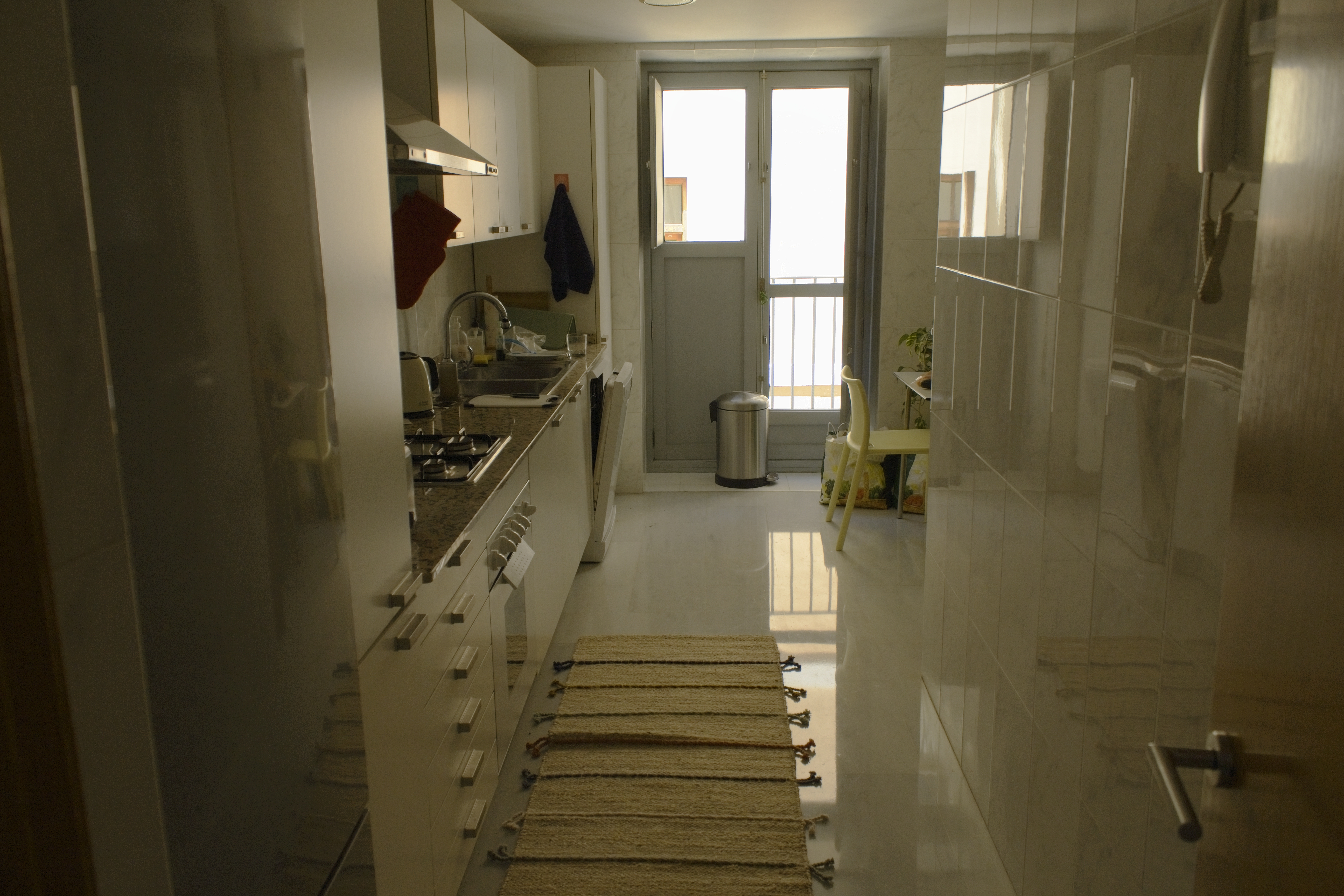
Galley kitchen. Next to the table in the distance is the washing machine
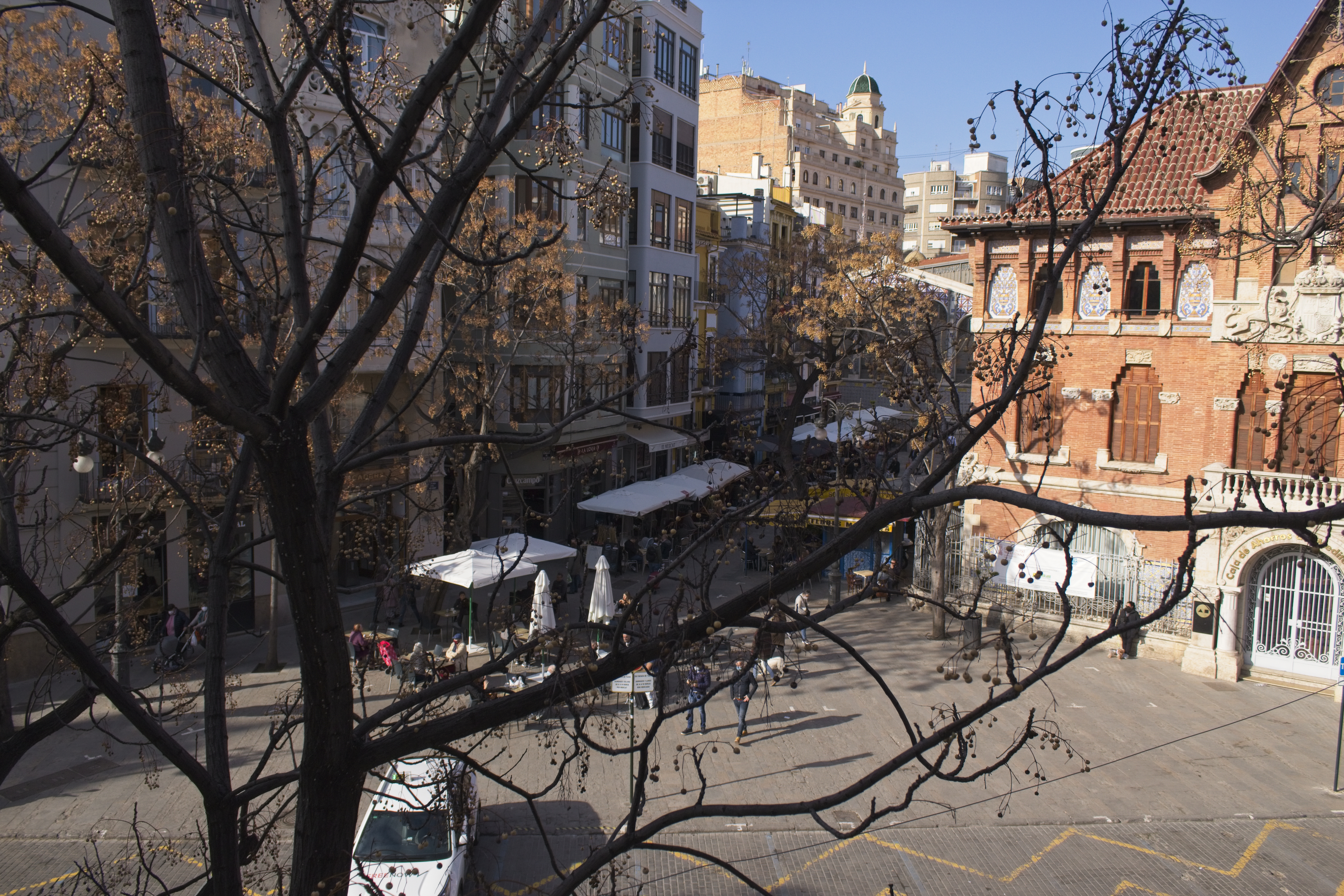
The plaza outside the windows. The pop-up tents for diners follow the plaza to the Central Market
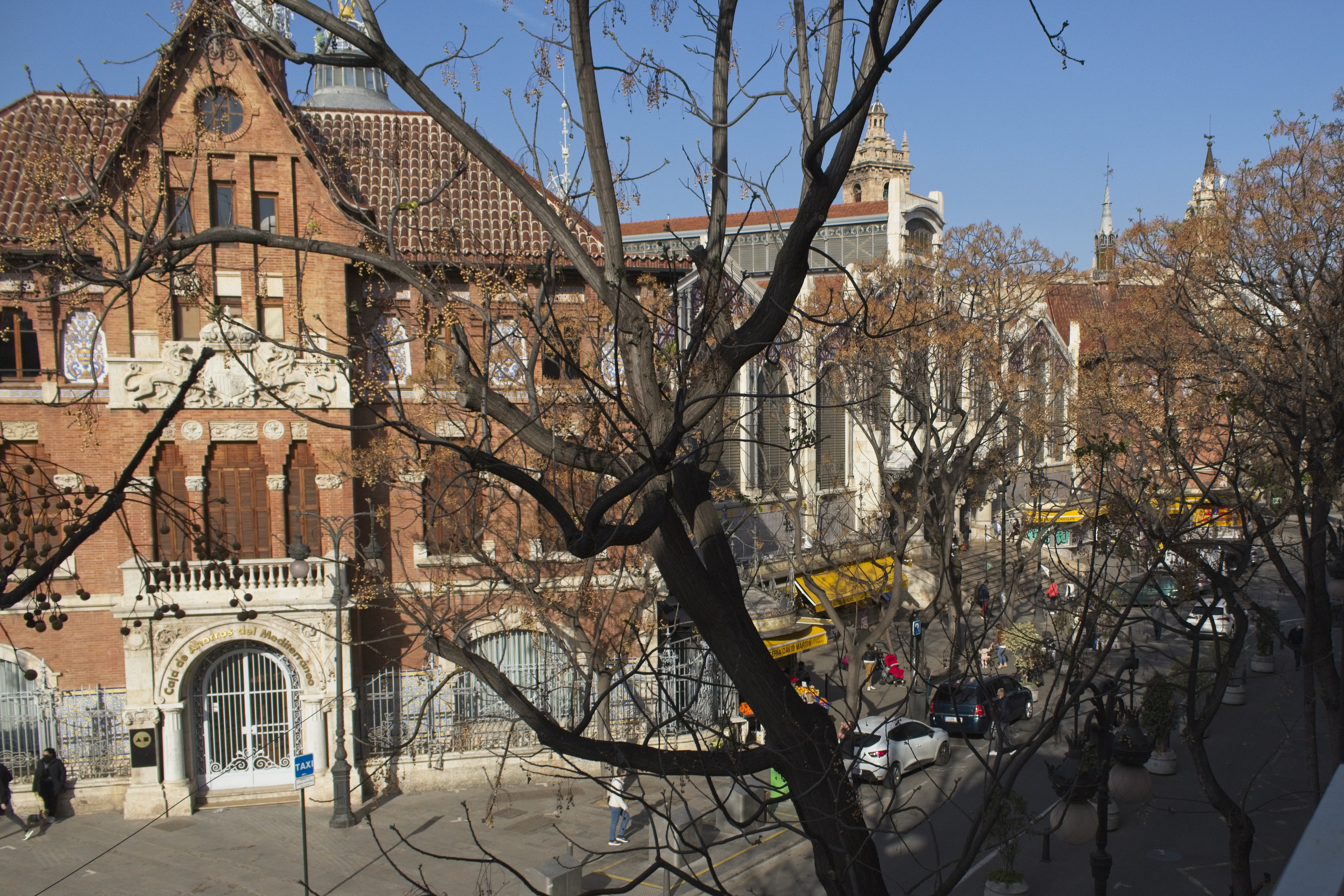
The rest of the front view. More of the market is in the giant gray building behind the brick one.
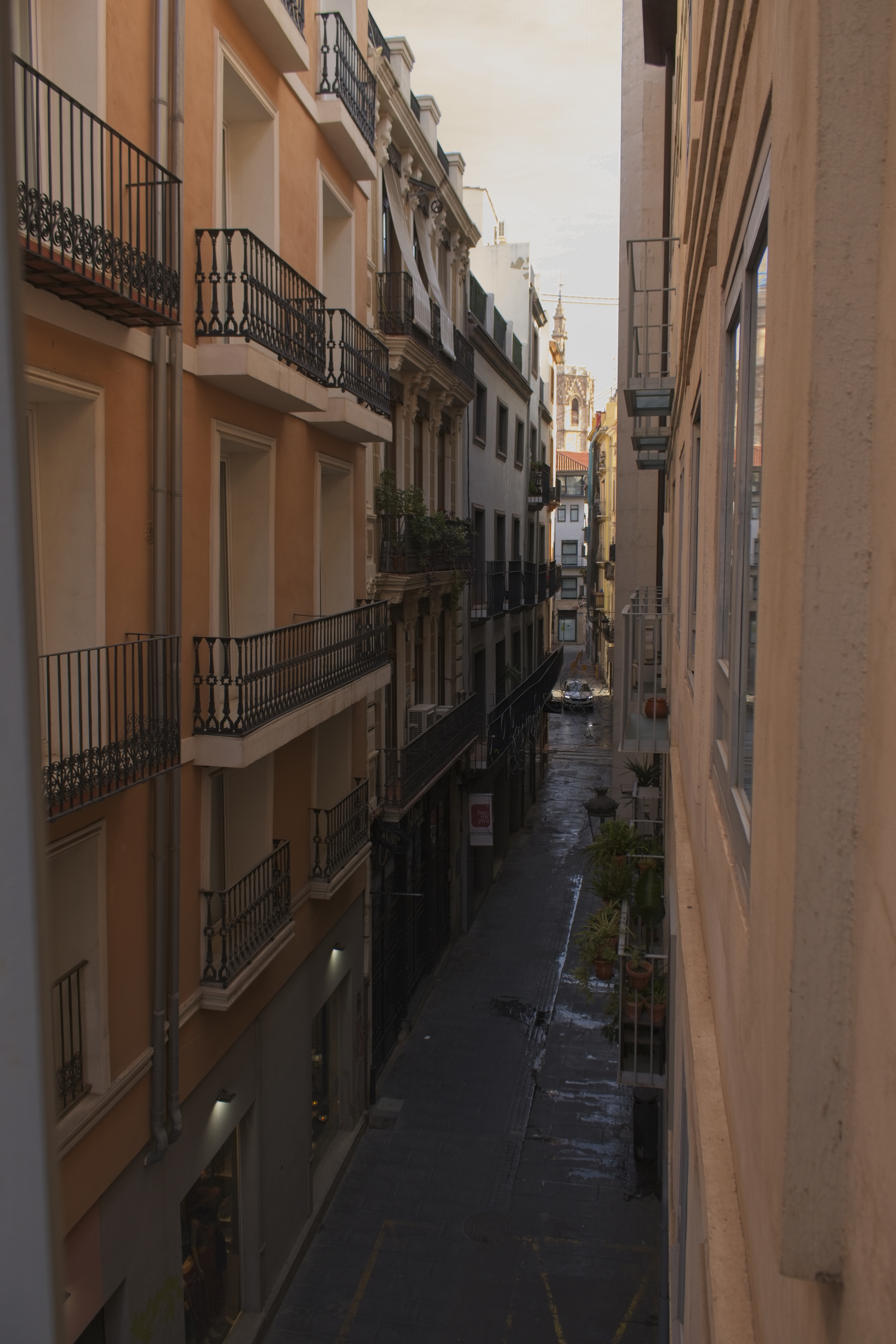
The other street on our corner spot. Looming in the distance is the Miguelete, which we could also see (and hear, as it chimed the hours) from our old flat
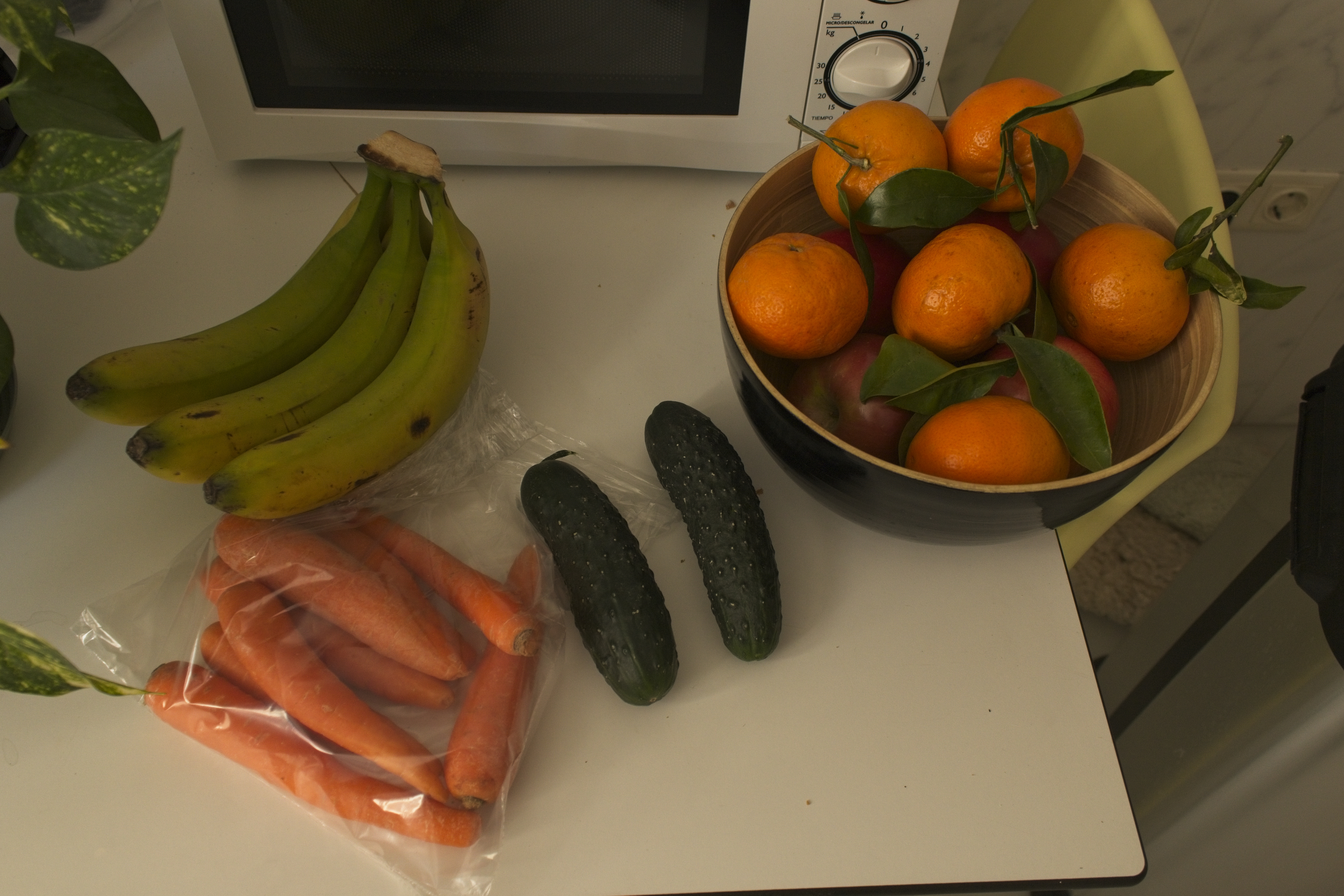
An example of the goodies that can be found at the market. So good and so fresh.
We bought bicycles! Our new apartment comes with garage space and while we aren’t especially eager to get a car yet it does give us a place to put bikes and we’re taking advantage of it. Cindy’s bike is a city cruiser; mine is a low-tech hybrid bike (seven speeds on the rear derailleur and a single sprocket up front) that I haven’t taken possession of yet. We’re looking forward to getting out to explore some of the wider spaces.
Looking at the vaccine situation here vs. in the US, we’re thinking we might fly home in May / June to get our jabs. We can’t even get an estimate of how long it’ll be for us here; they are distributing vaccines through the national health service and as expats with private insurance we figure we’re at the end of the priority list, meaning probably next fall. The provinces here are doing the best they can but they still haven’t vaccinated all of the over-80s and are limited mostly by the amount of vaccine they can get through the EU. It looks a lot more likely that we could get jabs in spring / summer back home. That plus the fact that we haven’t seen the kids in a year makes the pull home pretty strong.
Hints of spring are in the air:
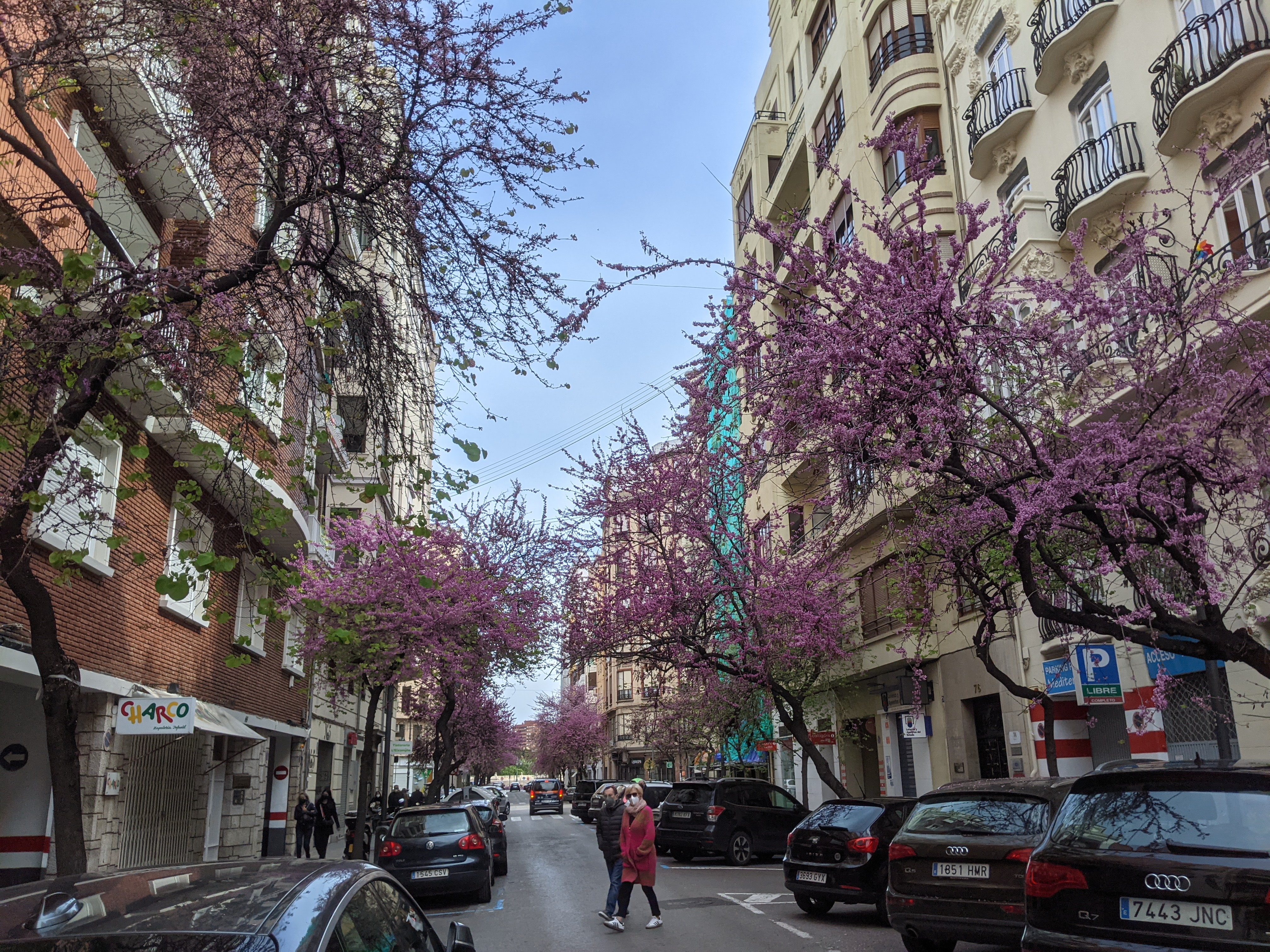
Hope you’re all staying strong and healthy and at least some of you are getting some vaccine in your arms.
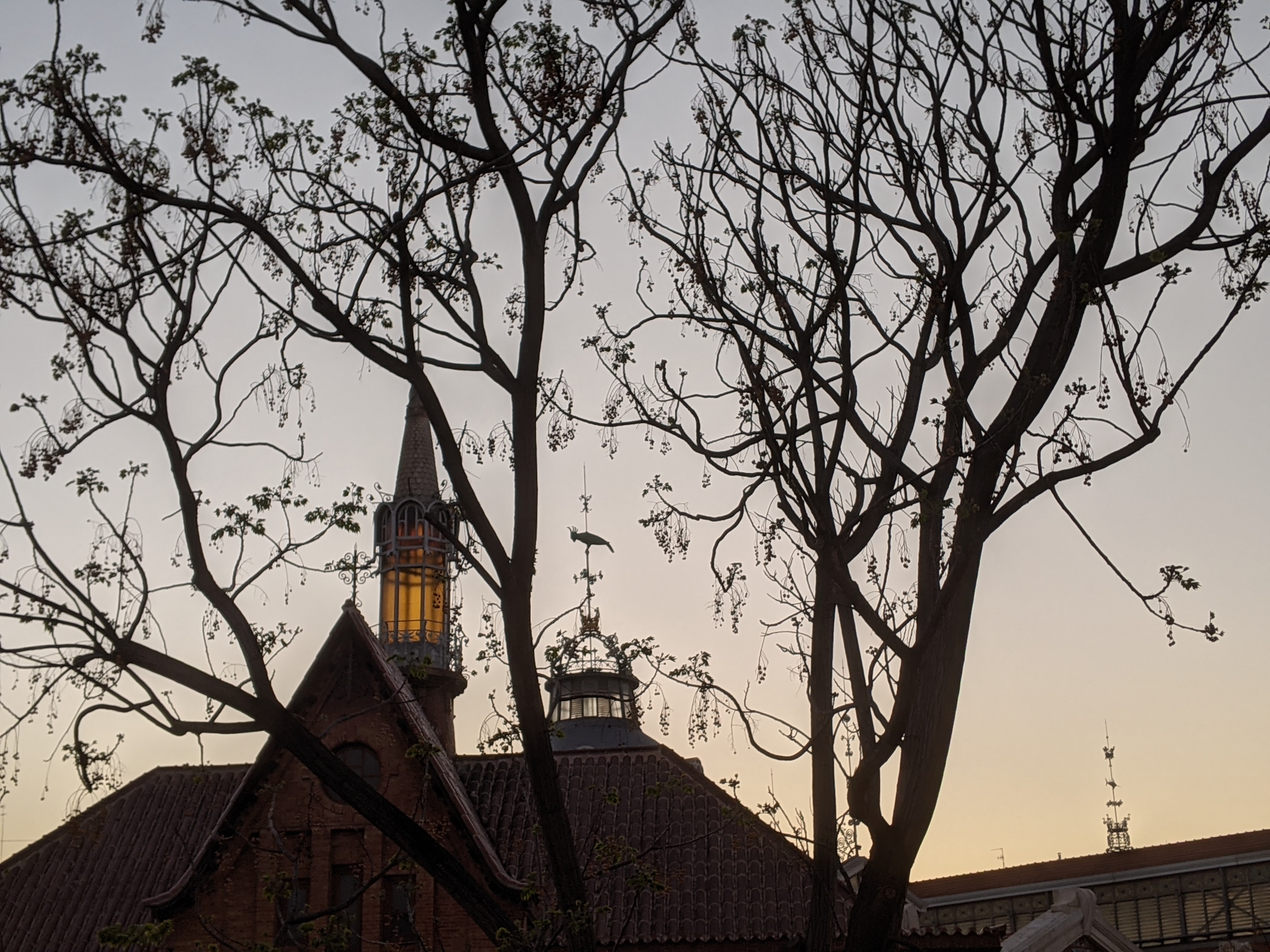
-
Intermission: Day Trips
“What happened to the rest of the August story?” you ask. Hey, it’s only December, don’t rush me. Meanwhile, September October and November saw us sticking closer to home and taking day trips around the region. It turns out Valencia has a very nice regional rail system and some pretty cool locations not too far away. The trains are clean and good enough if spartan for the local routes. None have been especially full and everyone’s masked up so we feel pretty comfortable.
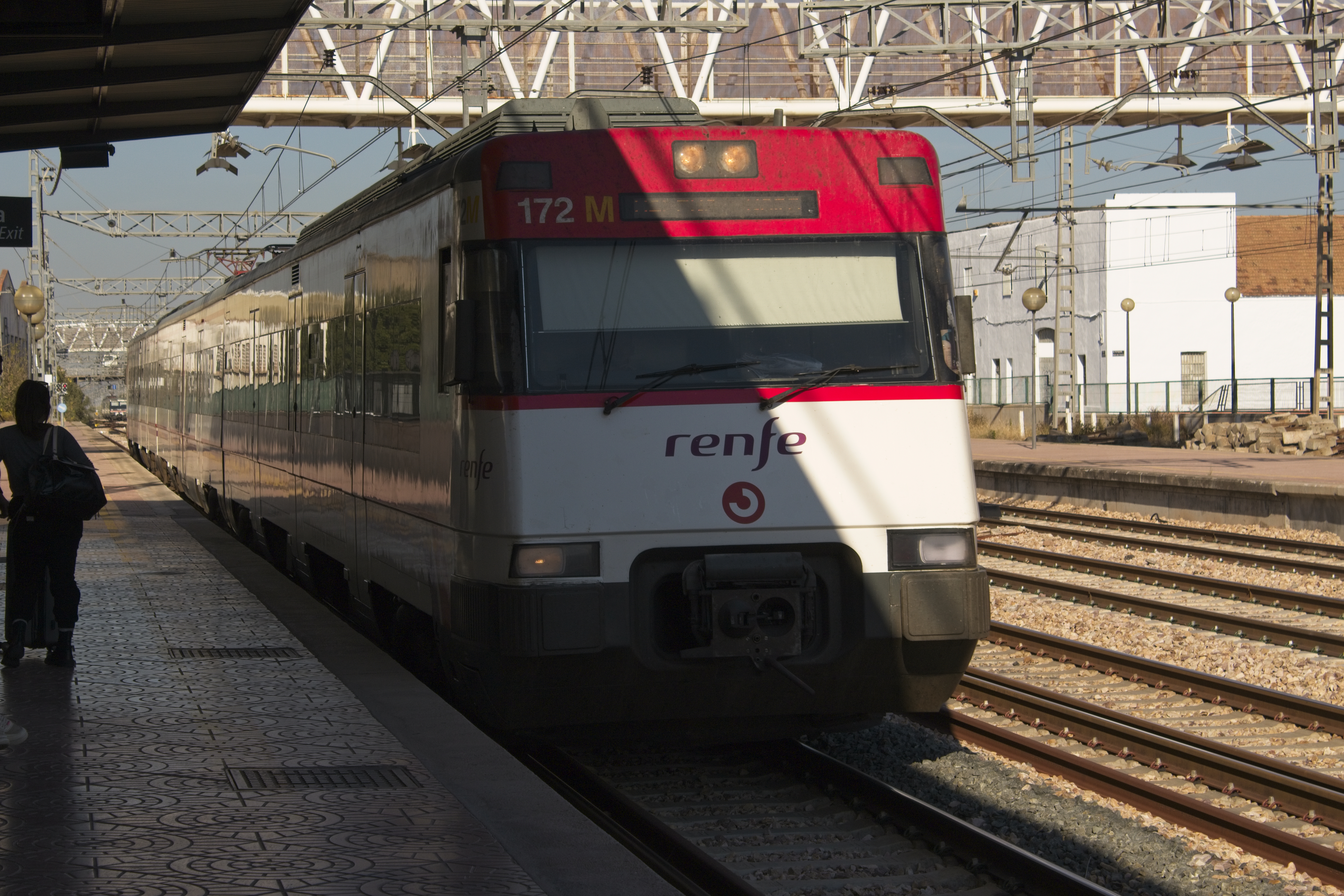
Our trusty steed
Xàtiva
Our first trip was to Xàtiva (SHA tee ba), about an hour south of Valencia. With its famous hilltop castle that dates back to Roman times, it’s also the birthplace of two Popes and the site of some royal brutality thanks to King James V. The town was also once a center of paper manufacture, imported by the Moors. The Castle occupies a strategically important hill that overlooks the Roman Via Augusta that ran from France down the Mediterranean coast to what is now Cadiz.
We picked the one rainy day in October to take this trip. We were lucky that the rain held off until the very end of our trip so while we don’t have the usual bluebird skies and Mediterranean light, we were able to enjoy the whole trip.
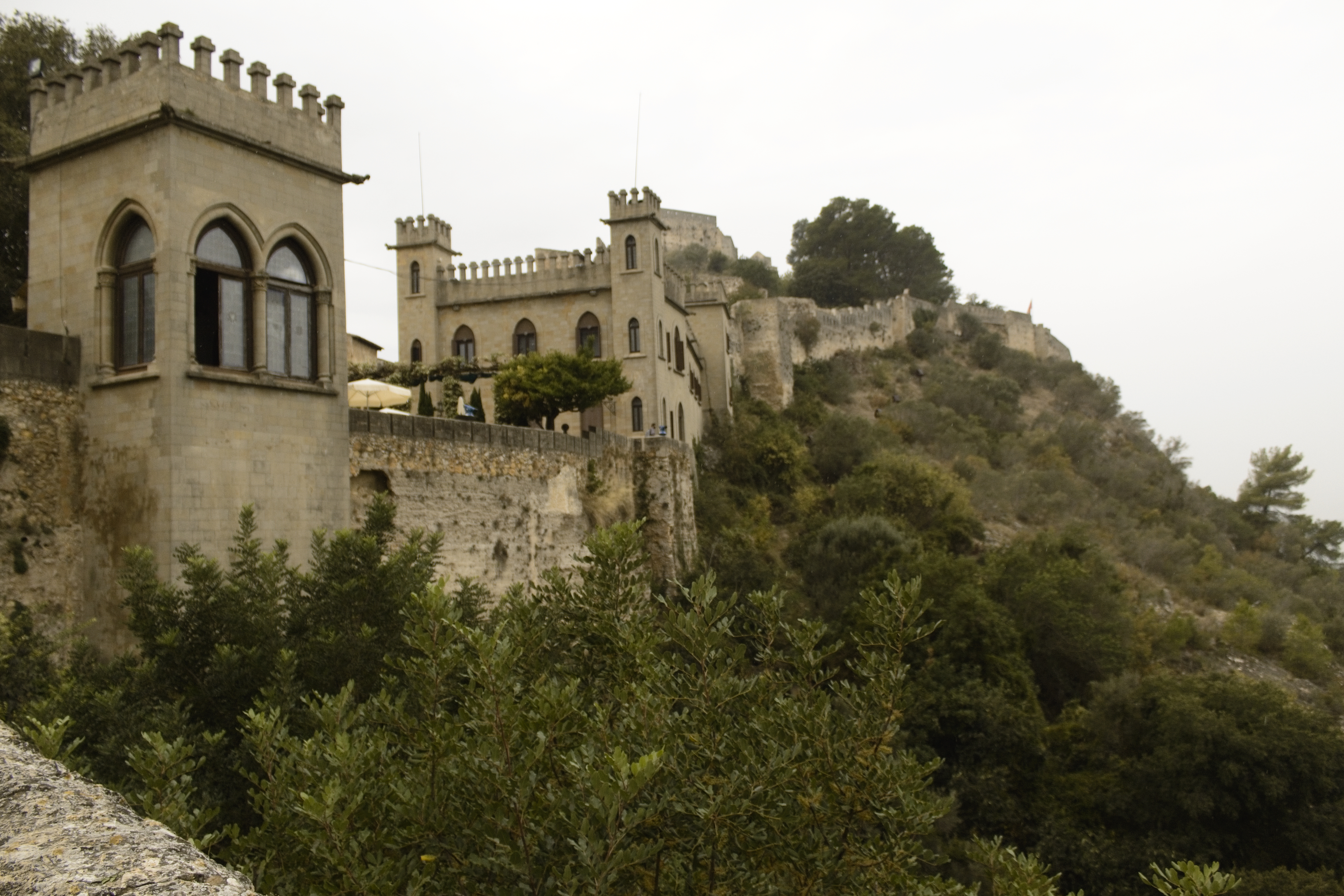
The view from the entrance.
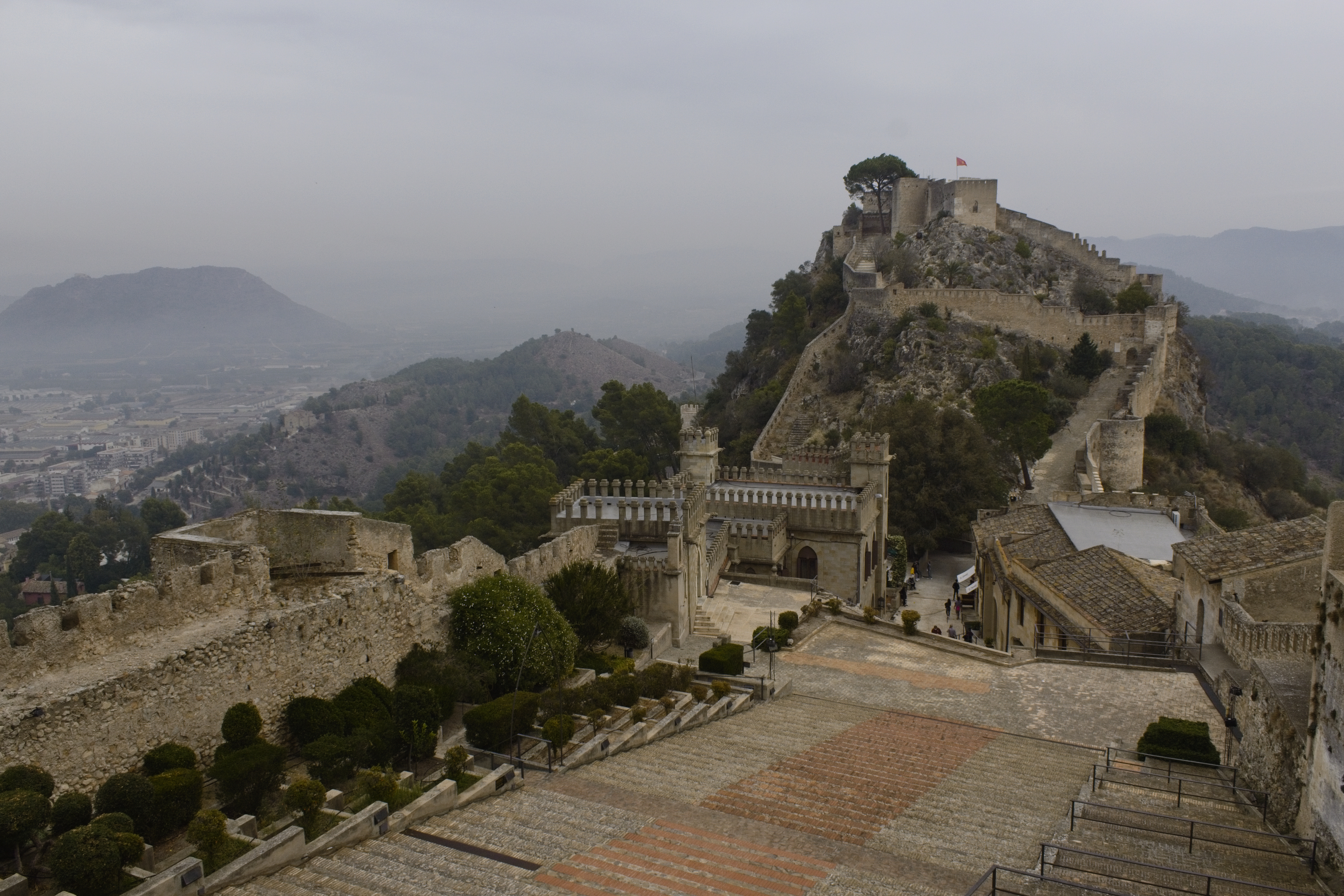
Looking south toward one of the two prominences on which the castle grounds are built. Love the crenelations. The valley was full of smoke from farmers burning…something. Many burn piles in the valley to the right.
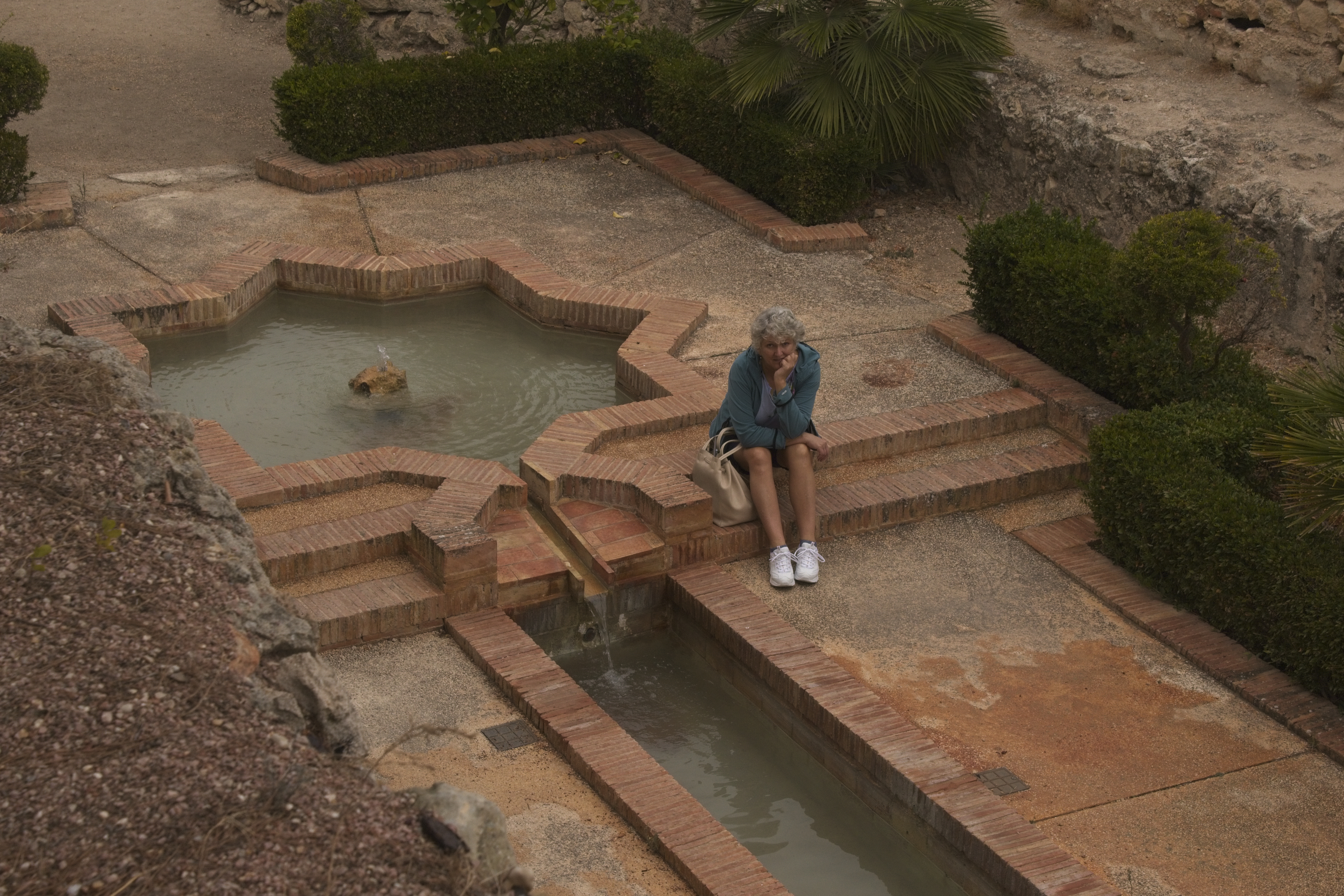
The Princess contemplates life at the fountain
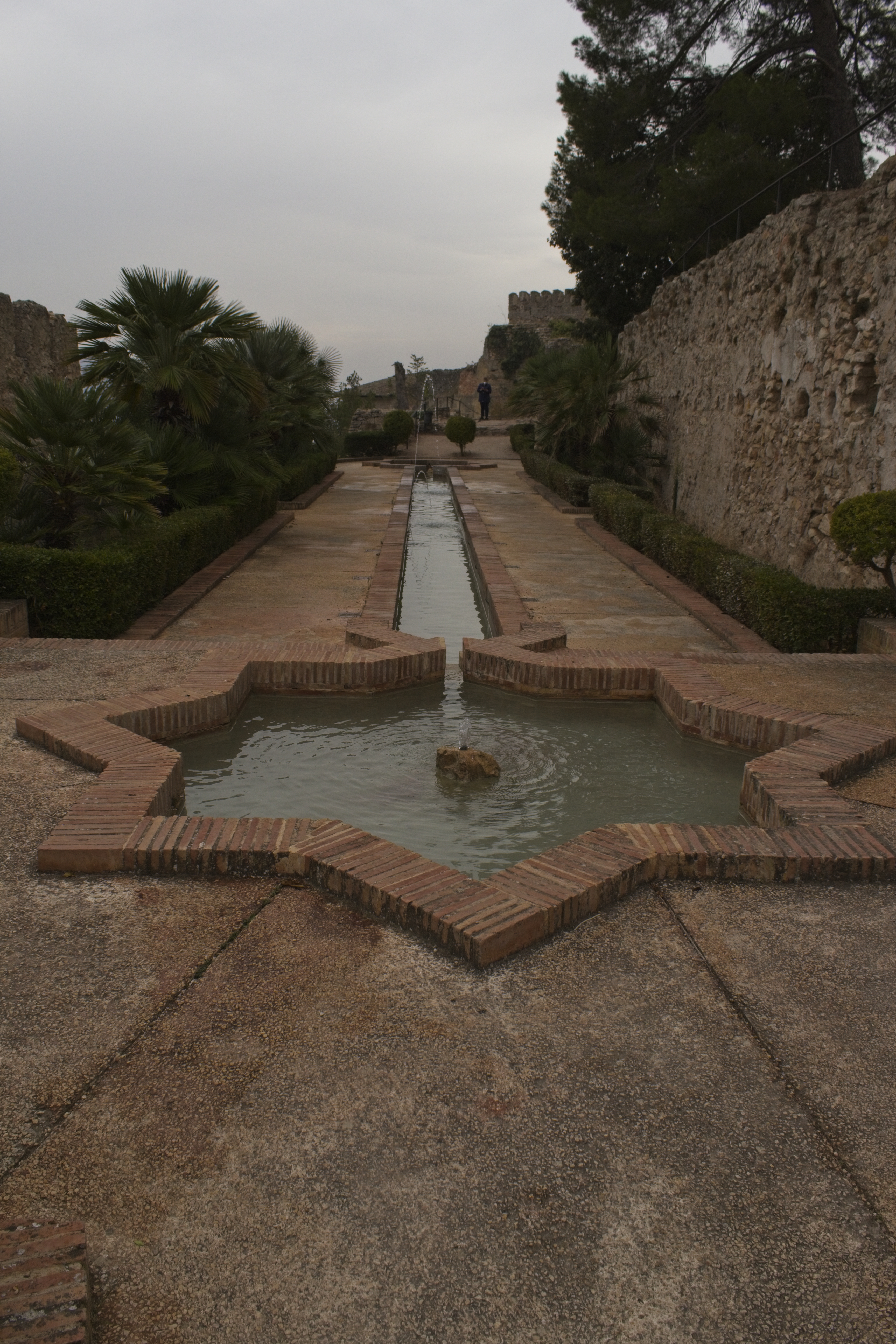
I absolutely love Moorish water features, which I assume this is. The square-in-square pattern is very common in Valencian art and architecture.
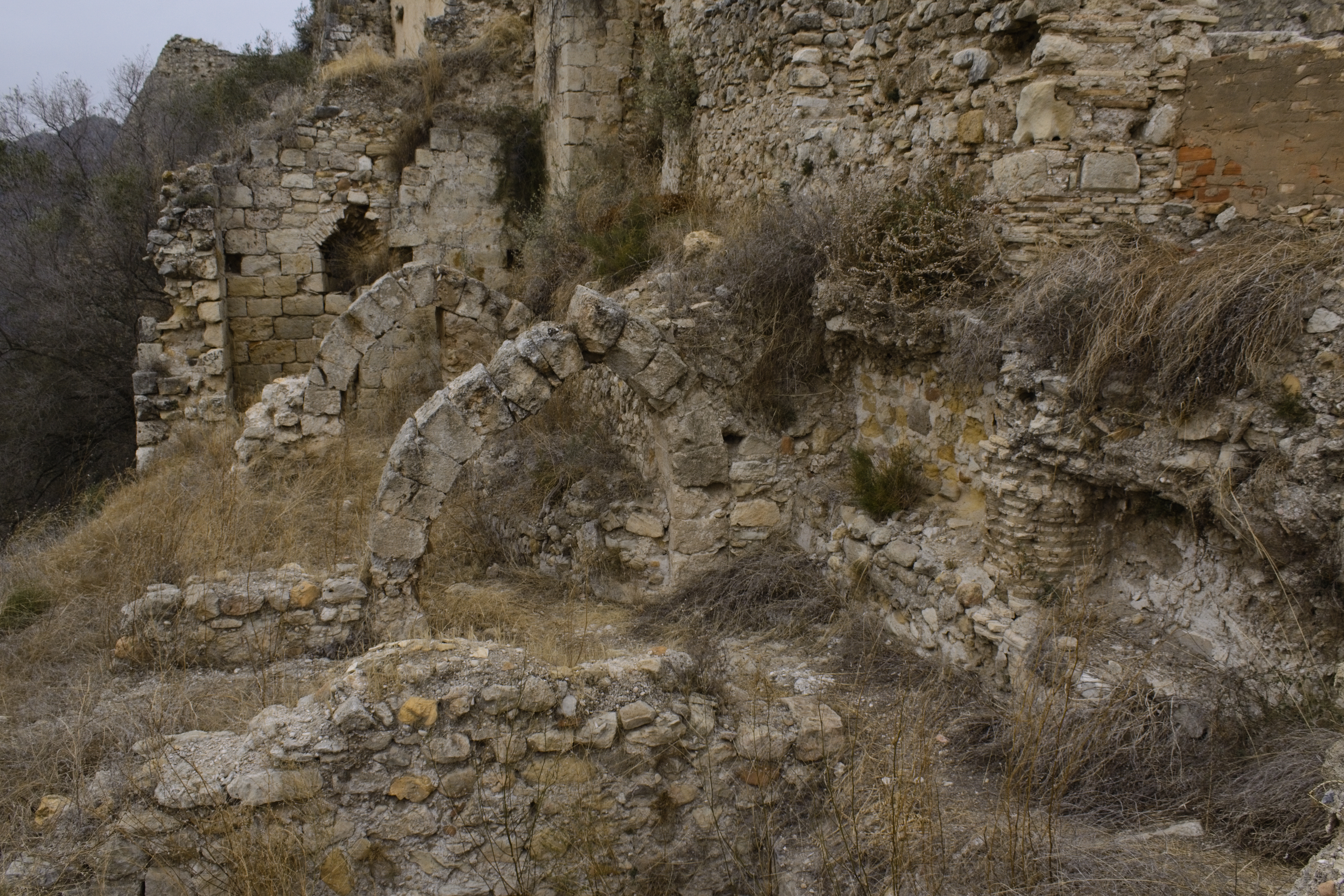
The remains of…something, don’t remember what now. Fascinating that all that really remains is the arches.
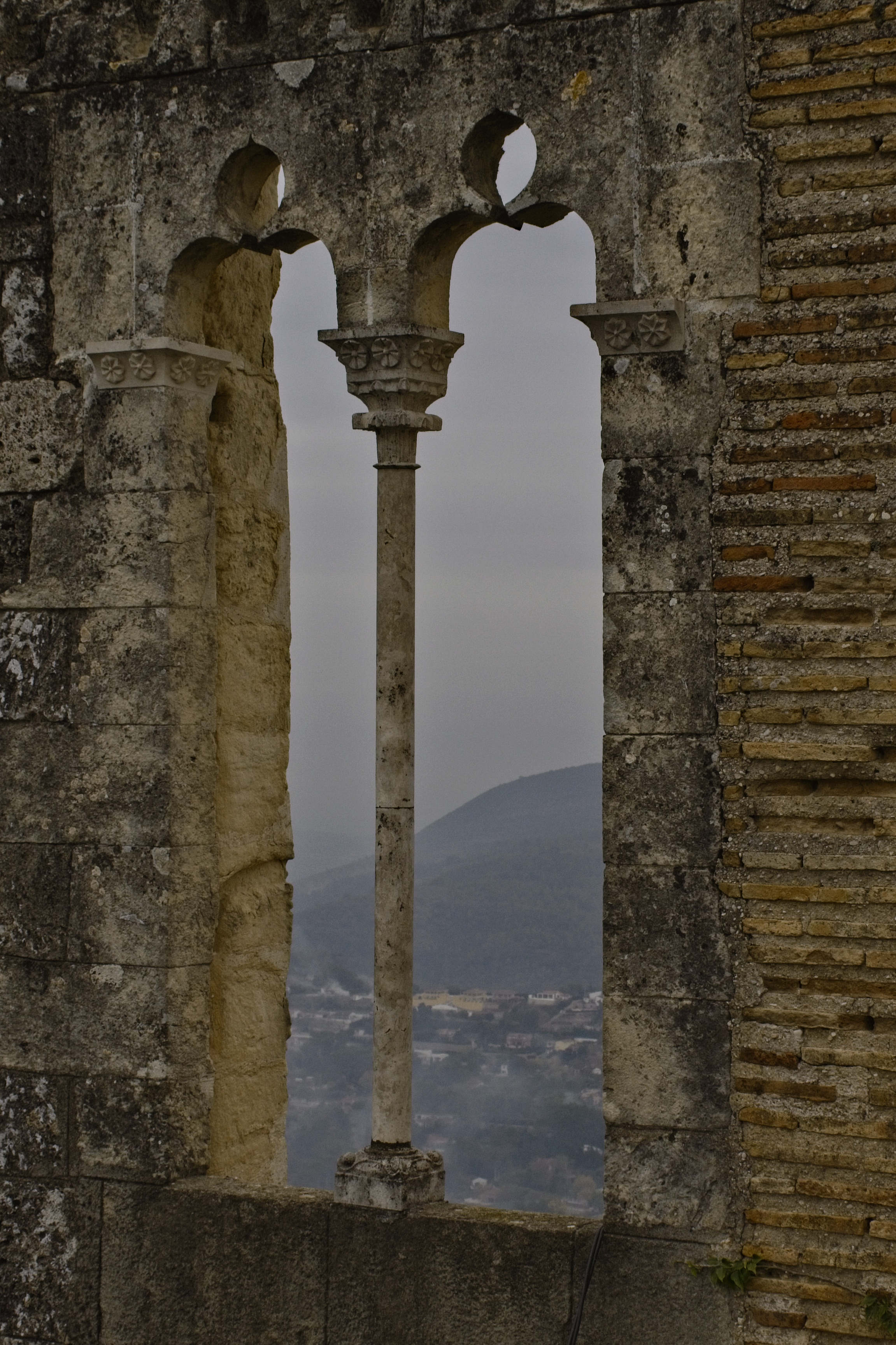
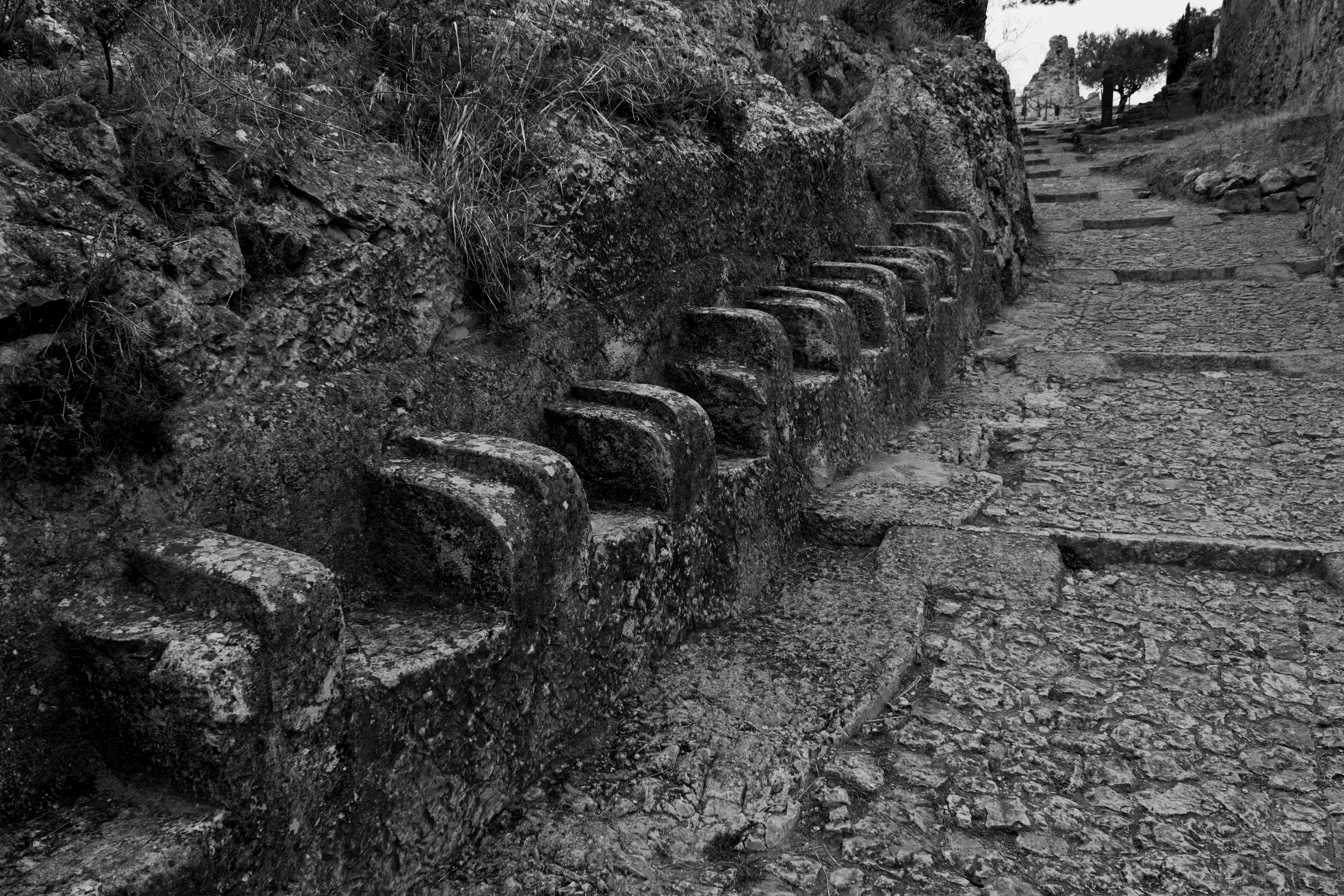
These seats, carved into the live rock, provided a nice view over the valley.
Sagunt
Our next trip was to the castle at Sagunto, about an hour north of Valencia. We were lucky with the weather, choosing one of the last sunny, over-70° days of the fall. The castle’s history goes back over two thousand years and covers Iberian, Roman, Moorish and Spanish history. Hannibal sacked the site in the second century BC and kicked off the Second Punic War. The Romans then took over shortly after, the Moors came along in the 9th Century, El Cid occupied the place in the 11th C, Christians by the 13th C. Of course, they then fought among themselves for hundreds of years, with the last major battle over the site taking place during the Napoleonic Peninsular War. There’s a lot of history there, is what I’m saying.
By the 14th Century, there was quite a substantial Jewish population in Sagunt, who built their cemetery into the rock under the walls of the castle. These were of course later raided and sacked because greed. The tombs were used by the population of Sagunt during the Spanish Civil War (1936-39) as air raid shelters, as Valencia was one of the last hold-outs against Franco’s Fascists (excuse me, “Catholic Nationalists”) and was heavily bombed by elements from the NAZI German air forces seconded to the rebels.
At any rate, it’s a big site, covering 800 meters on its long axis. We spent the day wandering about and enjoying a picnic lunch on the walls. ‘Twas a lovely day.
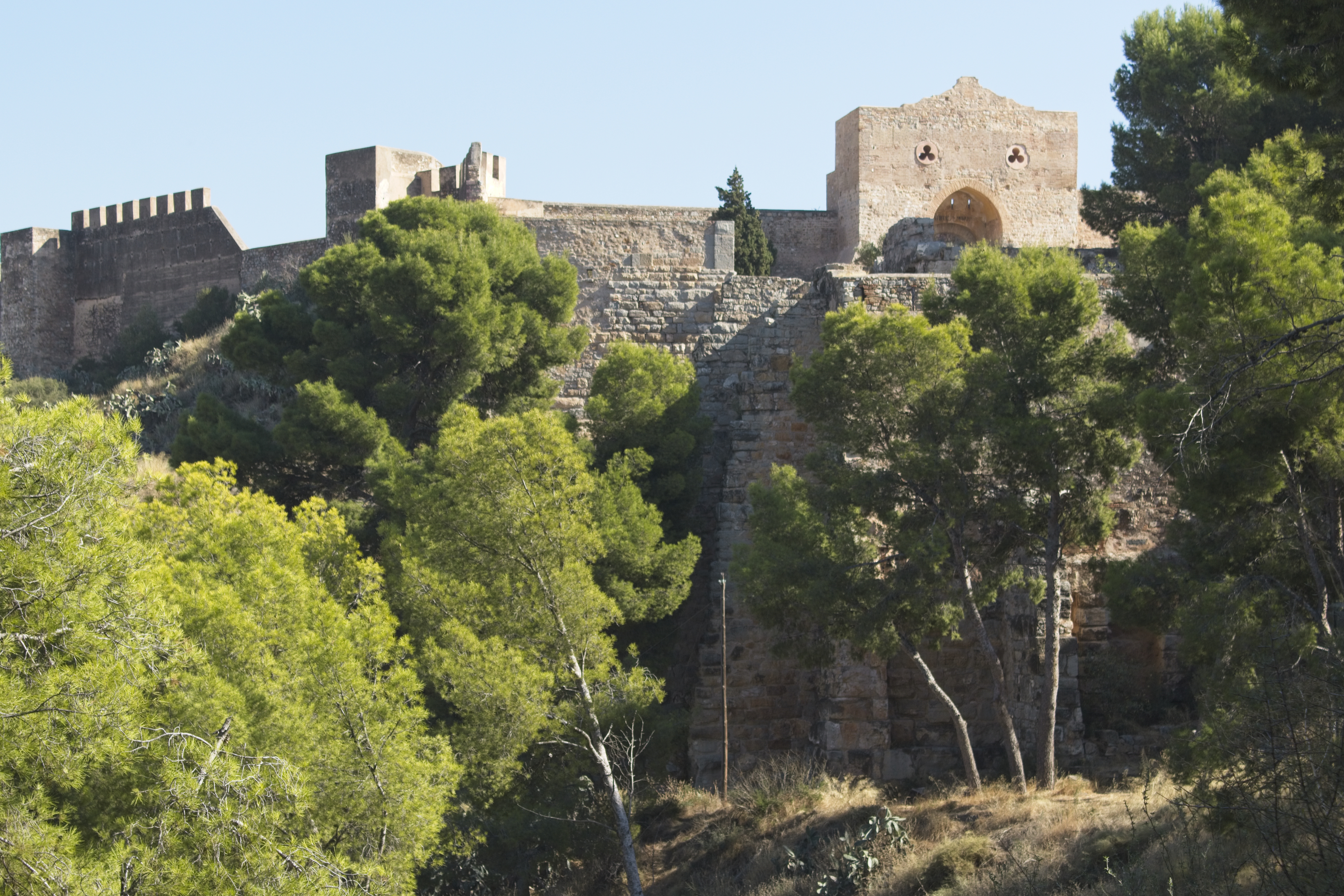
The view of the castle from the entrance
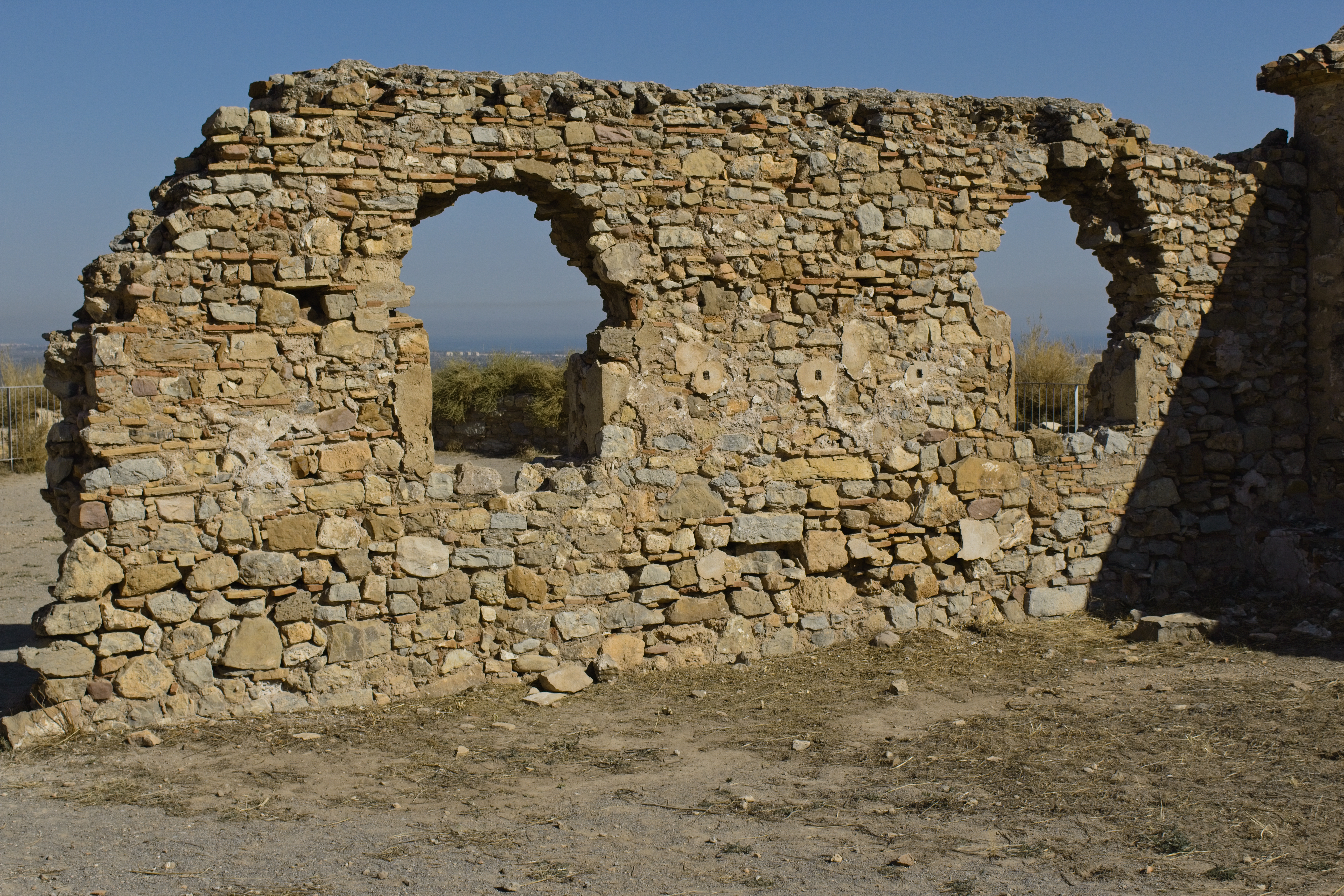
Walls. And former windows.
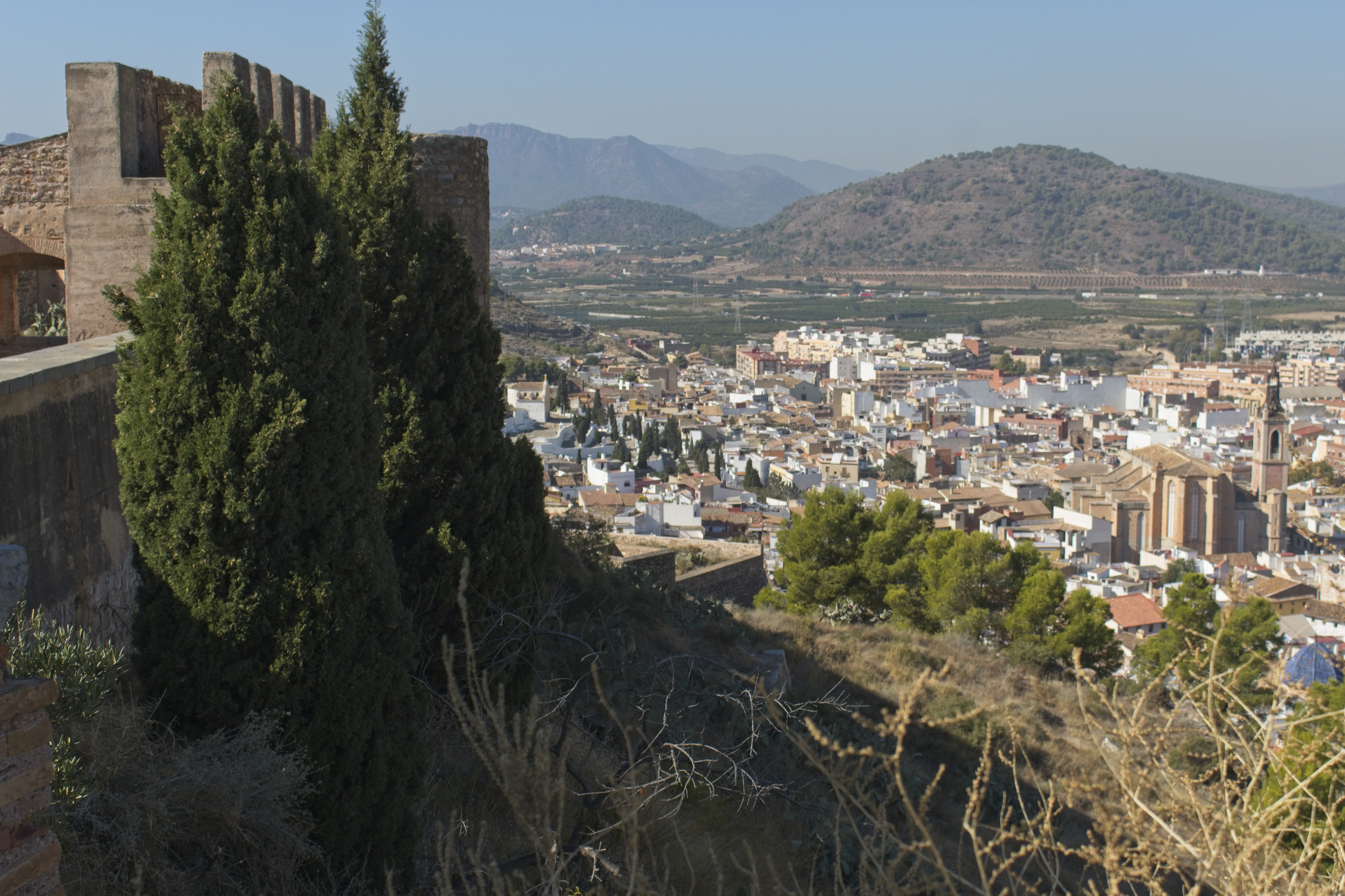
Overlooking the valley
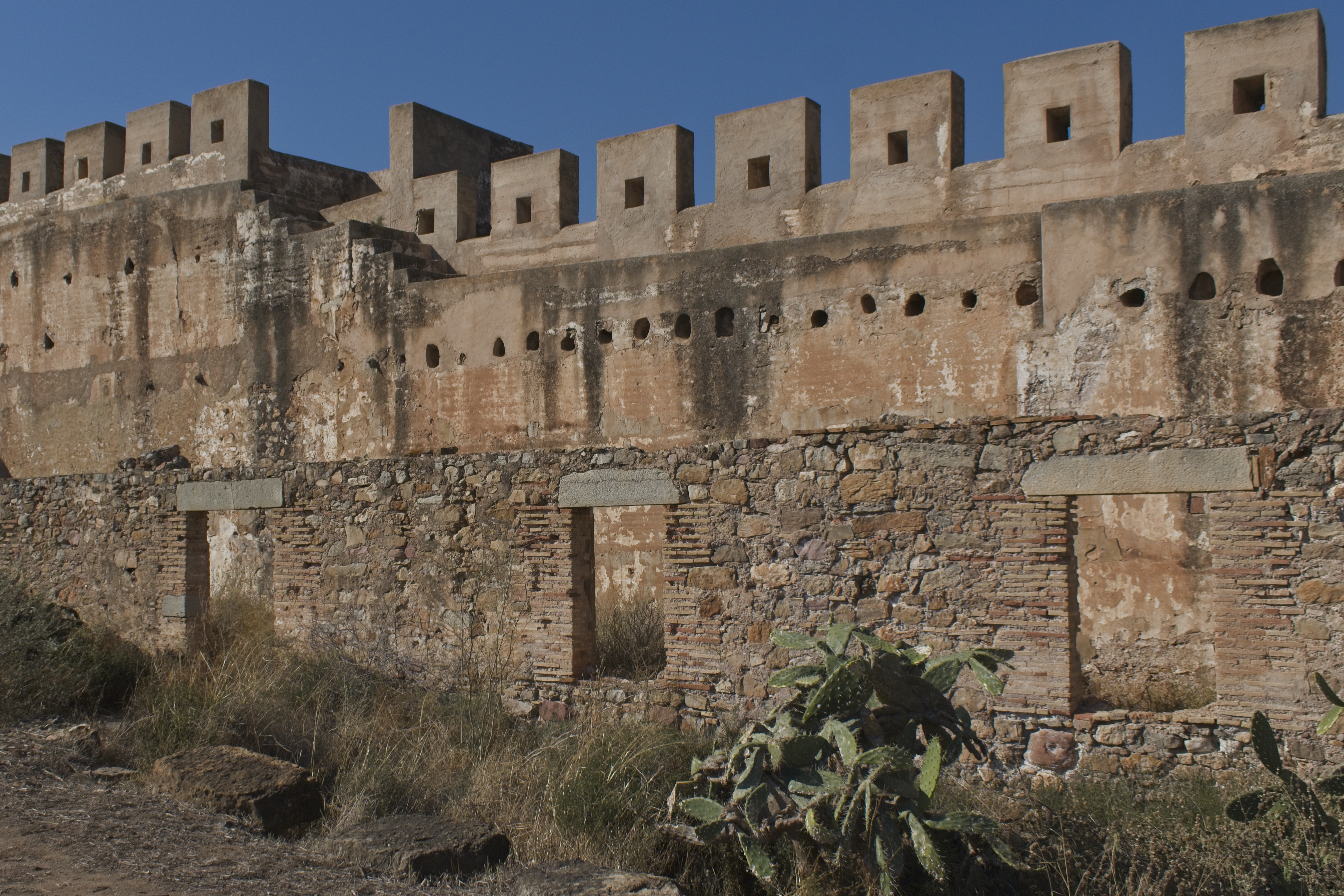
The remains of a building that was probably 50 meters long. You can see where the rafters ran from the exterior wall to the near wall. This was one of several such buildings and would have held a lot of…whatever they put there.
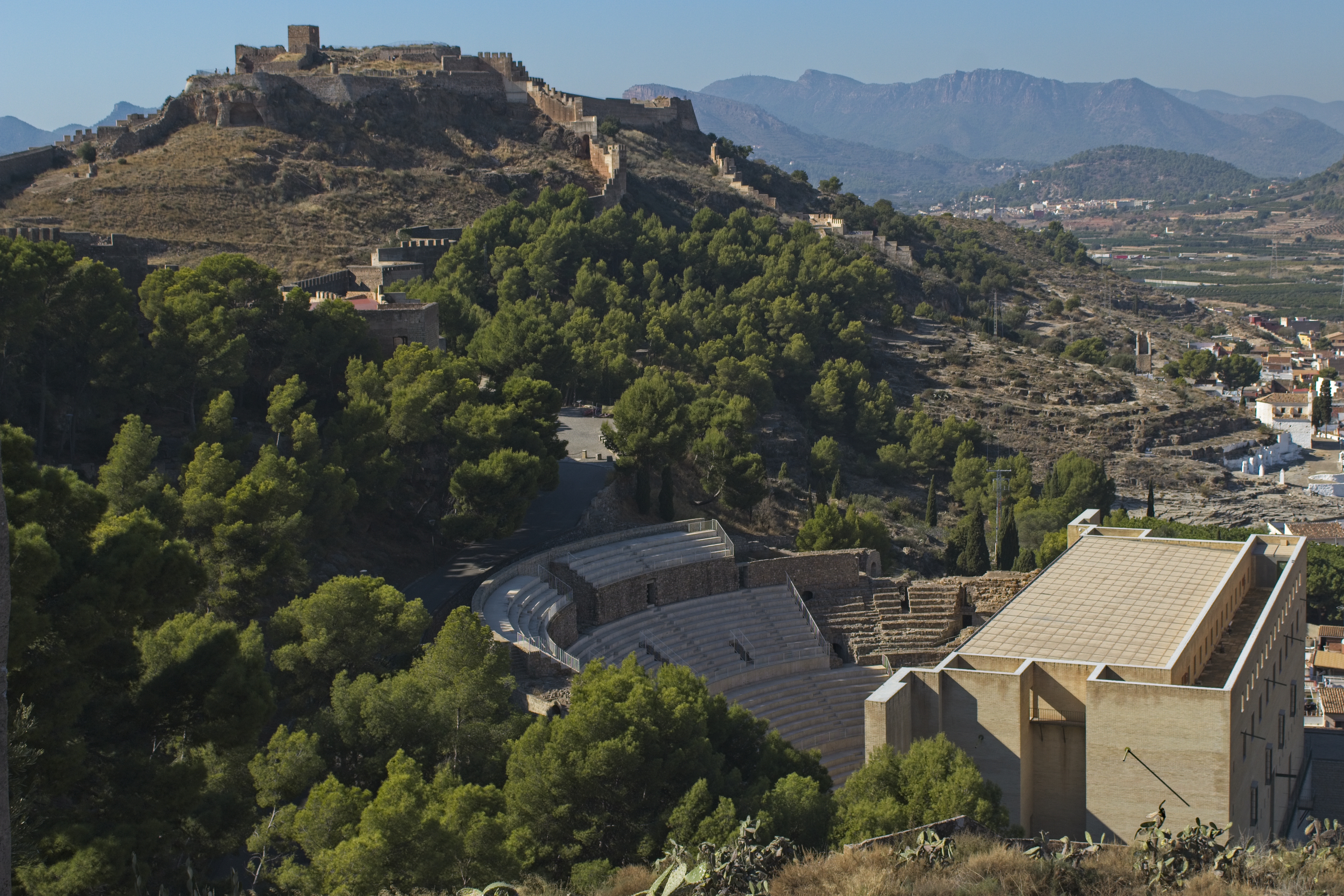
Looking across to the eastern part of the castle. In the foreground is a Roman theater, refurbished and still in use.
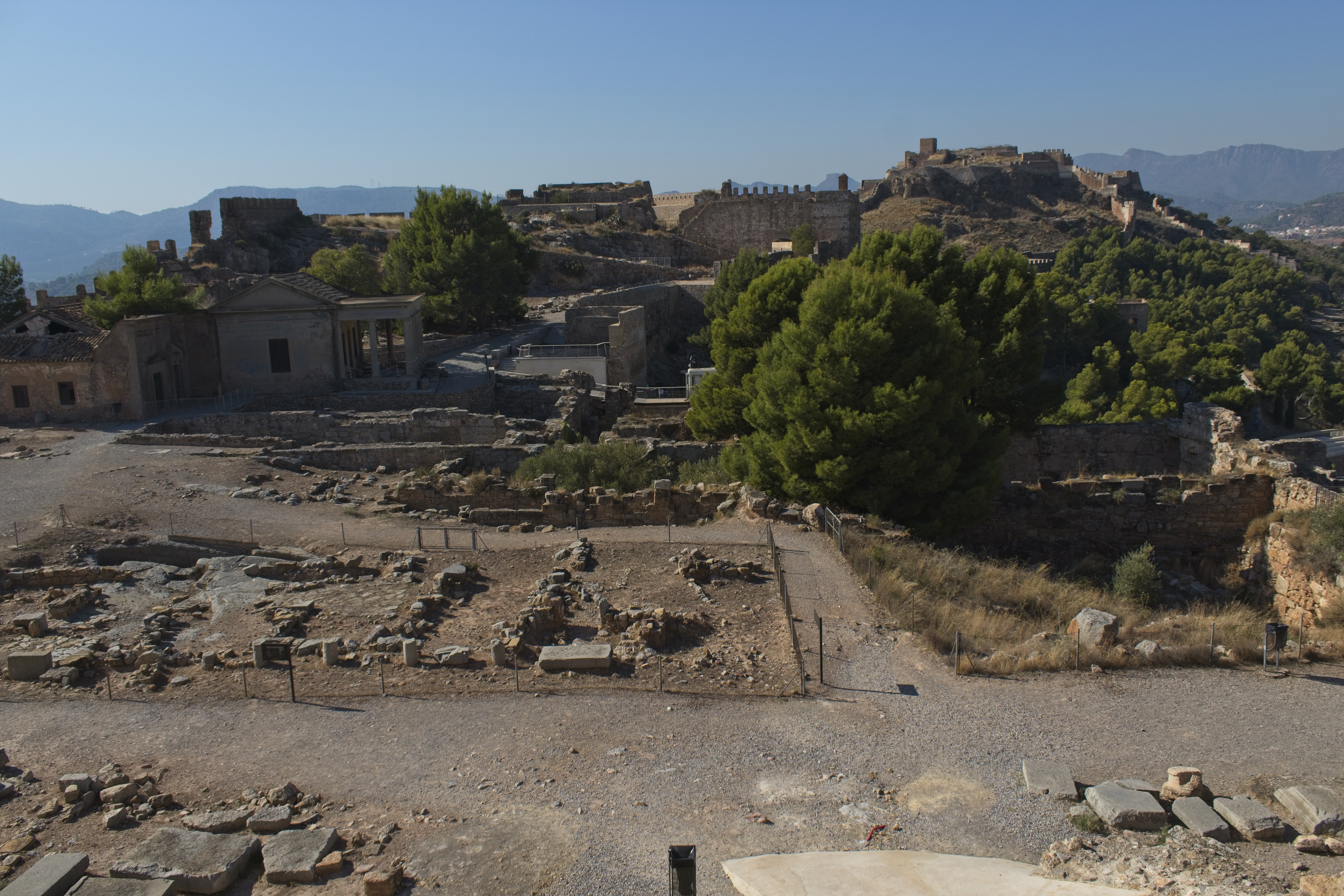
Ruins of the Roman site in the foreground. This is in the central part of the site.
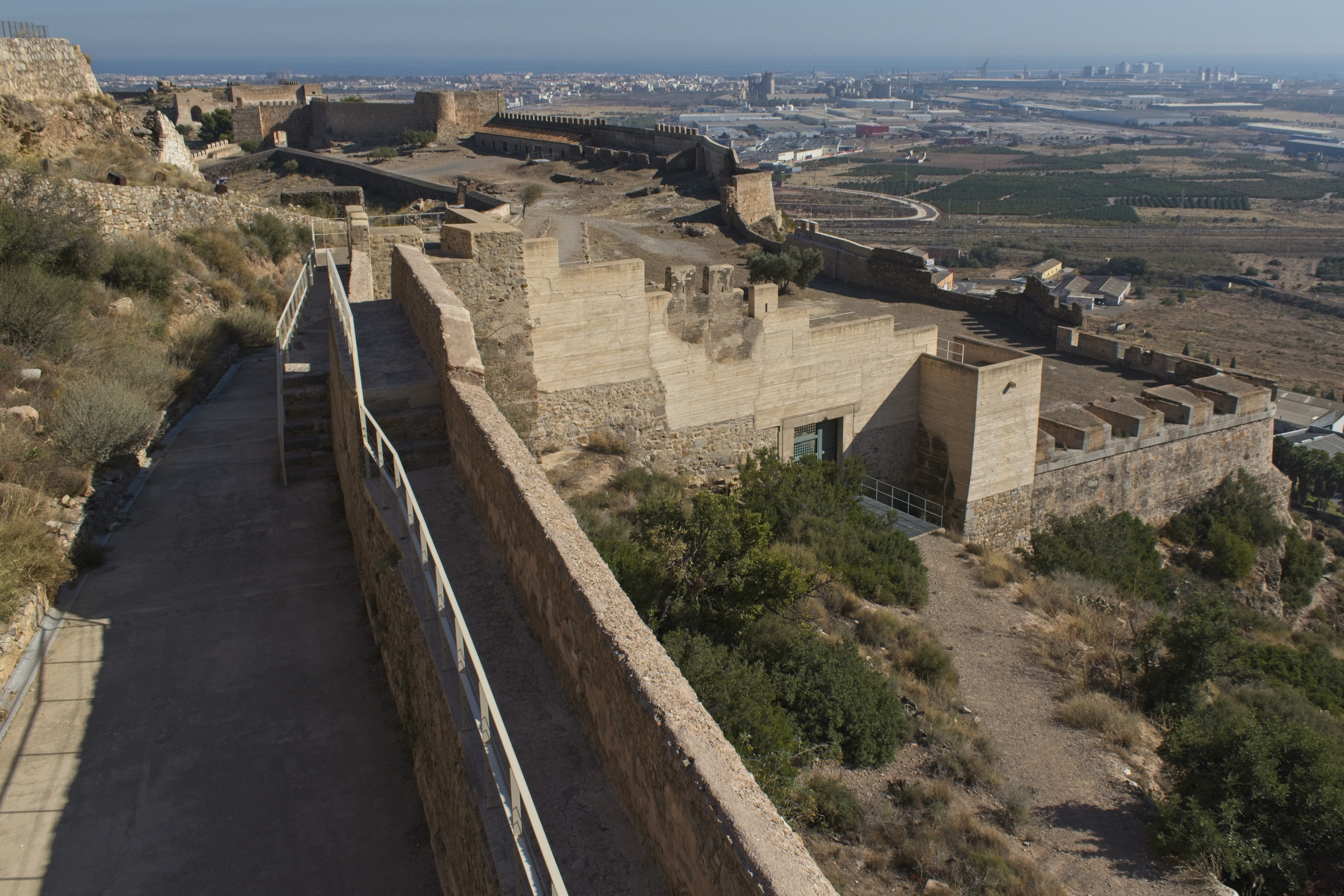
More walls and plazas. The place was huge.
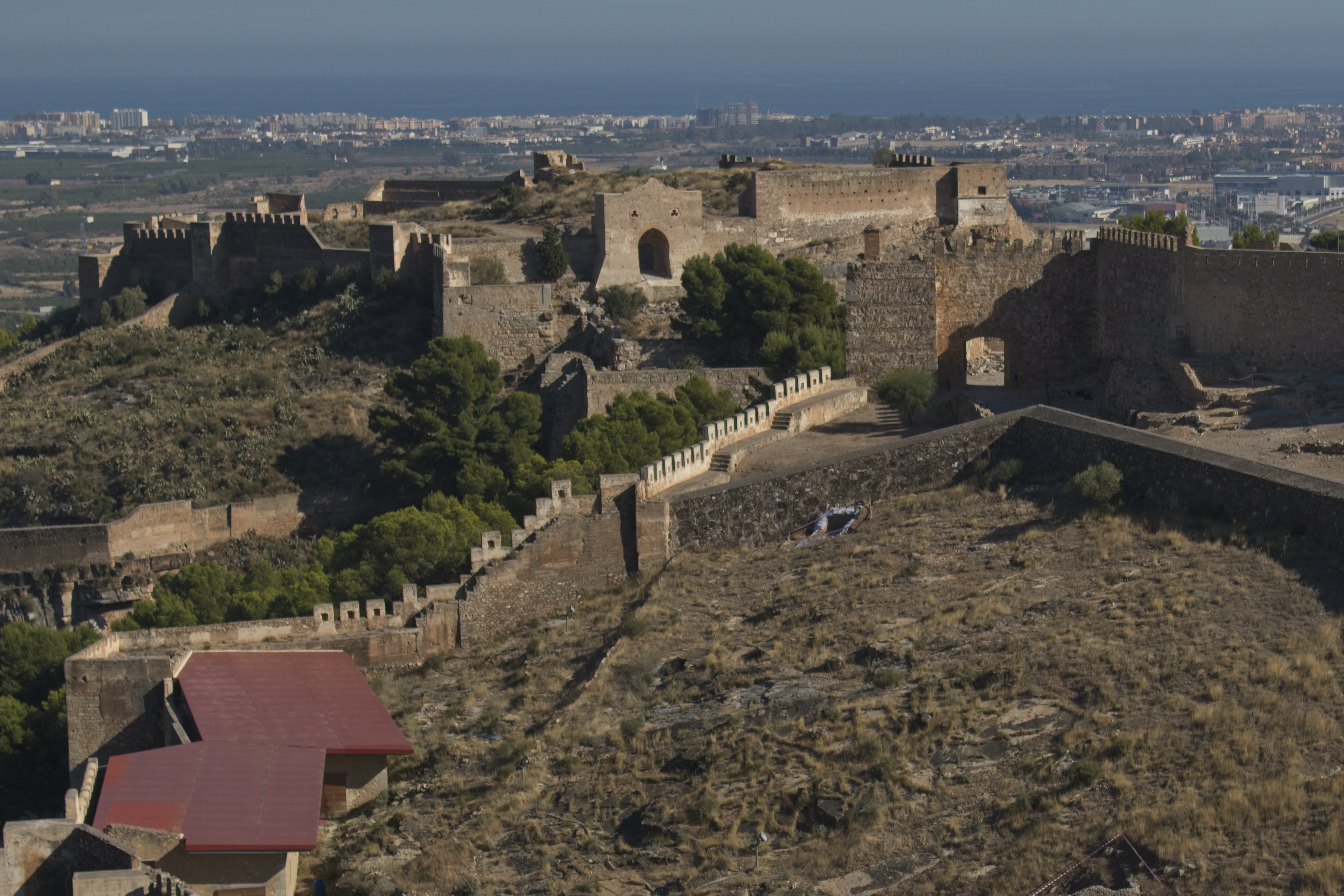
Looking back toward the sea from the east. The Roman theater is in the tree-filled ravine center left.
Peñíscola
Our most recent trip went a bit further afield, to Peñíscola, a couple hours north of Valencia by train, roughly halfway to Barcelona. The town dates back to the Iberians and was held at various times by Phonecians, Greeks, Carthaginians, Moors, Spanish and now mostly Brit vacationers. It’s a huge beach town, with tens of condos built along the shoreline for holiday makers. In this November of the Plague, it was a ghost town, inhabited primarily by the locals.
The castle on the peninsula (which is the word the town’s name is derived from) was established by the Knights Templar in 1294. This was their last home before they were disbanded by Pope Clement at the behest of King Phillip IV who owed them a lot of money. This story smells a lot like the reign of our most recent Grifter-in-Chief. History may not repeat itself but it rhymes. In any case, they were kicked out of the castle in 1307, some other knights hung there for the rest of the 14th C, then Pope Benedict XIII (AKA Papa Luna) moved in to make the place the Vatican-in-Exile during the Western Schism in the Catholic church (the so-called Avignon papacy). It’s more complicated than that but anyhow Papa Luna lived at Peñíscola from 1417 until his death in 1423. Several films and TV shows including Game of Thrones have shot scenes at the castle.
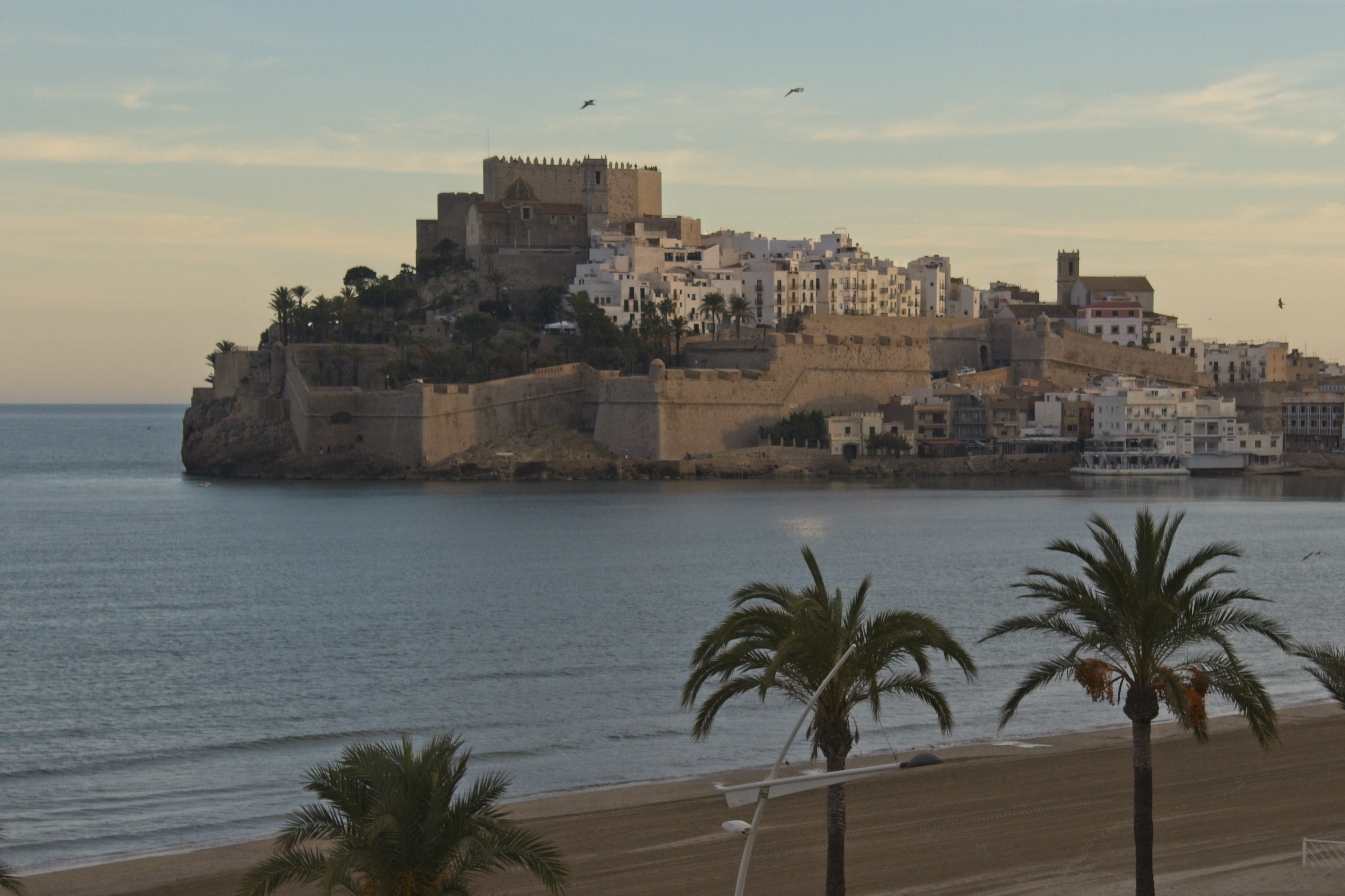
The view from the balcony of the AirBNB where we stayed. We weren’t the only people in the condo building but it was pretty empty. We did have a neighbor above us who apparently wore tap shoes around the house.

The castle and the old part of town at night

This place!
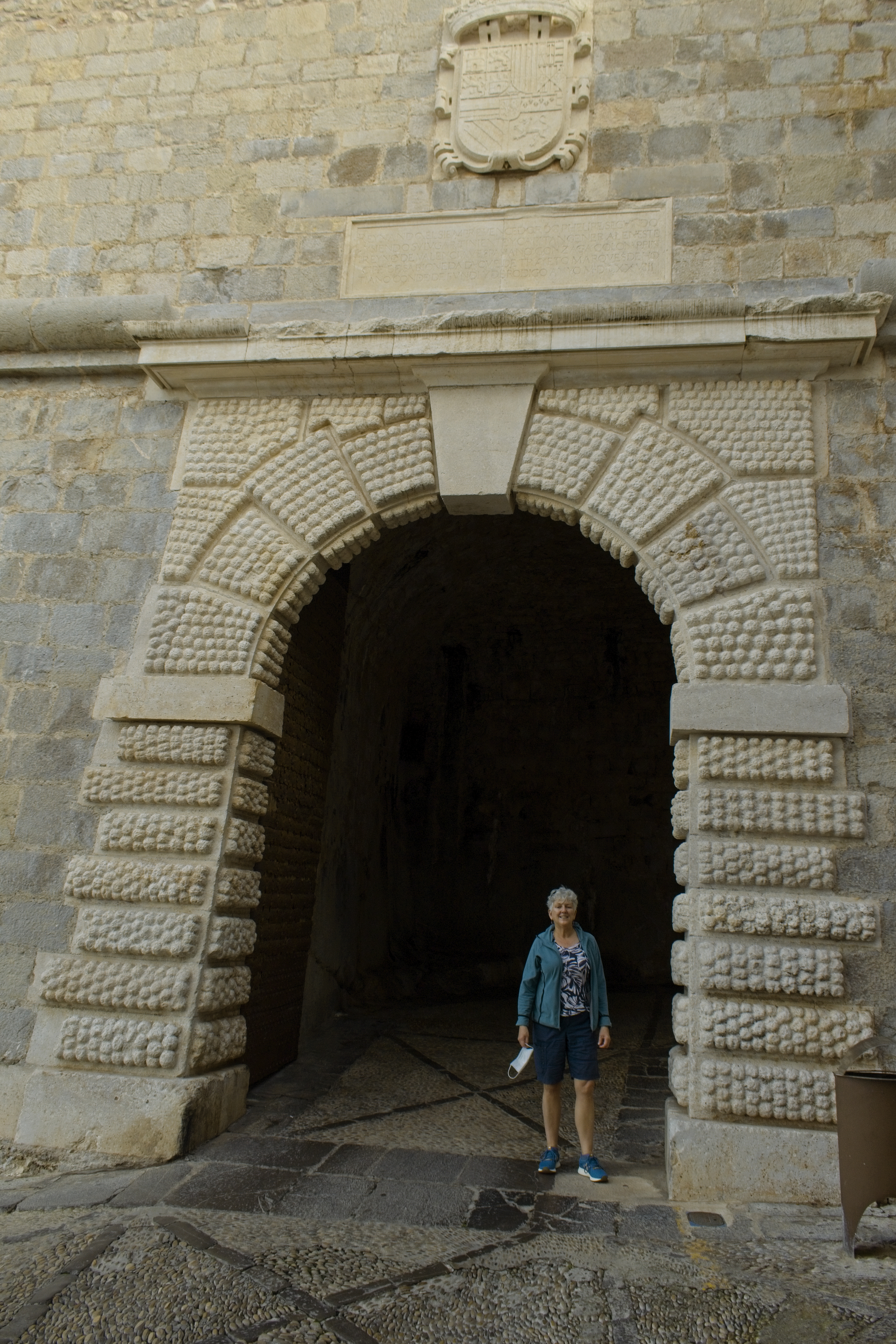
Castle entrance. Cindy included for size
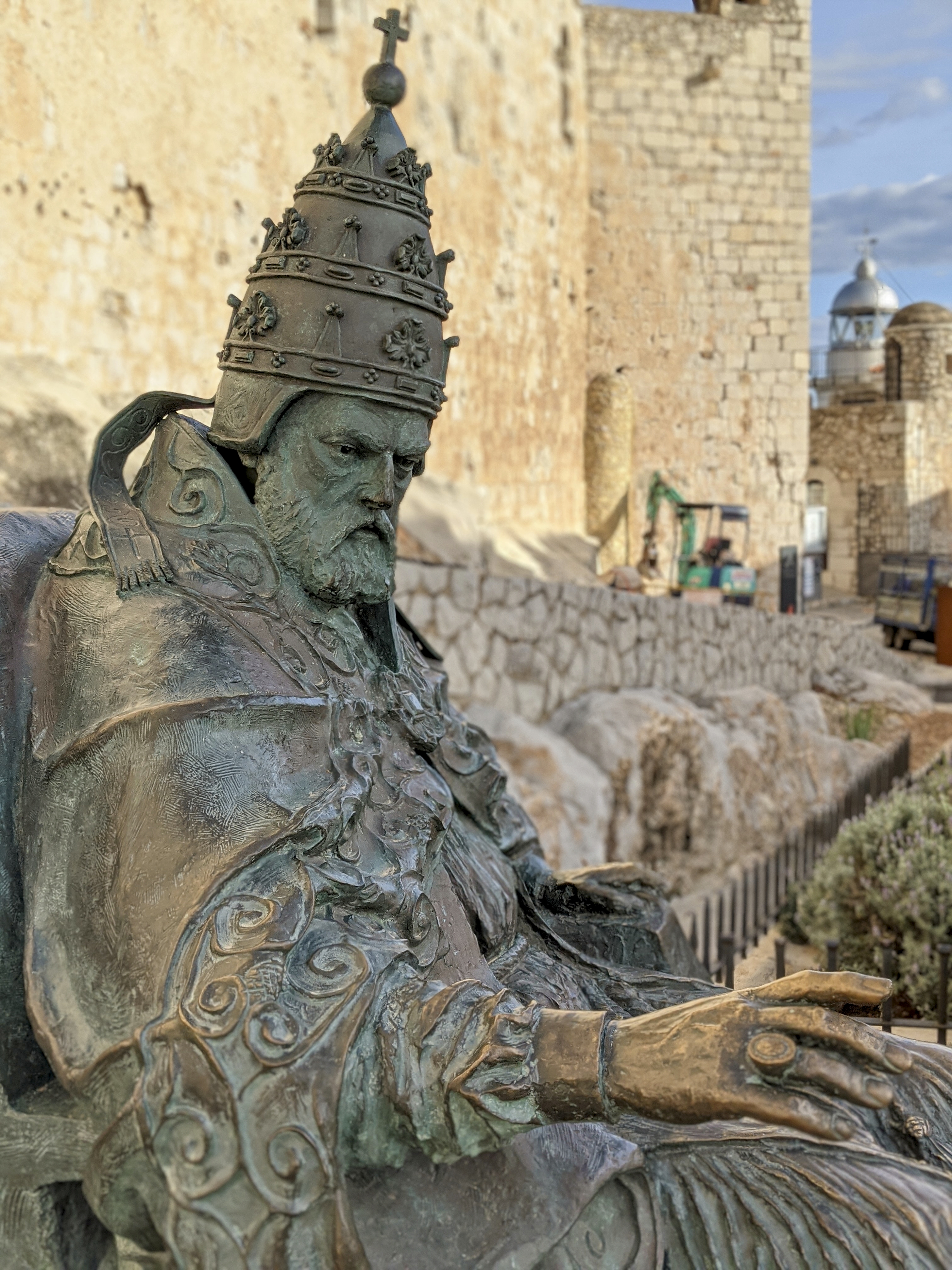
Papa Luna, watching over the town
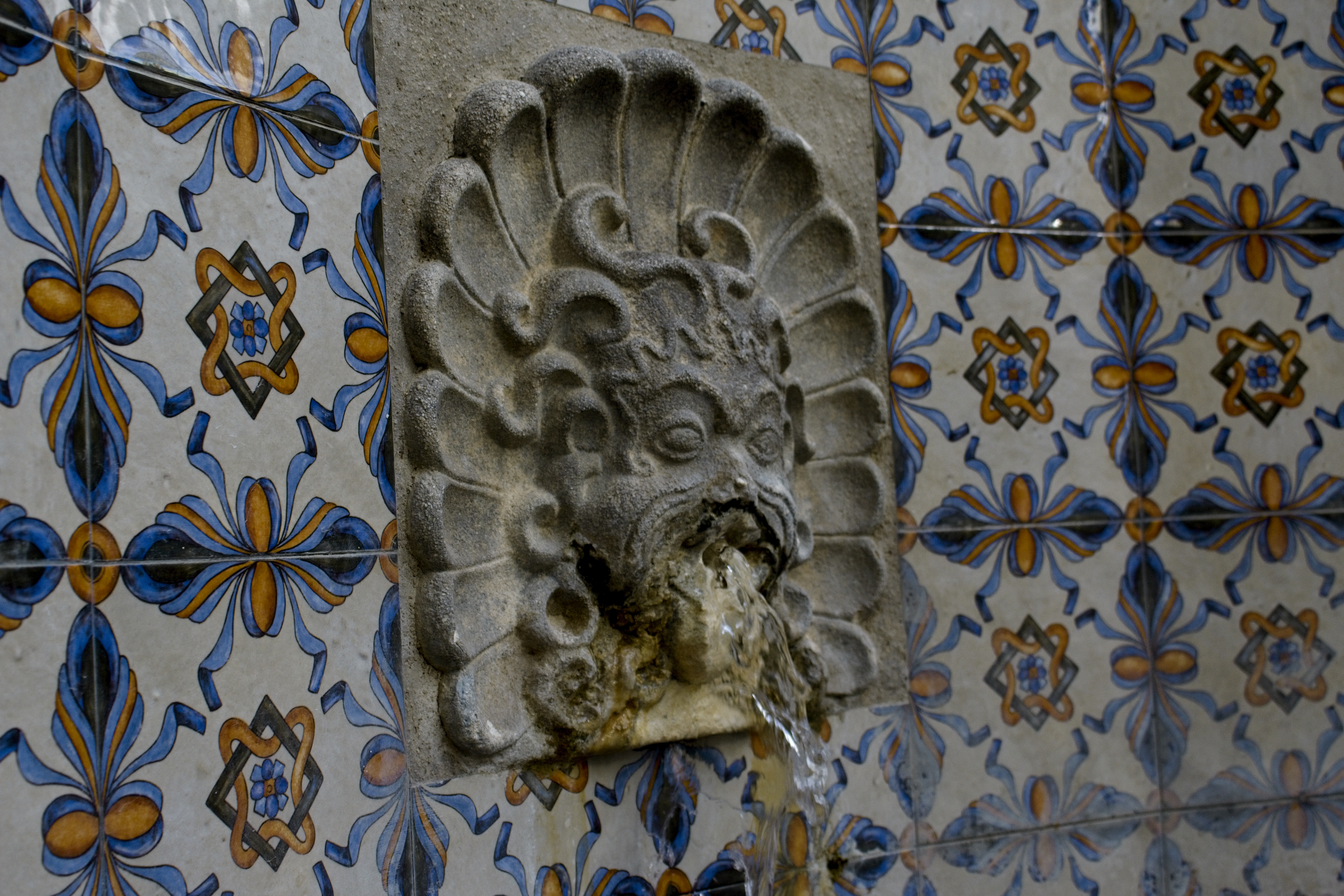
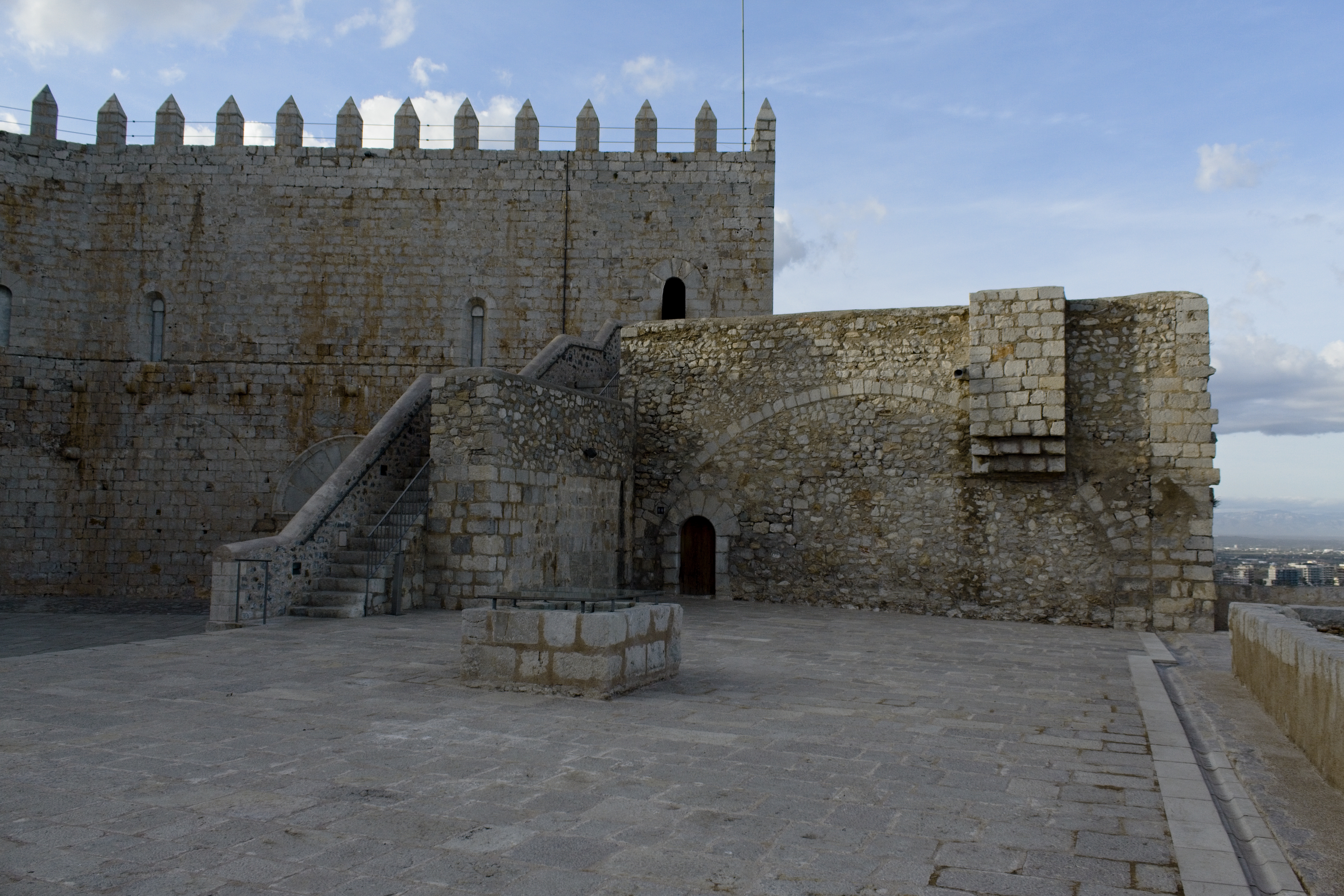
The place is pretty well preserved and has some pretty cool displays in the rooms.
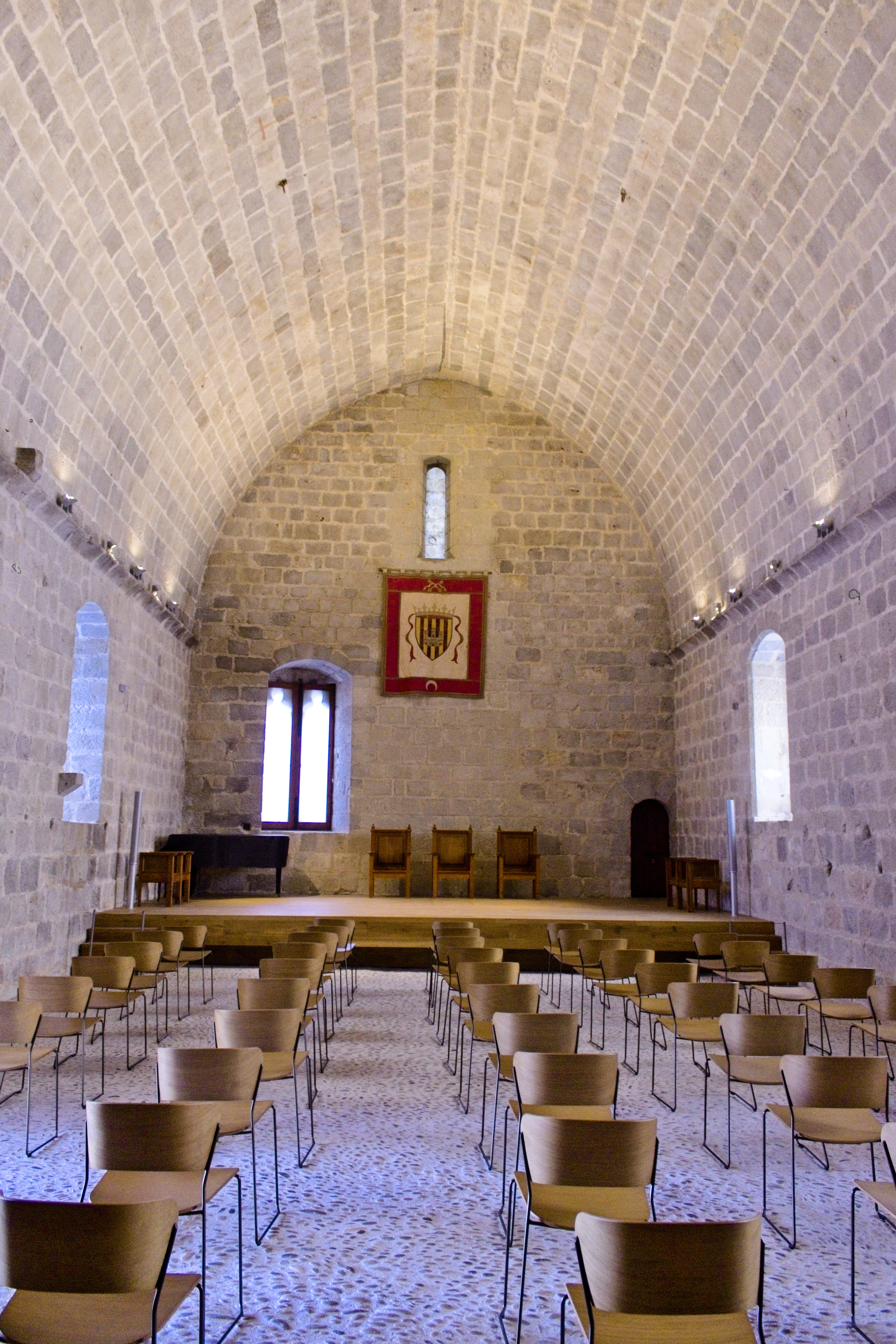
Chapel, including 10-meter barrel vault ceiling.

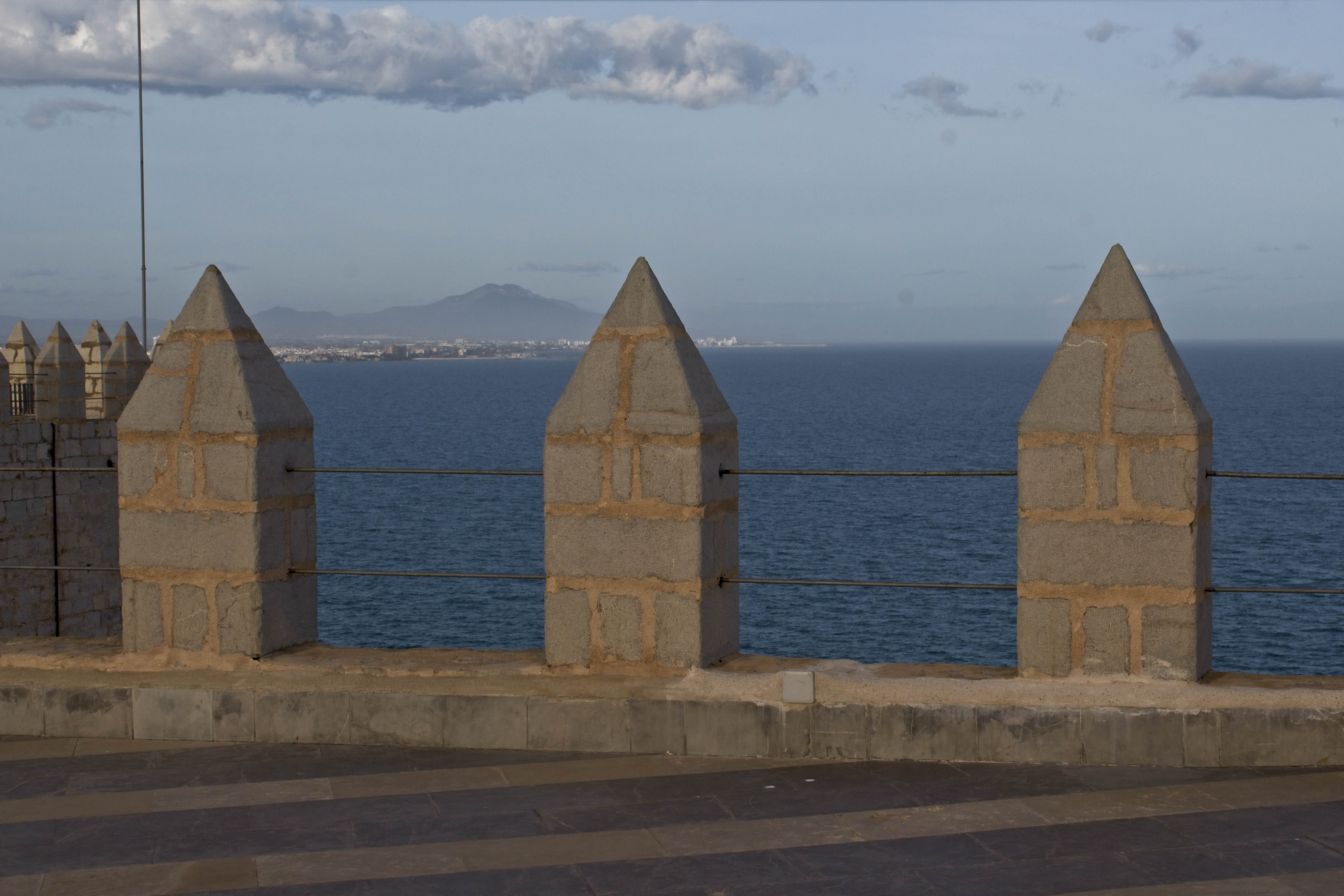
Looking north
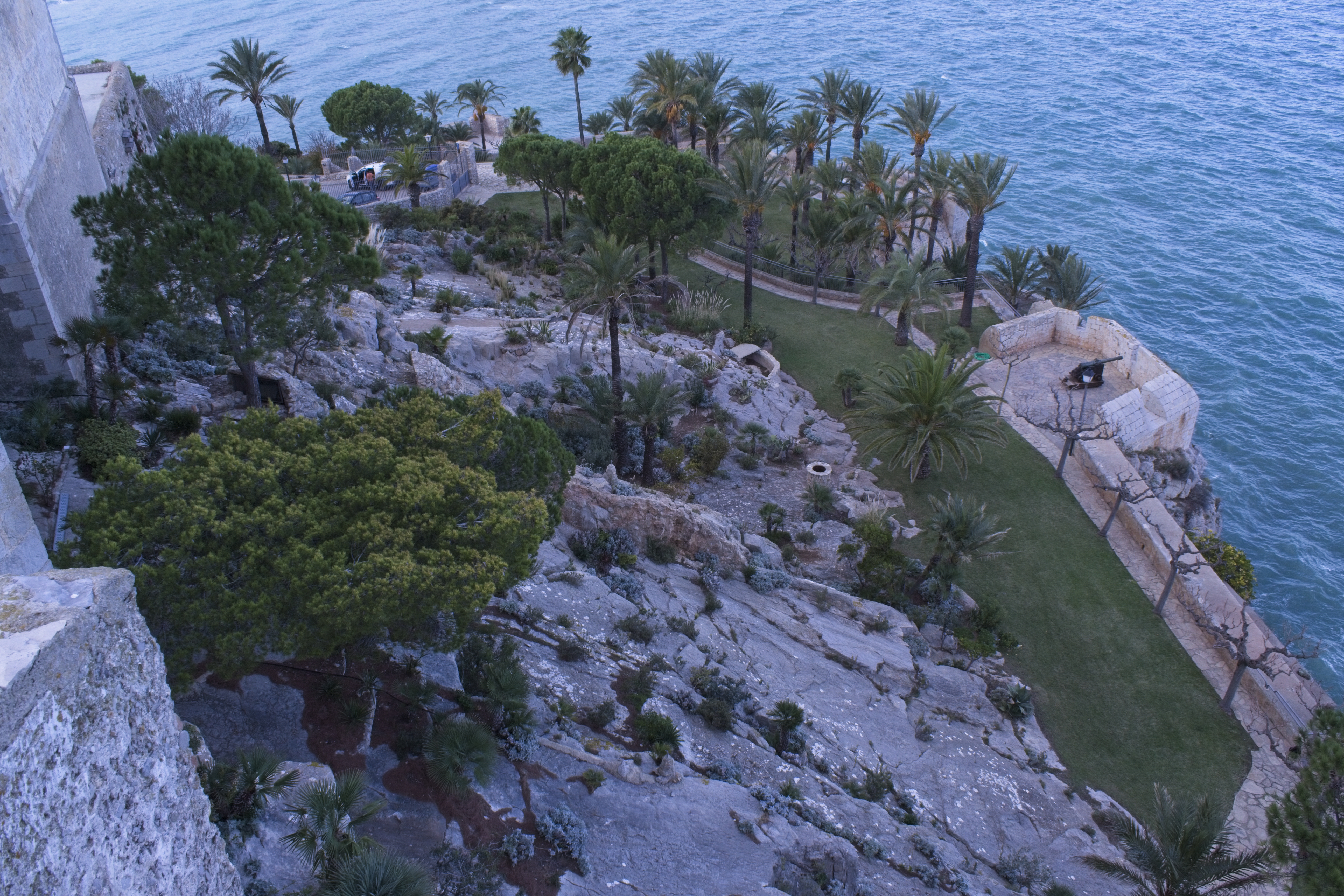
Artillery and parade grounds
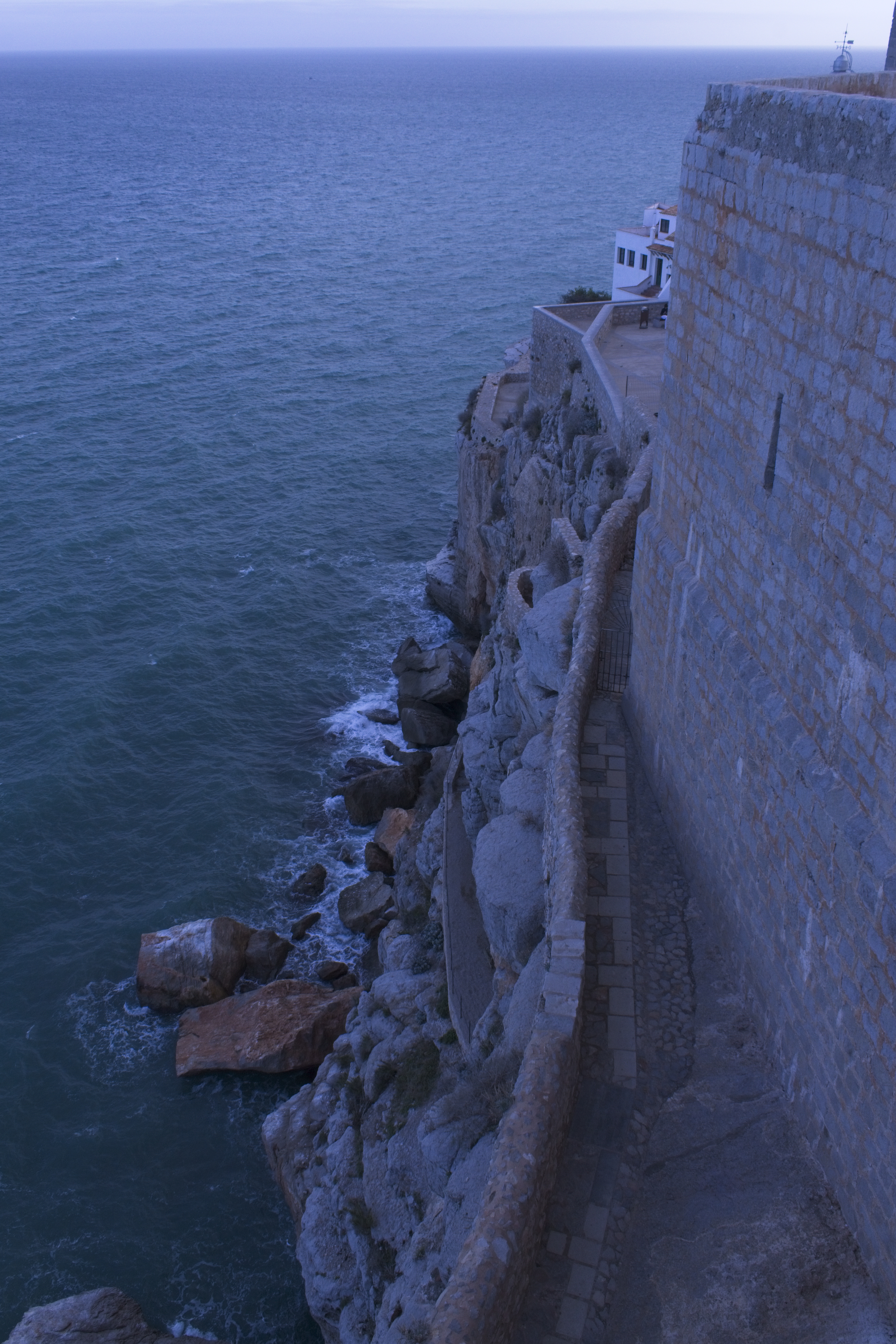
The seaward side of the castle is sheer to the water
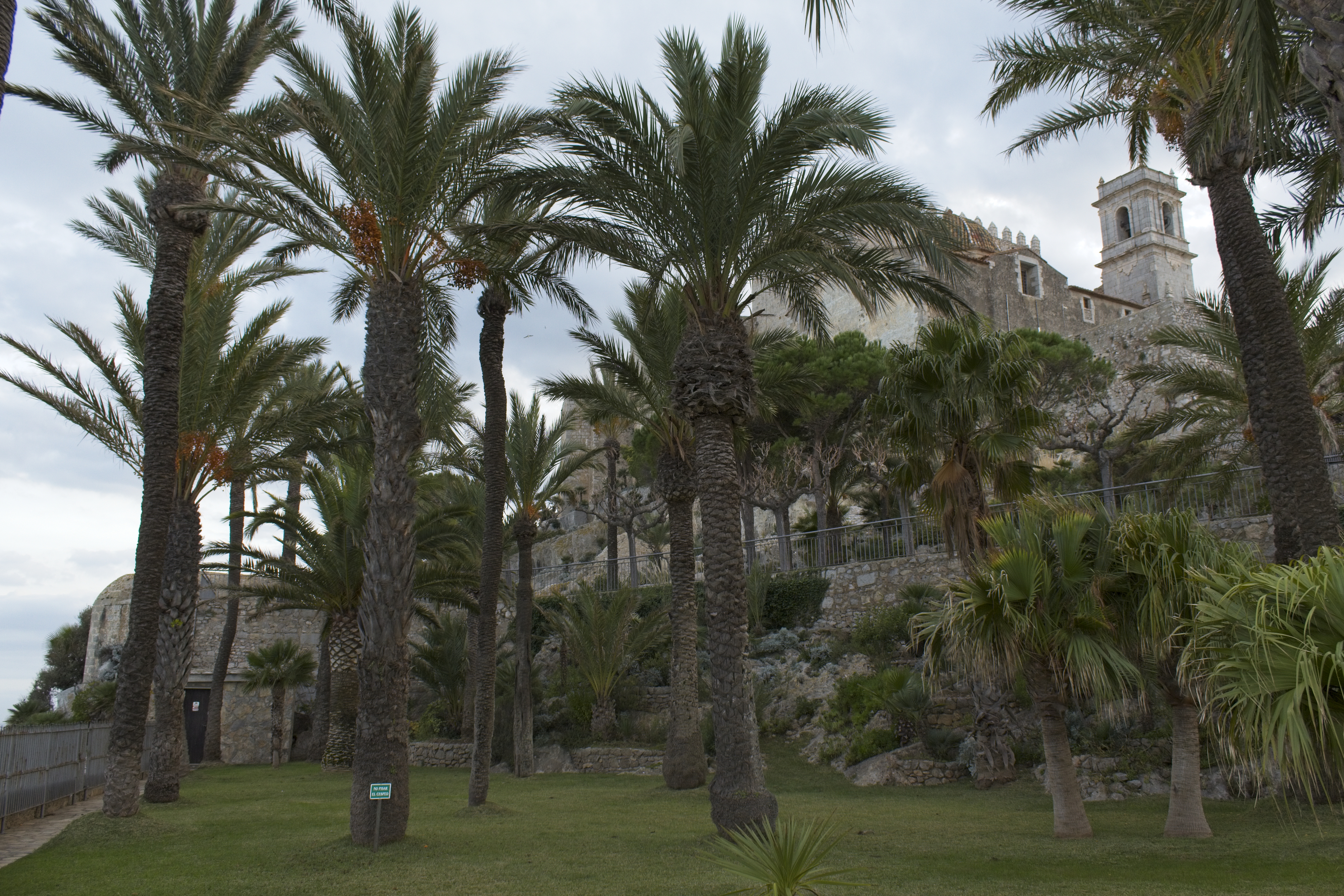
Looking up at the castle from the artillery grounds
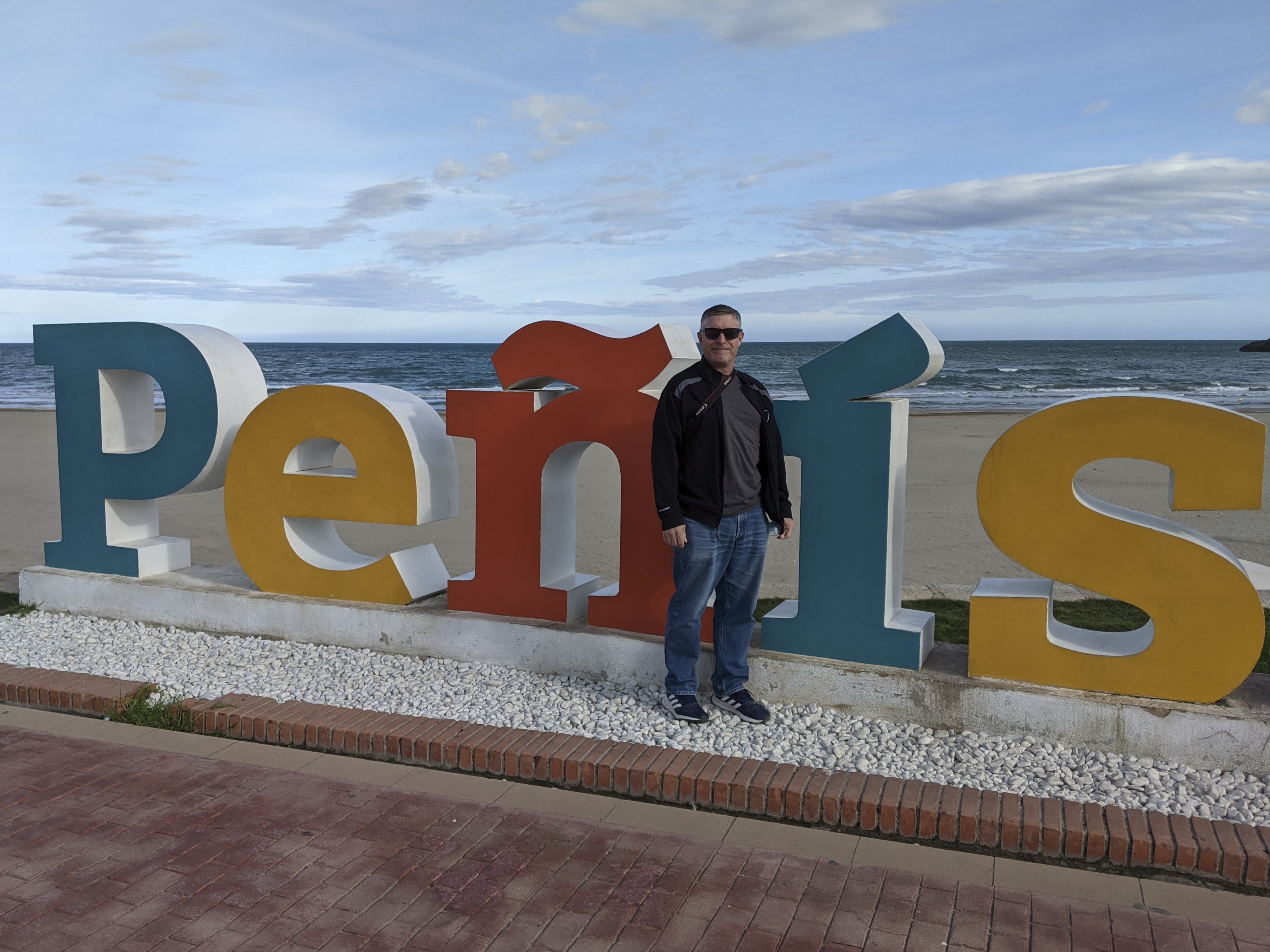
Obligatory. Hopefully not editorial content.
The following day we did an 11 kilometer day hike in Serra d’Irta Natural Park just south of Peñíscola. The park is very close to town but we had to rent a car to get to the trailhead. Turns out the road through the park is mostly gravel, so that was fun. Hilly and with mostly scrub trees, the park is a lot like “forests” near Los Angeles or in the high places in Arizona. That said, it was really great to get outside and smell the pines and see green.
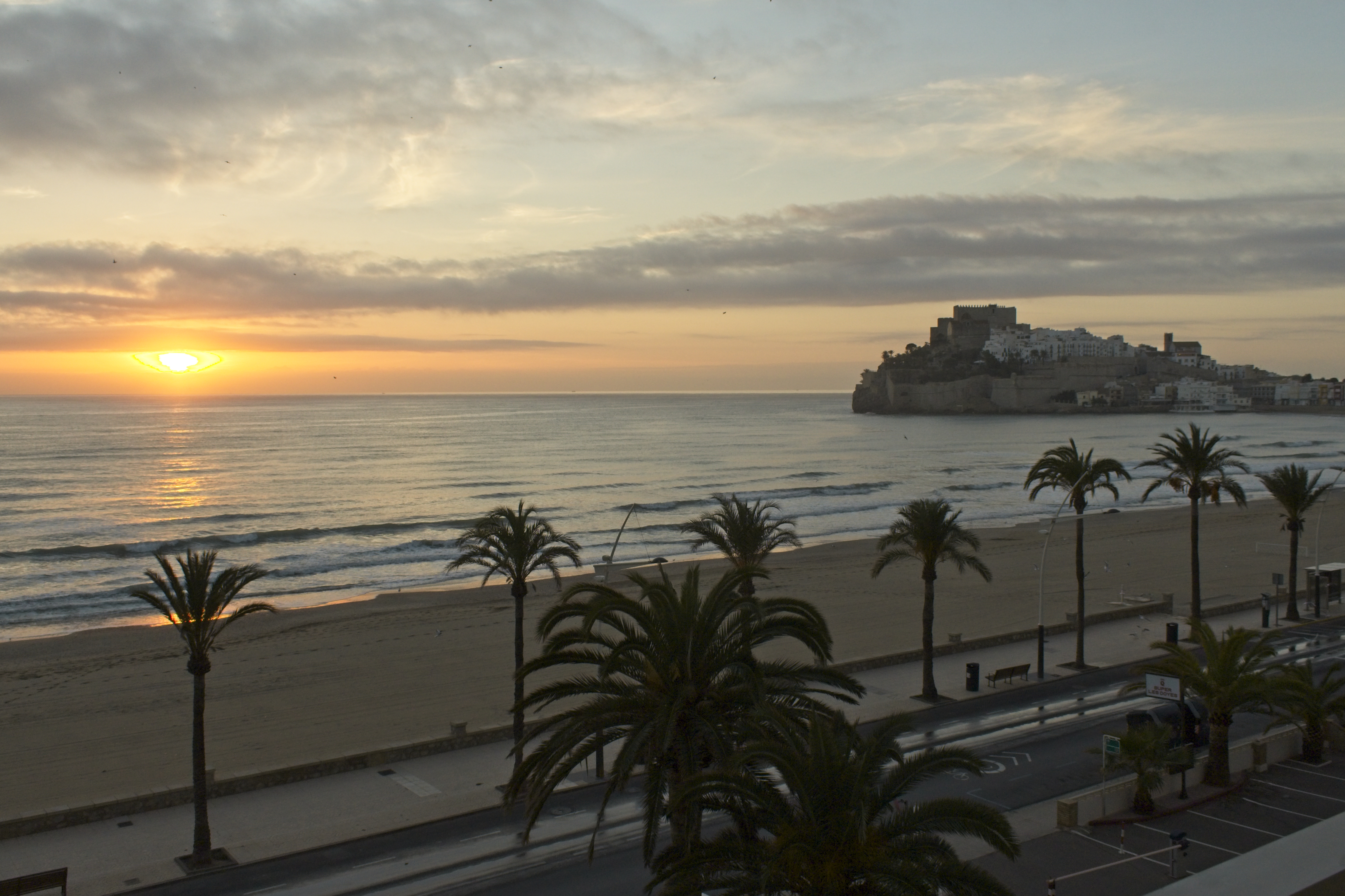
Morning view of the castle
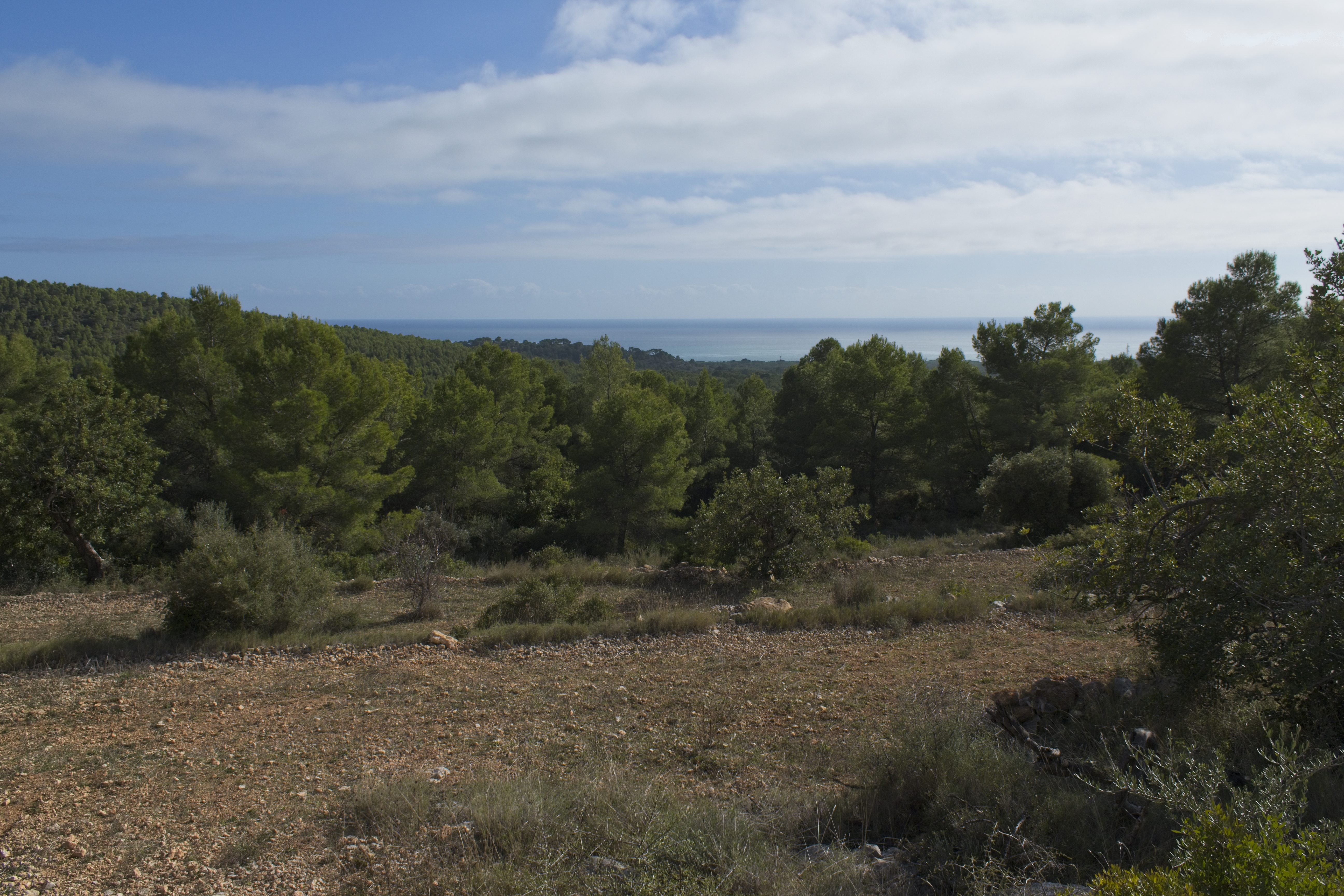
We started way down there by the water. This was the first time we popped out above the trees. I was standing on an old terraced farm plot. Maybe olives?
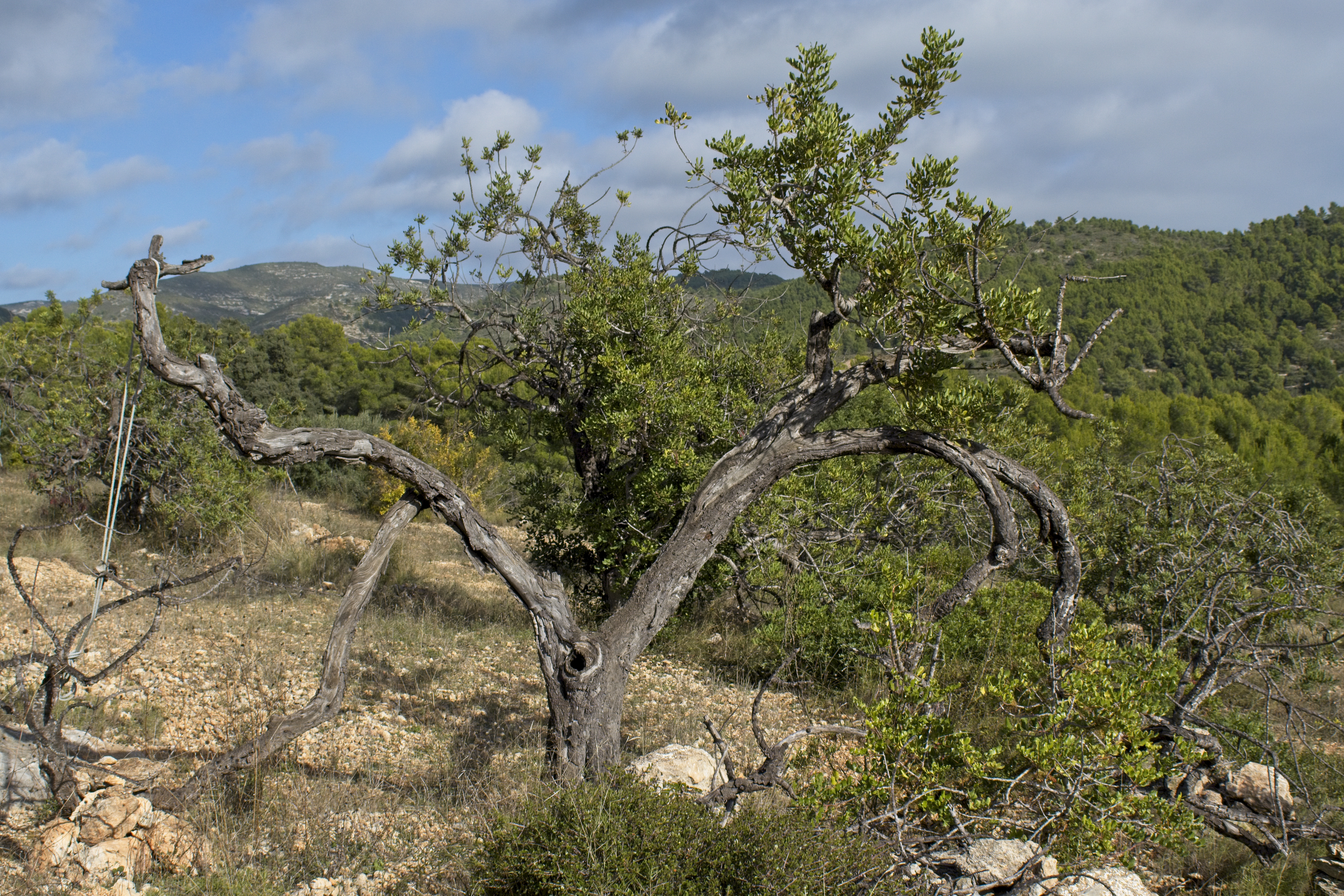
A very old olive tree
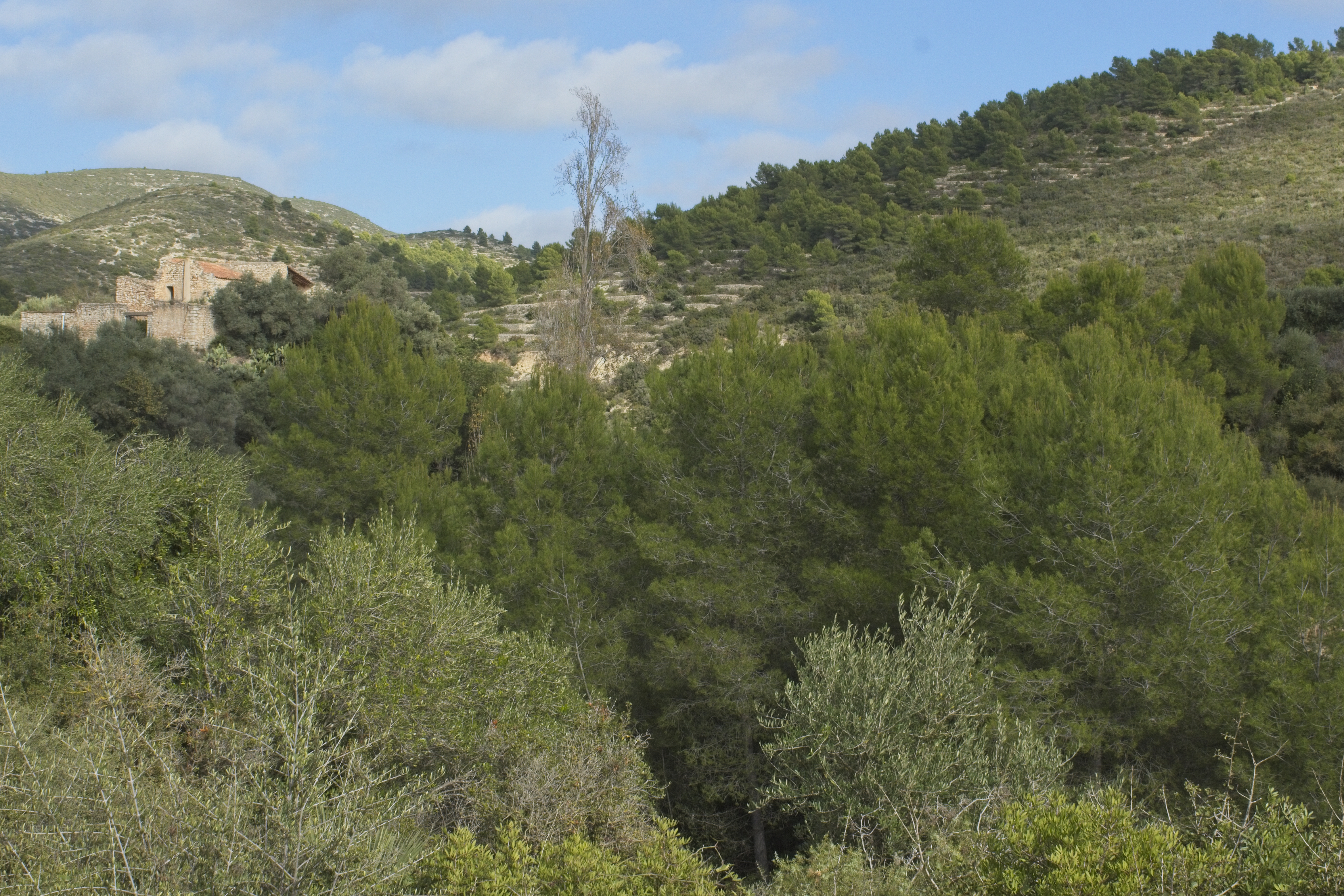
The building on the left is an old vineyard. Terracing up the hill to the right was where I figure the grape vines were. I wish I could have captured it better, it was really remarkable.
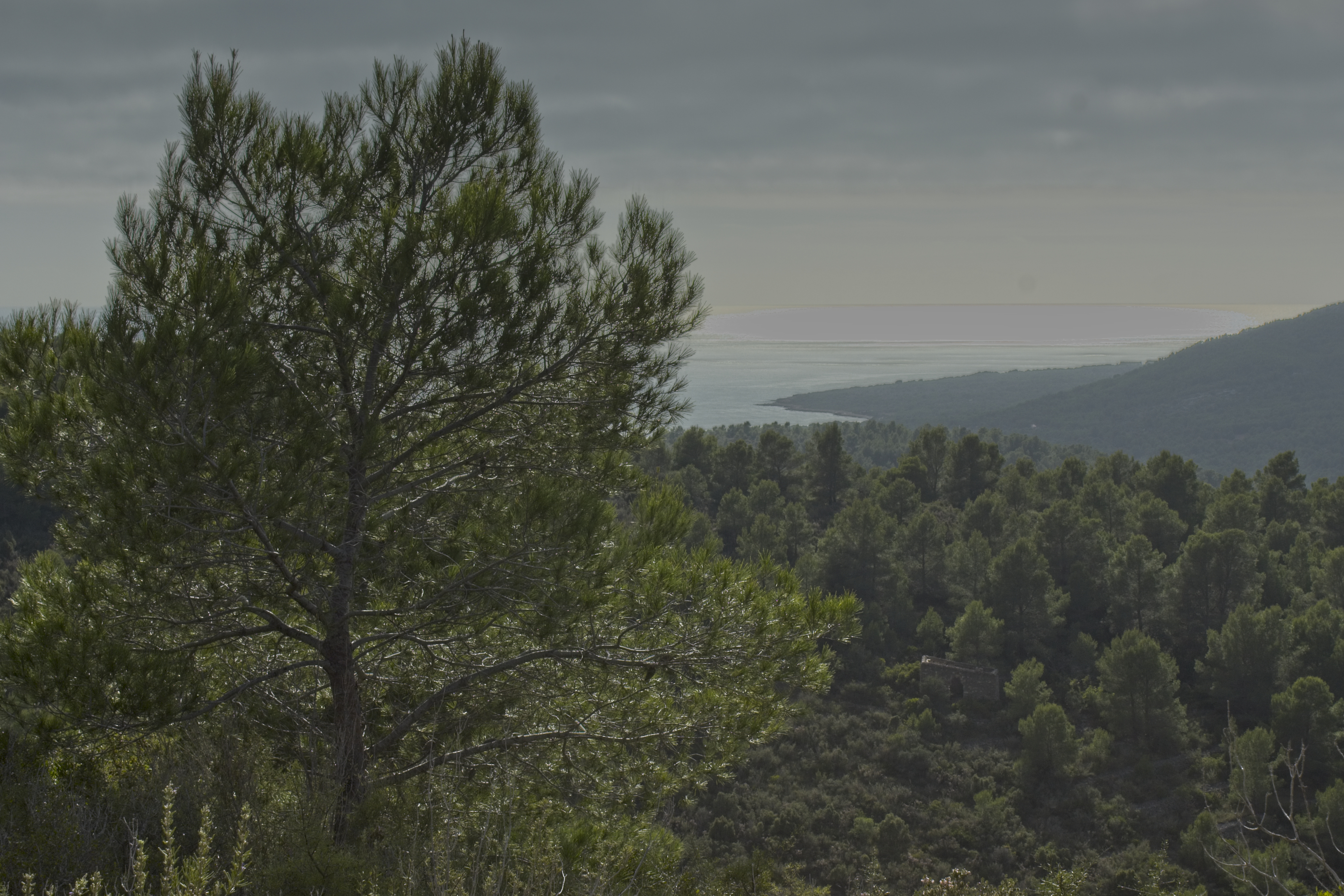
From the high point where we had lunch, looking SE at the coast
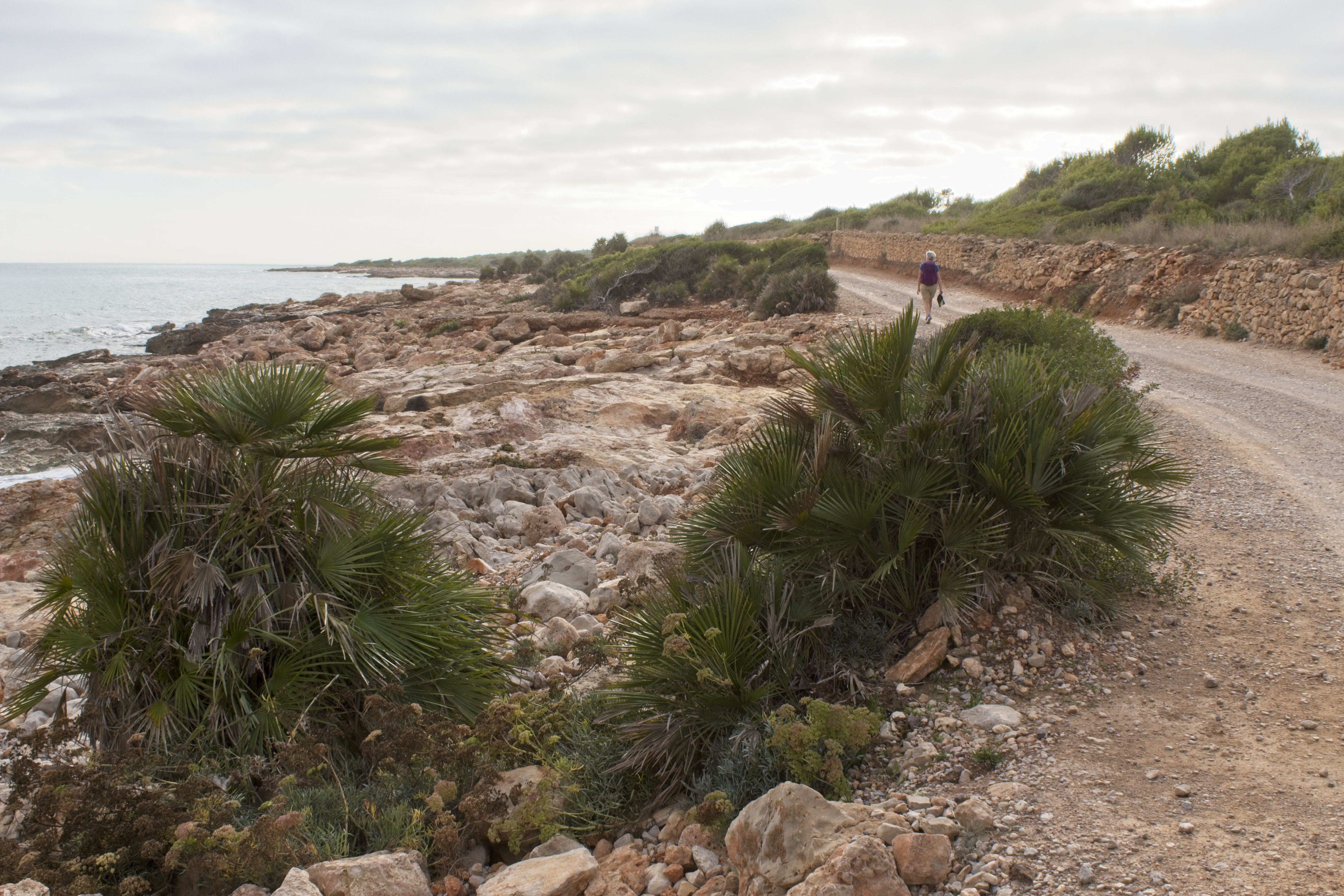
Back at sea level, we had a kilometer walk back to where we parked.
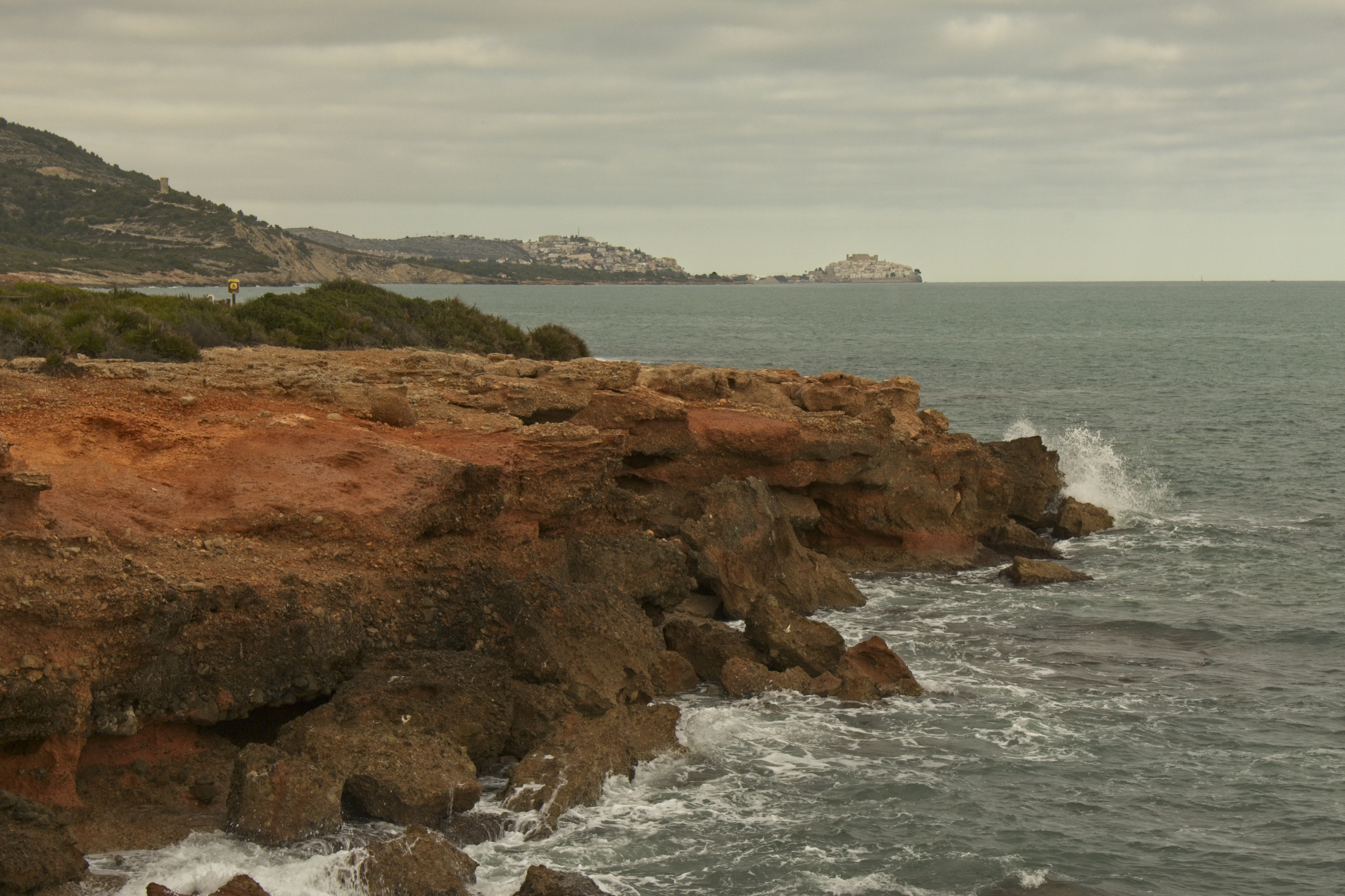
Looking back north toward Peñíscola. We were surprised at how close it is, it felt a lot more remote. We didn’t see another hiker on our whole walk. We did see workers doing maintenance on the roads and there were some bicyclists on the road (one of which passed us on a downhill section on the drive to the trailhead) but mostly we had the place to ourselves.
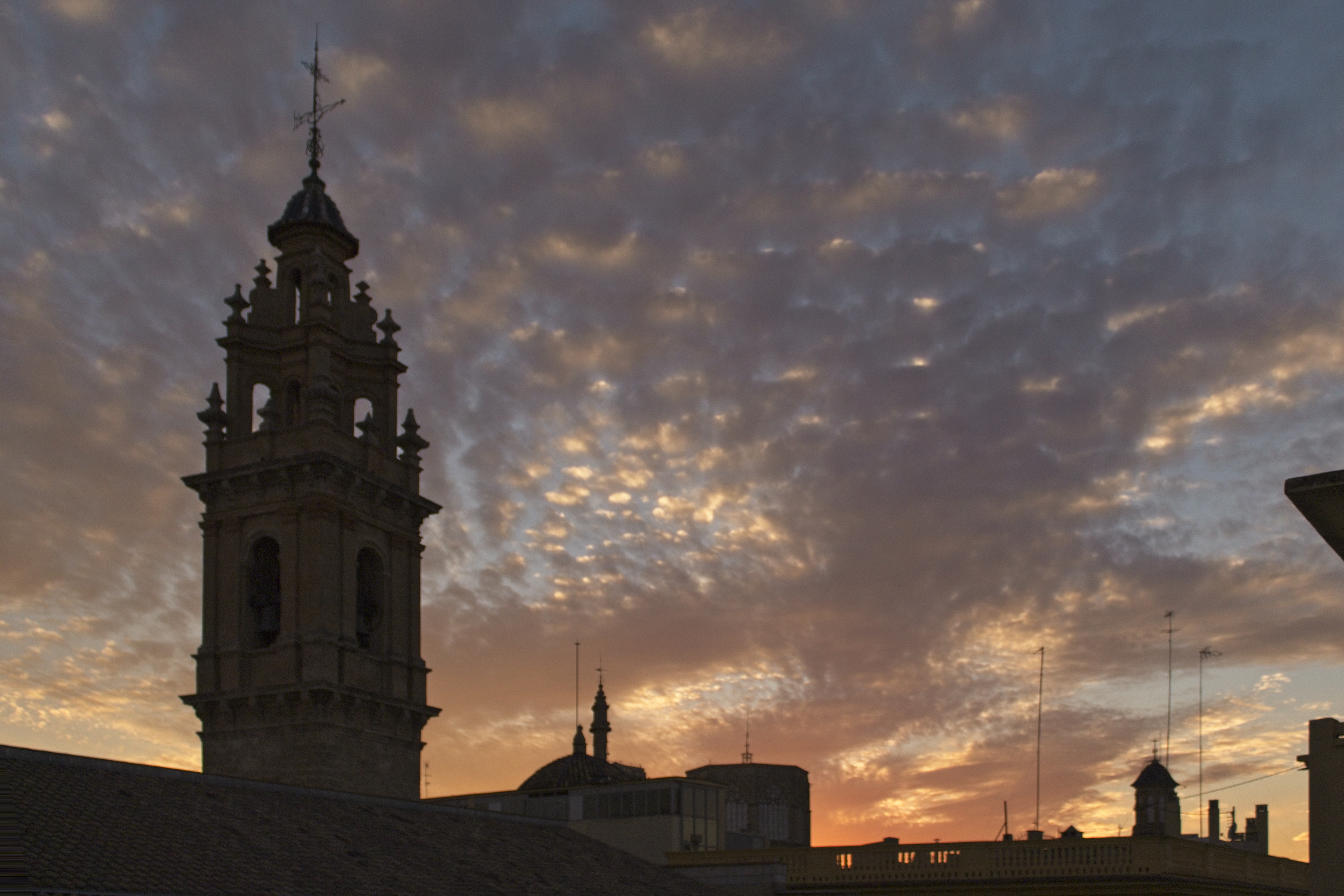
Bonus content: sunset from our window back in Valencia.
-
August on the North Coast, Part 1
We had to get out of Valencia. Temperatures were north of 95° and humidity was high in July and we had been told it would be worse in August. Border closures thanks to Covid-19 would keep us in Spain, so the mountains and near the Atlantic were the clear choices. Cindy did her magic and lined up a tour of the north coast by car.
First stop was Beria, right on the north coast at the foothills of the Pyrenees by the French border. We left Valencia August 1 and drove straight through, about 500 KM, to Beria. Our rented steed, a Toyota Corolla Hybrid, had plenty of space and managed 44 MPG (5.3L / 100KM) throughout the trip. After our experience with an early ’00s Sienna, I never thought I’d want another Toyota but this was a good, comfortable ride. The drive was hot for most of the way; our lunch in Zaragoza was hot, dry and windy. I thought for a moment we might have passed through a portal and wound up in Ellensburg.
We arrived in Beria in the early evening. It had begun to drizzle so our last few KM up the mountainside to our hotel, the Elizalde in Ibardin, were in thick mist. We had no idea what was around us. We gulped down a drink and crashed for the night.
We woke to more drizzle after finally being able to sleep without sweating through our sheets and grabbed breakfast, then took a hike to the local lake, Xoldokogaina…did I mention we were in Basque Country, where they speak their own language unlike either French or Spanish?… and back to the hotel.
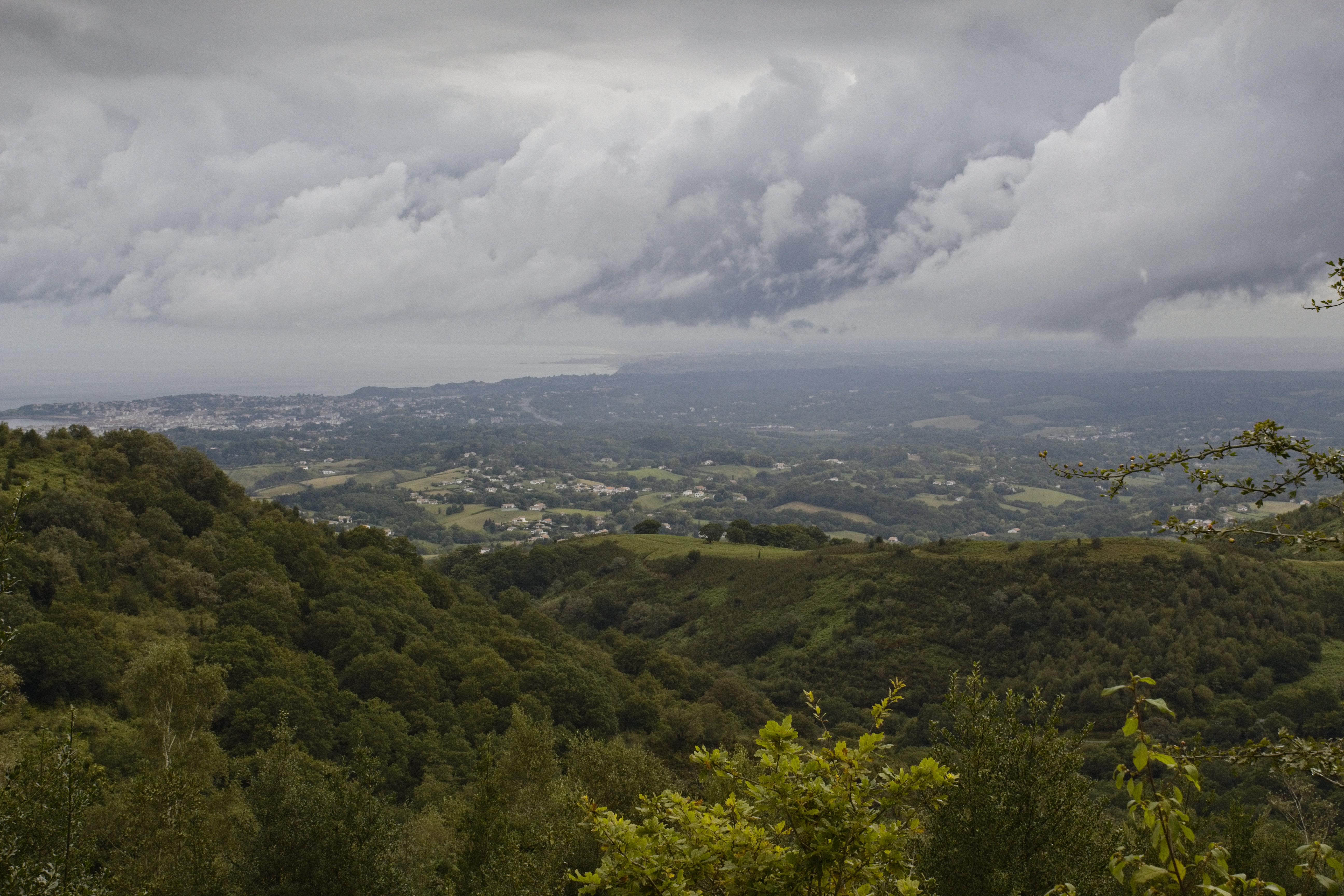
The view we woke up to. Holy crap, where are we? This is looking north into France. Expect to see more pictures of this as the week goes on because I was obsessed with this view.
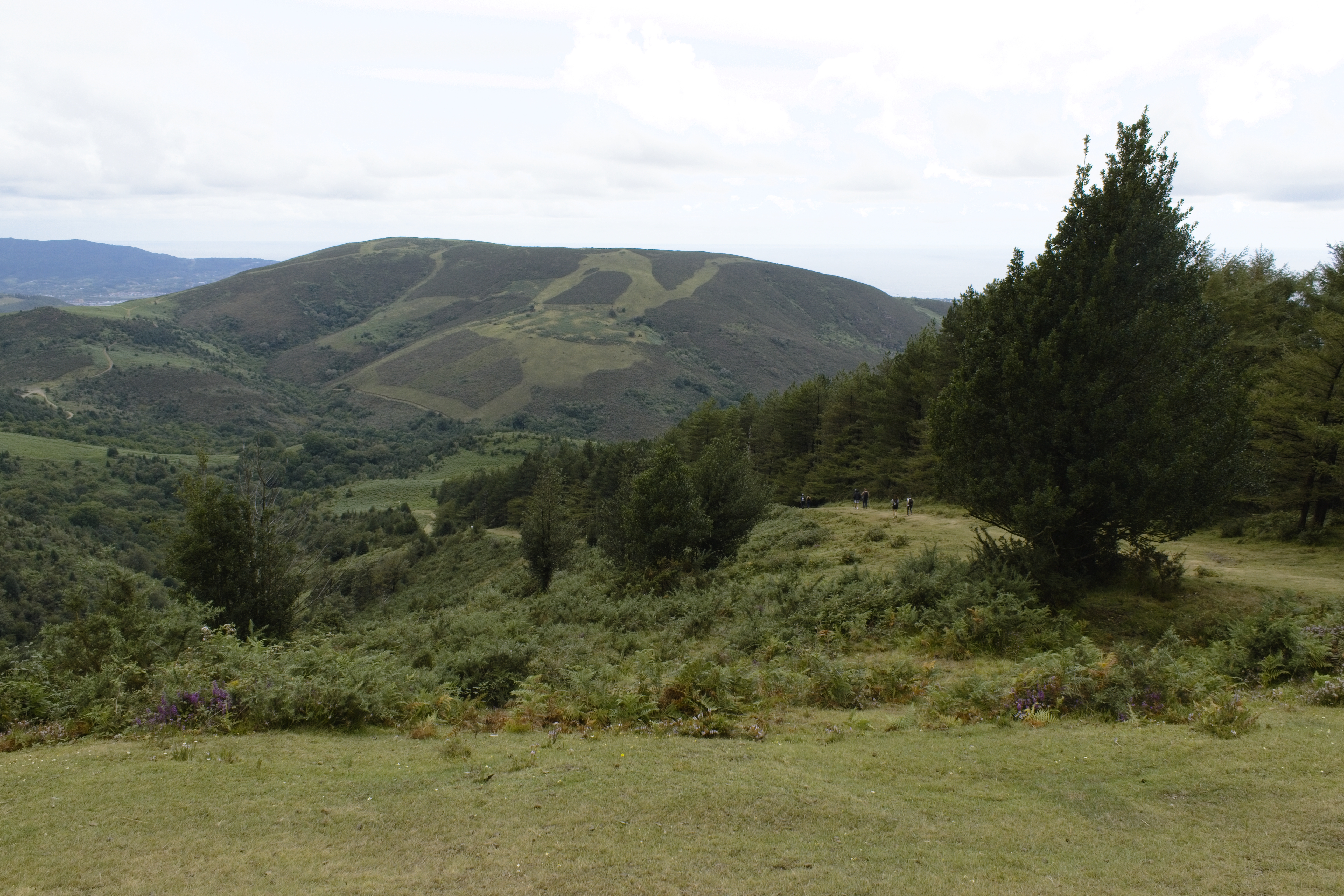

The hike to the lake and the lake itself. Beautiful green hills covered in brush, trees and ferns. What you can’t really see is how steep some of the trails were.
We then made the drive to San Sebastian. Literally as soon as we left Iberdin, we crossed the border into France. We drove east a bit, then north to the coast, and then turned west again and boom, we were back in Spain. Border controls? Not here, amigo.
San Sebastian is a lovely town on the Urumea river, with a thriving old town facing the well protected harbor. We didn’t spend enough time here but we enjoyed the afternoon.
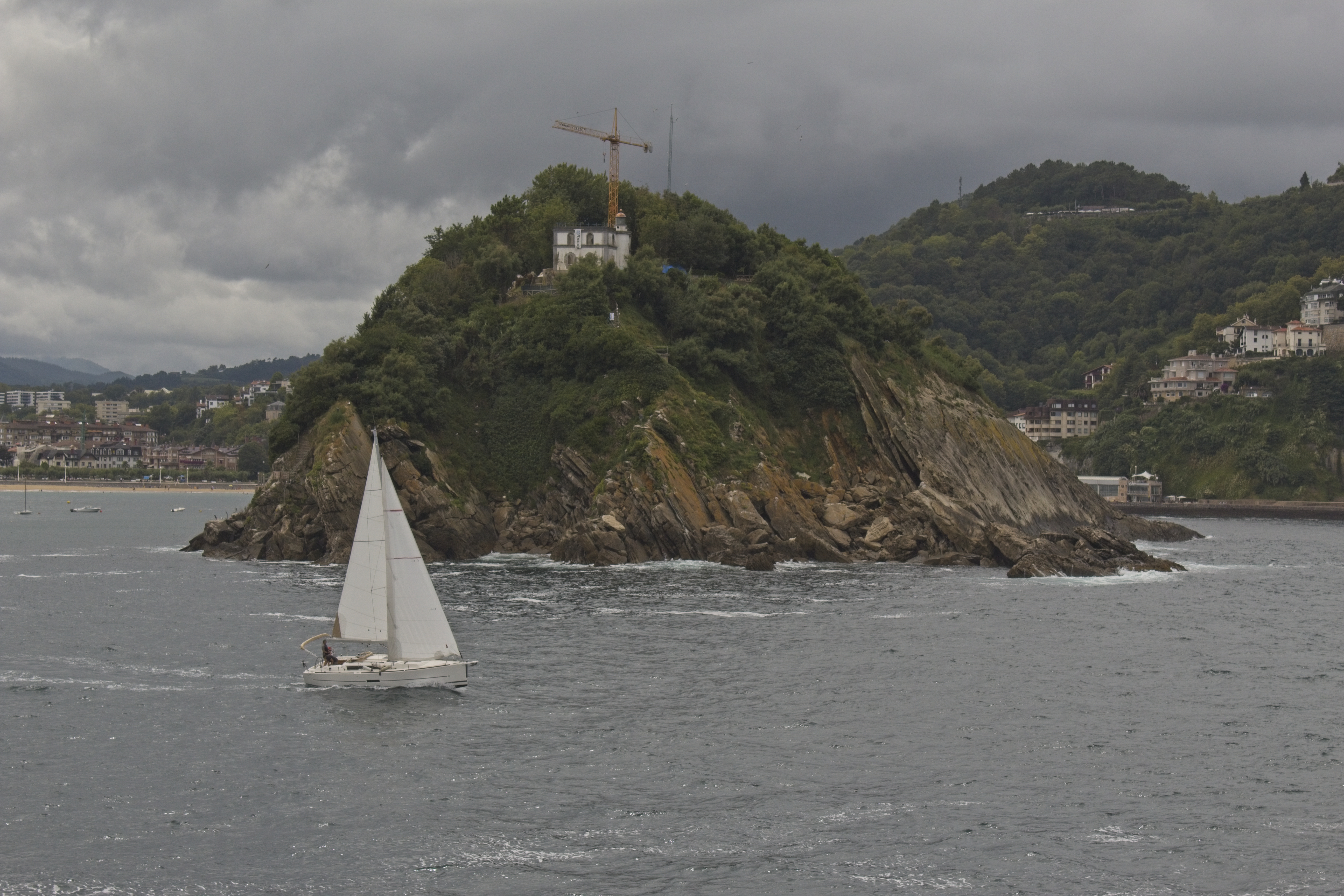
Rocky coast, sailboats…what’s not to love?
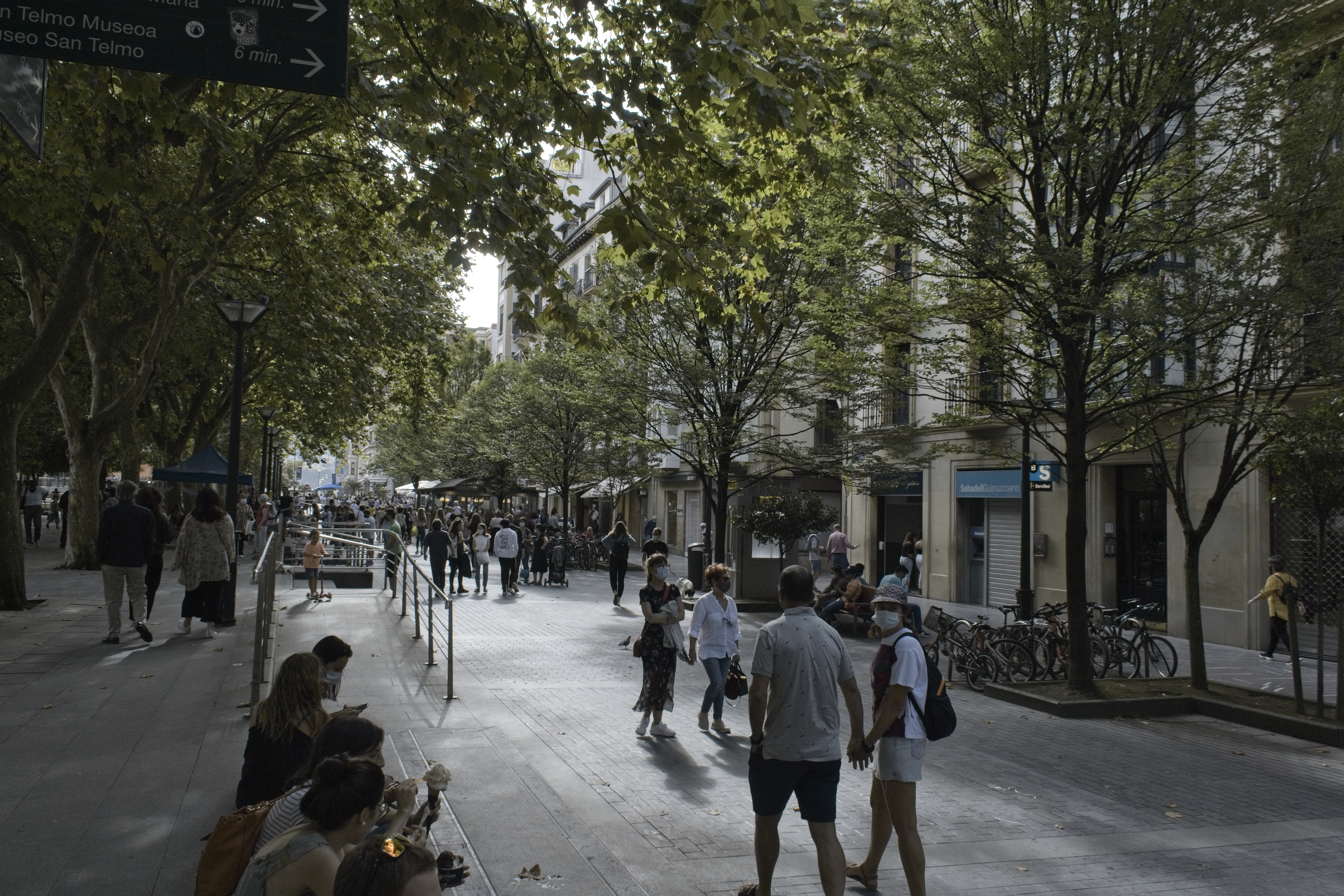
The grand walkway between the park and old town, where everyone came out to stroll for the early evening.
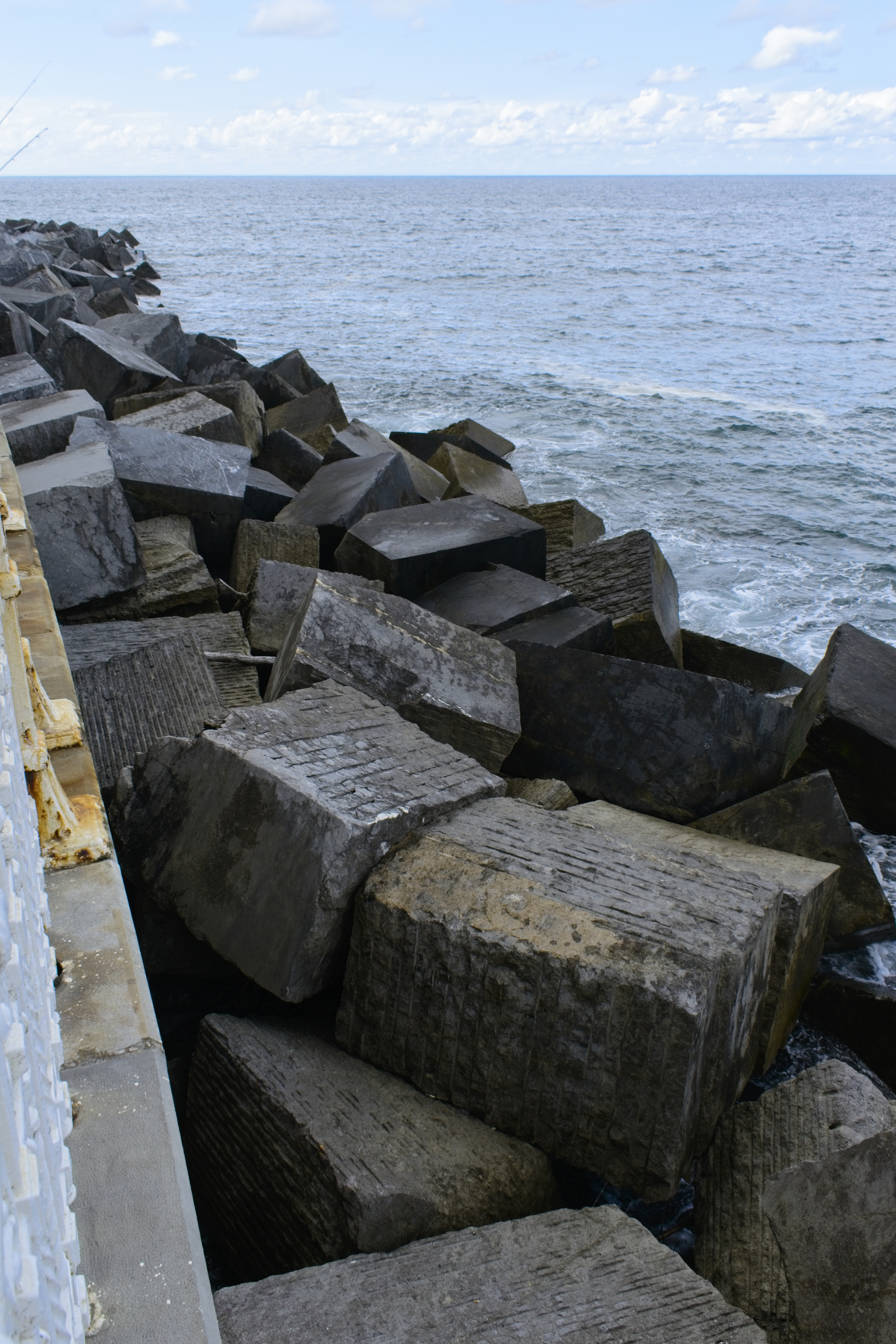
It’s hard to tell from this, but they use marble blocks for their breakwater. Now THAT’s classy.
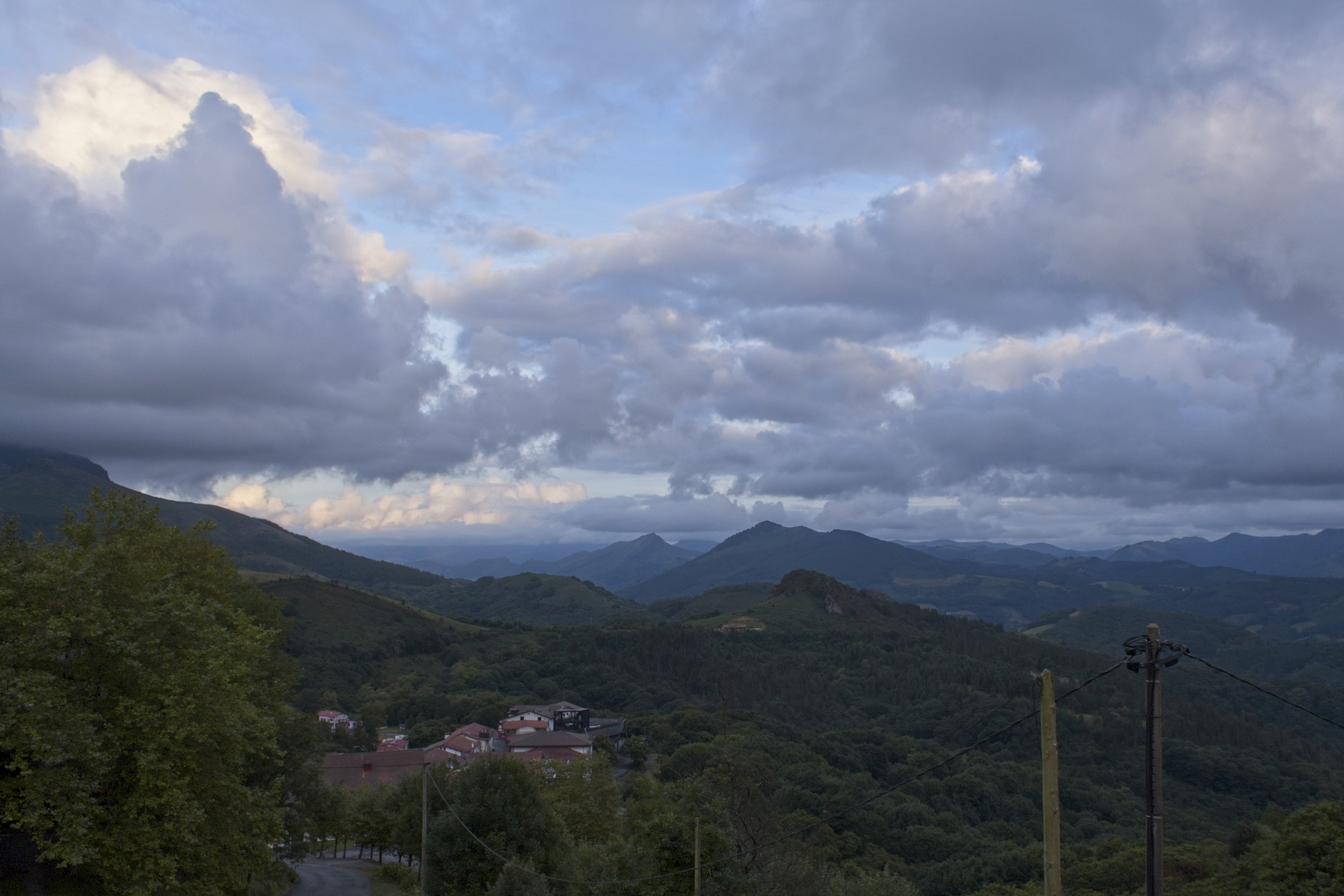
We came home to a spectacular view from our room.
Next day was a short hike along the border, spotting border markers, sheep and horses with cowbells. The horses must have been very confused.
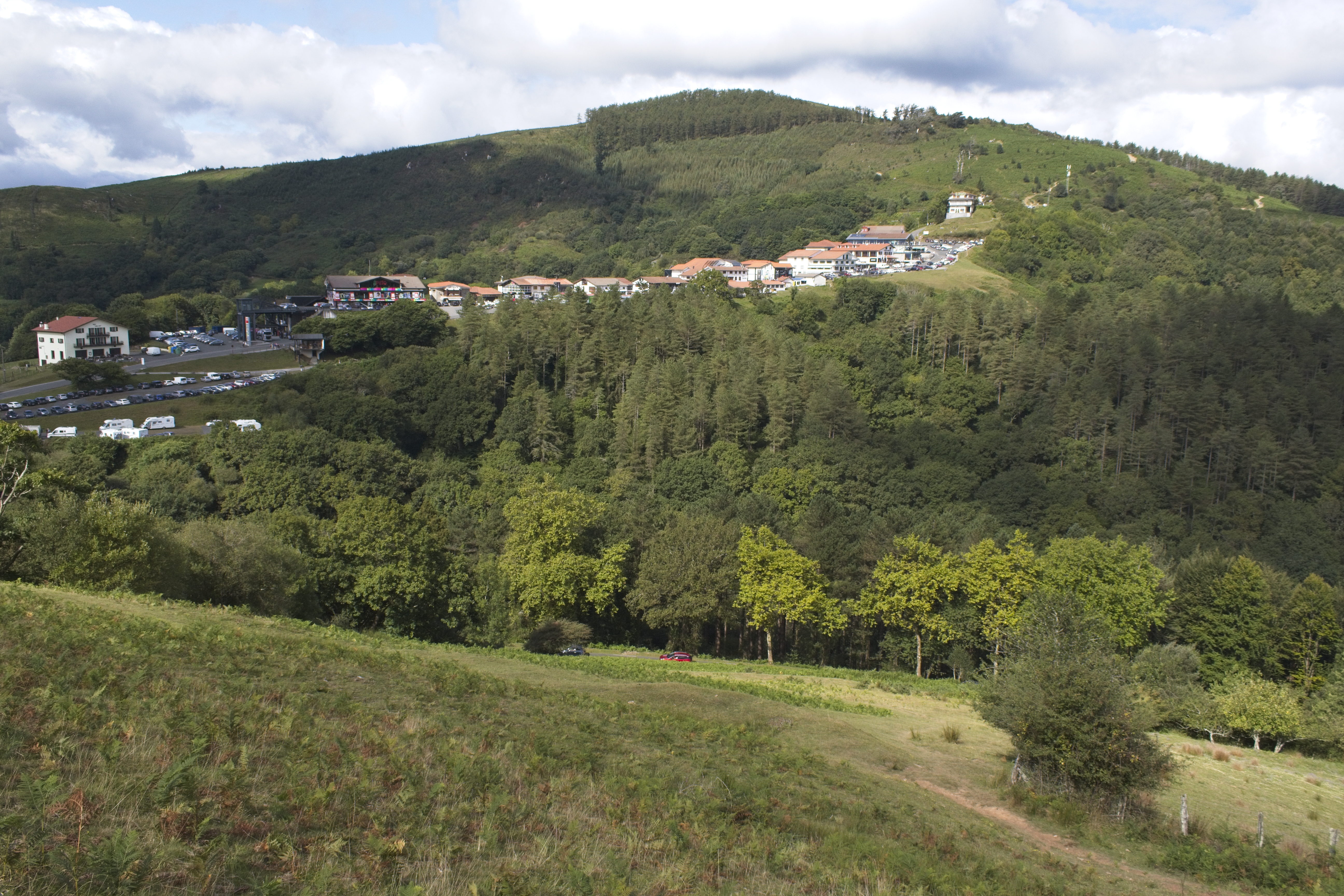
Looking back across the valley at Ibardin. Note the number of cars center left — Ibardin is like Bellingham, where instead of Canadians coming to shop, you get French. Many of the stores were outlets that sold in bulk.
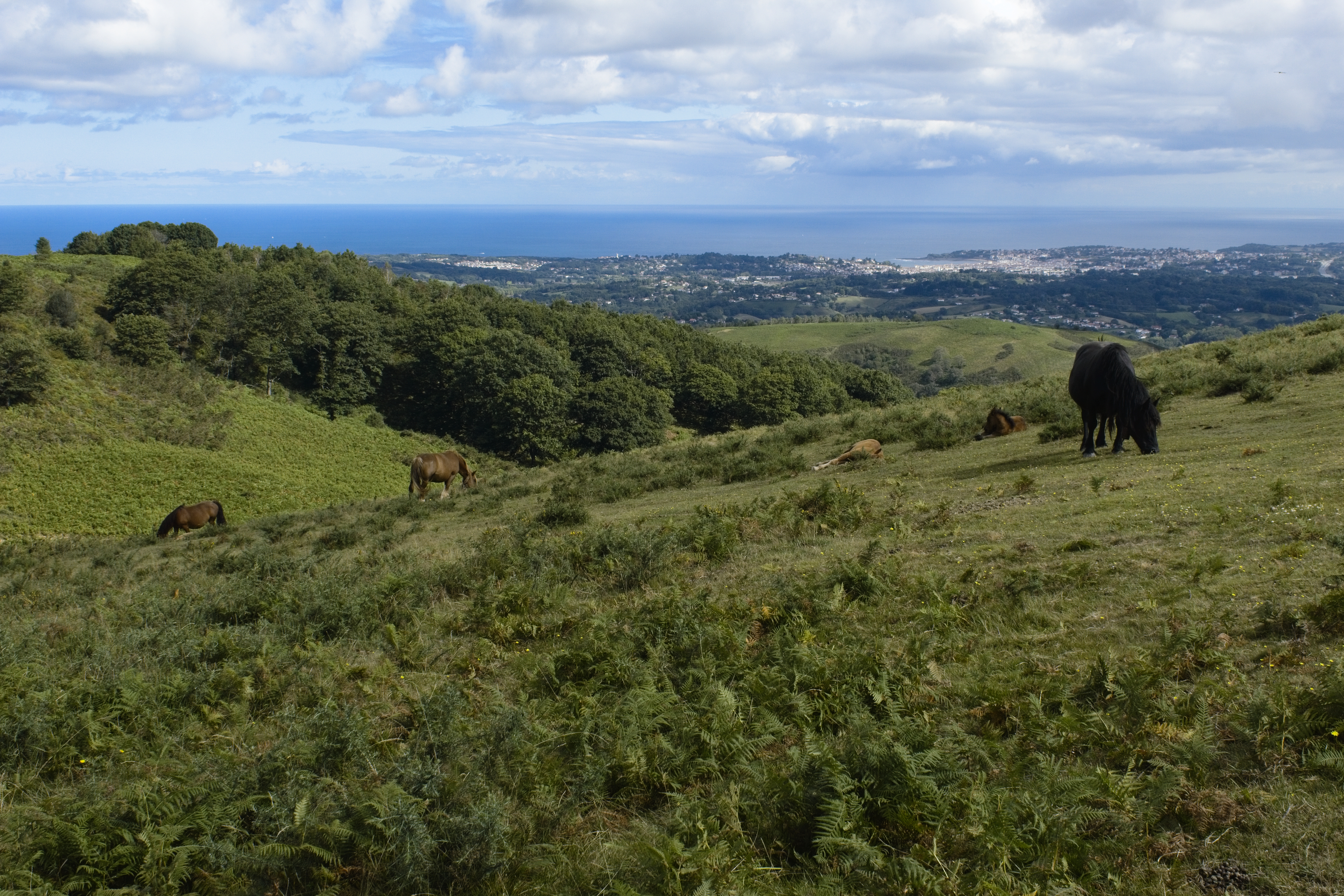
Horsies! And more of that coastline.

You can probably see 50 miles up the coast here, past Bayonne and Biarritz.
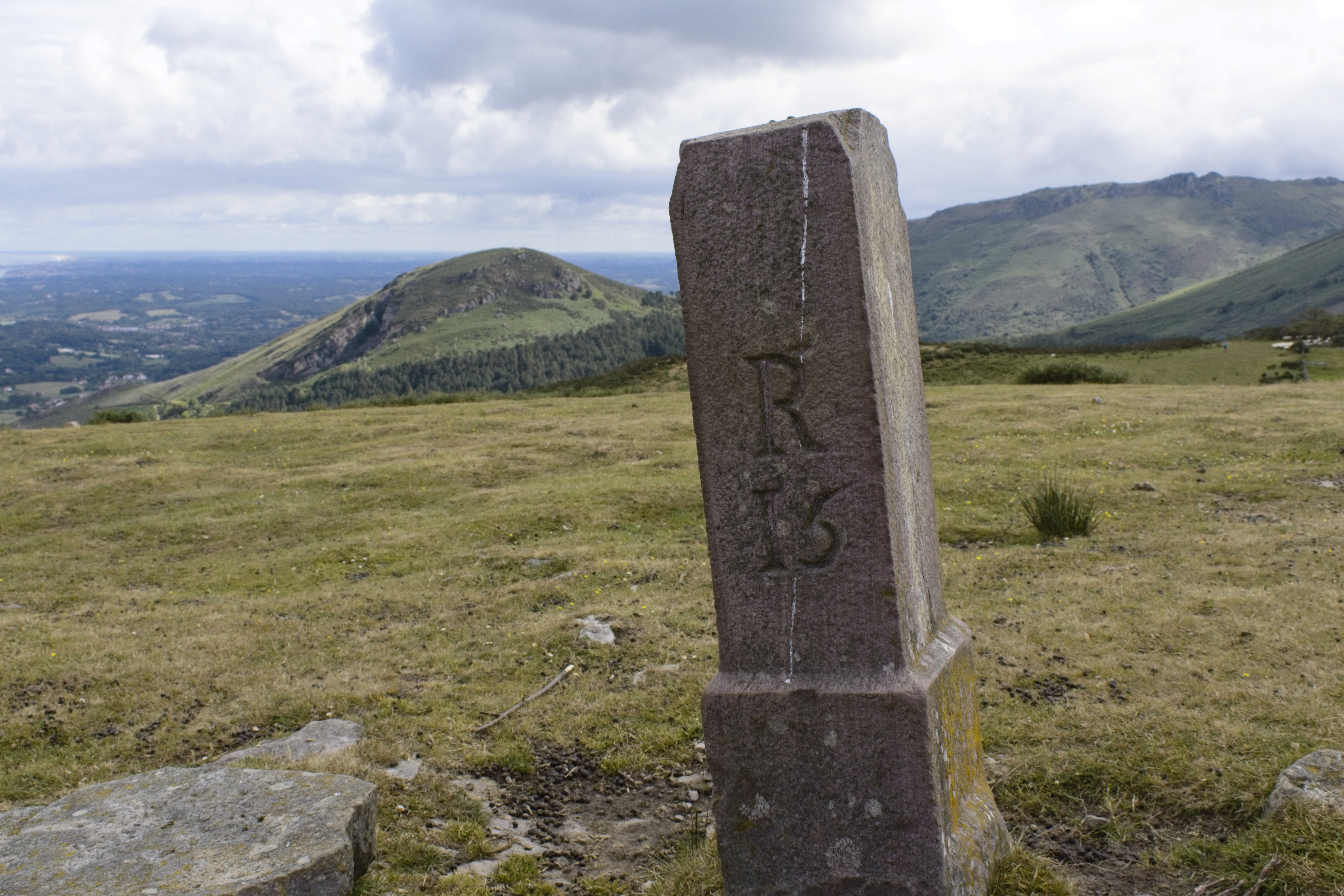
Border marker
The area around where we were staying is important in history; as you can see, it overlooks a good chunk of France at the easiest point to get an army through. The English, Napoleon, and border crashers throughout history left their marks here.
The next two days were fairly long hikes through the hills, one to Bera where we found a very nice spot open to have lunch and the other to Biriatou, where there were no cafes open at all. We had to share our meager trail food as we had expected to have lunch in town, and pester a lovely french woman to fill our water bottles for the uphill hike back to our hotel. Two long days of walking and at the end we were tired. Our pathfinding skills were tested, because while the trails are marked, there are many variants and not all of the forks are clear. We did not emerge covered in glory.
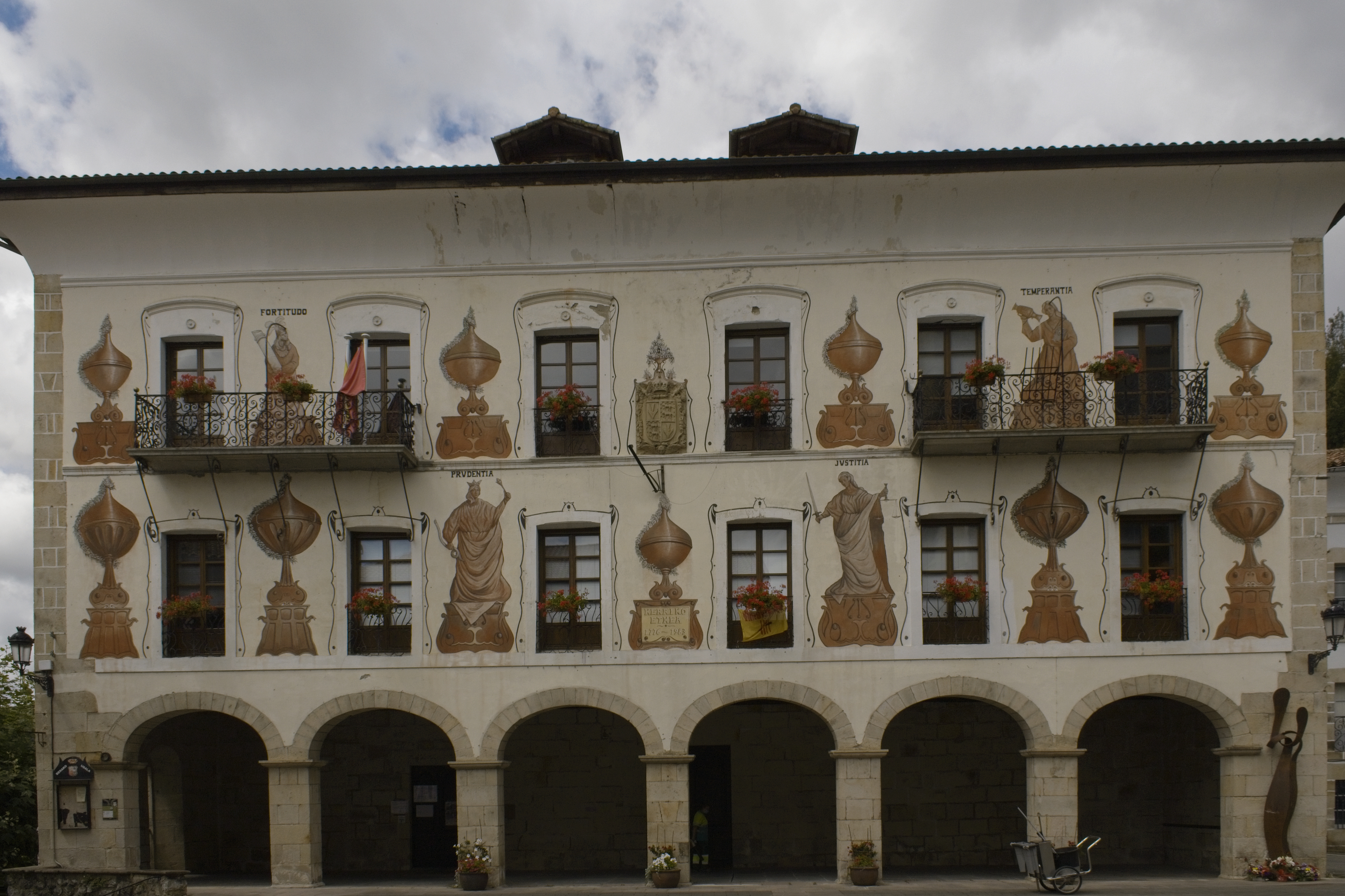
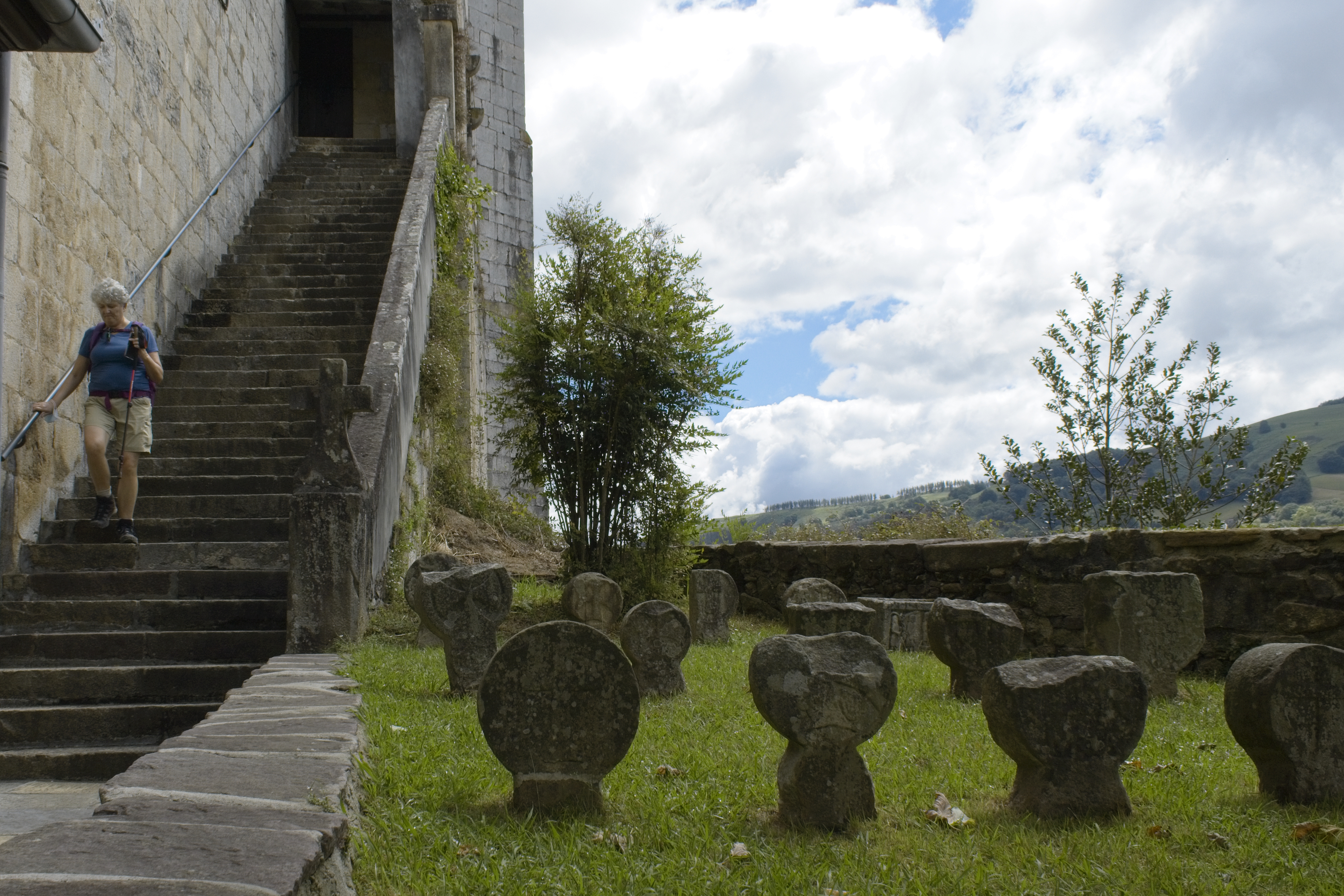
The local church and graveyard
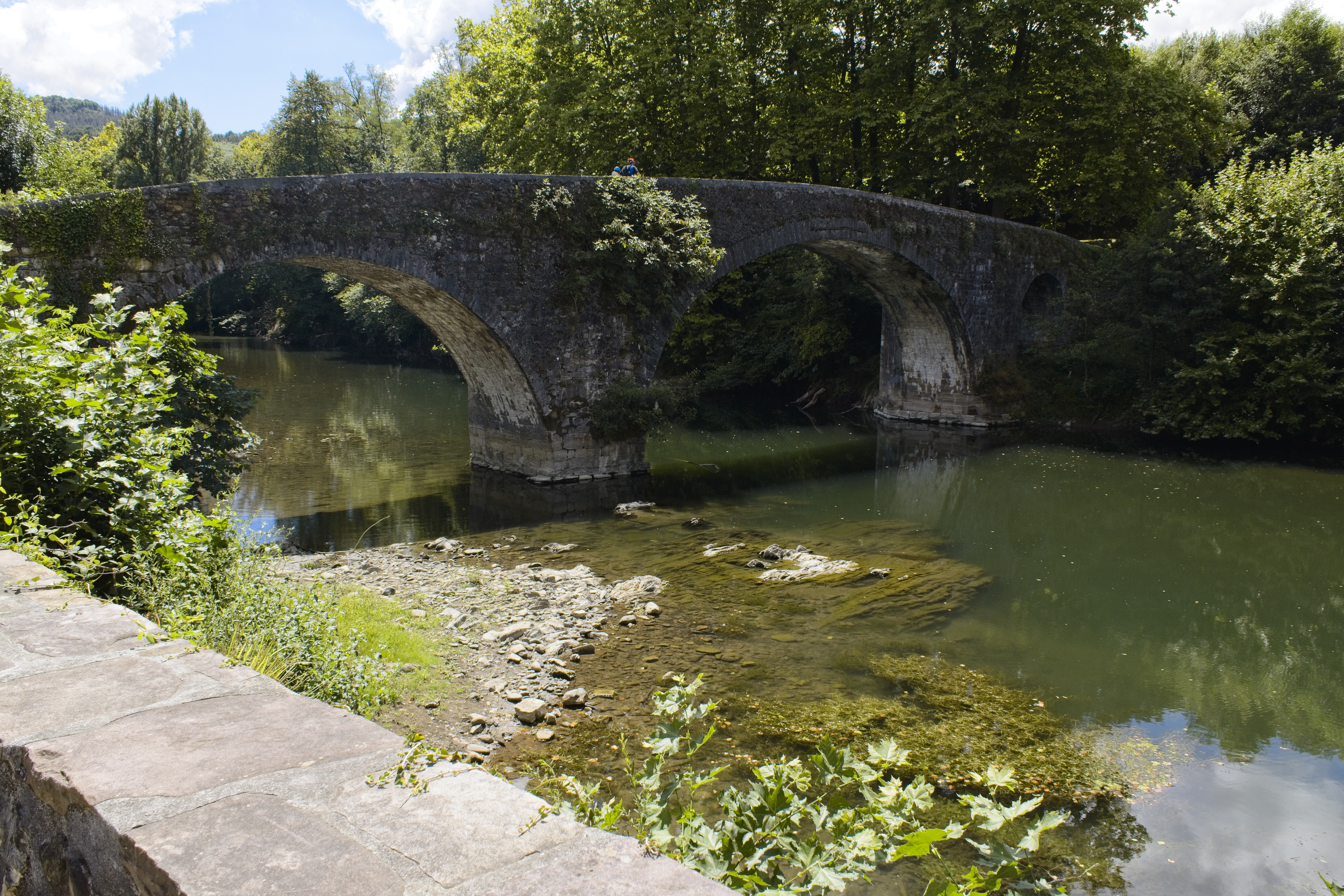
A bridge from Roman times
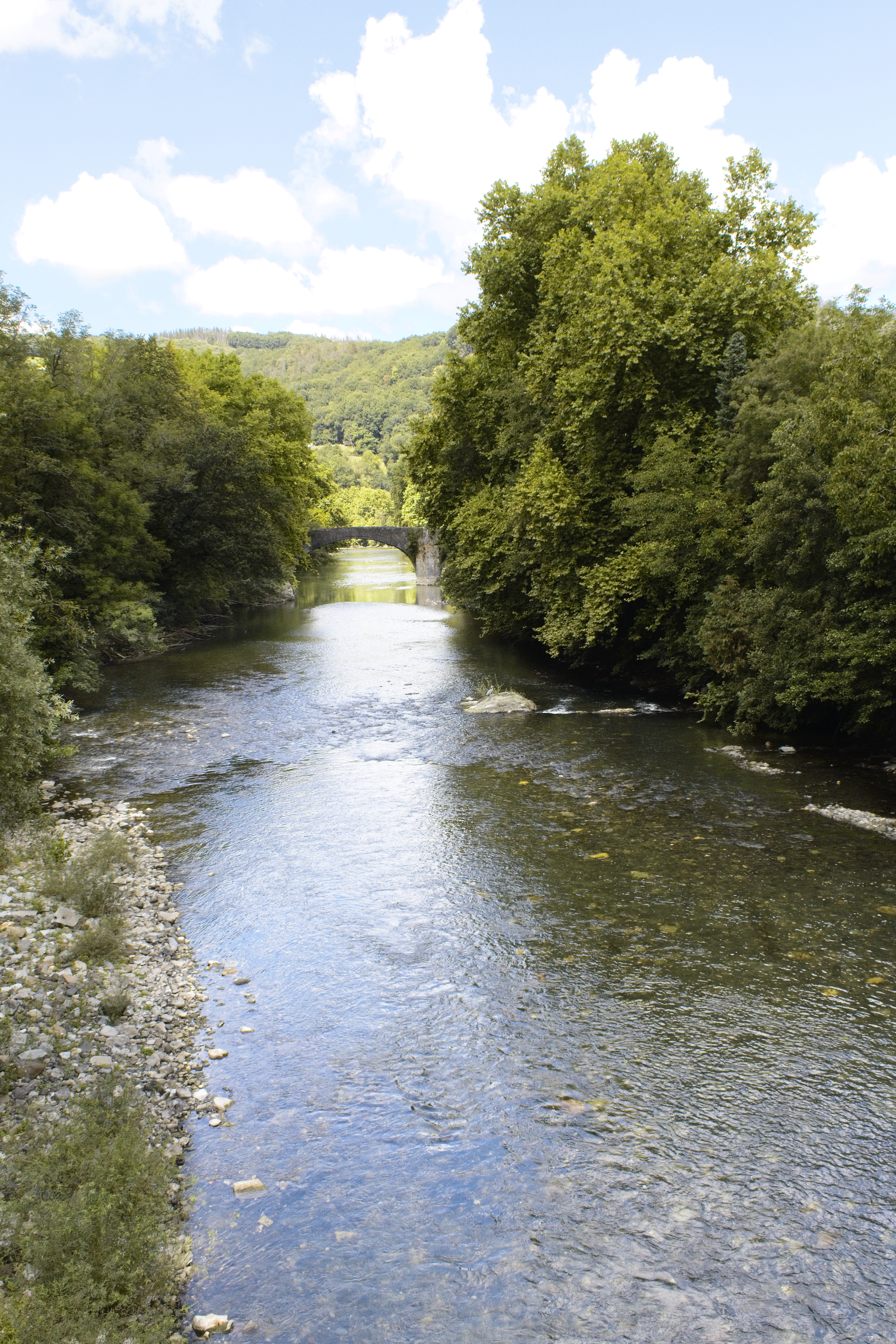
The bridge from upriver
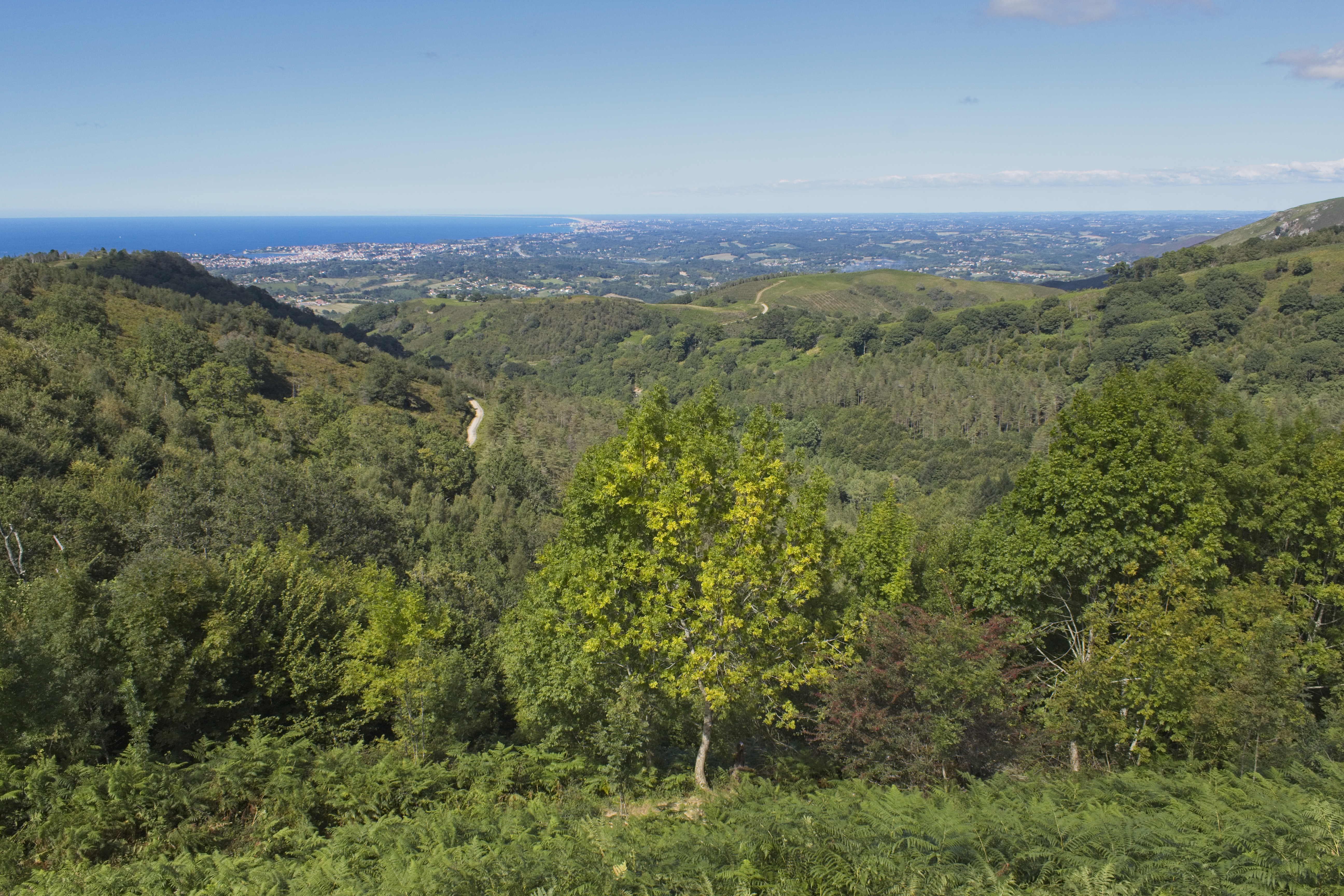
That view.
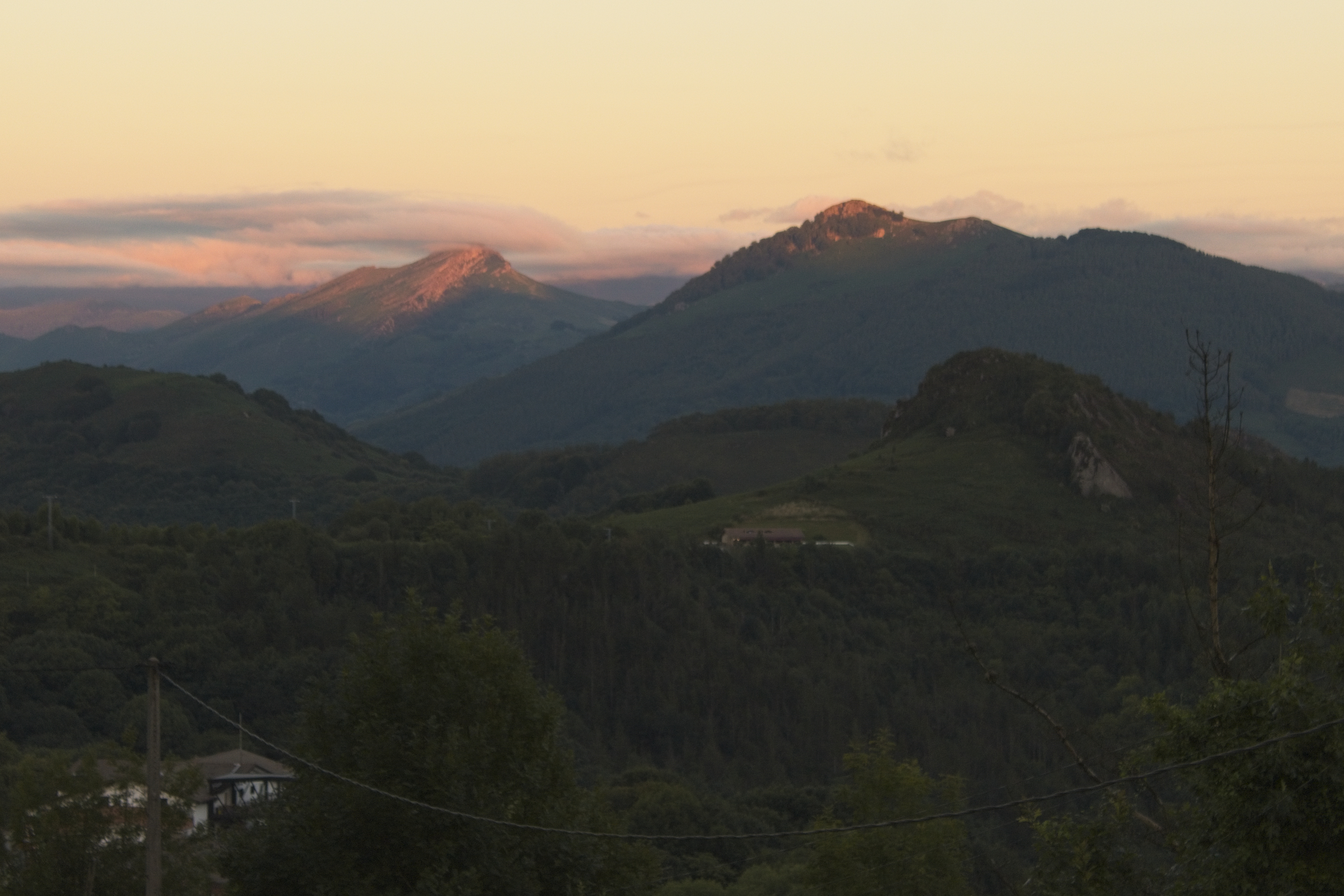
Sunset
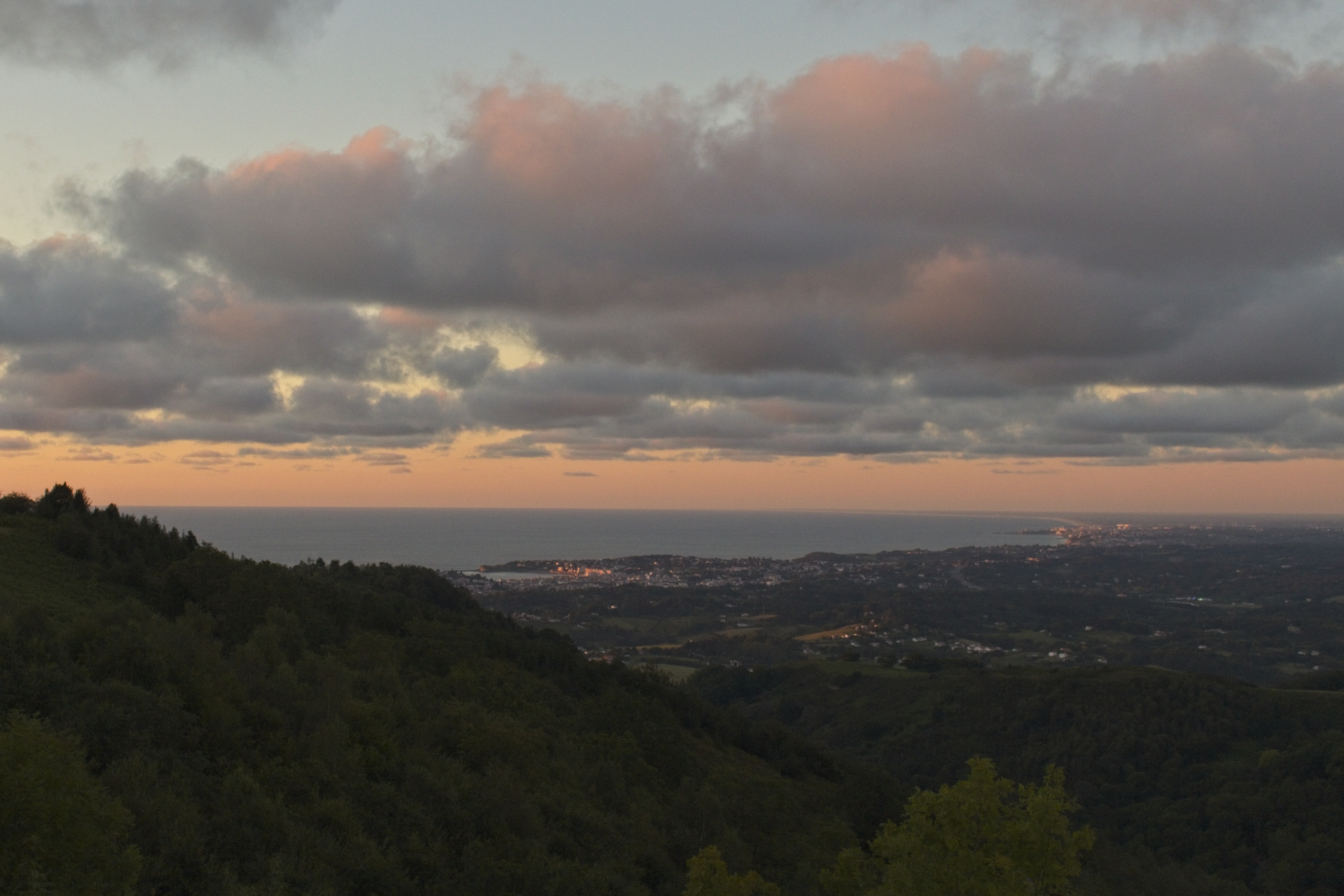
My gawd, that view.
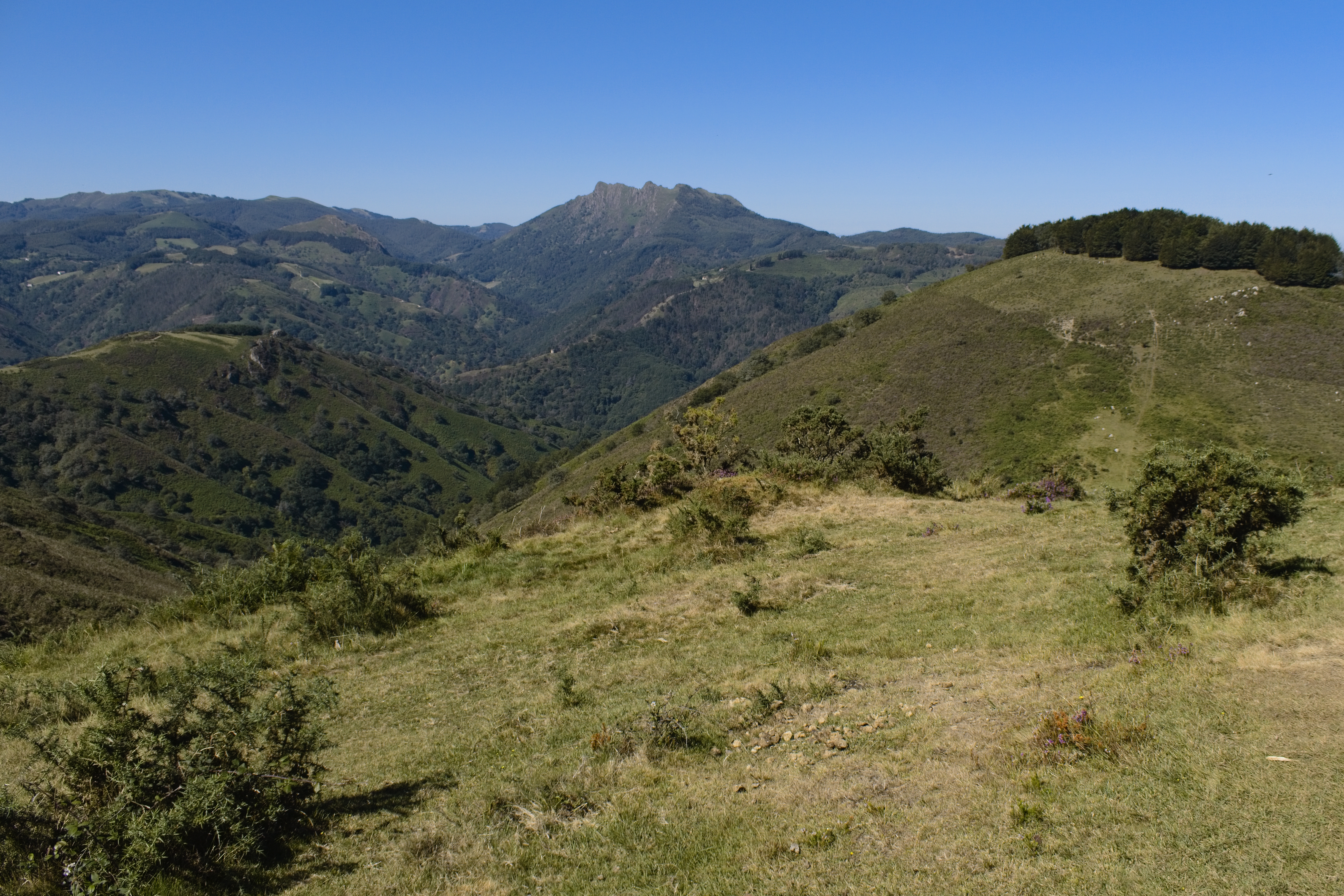
It’s rugged country, even this close to the coast.
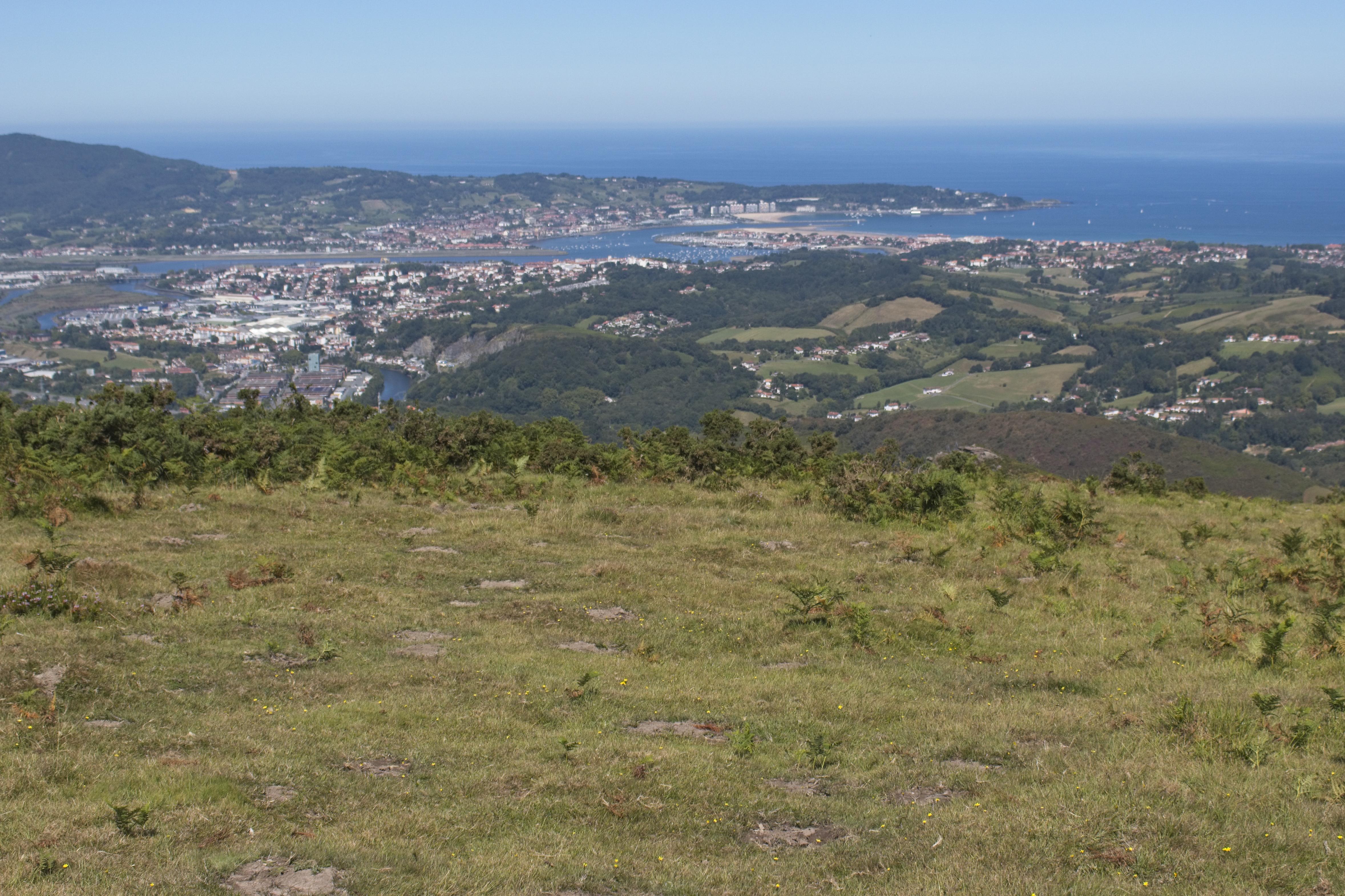
Looking down into Irun
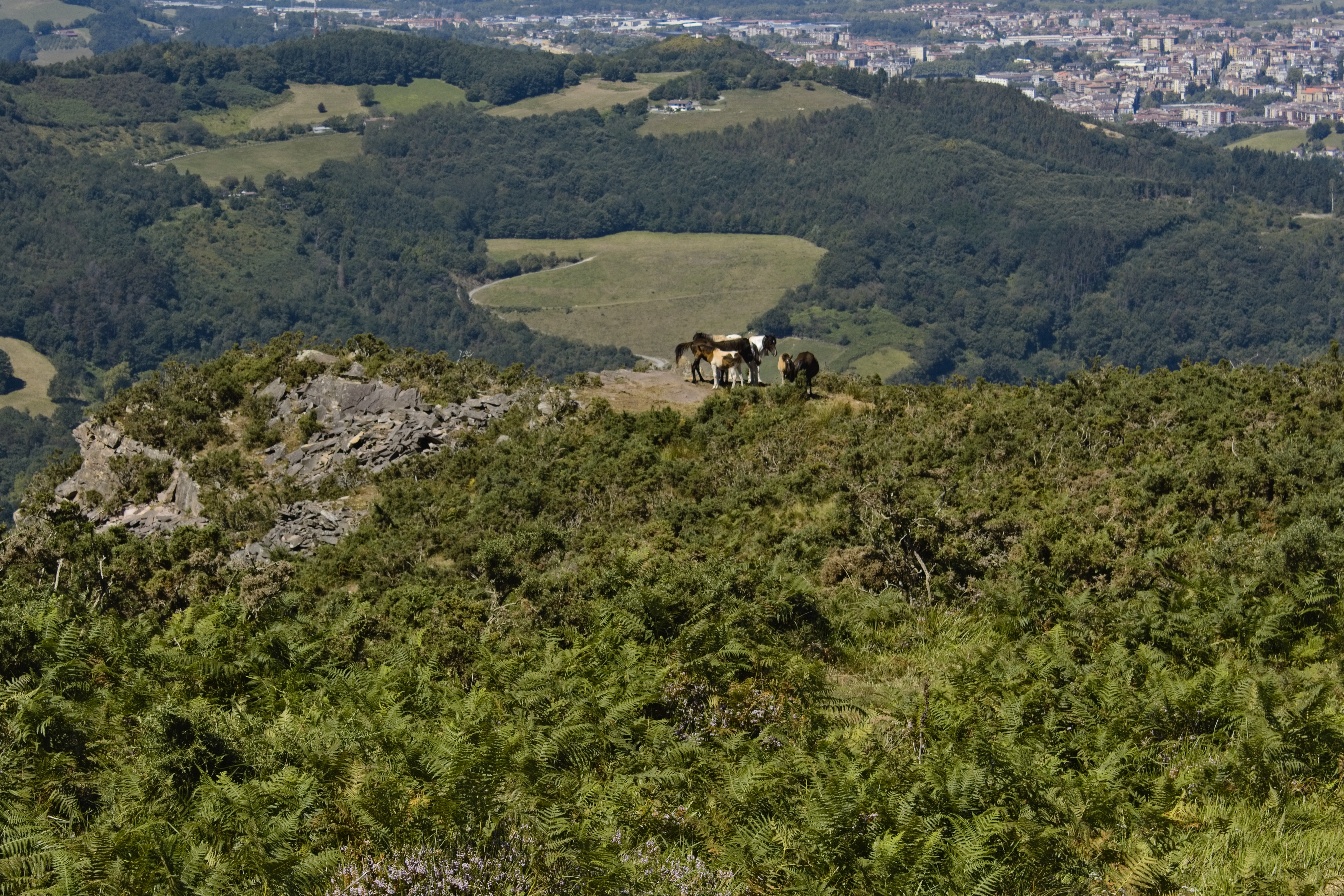
Horsies! on a cliff
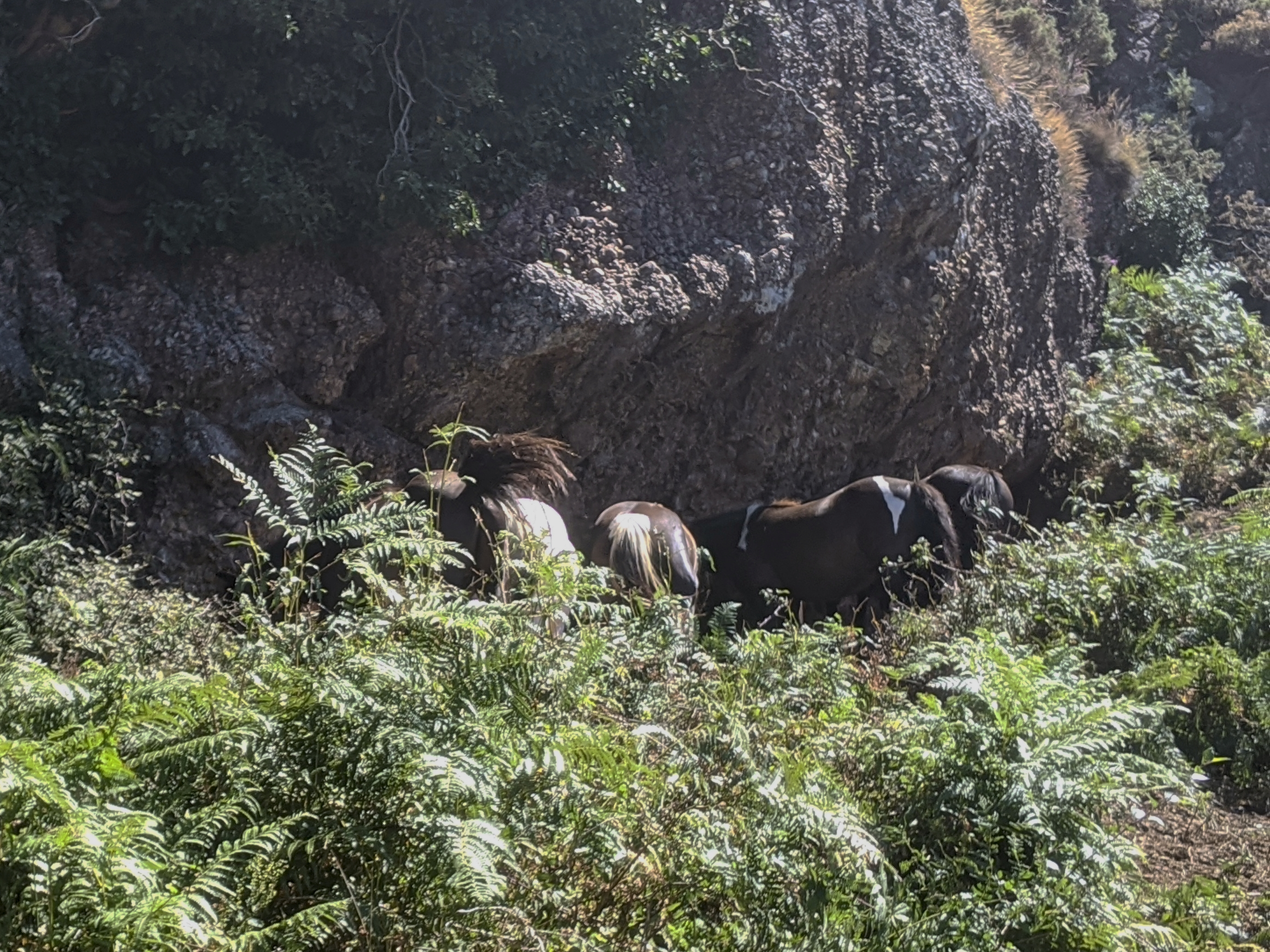
Evidently there was a Trump cabinet meeting here that day. Get it? Because it’s a bunch of horses’ asses!
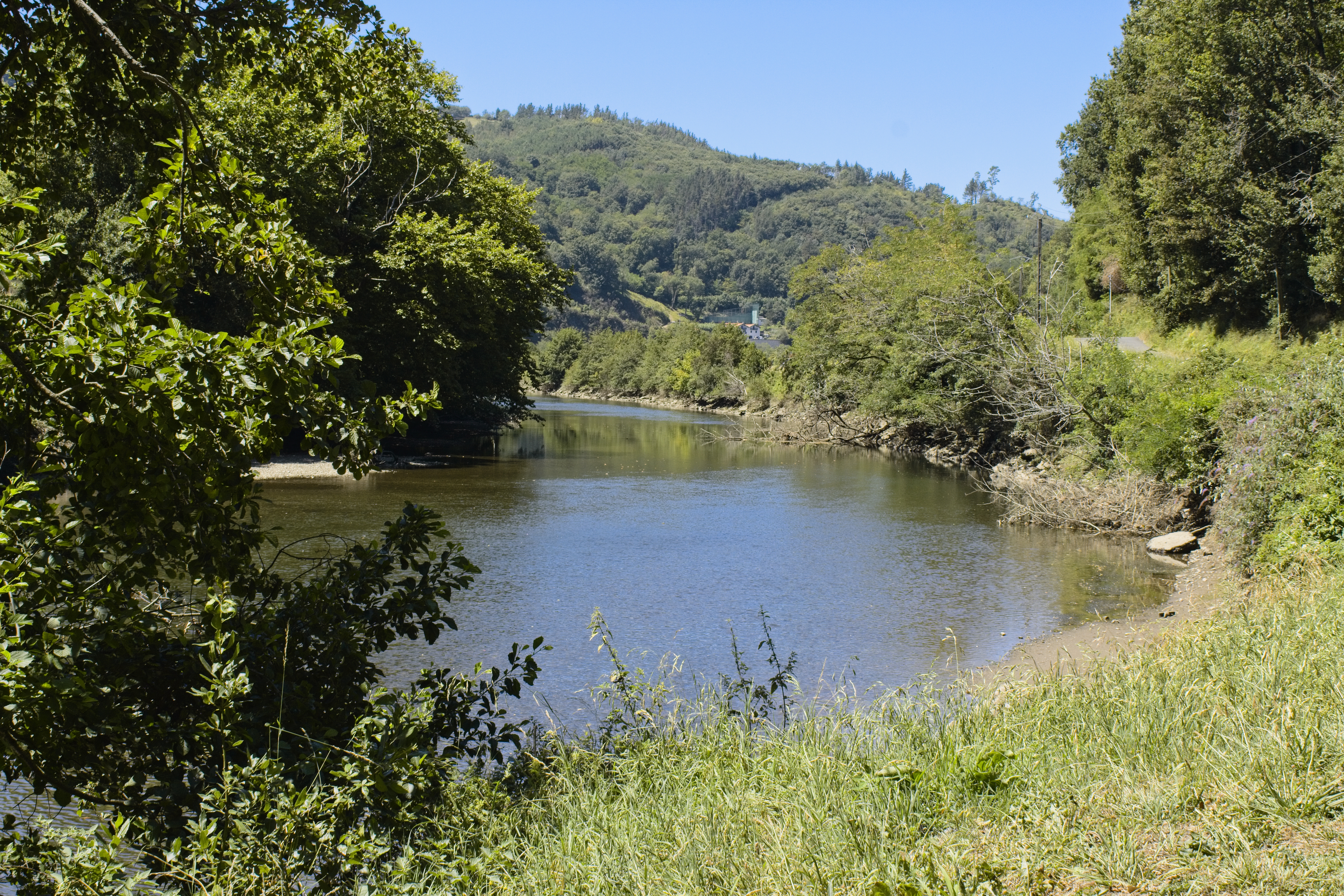
The border between France and Spain.
We took a day off and drove east and then north through the foothills of the Pyrenees. It was beautiful and I wished I had a motorcycle to ride on those amazing roads. The pass over the Pyrenees into France was just like every alpine stage of the Tour de France.
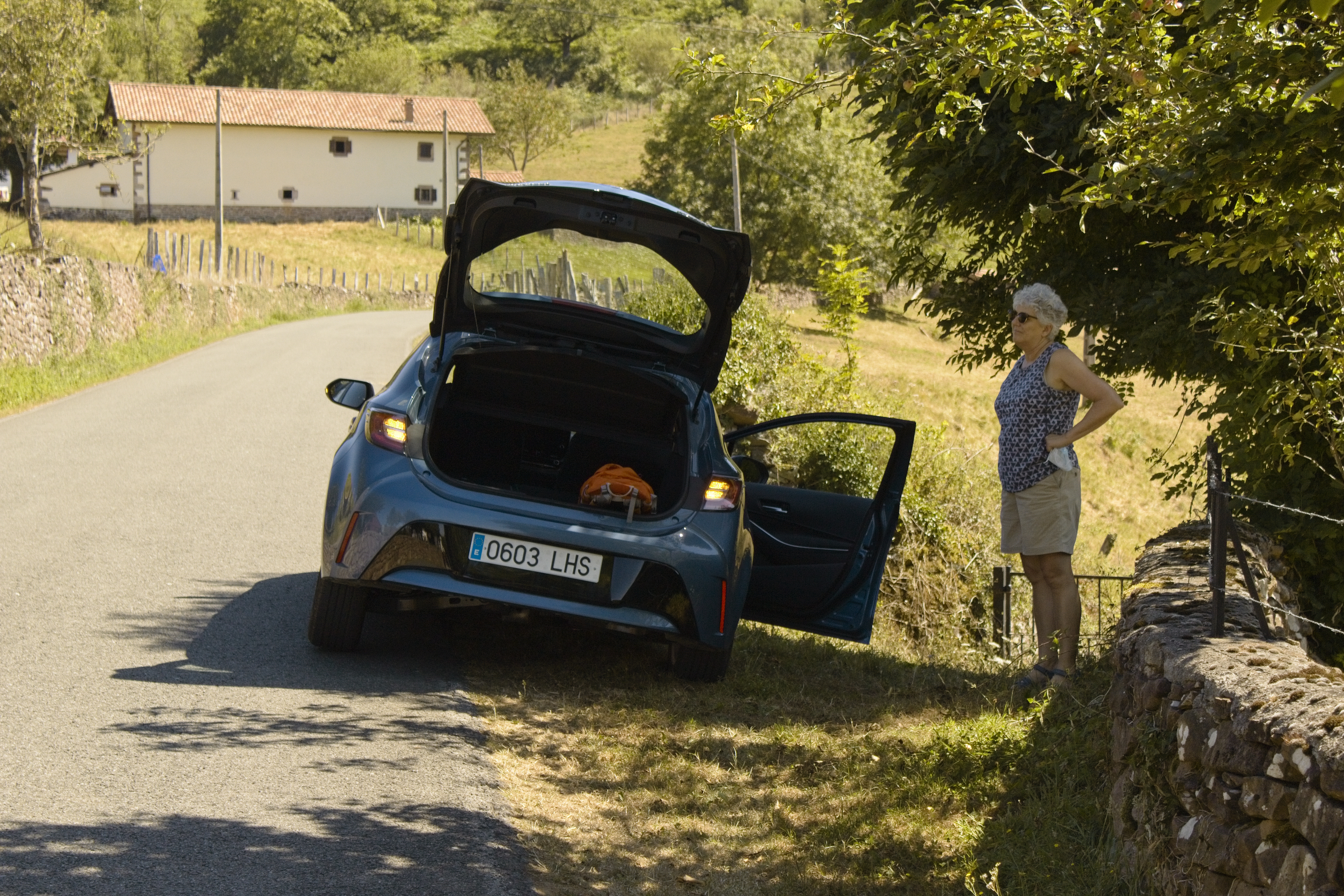
Our trusty steed and the Navigator.
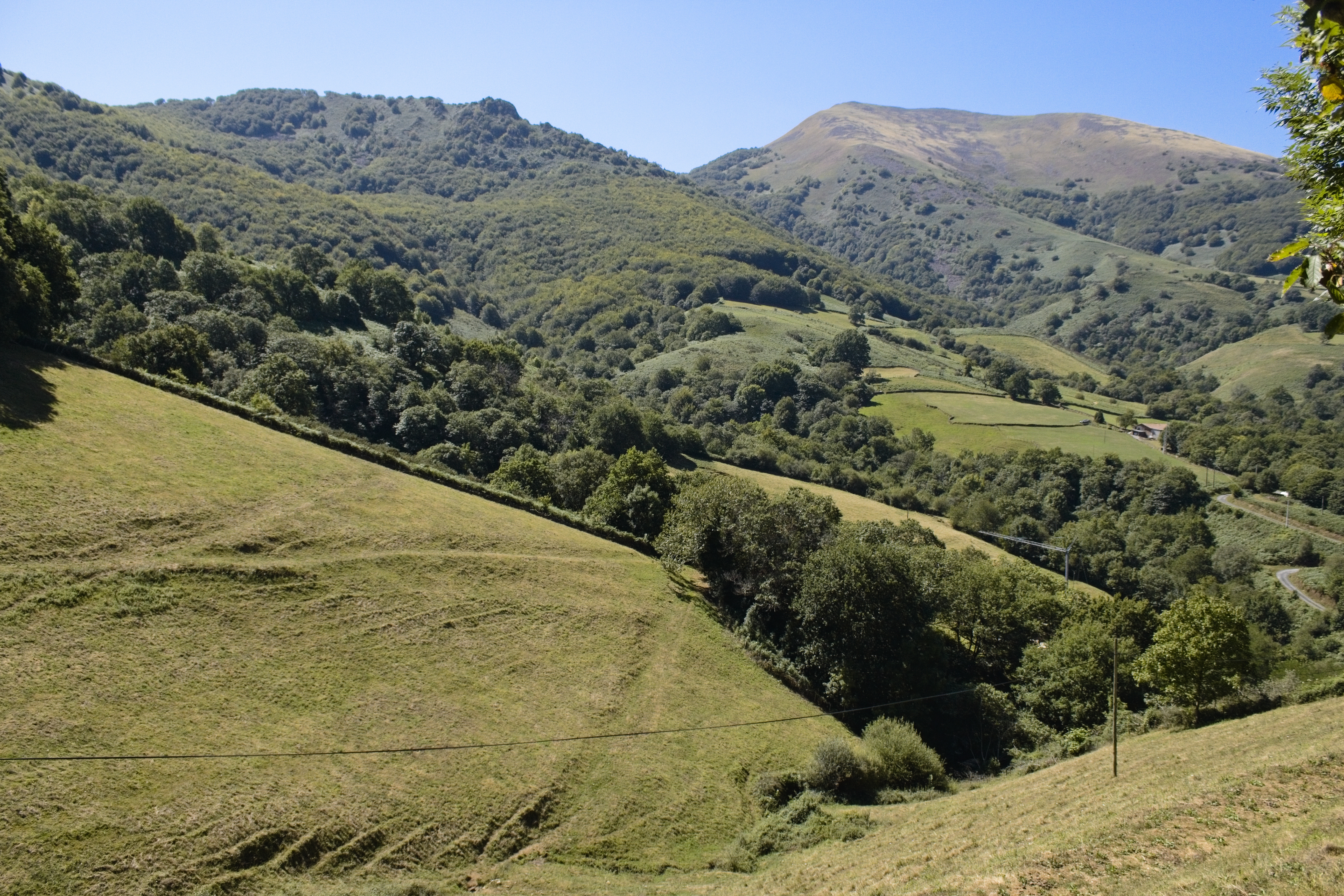
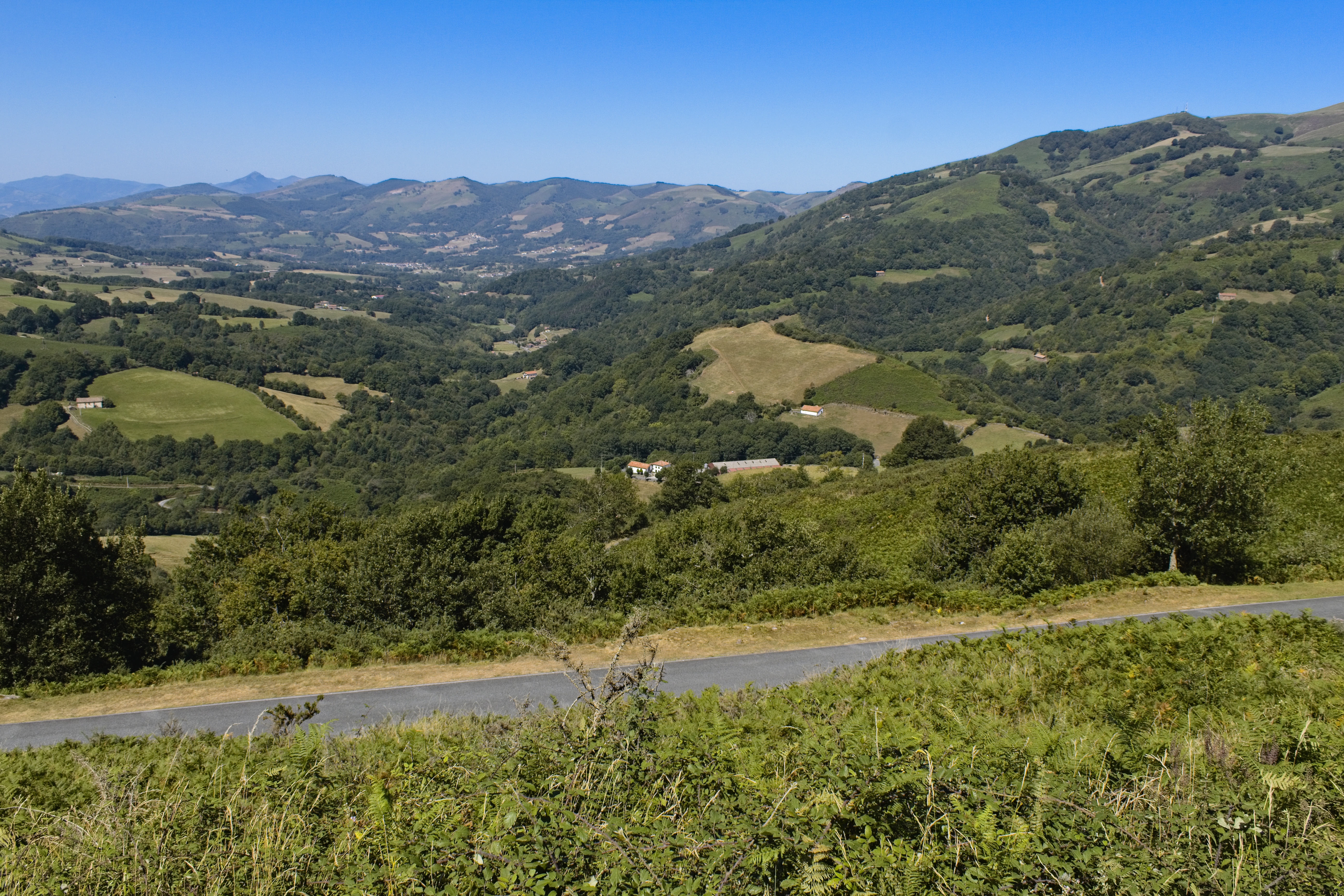
The countryside goes on forever.
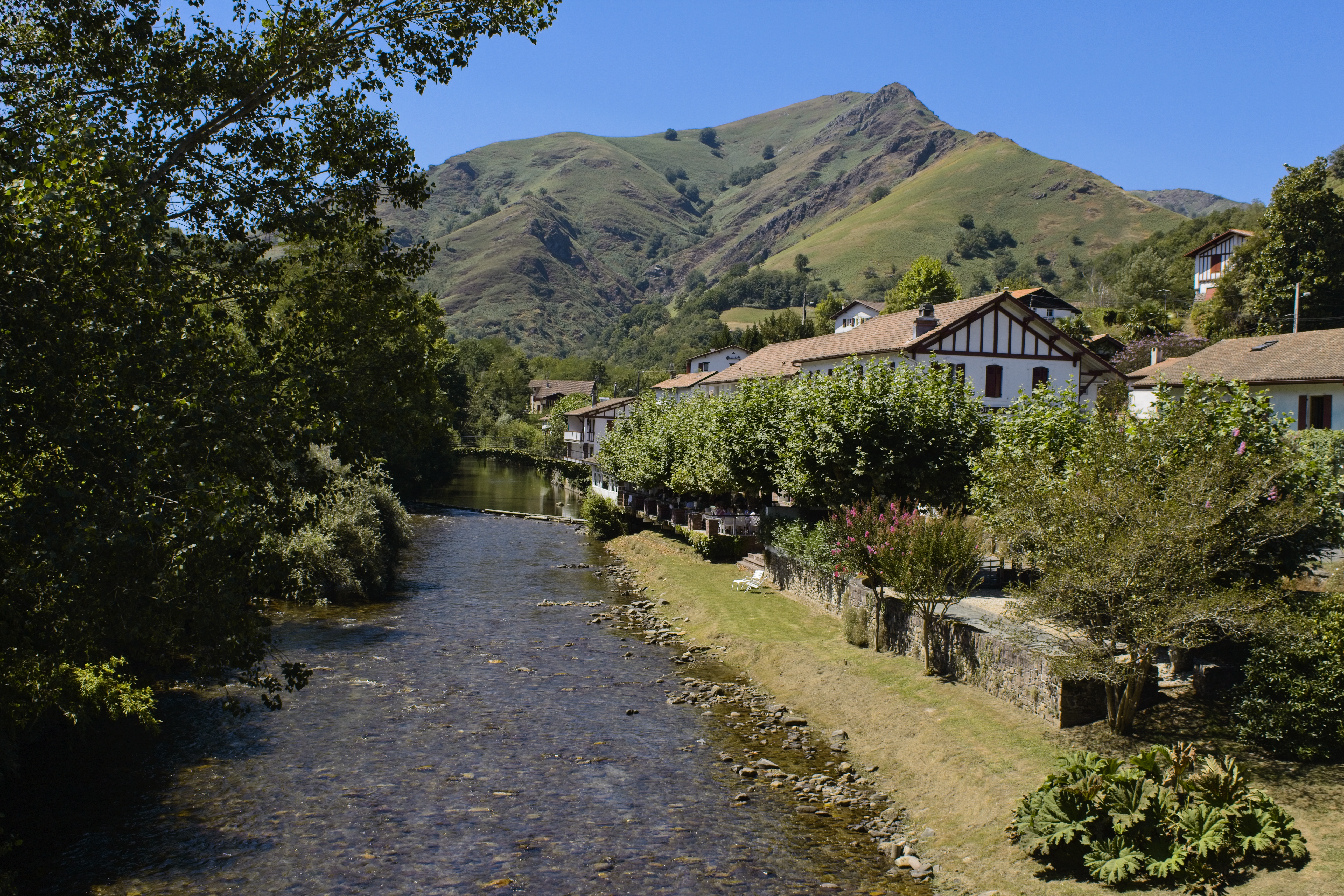
I dunno, some town we stopped in.
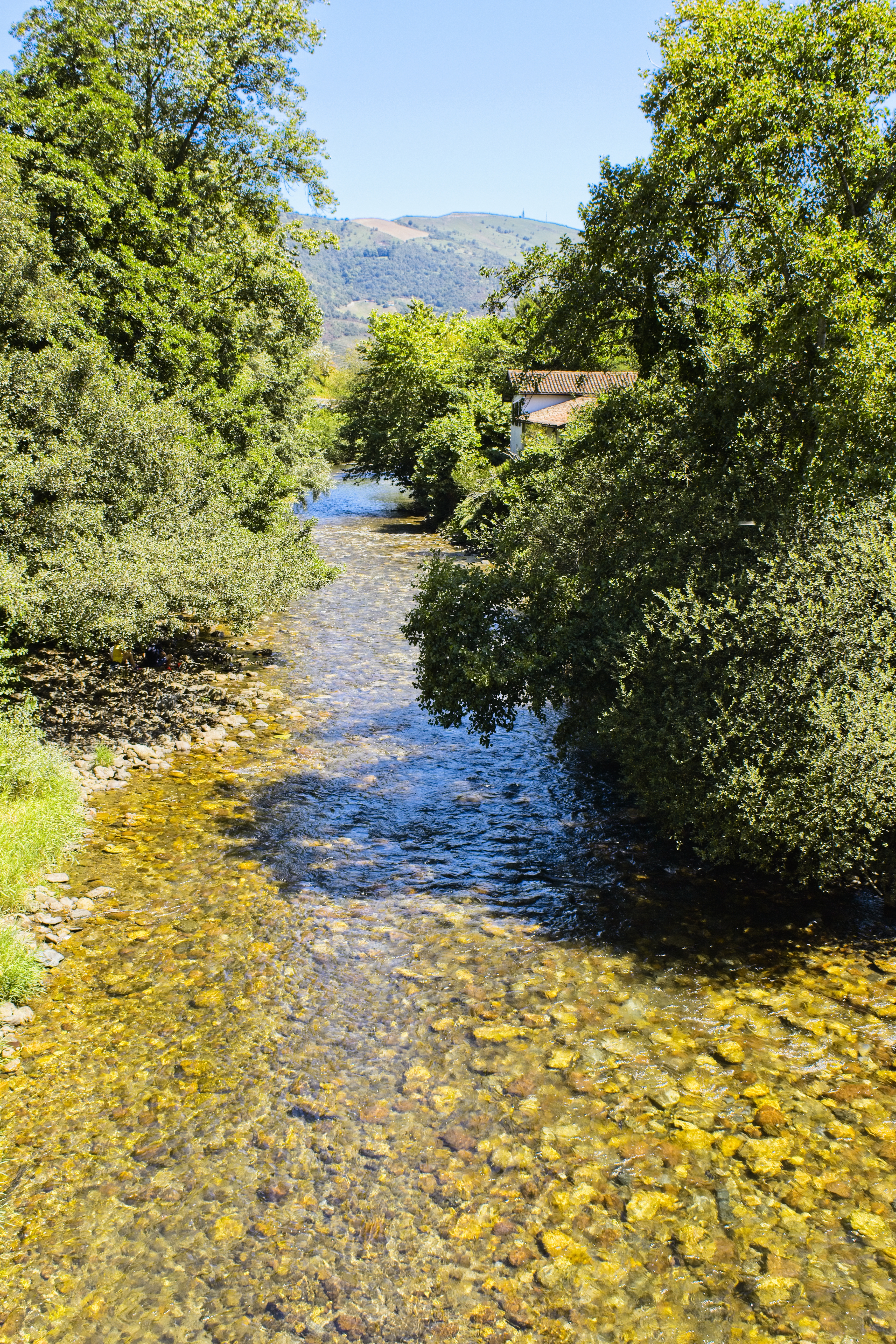
We wound up in Bayonne, where the lack of social distancing on the beach and streets freaked me out. It’s a lovely city and I’m sure very glamorous.
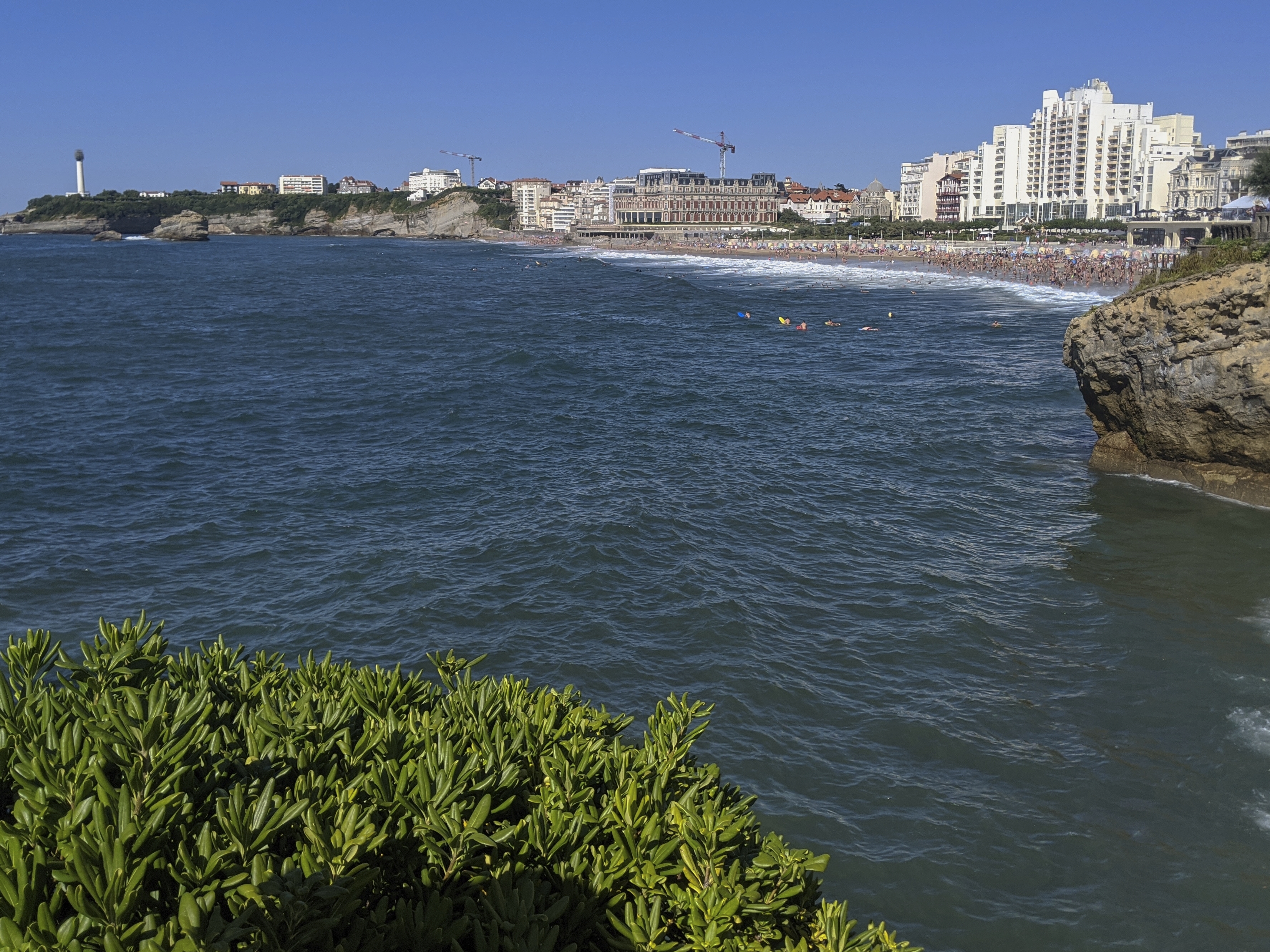
View of the beach from about as close as I wanted to get to it.
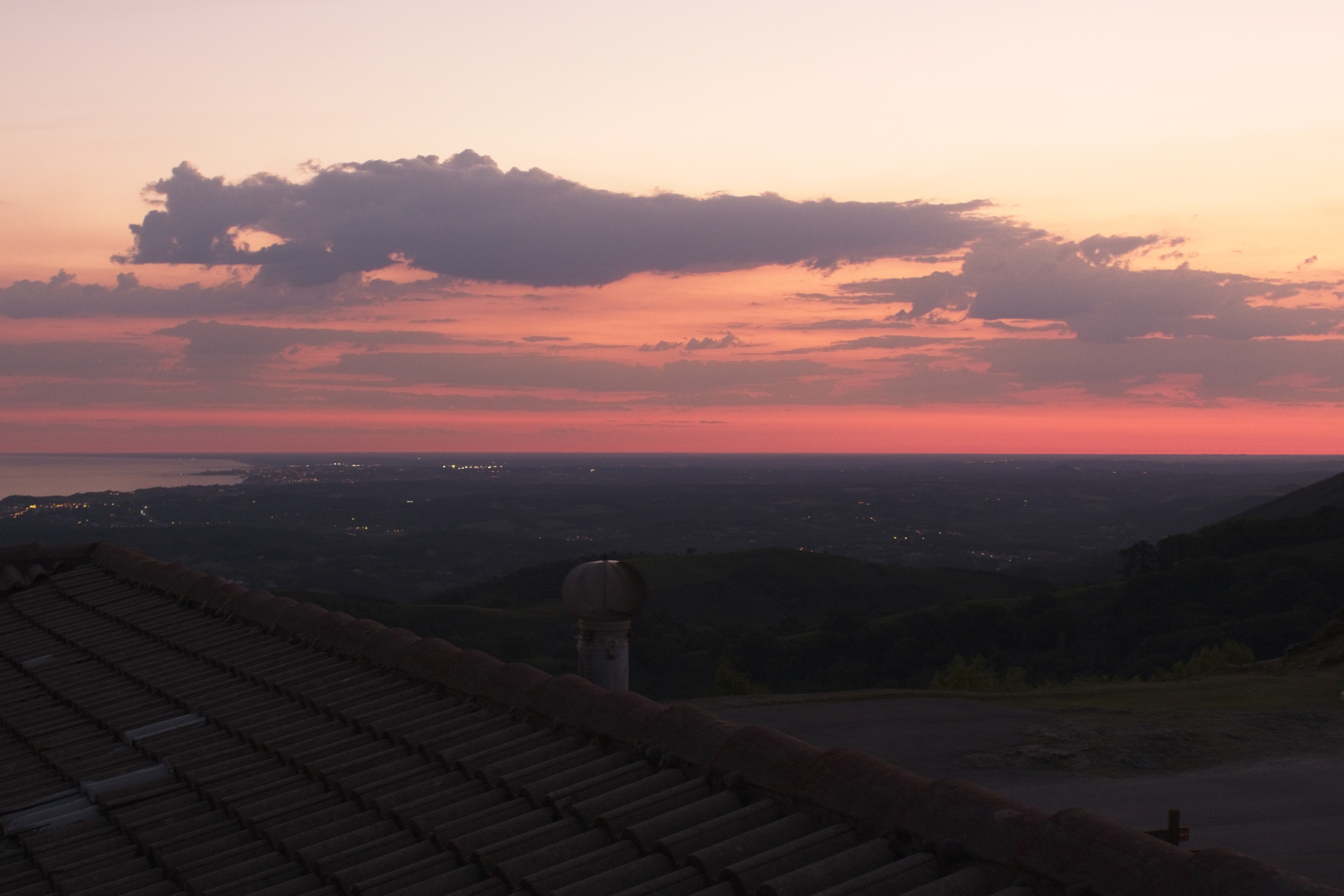
Have I mentioned the view yet? This was a bit before sunrise.
Next day was a road trip to Bilbao, a lovely city where we had a spectacular meal for a very good price. Too much time driving, not enough hanging out. Can’t complain though, it was very pretty.
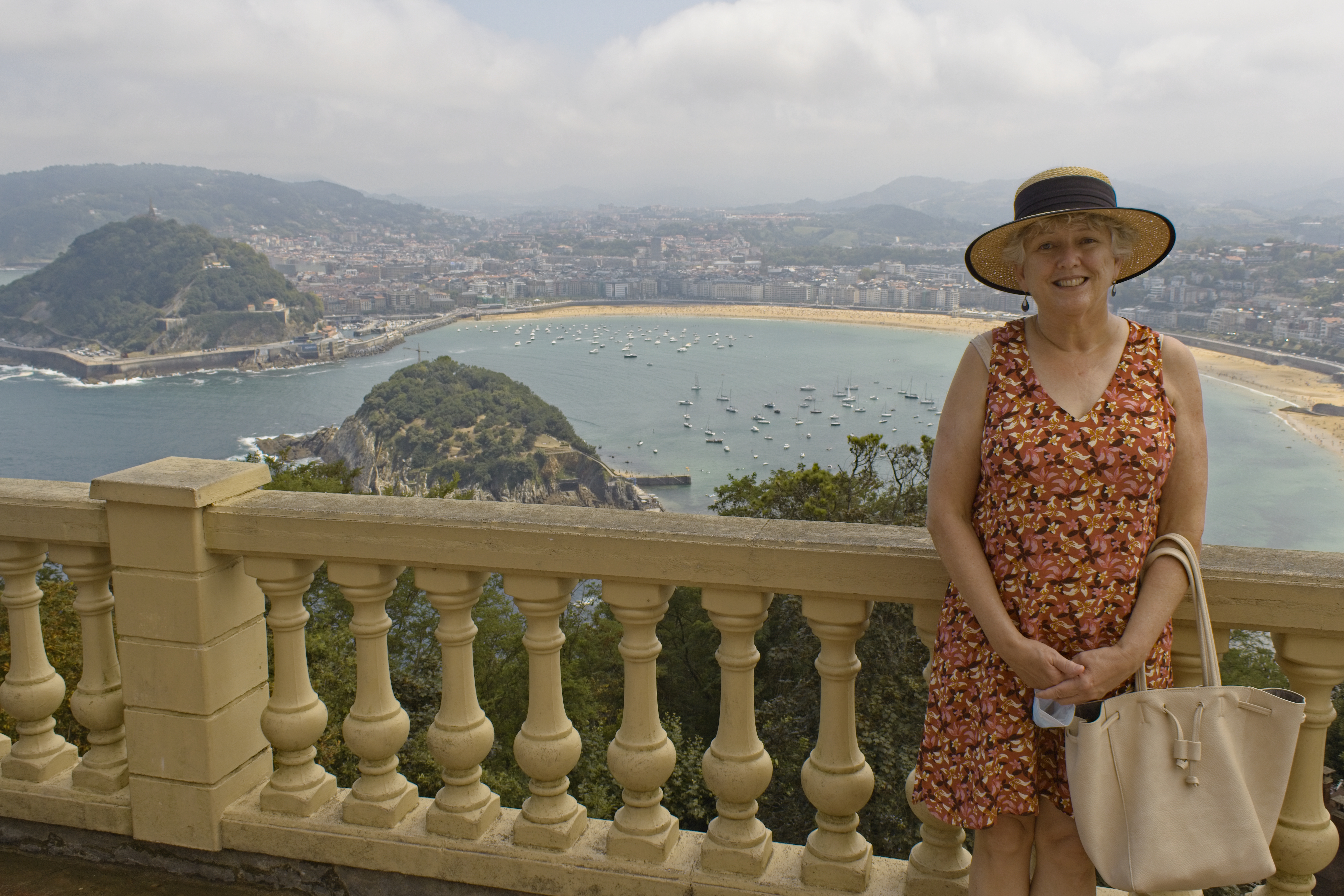
On the way to Bilbao, we stopped in San Sebastian for a view of the city from another angle.
And that was section 1 of our north coast trip. At the rate I’m writing, I should finish up the recap before Christmas. Probably.
-
Alicante
The weekend after July 4, we made a trip to Alicante. Cindy planned this in May once we thought we could see an end to the lockdown. The hotel was offering a great deal, fully refundable, so what did we have to lose? We booked a 4-day stay.
As it turns out, we picked a great weekend to get away. It was just starting to get really hot in Valencia and we were definitely pretty tired of seeing the same four walls. Even the city was getting too familiar. We picked up our car at the airport and hightailed it south for two hours to Alicante.
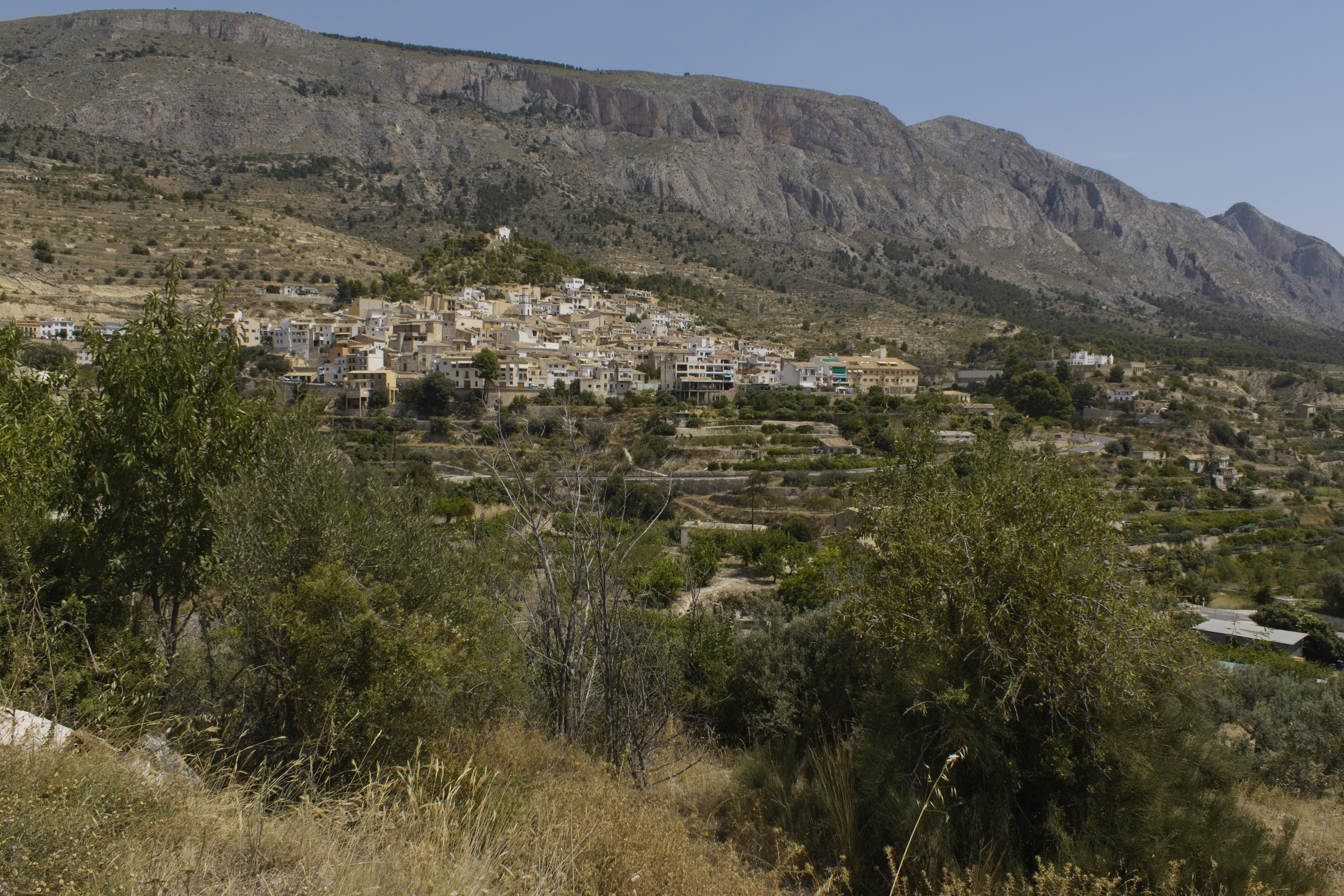
Looking back at Sella from the trail.
Our first stop was a village called Sella (say-ya) just outside Benidorm. There’s a Britcom about Benidorm and the very middle-class British folks who spend their summers there. It isn’t complimentary and I can’t actually say how closely it hews to the reality; suffice to say we were happy to give Benidorm itself a wide berth. At any rate, Sella is a hill town located at the confluence of two rivers (“rivers”), the Riu Sella and the Barranc de l’Arc (“Ravine of the arch” according to Google Translate), which have allowed the valley to be irrigated and cultivated for over a thousand years. Evidently they used to grow grains along with fruit and olives at least as far back as the Moorish occupation. There was a mill at the confluence of the two rivers and terracing that allowed the steep hillsides to be cultivated.
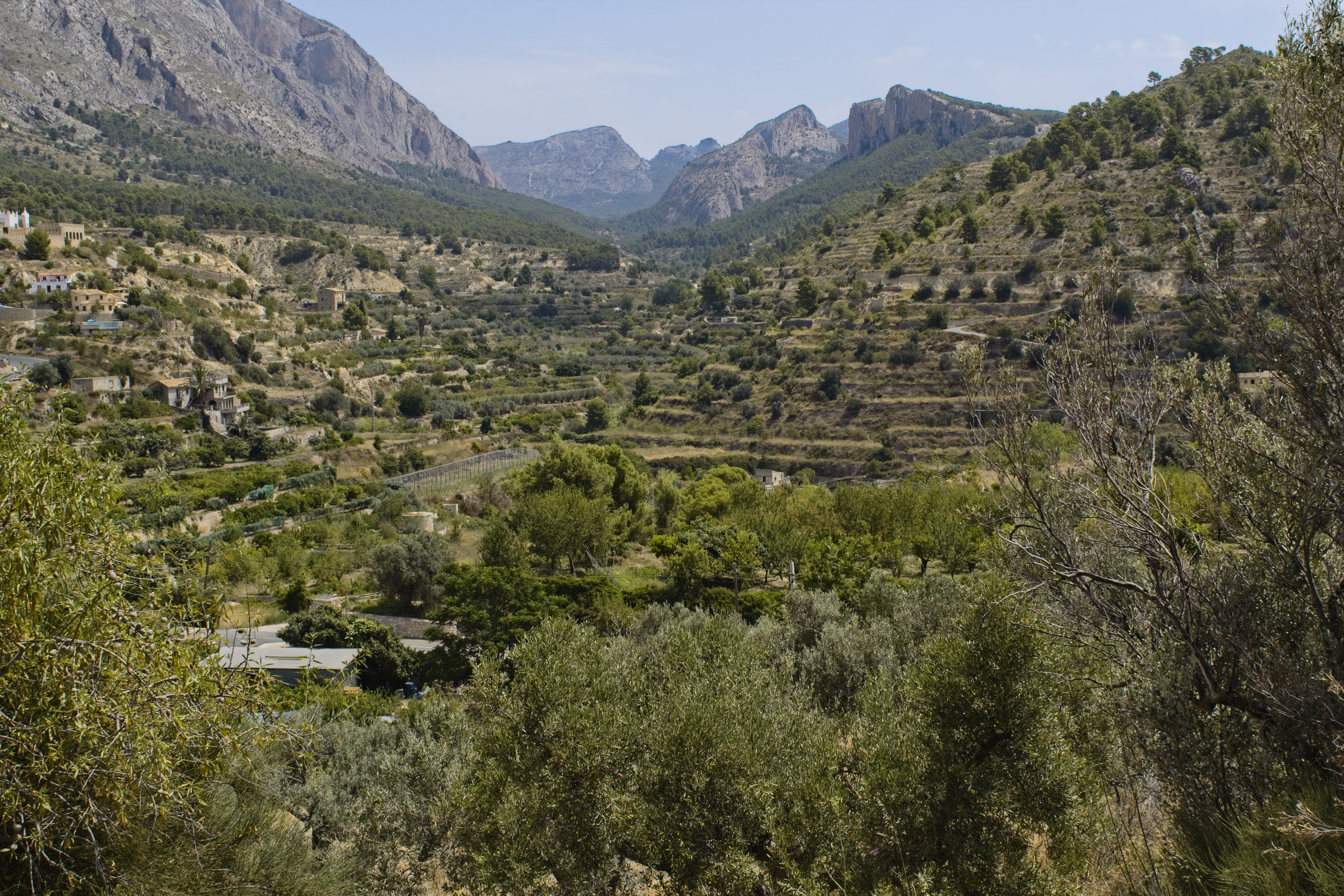
Looking up the valley of the Barranc de l’Arc.
The terraces of course only went as high as where they could get river water, so there’s a very clear point where the cultivated land cuts off and the rest of the valley is natural. The location sits at the feet of steep granite (?) mountains and is very picturesque. The area is still actively under cultivation. We saw olives, oranges, lemons, limes and artichokes with our un-trained eyes.
We had a little difficulty finding the start of the trail in town. This may become a recurring theme, as the hike details were a little sketchy. Once we found it, it was great, with painted blazes at the key points in the hike and a signboard in town showing the route. I think the Spanish are very hiker friendly but we haven’t quite unlocked the code in the route descriptions.
At any rate, from town we dropped down into the bottom of the valley, eventually coming to the confluence of the two rivers.
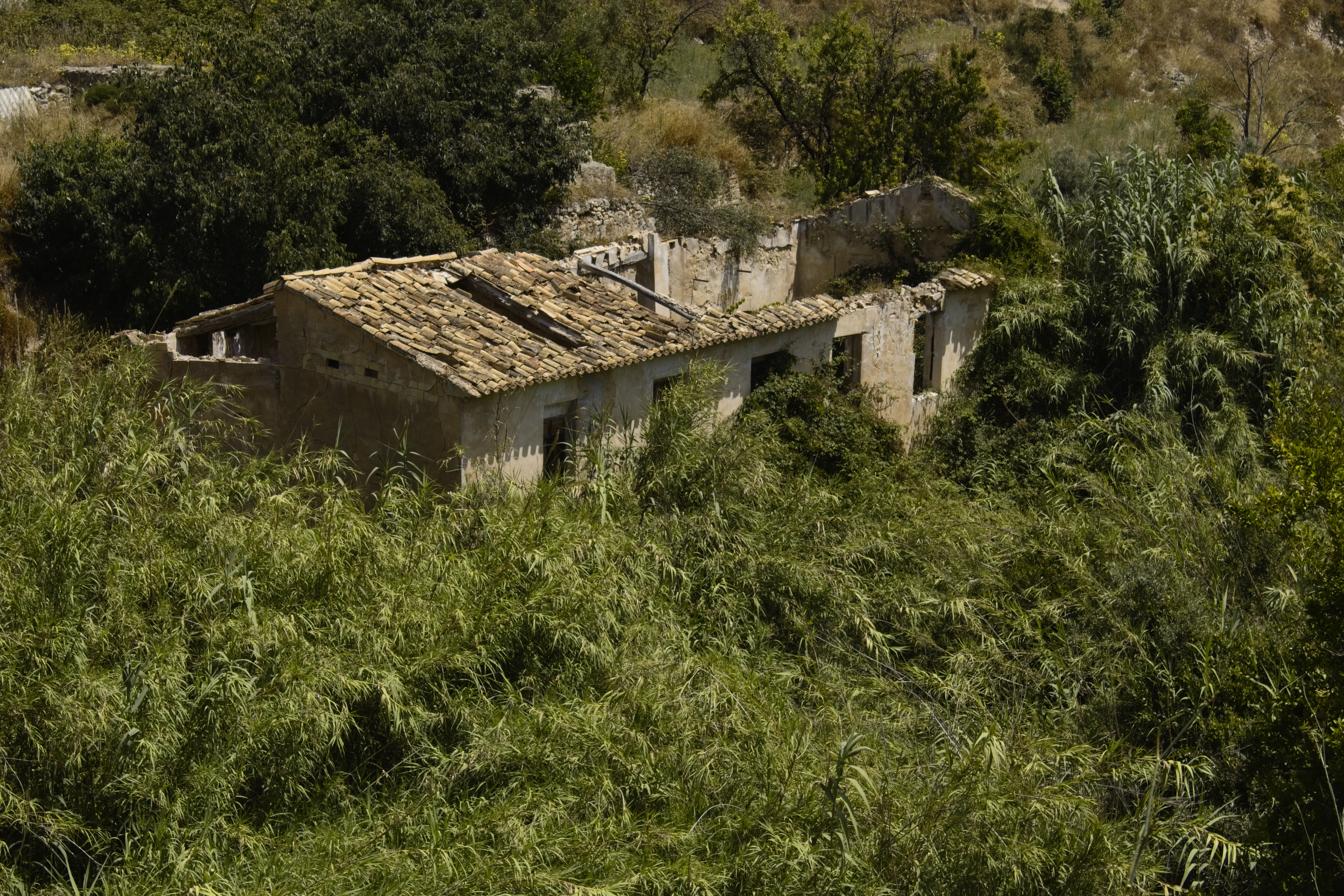
Handy man special! You can put your own mark on this property with its fine bones. Seller motivated!
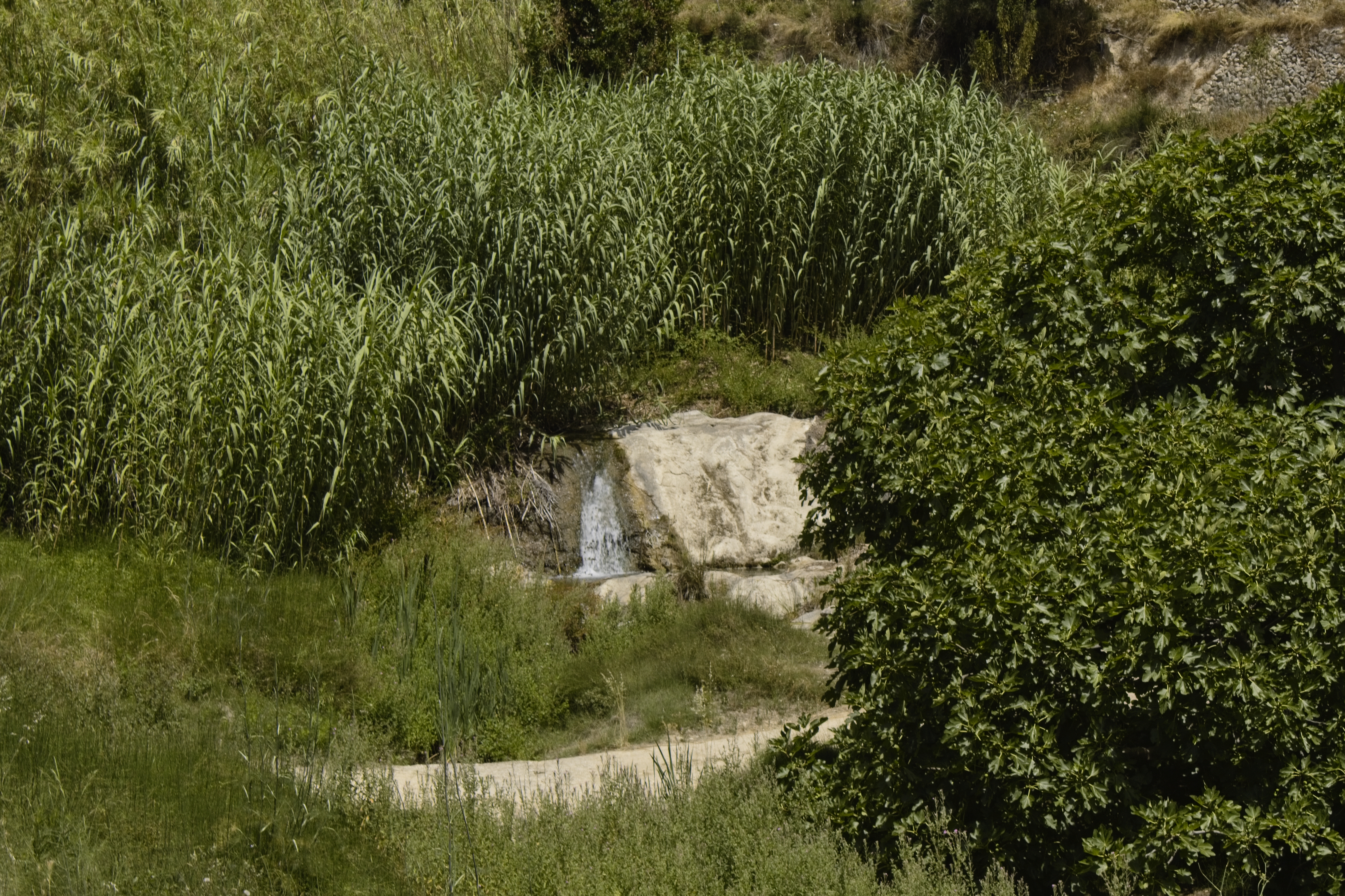
Riu Sella
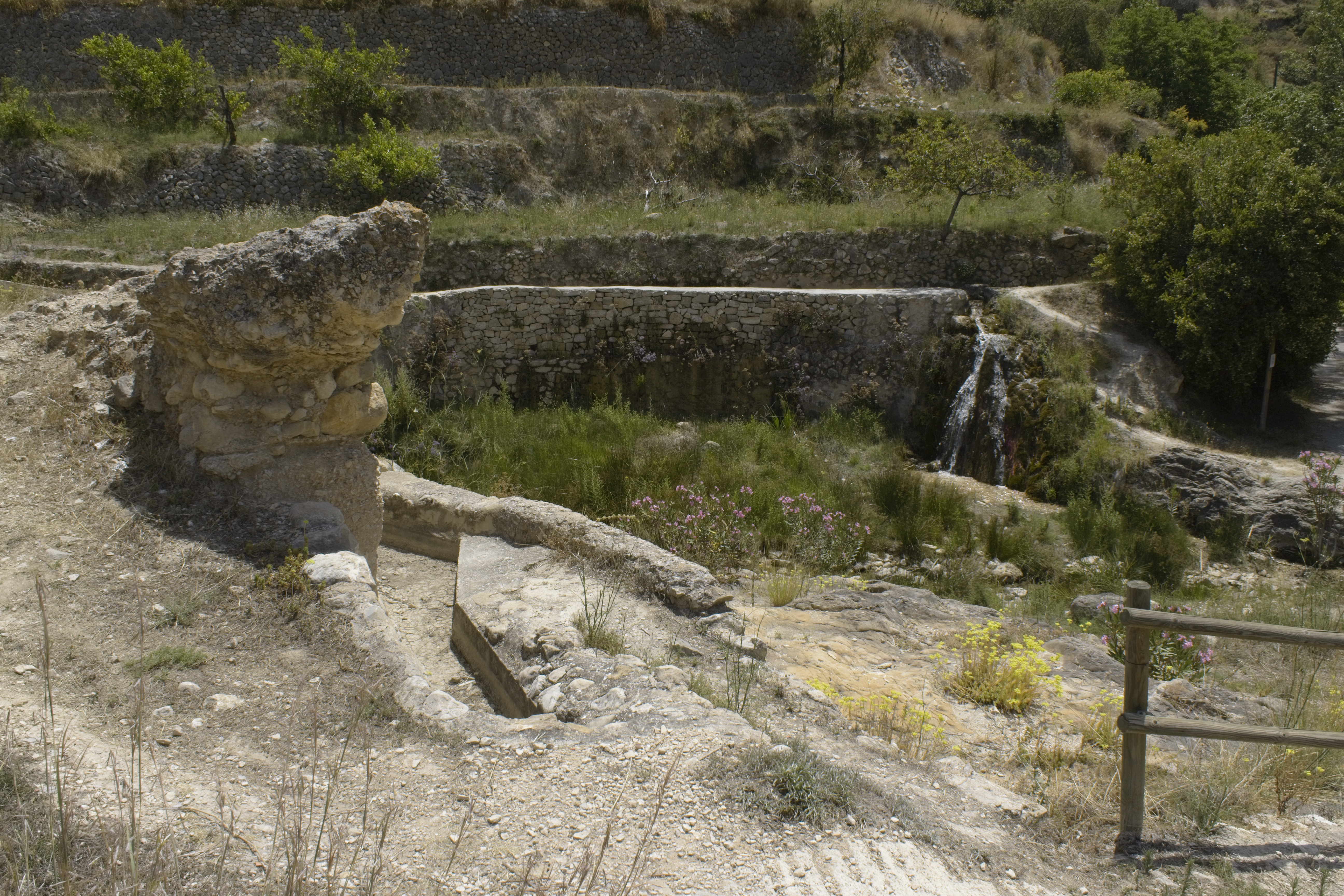
Barranc de l’Arc comes in just a bit away from the Sella. The wall is from an old water driven flour mill.
We then climbed back up the other side of the river and followed the Barranc de l’Arc to where we could cross at the Font del l’Alcántara (“Source of the Alcántara”), a little spring, and then we made our way along the other side of the river back to town. It was a good walk and another little bit of insight into the country.
So then we hopped back into the car (A/C!) and drove down the coast to Alicante.
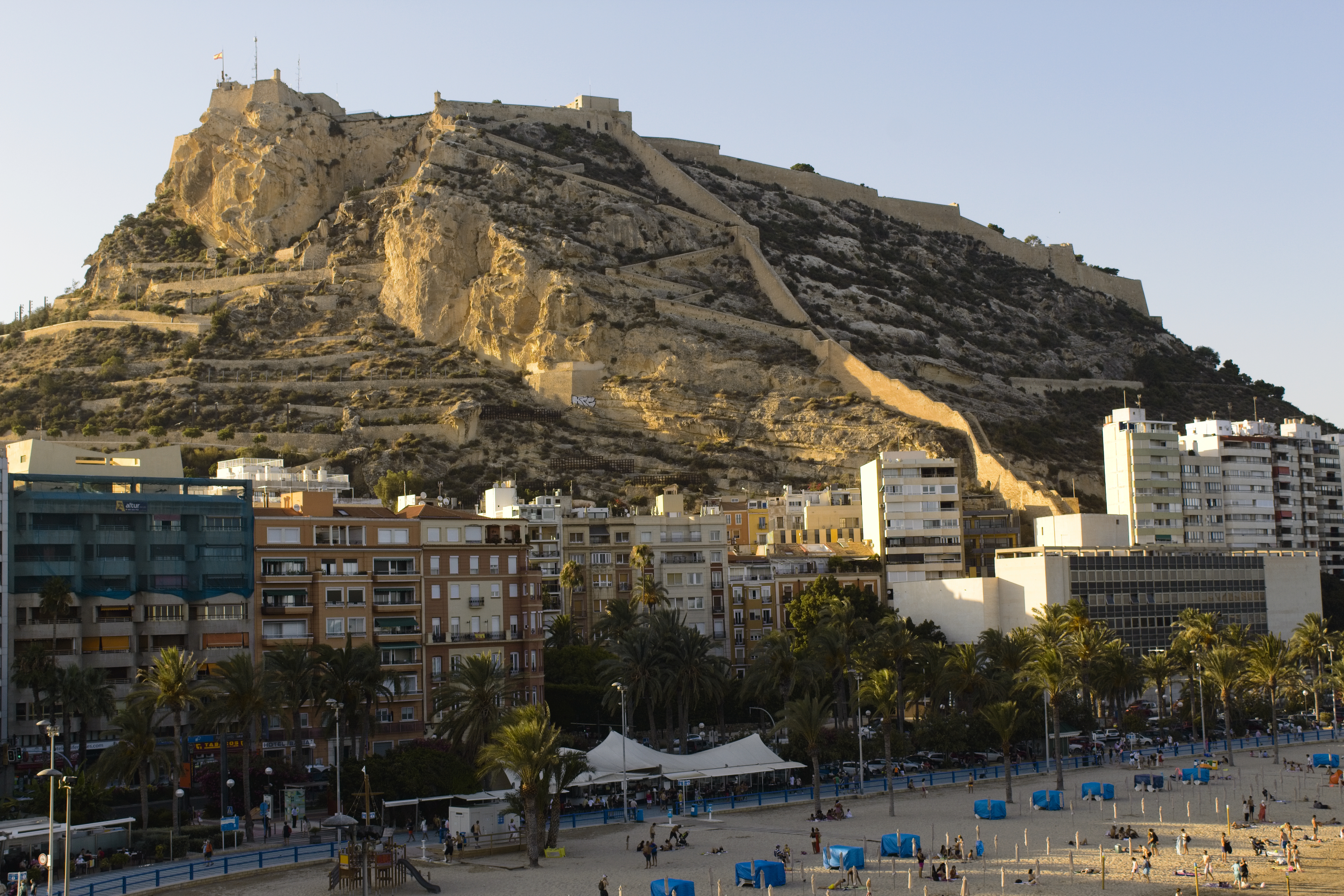
The town is dominated by the Castell de la Santa Barbara.
We stayed in a nice hotel, maybe a bit past its prime, right on the beach. We totally played tourist, sampling some of the good food that could be found in town, visiting the castle and hanging on the beach.
The castle was in continuous use from the ninth century through the middle of the seventeenth century. The location was first established by the Moors, then the Spaniards took over and added on after the Reconquista. It was kept in shape and upgraded to guard against the Berber Pirates until the time when modern weaponry rendered it indefensible. The city has turned it into a nice little tourist draw although many of the services were closed thanks to Covid.
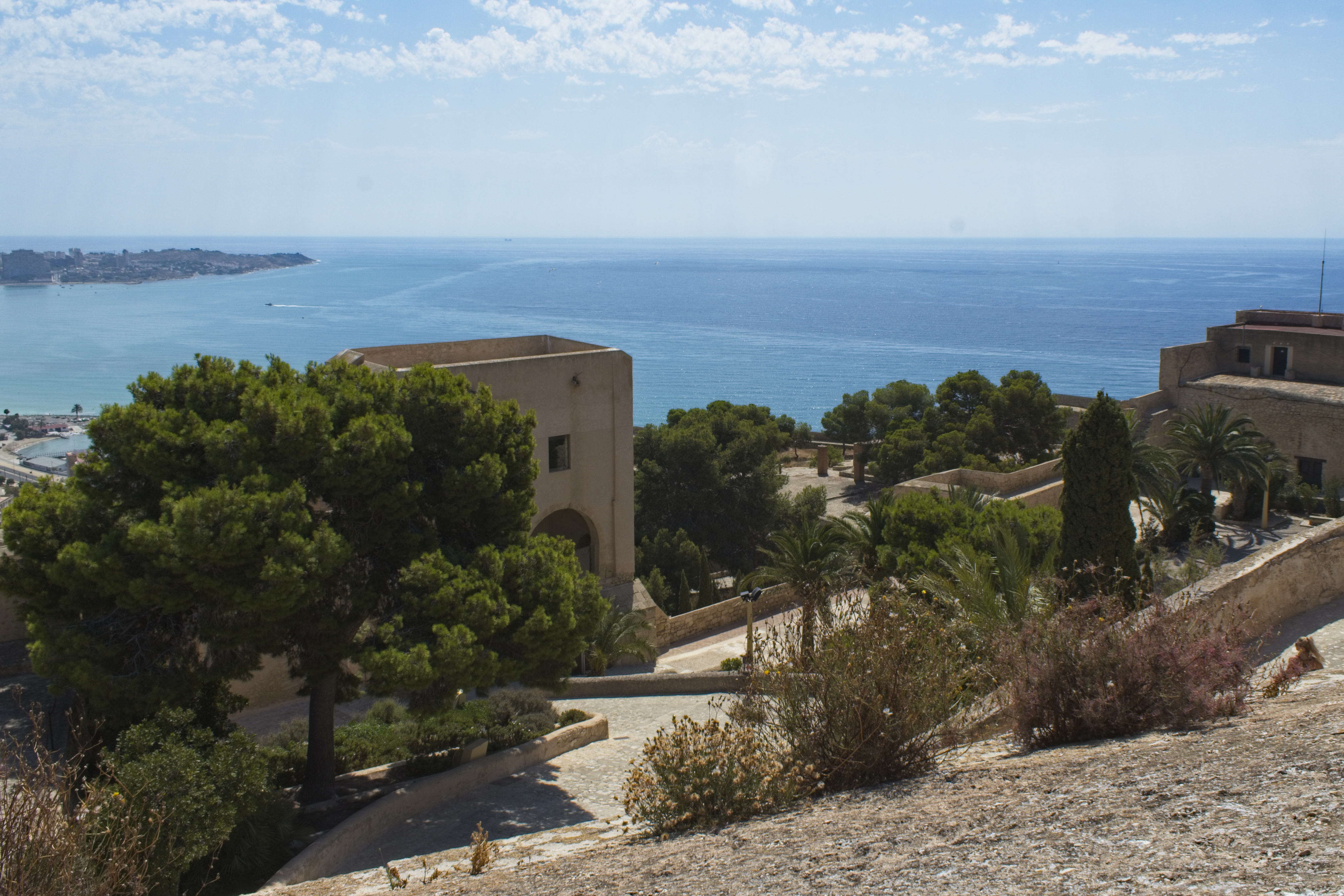
Nobody going to sneak up by sea.
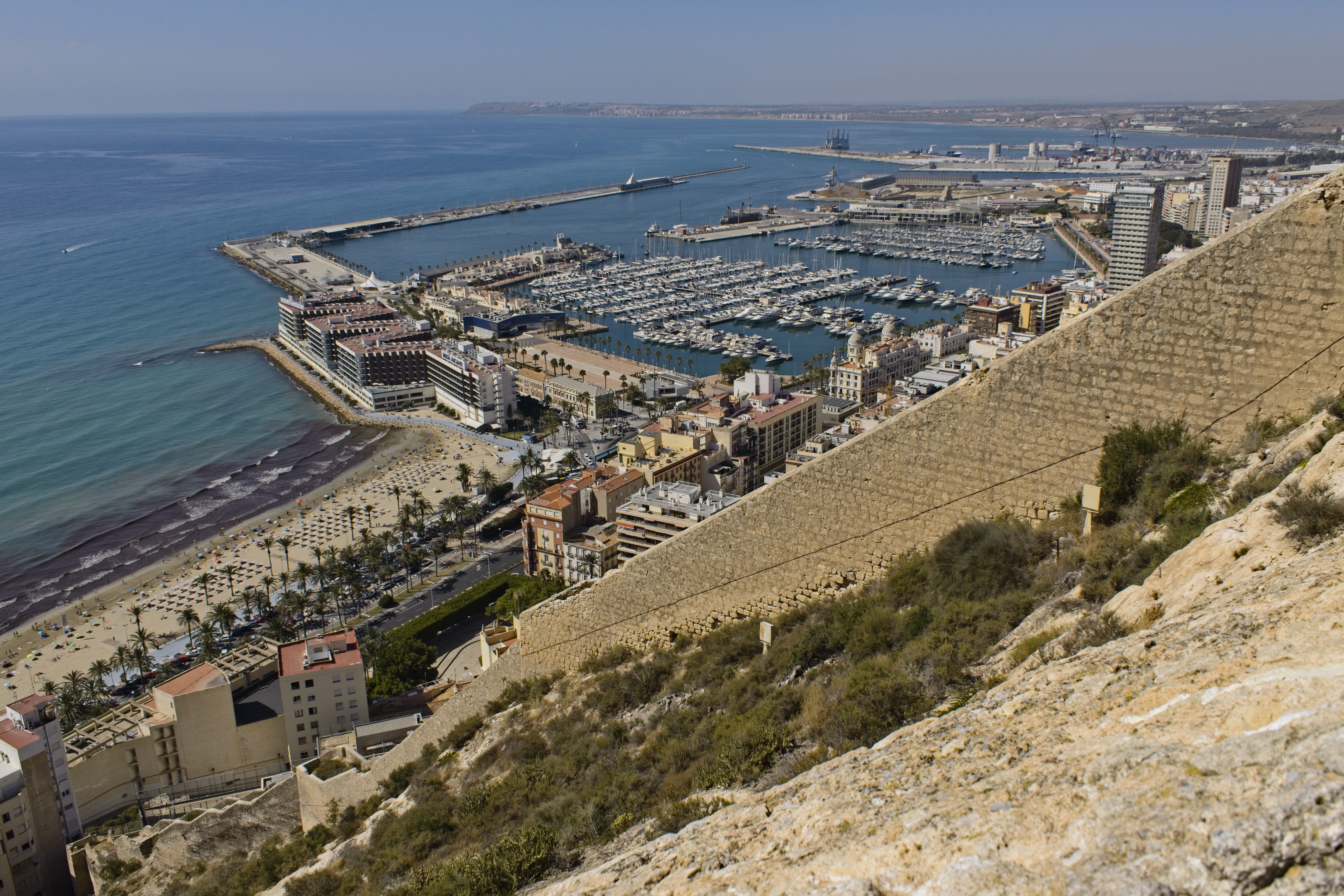
Totally dominates the coast for miles.
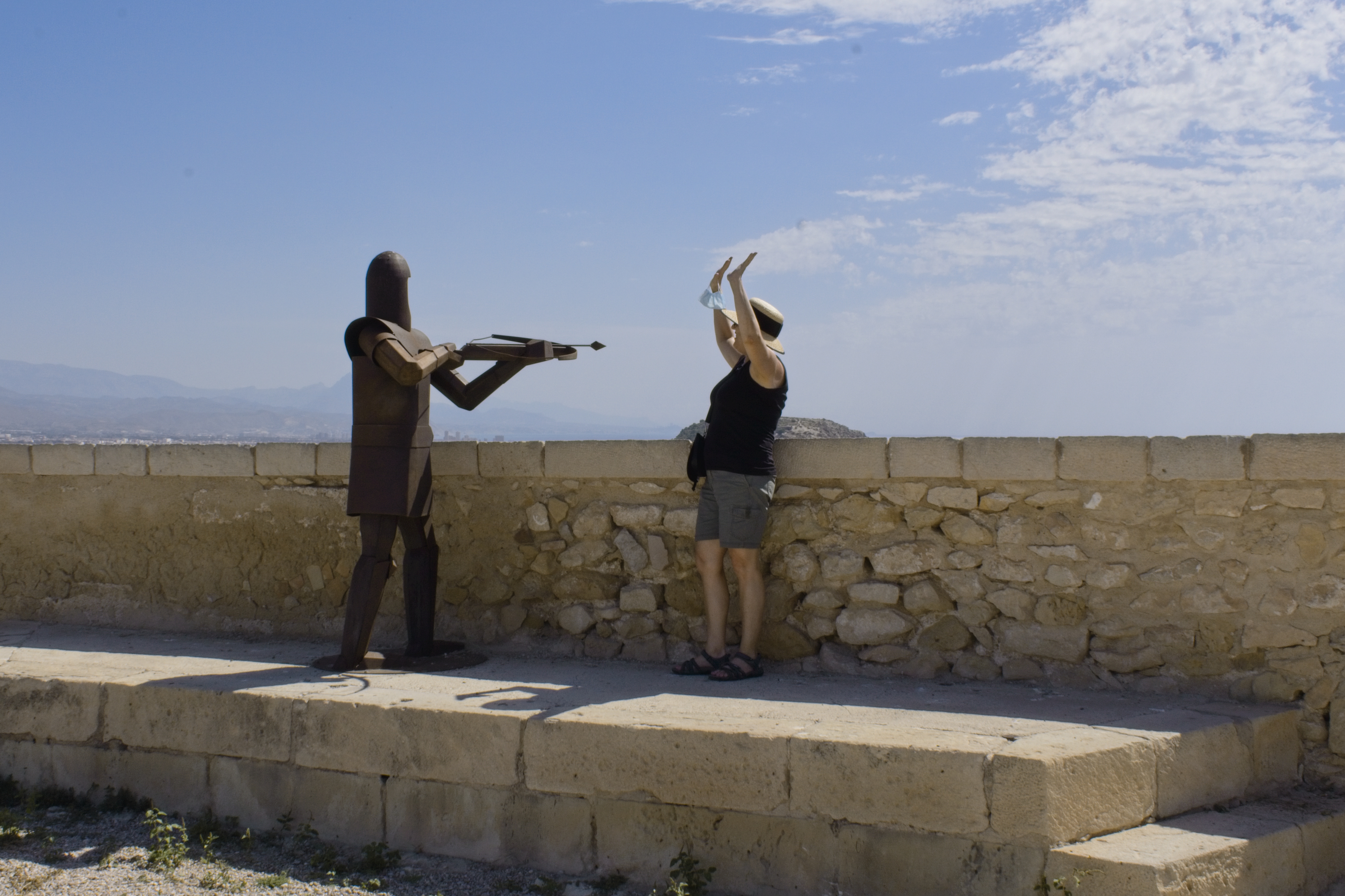
Crime is a little bit of a problem.
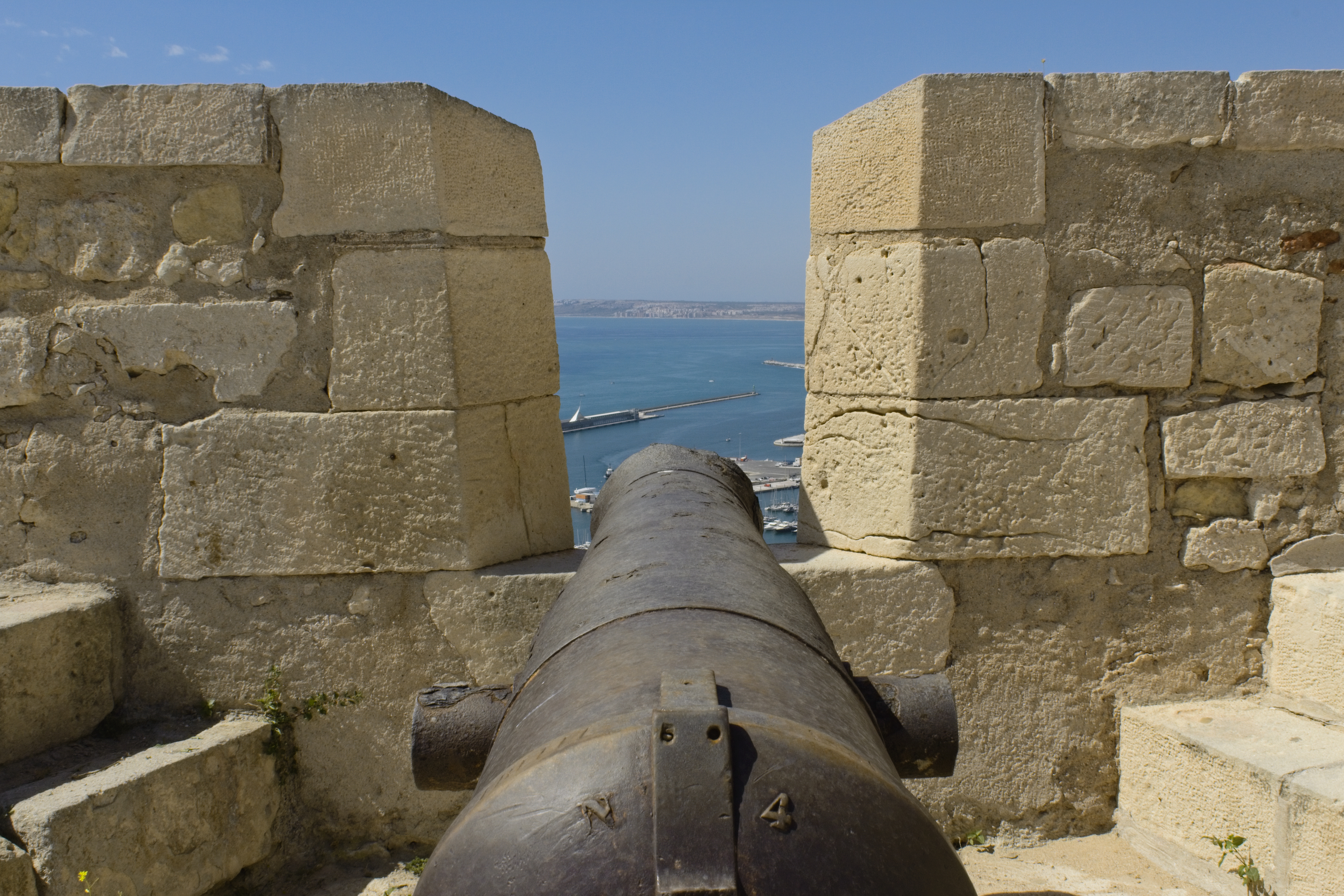
Did I mention the castle dominates the coast?
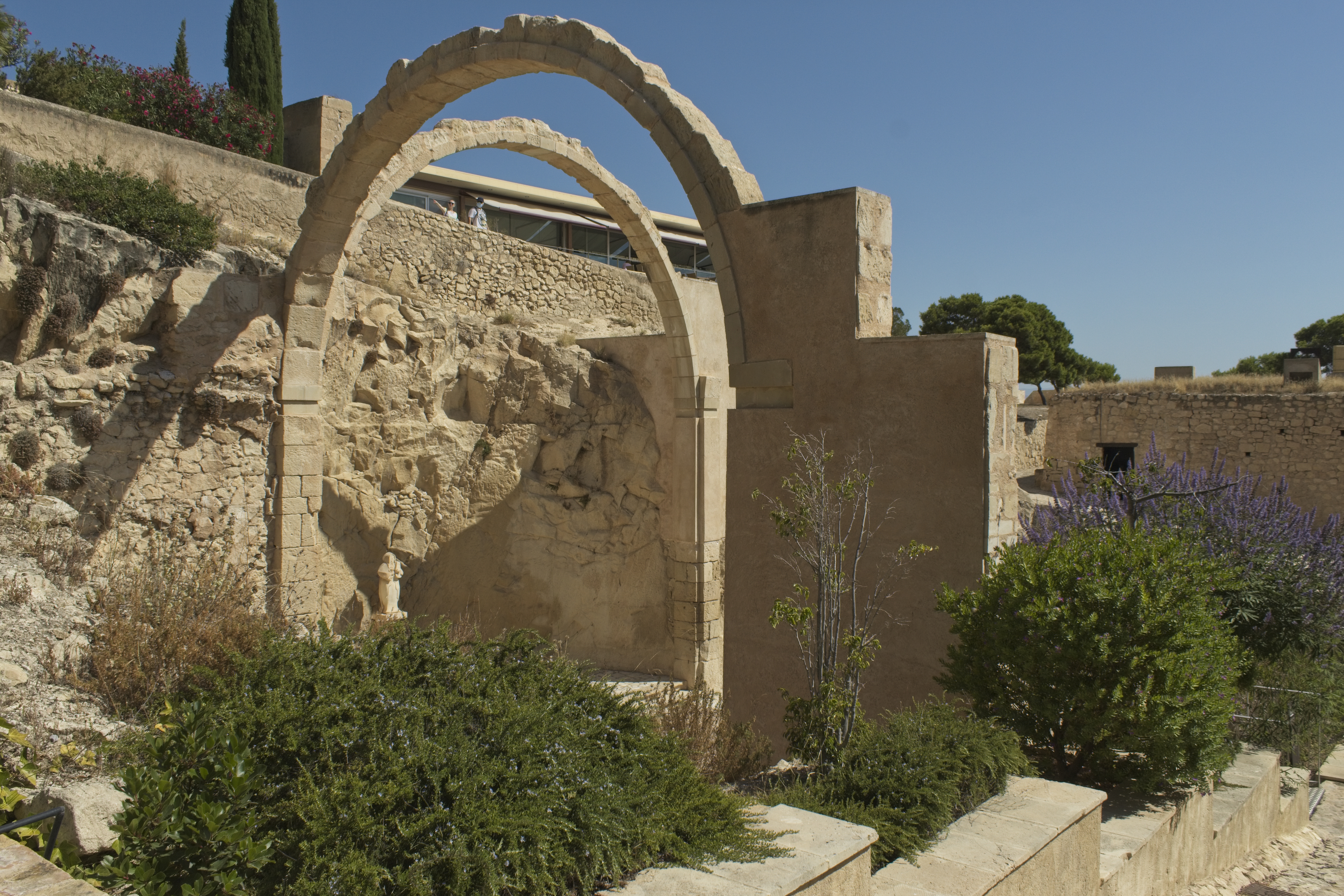
Remains of the old chapel. I thought it was interesting that the only things really still standing were the arches.
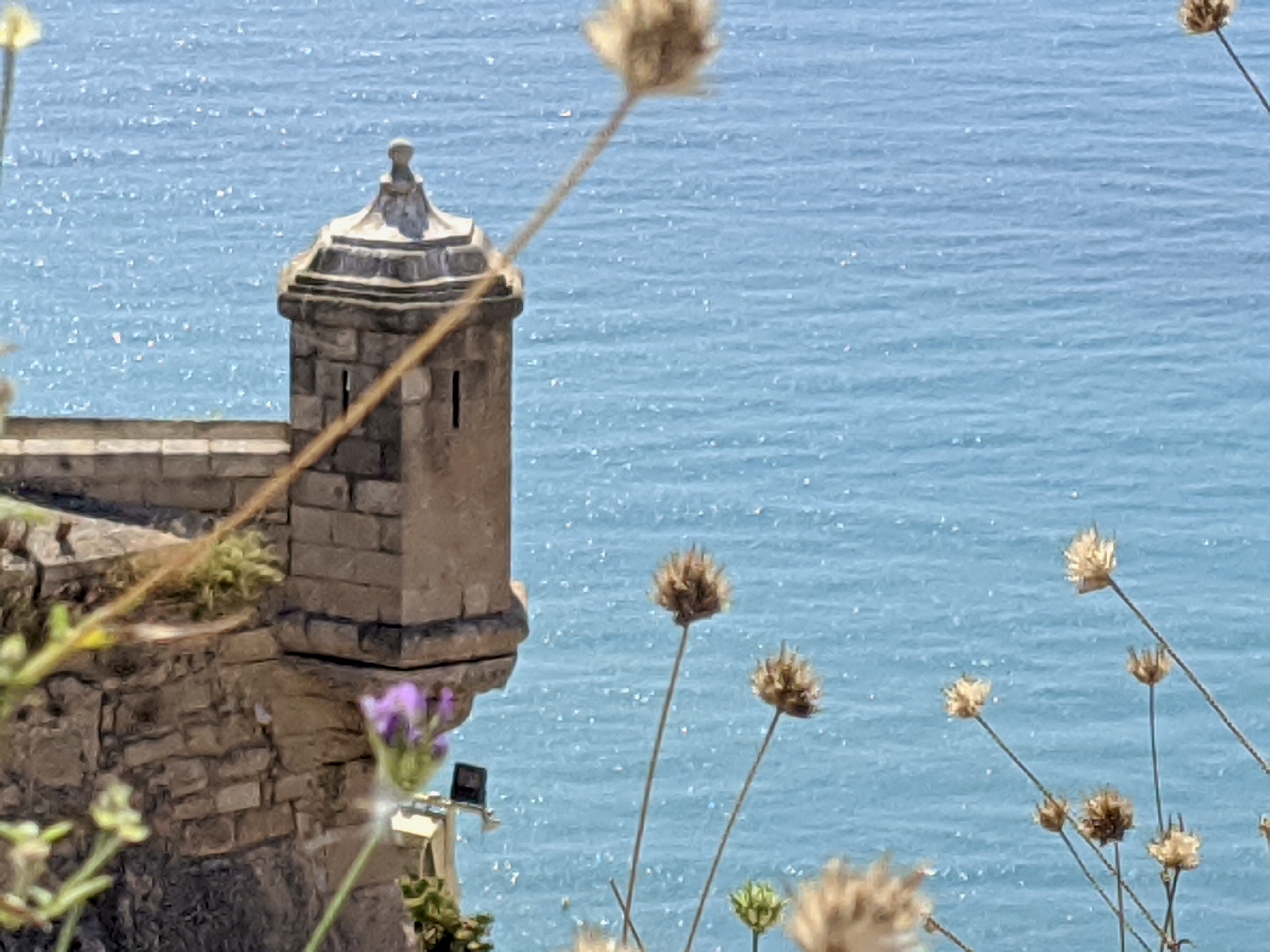
Nobody’s going to sneak up by climing either.
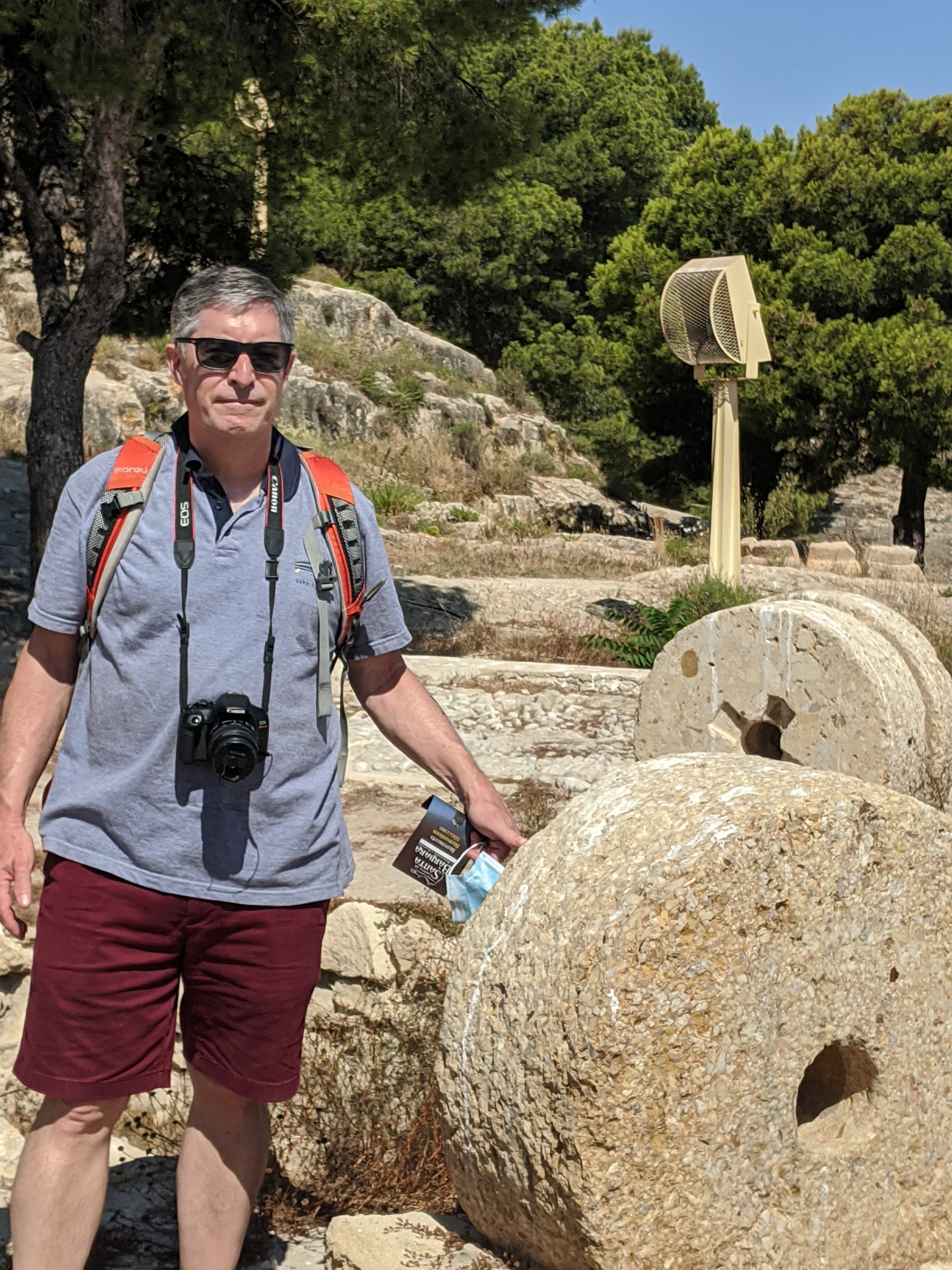
At the bakery / kitchen, among the grinding wheels. A seagull had a nest nearby and did not like having us around.
In town, behind the beachfront tourist area, was a typical Spanish city with maybe better ethnic food choices than we’ve found yet in Valencia. We found a delish gluten-free Italian restaurant and the next night we came back to the restaurant next door, Mish Mish, which serves a mix of middle eastern and Mediterranean food, with recepies that extend to Pakistan. Also with gluten free options and also delicious.
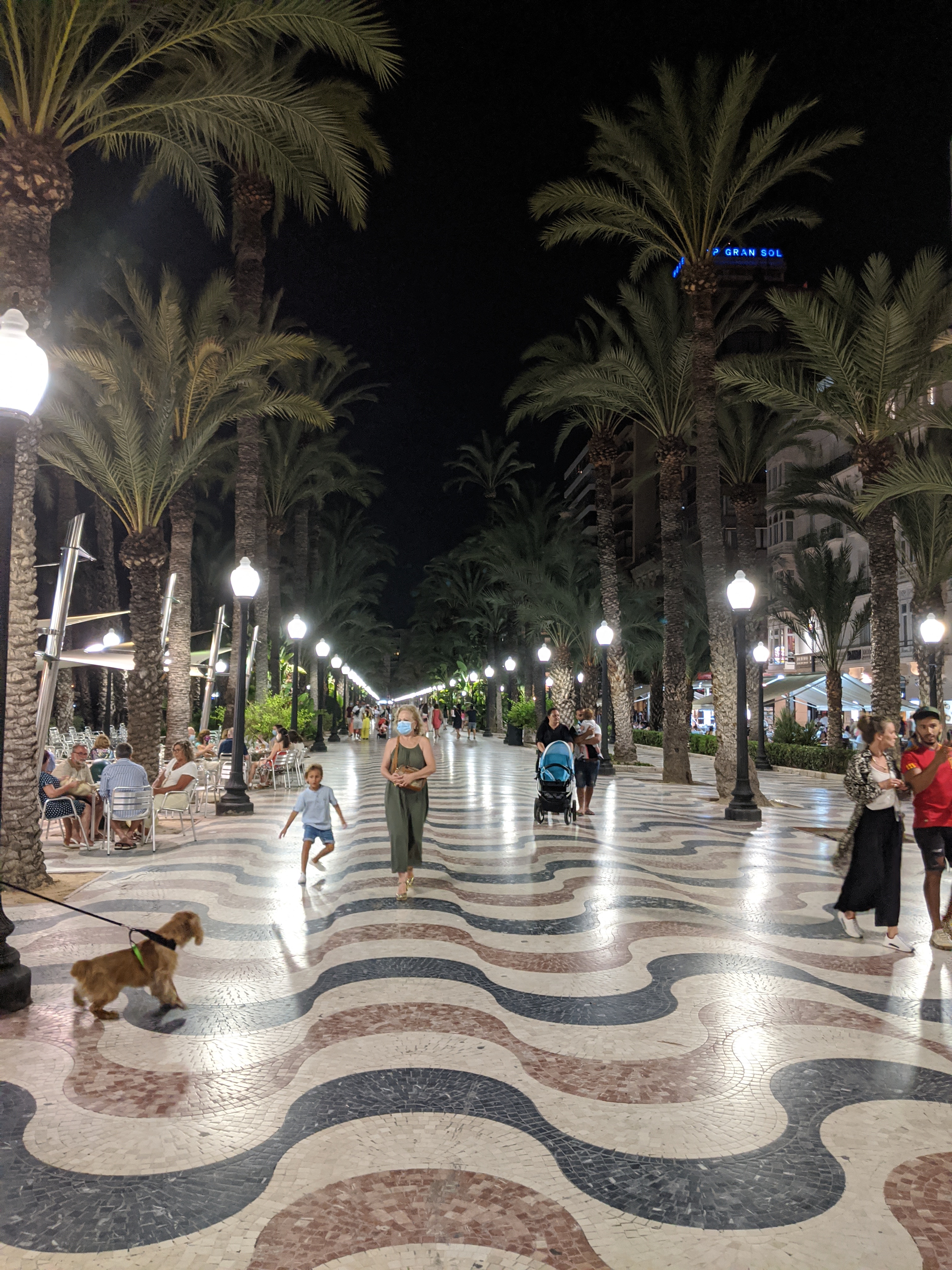
The waterfront promenade at night
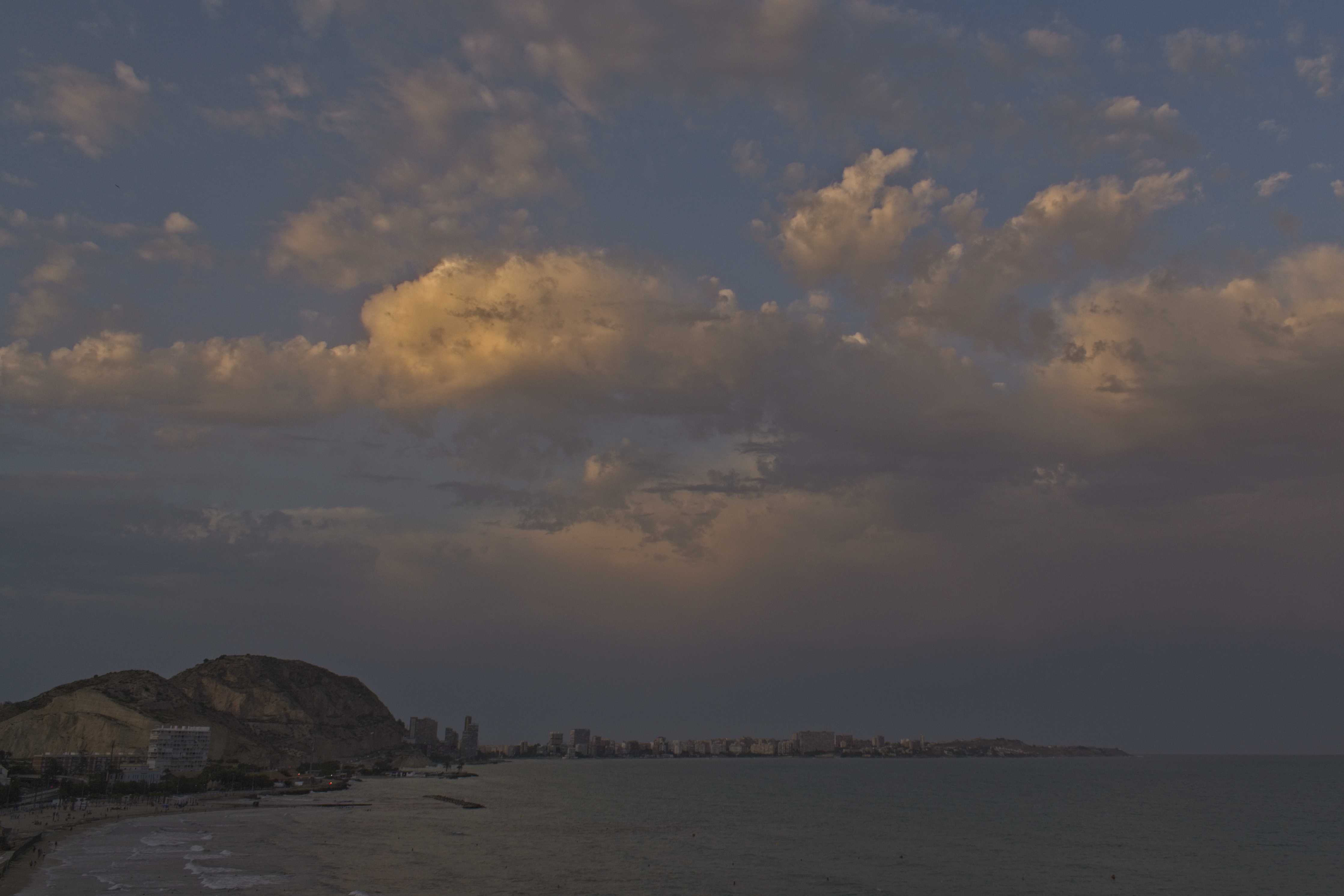
Dramatic evening sky
And that was our weekend getaway to Alicante.
-
Catching Up
Been lazy, haven’t posted since the end of June. Bad us.
In late June we caught the Metro out to the suburb town of Manises near the airport, to visit the Ceramics Museum there. It was an average Thursday afternoon but very shortly after the lockdown was lifted and sadly, the museum itself was closed. We were in luck though; the city fathers had created a little self-guided tour of the high points of the town, along with a Youtube audio tour, so we followed that. The audio tour was a bit of a disappointment since it mostly focused on the architecture of the churches along the way — the churches that were closed so we couldn’t even see the referenced features. Still, we got out of the flat and out of town, had a nice walk in the sun and explored a little.
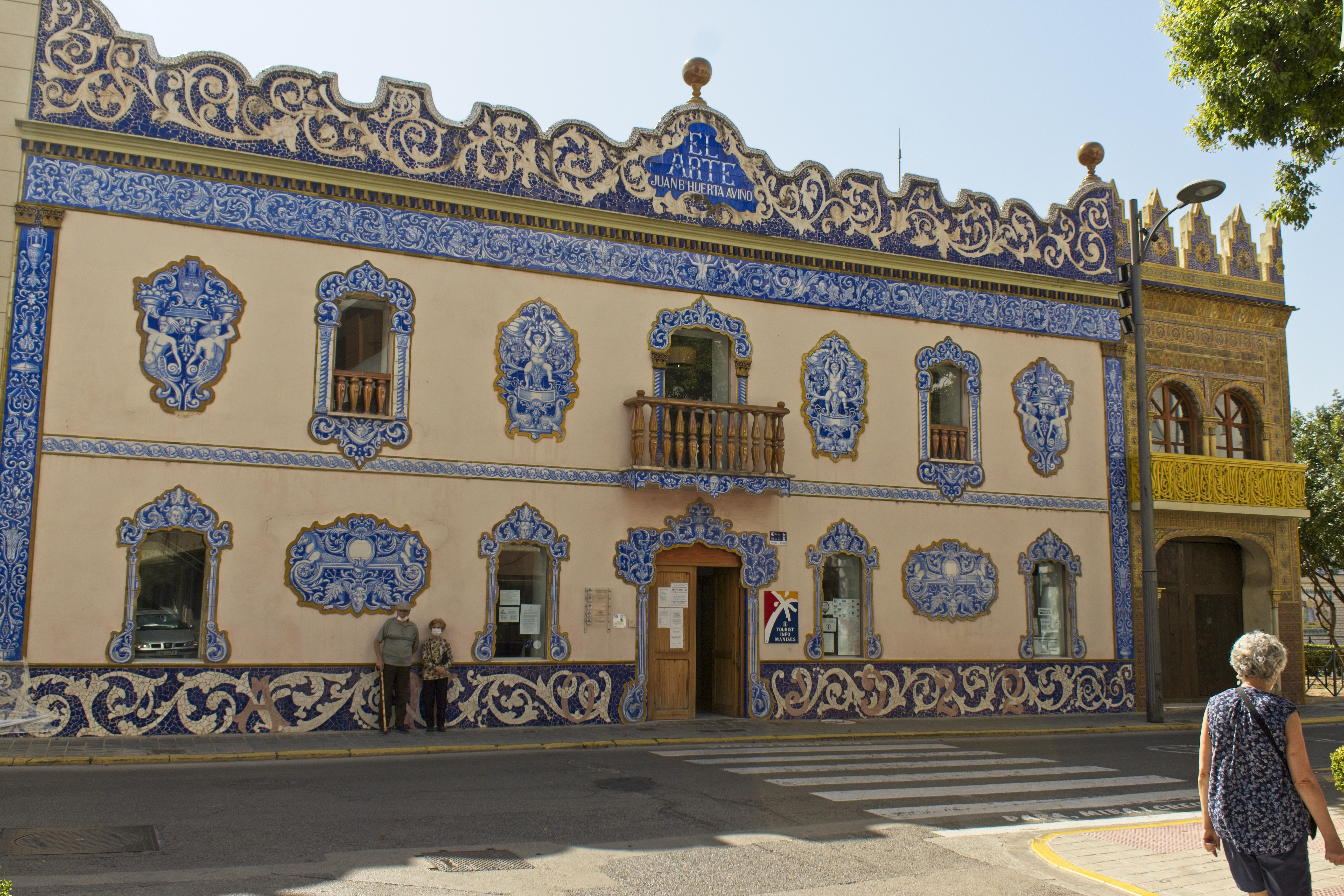
The tourist office. Nice intro to the town.
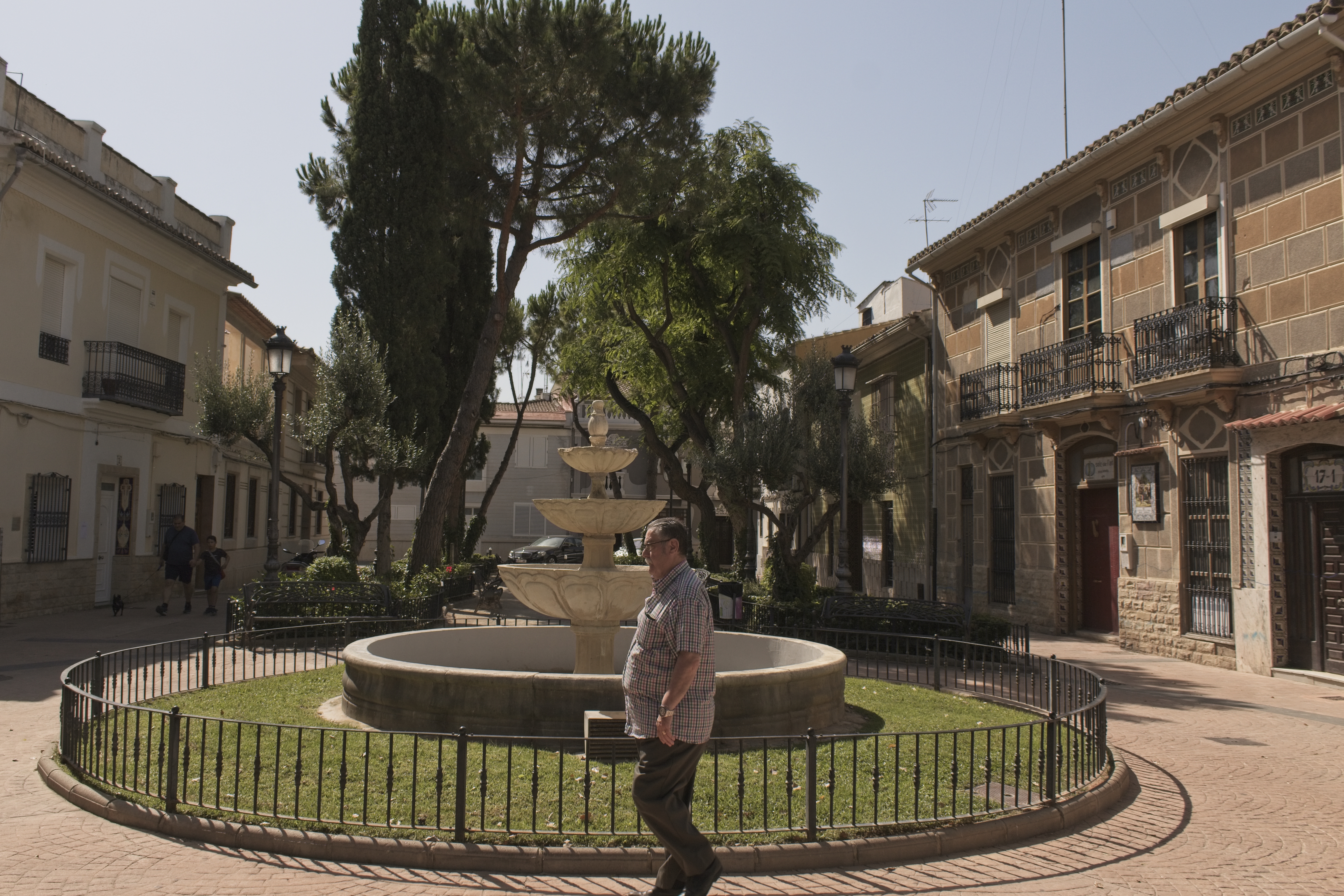
Just a little square with fountain we came across.
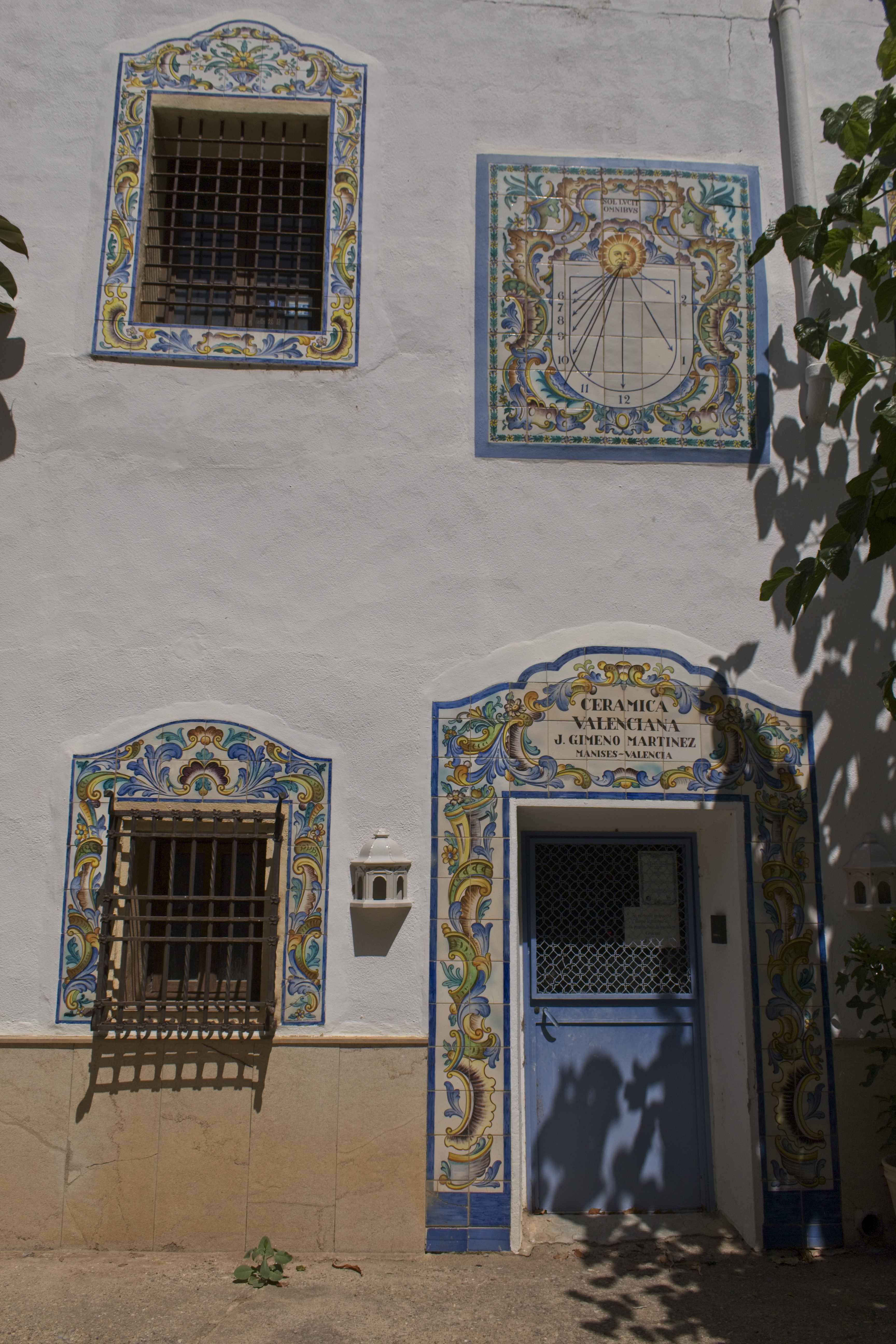
Old ceramics factory storefront. It was closed so we weren’t able to go inside but the tiles on the outside were beautiful. Note the sundial above.
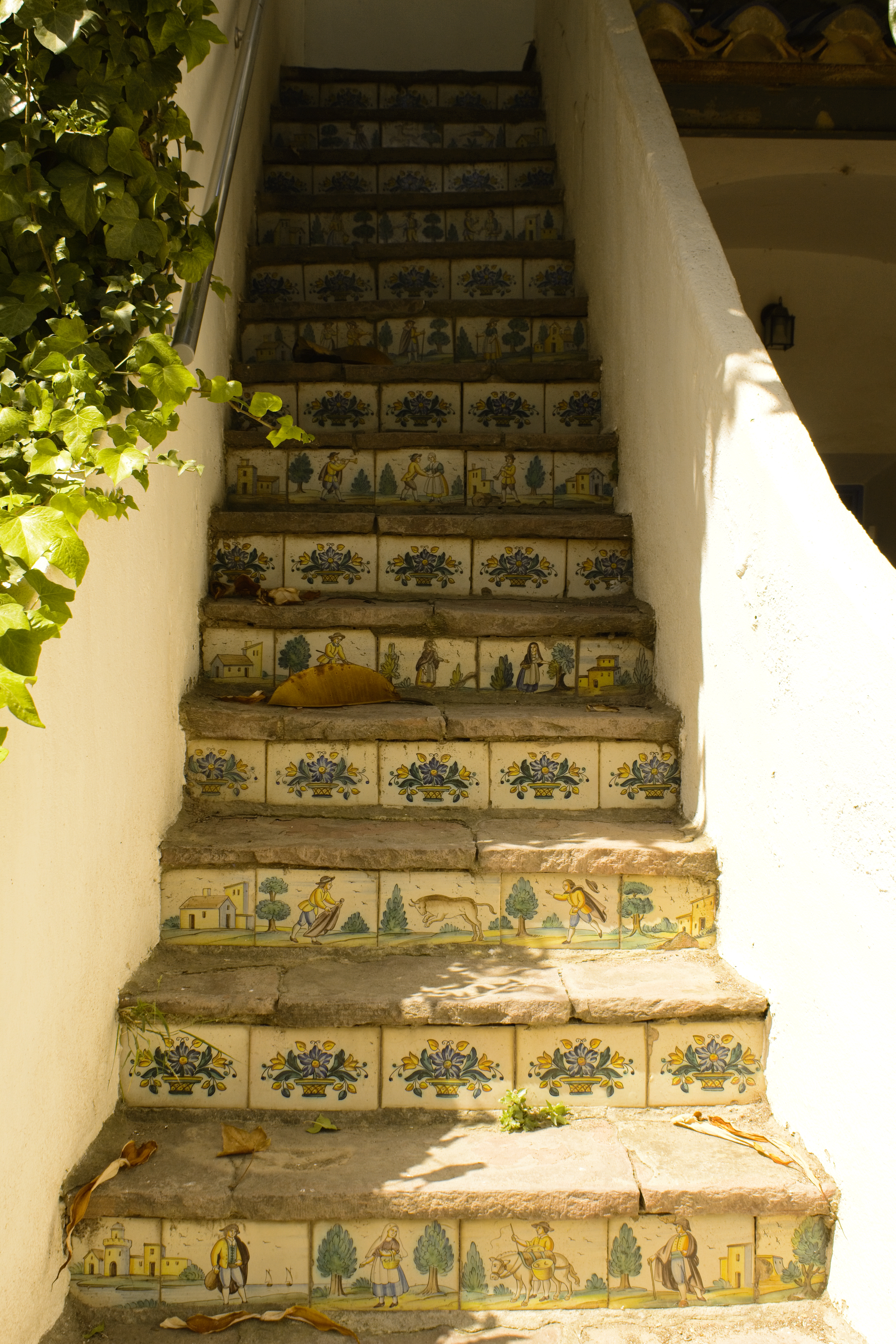
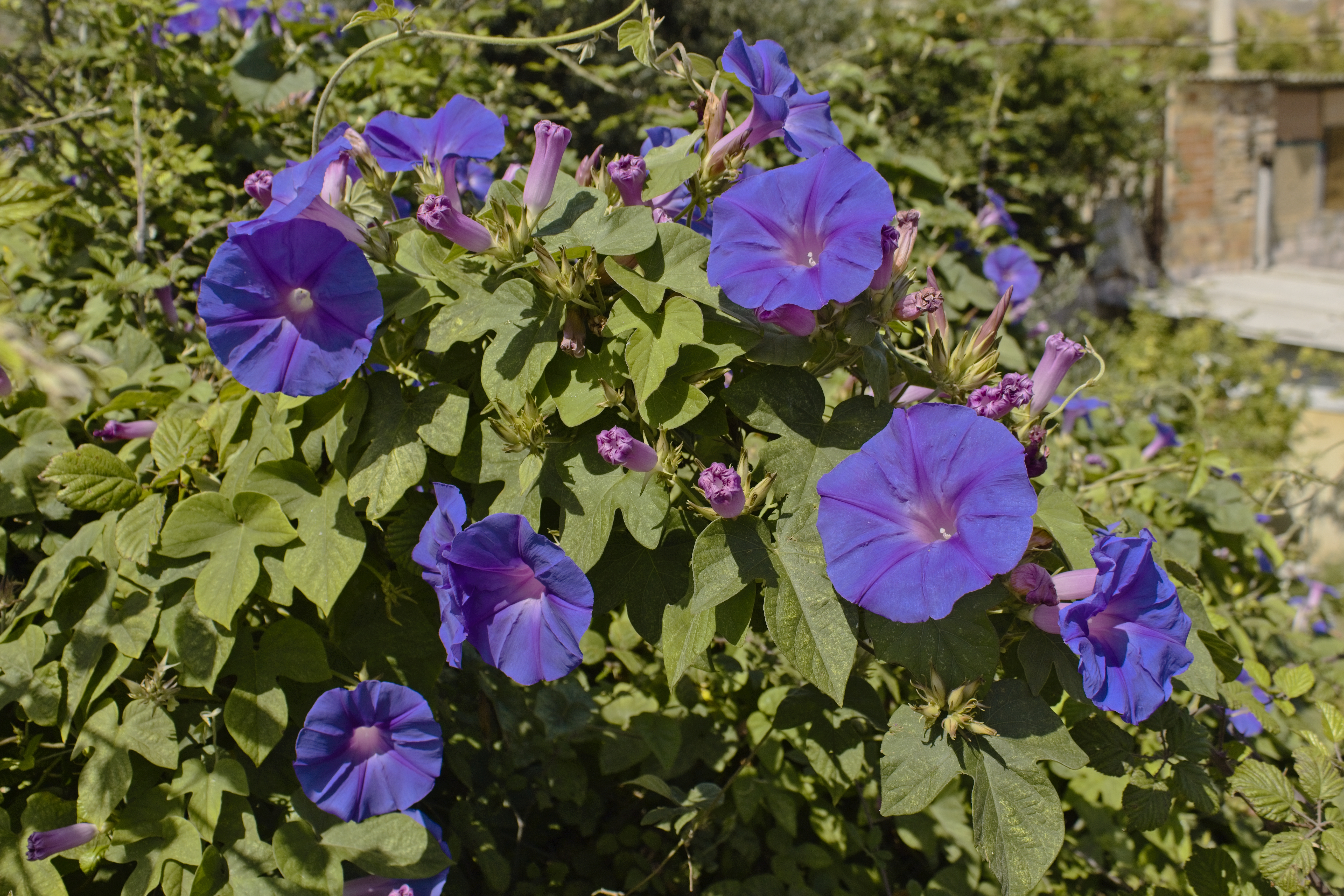
Invasive species don’t always have to be prickly and ugly.
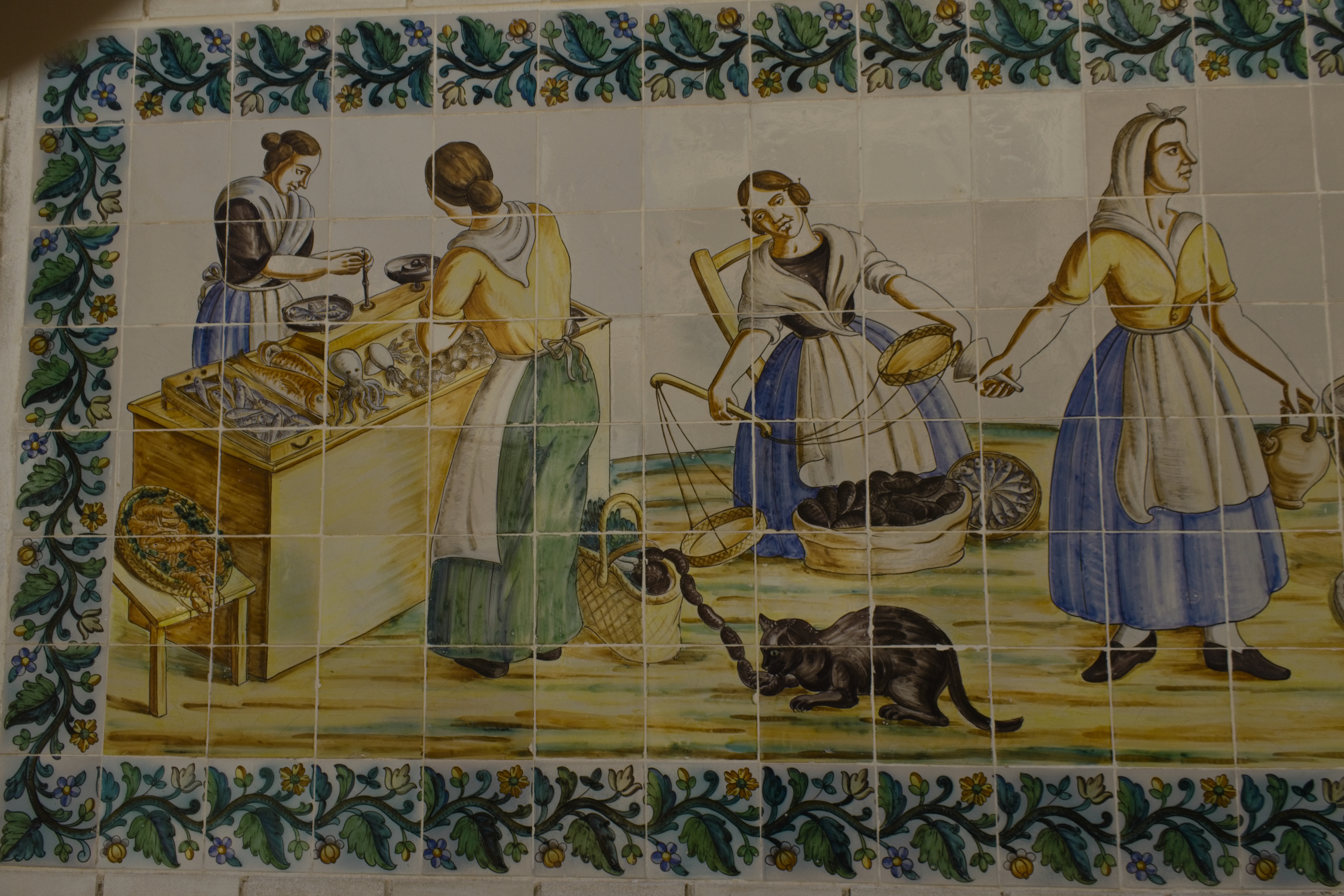
These three shots are from the outside of the local supermarket. It sits on the site of the old water purification works which was the center of the town’s life and market. The whole storefront has these scenes, these are just samples.
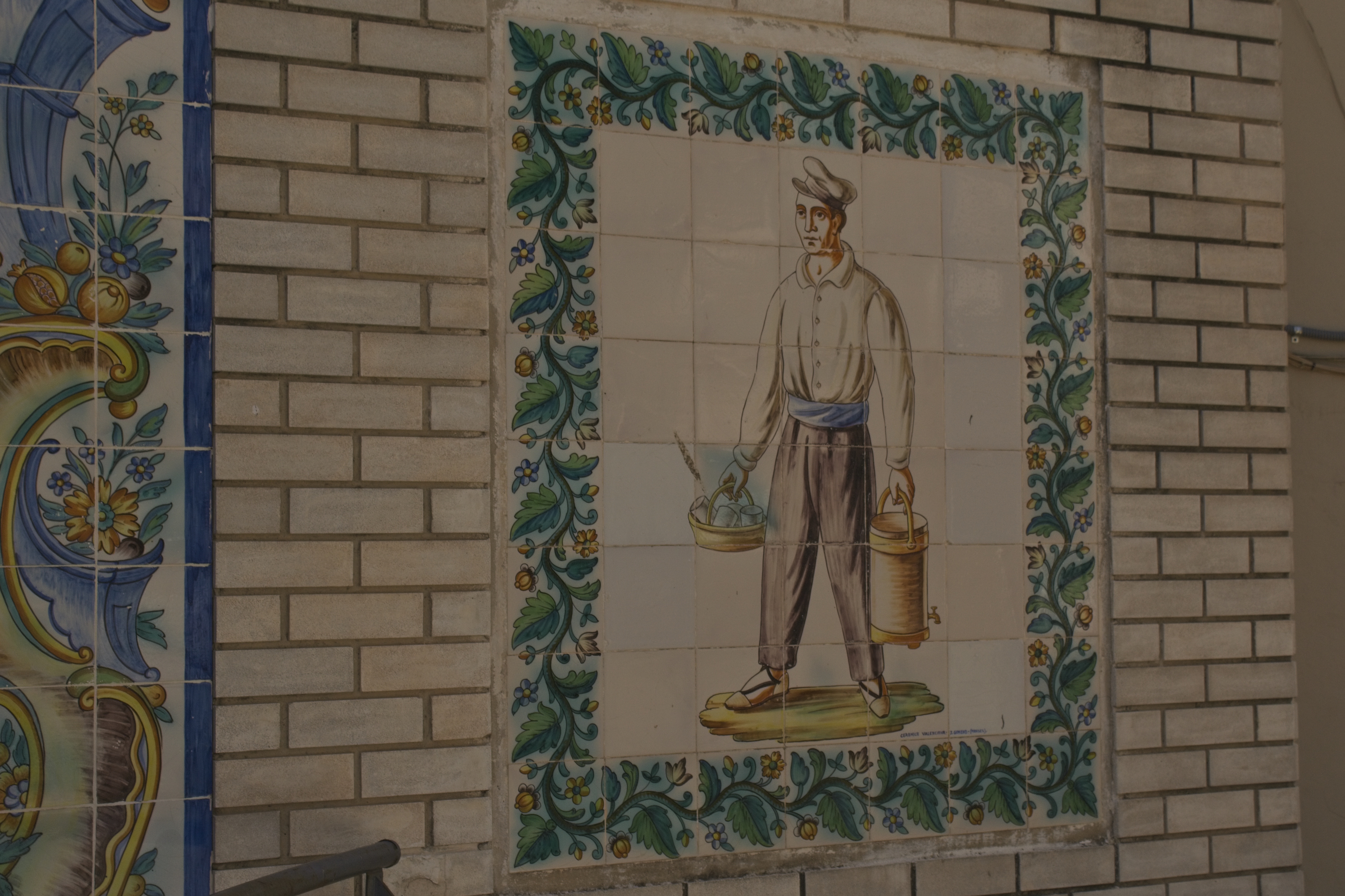
Me, circa 1600
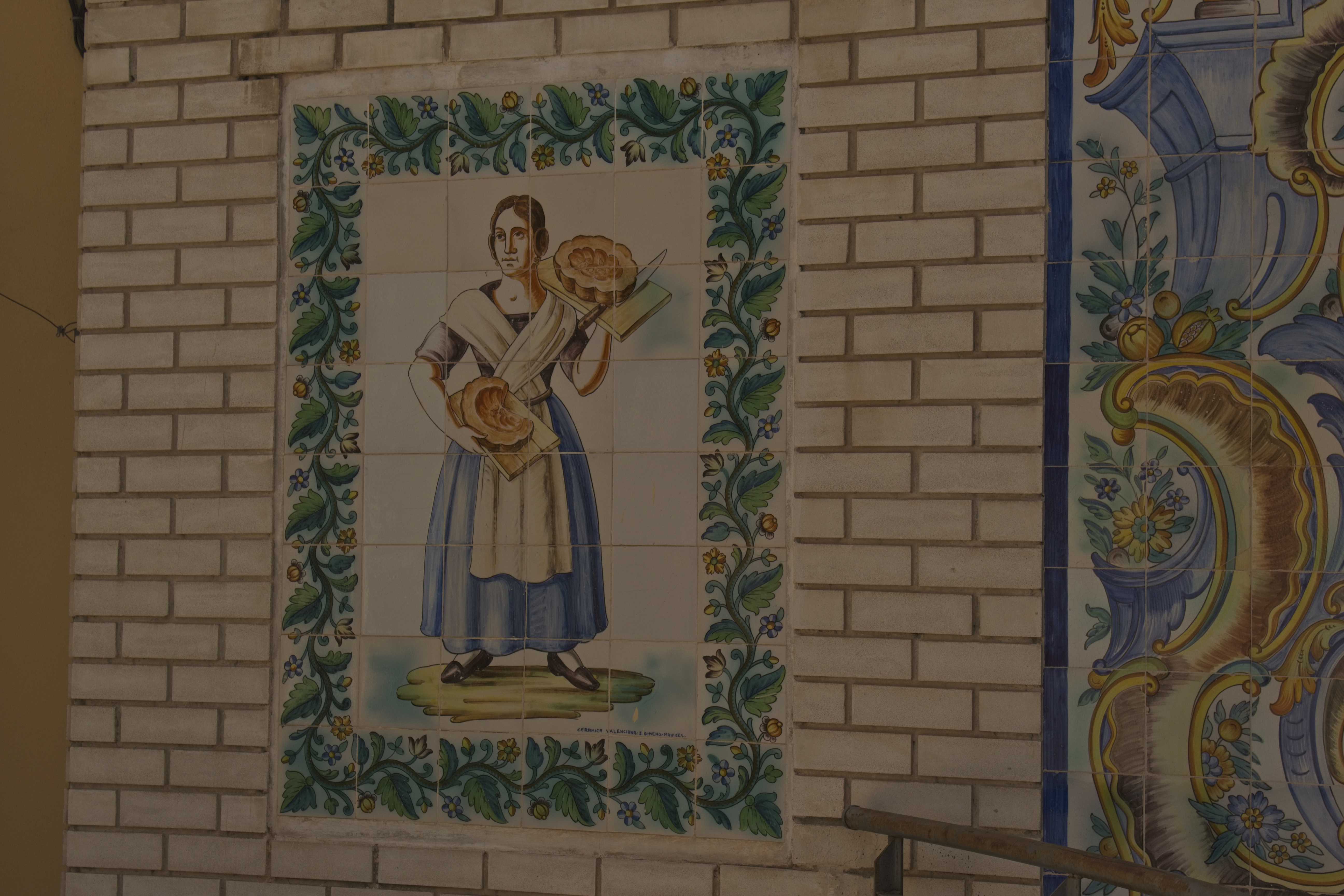
Cindy, from a past life.
Aín
Right at the end of June we rented a car and took a trip north of town to the tiny town of Aín in the mountains, to get a little hiking in. We found the location using the Wikiloc app and it looked like a pleasant little walk. Well. Somehow, Wikiloc doesn’t work all that well with Google Maps so pathfinding to the town was troublesome, and GPS didn’t really work out in the boondocks so we found ourselves struggling a bit to find the trailhead. Fortunately, we stumbled into somebody’s cork farm, which was educational.
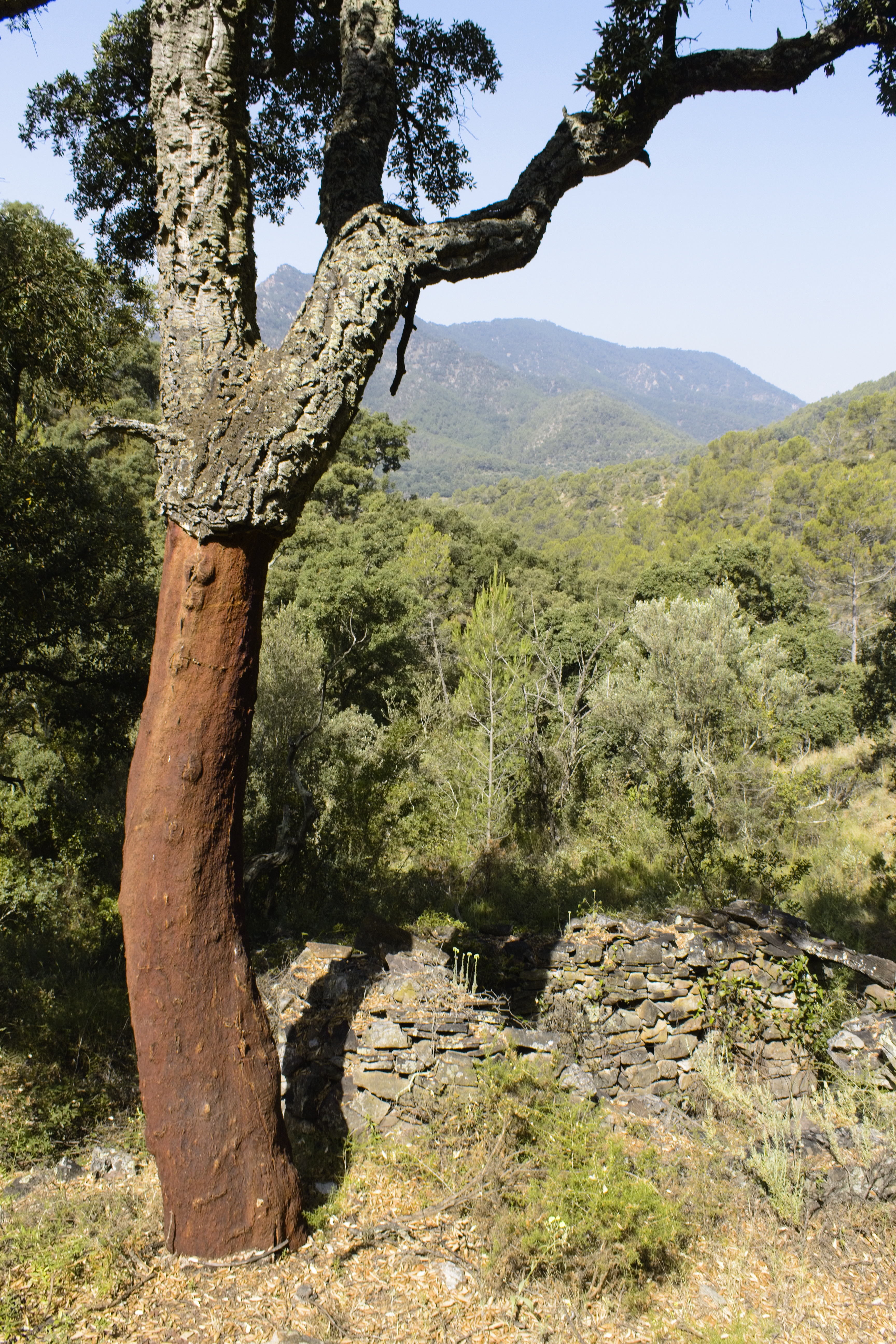
Every 8 years they peel away the bark from the cork trees, up to the first branch or as high as a man can reach, whichever is lower, then let it grow back. This apparently doesn’t hurt them. The landscape behind the tree was pretty much our view for the day; dry scrubby hills. Nice change from the city.
We did finally figure out where the trail started and it turned out to be fairly well marked once we realized what we were looking for (in this case, painted stripes along the route) and were able to make our way comfortably without need of the cellphone GPS.
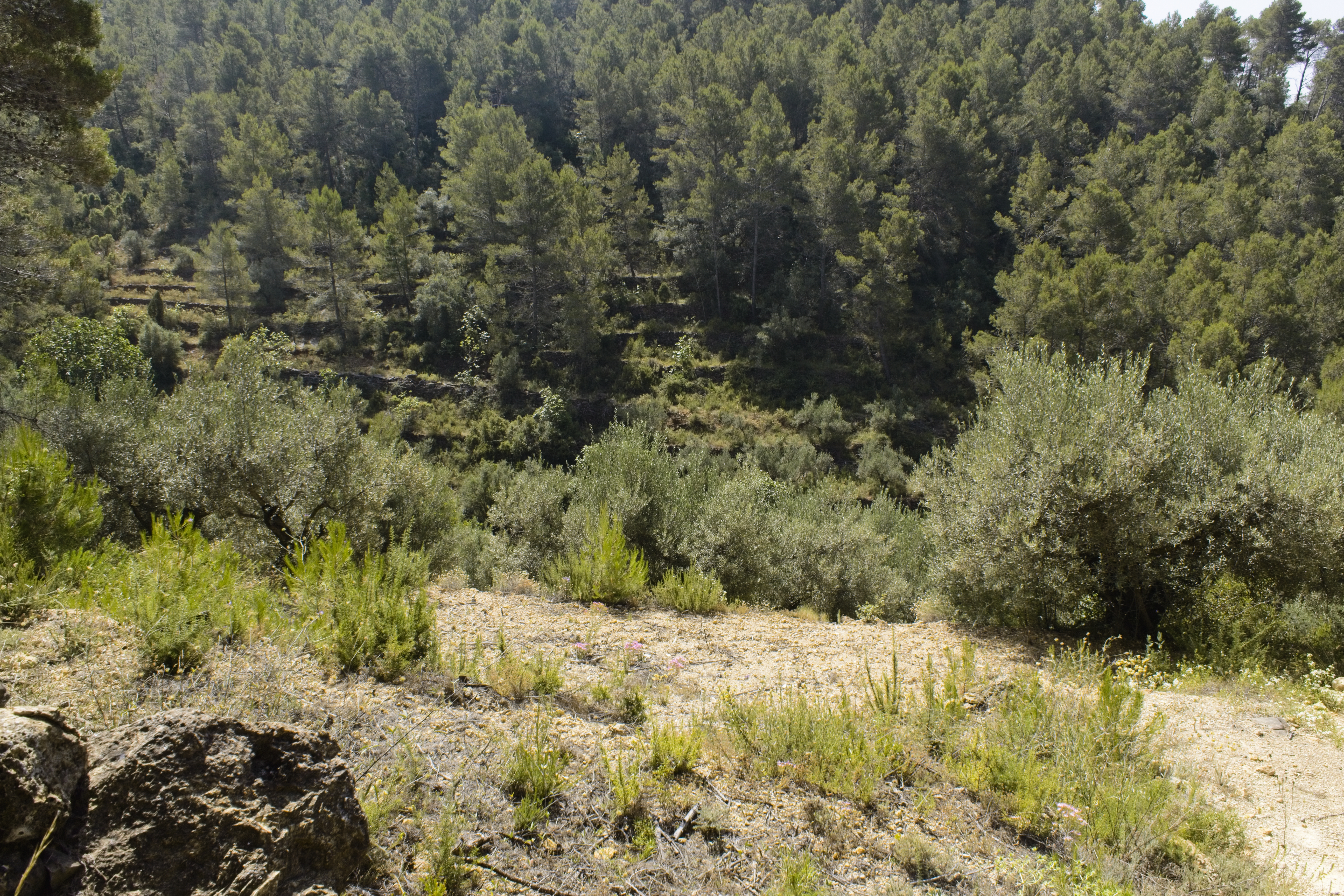
A remarkable amount of the countryside is terraced
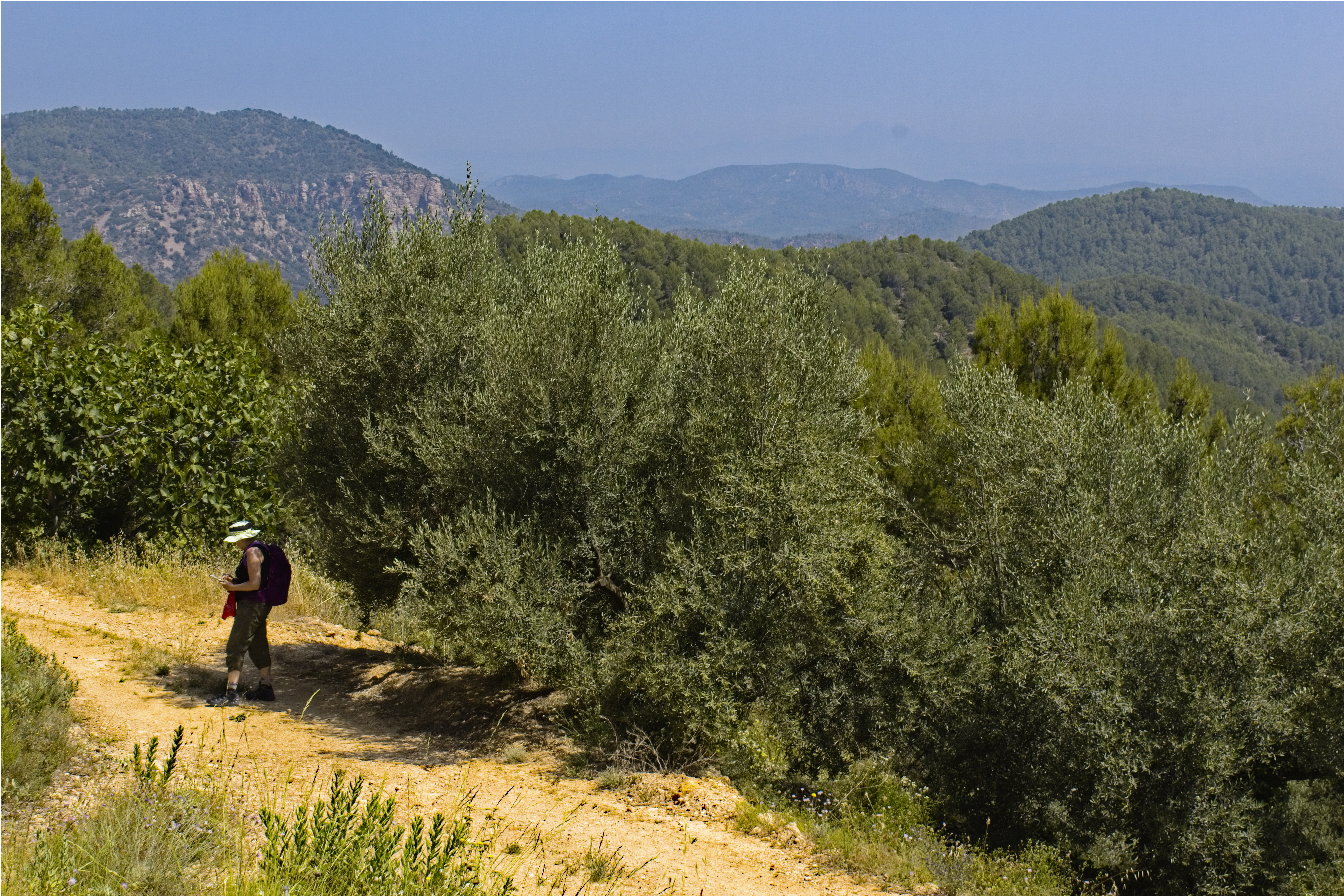
Shade is precious
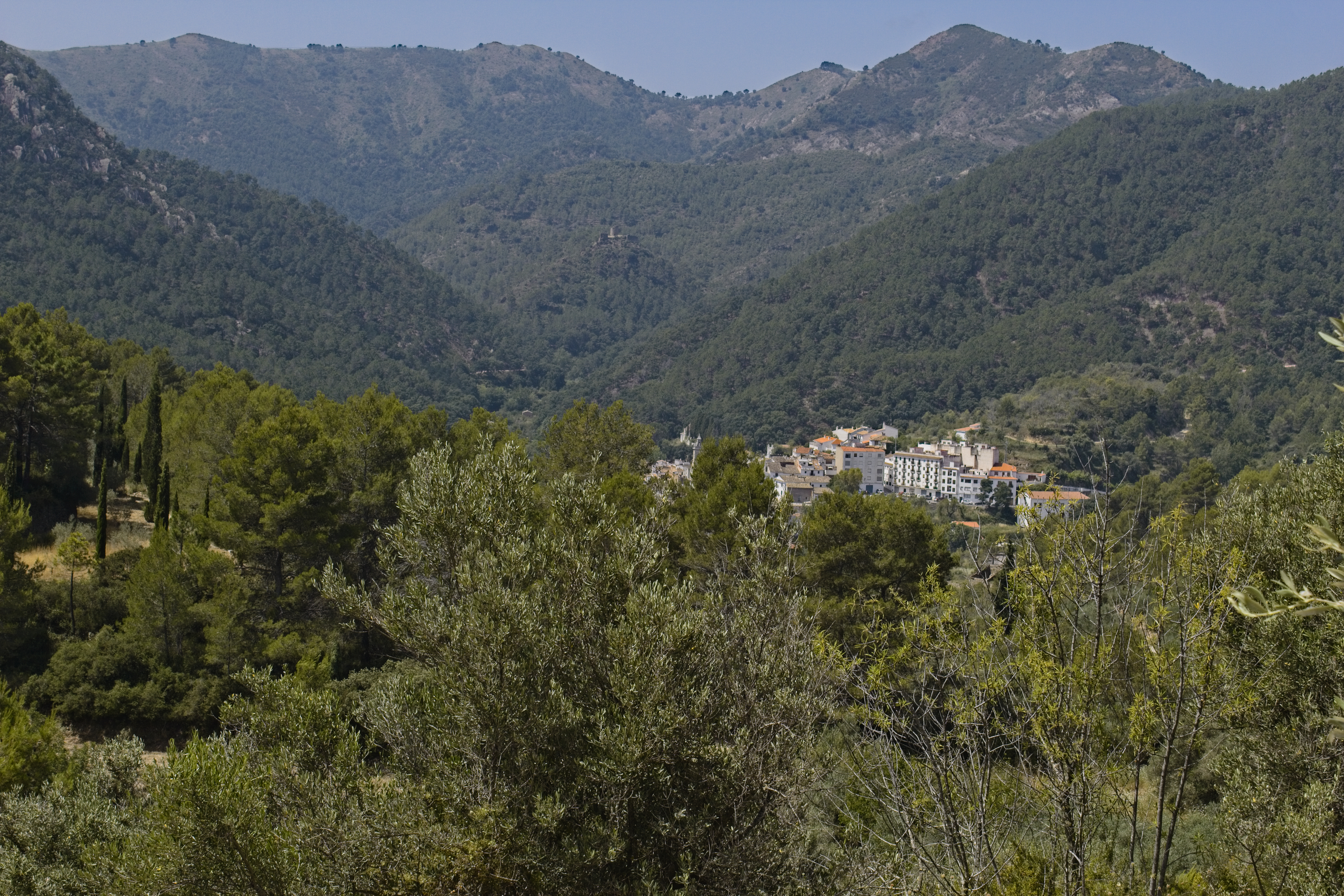
Up and over the hill, and we came to the town itself.
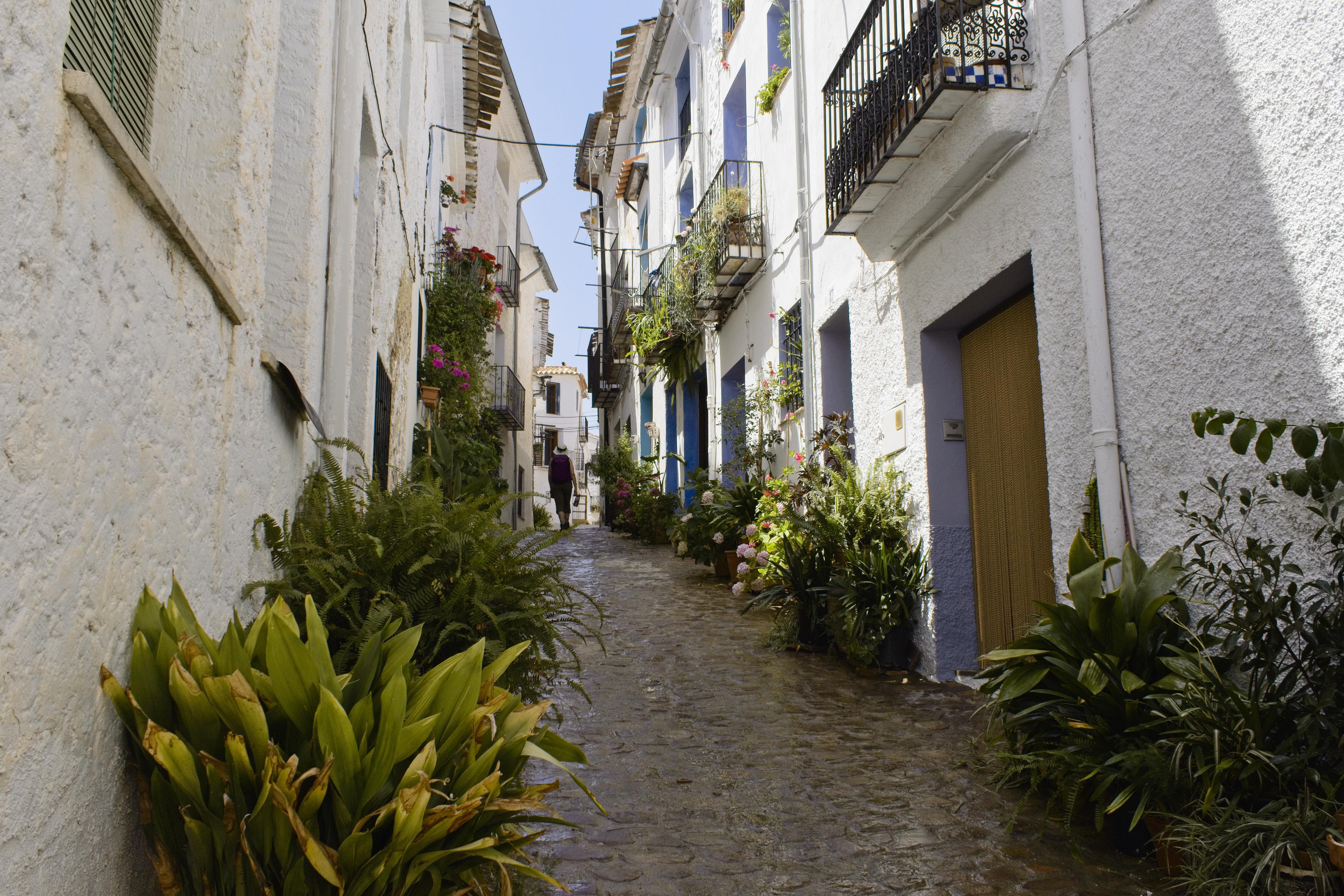
In town was a lovely place to be.
We stopped long enough to get a drink at the local watering hole, then it was back over the hill to the car.
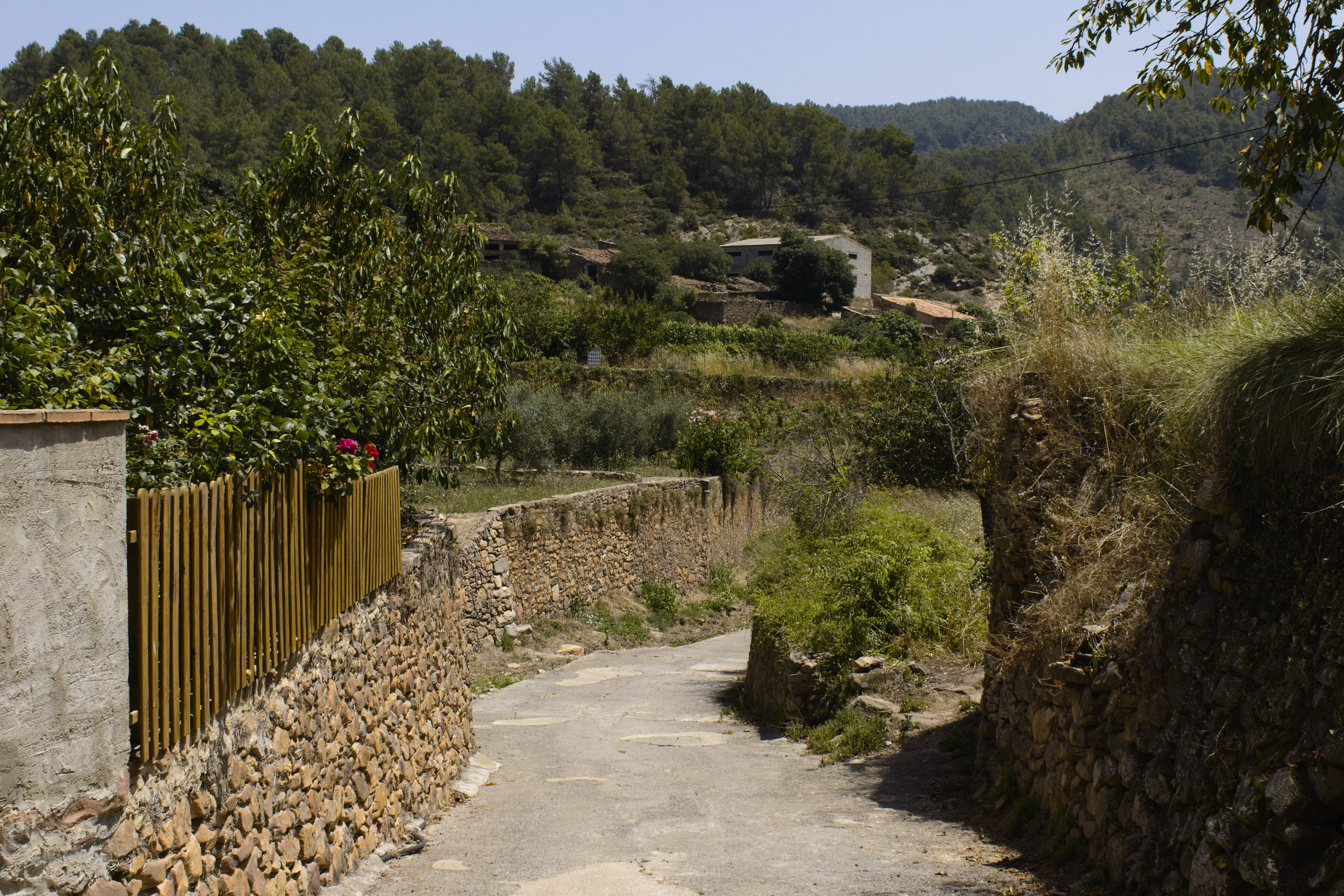
The road out of town. There are a lot of abandoned and semi-abandoned stone buildings on the outskirts of town; from our limited experience this may not be unusual in the campo.
July 4
For the fourth of July we attended a lunch hosted by Democrats Abroad at a local restaurant, Franky’s American Restaurant, which can only be described as a Valencian idea of American food. It was good enough and it was great to get to meet some like-minded Americans here in Valencia.
There was Patricia whose husband couldn’t make it to the lunch but who has lived in Hong Kong, Texas, Arizona and now Valencia…maybe a couple other places…for extended periods. There was Alex, who was originally from Argentina, was planning to settle down in New York until he met Guillermo in Spain; they dated and were soon married and it just made more sense to be in Spain. I didn’t catch others’ names or whole stories but it was just a nice bunch of people.
The group had reserved two tables, one inside the restaurant and the other on the terrace. We requested to eat outdoors and were thankful we did. This was our first real venture out into a gathering with strangers in the world and it was uncomfortable to be elbow to elbow and unmasked (as everyone quickly was) for a long period of time. I’m not actually sure I could have managed to stay inside in those conditions.
Altea
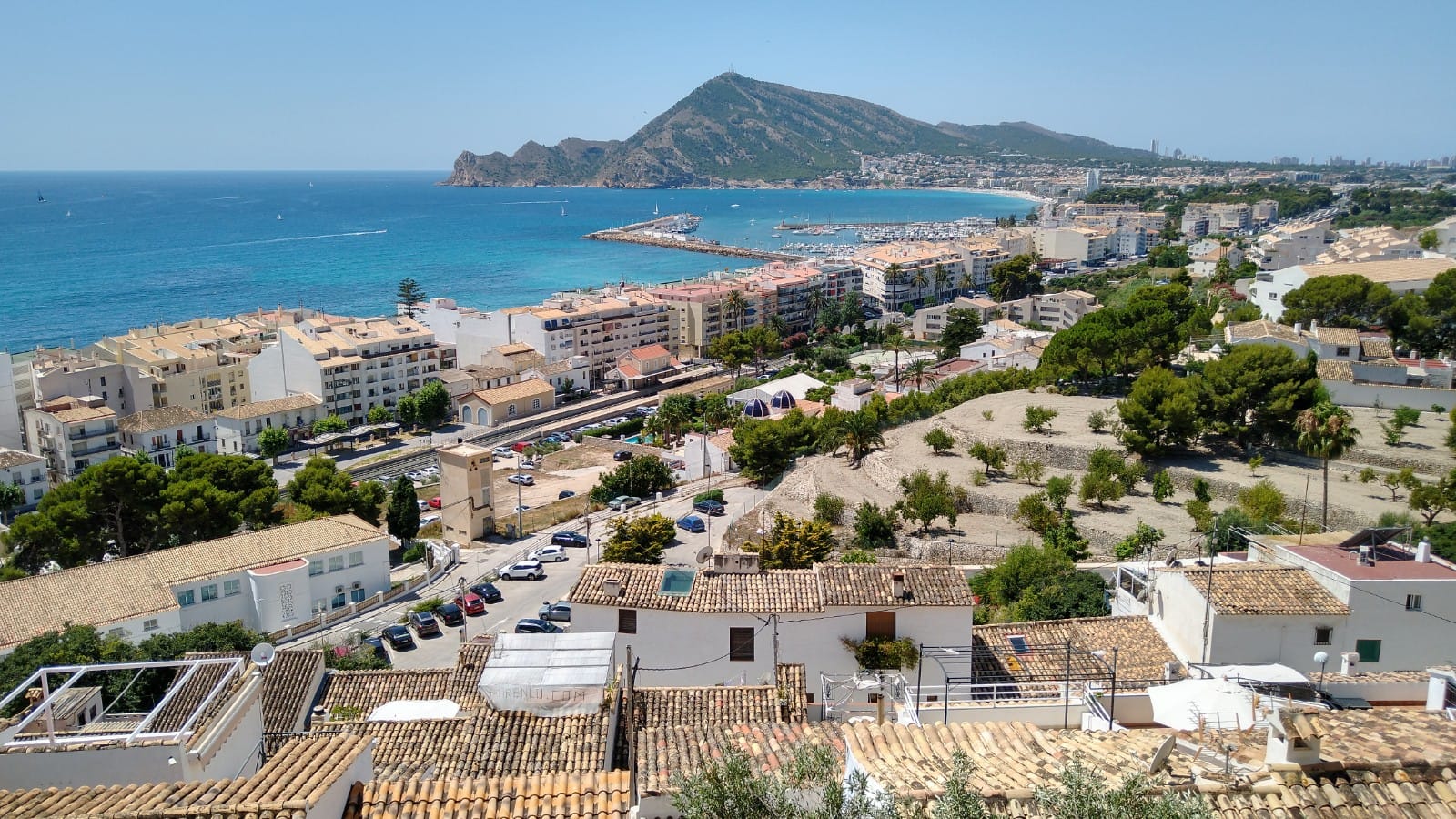
Looking out over the town of Altea
The next day, we took a group bus tour to the beach resort town of Altea. This was organized by a local bike tour shop and included a beachfront bike ride in the package, along with lunch. We caught a morning cab to the meeting point in El Cabanyal, the beachfront neighborhood of Valencia. After some organization of the bikes and riders, we all climbed aboard a tourist coach and headed south. Because these are the times we live in, I have to say that the tour operators were careful to get everyone fully inside their masks and people mostly complied.
When we arrived in the town, we had the opportunity to do a walk through the town with our guides but instead chose to sit by the seaside and grab a coffee. I think we made a good choice. I got a chance to chat with the British, sorry, English, owners of the coffee shop, who have been here for years and have no plans to go back, Brexit or not. They weren’t at all worried about the effects of Brexit and even were fairly optimistic for the rest of this season, saying that Spaniards were starting to come out.
This is the northern end of the resort area that includes Benidorm, on the Costa Blanca, where one could comfortably live without ever having to learn Spanish. I’m saying there are lots of British tourists and expats in this place. Cindy and I were both attracted and appalled by this idea.
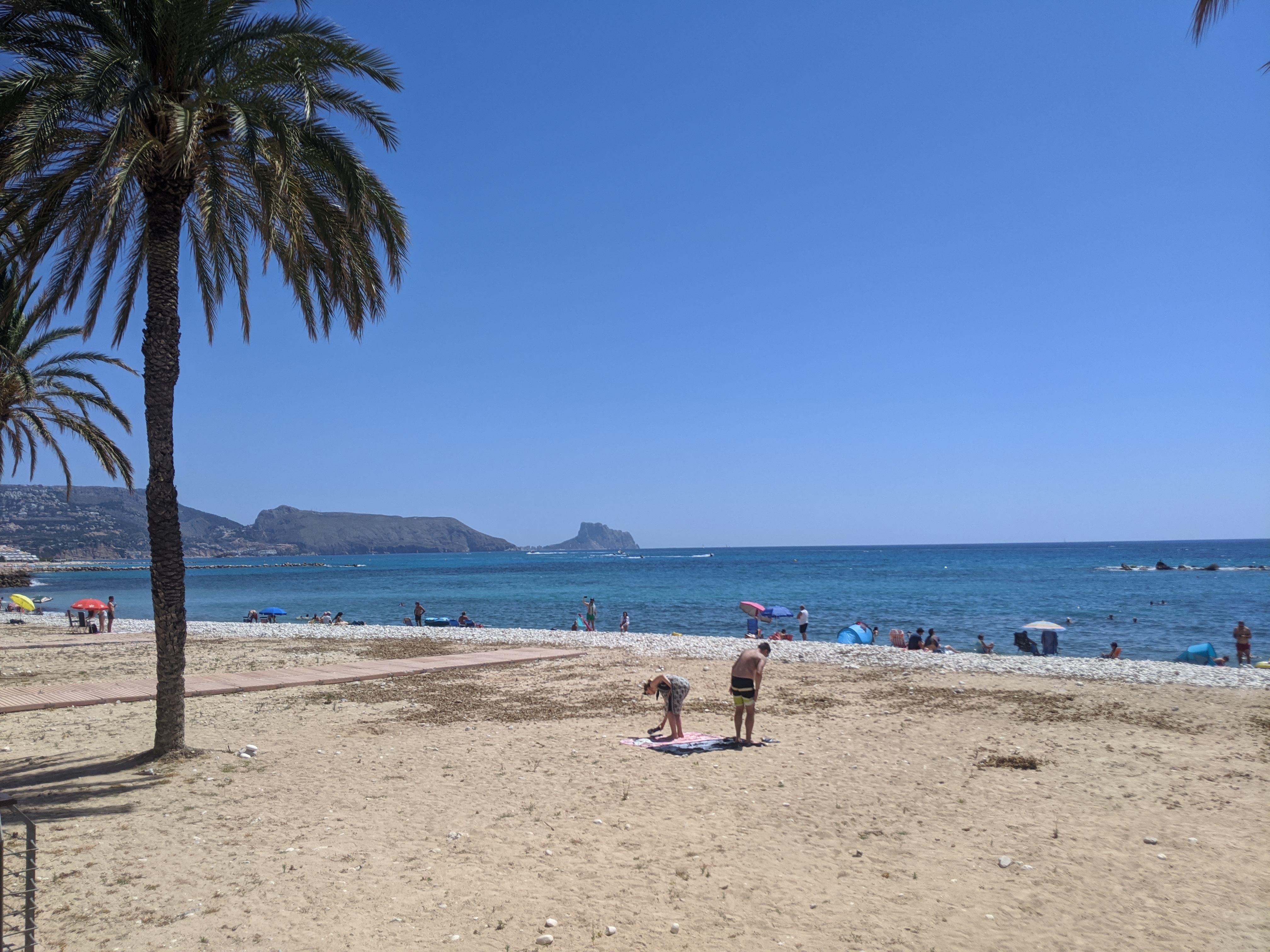
The beach isn’t sandy loveliness but the Med is beautiful here.
At any rate, we killed time until lunch where we chickened out on eating inside with the group and instead ate on the terrace. Fortunately we enjoy each others’ company and didn’t miss the others. Lunch was a lovely Indian meal. Afterward, those of us who chose to bike got going along the beach. We took a little detour inland along the river that runs through town, riding through the rushes.
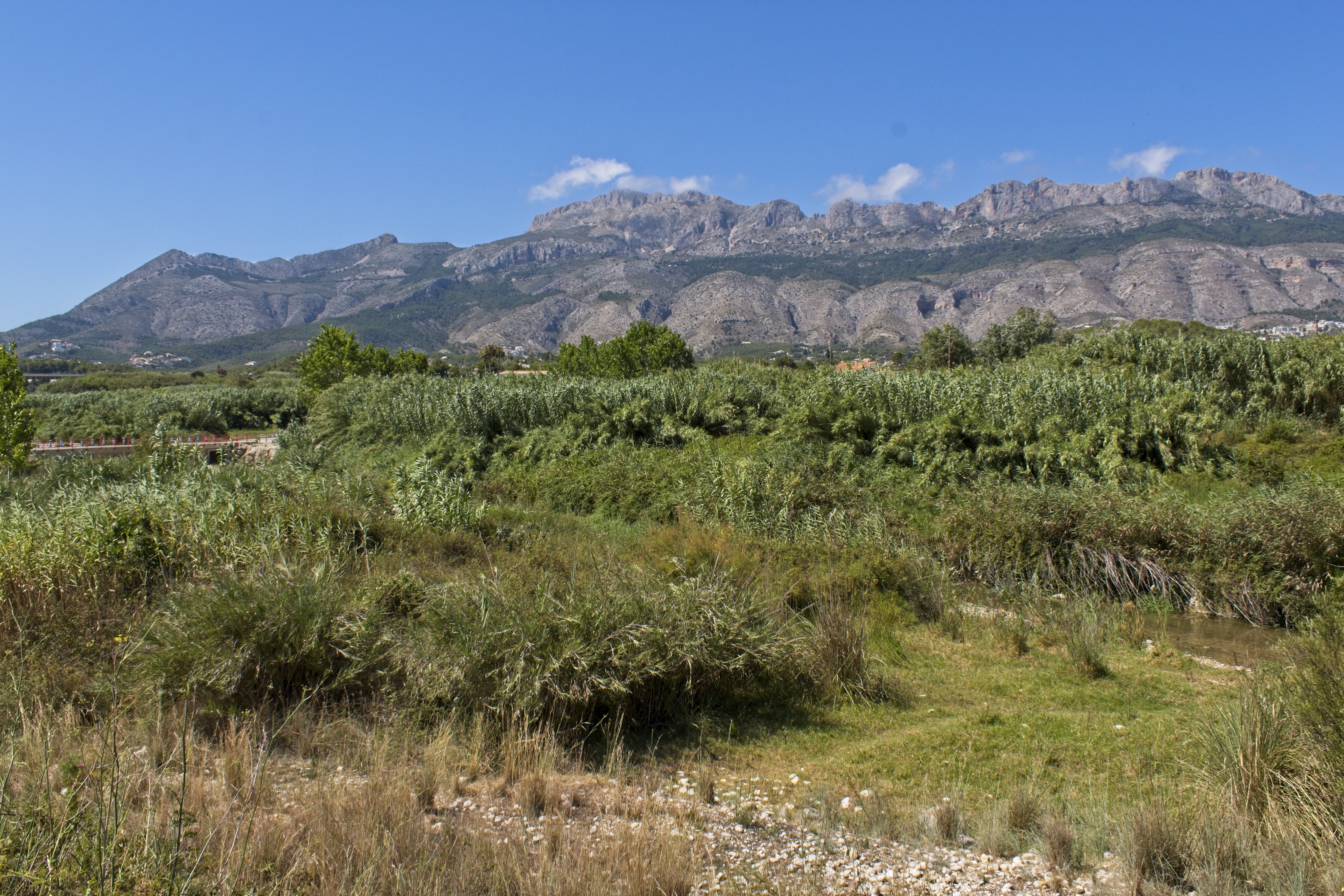
Looking northwest at the coastal mountains
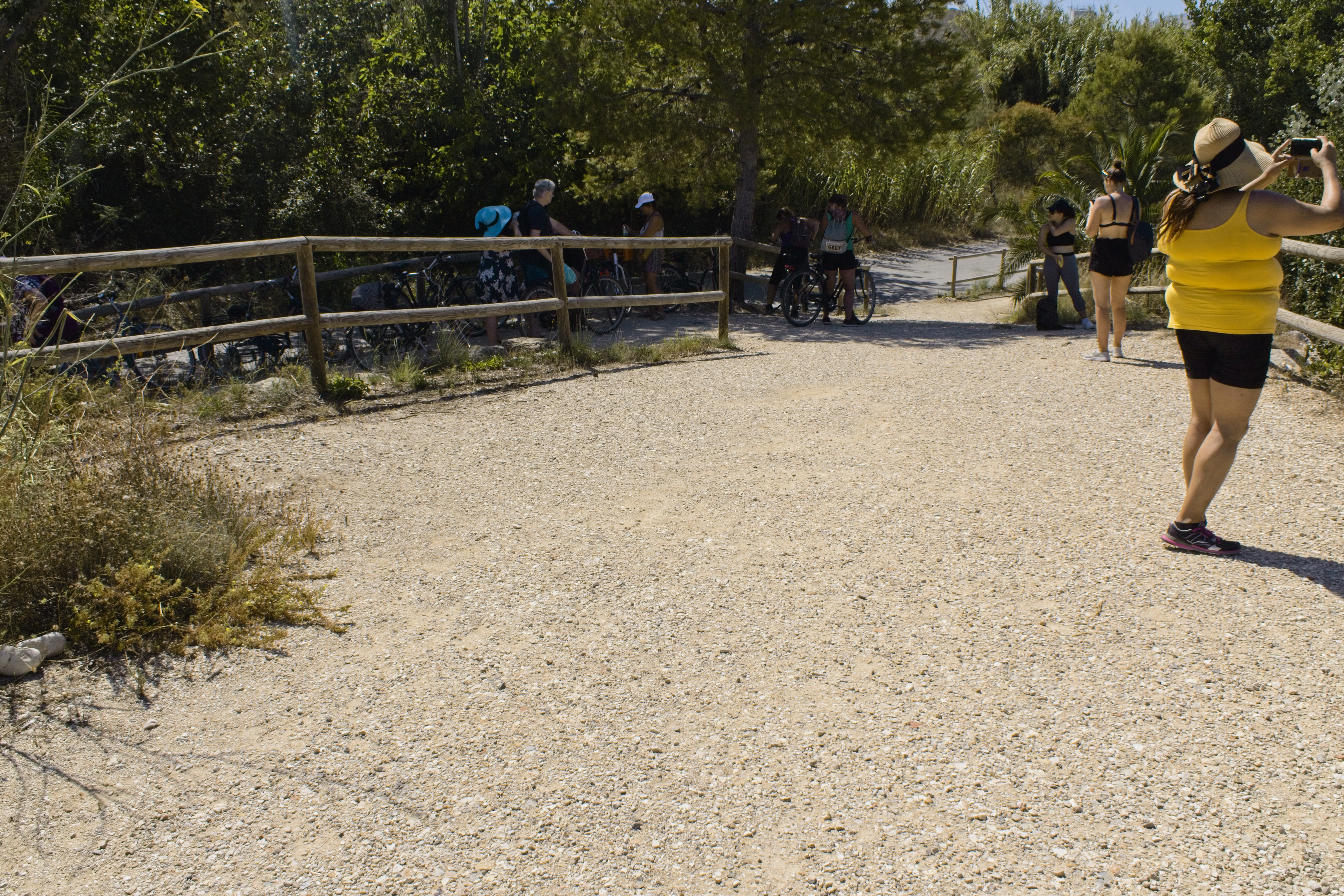
Some of our companions for the afternoon
We returned to the beach and rode next to the beautiful blue Mediterranean, then returned to the town center to bus our way back home. Mask discipline was much worse on the way back and again left us pretty uncomfortable. We’re not likely to try another tour like that soon.
So far we’ve managed to avoid getting the plague. We’ve even done another trip, but that’s going to have to be a new post. Meanwhile it’s getting hot here in Valencia, with temperatures up into the 90s and high humidity. We’re struggling to keep our cool but the good news is that we’ll be spending most of August on the north coast, where temps are much more like Seattle. Evidently Valencia largely shuts down in August and we don’t want to be here to see what that looks like.
We took another trip, to Alicante, which is fodder for another post. Stay safe, stay cool.
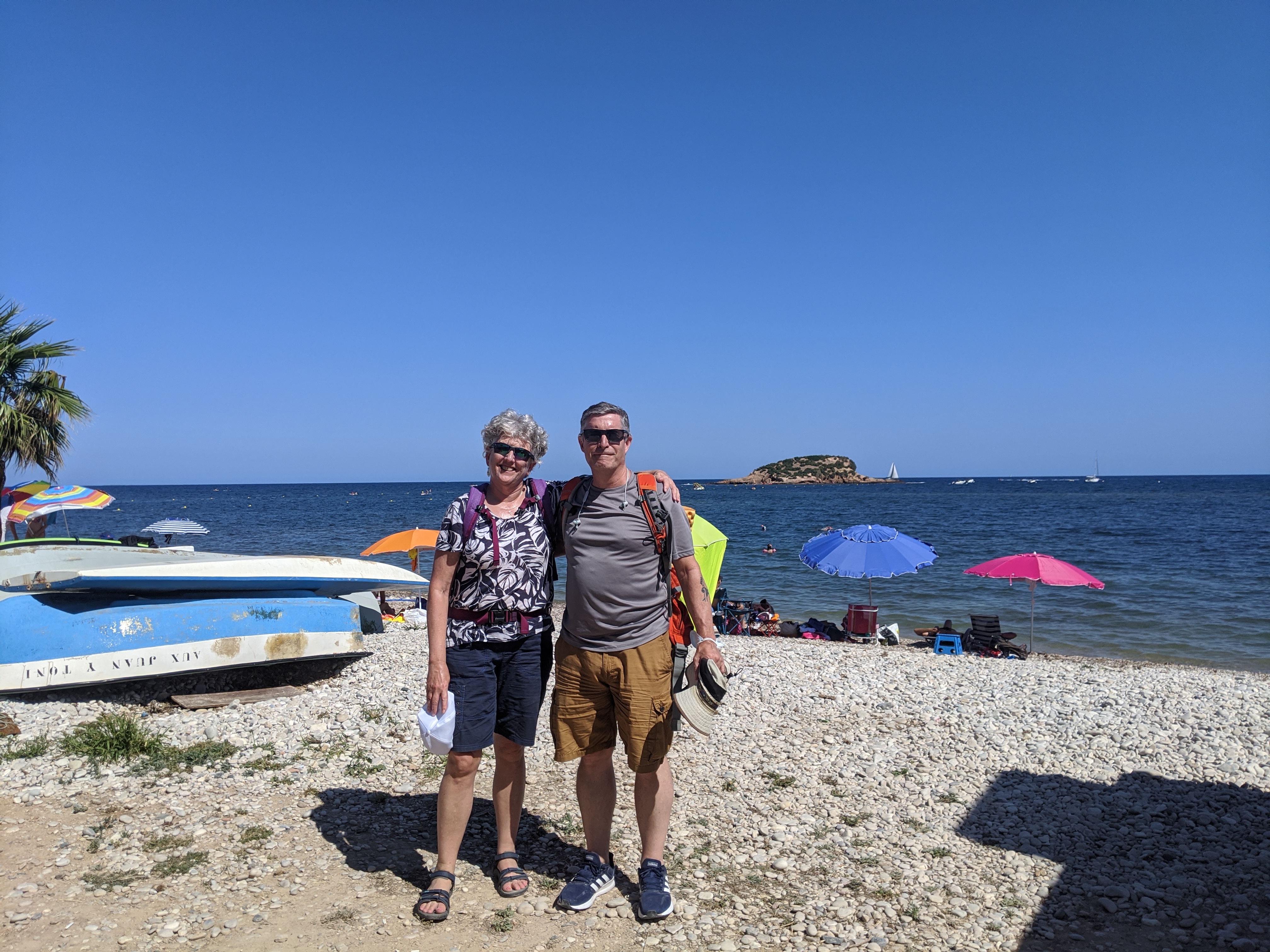
Following are some random photos from the camera roll…
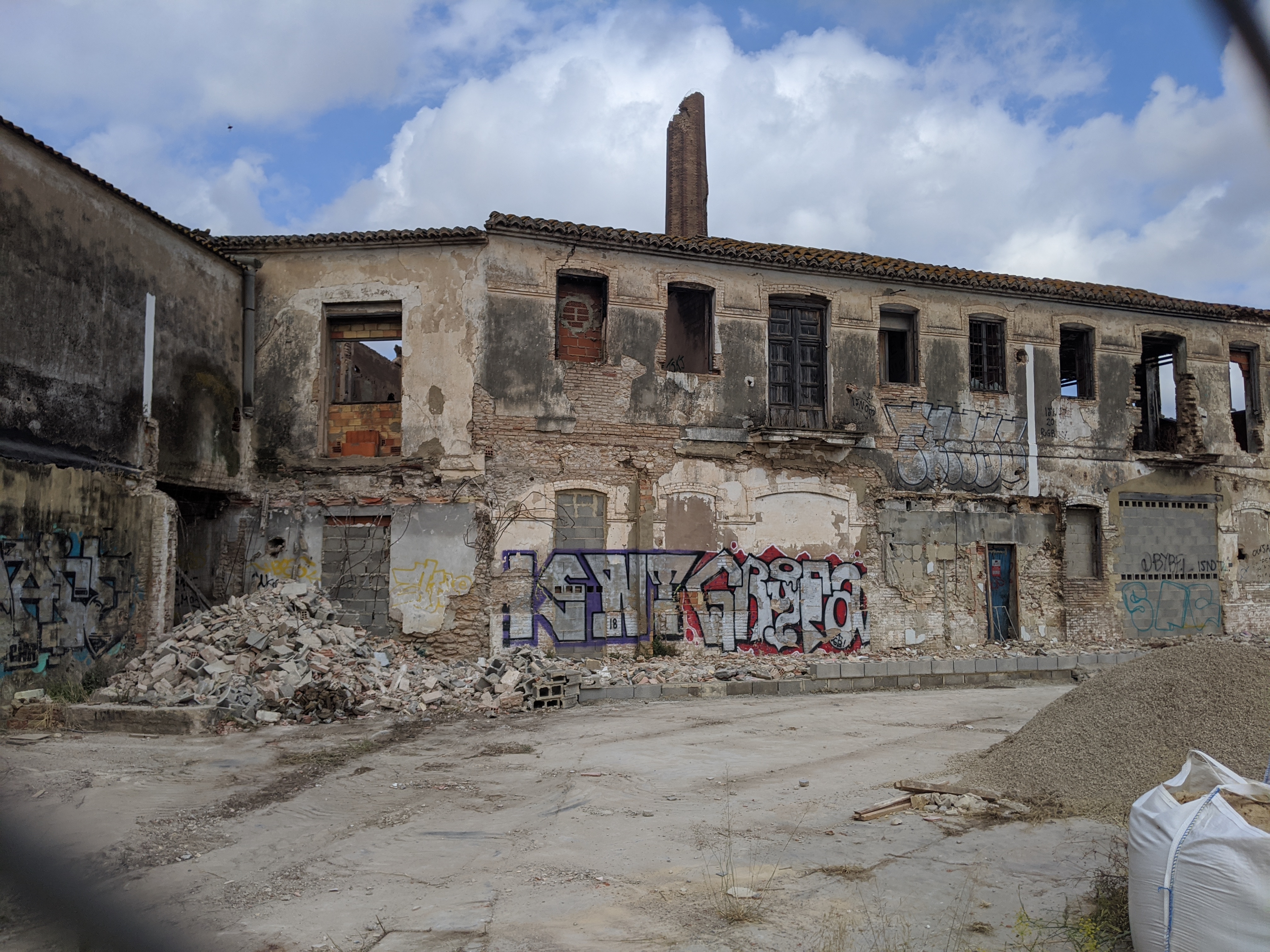
Factory? Maybe. Somebody was fixing on it when I took this picture though.
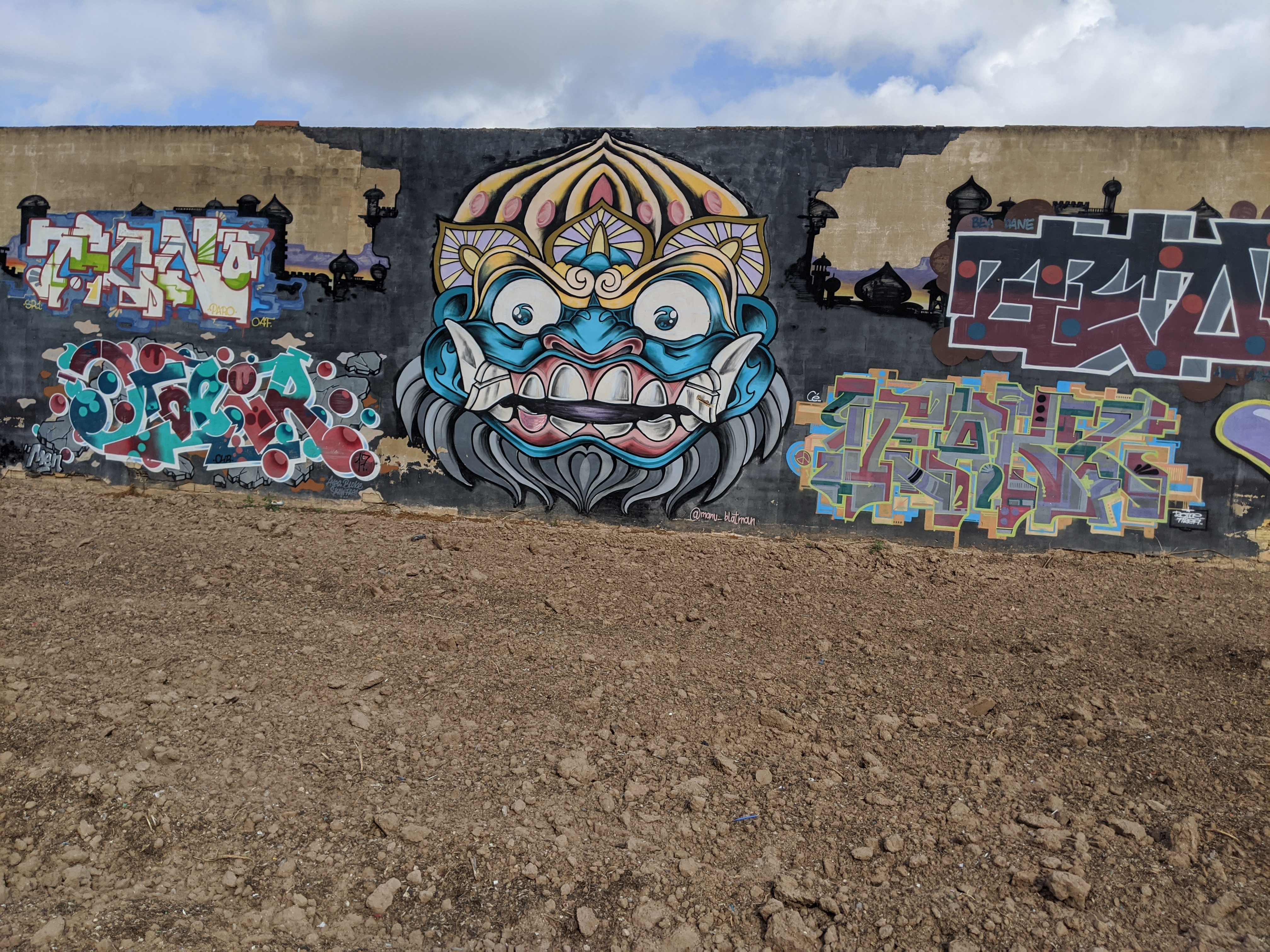
Random wall by a farm field outside Valencia
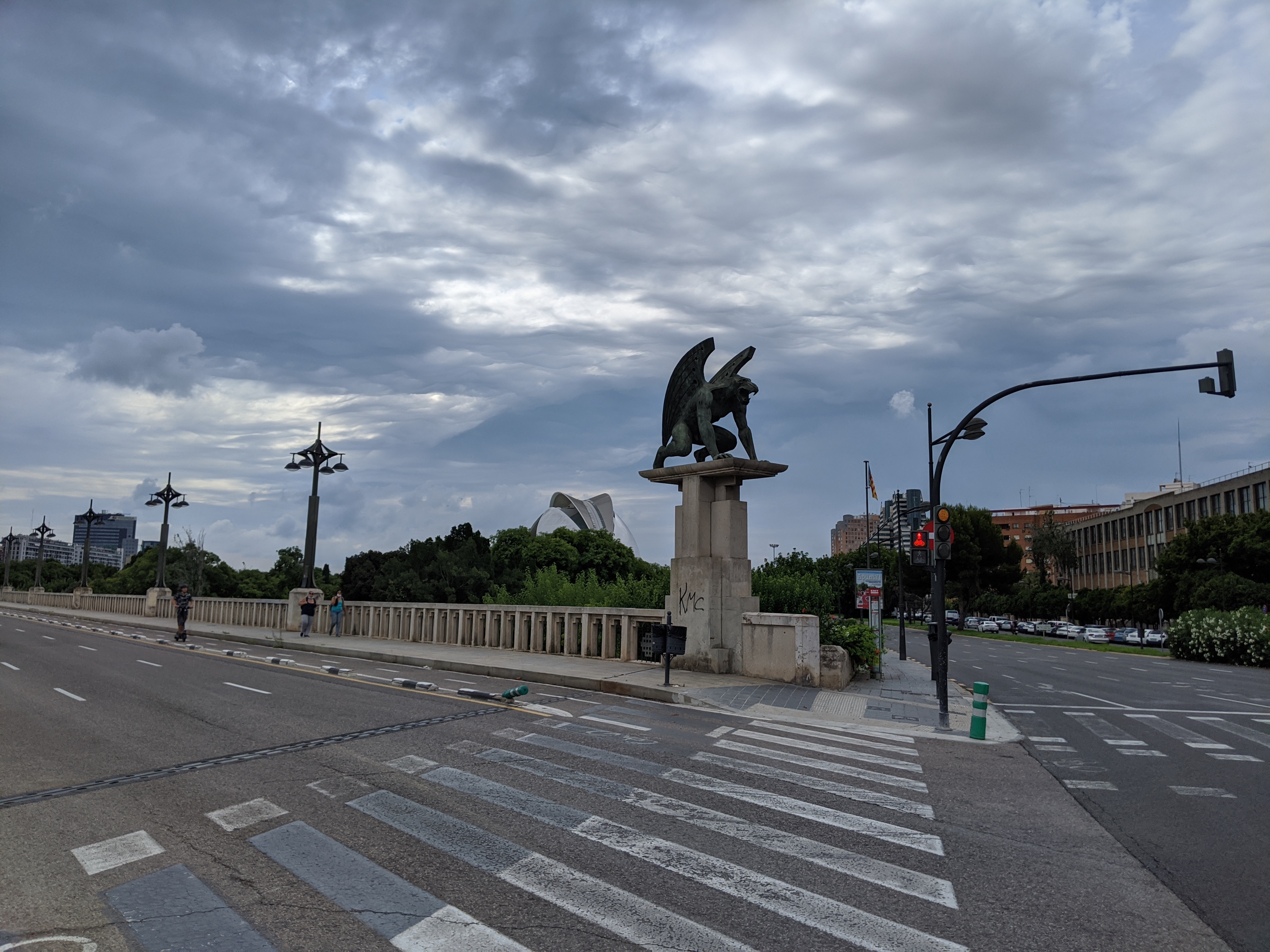
LOOK OUT FOR THE BATS!
-
Fase 2
Since June 8, the Valencia region has moved to Phase 2 of the lockdown de-escalation planned by Spain, meaning that more restaurants are open, they’re open for limited seating indoors, museums and shops are open and we can travel within the Valencian Community.
As a result, we’ve gotten out. We have been able to visit some local bars and restaurants in the neighborhood, we’ve been into a couple of museums — we’ve even rented a car and took a road trip for a day.
I’ve been taking pictures both with the big camera and my phone and wanted to do a little show-and-tell. This will be mostly show, hopefully the photos will speak for themselves.
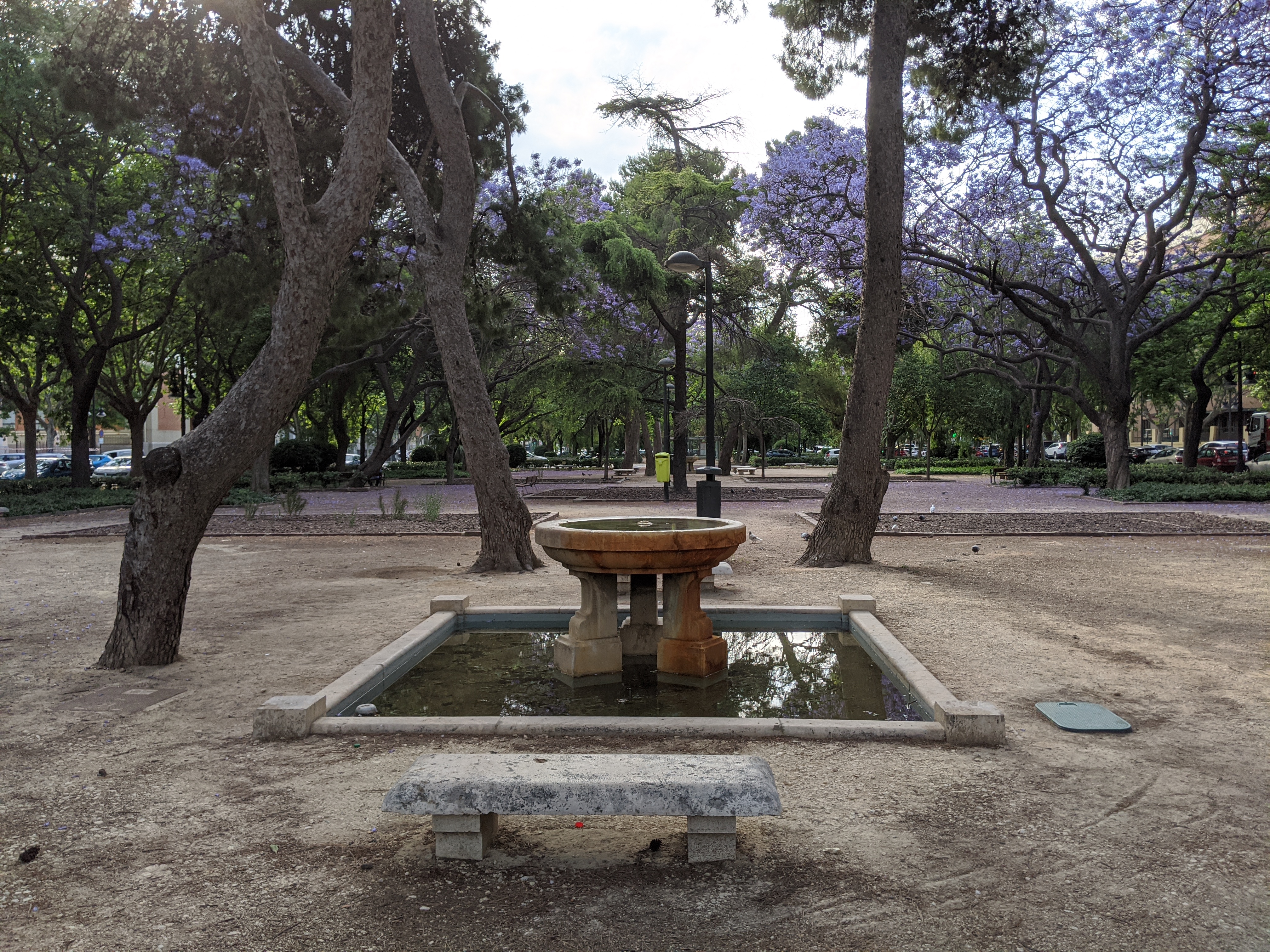
In my walks around the city I find little gems like this park between the lanes of a boulevard.
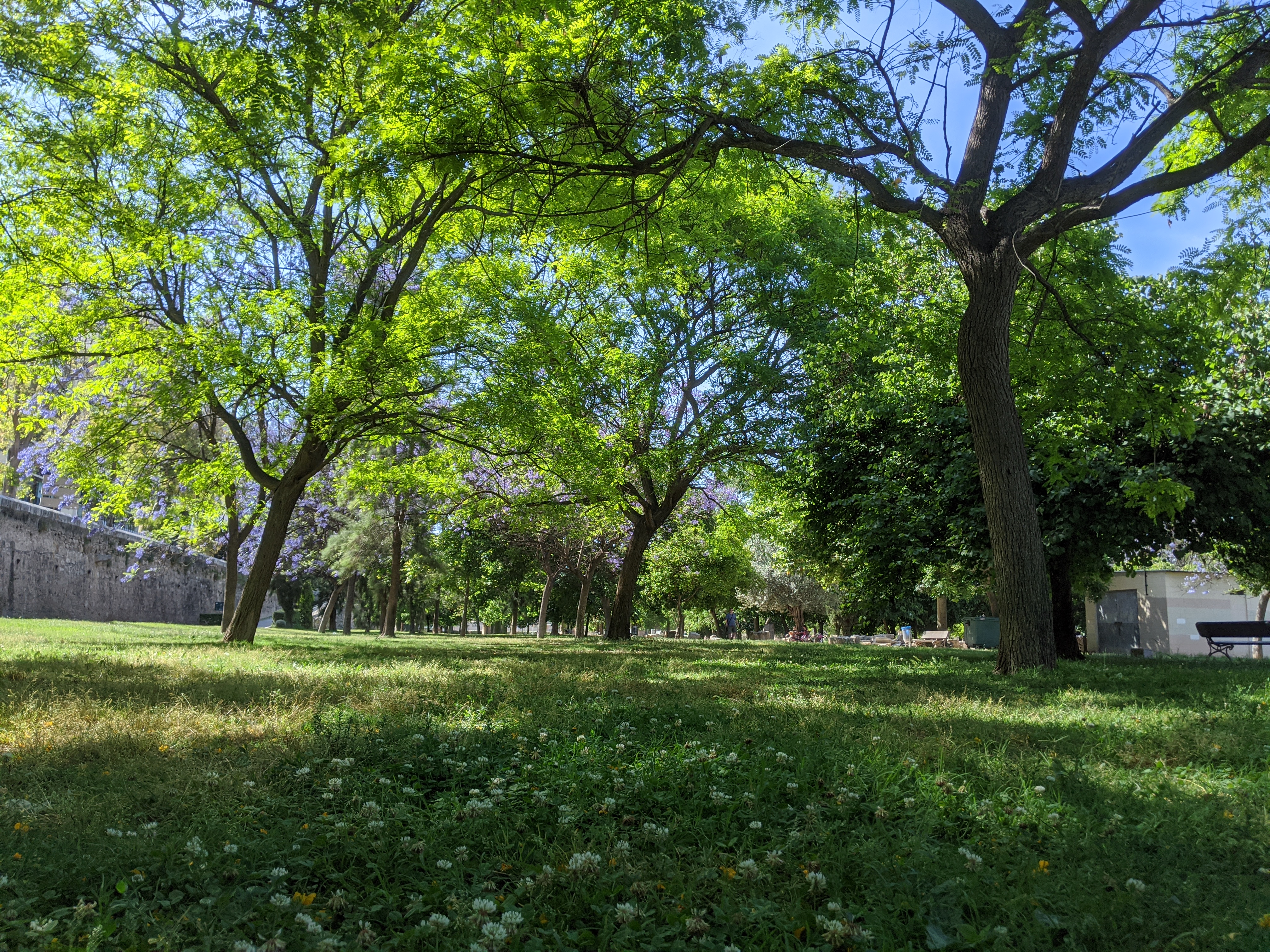
We snuck out just before Phase 1 was eased, for a bottle of wine in the park. Lovely.
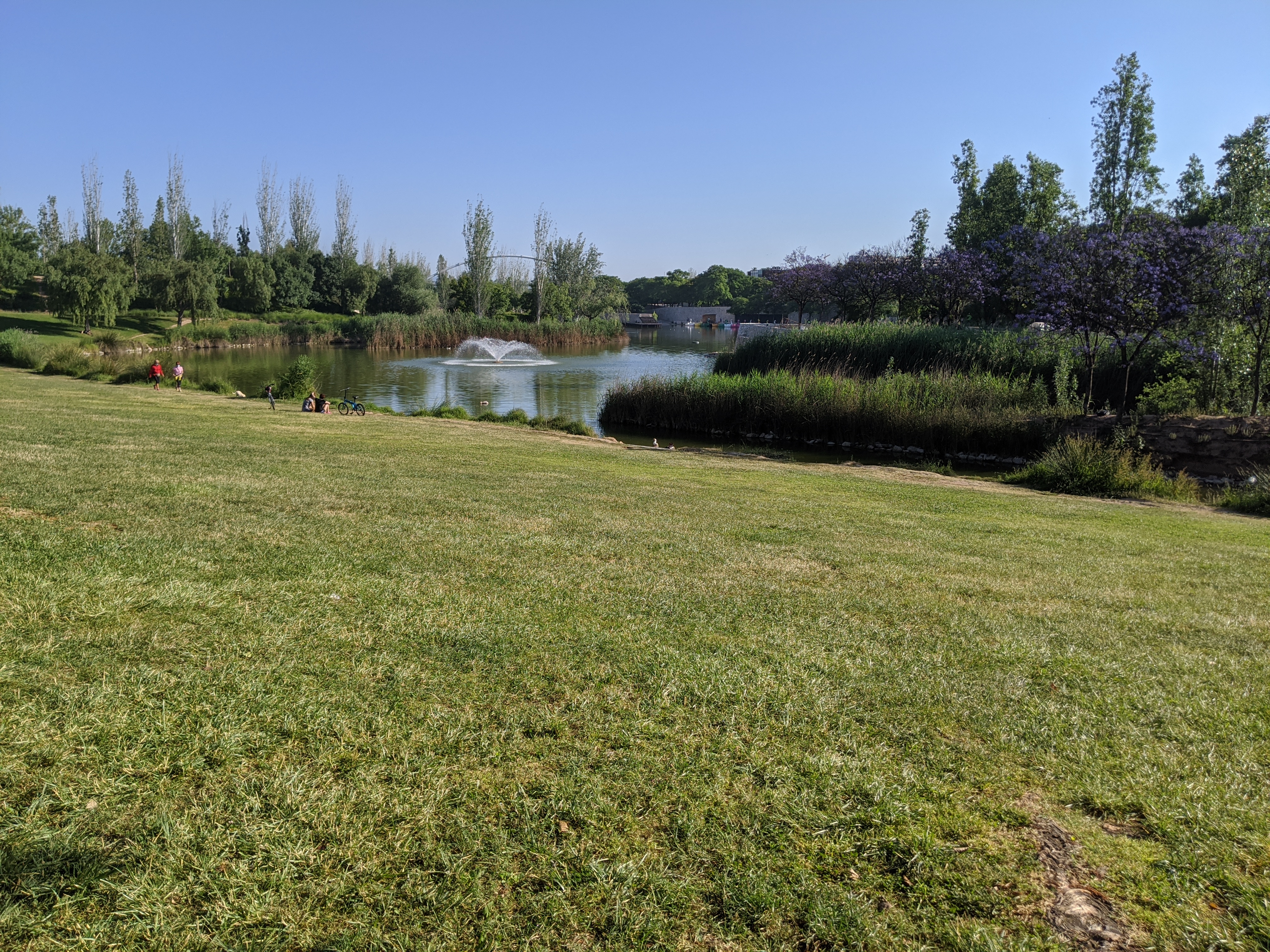
One morning we walked to the west end of the Turia Gardens and found this.
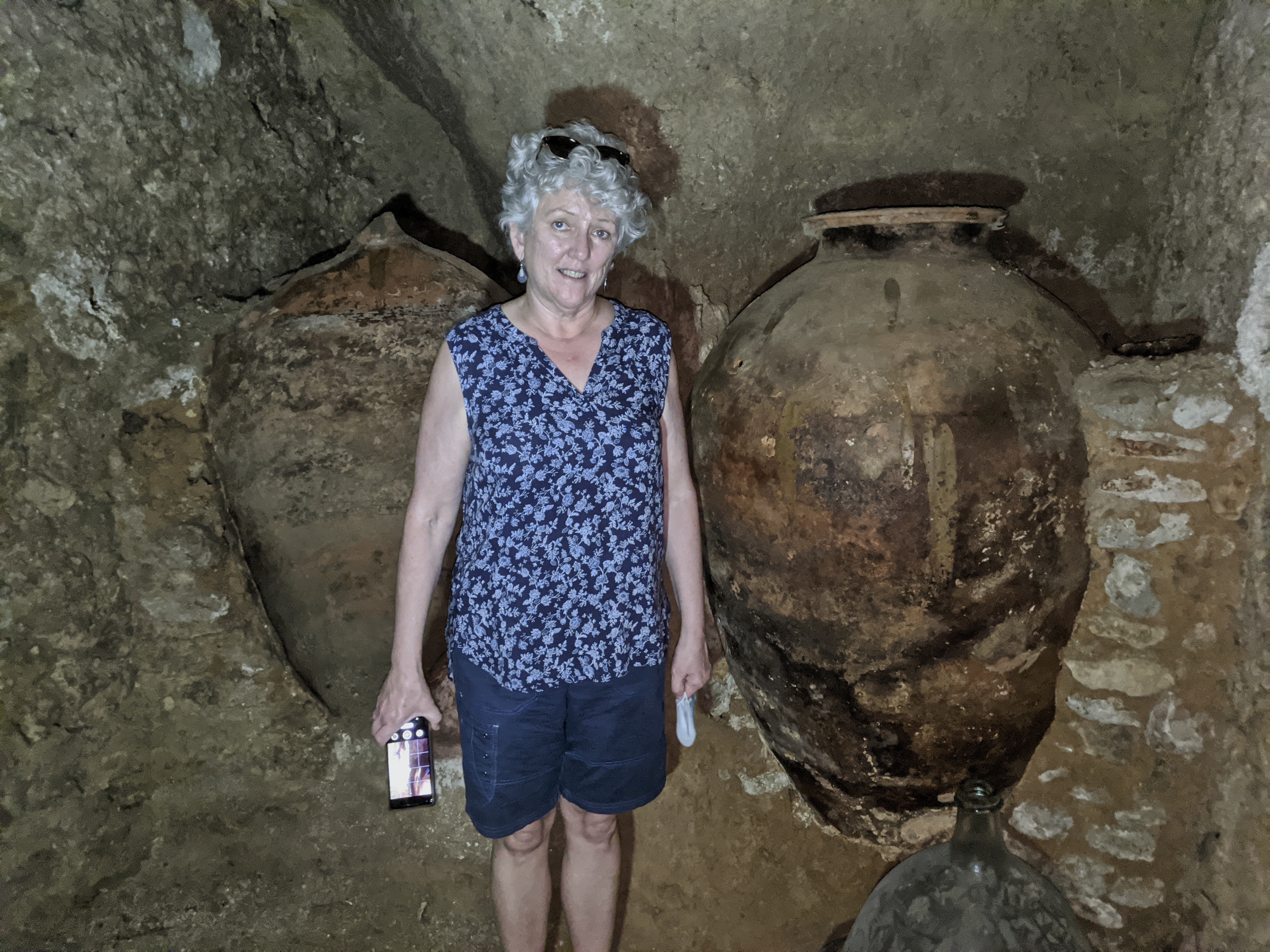
Caves used in ancient times to keep wine cool. Now keeps tourist cool.
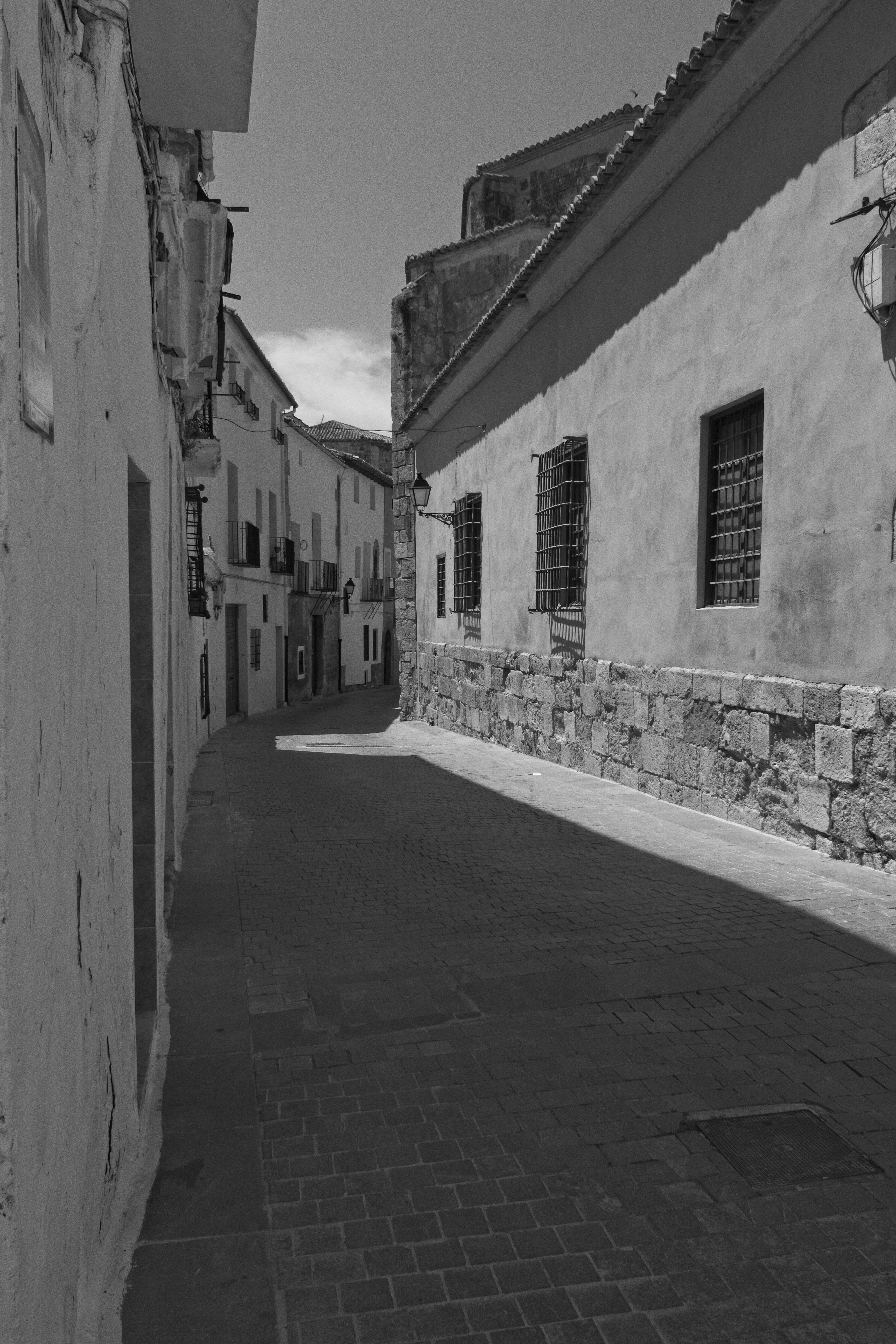
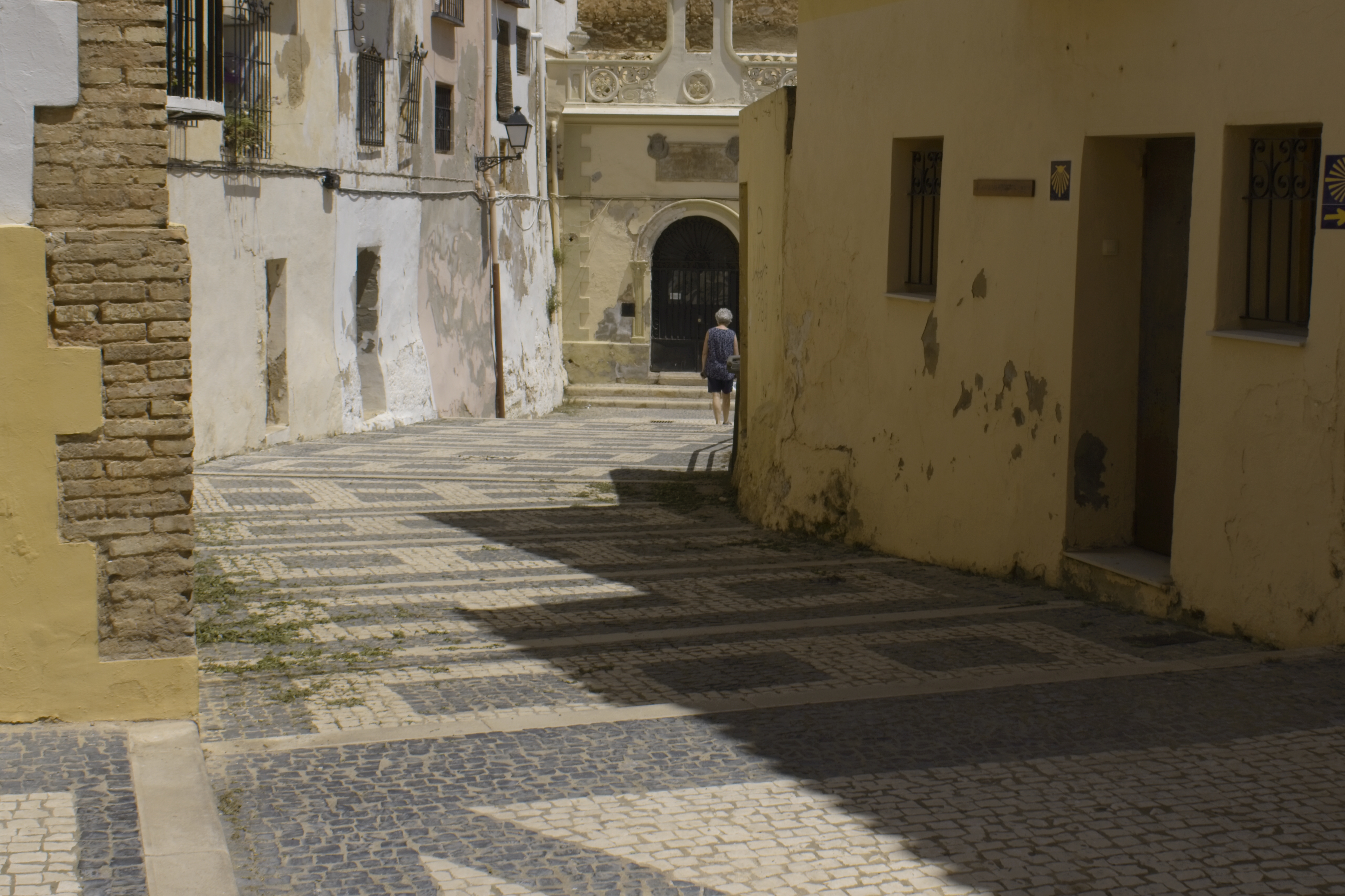
From our rental car field trip Valencia – Requena – Almansa – Xátiva – back along the coast. Photos of Requena.
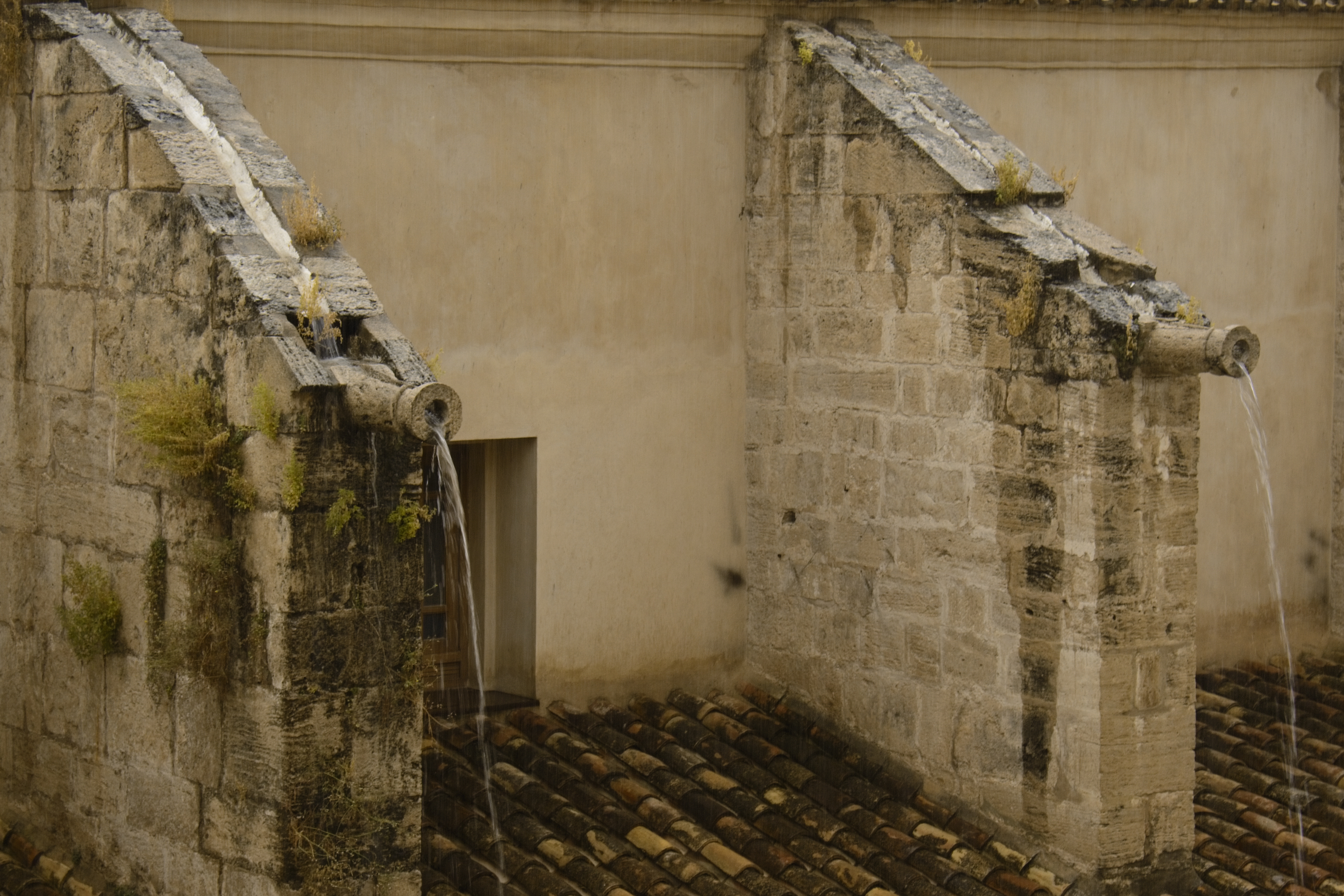
We have gotten occasional rain. The downspouts work.
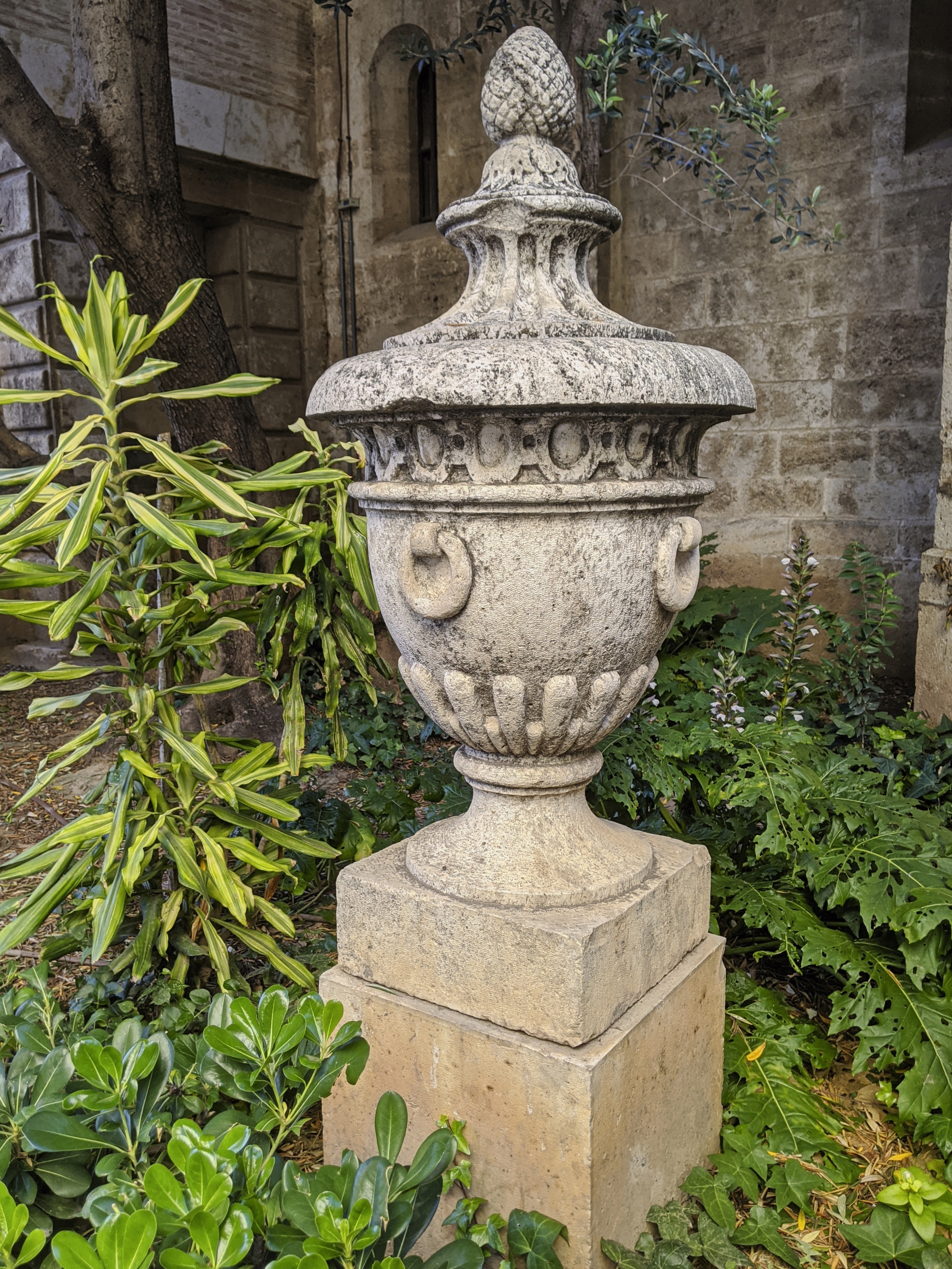
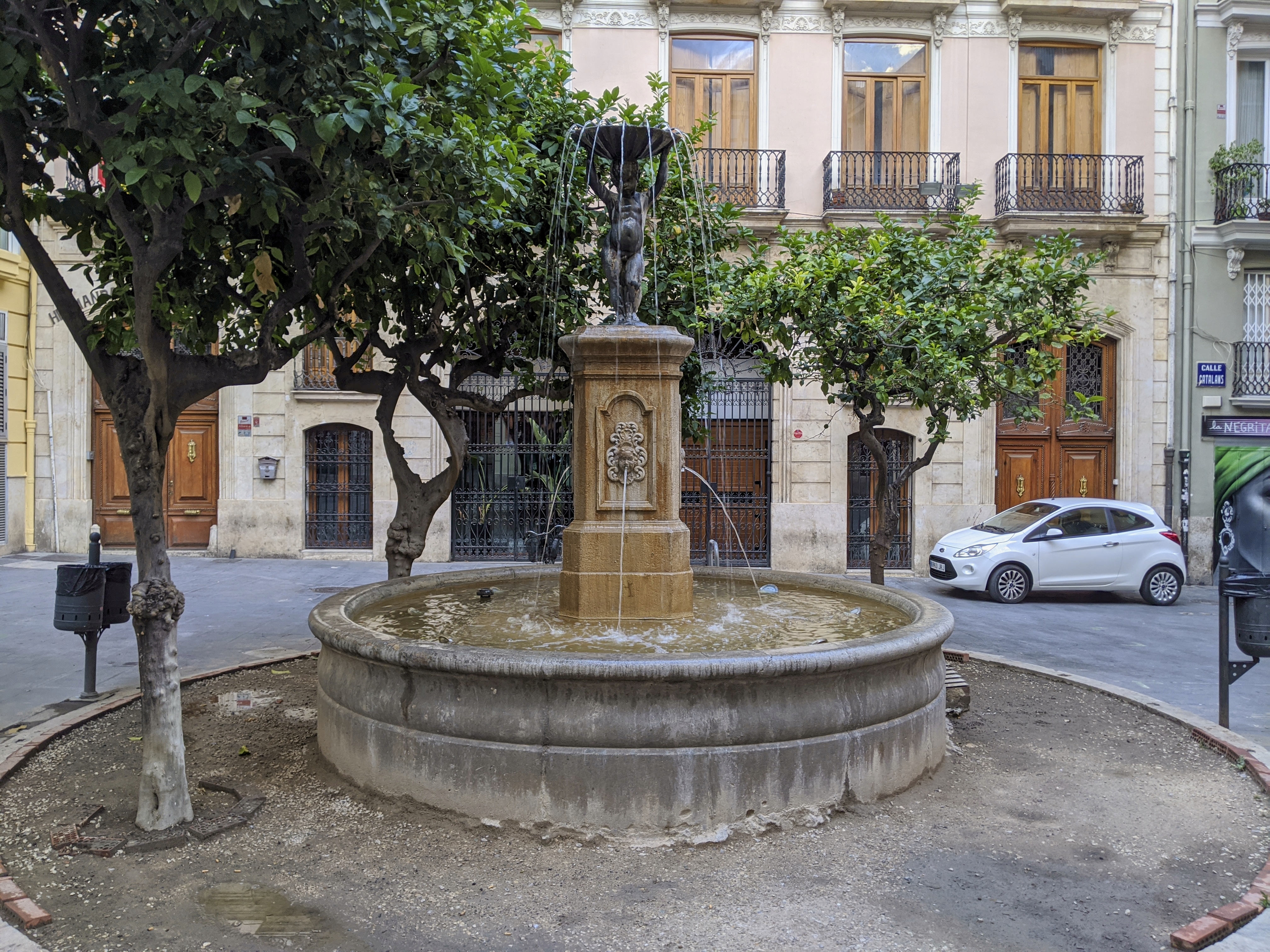

Stuff I’ve seen walking around.
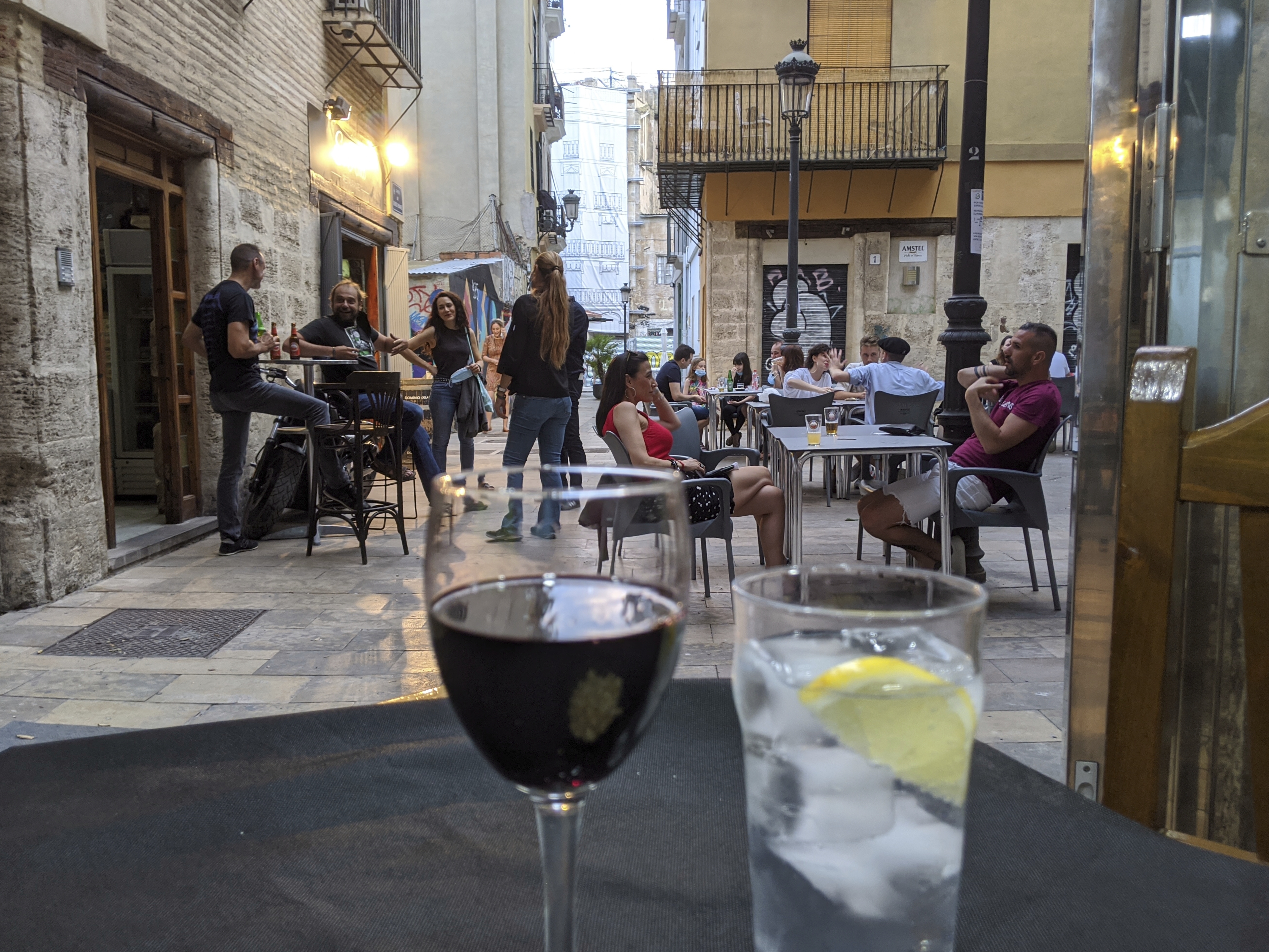
Out for a drink. Note masks only thinly in evidence but everybody was pretty well separated.
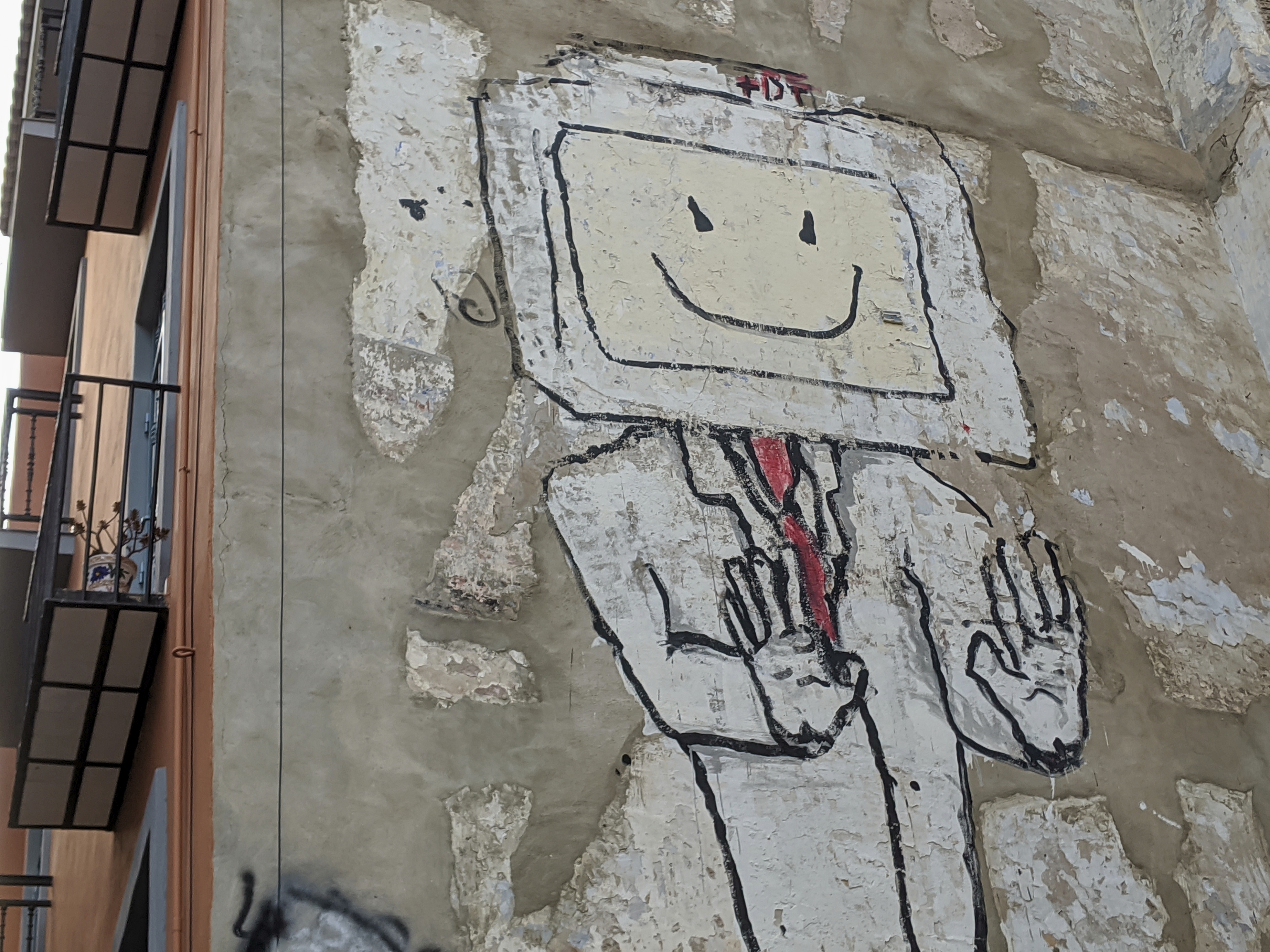
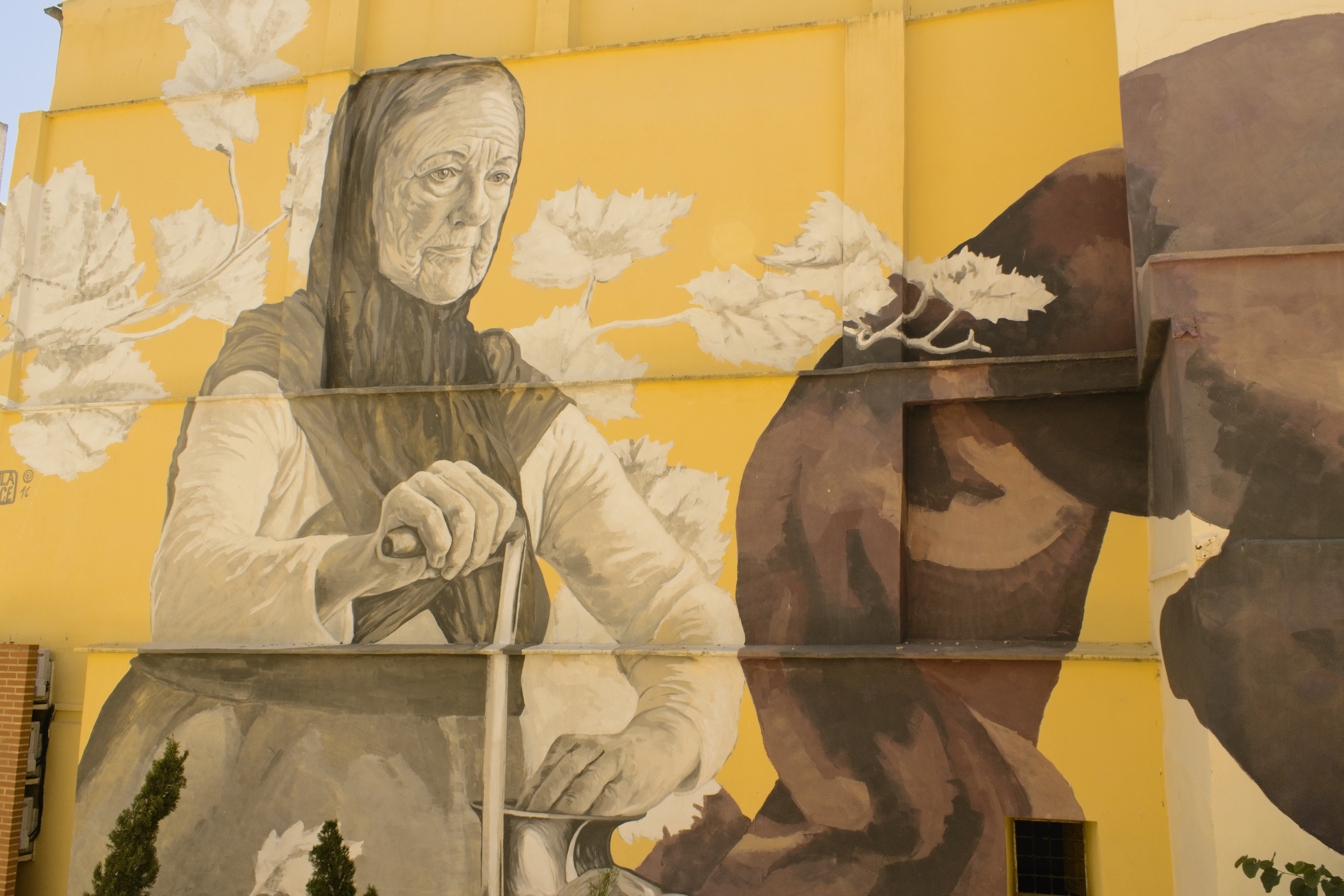
Street art
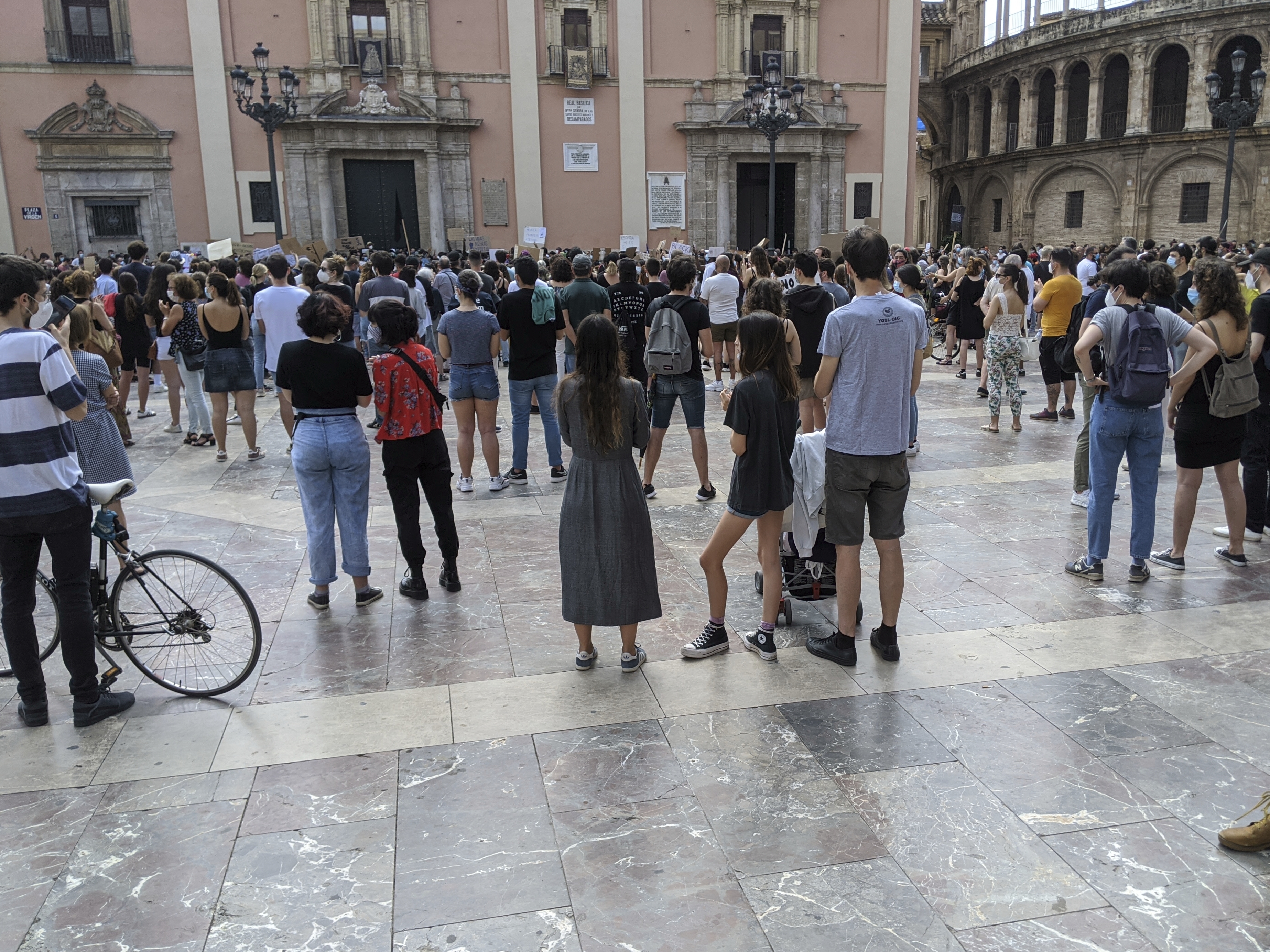
Another BLM protest, only steps from our door.
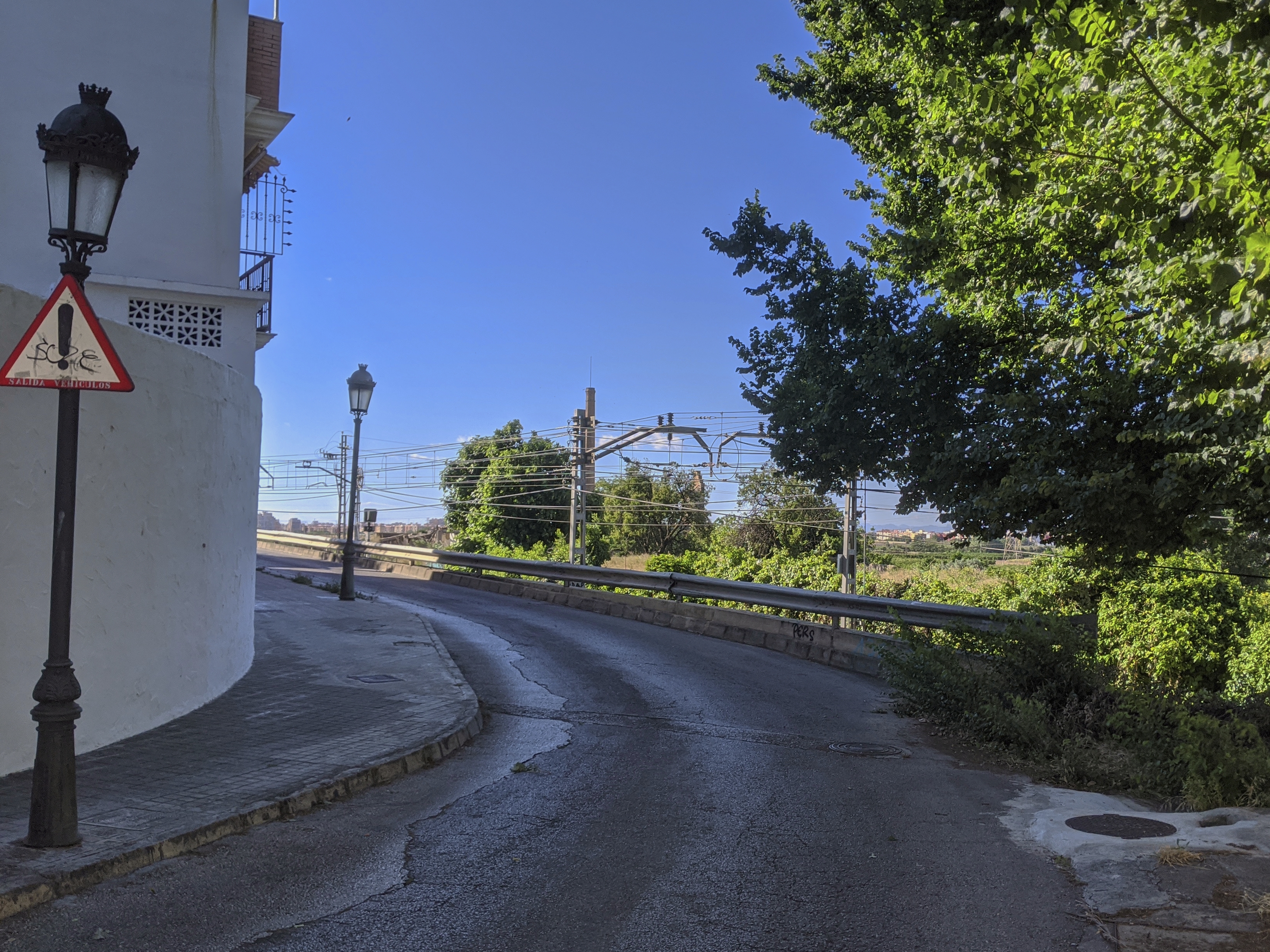
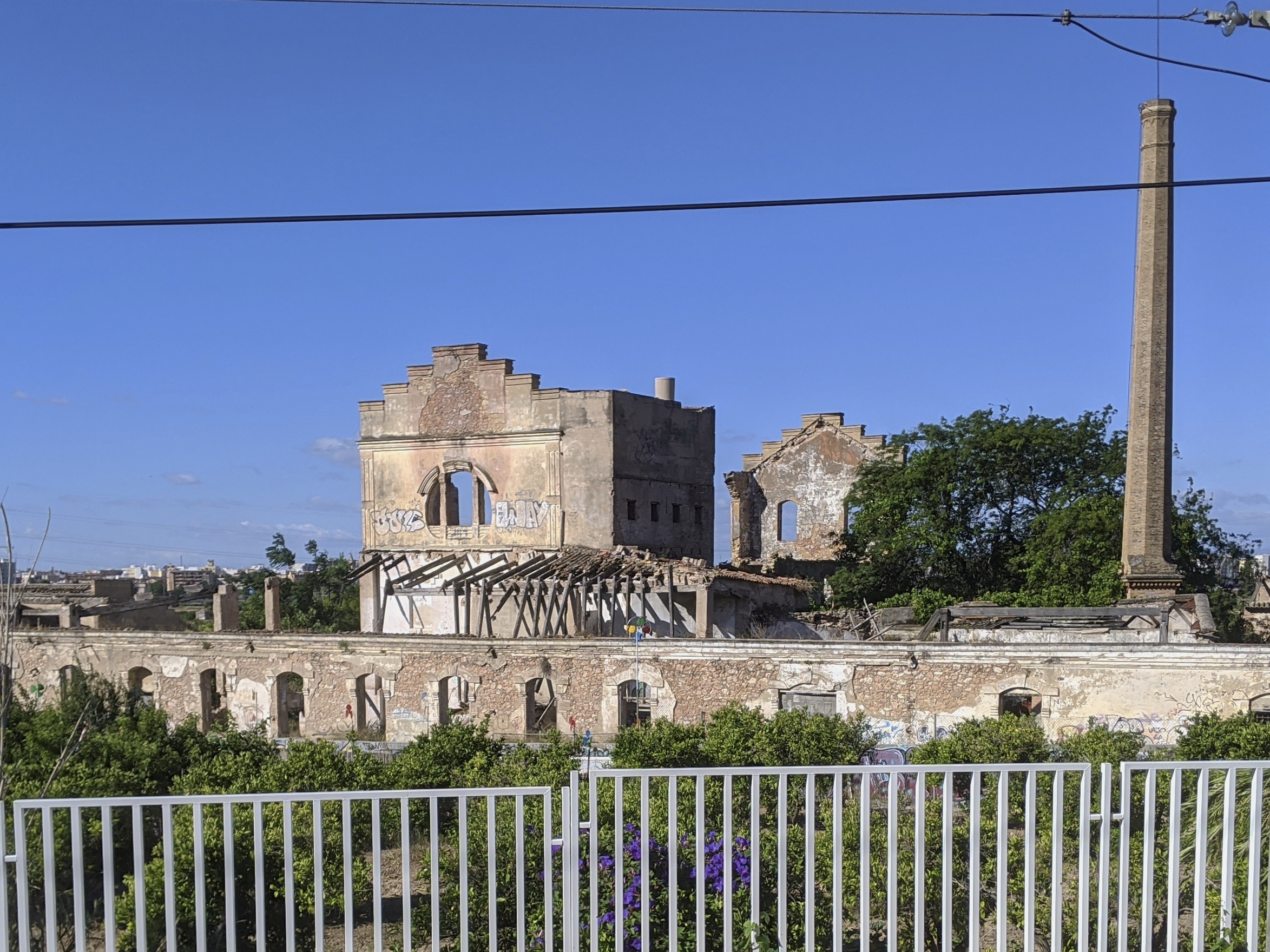
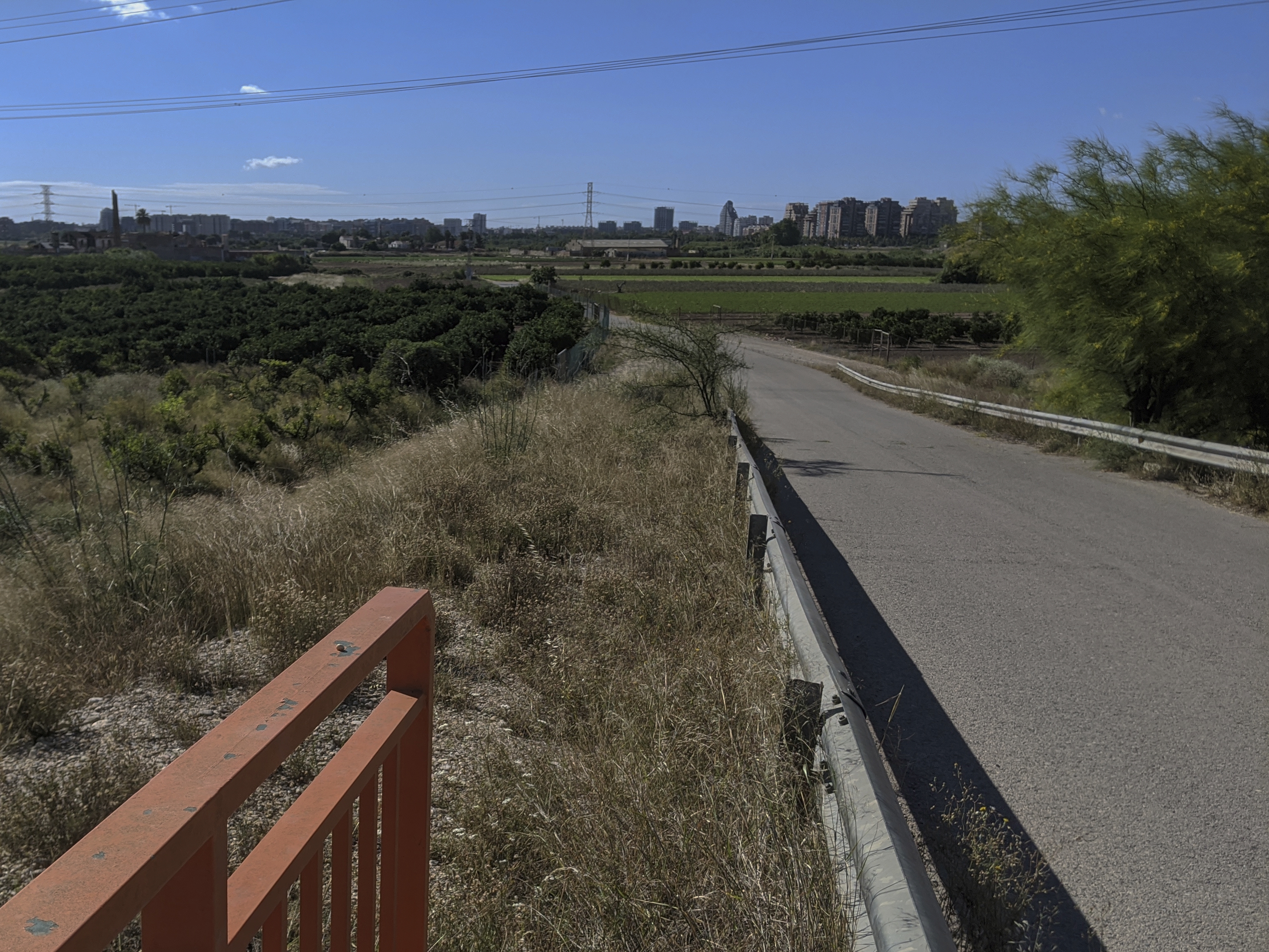
I rode the Metro out to the outskirts of town, then walked back. First picture was a view of the city across the fields, next is an abandoned factory, third is a view from closer in.
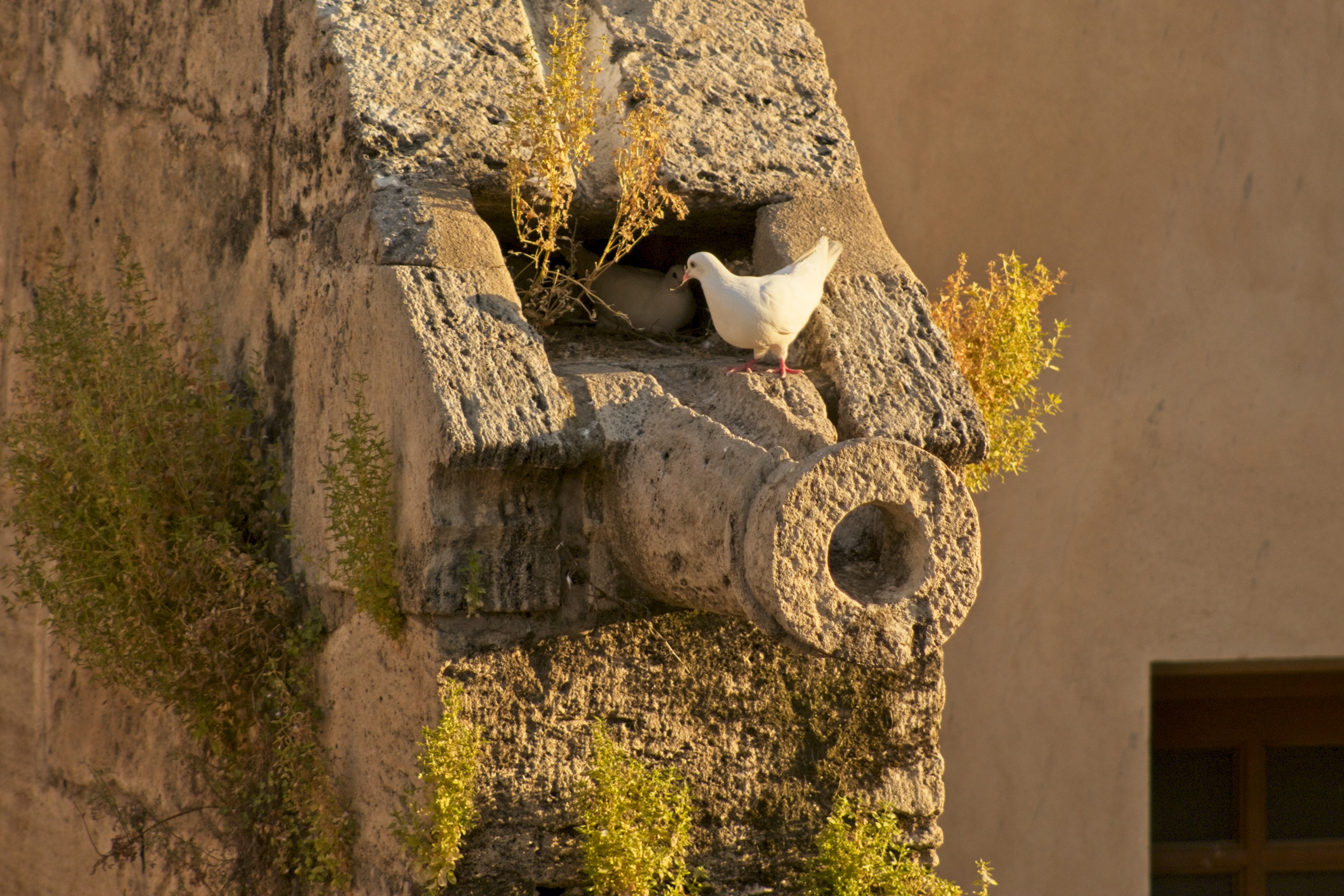
Update on the Whites: Mr. Gray ruled the roost for several days but from what I could see, couldn’t find a girlfriend. He became less interested in the space and it appears that the Whites just waltzed in and took the place back. However, since this photo was snapped, it looks like Mr. Gray has run them off again and the space appears to be abandoned now. See, this is what happens when you don’t share.
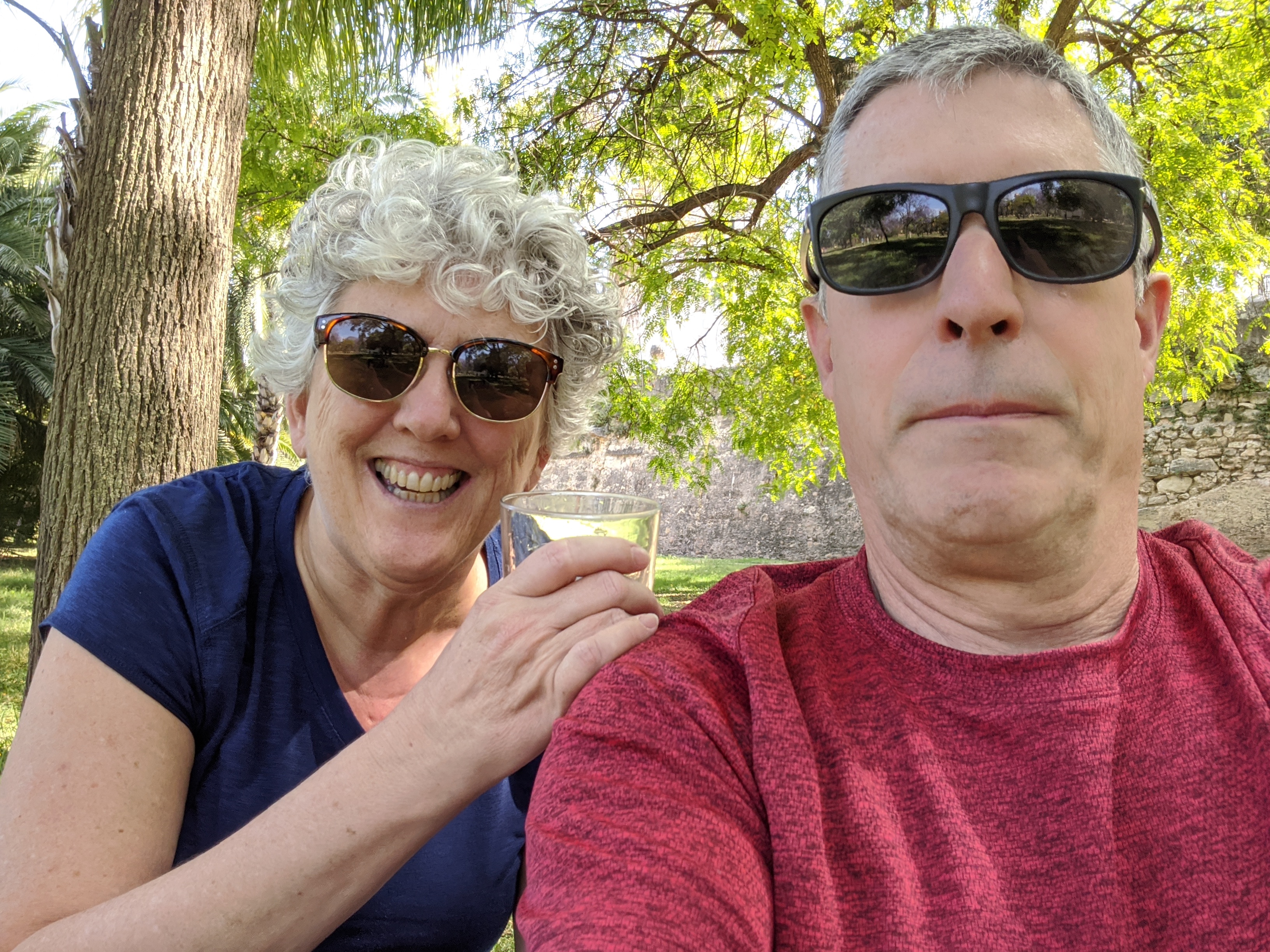
We’re doing OK and we hope you are too.
-
Nine Minutes
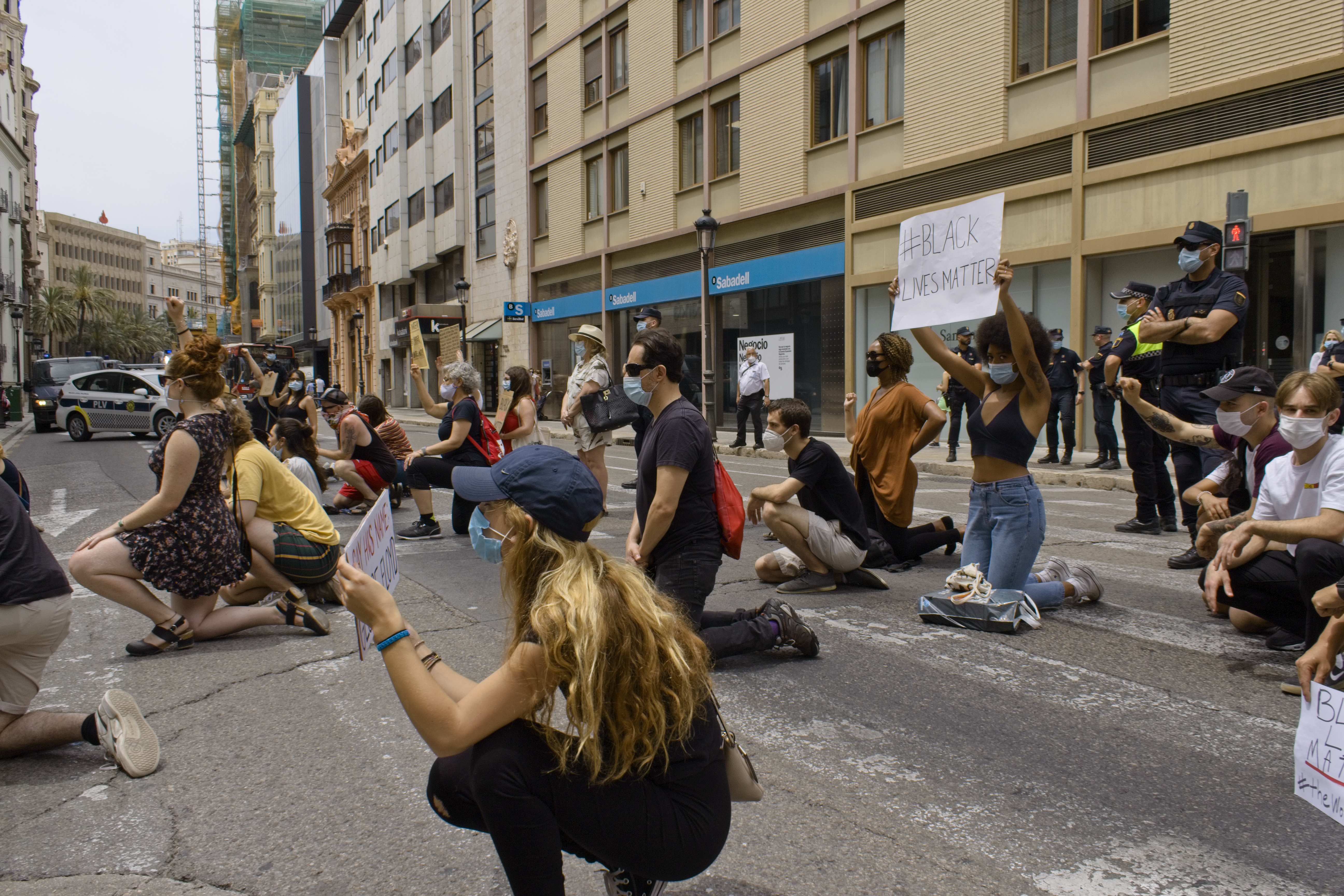
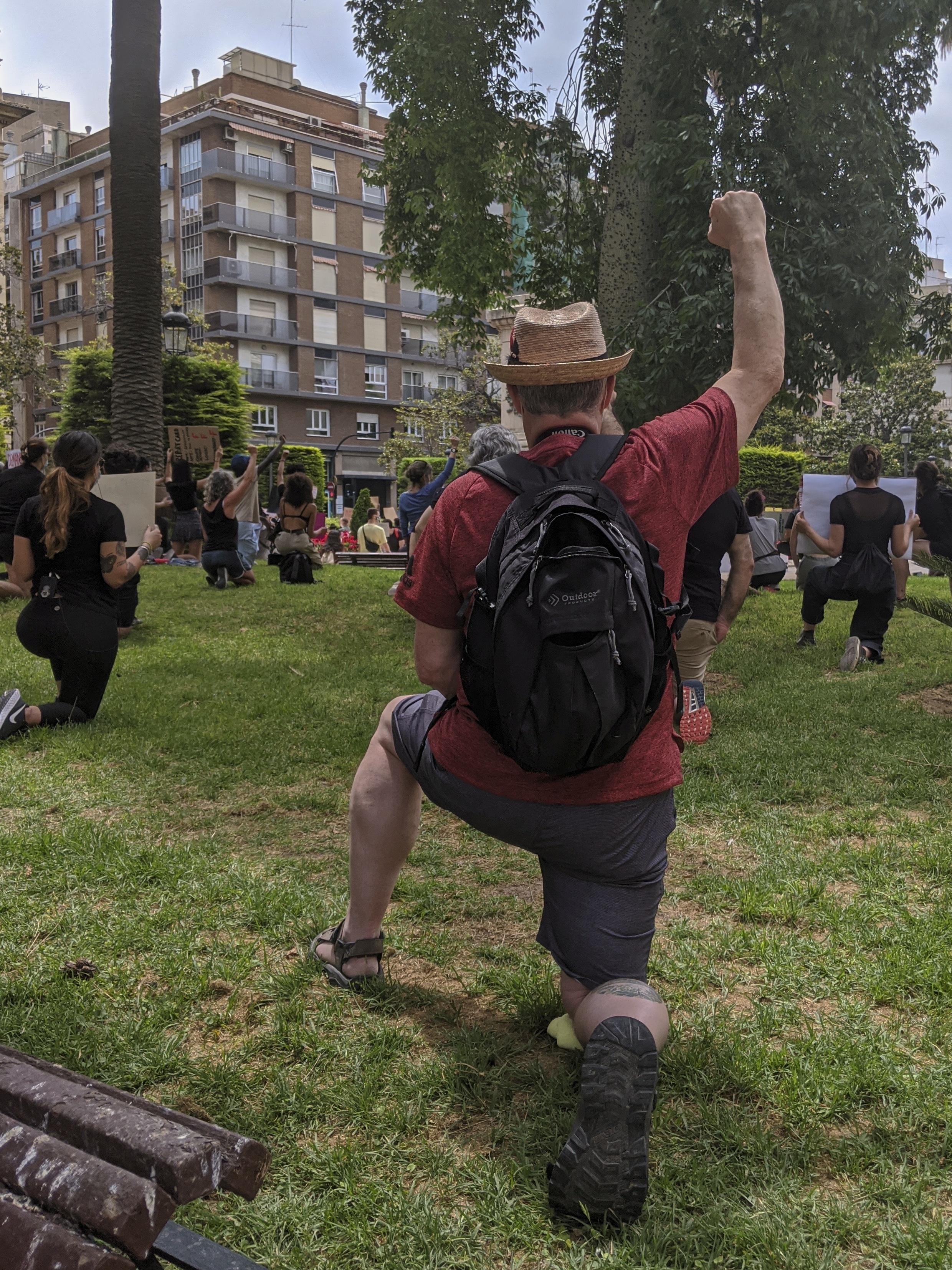
We attended a Black Lives Matter demonstration here in Valencia today. Part of it involved kneeling in silence for nine minutes in honor of George Floyd. Try it. Try kneeling in one place for nine minutes; maybe raise a fist in solidarity. At the end of nine minutes, you’ll be in agony. Your knee will hurt, your shoulder will ache. After a certain age your back will hurt too. For me, it was the longest nine minutes I’ve experienced in some time.
If someone was making you do it it’d be called a “stress position.”
Now imagine being laid out on the ground with your hands cuffed behind you while somebody else’s knee was on your neck, two other guys kneeling on you too, while you struggle for air and feel the life drain out of you.
Nine minutes. It must have been interminable.
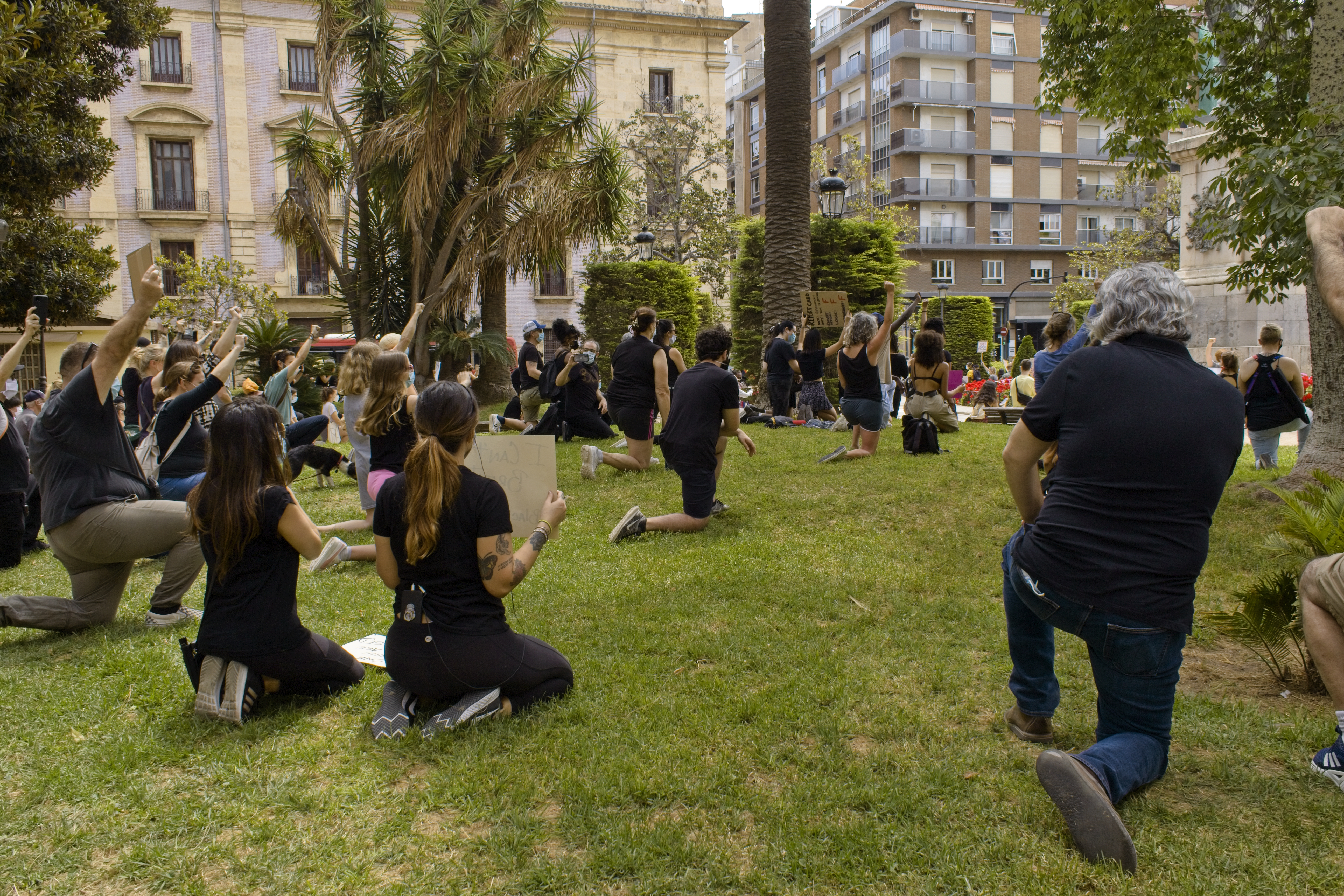
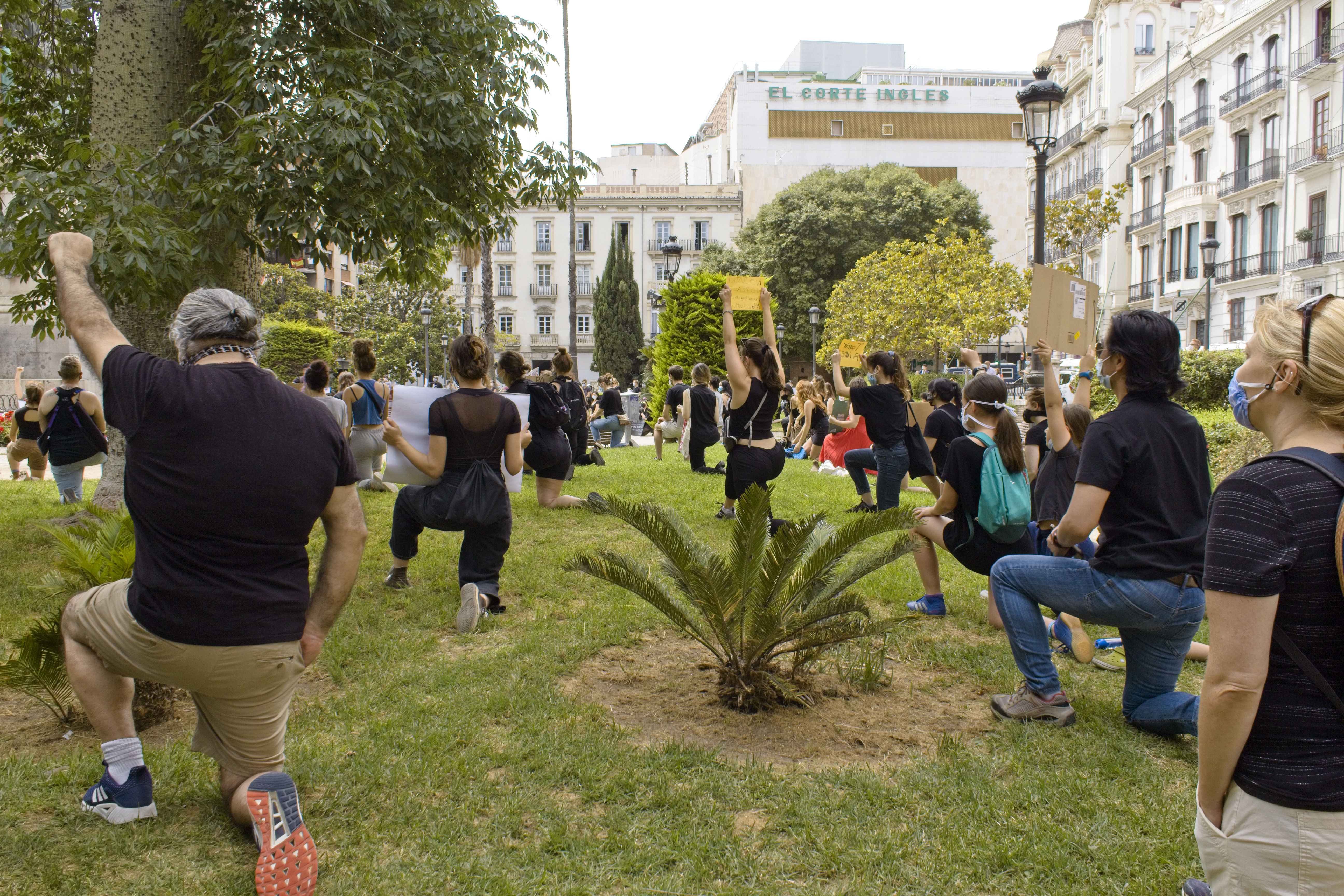
This wasn’t an accident. This wasn’t “overpolicing.” This was murder.
To be in another country, protesting such an event back in my own country, made me feel deeply ashamed. Ashamed that for so many of my countrymen this was no big deal. Ashamed that for 400 years we’ve abused fellow human beings because of the color of their skin. Ashamed that for 155 years we failed to give them their full value as citizens even after we ceased to enslave them. Ashamed that for 55 years we have held them as second-class citizens even after the end of Jim Crow. Ashamed that our government feels free to kill them for selling loose cigarettes, for jogging, for sleeping in their own bed, for passing, probably unwittingly, a phony 20 dollar bill, for just trying to get home from work.
I don’t think we get to call ourselves “the shining city on the hill,” if we ever really had that right.
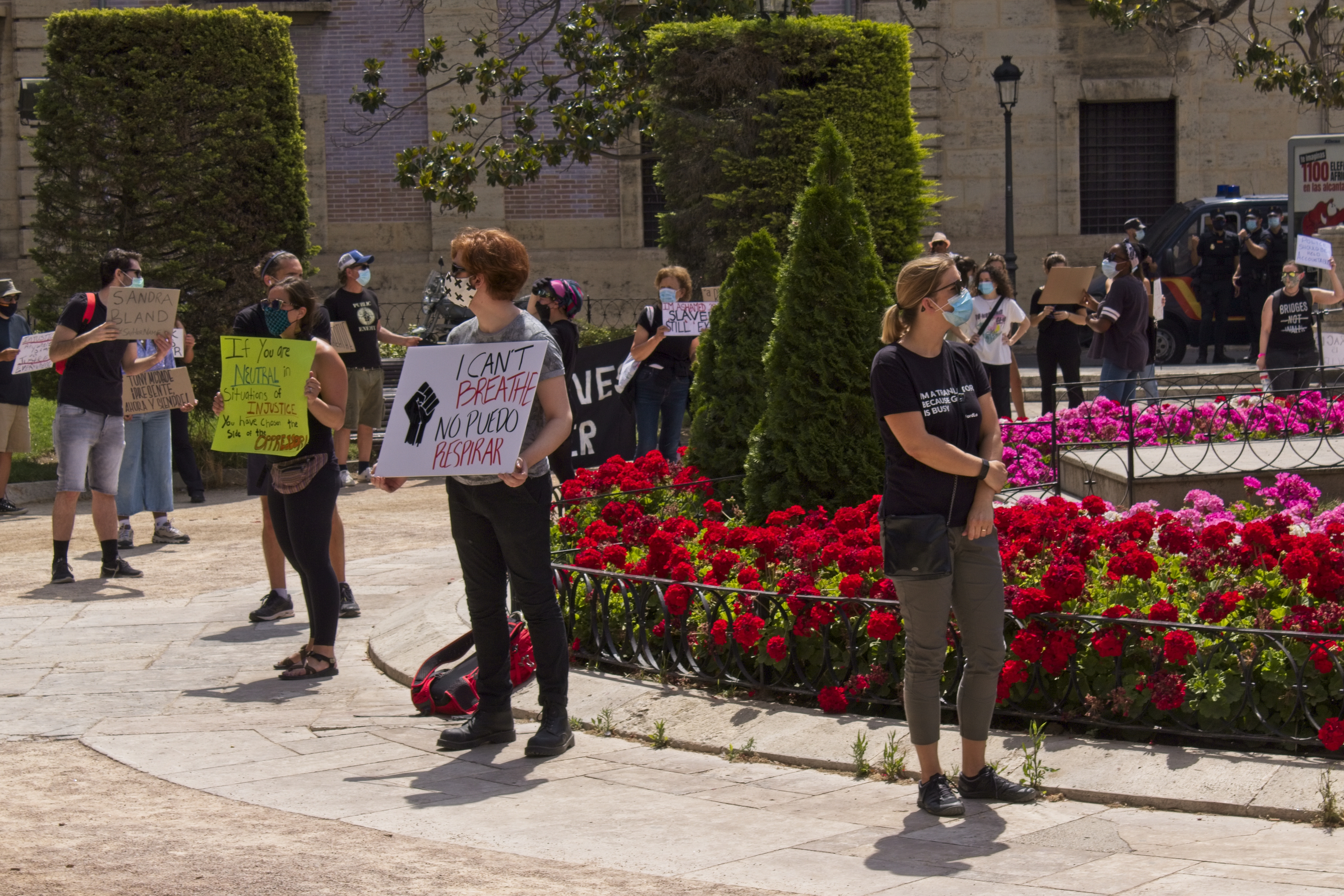
There never seems to be any real consequence, unless someone has a camera in hand and can get the video out to the world. We know of the incidents that we’ve seen; how many have we not seen, where the authorities got away “clean?”
Nine minutes. Nine minutes in which a black man was shown just how much he was valued in white society. Nine minutes where four white men got to feel their power over someone they regarded as less value. Nine minutes where it didn’t occur to any of them that this might be a problem, even though they knew they were being filmed.
Nine minutes that says so much about our society, all of it ugly.
-
De-escalation
We have been allowed to move to Phase 1 of the de-escalation of the Coronavirus lockdown. Now we can get out to do a few much-needed errands, for example Cindy got her hair cut and I got a new set of tennis shoes that I thought I’d be able to get just after we arrived, ha. We had a new set of keys made for the house. I got some contact cement to re-attach some trim to kitchen cabinet doors. You know, all of the little things that used to be routine.
Outdoors dining is also allowed. That means the little cafe directly below us is now open for breakfast and lunch.
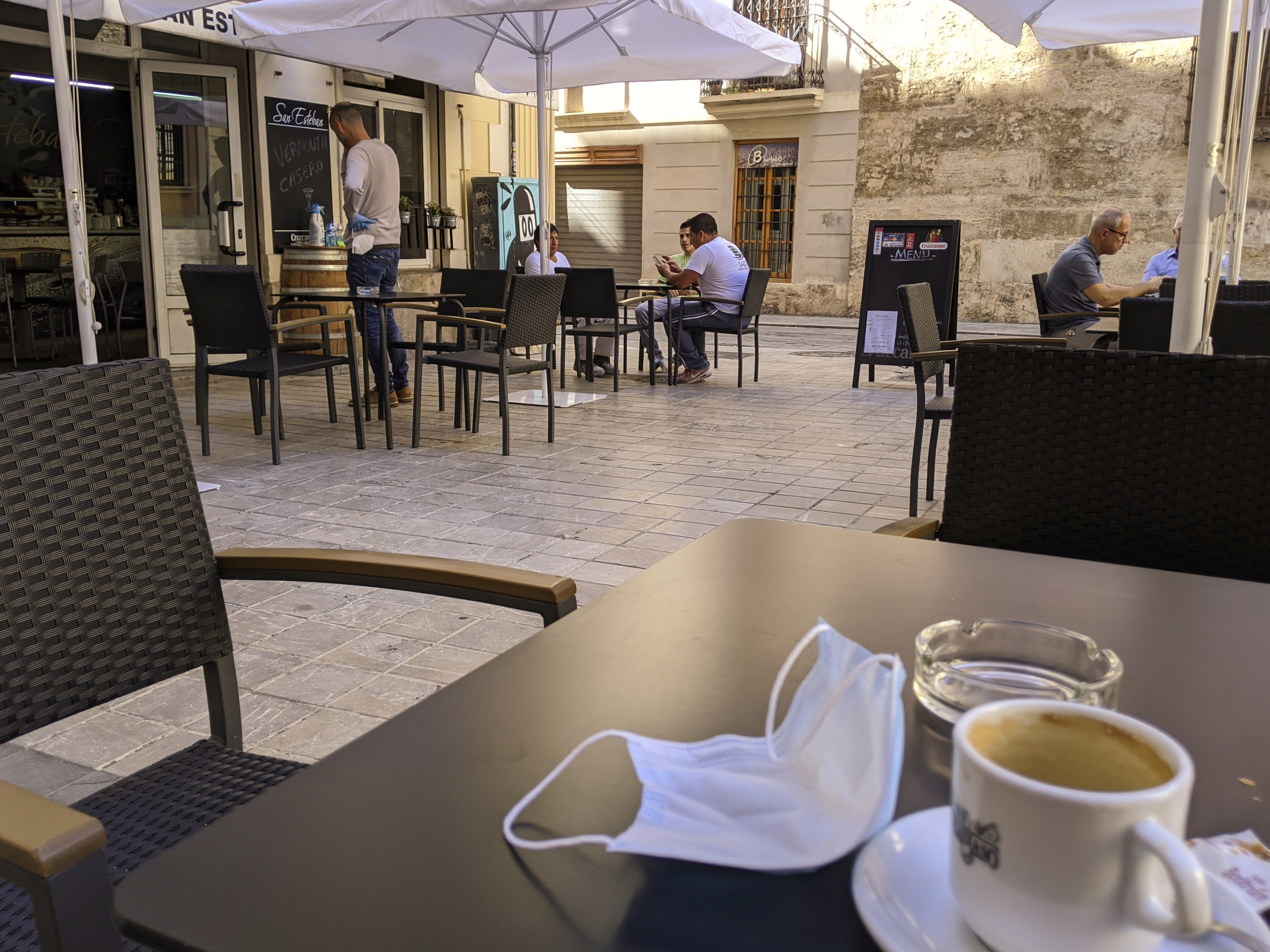
Right under our window.
Since we’ve been able to get out and about, I’ve grabbed my camera to do a little photo safari of the neighborhood. Come walkies with me.
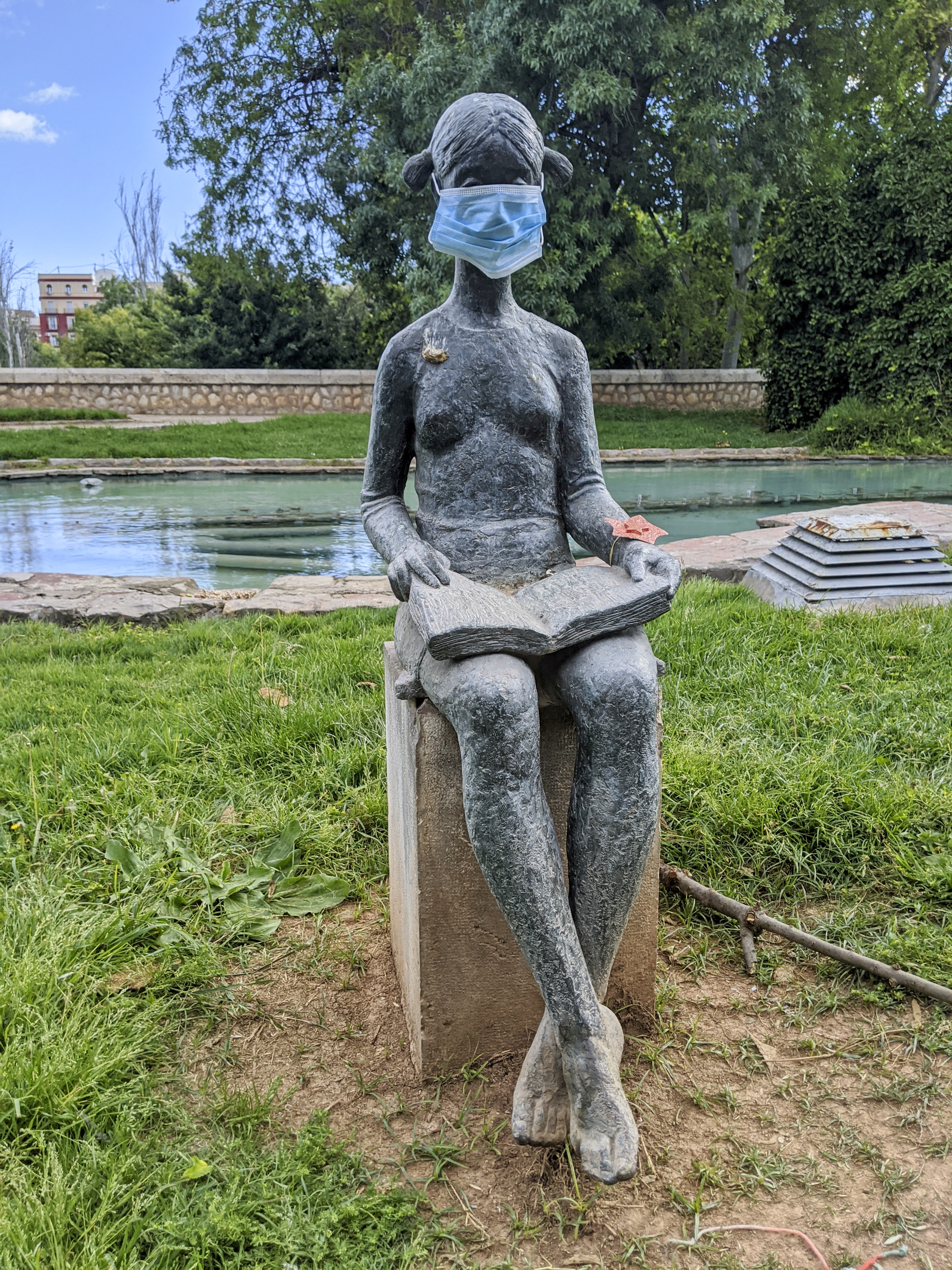
Proper social hygiene is important
Evening strolls can be amazing. The light is so warm, as is the air. And few darn tourists to battle.
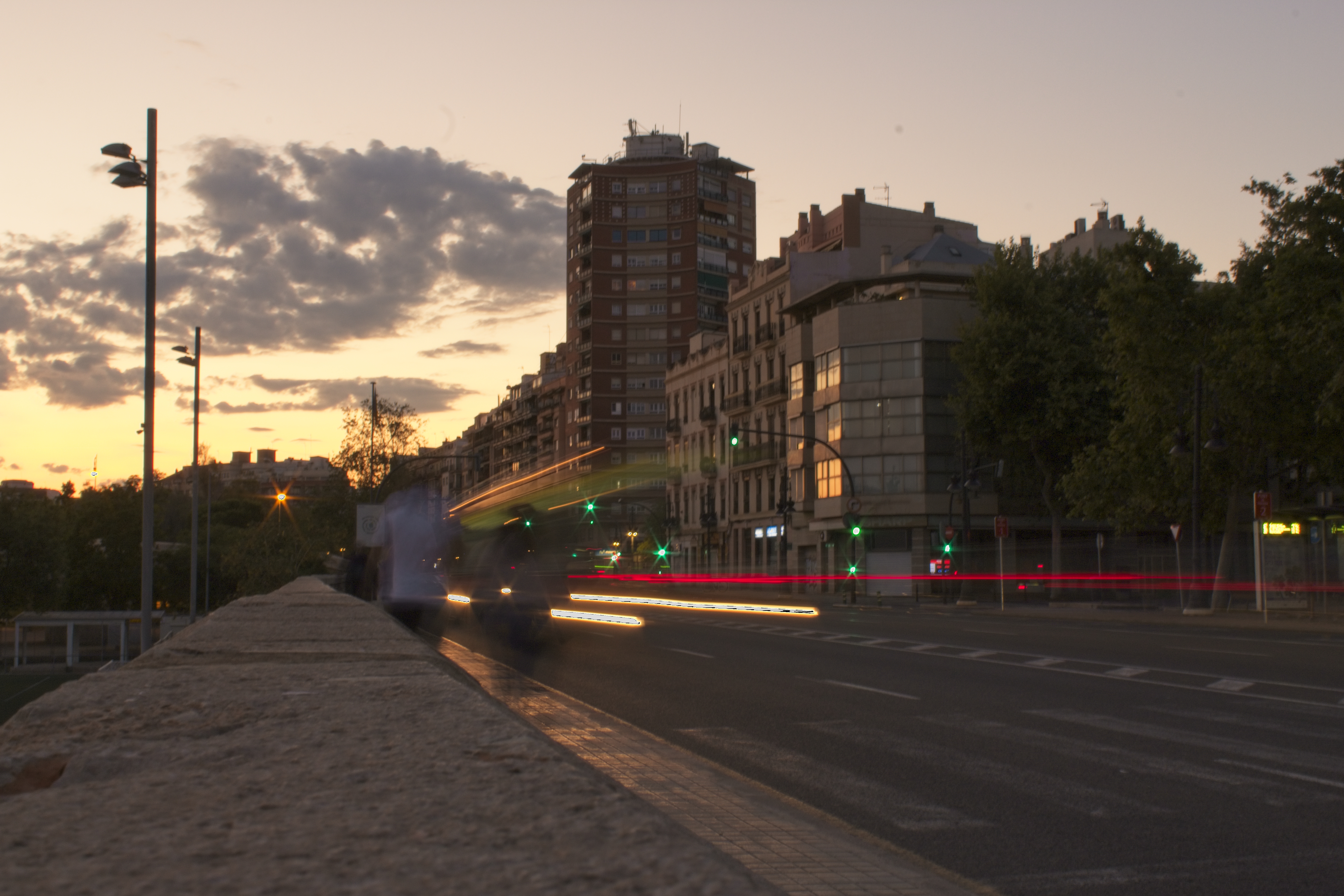
Sunset street scene
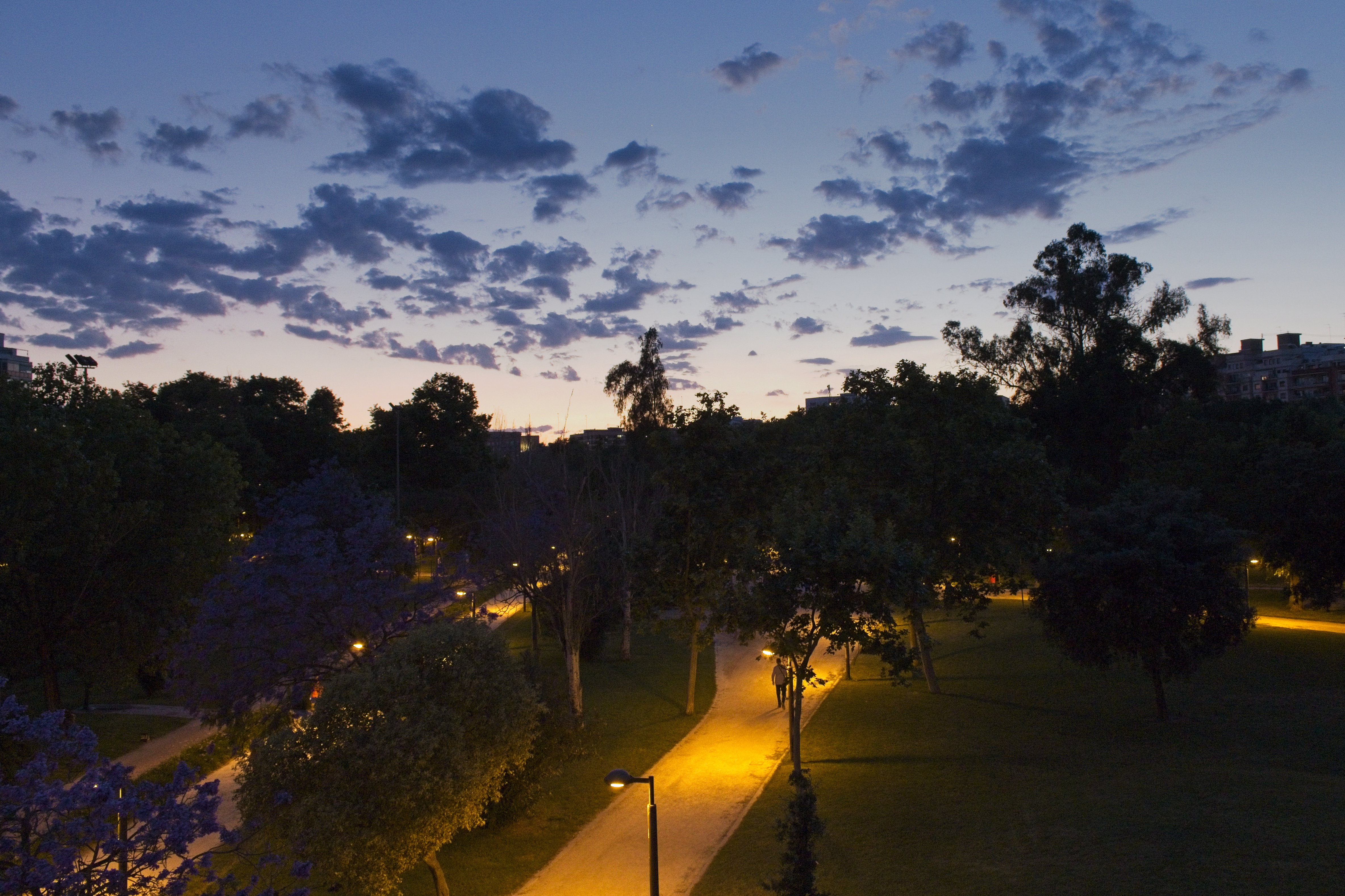
Turia paths from Pont dels Serrans
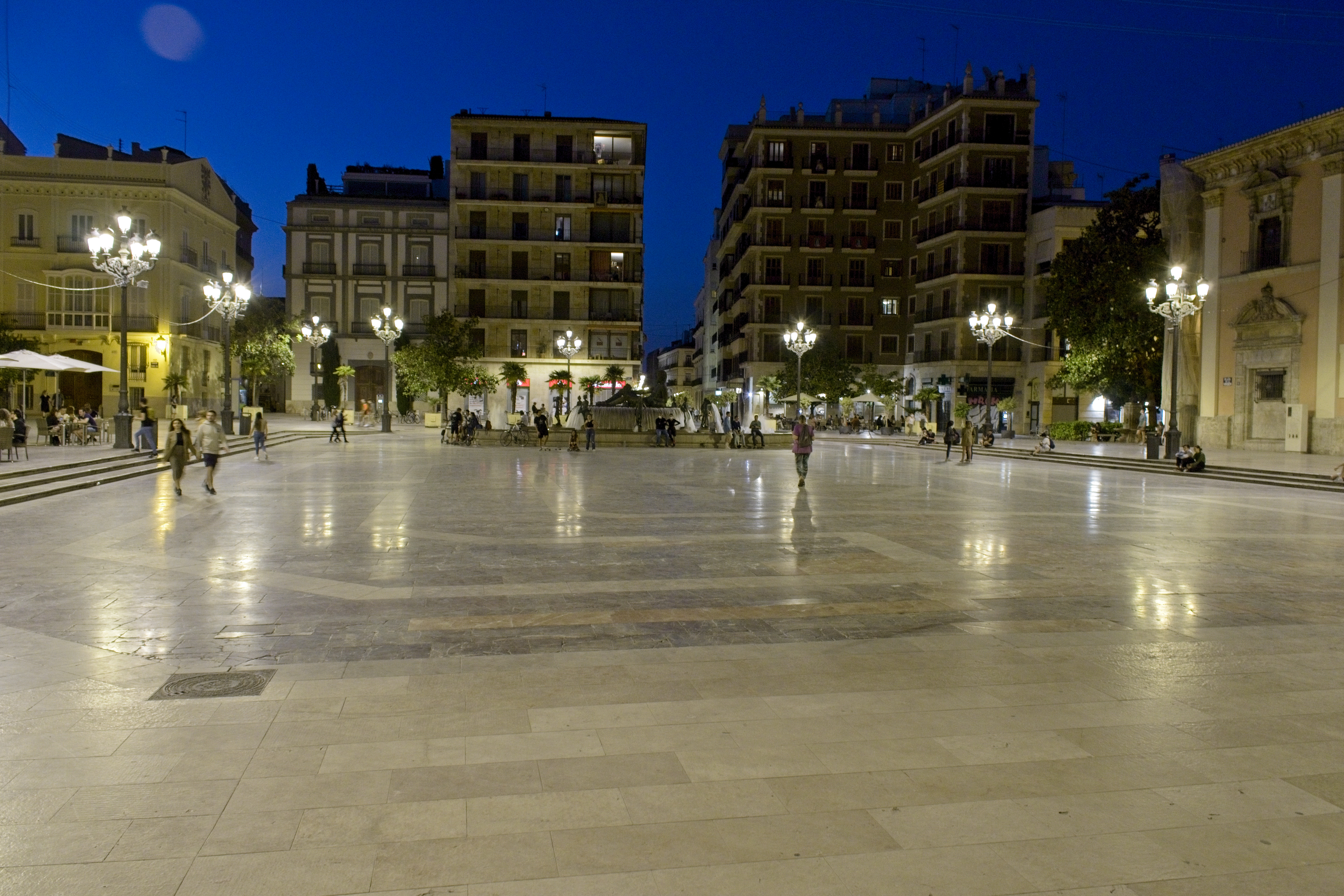
Plaza de la Virgen, where they demonstrate proper social distancing
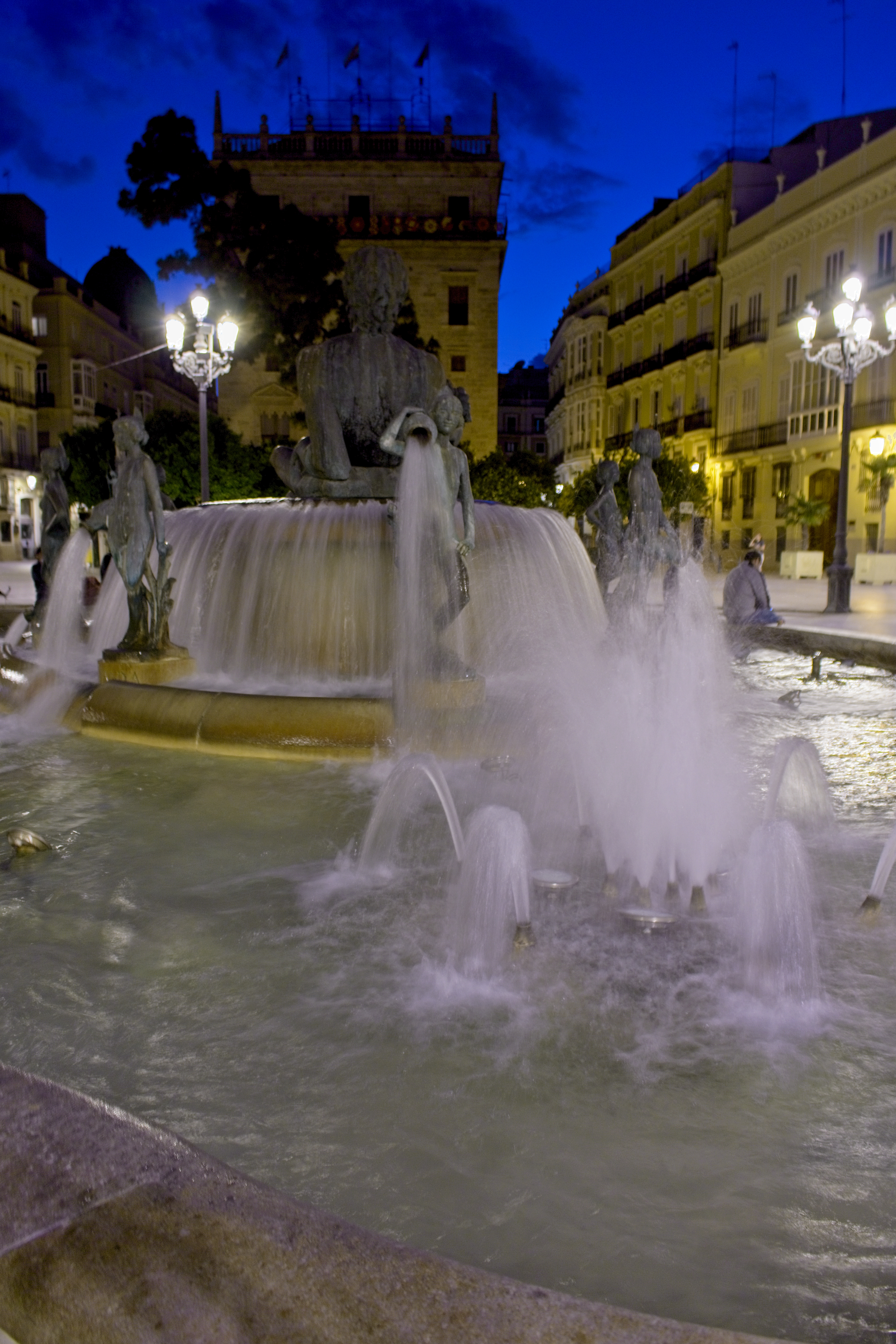
Neptune and his buddies, splashin’
Daylight hours can be fun too though.
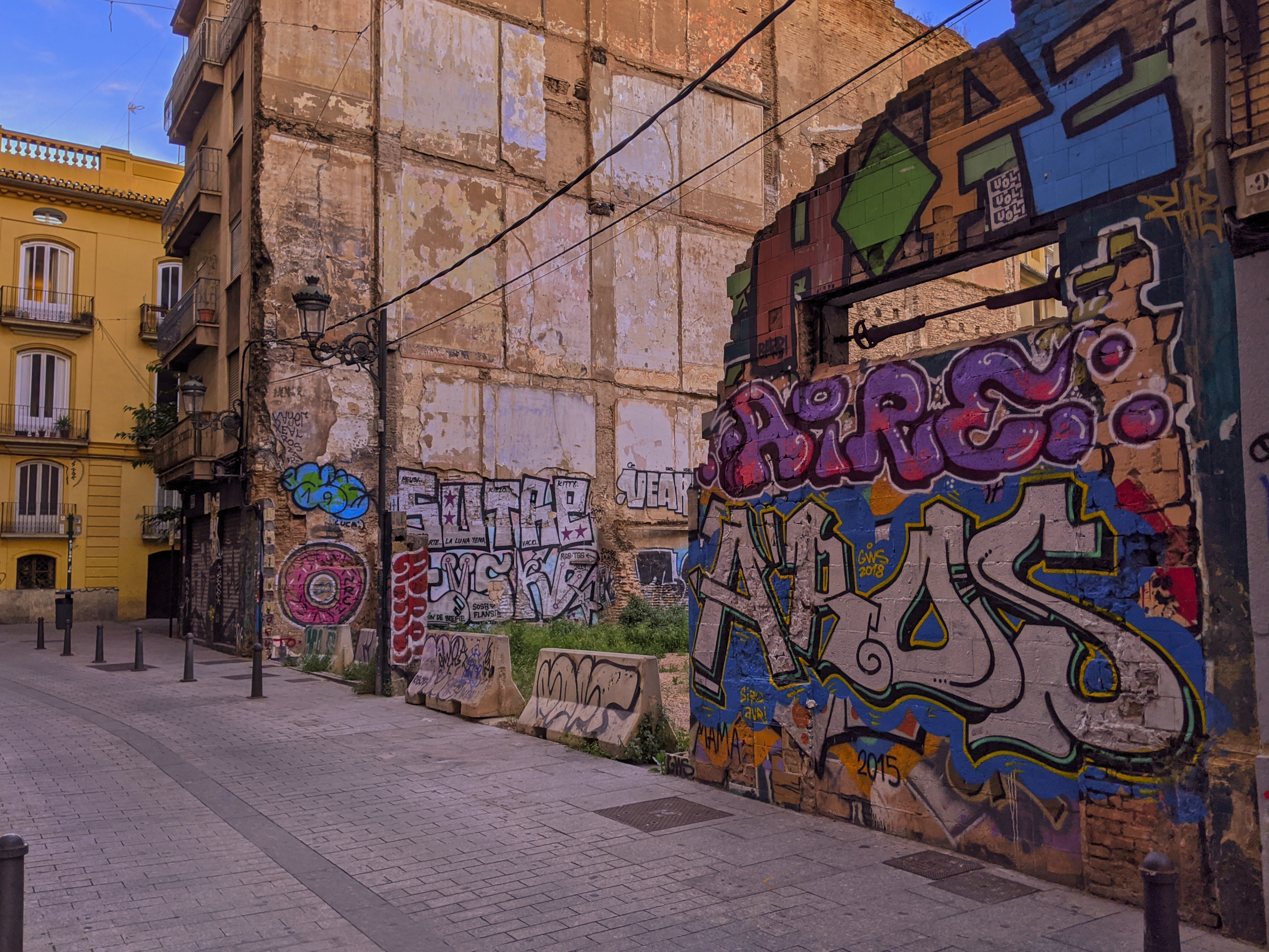
Nearly any unoccupied wall gets the graffiti treatment.
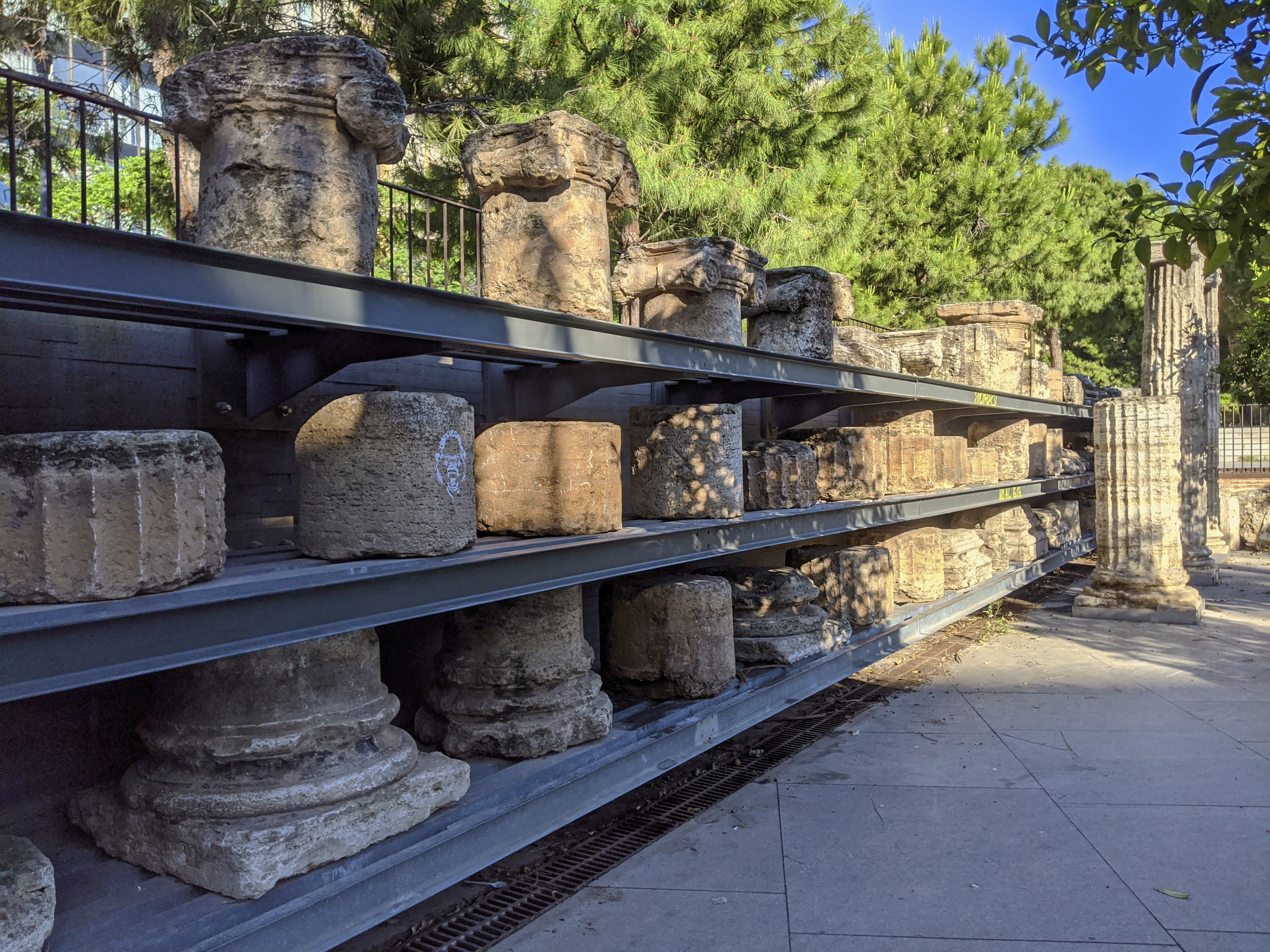
The Romans left behind some junk. Stencil may have been added later however.
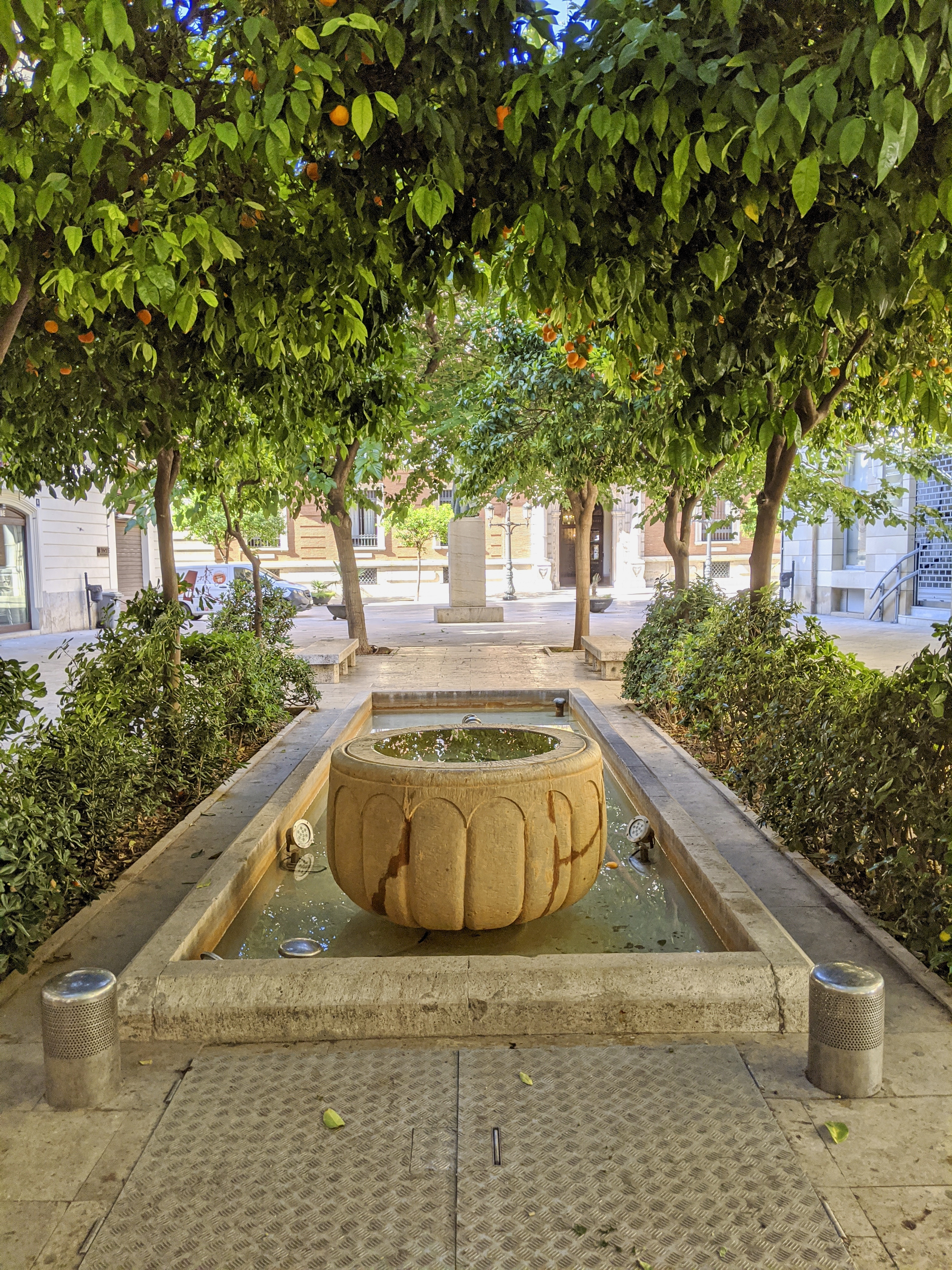
There are little hidden gems like this all over. I’ve seen the fountain in the center of the pot and on the other side (not shown) running; it’s quite pretty. Very Moorish although this park is in the plaza next to a Catholic university building.
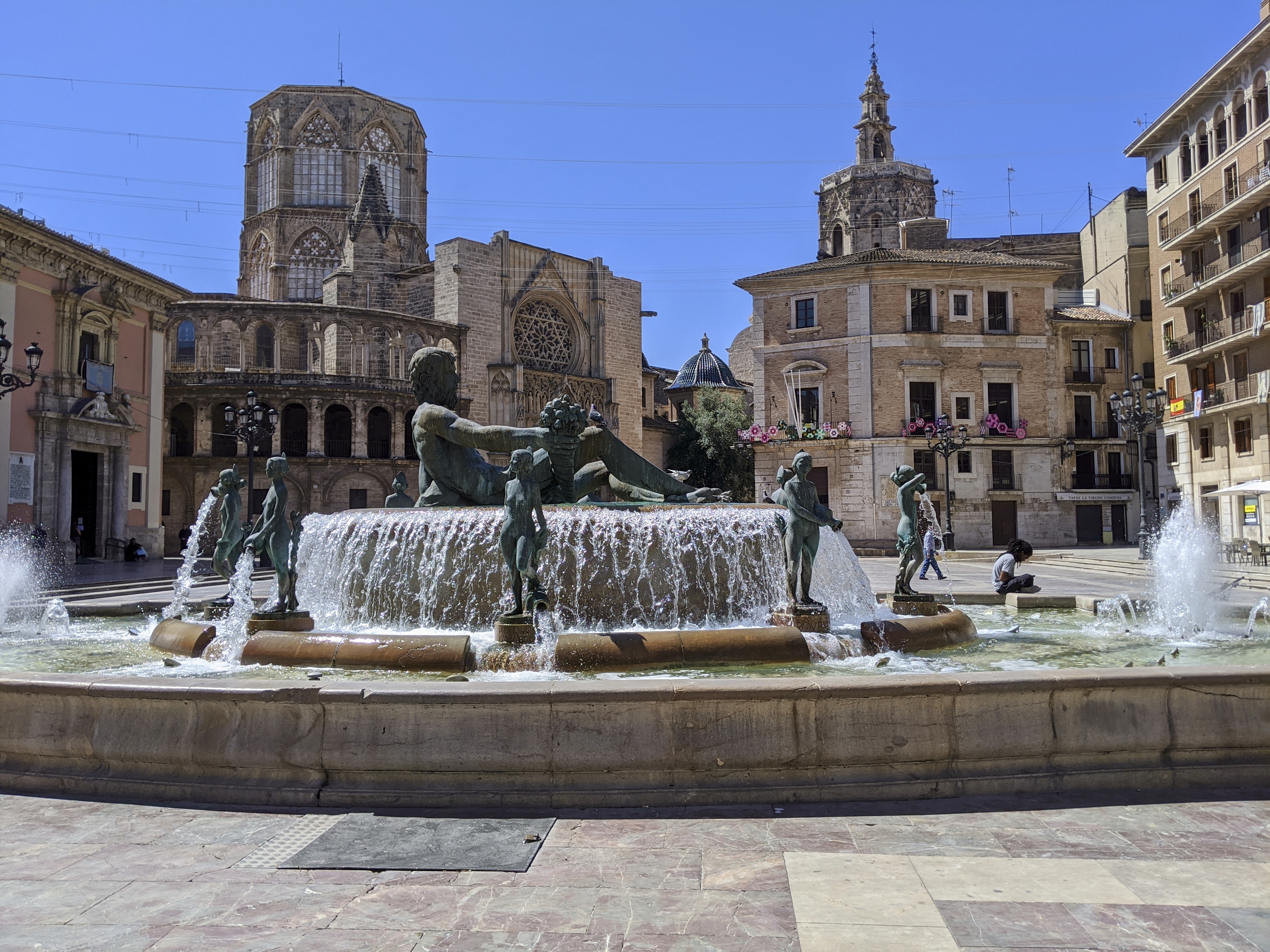
Neptune and his buds from another angle.
And now I’m going to go all Marlin Perkins on you (kids, ask your parents). Across the plaza from our window is a church. Because it’s a medieval church, it has flying buttresses on the walls, and these buttresses channel water from the roof away from the church. Some pigeons found a place in one of these buttresses to make a home.
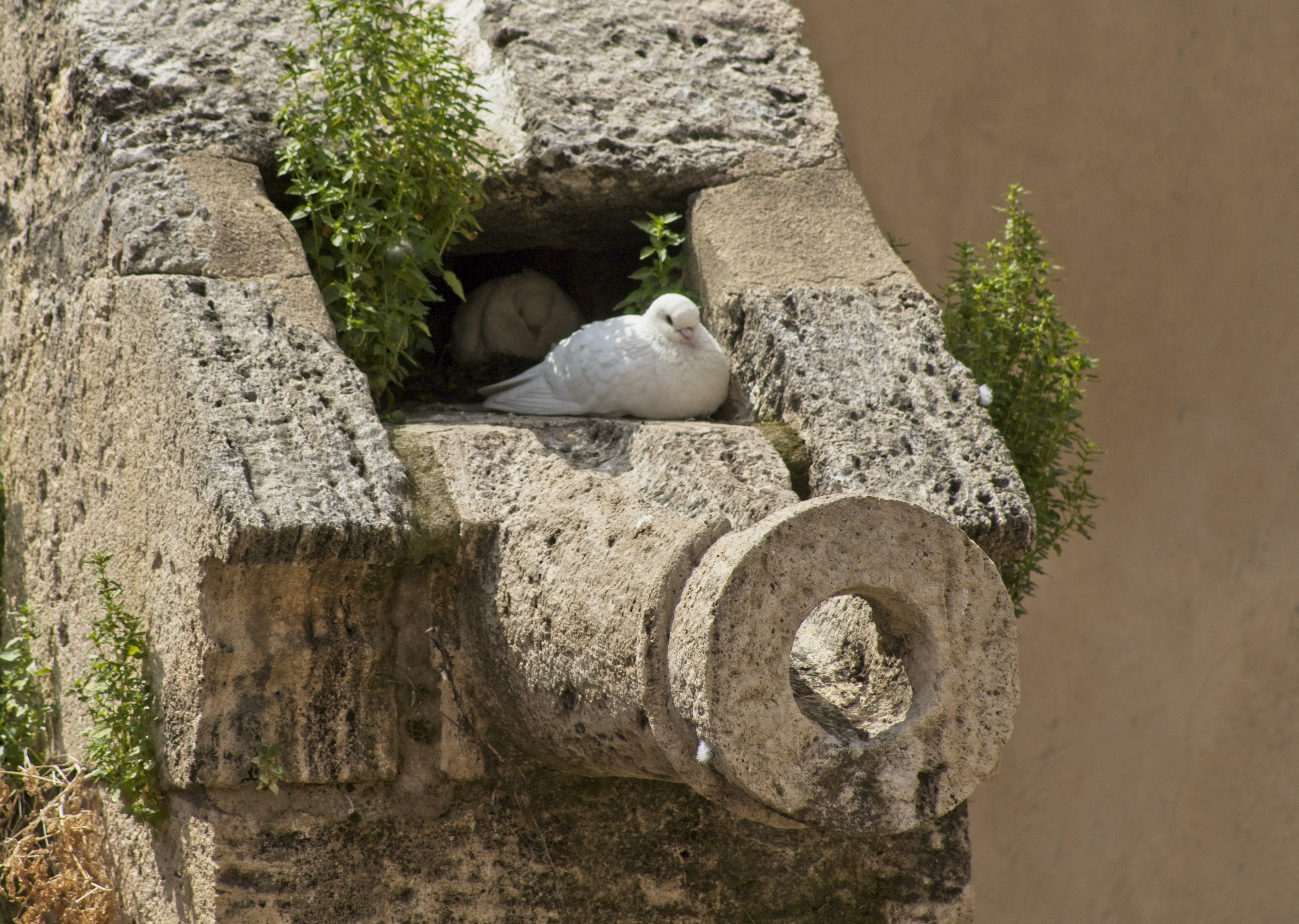
They worked hard to make it homey; Mr. White plucked branches from the weeds growing in the walls to help Mrs. White make a comfy nest for their coming brood. All appeared to be going well; it’s been this way for the whole six weeks we’ve been living here.
Well, things have changed. Yesterday as we were getting ready to go out for our evening walk I noticed that Mr. White was being challenged by a certain Mr. Grey.
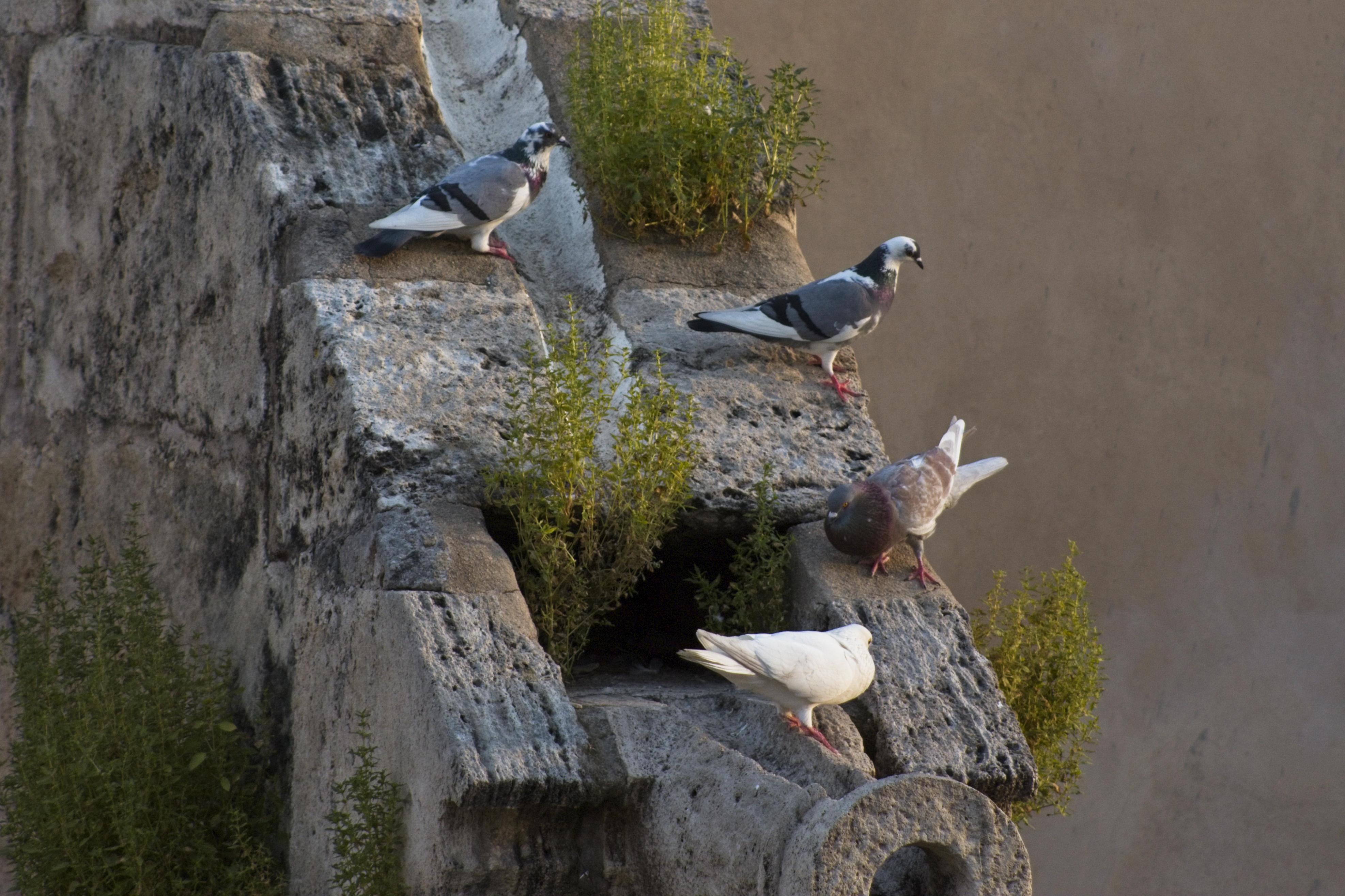
You’ve got it, I want it.
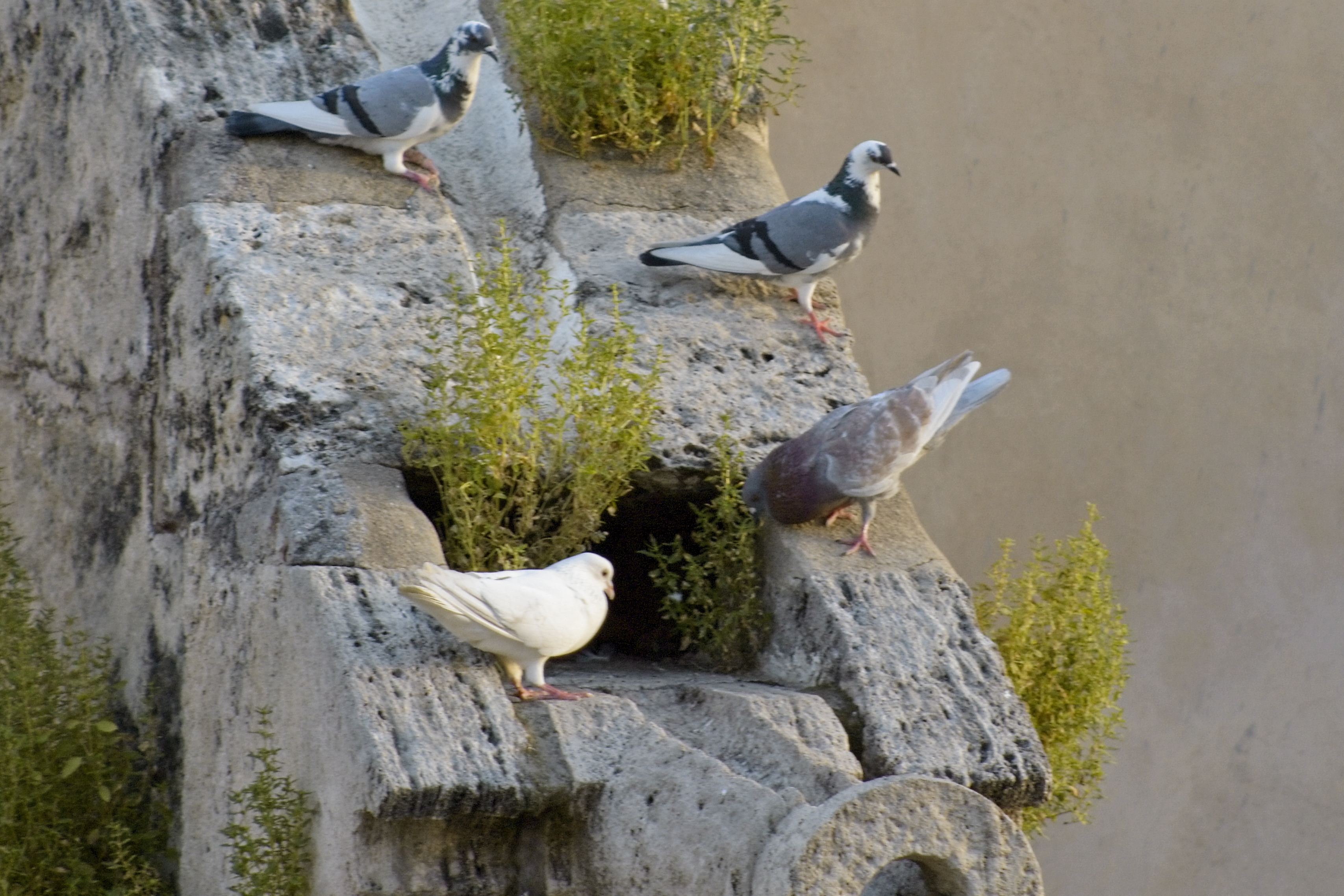
Notice the observers, there always seems to be somebody ready to watch other people fight.
The conflict went on for ten, maybe fifteen minutes. They mostly just pushed against each other although I think they might have grabbed each other by the beak to gain an advantage. In any case, there were several rounds of Mr. Grey jumping down into the entrance and Mr. White pushing him back out again.
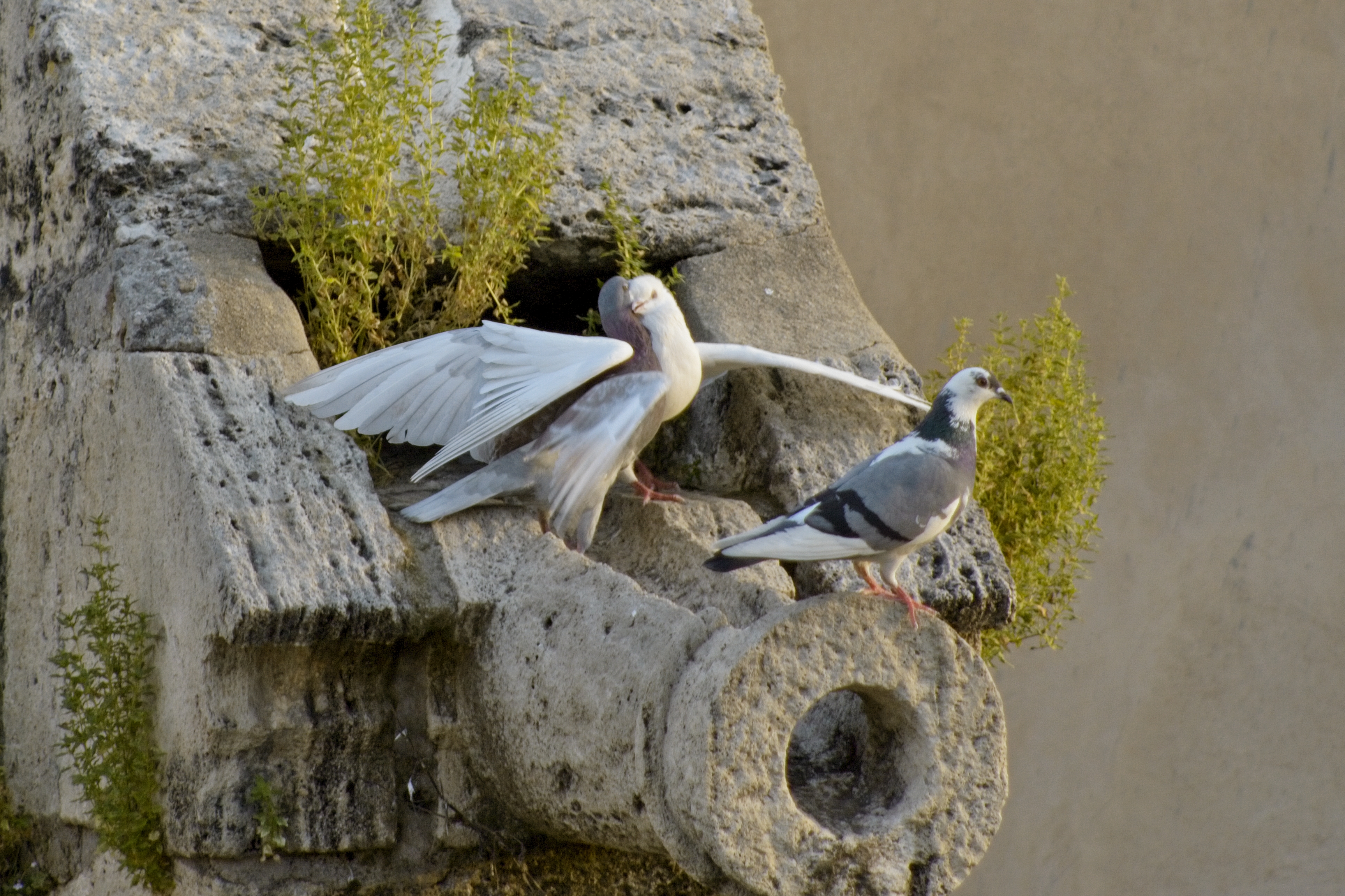
This was not friendly horseplay.
Much to my surprise, after several rounds of White successfully beating back Grey’s advances, White gave up. I’m guessing he got tired; Grey was remarkably persistent. It’s worth noting that this is prime real estate; there are no other little nooks like this on this side of the church. At any rate, there’s new ownership up in here.

New neighbors
It will be interesting to see how brooding goes for the new pair.
We remain healthy and are getting happier. The soft Mediterranean sunshine is warming our bones; we spend most of our days barefoot and in shorts. This is starting to feel like more of what we were expecting.
-
Phase Zero
The lockdown has begun to be lifted here in Spain. Since last Saturday May 2, we’ve been allowed out for exercise for an hour a day, either 6-10AM or 8-11PM, within a 1 KM radius of our house. Elders over 70 and children have their own hours, to minimize overlap. They’re calling this Phase 0 of easing the lockdown, similar to what I’m reading about WA. We have been out every day and from what I can see, people are being mostly careful about keeping social distancing.
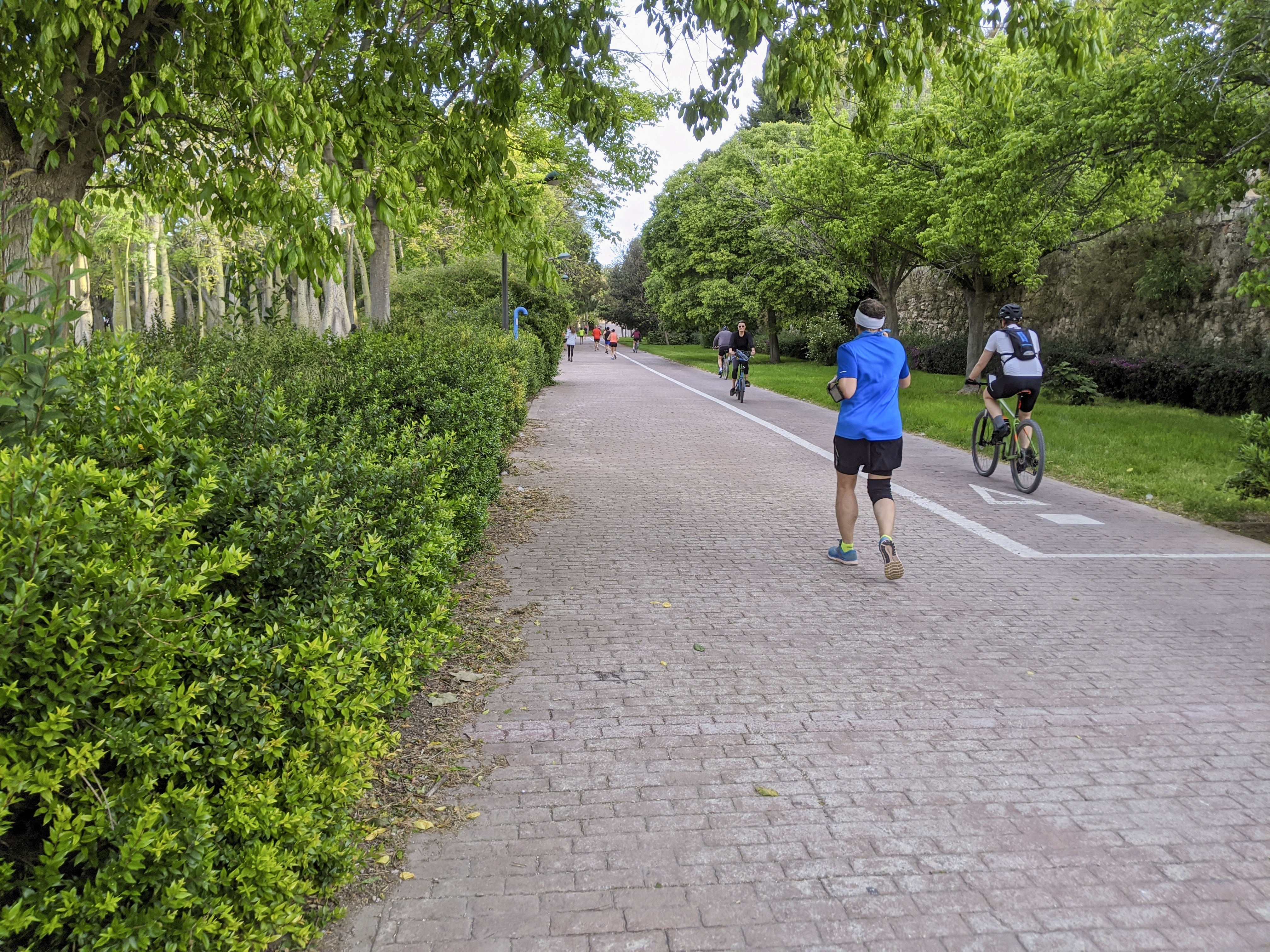
First day of Phase 0, everybody keepin’ their distance
I’ve been cheating a bit, going out both morning and evening because I really need the exercise and the crowds have been manageable. Cindy has been following the rules but she has Zoom Pilates to fall back onto.
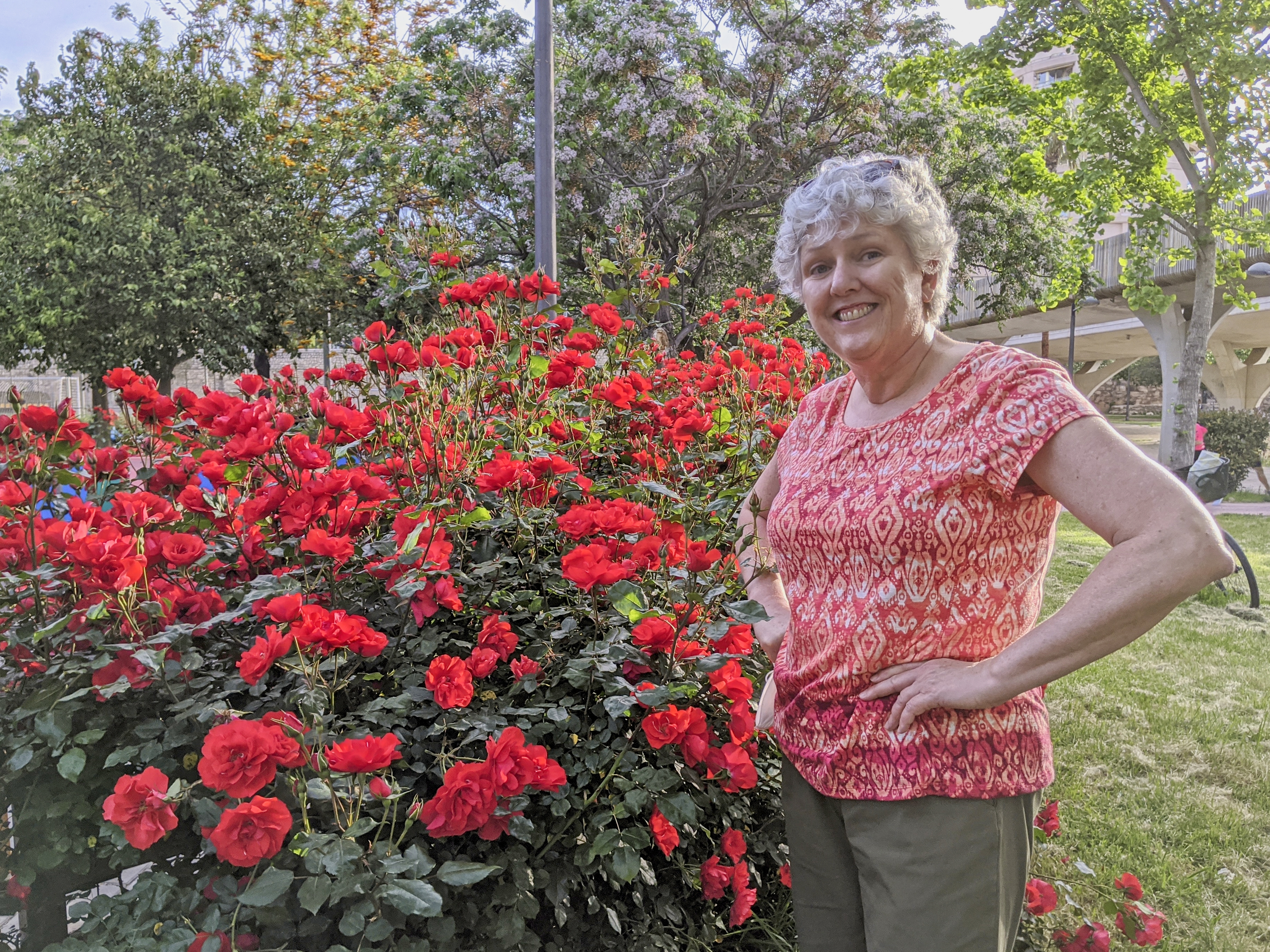
Happy to be out!
Our available area includes all of the old part of the city, a big chunk of the middle of the Turia Garden (where they turned the river bed into a garden) and a little bit of Benimaclet neighborhood north of the park, including the Jardins de Real (Royal Gardens). It’s easy and entertaining to get an hour’s worth of energetic walking in and the people watching is fantastic. Probably half of the walkers are wearing masks, half don’t (we’re in the latter half but work really hard to maintain the 2 meter distance). We carry masks with us in case we find a shop to step into or need to get groceries. A few places are open for takeaway; from what I can tell they’re bread and sandwich shops.
On what is evidently the most important topic of the day, hair salons are open by appointment and only one customer per hairdresser is allowed inside at a time. Construction work is allowed again with social distancing rules in place but beyond that, shops and business are still shut. Repair work is not allowed in the home if the resident is present, which is pertinent to us for a little plumbing issue we found in our apartment. We have to wait to have it addressed and it’s beyond my personal ability to deal with.
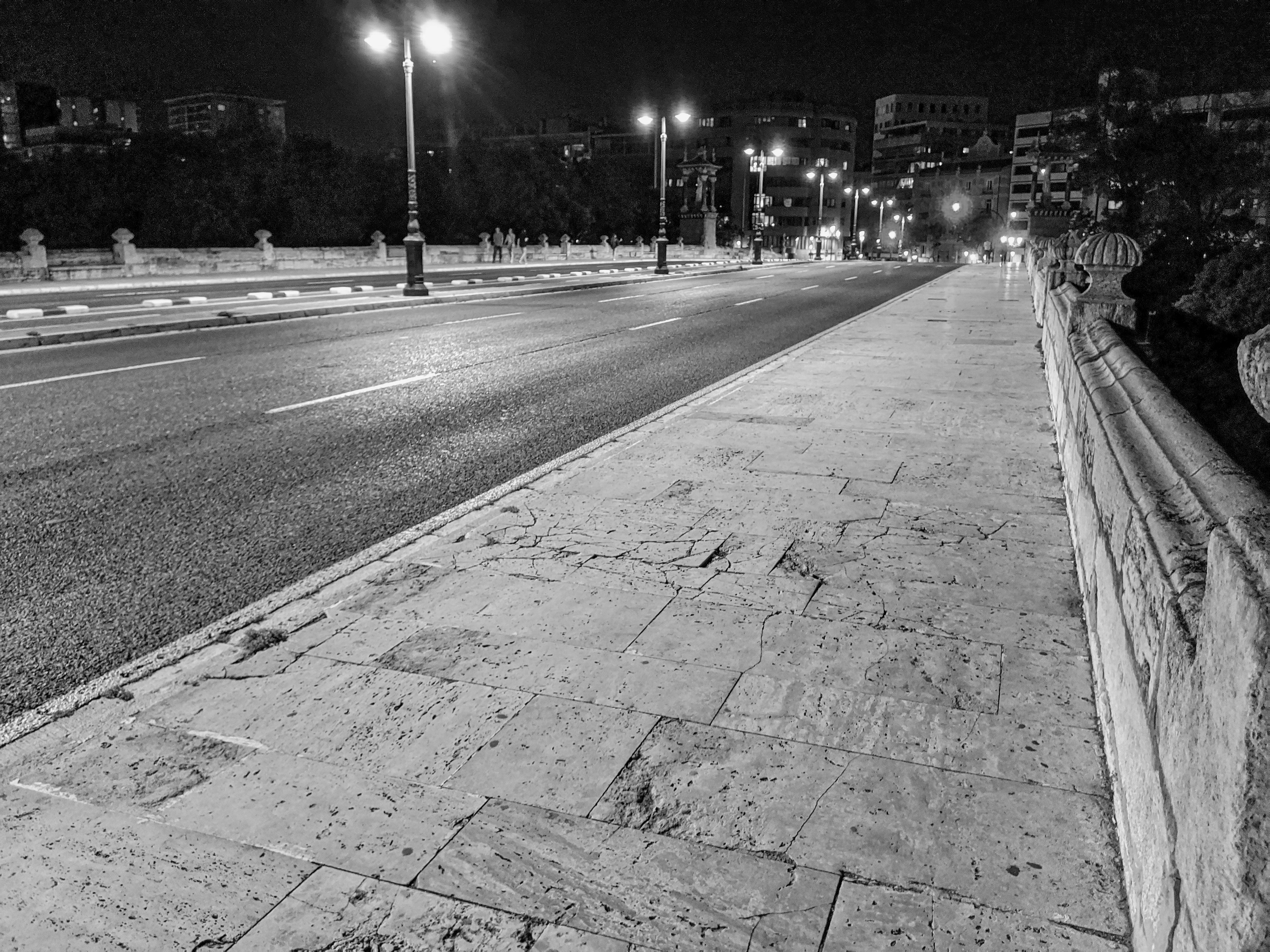
Evening walk. Traffic is pretty light.
The government announced yesterday that some more rural parts of the country would be moving to Phase 1 starting Monday. We were hoping Valencia would be included, as our case load has been very light for some time. We were not so lucky though. In an abundance of caution, we were included with Madrid, Barcelona and Catalunya in the group of kids that would be held back “for at least a few more days.” It’s disappointing because Phase 1 allows shops, restaurants and museums to open at limited capacity, and groups of 10 or fewer to gather inside or outside homes. There’s a cool little bar that lives in the plaza right below us that we can’t wait to see re-open. Not to mention all of the tiny shops all around us who must be suffering terribly through the shutdown.
We soldier on, reminding ourselves that for us, it isn’t so bad. The weather has turned, with a long string of 75+ degree days and sunshine coinciding with the end of the super-tight lockdown. We are using our imaginations and cooking some pretty delish meals for each other. Last night I made oven-baked ribs with a rub I adapted to the recipe using what is available here. That came out pretty good. We can get out when we need to and we remain healthy.
I hope you all are OK and safe where you are.
-
Subscribe
Subscribed
Already have a WordPress.com account? Log in now.
 Home | Travelblog